












 500,000+ readers just today.






The Russia diesel deal.
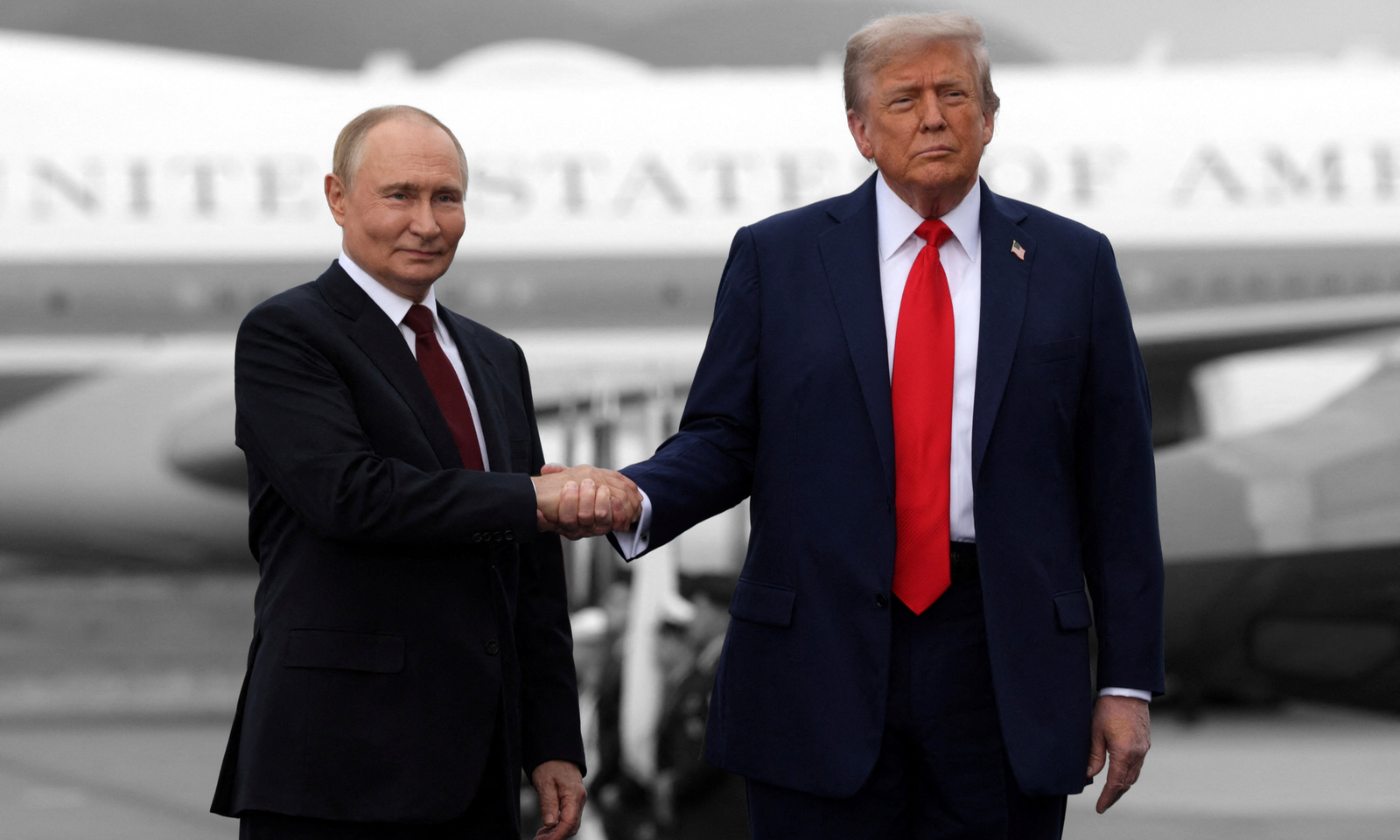
Good Thursday morning. I’m Executive Editor Isaac Saul, jumping into the driver’s seat today for the first time this week. I’ve been head down writing for the last few days, working on tomorrow’s Friday edition about the viability of a third party this year, writing Part II of my piece on corruption in the Trump administration, and putting the finishing touches on an exciting announcement for all our readers.
We’ve got a lot of great stuff coming, but today, our eyes are on the Trump–Putin diesel deal, a development with important implications for the global energy market and the Russia–Ukraine war. Plus, a day in the history of the Supreme Court, and a feel-good story about two siblings discovering each other in a chance encounter.
It’s a 13-minute read.
Ari Weitzman, Will Kaback, Carina Pacheco, Russell Nystrom, Isaac Wood, and Bailey Saul edited or contributed to today’s newsletter.
Suspension of the Rules.
Following a few heavier episodes, Isaac, Ari, and Kmele have a bit of fun this week. Kimberly Guilfoyle’s resignation prompts Ari to quiz the guys on other U.S. ambassadors, then the three react to a viral video of a candidate in a local Indiana race. Plus, some discussion on James Talarico and Ilhan Omar. Check it out here:
The new episode
Quick hits.
- BREAKING: President Donald Trump said the execution of the Fort Hood shooter will not be livestreamed. (The update)
- The consumer price index increased 0.6% in September and 3.7% on an annual basis. Gasoline prices rose 9.1% month-over-month, accounting for over half of the overall monthly increase. (The report)
- A Singapore-flagged container ship sank in the Strait of Hormuz after it was struck by an unidentified projectile, which Iran’s Revolutionary Guard said was a naval mine. A second Singapore-flagged ship was also hit by an unidentified projectile and sustained damage. (The incidents)
- Ukraine’s Ministry of Defense said that Starshield, the military version of Starlink’s satellite communication system, is working at full speed again after officials claimed that connection speeds were throttled. Ukrainian President Volodymyr Zelensky suggested on Wednesday that SpaceX CEO Elon Musk deliberately slowed the service. (The latest)
- The Social Security Administration announced a cost-of-living adjustment that will increase the average Social Security recipient’s benefits by $900 a year starting in 2027, a 3.6% increase and the largest rise in monthly payments in four years. (The announcement)
- A trial began in Germany for a Ukrainian special-forces veteran accused of leading an operation to blow up Nord Stream pipelines in 2022. (The trial)
12 reasons why this strange tooth powder is the gold standard in Japan.
What if whitening your teeth was as easy as brushing them? PurelyWHITE uses Hydroxyapatite — the same mineral found naturally in your teeth — to help strengthen enamel while lifting stains.
Originally created by NASA to help astronauts fight bone and enamel loss on long space missions — today it’s the gold standard in Japan for strengthening teeth.
- Zero peroxide quickly whitens deep stains without sensitivity or damage
- Created by dentists — not influencers
- 30-day money-back guarantee
Tangle readers join 1 million people and get 20% off your first order.
Today’s topic.
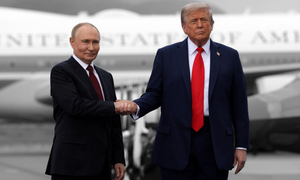
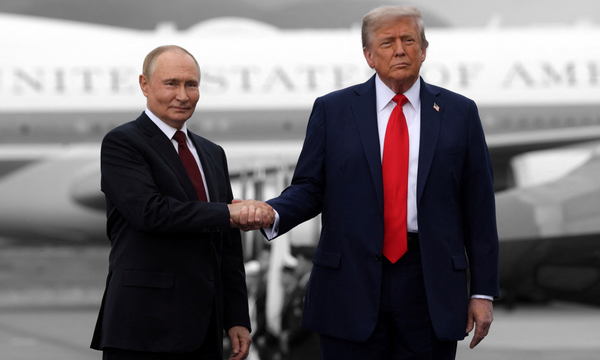
The Russia diesel deal. On Friday, President Donald Trump announced an agreement to lift sanctions on Russian oil exports in return for Russia releasing roughly 800,000 tons of diesel by the end of November and millions more by an unspecified date. The president said the deal will bring down diesel prices impacted by supply disruptions linked to the Iran war but did not say it is tied to a larger ceasefire deal. Ukrainian President Volodymyr Zelensky and some U.S. lawmakers criticized the agreement as a gift to Russia and urged Trump to reverse course.
Back up: In response to Russia’s full-scale invasion of Ukraine in 2022, the U.S. and other Western countries leveled broad sanctions on the Russian economy and individual leaders. In September, Congress passed a new set of sanctions — some of which applied to Russia’s energy sector — with strong bipartisan support, and President Trump signed the bill into law.
Under the announced terms, the U.S. will temporarily remove sanctions on Russian diesel exports, and Russia will immediately supply the U.S. and global marketplace with approximately 300,000 metric tons of the fuel. They’ll supply another 500,000 tons in November and an additional one million tons “immediately thereafter,” according to Trump. The president also said Russia will supply three million additional tons “within a short period of time” based on Russian refinery capabilities.
President Zelensky immediately spoke out against the deal, saying, “It looks like a happy birthday present for Putin… It shows weakness of the world.” Zelensky also suggested that a U.S. negotiating team had misled Ukrainian officials about Trump’s discussions with Russian President Vladimir Putin over the energy agreement. Other Western leaders also questioned the deal; Italian Prime Minister Giorgia Meloni said, “It provides Moscow with legitimacy as its bombs continue to fall on Ukrainian cities, generates new revenue to finance the war, and implicitly weakens the effectiveness of sanctions.”
Separately, on Sunday, President Trump announced an “energy ceasefire” between Ukraine and Russia, saying, “Both parties have agreed. Do not break it!” However, Zelensky indicated that he was not aware of an agreement or the terms of the purported ceasefire, later accusing Russia of attacking Ukrainian energy infrastructure.
On Tuesday, a group of six Democratic and six Republican senators sent a letter to Trump asking him to back out of the diesel deal. “[The agreement] will have a negligible impact on fuel prices but the revenues the Kremlin will receive from this agreement will undoubtedly finance its desired war of attrition and advance security cooperation with China, Iran and North Korea,” they wrote.
Today, we’ll share perspectives from the left and right on the deal, followed by Executive Editor Isaac Saul’s take.
|
What the left is saying.
|
The Guardian editorial board wrote about the “imperative to keep pump prices down.”
“Mr. Trump is unhappy with Ukraine targeting Russian oil refineries. He claims that this is the cause of high energy prices afflicting American consumers and threatening Republican prospects in next month’s midterm elections,” the board said. “The real driver of global energy prices is not Ukraine defending itself from Russian attack, but Mr. Trump’s failing war against Iran. However, the US president is incapable of admitting any fault.
“Blaming Mr. Zelenskyy enables him to deny his own culpability and, with malevolent encouragement from Mr Putin, to revive the preposterous notion that Ukrainian intransigence rather than Russian aggression is the reason why his promise to broker a peace deal remains unfulfilled,” the board wrote. “The best response to Mr. Trump’s perfidy is for Mr. Zelenskyy’s friends to reaffirm their support… thereby signalling that Ukraine will not be beaten by deals between the Kremlin and the White House.”
In The Philadelphia Inquirer, Trudy Rubin suggested the deal will “fund Putin’s war machine.”
“The ‘diesel deal’ Trump has gifted Putin won’t halt Russia’s aggression. It will reward it,” Rubin wrote. “It will encourage the Kremlin’s unyielding demand that Kyiv surrender to Moscow’s overlordship. And it will fuel Putin’s war chest… The Ukrainians were ready to discuss a two-way ceasefire over attacks on energy infrastructure, but were totally blindsided. Instead, Trump unilaterally declared such a ceasefire had been reached. It hadn’t.”
“Yet when Zelensky rejected the one-sided diesel deal, Trump went ballistic and called for his replacement, as if Ukraine were a banana republic whose president could be ousted overnight,” Rubin said. “If Putin keeps getting freebies from his friend Donald, why make concessions? Lifting sanctions on Russian diesel exports, as Zelensky noted, not only gives Putin ‘more money to inflict suffering on us’ but ‘gives him the ability to fight even more.’”
In The Atlantic, Anne Applebaum said “Donald Trump has dropped all pretense.”
“[President Trump] lifted sanctions on the import of Russian diesel fuel, in violation of the letter and spirit of laws that he himself signed,” Applebaum wrote. “The president has implied that the point of his new policy is to lower fuel prices for Americans. But this is not a sufficient explanation or justification for these dramatic actions. The amount of fuel that Russia could export is too small, the impact on pricing too slight, the narrative too late to shape electoral outcomes.
“This looks, instead, like something very different: an abrupt, Hail Mary attempt to force Ukraine to surrender and to save the Russian economy, perhaps in order to finally complete the multiple business deals that the Russians are known to have discussed with American negotiators and others in Trump’s orbit,” Applebaum said. “American allies in Europe and elsewhere have tried to explain to the president the significance of the war and the threat that Russia poses... Now it looks as if they have failed, and Trump has followed his oldest instincts to side with Putin.”
|
What the right is saying.
|
In Fox News, Gordon Sondland suggested Trump is “threading the needle.”
“Europe is not yet strong enough to contain Russia without substantial American support. Despite years of promises, too many NATO allies remain dependent on American military capabilities, intelligence, logistics and leadership,” Sondland wrote. “Every additional weapons system, dollar and hour of strategic attention consumed by Moscow is a resource unavailable for deterring Beijing or addressing other threats… Trump is trying to change that equation.
“In the long run, we want a fully economically engaged Russia that has something meaningful to lose,” Sondland said. “That doesn’t mean trusting Putin. It means understanding his incentives. Putin wants two things: money and real estate. He wants the economic benefits of international engagement and the territorial advantages of an empire. Trump is uniquely positioned to offer the former while making the latter prohibitively expensive. That is the needle Trump is trying to thread.”
In the Daily Caller, David Blackmon wrote about energy’s “long-term problem.”
“Any visible relief at the pump before the mid-terms would matter politically as well as economically,” Blackmon wrote. “But, with just three weeks until Election Day… the same constraints remain: Utilization rates that are not sustainable, thin inventories, and the absence of new domestic refining capacity. Temporary imports and sanctions waivers can buy time, but they do not substitute for permitting and building additional domestic capacity.
“If the new diesel flows and the energy truce are kept, U.S. consumers will no doubt see some price relief. If any of the deal’s fundamentals fail, the pressure on U.S. refineries continues unabated,” Blackmon said. “Either outcome leaves the central problem intact: The U.S. and the world need more refining capacity than current policies and geopolitics have allowed, and two ongoing wars have robbed markets of all their cushions. Something has got to give.”
The Wall Street Journal editorial board said the deal will “directly finance Mr. Putin’s bloody war.”
“The Financial Times reported Saturday that the Trump Administration ‘threatened to cut off vital intelligence sharing’ to Kyiv if it continues attacking Russian refineries,” the board wrote. “On Wednesday 22 people, including five children, were killed in a Russian cruise missile strike on an apartment building… After the diesel announcement, Russia launched glide bombs Saturday at a residential area of Zaporizhzhia, killing at least 20.”
“Without a complete cease-fire, Russia will continue to torment Ukrainian civilians. The strategic turn here is hard to understand,” the board said. “[Trump’s] multiple attempts at appeasing Mr. Putin… haven’t moved the Russian. On the weekend a Russian official said the diesel deal doesn’t change Mr. Putin’s determination to achieve his war aim, which is to turn Ukraine into a Kremlin satrapy. Until that changes, Mr. Trump’s diesel deal helps Russia and not the cause of peace.”
|
||||
|
||||
|
Reminder: This is where we share a personal opinion. If you have feedback, criticism or compliments, leave a comment or reply to this email.
|

Imagine you are in President Trump’s position.
At the urging of a Middle East ally, you’ve led the nation into a conflict with Iran that has proved much more difficult to end than you imagined. Iranian forces have been able to disrupt (or, at times, completely shut down) the Strait of Hormuz, a critical chokepoint for oil shipping, something you may have known was possible but never imagined would be so difficult to resolve. Bravado and bombs have not freed up the waterway, nor have quieter tactical negotiations or special operations. As the midterms have inched closer, fuel prices have continued to rise, driving persistent inflation. Despite leading a country that dominates diesel exports, diesel prices have also skyrocketed to the detriment of Americans.
At the same time, you haven’t been able to negotiate a truce between Ukraine and Russia, which you promised you’d do in the first 24 hours of your presidency. Vladimir Putin is an influential, authoritarian leader you harbor a kind of twisted respect for, while Volodymyr Zelensky is a petulant, persistent leader of a less significant country who desperately needs your support but has less to offer in return. You thought Putin would defeat Zelensky, then briefly thought Zelensky would defeat Putin, and now fear that the effective Ukrainian strategy of targeting Russian oil refineries will further disrupt an already fragile global energy supply. And, still, the midterms inch closer.
So you have a predicament. Expensive foreign diesel is not necessarily bad for U.S. producers. In theory, they should benefit from the short supply by making more money refining crude oil into diesel. However, American consumers pay the downstream costs of more expensive diesel: From freight companies paying higher transportation costs to your average Great Plains rancher getting crushed at the pump, the bad outweighs the good. These pains are felt globally, and a lot of world leaders blame you, since you launched a war with Iran, which also disrupted global energy supply. You could definitely use a scapegoat.
The obvious solution to lower prices is to create more supply, and the simplest route is to free up the Strait of Hormuz, allowing more diesel to flow in every direction and bringing down the costs globally. But you have not been able to get the strait back to “normal,” and after several attempts you start to look at the rest of your board: You’ve played your hand in Venezuela, you’ve made major releases from the strategic U.S. oil reserve — that leaves Russia.
Now imagine being in Vladimir Putin’s position: You invaded Ukraine in 2022, plunging Eastern Europe into disarray and sending an economic and energy shock across the globe. When the war started, you were exporting about 40 million tons of diesel per year. The United Kingdom and Europe tried to punish you by not buying your diesel, so you replaced their markets with countries like Turkey, Brazil, and nations across Africa. This worked for a while, and as of April this year, you still had some 3 million tons of diesel per month available to export, or 36 million tons per year.
And then Ukraine opened up a new front in the war. They started bombing your oil refineries, and by September, your export rate was decimated — down to 325,000 tons per month. To avoid a domestic shortage, you banned diesel exports everywhere except Central Asia and Mongolia. You’re weathering the storm, refusing a ceasefire with Ukraine and escalating the war there, hoping that your country can pace its own use of oil to stave off economic calamity until well after Ukraine’s financial ruin.
In walks President Trump. He’s got an offer: Export a few million tons of diesel between now and April 2027, and over that period he will suspend the economic sanctions he has in place to punish anyone buying diesel from you — no strings attached to a ceasefire or peace deal with Ukraine. The diesel you’ll export in the arrangement is worth about $7 billion, and with the sanctions gone, you won’t have to sell it at a discount. For the U.S., this will create more supply in the global system, theoretically bringing down global oil and diesel prices.
There’s your deal.
As for the millions of us American voters and consumers, I have a few frameworks for thinking about this deal: First, is it good for America? According to Reuters, Russia is going to immediately supply 300,000 metric tons (or 2.25 million barrels) of diesel to the United States and global markets. That sounds like an astronomical amount, and I suppose it is. But it’s less than a day’s supply for the U.S. transport sector alone, and it’s going to be dispersed globally. Trump has said Russia will release another 500,000 tons in November and another 1 million after that, which altogether amounts to about four days of the total diesel demand for U.S. transport.
The Carnegie Russia Eurasia Center suggested the deal might bring prices down marginally, but many market players have already factored in assumptions that Russia would export all the surplus diesel it could — it has no place to store it otherwise. Real price relief would only come if Kyiv stopped bombing Russian refineries, which it isn’t going to do, since it has learned that’s a powerful lever to pull.
And that’s just the benefits. The costs — benefiting a geopolitical rival, undermining a geopolitical ally, and embroiling the U.S. government in yet another questionable international deal — are also real.
That brings me to my second framework: Is President Trump’s deal even legal? The sanctions statute was enacted in 2022 under President Biden. While presidents typically have broad authority to waive sanctions, this specific law was unusual, putting in plain text that the president must first consult with several congressional committees, submit a report 45 days before making changes, and provide certification to Congress before lifting the prohibition. In fact, the entire sanctions relief — by law — is dependent on Russia withdrawing from Ukraine and ceasing hostilities, a determination that must be accepted by Ukraine. None of that has happened, so many legal experts and a bipartisan coalition of Congress say the president broke the law, and they have called for the president to rescind the deal.
Third, and finally, is the larger geopolitical context: Will this meaningfully address the global energy crisis? Remember, Russia’s war didn’t spark the 2026 global energy crisis — Trump’s decision to attack Iran did. The deal itself won’t be much of an economic boon for Russia (the $7 billion of diesel was going to be sold anyway, and at just slightly cheaper rates), but the signal it sends is helpful for Putin. It comes at a time when Ukraine is accusing the U.S. of hampering its battlefield tech and halting shared intelligence about Russian attacks. In sum, we appear to be turning on Ukraine, handing a small but meaningful economic gift to Putin, and doing it all for an uncertain and marginal improvement in energy prices — prices that were destabilized by a different war that we started.
Oh, and this is all happening a month after the president signed a bipartisan bill that explicitly leveled sanctions and tariffs on countries that buy Russian oil and gas. Trump explained the sudden pivot by saying his number one priority was ranchers, farmers and truckers, and he blamed Ukraine for ignoring requests to stop bombing Russian refineries.
It’s a mess — a genuine election-time Hail Mary that could have long-term negative implications for our international relations (after all, we’ve been punishing countries for buying Russian oil until now) and for the future of Ukraine (which is suddenly dealt yet another disadvantage in the war). I’m open to arguments that this is somehow “good” for us, or the global geopolitical situation, but I’ve seen very little in the way of compelling points to that end.
Take the survey: Do you think the deal will affect energy prices? Let us know.
Disagree? That’s okay. Our opinion is just one of many. Write in and let us know why, and we’ll consider publishing your feedback.
This day in history.
On October 15, 1991, the Senate confirmed Clarence Thomas to the Supreme Court by a narrow 52–48 vote. Thomas was among the youngest nominees in Court history at 43 years old and became the second black Supreme Court justice after Thurgood Marshall, whom Thomas replaced on the bench.
Thomas’s confirmation process was one of the most contentious in Supreme Court history. After President George H. W. Bush nominated Thomas, confidential allegations of sexual harassment that former colleague Anita Hill gave to the FBI and Senate Judiciary Committee were leaked to the press and became a focal point of Thomas’s hearing. The Judiciary Committee (chaired by then-Sen. Joe Biden) deadlocked 7–7 on advancing Thomas’s nomination and ultimately voted to send it to the full Senate “without recommendation.”
Racial dynamics also played a role in the hearings — the 14-member Senate Judiciary Committee that questioned Hill and vetted Thomas was all white and male. Separately, civil rights groups expressed alarm about Thomas’s staunch conservatism and originalist constitutional interpretation, especially since he would be replacing Marshall, a champion of civil rights.
The bitter confirmation process took over three months; Thomas fiercely defended himself before the committee, and at the time called it a “circus,” a “national disgrace,” and a “high-tech lynching for uppity blacks who in any way deign to think for themselves.” He was sworn in on October 23, 1991.
Numbers.
- $2.69. The spot price of one gallon of wholesale diesel in the United States on February 27, according to the U.S. Energy Information Administration.
- $4.71. The spot price of one gallon of wholesale diesel in the United States on October 6.
- +$1.95. The change in the weekly retail average price of diesel in the U.S. between July 6 and September 21.
- 2.25 million. The approximate barrels of diesel that Russia will immediately supply the U.S. and global markets under the terms of a deal announced by President Trump.
- 2.94 million. The average barrels of diesel consumed daily by the U.S. transportation sector.
- 29 million. The average barrels of diesel consumed daily globally.
Why are 1 million people brushing with this strange tooth powder?
Maybe it’s because they’re tired of whitening products that leave their teeth feeling sensitive. Maybe it’s because they want something they can actually use every day. Or maybe they’ve discovered something the rest of us haven’t.
Find out why 1 million people (and counting) are obsessed.
The extras.
- One year ago today we covered Venezuelan opposition leader María Corina Machado winning the Nobel Peace Prize.
- The most clicked link in our last regular newsletter was the report on Pope Leo’s cancer diagnosis.
- Nothing to do with politics: Play Tetris while creating entrancing music.
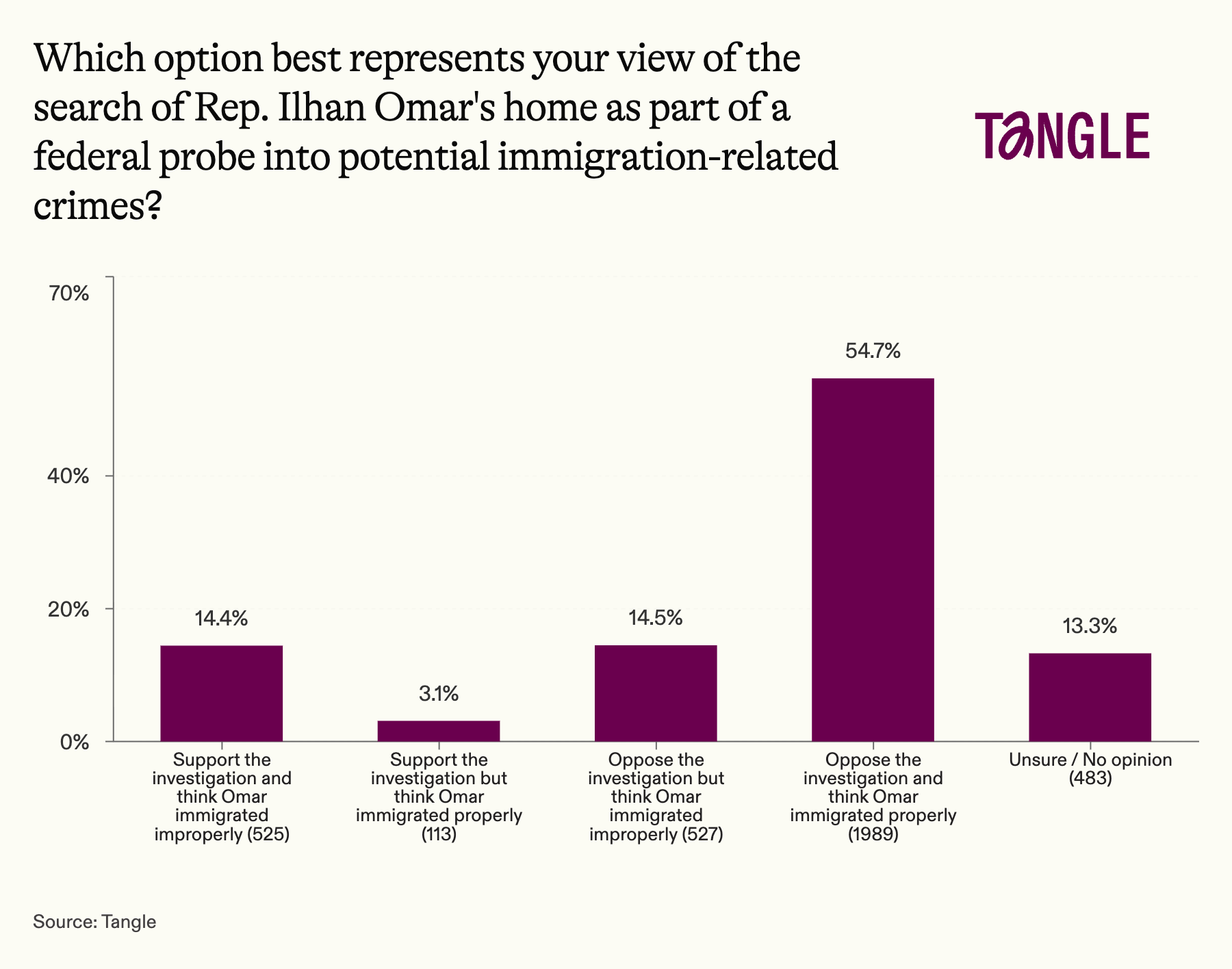
- Our last survey: 3,637 readers responded to our survey on the federal investigation of Rep. Ilhan Omar (D-MN) related to her immigration paperwork, with 55% saying they oppose the investigation and think Omar immigrated to the U.S. properly. “The investigation is clearly a political act and would not otherwise have been pursued given the expired statute of limitations,” one respondent said. “If a judge saw fit to grant a search warrant, I would like to know the outcome [of the probe],” said another.
Have a nice day.
19-year-old Samantha Rensvold always knew she had a younger biological sister, but since both girls had been put up for adoption, Rensvold was never able to contact her. Then, at a softball tournament in Montana in August 2025, a teammate pointed out an infielder on the other team to Rensvold to whom she bore a striking resemblance. Rensvold went to her mom, who checked the roster: The player’s name was Kyann Dean, the same first name Rensvold’s birth mother had given her sister. The two families confirmed their details, and Rensvold and Dean stayed in touch. They discovered that they not only have the same interest in sports, but they wear the same volleyball jersey number and have the same “little giggle.” People has the story.