







Good morning and welcome to Tangle. I’m Isaac Saul, and I am fully locked in for election season — which, I have to tell you, is here. It’s been here, really, but now it’s fully arrived. And today, we’re diving into the midterm elections with our first election preview of the season (yes, there will be more). I’m trying to learn some lessons from the past, but will still put some of my cards on the table with a few predictions.
We’ve also got a fun announcement (below) and a rather unsettling story about the FBI.
It’s a 12-minute read.
Ari Weitzman, Will Kaback, Audrey Moorehead, Carina Pacheco, Russell Nystrom, Isaac Wood, and Bailey Saul edited or contributed to today’s newsletter.We're launching something new.
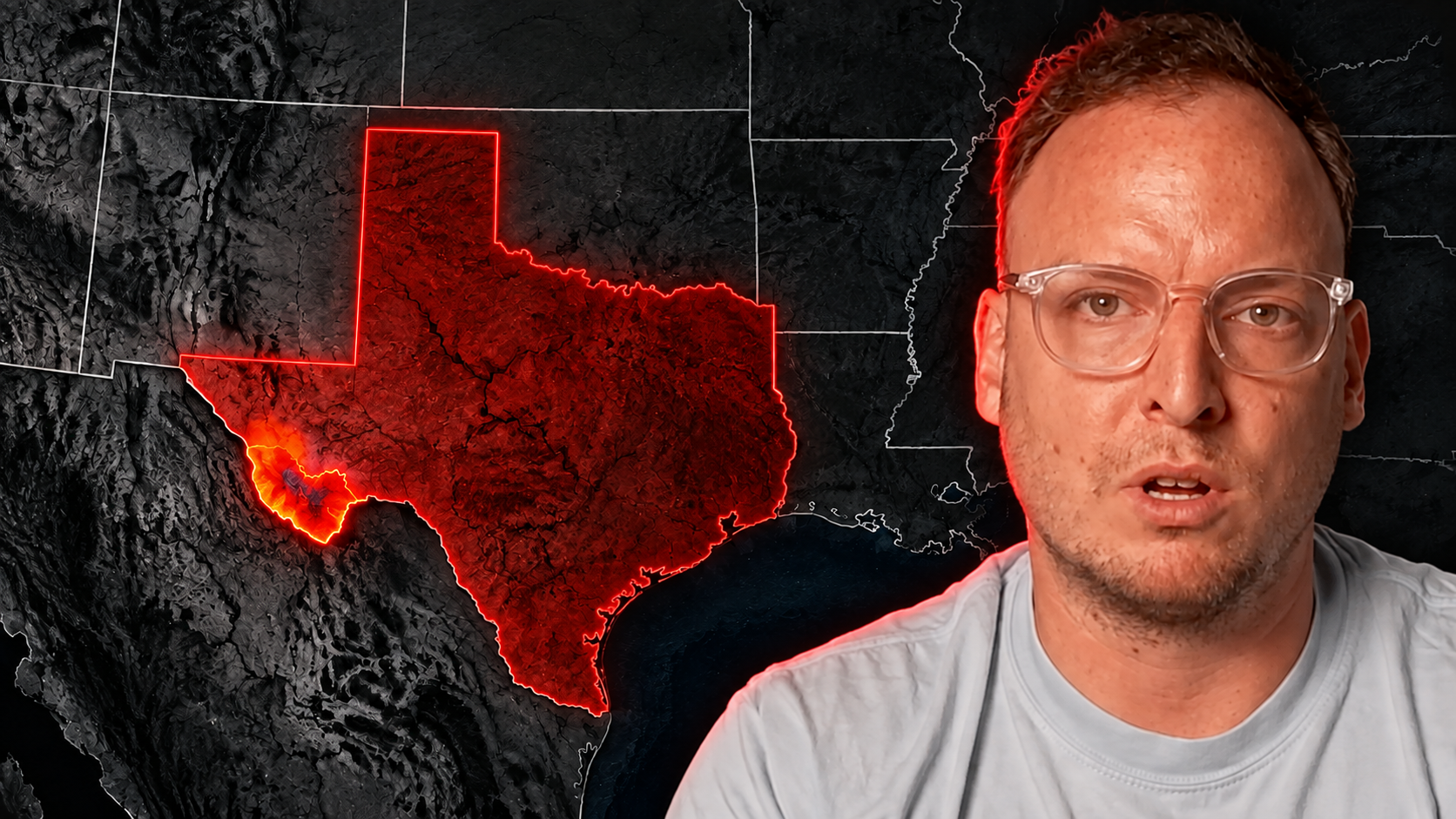
In today’s edition of Press Pass, I wrote about going back to my roots (more writing, more brevity, more personality). As part of that goal, I’m thrilled to announce that we’re launching a dedicated YouTube channel for some video essays about the current happenings in politics. This will be a place for me to get into some stuff we don’t cover in Tangle, and deliver “My take” essays in video form. The channel launched today with a deep dive on the plans for a border wall in the Big Bend region of West Texas, with some personal stories about my connections to the area and why I think it’s a historically bad policy idea. You can watch it here:
Quick hits.
- President Donald Trump announced a proposal for a $15 billion steel mill in Iowa. The White House said the plant could begin production in 2030. (The announcement)
- Federal Bureau of Investigation Co-Deputy Director Andrew Bailey announced his resignation after approximately one year in the position. (The resignation)
- Five British nationals were released on bail after being arrested on Sunday near a U.S.-operated base on suspicion of plotting a terrorist attack. (The release)
- A New York prosecutor reopened a probe into allegations of gang rape at Cornell University in 2024. A woman has filed a lawsuit alleging that she was raped by seven students at a fraternity house after being pressured into consuming drugs and alcohol. (The latest)
- The Senate voted 77–22 to pass the Protect College Sports Act, which would create a national regulatory framework for collegiate athletics. The bill now goes to the House. (The vote)
Teaching students how to think, not what to think.
Critical Thinking in History offers 250+ free and published lessons created by NCSS National Teacher of the Year Kevin O’Reilly to develop critical-thinking skills for tomorrow’s informed citizens.
Students assess conspiracy theories (Examples: Tweed Ring, JFK assassination), make tough decisions people actually faced (Bay of Pigs, Iran Nuclear Deal of 2015), evaluate historical and online sources, analyze interpretations (Salem Witch Trials, slavery), and evaluate cause-and-effect (causes of the American Revolution, causes of the rise of the Nazis).
Each lesson includes handouts, targeted skills, teaching strategies, and an annotated bibliography of sources.
Today’s topic.
The 2026 midterm elections. Tuesday marks 35 days until federal elections will be held for all 435 U.S. House seats and 35 of the 100 U.S. Senate seats. Additionally, 36 states will elect governors and 46 states will vote on a total of 6,139 state legislators. Currently, most election models heavily favor Democrats to take back the House and give the party a slight edge to flip the Senate.
Back up: Republicans have a 53–47 majority in the Senate, counting independents who caucus with Democrats, so Democrats must pick up four seats to take control of Congress’s upper chamber (accounting for Vice President JD Vance’s potential tie-breaking vote). Republicans have a 218–214 advantage in the House, with one independent (Californian Rep. Kevin Kiley, a former Republican) and two vacancies. Democrats will need to control 218 seats to win a majority.
Sabato’s Crystal Ball, which analyzes races according to factors like election history and polling, favors Democrats to hold 48 Senate seats after the midterms and Republicans to hold 47, with Alaska, Iowa, Ohio, Maine, and Texas considered tossups. Sabato describes three seats as “lean Democrat”: the Republican-held North Carolina and Democrat-held seats in Michigan and New Hampshire. The Senate race in Kansas is the only one considered “lean Republican.” In the House, the GOP is favored in 203 races, compared to Democrats in 211; the remaining 21 House elections are tossups.
Democrats have campaigned against President Donald Trump’s policies, highlighting healthcare cuts from the One Big Beautiful Bill Act (OBBBA), inflation, and the war in Iran. “Democrats are focused on the American people’s priorities,” Senate Minority Leader Chuck Schumer (NY) said. “Lowering costs, bringing stability, and fighting back against this administration’s rampant, rampant corruption.”
Republicans have promoted the OBBBA’s tax cuts and argued that Democratic candidates are too aligned with the party’s ascendant far left. They have also centered immigration policies and social issues. “As we summarize [the election],” Speaker Mike Johnson (LA) said, “it’s a contrast between common sense and crazy, and now common sense and communism.”
Below are views from the right and left on the outlook for the midterms with one month to go. Then, Executive Editor Isaac Saul shares his take.
|
What the right is saying.
|
In the New York Sun, Lawrence Kudlow argued “nobody should underestimate Trump and the GOP.”
“While the Republicans are running some really solid candidates… the Democrats are running these far-left wing socialists like Abdul El-Sayed in Michigan, Peggy Flanagan in Minnesota, [James] Talarico in Texas, and far-left Troy Jackson in Maine. It’s really the mirror image of Republican mistakes in 2022,” Kudlow wrote. “And although gasoline prices are high, and that’s an issue, it’s also true they’re almost identical to gas prices under President Biden.”
“Not downplaying the gas issue, but there’s a lot of other very good things going on in Mr. Trump’s economy. Private jobs are up by a million since he was re-elected. Federal jobs have declined by about 350,000. The economy is being restructured away from big-government socialism,” Kudlow said. “Voters want common sense, not crazy values. And that’s why… nobody should underestimate Mr. Trump and the GOP.”
In the Wall Street Journal, Karl Rove said “this election season will likely have more surprises than most.”
“What if much of what we think we know about the midterms is wrong?... Democrats lead the generic ballot, 50.4% to 41.8%, in the RealClearPolitics average,” Rove wrote. “But what if, at least in the House, that’s too broad a measure for the races that matter most? A Sept. 17 Cook Political Report poll says the Democratic advantage across the 37 battleground districts is 2 points… That could mean a smaller pickup than they expect.”
“Republicans have a record of success to run on: closing the border, keeping Americans from a record tax hike by passing the Big Beautiful Bill, and virtually ending peak wokeism by attacking DEI in all its forms. But what if voters are more concerned with problems they face now?” Rove asked. “I have my hunches about what will happen. So do you. But what’s conventional wisdom today could look like folly six weeks from now.”
In National Review, Jeffrey Blehar wrote about “preparing for the worst in the Senate elections.”
“The GOP is playing defense in so many states it has come to think of as home turf that it’s easy to forget how many opportunities for his party to make gains were squandered by Trump in pursuit of his private grudges and obsessions,” Blehar said. “The GOP is virtually guaranteed to lose at least one Senate seat it currently holds: Facing threats from Trump that he would back a primary challenger, North Carolina Senator Thom Tillis dropped his race for reelection.”
“The one potential pickup opportunity that exists for Republicans is in Michigan… Several factors militate against optimism, however. The state’s DNA is fundamentally Democratic; it has not elected a Republican to the Senate since 1994,” Blehar wrote. “With so many Senate races so close… only a brave man or a fool would attempt to predict the final result… But a red harvest is likely approaching, a bloody cull, and Trump now seems to be preparing for the worst.”
|
What the left is saying.
|
In CNN, Aaron Blake said “[this] could be the worst midterm for the GOP this century.”
“The Republican Party’s two worst midterm elections in the 21st Century were in 2006 and 2018… The president’s continued decline has now made him clearly a more unpopular president than he was in 2018 and Bush was in 2006 — at least on a national scale,” Blake wrote. “Today the Iran war is more unpopular than Iraq was… There is a real question whether Iran is as big an issue as Iraq was, given that unlike in Iraq, there aren’t boots on the ground.”
“But similar numbers called the wars ‘extremely important’ to their vote in 2006 (46%) and today (48%),” Blake said. “There is one very important measurement that hasn’t tipped towards Democrats as much as they’d like — at least not yet. And that’s the generic ballot… For now, every other major measure appears to be very bad for Trump and the GOP. So it’s worth watching to see whether this one follows suit.”
In MS NOW, Hayes Brown suggested that GOP spending won’t “persuade voters to ignore their own economic pain.”
“The extra money to buy ads notwithstanding, there is little in the record for congressional Republicans to promote,” Brown wrote. “While many of the harshest cuts to the social safety net used to pay for its tax cuts were punted until next year or later, hundreds of thousands of Americans have already seen their benefits slashed in a bad economic environment — and know exactly which party to blame.
“When they don’t have a positive message, campaigns often blanket media markets with negative messaging,” Brown said. “Major Republican bogeymen for this campaign season have included the twin specters of communism and socialism, or, as a talking point Vice President JD Vance and numerous others have repeated goes: ‘common sense versus crazy.’... But while the GOP’s life raft of cash might save some candidates, there’s not enough room for everyone to climb aboard.”
In The American Prospect, David Dayen called Republican candidates’ distancing from Trump “performative and inauthentic.”
“After a notable absence, an anti-war movement has emerged to finally challenge a president over the unpopular conflict in Iran. Not in the streets so much, but in ads and statements from Republicans trying to salvage their doomed election campaigns,” Dayen wrote. “This shift is almost 700 days late and about $3 trillion short. For 99.9% of the past two years, Republicans have fallen in line with every insane maneuver and utterance from this administration.”
“Since January 20, 2025, the Republican Congress could have stopped the imposition of tariffs through existing mechanisms. They could have cut off funding for wars they don’t like,” Dayen said. “They could have impeached and removed him from office, with Democratic support. Instead they support Trump’s every whim in almost perfect lockstep, no matter how crazy. These deathbed conversions are preposterous, and everybody knows it.”
|
||||
|
||||
|
Reminder: This is where we share a personal opinion. If you have feedback, criticism or compliments, leave a comment or reply to this email.
|

Heading into the 2022 midterms, Republicans were poised to ride a red wave and take complete control of Congress from Democrats.
The equation was simple. The Senate was split 50–50, and Democrats had a narrow advantage in the House. From 1934–2018, the party in the White House had lost an average of 28 House seats and four Senate seats in midterm elections. President Biden’s approval ratings were bad, inflation was pummeling economic sentiment, and the president faced mounting criticism of his handling of the Russia–Ukraine war. Meanwhile, Republicans had a polling advantage over Democrats, and a consensus quickly formed that they were poised to have a big night.
Sound familiar?
We know what happened instead: Democrats handed in a shocking midterm performance for an incumbent party, holding the Senate and keeping the race for the House so competitive it took days to call. Cook Political Report’s Dave Wasserman called it “the craziest Election Night I’ve ever seen.” I could only find one reputable analyst in the entire country who predicted that outcome: a Democratic strategist named Simon Rosenberg. I was prudent enough to cite Rosenberg in our last newsletter before the midterms, calling him out as a dissenting voice worth considering.
Everyone who predicted a red wave, including me, was wrong.
Of course, four years have passed since that midterm outcome, which is plenty of time for everyone to stack their hubris and bury the memory of their wrongness. I’ll try not to make that mistake here.
I see two ways to frame those 2022 midterm results now, and they invite nearly opposite predictions about what’s going to happen in November. One framing is that the 2022 midterms were a good example of Republicans’ weakness when Trump is not on the ballot. The party had an opportunity for huge electoral gains, but it couldn’t turn out enough voters without their leader on the ballot, its candidates lacked enthusiasm, and the red wave was more like a middling tide. This is the downside of building a movement around a single man. It’s also possible things in 2022 just weren’t that bad, so Democrats did better than people thought (especially with the motivating factor of Roe v. Wade being overturned). This time, voter sentiment is definitively worse about Trump, Republicans, and the economy.
In this frame, 2026 could be an even bigger blue wave year than any of us are expecting. Trump is in office, yes, but since he isn’t on the ballot, his base might not show up. Not only that, but the president has historically bad midterm approval numbers, Republicans are in power, and Republicans are the ones losing on the generic ballot. That could spell disaster.
The second frame is almost the opposite: Polling gives us some information, but it’s not a sure thing. Forecasting is even less reliable. Polls have missed badly in the special elections over the last few months. Much is being made of Trump’s deteriorating polling numbers, but Democrats still have an even bigger problem: Their party and their policies are also historically unpopular. Lastly, a lot of ink has been spilled about all the Trump voters who regret casting a ballot for him or the former allies who are jumping ship or the Republicans who are scrubbing him from their websites — so much so that it could be creating a false impression of the electorate. Trump wasn’t on the ballot in 2018, either, but he was in the White House; and despite his unpopularity, Republicans expanded their Senate majority while losing the House — a pretty mixed outcome.
Anecdotally, if I could describe the mood among my Trump-supporting friends and family, I’d describe it less as “they are abandoning Trump” and more as “they are feeling let down by Trump.” They aren’t thrilled with the president or the economy or the war, but they’d still vote for him over a generic Democrat nine times out of ten. It’s hard to know precisely how widespread that sentiment is — that’s what the election is for.
In this second frame, it isn’t hard to throw several grains of salt on the polls, consider my own pop-up focus groups, and see Republicans narrowly losing the House but holding onto the Senate (or even expanding their majority). That would leave us talking about the “blue wave” that never was in the same way we spoke about 2022’s undelivered red wave.
If that’s what happens, the midterms could still be a win for Democrats because they would have taken back the House. That alone would be enough to grind the Trump presidency to a crawl and launch a dozen investigations into senior ranking members of his administration. That we are even discussing the possibility of Democrats winning the Senate is rather remarkable. Much like “red wave” prognostication was everywhere in 2022, we’ve endured think piece after think piece after think piece for the past eight years explaining how Democrats may never win the Senate again because of the institutional advantages Republicans enjoy. Now, in the first election since many of those pieces were published, they have a very realistic path to doing just that.
The races I’m most keen to watch are taking place in Virginia, Iowa, and Texas. Virginia’s Second Congressional District will be a great testing ground for theories about how important the Iran war is to voters. Jen Kiggans, a Republican incumbent, is defending the seat against Elaine Luria, a Democrat. Both Kiggans and Luria are Navy veterans. Their district has some of the highest numbers of active-duty troops and veterans in the country, and Kiggans won the seat by beating Luria in 2022. Kiggans has repeatedly voted down resolutions to limit Trump’s war powers while Luria has made opposition to the war central to her campaign. Early voting in Virginia’s second will provide a signal of how motivating an issue the war is to voters.
In Iowa, Democratic state auditor Rob Sand is running a unique campaign for governor against Republican businessman Zach Lahn. Sand is a moderate Democrat’s dream: allergic to any culture war debates, willing to speak from the center, and relentlessly focused on pragmatic government and attacking corruption. Iowa has been reliably red for a decade, but both Sand and Democratic Senate candidate Josh Turek have a real shot this year. If they put in strong numbers — or even turn Iowa blue — Republicans are in for a bad night.
Finally, and fittingly, we turn to Texas for the big one: James Talarico vs. Ken Paxton, in which Democrats test how progressive a candidate can be and still win in Texas, while Republicans test how corrupt a candidate can be and still win in Texas. But more interesting stuff is happening further down the ballot. As part of the gerrymandering war Trump launched in 2025, Texas redrew its congressional maps to gain as many as five seats for the GOP. Winning those seats, though, relies heavily on keeping Trump’s advantages with Latino voters across South Texas.
That plan will be tested in Texas’s 15th and 35th Congressional Districts, where Latino voters are an outsized share of the electorate. If Republicans lose some of the voters they won over in previous elections, they’ll also lose congressional seats in these heavily Latino districts where margins are dangerously narrow. I could even see a world where we reflect on these gerrymandering efforts as a strategic error, putting otherwise reliable GOP seats in play by stretching their advantages too thin.
With five weeks to go until election day, I’ll close with this: A lot can happen in a month. For now, some kind of blue wave looks likely, and early voting has already begun — meaning voter sentiment today will impact the outcome. But I’ve seen how quickly things can change in just a few days, let alone a few weeks, so I’ll be keeping my eyes and ears open as we barrel toward Election Day.
Take the survey: What’s your midterms prediction? Let us know.
Disagree? That’s okay. Our opinion is just one of many. Write in and let us know why, and we’ll consider publishing your feedback.
Under the radar.
Last week, a hacking group called ShinyHunters said it had accessed a large amount of data containing personal information about Federal Bureau of Investigation (FBI) employees and applicants. FBI leaders have acknowledged the hack and told employees that their information may have been stolen, asking them to report unsolicited contacts or threats. Meanwhile, ShinyHunters has demanded the bureau take down a posted advisory about the group by the end of the day on Tuesday or risk the release of the stolen information (though the group has also said it would “never publish the data”). The New York Times has the story.
Critical Thinking: the cornerstone of democracy.
Critical Thinking in History includes 250+ problem-centered lessons on such questions as: Would you support the Northwest Ordinance in 1787? Why, in the past hundred years, have some democracies fallen into autocracies?
Guide to Critical Thinking and Guide to Decision Making provide support for specific thinking skills.
By a teacher, for teachers.
The extras.
- One year ago today we covered the James Comey indictment.
- The most clicked link in our last regular newsletter was Isaac’s Friday edition asking whether President Trump is okay.
- Something to do with politics: Take this quiz to find out your political ideology.
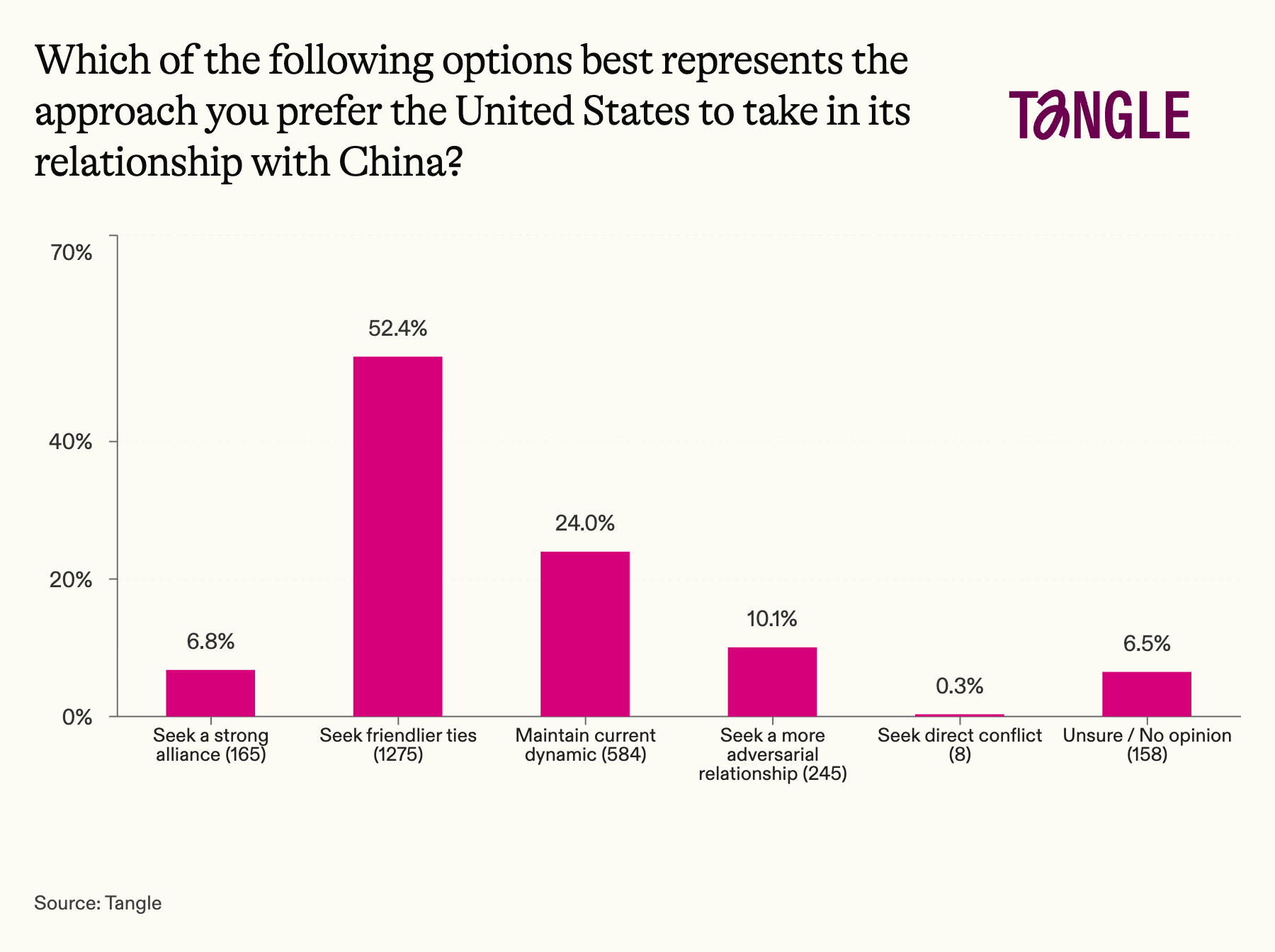
- Our last survey: 2,435 readers responded to our survey on U.S.–China relations, with 52% saying the U.S. should seek friendlier ties. “The more friendly we are, the easier it is to influence their worse tendencies for the better and the less likely it is for things to go very sideways,” one respondent said. “China has proven time and time again that they are our enemies and any purported friendliness is very suspect,” said another.
Have a nice day.
In 1979, Joel Greenia placed a classified ad looking for a partner to bike across the country with. A fellow 20-something named Ray Halbert answered, and the two pedaled 3,485 miles from Santa Cruz, California, to Hartford, Connecticut, over 57 days — sleeping on park benches and getting pulled over by police along the way. 45 years later, the two met again and rode together again on a (shorter) journey from Detroit to Buffalo, New York — the city where they’d first connected. “It was amazing to be able to be apart for so many decades... and then reuniting without barely missing a beat,” Greenia, now 68, said. “A true circle of life event.” Nice News has the story.

Member comments