




Good morning, Tangle readers. This is an overly caffeinated Associate Editor Carina Pacheco. We have a rather serious edition about “the Cornell 7,” followed by a look at the Gaza peace plan on the third anniversary of Hamas’ October 7 attacks. We’ll finish with an uplifting story of an intense physical endurance challenge.
It’s a 13-minute read.
Isaac Saul, Ari Weitzman, Will Kaback, Audrey Moorehead, Russell Nystrom, Isaac Wood, and Bailey Saul edited or contributed to today’s newsletter.
Our latest YouTube video.
A year after President Donald Trump deployed the National Guard to Washington, D.C., Assistant Producer Aidan Gorman visits the capital to ask: Have these troops made our capital safer? The answer isn’t straightforward. You can check out our latest YouTube video here:
Our latest YouTube video
Quick hits.
- An estimated 250,000–450,000 French students, teachers, parents, and others demonstrated across the country in protest of understaffing and other resource challenges in schools. (The protests)
- Attorneys for Christa Pike said that she has regained consciousness after surviving two doses of lethal injection last Wednesday. Pike was sentenced to death for the murder of her classmate in 1995. (The update)
- The U.S. trade deficit rose to a 17-month high of $105.6 billion. (The latest)
- German authorities arrested August Hanning, the former head of the country’s foreign intelligence agency, on suspicion of “treasonous espionage.” Hanning is reportedly suspected of illegally acquiring and selling state secrets. (The arrest)
- New York Gov. Kathy Hochul (D) declared a state of emergency in response to the increasing number of cases of measles in the state. (The declaration)
Can You Barely Keep Your Eyes Open? The Struggle is Real…
It’s 2 PM… and once again, you can barely keep your eyes open. You’re slamming coffee, splashing water on your face, eating candy, and just doing whatever you can to stay awake. When really, all you want to do is climb under your desk and take a nap. For millions of people over 35, the problem isn’t just late nights or a busy schedule — it’s a simple mineral deficiency that’s ruining your sleep, keeping you up at night, and leaving you drained during the day. Organixx Magnesium 7 is the complete solution, with seven highly absorbable forms of magnesium that target every pathway your body uses for relaxation and recovery. The result?
- Fall asleep in minutes
- Stay asleep for hours
- Wake up ready to power through your day
Flash Sale — Buy 2, get 1 free
Today’s topic.
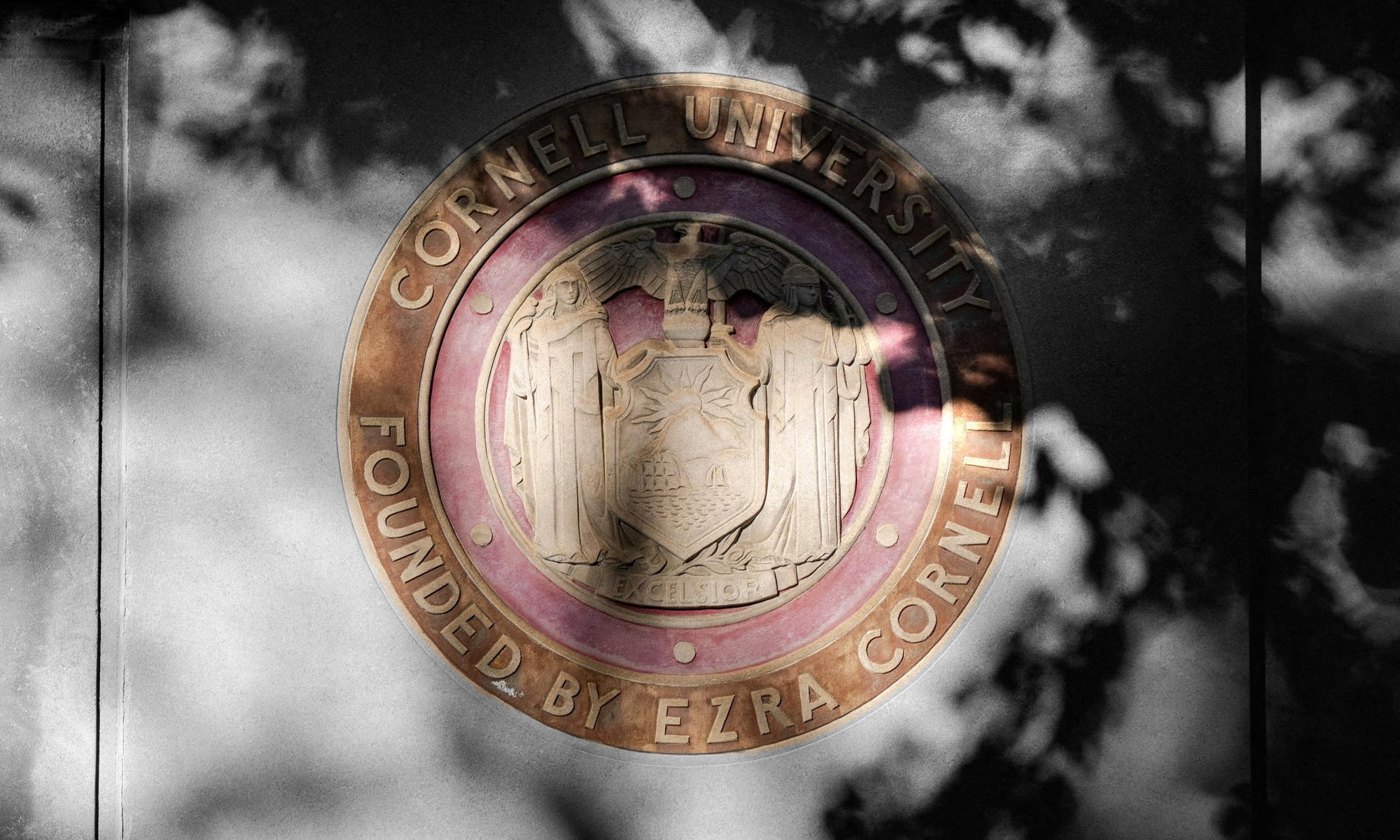
The Cornell rape allegations. On September 28, New York prosecutors said they had reopened an investigation into an alleged sexual assault and gang rape by seven Cornell University students in October 2024. The woman who filed the suit, anonymously identified as Jane Doe, alleges that she was coerced into taking ketamine, encouraged to take alcohol and cannabis, and forced into sexual actions she did not consent to. Last week, New York Gov. Kathy Hochul (D) appointed state Attorney General Letitia James (D) as special prosecutor in the case. Separately, Cornell tapped former acting U.S. Attorney General Sally Yates to lead an independent investigation into the school’s handling of the allegations.
Editor’s note: Today’s newsletter includes explicit descriptions of sexual acts and drug use. The Tompkins County District Attorney published its anonymized summation of the events here. Tangle has decided to withhold the names of the accuser and accused.
Back up: In November 2024, Jane Doe filed a police report detailing her experience at Cornell’s Chi Phi fraternity, alleging sexual assault. At the time, the Tompkins County District Attorney’s office chose not to prosecute her case because “the evidence did not support the filing of criminal charges.” Cornell held a Title IX sexual assault investigation in January 2025, later expelling two of the men named in the suit, suspending two, mandating a bystander intervention and sexual assault prevention training for two others, and barring the seventh (who had since graduated) from campus. Public scrutiny of the case increased in September 2026, when Jane Doe filed a civil suit against her alleged attackers; shortly after, the student newspaper The Cornell Daily Sun ran a story publicizing the names of the seven accused men.
On September 29, CBS New York obtained messages from a Snapchat group for members of the Chi Phi fraternity. The messages show one of the men implying that Doe was available for sex. Other messages obtained by The New York Times showed Doe’s understanding of the events changing, eventually concluding that she had been assaulted. Three of the men broadly deny any criminal wrongdoing; the four others have not released any public comment.
Tompkins County District Attorney Matthew Van Houten called the facts of the case presented in the civil suit “dramatically different” from the testimony Doe presented to authorities in 2024. “Jane Doe’s sworn statement in November of 2024 did not allege that she was drugged against her will or gang raped. On the contrary, Jane Doe’s statement described her participation in drug use and sexual conduct as voluntary, conscious, and consensual,” Van Houten said. “Seeking justice sometimes requires us to reconsider or reopen cases when we are provided with additional evidence.”
We’ll cover what the left and right are saying about the case below. Then, Associate Editor Carina Pacheco gives her take.
|
What the left is saying.
|
In Salon, Amanda Marcotte suggested the case “shows #MeToo didn’t go far enough.”
“In 2017, the #MeToo movement took the nation by storm. A veritable flood of women, and some men, spoke out about their own experiences with sexual abuse,” Marcotte wrote. “Despite this, it was barely weeks before the backlash began, with countless articles about how #MeToo had gone ‘too far,’ despite scant evidence that innocent men were getting entangled… The Cornell case shows, though, that… the #MeToo movement didn’t go far enough.
“For many people and institutions, it still feels much easier to make the issue go away by suppressing accusations than dealing with these cases which are, admittedly, often complex,” Marcotte said. “Despite the hysterical claims of its critics, #MeToo was never about ruining the lives of innocent men. In a very real sense, the movement was about leveling the playing field, which is so dramatically tilted against victims that it makes justice nearly impossible to achieve.”
In MS NOW, Mimi Rocah said the “case was set up for failure.”
“[The backlash] has now led the office of the Tompkins County District Attorney in upstate New York to take the unusual step of reopening a criminal investigation. In my view, this is too little, too late,” Rocah wrote. “According to the DA’s statement and multiple media interviews, [the district attorney’s] office relied solely on an investigation done by Cornell’s campus police in making its determination not to pursue a criminal investigation in 2024.”
“[The CUPD] is employed by the entity that has a specific interest in the investigation and its outcome. It is also not equipped to conduct a complex, fact-based, sexual assault investigation,” Rocah said. “Conducting an investigation of this type years later, after multiple witnesses have reportedly been interviewed for the Title IX investigation, and after digital and forensic evidence has likely been lost, makes a meaningful investigation so much more challenging, if not impossible.”
In The Philadelphia Inquirer, Jonathan Zimmerman called for “an overdue discussion about the role of alcohol in sexual assault.”
“Sexual assault is rampant on American campuses, and we need much better systems for preventing and prosecuting it,” Zimmerman wrote. “But here’s one thing you probably haven’t heard: If we want to reduce sexual assault at our colleges, we’ll also have to bring down student drinking. There, I said it… Alcohol can increase aggression and decrease inhibition. It makes it harder to interpret social cues. And it makes victims less capable of giving sexual consent and resisting sex they don’t want.”
“In every sexual assault, the sole responsibility lies with the perpetrator. Period, full stop. But we shouldn’t let that fact blind us to another one: that if one or more partners are drunk, they’re more likely to do something the other one doesn’t want,” Zimmerman said. “At least one of the men accused in the assault had been drinking and the victim had, too… If we shrink from telling the truth about alcohol and sexual violence, we will all share the blame for whatever comes next.”
|
What the right is saying.
|
In the New York Post, Jonathan Turley wrote about the “complex Cornell case.”
“Conflicts in testimony, as there is in the Cornell case, does not mean that there was no rape… However, there is ample reason to withhold judgment until more is known,” Turley said. “Legally, the extreme intoxication and drug use undermine claims of consent. While she admits that her memory was ‘super clouded,’ it is hard to imagine anyone believing that a student in her condition was capable of giving knowing consent.
“There are obvious problems with the case… In New York, one threshold issue will focus on her voluntarily drinking to excess. Like other states, a mentally incapacitated individual cannot legally consent to sex but there is an exception for those who voluntarily consumed alcohol to the point that they became incapacitated,” Turley wrote. “Hochul’s appointment of [Letitia] James maximizes the chances of a criminal charge in the case. James has always followed the policy of the Queen of Hearts in ‘Alice in Wonderland’: ‘Sentence first, verdict afterward.’”
In The Free Press, Kat Rosenfield said “the ‘Cornell 7’ have not been proven guilty.”
“In the wake of the MeToo movement, a disturbing consensus has emerged that the protections afforded by our criminal justice system to those accused of sexual misconduct are a real drag, an outrageous inconvenience to be subverted by relocating the litigation of rape into the extralegal realm of social media wherever possible,” Rosenfield wrote. “There is a reason why the wheels of justice turn slowly as compared with the fast, bright flare of human passions; the system is designed to allow the time for cooler heads to prevail, for the truth to come out.”
“At least two of the men who have been publicly smeared as gang rapists have denied ever touching the accuser, or even being in the room during the alleged assault; it is impossible to know if they’re telling the truth, just as it is impossible to know if she is,” Rosenfield said. “What does seem certain, though, is that by the time the accused and accuser alike have their day in court, the truth will have ceased to matter.”
In National Review, Caroline Downey suggested “the sex-positivity movement invited a world of depravity.”
“According to the legal standard of consent in New York State… [Jane] Doe was capable of consent and both exercised and withdrew consent during the multi-hour stretch. None of this morally excuses the men’s conduct, which is reprehensible,” Downey wrote. “We’re told that under modern feminism the sexes are totally equal, as are all the many sexual lifestyles. Anything goes in the sexual arena, with the one caveat being ‘consent.’”
“The drama at Cornell lays bare the perils and false promises of sexual liberation,” Downey said. “It opened Pandora’s box, from which sprang hookup culture on college campuses, OnlyFans, and rampant pornography, which no doubt influenced the seven men’s behavior that October night. With consent as its only moderating principle, the sex-positivity movement invited a world of depravity with blurred lines and infinite regret.”

- The Cornell case is the first big test of post-MeToo feminism.
- It can be uncomfortable to stare at the facts straight on, but they prove the extreme versions of this story wrong.
- The societal failures surrounding this story go far beyond just consent and legal definitions of rape.
When the Cornell story broke into the mainstream media, everyone had strong initial reactions. I was no exception: My overwhelming feeling was simply discomfort.
This moment certainly feels like a social reckoning, where post-MeToo feminism is testing itself out. And while the MeToo era illuminated pervasive, reckless, and callously misogynistic cultures across the country, many critics argued too many women overreached and decided to cash in on the cultural tide of cancellations. Though it’s tempting to jump to broader themes, this situation requires looking at the facts by themselves — which is uncomfortable.
Discomfort is a powerful emotion. It tells us to look away when we should look harder. On the opposite side of that coin is certitude, which tells us we’ve seen enough because we’ve found the side that feels good to be on. It feels pretty good to jump on the moral crusade bandwagon against the depraved fraternity rapists or the lying promiscuous sorority girl, doesn’t it? I’m skeptical of the assuredness on either side.
The situation out of Cornell may be the most complicated alleged rape case litigated in the court of public opinion in my lifetime. This isn’t Brock Turner assaulting a passed-out woman behind a dumpster at Stanford in 2015. This isn’t Brandon Vandenburg and his football teammates assaulting an unconscious woman at Vanderbilt in 2013. On the other side of the spectrum, this doesn’t seem like the 2006 Duke lacrosse case, when members of the team were falsely accused of rape.
The allegations here are messy. Everyone was drunk; they were all snorting ketamine off each other; some of them had sex together, some of them watched; she said yes at times, no at times, and claims she felt coerced into numbly saying nothing at other times. Everyone’s level of clarity appears to have varied from minute to minute, and the extent of those fluctuations is disputed.
Not only is the moral line blurry, but it’s very possible for “immoral” acts to be legal. But when one of those men messages in a fraternity group chat that “Free Pussy” is upstairs, then another follows up to explain how brothers might introduce themselves — “Like you can walk in and whip it out” — and then the woman finds herself in a room with more men? That all feels… very different.
Those messages don’t prove rape, but they are evidence of how some of these young men viewed the accuser: as an object. The messages, and the decisions to act on them, are reprehensible.
These pieces of evidence are unsettling, and they could ultimately combine with the claims about who consented when and create a guilty verdict in a court of law. Time will tell. In the meantime, loud factions in the court of public opinion have already acted as judge, jury and would-be executioners, some by doxxing the men and calling their jobs and threatening them and their families, all before any criminal conviction. An online swarm even mistakenly doxxed and harassed someone with no relation to the case.
I understand the motivation: Critics think the university didn’t do enough to punish these men, with viral claims that their punishments were reduced to “writing essays” about what happened. In reality, Cornell opened a Title IX investigation, expelled two students, suspended others, banned one from campus, and disbanded the entire fraternity — and, yes, some of the alleged assaulters wrote essays to the school. Essays and suspensions might seem like light fare against jail time for sexual assault and rape, but the county prosecutor said the initial statements in 2024 did not include allegations of rape. Simply put: This story is more complicated than Cornell dropping the ball or letting the accused off easy.
Do I think that the accuser was violated? Yes. Do those violations amount to sexual assault or even rape? In my opinion (and, apparently, Cornell’s), the answer is also yes. But the repercussions for the alleged perpetrators should range in severity based on the individual actions of the accused.
Even after the claims percolating online — that an unconscious girl was violently gang-raped by a group of seven men — were contradicted by the woman’s own accounts, finding the accused guilty in a court of law wouldn’t satisfy the people urging us to “Castrate the Cornell 7.” Their goal is not justice; it is white-hot, tunnel-vision revenge. Even the newly appointed special prosecutor Letitia James has made social media posts that presume the alleged assault is fact.
We can simultaneously confront cases of sexual assault and institutions or norms that defend it while also examining the other social elements at play. We could reevaluate social acceptance of cultural forces like porn, hookup culture, drugs and alcohol that cloud people’s judgment, but we don’t, because it’s uncomfortable. As onlookers, we could avoid rushing to conclusions on complicated cases and doubling down when honest analysis doesn’t match up with our preferred “side” of the story, but we rush in anyway, because it’s satisfying.
I keep wondering about the role porn plays in sexual encounters like the one described here. Sexual promiscuity and experimentation have always been a thing, but now the most extreme possibilities are mainstream instead of fringe and more accessible than ever. At the risk of sounding like a total prude, how else do young men come to believe that women are receptive to sexual encounters involving multiple unfamiliar male partners? How did young women come to believe that young men wanted such scenarios? Where else would they get the idea that it’s “hot” to take turns on the same partner? Porn narratives rarely consider awkward post-orgy social interactions — so I’m not surprised that there was minimal regard given to how this might play out on the quad the next day.
At the intersection of porn consumption and longstanding college drunken hookup culture is the idea that sex means nothing or is consequence-free. We want to pretend there is no stigma around casual sex and that the “free love” principle is applied to men and women evenly, but it is not. And when alcohol and drugs are involved, questions about responsibility and accountability become even more contentious. If the act is outlandish but consensual, the woman bears the pariah status of “slut.” If the act was at any point non-consensual, now she’s a rape accuser who immediately becomes the subject of skepticism or scorn. If she actually manages to prove she was a victim, she’s the subject of pity or even a martyr. And if the accused are acquitted, both parties become irrevocably tarnished. There’s no clean “win” in any scenario after an event like this, especially not for her.
Our society needs to recalibrate and be honest about all of the factors that lead to these horrible stories. It’s not victim blaming to tell your daughter to watch how much she drinks and be defensive of her body. It’s not “woke” to tell your son that real men do not use women as toys. It’s not prudish to tell teenagers that porn is not real life, that ketamine and vodka cloud everyone’s judgment. As Hanna Stotland wrote for Slate, “Every possible interpretation of the terrible night at Chi Phi leads to the same conclusion: Everybody would be better off if it had never happened.”
Deep inside the web of conflicting testimony and recollections and lawsuits and countersuits is a legal question that remains very much unresolved. But it is a question for a jury to decide in a court of law, not for me or any online mob to answer. Justice is not one-size-fits-all. It’s not reserved for one party on one side of a lawsuit. Justice seeks to find the truth and uphold the law, and the accuser and the accused all deserve to see that happen.
I certainly hope that this question sees its day in court, and I hope we will all be ready to push past our discomfort, reject urges for self-satisfaction, and look the truth in the eye when that day comes.
|
||||
|
Take the survey: What issues do you think are contributing to sexual assault on college campuses? Let us know.
Disagree? That’s okay. Our opinion is just one of many. Write in and let us know why, and we’ll consider publishing your feedback.
Under the radar.
Wednesday marks three years since Hamas’s October 7 attacks in Israel and approximately one year since Hamas and Israel agreed to a U.S.-brokered ceasefire as part of a plan to end the war. In the ensuing 12 months, the sides have not returned to all-out fighting and increased humanitarian aid is reaching Gaza, but Israeli airstrikes have continued. The U.S. plan called for Israel to gradually withdraw to a “yellow” line that left it in control of 53% of the enclave, but its military presence has instead expanded to cover roughly two thirds of the territory. Separately, a 15-point roadmap for Hamas to disarm has stalled, and a planned International Stabilization Force has yet to form. Reuters has the story.
Better Sleep Starts Here
Tired all day, wide awake at bedtime? Organixx Magnesium 7 combines seven highly absorbable forms of magnesium designed to support relaxation, restful sleep, and recovery. So you can spend less time staring at the ceiling and more time actually sleeping.
The extras.
- One year ago today we covered the Jay Jones scandal.
- The most clicked link in our last regular newsletter was our ad in the free version for the wallet-sized portable phone charger.
- Nothing to do with politics: Relax with this musical snake game.
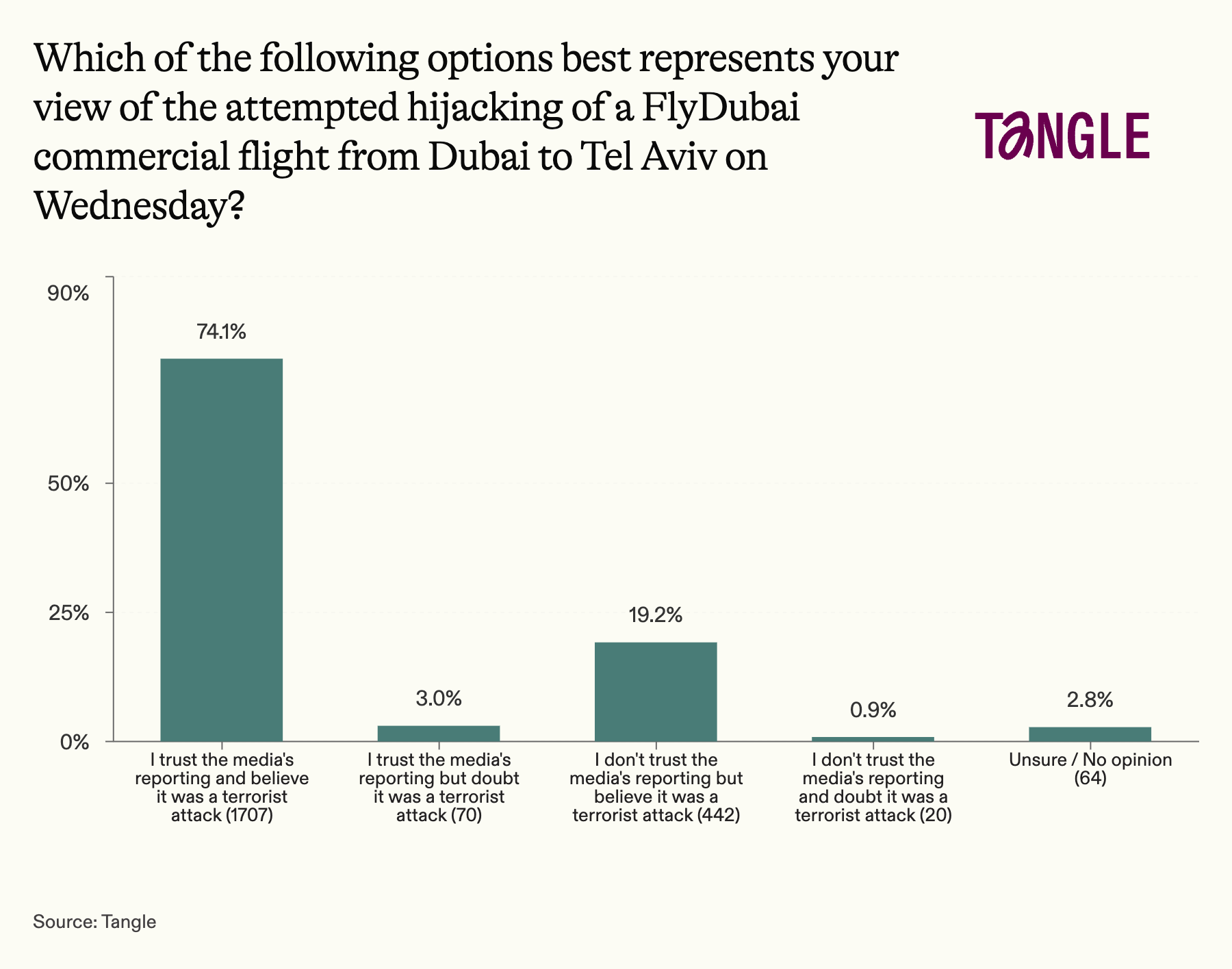
- Our last survey: 2,303 readers responded to our survey on the attempted hijacking of a FlyDubai commercial flight, with 74% saying they trust the media’s reporting and believe it was a terrorist attack. “It definitely appears to be a terrorist attack, which is not surprising given today’s global climate on the politics of the war,” one respondent said. “Media has certainly earned the scrutiny and mistrust they face, but that doesn’t mean we need to jump immediately to conspiracy theories,” said another.
Have a nice day.
In 2022, Tommy Price was training for the grueling Bobby Graham round, a 66-mile circuit summiting the highest peaks in England’s Lake District, when hypothermia caused his heart to stop. Price was clinically dead for roughly four hours before receiving medical care at a hospital in Newcastle, where he was revived and slowly recovered during a five-day, medically induced coma. Just nine months later, he completed the London Marathon in just over three hours. Then, after raising £10,000 for the Keswick Mountain Rescue Team that saved him, Price returned to the Lake District to attempt the Bobby Graham — this time, he completed the course in 23 hours and 35 minutes. “It’s unlucky that it happened to me, but in another sense it’s lucky that that’s happened to me, because I can raise awareness and raise money for mountain rescue, and I can still do all this crazy stuff,” he said. “I should be dead, really.” ITVX has the story.

Member comments