






Good Monday morning and welcome to Tangle. I’m Executive Editor Isaac Saul, officially ready to welcome fall with open arms. The temperature dropped below 60 degrees in New Jersey this morning, so I gleefully started my day with a hot cup of coffee in front of the fireplace and some NFL highlights. Now we get to enjoy the best two months of the year. Breathe it in.
In the “things I’m not willing to accept” genre, today we are turning to the botched execution of Christa Pike in Tennessee. I have strong feelings and I will do my best to argue them with some intellectual honesty (and we’ve also got a dissenting view). Plus: A shoutout to Audrey Moorehead for her thought-provoking Friday edition on the fertility crisis. It’s a 12-minute read.
Ari Weitzman, Will Kaback, Audrey Moorehead, Carina Pacheco, Russell Nystrom, Isaac Wood, and Bailey Saul edited or contributed to today’s newsletter.

Is it a crisis?
In Friday’s piece on the global fertility decline, Editor Audrey Moorehead wrote:
The numbers vary from country to country, but consistent across the data is a simple fact: The fertility rate is in decline, both in the United States and around the world. To calibrate a response… three questions immediately arise: What does it actually mean that fertility is declining? Why is it in decline? And can — or should — we try to reverse it?
You can read Audrey’s exploration of these questions — and what’s at stake if the decline continues — here.
Quick hits.
- The U.S. military removed all 12 of its B-1 bomber aircraft from the United Kingdom’s RAF Fairford air base, reportedly due to unspecified security concerns. (The removals)
- The Bureau of Labor Statistics reported that nonfarm payrolls increased by 29,000 in September, and the unemployment rate slightly increased to 4.2%. The August and July nonfarm jobs totals were both revised lower. (The report)
- Yemeni and Saudi forces launched a counteroffensive against Iran-backed Houthi rebels, seeking to regain control over the Bab al-Mandeb Strait. (The counteroffensive)
- A researcher in southeastern Siberia died after contracting a suspected case of the pneumonic plague. The State Department asked Russia to share information about the incident. (The report)
- Right-wing candidate Flávio Bolsonaro and left-wing President Luiz Inácio Lula da Silva advanced to a runoff in Brazil’s presidential election. (The result)

Get GLP-1s for $59/month. Yes, you read that right.
Predatory pricing is everywhere — your groceries, your car repairs, and yes, even GLP-1s. While some companies charge up to $500 a month for compounded GLP-1s, the ingredients themselves can cost as little as $5 to produce.
Thrive Market co-founder Gunnar Lovelace thought there was a better way.
His newest venture, Collective, uses a membership model to pool customers’ buying power and negotiate wholesale prices from U.S. pharmacies. Think Costco, but for GLP-1s.
The result? Eligible members can access doctor-prescribed, third-party-tested compounded GLP-1s for just $59/month.
Even better: Your price doesn’t increase when your dose does, and you don’t have to prepay for a year of medication to unlock the Collective price.
Tangle readers can check out Collective and see if they qualify.
Today’s topic.
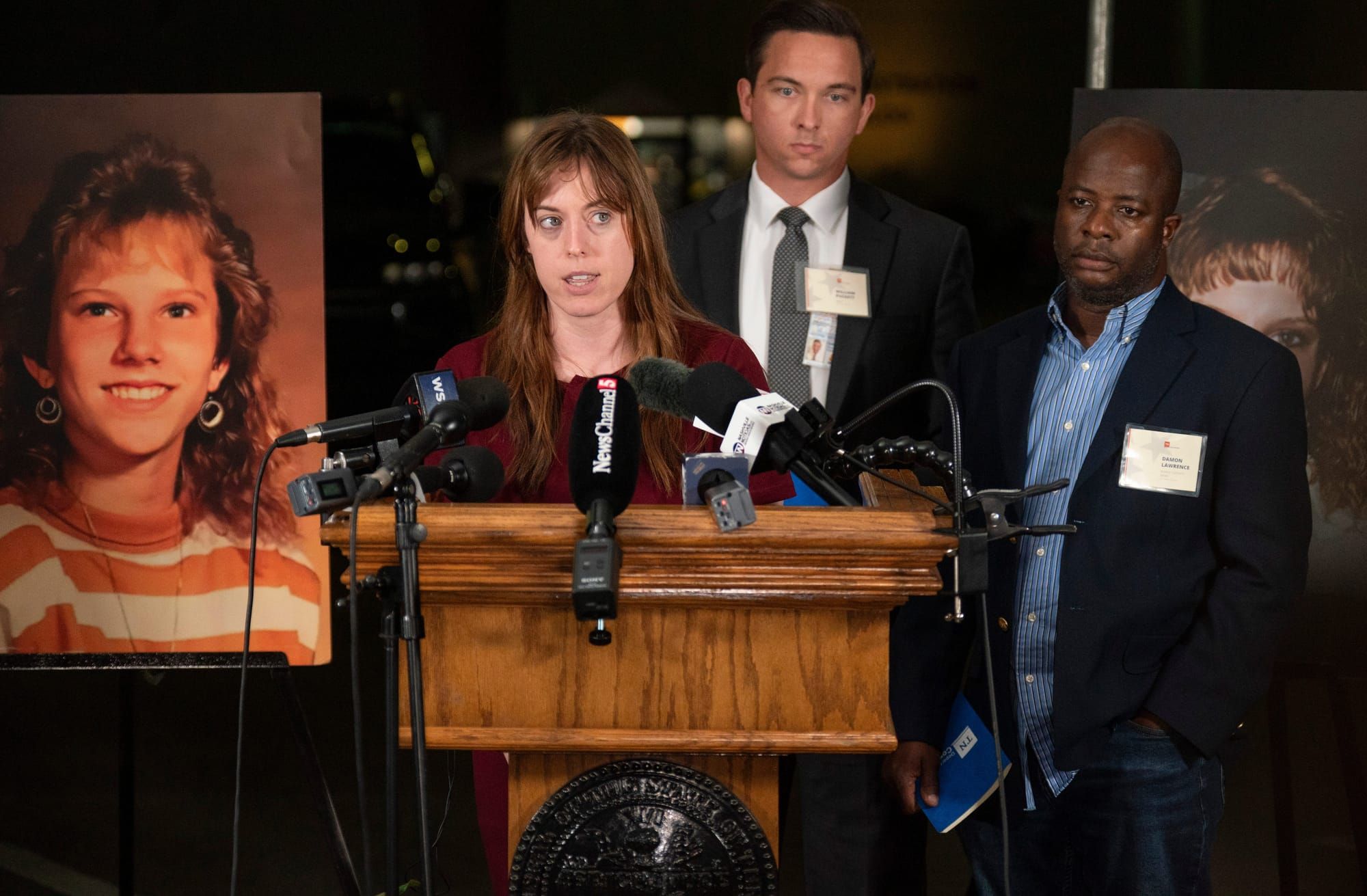
Christa Pike and the death penalty. On Wednesday, Tennessee failed to execute Christa Pike after administering two doses of a lethal drug. Pike had been sentenced to death for her role in the 1995 murder of Colleen Slemmer, and she is now hospitalized in critical condition. Tennessee Gov. Bill Lee (R) canceled the state’s final scheduled execution of 2026 and accepted the resignation of Tennessee Department of Correction Commissioner Frank Strada.
Back up: In 1995, Pike and her boyfriend lured Slemmer into the woods and attacked her, eventually bludgeoning her to death. The crime drew national attention due to the extent of Slemmer’s wounds and investigators’ suggestion that the killing was tied to the occult. Court documents said that Pike viewed Slemmer as a romantic rival; Pike confessed to the murder and was sentenced to death in 1996.
Pike’s lawyers appealed the sentence, arguing that jurors may have decided differently had they been informed of physical and sexual abuse Pike suffered as a child. The attorneys also asked the Supreme Court to halt last week’s execution, saying it was likely to cause “severe mental suffering and superadded psychological terror under Tennessee’s lethal injection protocol.” The Court denied the appeal.
Tennessee’s death penalty protocol is to administer five grams of pentobarbital, a barbiturate that can depress breathing and circulatory function and lead to death. On Wednesday, according to witnesses, Pike complained of pain in her arm after prison officials administered an initial five-gram dose of pentobarbital. She was later given another dose and appeared to lose consciousness but continued breathing for another hour; eventually, witnesses were asked to leave the facility, and Pike was taken to the hospital.
In a Saturday statement, Department of Correction Commissioner Strada maintained that the state followed all protocols in attempting to execute Pike but said he will step down “in the best interest” of the state. Separately, Gov. Lee ordered an independent investigation into the incident, which is Tennessee’s second failed execution this year.
Pike’s attorneys criticized the state for its actions, saying it had been warned ahead of time that it was not prepared to carry out the execution. “The concerns raised by Ms. Pike proved to be true: difficult vein access, blown veins, degraded pentobarbital, no emergency medical care available when things inevitably go wrong, all under a protocol that remains veiled in secrecy,” they said.
Below are views from the left and right on the failed execution and the debate over the death penalty in the United States. Then, Executive Editor Isaac Saul’s take.
|
What the left is saying.
|
In Salon, Austin Sarat wrote “Christa Pike’s botched execution was not an isolated incident.”
“Such problems have occurred many other times, though generally they have not prevented executions from proceeding. The people tasked with the job of finding a usable vein and securing an IV are not phlebotomists with specialized training or nurses,” Sarat said. “In states like Tennessee, which does not carry out many lethal injection executions, members of the execution team do not have the chance to perfect their skill by using it a lot.”
“According to [American Medical Association] guidelines, doctors involved in lethal injections cannot choose injection sites, start IV lines to administer the lethal medicine or be involved in prescribing, preparing, administering, or supervising injection drugs or their doses or types,” Sarat wrote. “The result is that states have been forced to turn to unlicensed medical personnel. Hundreds of them have played a role in executions — but they have done so in the shadows. That is not good enough when someone’s life is being extinguished.”
In The Tennessean, Tacuma Roeback argued “Tennessee can’t get executions right.”
“Legal studies like this one have long called Tennessee’s capital punishment protocols into question, particularly when it comes to legal representation for defendants and the state’s administration of capital punishment,” Roeback said. “Before Pike, and before nine Tennessee lawmakers wrote Lee requesting a review of what went wrong in Carruthers’ execution, there were similar concerns about lethal injection protocols raised by another independent review four years ago. That review was supposed to fix things.”
“When the Tennessee Legislature resumes in January, it should push for a full, multi-year review of the TDOC and its death penalty protocol, including the method by which executions are administered,” Roeback wrote. “Given the demonstrated incompetence of how the death penalty is administered in this state, can we really trust that another review will result in substantive, corrective change?”
In USA Today, Rex Huppke called the failed execution “a moral stain on America.”
“Simply put, state and federal governments should not be in the business of killing people. Killing is messy, and things can go grotesquely wrong, as they did in Pike’s case,” Huppke said. “More important, though, killing is wrong. (I shouldn’t even have to type those words.) And the state deciding who among convicted criminals lives and who dies is morally obtuse.”
“There is no evidence the death penalty acts as a deterrent, yet there have already been 29 prisoners executed in the United States since January. We still haven’t reckoned with the fact that not wanting our government to kill criminals isn’t the same as wanting a murderer to live,” Huppke wrote. “The murderer is the one who did wrong, so what good comes from us doing wrong as well? I hope the horror of what happened to Pike at our hands shifts some thinking on the morality of the death penalty.”
|
What the right is saying.
|
In The Federalist, Hayden Daniel argued “Christa Pike shows it’s time to bring back firing squads.”
“In contrast to Lee’s limp-wristed act to deny justice even further by halting further executions, gubernatorial candidate and current Tennessee Sen. Marsha Blackburn said, ‘This situation is tragic. Christa Pike should have been executed long ago… The answer is simple: bring back the electric chair and deliver justice for these victims swiftly,’” Daniel said. “Blackburn is exactly right. People who commit especially heinous crimes should be dealt with via the death penalty and dealt with both efficiently and quickly.”
“The firing squad represents another execution method that we’ve nearly abandoned because of its supposed ‘barbarity,’ yet it stands as the very definition of swift and efficient… Death by firing squad comes in less than a minute, while death from lethal injection can take up to two hours, or not at all in Pike’s case,” Daniel wrote. “[Pike] shouldn’t have sat on death row for decades, and her botched execution undermines the pursuit of true justice — not only in her case but in all cases going forward.”
In National Review, Kathryn Jean Lopez wrote “the state as executioner is a moral failure — and turns out to be a practical one, too.”
“Pike was going to be the first woman executed in the state in over 200 years and the first person ‘in the modern era who was a teenager at the time of the offense,’ according to her clemency petition. This is barbaric,” Lopez said. “I don’t believe there is a circumstance in the United States in this day and age that warrants the death penalty. Like with just war, I think there could be a moral case and time. Not this time. Life in prison will do just fine.”
“Even if you do not agree with me: We should not be executing people with brain damage and with severe mental illness. Or who were severely abused as children,” Lopez wrote. “Child abuse happens when adults fail children. When they directly inflict pain on them, are indifferent to harm others are doing to them, or when they have not adequately protected them. Someone who was failed by the adults in her life from the beginning should not then be killed by the government.”
In the Washington Examiner, Zachary Faria described “how legislatures and the courts sabotage the death penalty.”
“State legislators and the courts have turned the death penalty into a grimly farcical process, feeding the cheapest arguments against it,” Faria said. “In March 1996, Pike was sentenced to death. Yet, Pike’s execution was not allowed to take place for another 30 years, thanks to the quagmire of appeals meant to bog down the process… The legal chicanery continued all the way to her execution date, when a federal appeals court momentarily halted the execution an hour before it was scheduled to take place.”
“This case will then be used to argue that the death penalty should be abolished. ‘It is more expensive than life imprisonment,’ you will hear, even though it is only more expensive because of the seemingly never-ending appeals that drag the process out for decades,” Faria wrote. “This legislative and judicial sabotage of the death penalty taints any debate about its merits, and it does so by denying justice to families like that of Slemmer.”
|
||||
|
||||
|
Reminder: This is where we share a personal opinion. If you have feedback, criticism or compliments, leave a comment or reply to this email.
|

A hospital is trying to keep a woman alive so the Tennessee government can try to kill her again.
That’s the dark, absurd situation created by the widespread acceptance of a system that allows the government to take the lives of its own citizens.
Longtime readers of Tangle will know that my most extreme political position is that I am anti-prison. I don’t believe we should release all the criminals into the streets — in fact, I don’t know of a better alternative for how to handle people who have proven themselves unfit for society. So, for now, I accept that prisons are necessary. But I do know that locking a human being in an 8x8 foot cage as a form of “justice” feels incredibly bleak, counterproductive, and inhumane. It’s a system that values punishment over civil liberties in the name of public safety, and the blackest parts of the soul push to hand out that sort of punishment.
So, unsurprisingly, I also oppose the death penalty.
Here, my argument is much more straightforward and defensible, because there is an alternative: Don’t allow our government to kill prisoners. Rather than debating the merits of executing someone like Christa Pike, or having arguments about whether someone who slit another person’s throat is worthy of sympathy, I choose to draw a simple line in the sand: Killing is immoral. There are reasons to cross that line in the sand — a police officer killing someone in the midst of a mass shooting, or someone defending themselves or others from legitimate lethal threats. But we have laws and systems to navigate those exceptions.
That’s the principled argument against the death penalty. Citizens don’t get to kill other people, so the justice system shouldn’t get to kill citizens. The practical argument, as I’ve laid out before, is that the government has almost certainly executed innocent people, and it has come terrifyingly close to executing innocents hundreds of times before. It’s so common that trying to free people wrongfully put on death row has become a cottage industry — and those appeals often succeed. How many government killings of innocent citizens are we willing to accept? The answer should be zero. But the only way to guarantee that is to end the practice.
But if none of that resonates, I have other practical arguments. The government is (evidently) bad at killing people, the legal process costs us more money than keeping inmates alive, and the death penalty itself isn’t actually a deterrent to heinous crime. So on top of the moral issue, it’s also carried out against the wrong people, in the wrong way, and to no practical end.
It really doesn’t matter if you want to mete out the maximum punishment on a convicted criminal or if you want to attempt to rehabilitate all the “bad” people. If you’re in the former camp, keeping someone alive in a prison is both cheaper for citizens and (I’d argue) a harsher punishment than death. If you’re in the latter camp, the death penalty precludes any opportunity to rehabilitate someone. It is just the final step in a cycle of violence that only reinforces the idea that killing is a reasonable way to solve problems.
Arguments like those from Hayden Daniel (under “What the right is saying”) that we could solve all this by bringing back the electric chair or firing squads might be convincing if the only goal is to “kill people more effectively than lethal injections.” Yet nearly 2% of all electric chair executions are botched, and since its inception it’s been one of the most gruesome tools for killing someone. Firing squads have a better track record of “working,” though they typically depend on trying to shoot the convicted’s heart — a target the shooters are known to miss.
In reality, there’s no such thing as a guaranteed and humane execution — even when they work as intended, they’re gruesome. A long line of people have supported the death penalty until they’ve witnessed an execution, including by lethal injection, mostly because the notion that people just doze off and pass into another dimension at the command of the state is a complete farce. Executions have been going wrong since hangings and stonings, and they’ll continue to be botched into the future. Christa Pike’s wasn’t even the first botched execution in the U.S. this year.
It wasn't even the first botched execution in Tennessee this year.
It wasn’t even the first botched execution by this same doctor in Tennessee this year.
A little bit of small-government libertarianism is all you actually need to oppose the death penalty. If you don’t trust the government to fix a pothole in your neighborhood, why do you think it can competently take the lives of human beings?
None of this requires any sympathy for Christa Pike. Her victim, Colleen Slemmer, would have just turned 51. Slemmer’s mother, May Martinez, remembers her daughter as a generous and kind person who volunteered at the Special Olympics, loved bowling and roller skating, and wanted to pursue a career in computers. Pike tortured her, then murdered her, then bragged about it later that night, telling someone she had “cut the victim’s throat six times, beaten her, and thrown asphalt at the victim’s head.” Pike relayed that Slemmer had begged her to stop, but she kept going because the victim continued to talk. She brought a piece of her skull to breakfast the next morning as a souvenir. Martinez is still alive — witnessing the events of the last few weeks — 31 years after her daughter’s murder, still trying to get justice.
Again: Nobody needs to have any sympathy for Pike. But, not incidentally, I could easily argue that she was a bad candidate for the death penalty. On the moral spectrum of convicted killers, even those who committed gruesome murders, Pike is more sympathetic than most: She has been diagnosed with bipolar disorder, she may have suffered brain damage in the womb, some evidence shows she was sexually and physically abused, and she was 18 years old at the time she committed the heinous murder — barely an adult (her boyfriend and accomplice was 17 and thus spared the death penalty).
But I shouldn’t even have to make that argument. The real discussion we should be having is not whether a mentally ill killer needs to be kept alive in a hospital so the government can kill her. We should be talking about the death penalty itself, and the guaranteed preposterousness of situations like this that are all downstream of us accepting that the government can sometimes kill its citizens. We should end this uncivilized, immoral practice and find other ways to solve our problems.
|
|||
|
Take the survey: What do you think of the death penalty? Let us know.
Disagree? That’s okay. Our opinion is just one of many. Write in and let us know why, and we’ll consider publishing your feedback.
Numbers.
- 40. The number of people on death row in Tennessee, including Christa Pike.
- 1820. The last year that Tennessee executed a woman.
- 18. The number of women who have been executed in the U.S. since 1976.
- 1,054. The number of executions carried out by lethal injection in the United States between 1890 and 2010, according to the Death Penalty Information Center.
- 7.2%. The percentage of those lethal injection executions classified as “botched.”
- 80% and 16%. In 1994, the percentage of U.S. adults in favor and not in favor, respectively, of the death penalty for a person convicted of murder, according to Gallup.
- 52% and 44%. In 2025, the percentage of U.S. adults in favor and not in favor, respectively, of the death penalty for a person convicted of murder.

Losing weight on a GLP-1 is one thing. Figuring out your dose, managing side effects, getting enough protein, exercising, and maintaining muscle along the way? That’s where things get more complicated.
Collective doesn’t just give eligible members access to doctor-prescribed, U.S.-compounded GLP-1s starting at $59/month at any dose. Membership also includes unlimited doctor messaging, so when questions come up, you have someone to ask — plus personalized guidance on nutrition and exercise to support you along the way.
The extras.
- One year ago today we had just published a two-part Friday edition on under-the-radar cabinet secretaries.
- The most clicked link in our last regular newsletter was the report on Tennessee’s failed execution of Christa Pike.
- Nothing to do with politics: A mathematician has identified a new shape.
- Our last survey: 1,548 readers responded to our survey on the Protect College Sports Act, with 58% saying they “strongly” or “somewhat” support the bill. “Limiting transfers without any consequence is critical. No action on coaches’ salaries is unfortunate,” one respondent said. “Of all things that are needed for the country, this is it that the Senate is working on?” said another.

Have a nice day.
Scientists long believed that gentoo penguins were a single species. But new genetic evidence has pinpointed four separate species among them, including the recently identified southeastern gentoo penguin (Pygoscelis kerguelensis). These penguins live on the Kerguelen Islands in the Indian Ocean, located approximately 2,000 miles from the nearest permanently inhabited landmass. Genetic markers and slight variations in body size and vocalizations distinguish them from other gentoos, and they are the first new penguin species discovered in more than 100 years. ScienceDaily has the story.

Member comments