This is the Tangle Sunday Edition, a brief roundup of our independent politics coverage plus some extra features for your Sunday morning reading.
Reminder: Tangle will be off tomorrow, October 12, in observance of Columbus Day.
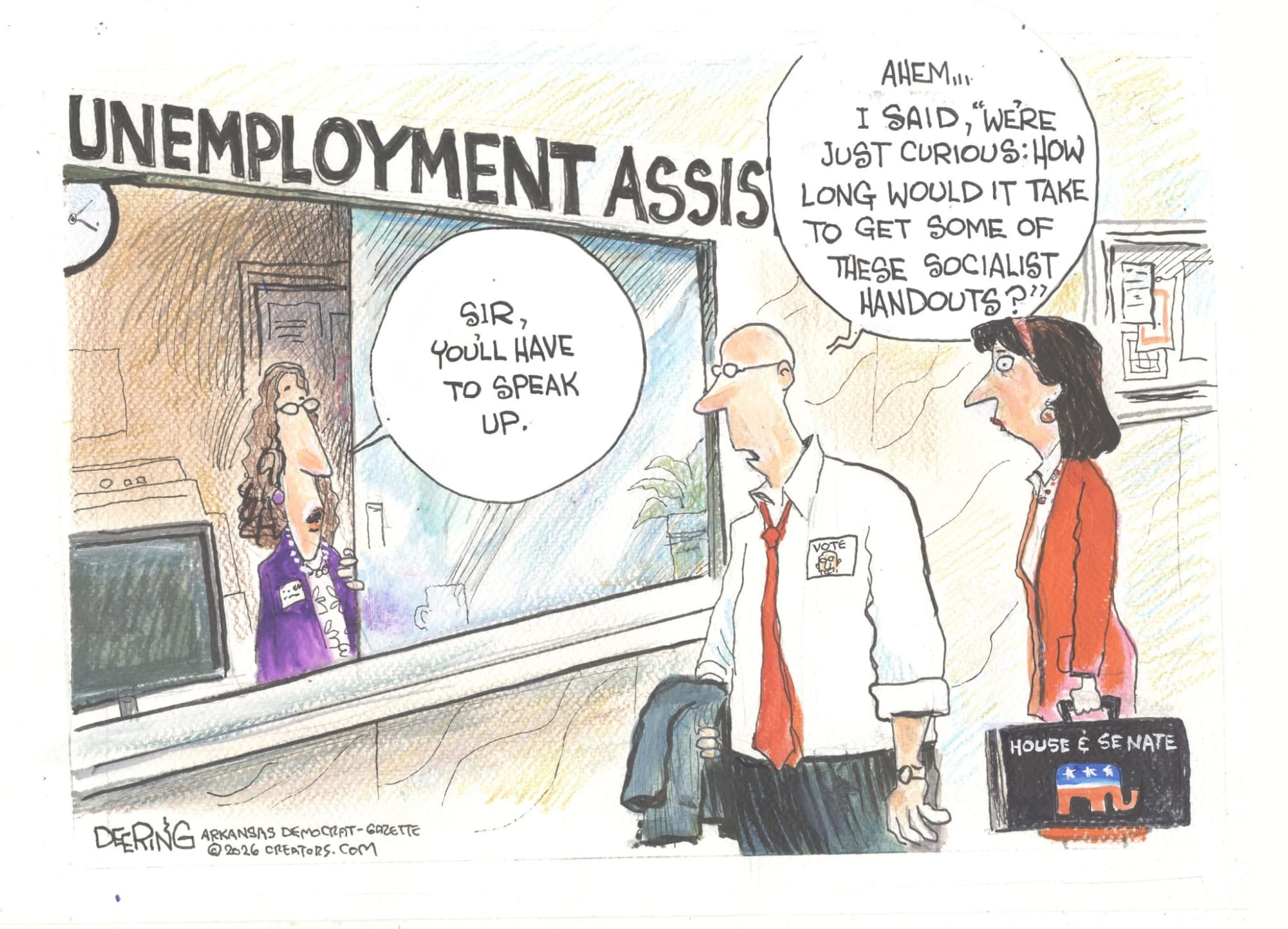
What the left is doodling.
John Deering | Creators Syndicate
What the right is doodling.
Gary Varvel | Creators Syndicate
Suspension of the Rules.
This week's Suspension of the Rules spans several topics. First, as the midterms draw near, Isaac, Ari, and Kmele get ready with their election hot takes. Then, which former Tangle guests are getting themselves in hot water? And does the left have an anti-semitism problem? All this and more can be found in the episode below:
Monday, October 5.
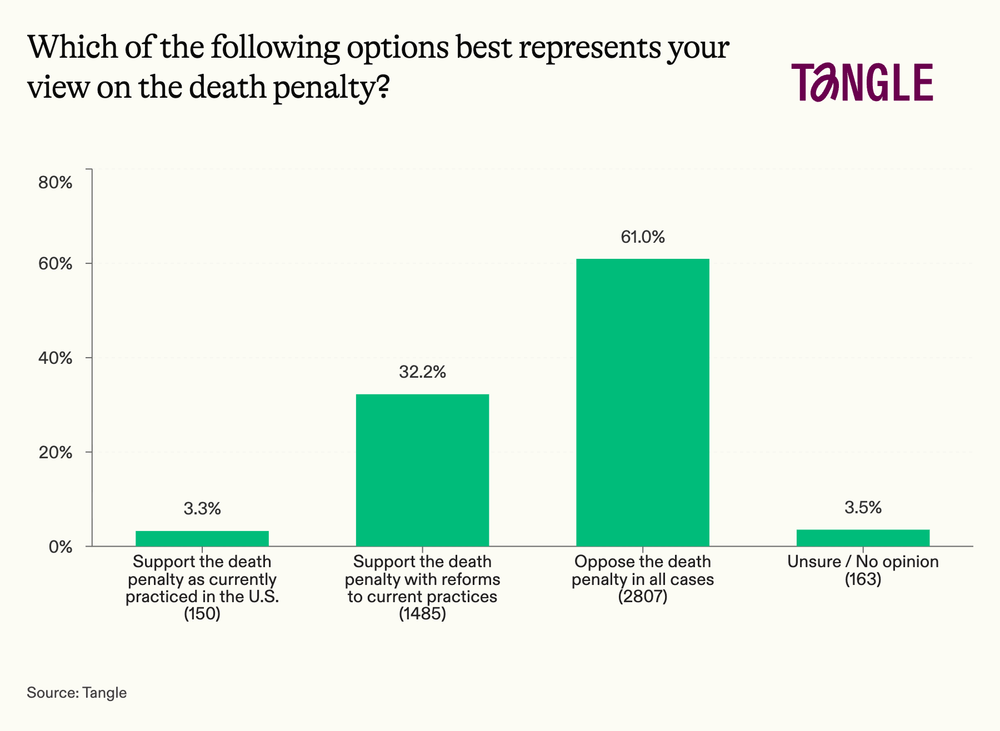
Christa Pike and the death penalty. On Wednesday, September 30, Tennessee failed to execute Christa Pike after administering two doses of a lethal drug, leaving her hospitalized in critical condition. Pike had been sentenced to death for her role in the 1995 murder of Colleen Slemmer. Tennessee Gov. Bill Lee (R) canceled the state’s final scheduled execution of 2026 and accepted the resignation of Tennessee Department of Correction Commissioner Frank Strada.
Executive Editor Isaac Saul’s take: “This case reinforces my opposition to the death penalty, which I view as both immoral and practically flawed. We can abhor Pike’s botched execution and maintain sympathy for Slemmer’s family at the same time. The simplest way to avoid more situations like this is to end capital punishment.”
Editor Audrey Moorehead and Associate Editor Carina Pacheco's dissent: “Tennessee’s botched execution attempt of Christa Pike is a horrible outcome, but it should push us to re-examine how and when we implement the death penalty rather than discard the practice altogether.”
Reader Survey:
Tuesday, October 6.
The FlyDubai attack. On Wednesday, September 30, the copilot of a FlyDubai commercial flight from Dubai to Tel Aviv allegedly attacked the plane’s captain and attempted to crash the aircraft in what Israeli officials have deemed an attempted terrorist attack. The captain, Smit Machchhar of India, was stabbed multiple times and seriously wounded but managed to open the cockpit door, allowing crew and passengers to detain the copilot. Two pilots on board as passengers then took control of the aircraft and landed it safely in Tabuk, Saudi Arabia. The attacker has been identified as an Omani national and is currently in custody in the United Arab Emirates (UAE).
Executive Editor Isaac Saul’s take: “It’s absurd that media outlets are being criticized for covering this story appropriately. It’s also absurd to believe this attempted terrorist attack was a false flag. Instead, this story is a reminder of the constant threats of violence Israelis live with.”
Reader Survey:
Wednesday, October 7.
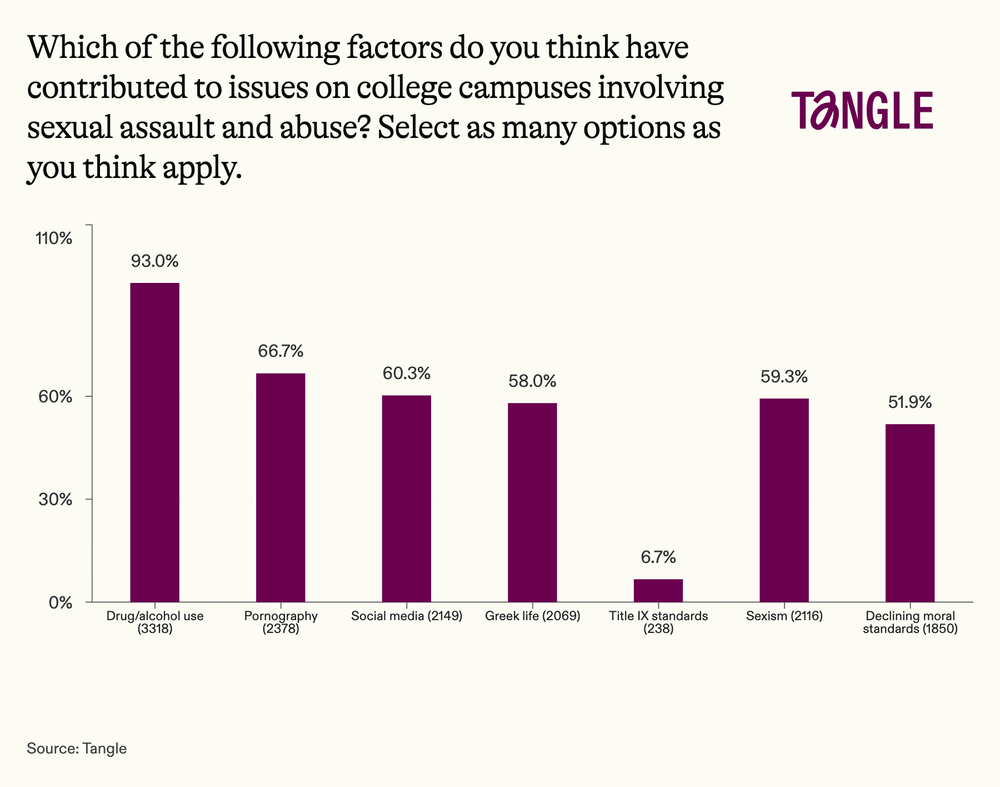
The Cornell rape allegations. On September 28, New York prosecutors said they had reopened an investigation into an alleged sexual assault and gang rape by seven Cornell University students in October 2024. The woman who filed the suit, anonymously identified as Jane Doe, alleges that she was coerced into taking ketamine, encouraged to take alcohol and cannabis, and forced into sexual actions she did not consent to. Last week, New York Gov. Kathy Hochul (D) appointed state Attorney General Letitia James (D) as special prosecutor in the case. Separately, Cornell tapped former acting U.S. Attorney General Sally Yates to lead an independent investigation into the school’s handling of the allegations.
Associate Editor Carina Pacheco’s take: “The Cornell case is the first big test of post-MeToo feminism. It can be uncomfortable to stare at the facts straight on, but they prove the extreme versions of this story wrong. The societal failures surrounding this story go far beyond just consent and legal definitions of rape.”
Managing Editor Ari Weitzman’s concurrence: “I share Carina’s opinion that the men in this case obviously crossed a line, but I worry that Hochul and James have taken the first steps towards a worst-case outcome: overzealous charges, exonerations, and fodder for the belief that rape accusations are almost always frivolous.”
Reader Survey:
Thursday, October 8.
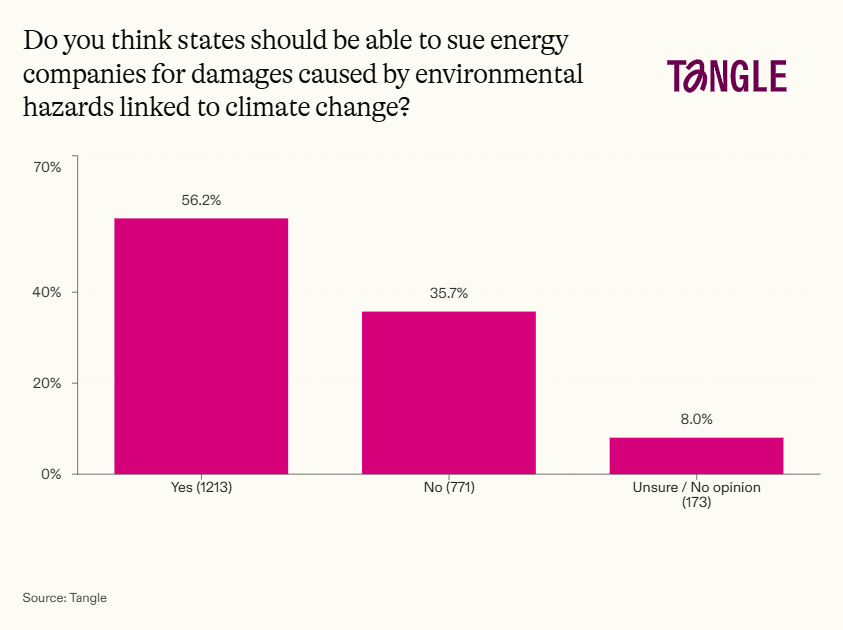
Suncor v. Boulder. On Monday, October 5, the new Supreme Court term began with oral arguments in a case over whether cities can sue energy companies for contributing to climate change. The arguments center on two major issues: whether federal law should block local governments from suing energy companies under state law, and whether the U.S. Supreme Court has jurisdiction to rule on the matter. Justice Samuel Alito, who is not involved with the companies named in the case but owns stocks in the energy industry, recused himself from the case.
Senior Editor Will Kaback’s take: “Both sides made compelling arguments over whether cities and states should be allowed to sue energy companies. Even if federal law supersedes the states, I think Boulder has the stronger case on technical grounds. However, I worry about the practical outcomes of the Court opening the door to lawsuits that sidestep a clearly delegated federal power.”
Contributing Editor Isaac Wood’s dissent: “I think it would be good for states to be able to sue for damages brought on by climate change — Big Oil companies are pumping harmful substances into the atmosphere that they know bring material damages upon individuals, towns, and states.”
Reader Survey:
Friday, October 9.
As left-wing political commentator Hasan Piker has risen to prominence, campaigning alongside major candidates and giving major interviews, some of his comments have come under scrutiny. In this week’s members-only Friday edition, Executive Editor Isaac Saul explains why he thinks the streamer’s comments matter. You can read the piece here.
What just happened.
Here’s a rundown of the major stories that have broken since our newsletter on Thursday.
On Thursday, Defense Secretary Pete Hegseth said the U.S. military execution of former Army Maj. Nidal Hasan on December 3 will be livestreamed to the public. (The announcement)
On Thursday, Vice President JD Vance announced that Microsoft and several other tech companies will be suspended from a green card program that gives foreign workers legal residence in the United States, accusing the company of abusing the program. (The suspension)
On Thursday, President Donald Trump said the U.S. will not restart military operations against Iran before the November midterms. (The comments)
On Friday, the Nobel committee awarded Navanethem “Navi” Pillay the 2026 Nobel Peace Prize. Pillay, a human rights lawyer, was recognized as “instrumental in ensuring that war crimes, crimes against humanity and genocide are prosecuted.” (The award)
On Friday, the Trump administration sanctioned the International Criminal Court. The sanctions follow the administration’s criticism of the court’s arrest warrants targeting Israeli officials and claims that it lacks jurisdiction over the U.S. (The sanctions)
On Friday, Hurricane Isaias made landfall along the U.S. Gulf Coast as a Category 2 hurricane. It was later downgraded to a tropical storm. (The hurricane)
On Friday, President Trump named former Department of Homeland Security spokesperson Katie Zacharia as his new White House press secretary. (The announcement)
On Friday, the White House announced President Trump signed an executive action directing Attorney General Blanche and other officials to create a committee to investigate mortgage fraud allegations against Federal Reserve Governor Lisa Cook. (The order)
On Friday, President Trump announced a deal with Russia for the country to supply the United States with over four million tons of diesel amid Iran war-related supply disruptions. (The deal) Later on Friday, Ukrainian President Volodymyr Zelensky said the deal “looks absolutely terrible” and “shows weakness of the world.” (The comments)
On Saturday, Christa Pike’s lawyers announced that she was discharged from the hospital following her failed execution. She is back in prison, the attorneys said. (The announcement)
In this week’s reader essay, Dr. Dinah Miller recalls the story of her patient Shelly, a woman suffering from postpartum depression. Dr. Miller uses Shelly’s story to engage with the broader questions facing our culture when it comes to medical psychiatric intervention — and how she, as a psychiatrist, navigates the choppy waters of treating mental illness.
This post is for paying subscribers only
Sign up now and upgrade your account to read the post and get access to the full library of posts for paying subscribers only.