
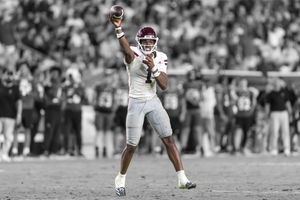


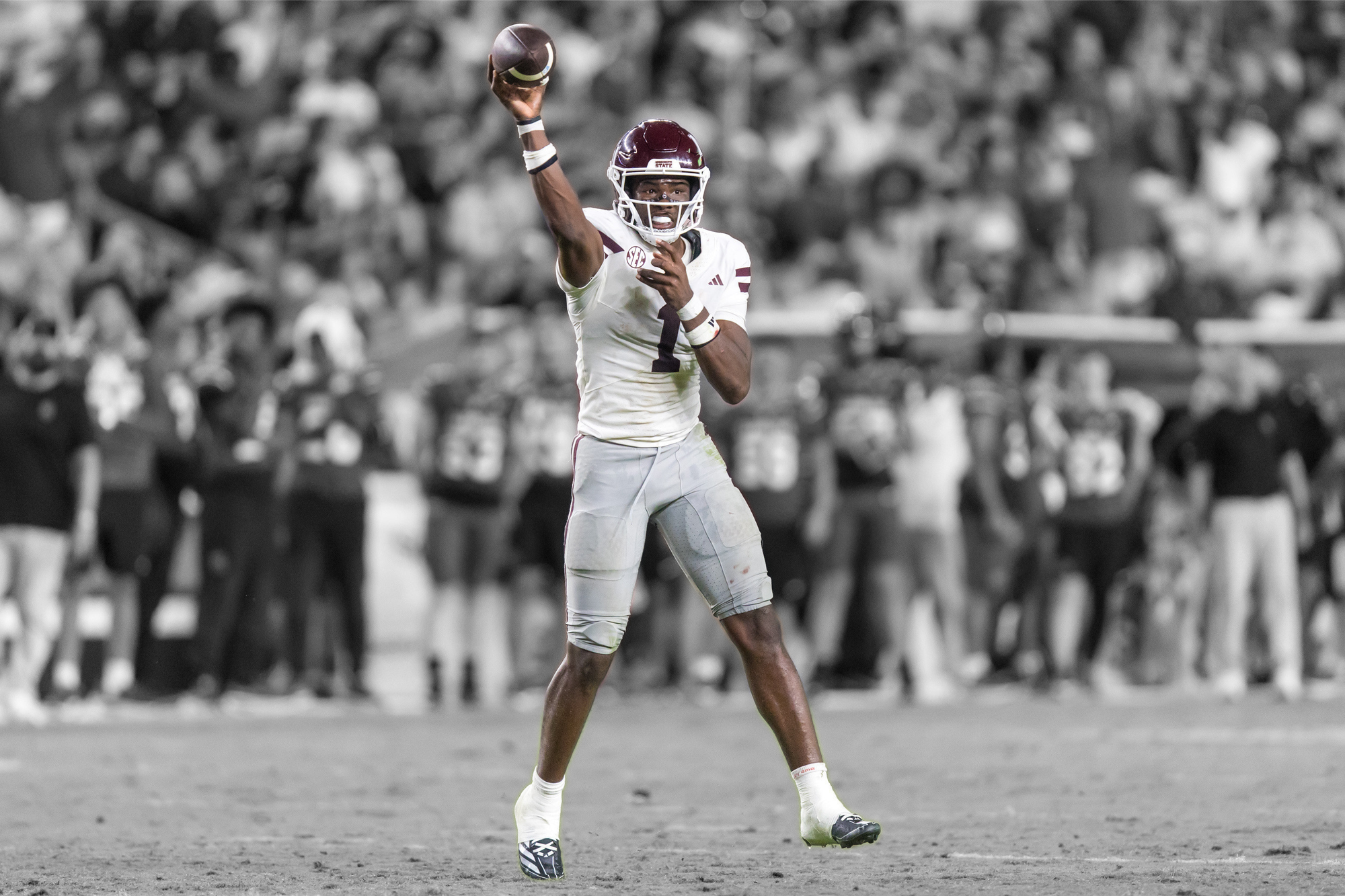


Happy Thursday and welcome to Tangle — this is Managing Editor Ari Weitzman, feeling particularly sporty today. I’m looking forward to my Pittsburgh Steelers taking on the long-hated Cleveland Browns tonight, and, more topically, we’re checking in on the state of college athletics in today’s edition.
Our main topic is the Protect College Sports Act, an issue I’m pretty close to as a former college sprinter. The vast, vast majority of college athletes have lives that look pretty similar to my one season on the track team: Make it to your classes, hit the gym, hit the library, eat when you can, and sneak in as much personal clothing as possible with your varsity stuff when you drop your laundry bag off at the varsity locker room. I struggled to make it out of prelims as a sprinter, but we’re going the distance in our coverage today — breaking down everything in the bill that just passed the Senate.
Lace ’em up for a 12-minute read.
Isaac Saul, Will Kaback, Audrey Moorehead, Carina Pacheco, Russell Nystrom, Isaac Wood, and Bailey Saul edited or contributed to today’s newsletter.
A wide-ranging conversation.
In this week’s Suspension of the Rules episode, we start by having some fun with Jack Smith’s congressional testimony. Then, we discuss the government-funded Trump commercials before turning to a much more serious subject: the Cornell sexual assault case. It was a heavy but important segment, and we wrapped up with some gratitude (instead of our usual grievances) to lighten the mood. You can listen here or watch below:
Quick hits.
- A pilot on a commercial flight from Dubai to Tel Aviv allegedly attacked his co-pilot and attempted to crash the plane. Passengers and crew subdued the attacker, and another pair of pilots on the flight safely landed the aircraft. (The incident)
- The U.S. military announced that all troops have withdrawn from Iraq, officially ending its 12-year mission. (The withdrawal)
- The Federal Reserve’s inspector general reported that mismanagement led to cost overruns in the central bank’s renovation of its Washington, D.C. headquarters, but found no grounds for a criminal referral against former Chair Jerome Powell. (The report)
- The Federal Trade Commission launched an investigation into leading AI companies over potential dangers their models pose to consumers. (The investigation)
- Tennessee Gov. Bill Lee (R) halted the state’s execution of Christa Pike after she appeared to survive two rounds of lethal injection. (The pause)
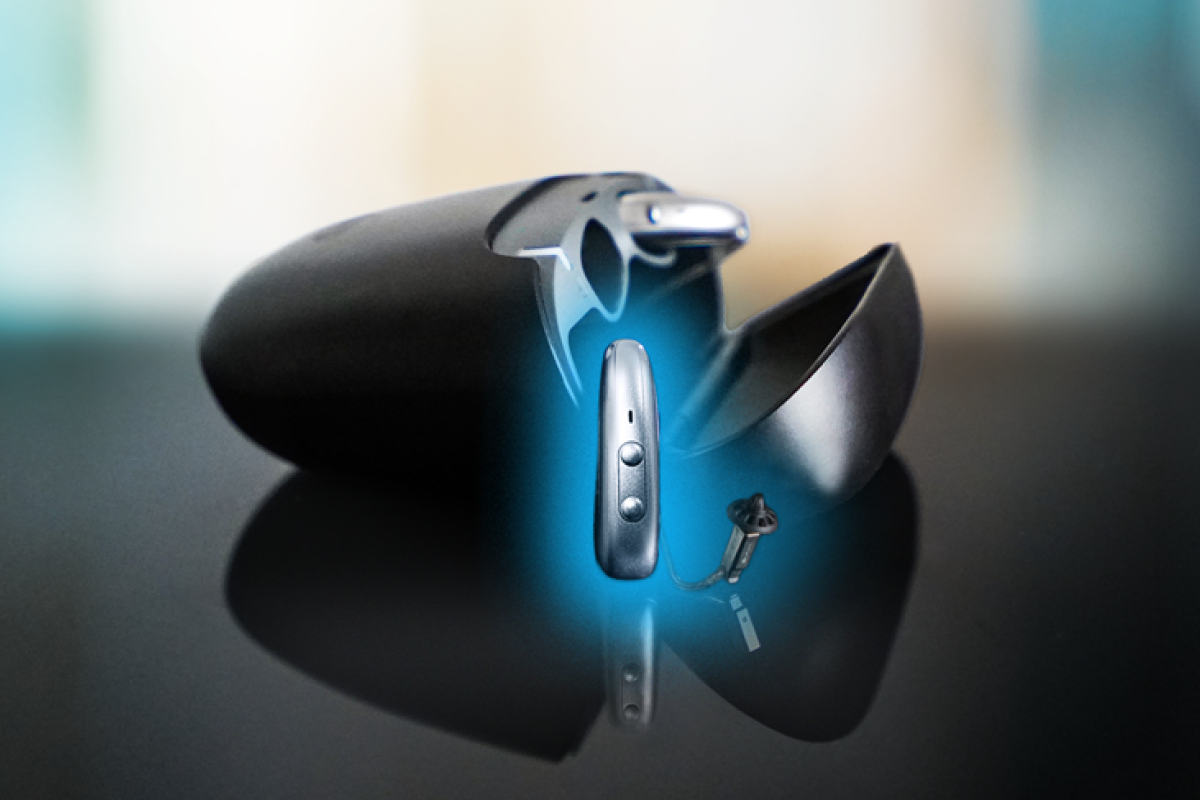
Audiologists tested 17 hearing aids. Here’s the winner.
Hearing specialists spend their careers knowing exactly what great clarity sounds like. When they point to one device above all others, it’s worth paying attention. Horizon IX is the world’s first dual-processing hearing aid that separates speech from background noise in real time. The result? Warm, natural sound, anywhere life gets loud. Nearly invisible, rechargeable, and trusted by over 670K people. To see why audiologists call it the best, claim your 45-day no-risk trial.
Today’s topic.
The Protect College Sports Act. On Monday, the Senate voted 77–22 to pass the Protect College Sports Act with support from 50 Republicans, 26 Democrats, and one independent. The bill would create a national regulatory framework for collegiate athletics and give the National Collegiate Athletic Association (NCAA) antitrust protection, allowing it to establish standards for student-athlete compensation, eligibility, transferring, and other activities. The House is expected to take up the bill after the November midterms.
Back up: In June, Sens. Ted Cruz (R-TX), Maria Cantwell (D-WA), Eric Schmitt (R-MO), and Chris Coons (D-DE) introduced the bill in response to concerns about recent changes in college sports. In 2021, the Supreme Court ruled unanimously that the NCAA’s limits on certain education-related compensation for student-athletes violated antitrust law. The NCAA then implemented a name, image, and likeness (NIL) policy that allows student-athletes (and some high school athletes) to earn money without losing their eligibility.
Initially, these payments could only come from third parties (such as advertisers), but in 2025, the rules were amended to allow NCAA Division I schools to compensate athletes directly. The policy has enabled some student-athletes — particularly football and basketball players — to earn millions in deals and led to more frequent transfers between schools.
The Protect College Sports Act contains several provisions, including:
- Codifying athletes’ ability to enter NIL deals
- Creating reporting requirements for NIL compensation
- Limiting the amount of money schools can spend on direct athlete payments
- Adding limited antitrust exemptions for the NCAA to implement rules on transferring and years of eligibility
- Capping agent endorsement contract fees at 5%
The NCAA, major college athletic conferences, and President Donald Trump have come out in support of the bill, arguing that it will rein in “chaos” created by current NIL policies and establish a level playing field for college sports. “[The measure will] ensure student-athlete benefits are codified into federal law and future generations of young people can access those benefits and use college sports as the launching point for their careers,” NCAA President Charlie Baker said.
Labor groups, student-athlete organizations, and some Democrats have opposed the effort, saying it will strip athletes of newfound leverage and freedom. “This is a bill not about student-athletes, it’s about wealthy coaches and wealthy institutions and an NCAA who [have] enjoyed unbridled power for decades,” Sen. Cory Booker (D-NJ) said.
Today, we’ll share views from the right, left and sports writers on the bill, followed by Managing Editor Ari Weitzman’s take.
|
What the right is saying.
|
The New York Post editorial board called the bill “a bipartisan win for protecting college sports.”
“[The bill is] imperfect, but it has real promise to end the nonstop litigation and over-the-top bidding wars launched when the Supreme Court in 2021 tossed key NCAA rules on antitrust grounds,” the board wrote. “The old system had huge problems… But what followed was ruinous, with stars transferring to the highest bidder multiple times and schools stinting on women’s and Olympic sports as they chased talent that would bring in the most revenue.
“The bill protects a collegian’s right to collect from the sale of his or her Name, Image and Likeness while setting national standards for transfers, eligibility, tampering and… limits on agents’ share of an athletes’ earnings,” the board said. “Yes, it gives the NCAA a partial antitrust exemption so it can’t get sued for enforcing eligibility and transfer limits and lets it limit coaches’ job-hopping rights, too — but keeping college sports different from the pros has to start somewhere.”
In The Tennessean, Cameron Smith said the “Protect College Sports Act favors universities over players.”
“Billed as a necessary measure to bring order to the chaotic landscape of name, image and likeness (NIL) agreements, the bill is touted as a rescue mission for a beloved American tradition,” Smith wrote. “In reality, it represents something far more familiar inside the Beltway: powerful institutions using federal authority to secure special treatment… The true engine of the bill is its conditional antitrust exemption.”
“Under the guise of protecting amateurism, Congress is offering the collegiate sports establishment a legal carve-out to sidestep the laws of supply and demand to avoid sharing its eye-popping profits with the athletes producing the value on the field,” Smith said. “Transforming college athletes into recognized employees who collectively bargain with leagues and universities is not a threat to college sports; it is an equitable solution.”
|
What the left is saying.
|
In The New Republic, Matt Ford argued the bill “will only protect the NCAA’s billions.”
“College athletes were finally able to pursue fair-market compensation for their services over the last few years thanks to a series of major court rulings. Now the NCAA and its allies are trying to turn back the clock to keep as much of the money that college athletes generate as possible,” Ford wrote. “Every good thing in the PCSA is a sweetener designed to make its real purpose easier to swallow.”
“The PCSA gives the NCAA immunity from federal antitrust laws when it enforces rules on compensation, transfers, broadcast rights, and more among member schools and conferences. Federal antitrust laws have been a powerful tool for college athletes to keep at least some of the wealth that they generate for themselves. With the PCSA, Congress would slam that door shut,” Ford said. “The good news is that the PCSA might not become law in the 119th Congress.”
In The Free Press, Joe Nocera wrote “last night, college athletes lost.”
“[The bill] does some good things. It gives players a 10-year window to graduate from the school they played for. It limits players to one transfer, which even I concede is necessary. It requires universities to give its athletes comprehensive healthcare benefits,” Nocera said. “But it does absolutely nothing to curb coaches’ pay, or the millions spent on fancy facilities, or any of the other things that have caused college athletics to become so outrageously expensive.
“Except one: It sets a cap on the amount of money an athletic department can spend on its athletes — not just football players but athletes in every sport,” Nocera wrote. “That amount is $21.6 million. (There is an additional $22.5 million ‘retention fund’ that is supposed to be used to keep star players from transferring.) That’s not nothing, of course, but it means that unlike most Americans, college athletes will once again be deprived of their chance to cash in on their prowess."
|
What sports writers are saying.
|
In Sportico, Lamell J. McMorris suggested “student-athletes need protection.”
“The agent world around these young athletes is largely unregulated, and too much of it preys on the very kids it claims to serve. [The business] is not built around the best interests of student-athletes, and this bill finally brings order to it,” McMorris wrote. “It protects Olympic and nonrevenue sports, invests in women’s athletics, strengthens health and safety, safeguards scholarships, and creates real accountability for schools and athletes alike.”
“I do not dismiss the people opposing this bill,” McMorris said. “[One objection] is that collective bargaining should fix all of this. I wish it were that simple. More than 80% of Division I schools are public institutions, and their athletes would be state employees, outside the reach of federal labor law and, in many states, barred from bargaining at all… Meanwhile, the protections in this bill are real, and they are available now.”
In USA Today, Blake Toppmeyer wrote “bad college football coaches have it good with Protect College Sports Act.”
“Perhaps the biggest winner in the ‘Protect College Sports Act’ passed by the Senate? Losing college football coaches,” Toppmeyer said. “This bill, which politicians pretend will address the ‘chaos’ and ‘crisis’ inside college athletics, fails to address the soaring salaries for coaches and their bosses, or the $50 million severance checks for fired coaches… There’s never been a better time to be a bad football coach.
“Just ask South Carolina’s Shane Beamer. He’s making $8.25 million this season, and he’s 2-11 in his past 13 games against Power Four opponents,” Toppmeyer wrote. “I don’t actually believe Congress should regulate coaches’ salaries or buyouts, either. Instead, force university presidents and chancellors to do their jobs. If schools can’t pay the athletics bills, then make them rein in spending and stop the contract stupidity, instead of awarding them a bailout.”
|
||||
|
||||
|
Reminder: This is where we share a personal opinion. If you have feedback, criticism or compliments, leave a comment or reply to this email.
|

As I mentioned at the start of today’s edition, I ran track (for one year) in college. Balancing school, sports and work can be really difficult, but it can also be really fun; and for most students competing in college sports at the level I was, the model isn’t broken.
However, for the most visible sports, particularly football and basketball, the operational model is fundamentally flawed.
First, the collegiate sports landscape is simply chaotic. Decades ago, college conferences were neatly organized by geography. Today, Texas and Oklahoma play in the Southeastern Conference while the Atlantic Coast Conference is home to Stanford and Cal-Berkeley. The formerly Midwestern Big Ten stretches from Rutgers to the University of Southern California (USC). Meanwhile, the Pac-10 (excuse me, Pac-12) was whittled down to two teams and now is limping along with nine. Smaller conferences wither away while mega-conferences demand cross-country travel for their teams, making a total farce of the idea that athletes are “students first” — how is anyone supposed to keep up with classes while flying from Los Angeles to New Jersey for an in-conference game?
The obvious reason for this convoluted setup is the second problem in college sports: money. USC is in the Big Ten simply because the school knows it can make more money through TV deals if it’s in a conference with better teams. Smaller conferences have no leverage for keeping their teams from leaving, and the major schools and major conferences have started concentrating resources at the expense of smaller conferences, smaller schools, and the academic schedules of the players themselves.
Speaking of the players, for a long time, the NCAA operated a business model that sounds downright criminal: It sold a billion-dollar product without paying the people who made it. Not only were student-athletes forbidden from taking any kind of compensation (lest it sully the sanctity of their scholarship at their chosen university), but the NCAA — already collecting over a billion dollars in television rights, advertising deals, and licensing fees — could profit from these athletes’ name, image, and likeness (NIL) without them earning a dime.
These rules led to absurdities. Several football players at the University of Oklahoma had to pay $3.83 in fines for having illegally large portions of pasta at a graduation dinner. Former NFL star Arian Foster admitted he colluded with the University of Tennessee’s coaches to take illicit tacos from them, all so he could have enough food to perform suitably for Neyland Stadium’s 100,000+ spectators.
Thus, problem three was born: NIL madness. The NCAA allowed athletes to take NIL deals to profit from sponsorships or having their likeness used for promotions. In theory, this is a good thing. Finally, some fairness for the college athletes who put their bodies on the line for the product and had to scrimp for enough food to eat while NCAA executives (and, for the big teams, their coaches) raked in the money. But the new NIL rules tilted the balance towards star players, allowing them to transfer out for more lucrative payouts (or better playing opportunities) elsewhere. Thus, the people the entire business model of college sports really depends on — the fans — were made to suffer, as they could watch their program develop a special athlete and then watch that athlete walk away to greener pastures.
The degradation of the fan relationship is one of the biggest risks of the current chaos, which I don’t think enough people are talking about. College fans are incredibly loyal to their schools, and that loyalty is the base of the intercollegiate sports megabusiness. If the Mississippi States of the world become feeder programs for major schools, if the field tilts more and more against the underdog, if Kansas is forced to play a home game in London, then that base of support could erode and the whole house of cards could come crashing down.
The intractable problem the Protect College Sports Act faces is the need to provide some stability to this mess, all without infringing on the collective rights of student-athletes and while protecting the athletes in small-market sports.
The bill takes the problem in parts, and in the collegiate spirit, I’ll grade how effective I think the major elements of this potential law will be.
Antitrust exception for the NCAA: A. Nearly every core rule of the NCAA could be a violation of the Sherman Act, which forbids an organization like the NCAA from limiting whom competing businesses can hire and how much they can pay them. Sports teams composed of students are not the same as most businesses, and collegiate sports’ regulatory body needs more ability to regulate its teams. Under this bill, the NCAA can set rules on transfers, eligibility, and recruiting in a way that should provide more structure.
Athletes’ rights: A. This is the necessary counterpart to giving the NCAA more power to regulate. If this act is passed, athletes will have a federally protected right to receive NIL money, scholarships, and protections for their health and safety. The law would also cap agent fees at 5% and ensure the ability of schools to pay their students directly. No more insiders fleecing unwitting 18-year-olds, and permanently gone will be the days of star running backs relying on back-door tacos.
Transfer and eligibility caps: B-. The counterpart to the counterpart, this would create a federal law, not an NCAA regulation, that limits college eligibility to five years and student-athletes to one transfer within those five years. Without this in place, star players could be in a constant state of free agency and more prone to pause their eligibility. If the NCAA gets an antitrust exception, then the government has to give itself some power here. But it’s hard not to feel a little queasy about potential government overreach. My biggest concerns are what happens when a student wants to transfer for non-opportunistic reasons; I could easily see this regulation being overly burdensome to many athletes. Still, the presence of a guardrail is sensible to me, especially given the widespread abuses of the current eligibility system.
Women’s and Olympic sports protections: A. One of the concerns with colleges and Congress getting more authority over regulating sports is that the for-profit model might shoulder out athletic opportunities for the bus-riders like I was in college. This provision requires schools to keep as many non-revenue athletes as they had in the 2024-2025 academic year, which I think is a tidy and clever way of applying that protection. It also requires schools that pool their media rights to redistribute some of their money to other teams, which is a way of preventing football teams from building palatial facilities while other teams get table scraps.
Conference rules: C. As hinted at in the previous bullet, this provision allows schools to pool and negotiate their media rights (an amendment to the 1961 Sports Broadcasting Act). This would allow conferences to spread their profits to smaller schools and conferences in a similar way as the NFL does now with their smaller markets, which will give these programs similar leverage to the megaconferences (and which is why the SEC and Big Ten oppose this portion of the bill). I’m very supportive of this collective bargaining among teams, but I’m not convinced this will meaningfully level a playing field that’s already so tilted. The act tries to address the power agglomeration among the big conferences by capping the number of teams per conference at 20, but that number is frankly far too high. The bill prevents the worst case of college sports becoming just two conferences, sure, but it doesn’t really address the problem as it exists today.
At the end of the day, I think this is a good law whose time has come. It’s not perfect, but it’ll be an improvement. And in an era where Congress can scarcely be asked to do more than the bare minimum, I’m happy to see lawmakers get together to act to try to tackle a problem in a bipartisan fashion. I’d love it if our lawmakers could bring that same spirit to balancing our budget, but that’s a problem for another day.
Take the survey: What do you think of the bill? Let us know.
Disagree? That’s okay. Our opinion is just one of many. Write in and let us know why, and we’ll consider publishing your feedback.
Audiologists tested 17 hearing aids. Here’s the winner.
Hearing specialists spend their careers knowing exactly what great clarity sounds like. Horizon IX is the world’s first dual-processing hearing aid that separates speech from background noise in real time. The result? Warm, natural sound, anywhere life gets loud.
Nearly invisible, rechargeable, and trusted by over 670K people.
The extras.
- One year ago today we covered the government shutdown.
- The most clicked link in our last regular newsletter was, for the second day in a row, the political ideology quiz.
- Nothing to do with politics: Try playing the English variant of peg solitaire.
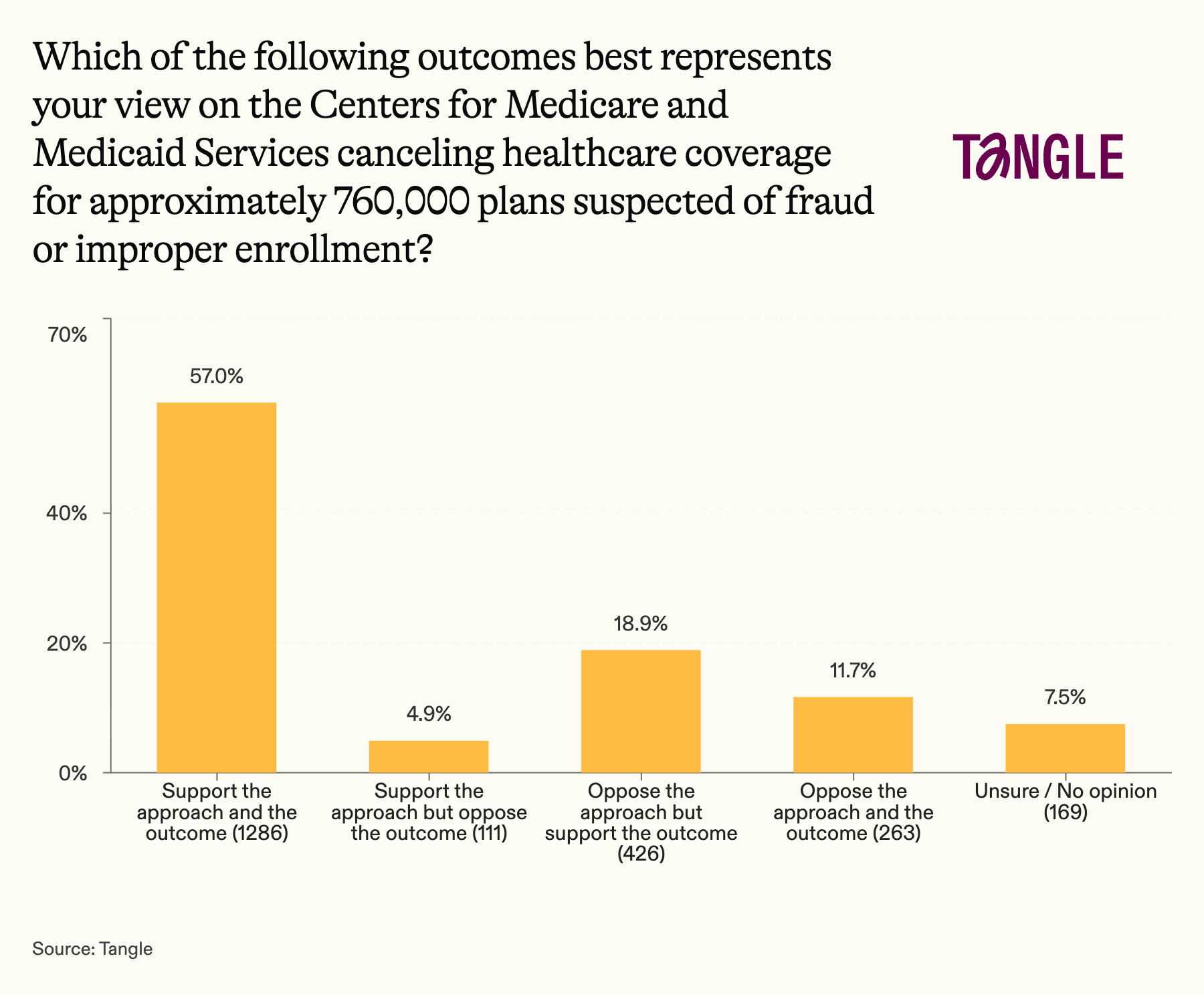
- Our last survey: 2,255 readers responded to our survey on the Affordable Care Act enrollment cancelations, with 57% saying they support the approach and the outcome. “Clear criteria, advance notice, and $2 billion saved. Nice!,” one respondent said. “I wish I had enough confidence in the Trump administration to trust what VP Vance is saying, but I don’t,” said another.
Have a nice day.
Vahine, a French cow, recently found herself in a spotty predicament. While grazing in the Pyrenees mountain range, the animal became stuck in mud in an area that was unreachable by vehicle. Fortunately, a rescue crew managed to secure Vahine in a sling and airlift her to safety via helicopter. Olympe Provest, a local who witnessed the extrication, said, “We were very surprised, quite impressed, and above all, we had a lot of questions about how the cow was feeling, why they were transporting her that way, and whether she enjoyed the sensation of flying.” The New York Post has the story and video of the rescue.

Member comments