














 500,000+ readers just today.






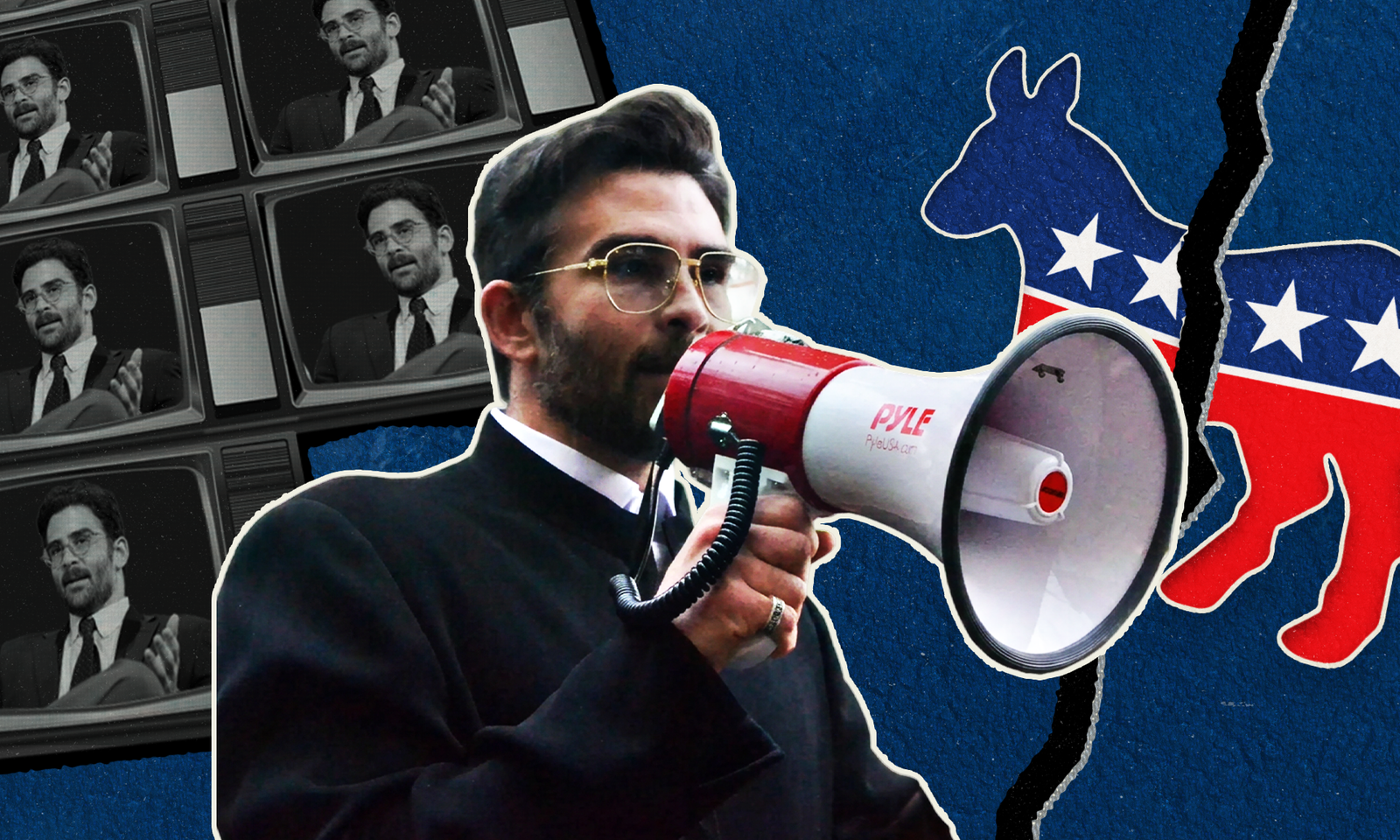
My honest thoughts on Hasan Piker.
Note: You are reading a preview of a members-only Friday edition. To read it in full, you’ll be asked to subscribe.
It’s hard to say how much your average American knows (or cares) about Hasan Piker.
To political reporters like me, Piker looms large. He has a massive audience of young people who follow his livestreams on the platform Twitch. During the videos, he reacts to the news in real time and gives running commentary while responding to people who join his chat room; it’s like a digital hangout with a friend — you might do your dishes while listening, occasionally chime in with a question, and chop it up with an internet-famous political pundit. This style of punditry creates a strong parasocial connection with his audience, and tens of thousands of people watch him every day.
Until recently, I would have said that Piker was still unknown or irrelevant for most Americans, especially older news consumers, despite his niche stardom. Yet over the last couple of years, Piker’s name recognition has skyrocketed. As both the Democratic Party and traditional journalists began reckoning with their inability to reach younger audiences, Piker became one of the most sought-after and recognizable leftists in politics. He campaigned with Abdul El-Sayed during Michigan’s Senate primary, boosted democratic socialist candidates in other primaries, and has sat down for lengthy interviews with The New York Times and Axios. Fox News runs standalone articles about him several times a week — he’s a new boogeyman of the left, like Alexandria Ocasio-Cortez or Zohran Mamdani.
In my own commentary, I’ve sometimes derided Piker or dismissed him and his worldviews offhandedly. Quite a few Tangle readers and listeners have challenged these comments: What’s so wrong with Hasan Piker? Why do you use him as a punching bag for the ascendant left?
It’s a fair question that I’ve never really answered. So, today, I’m going to try to do that in two parts:
First, I believe Piker is a bad guy. I try to be careful passing judgment on people I’ve never met, but to quote the great pollster Dave Wasserman, “I’ve seen enough.” I say this in the most straightforward, judge-of-character sense; I feel the same way about Piker as I do about Texas’s Republican Senate candidate Ken Paxton or Maine’s former Democratic Senate candidate Graham Platner.
I just don’t trust him.
And second, I think many of his views are — broadly speaking — either unrealistic, absurd, offensive, or dangerous. While Piker’s platform and cult of personality are novel, his views hardly are. They sit at the intersection of leftist populism and campism. Socialist activists Jason Schulman and Dan La Botz define campism as a lens for world politics, through which “the main axis of conflict is between two hostile geopolitical camps: the ‘imperialist camp,’ today made up of the United States, Western Europe, Saudi Arabia, and Israel (or some such combination) on one hand and the ‘anti-imperialist camp’ of Russia, China, North Korea, Syria, Iran, Venezuela, Cuba, and other less-industrialized nations on the other.”
Obviously, Piker is not the only alarming figure in the political landscape. I’m not writing this piece to suggest he is any better, worse, or the same as figures on the right whose views and character I’ve also criticized — from the president to Nick Fuentes. Instead, I’m making a narrow point about Piker — what he believes, what he’s said, and why he’s important.
Hasan Piker is not a good guy.
I wanted to start with the character element here for an important reason: Piker is charming.
If you watch his interviews, he’s funny, often looking for edgy punchlines to pull people in. He’s well spoken, good at riffing, has an interesting style, and generally just gives off some of that sought-after aura (hence Democrats’ handwringing over whether to attach themselves to him or rebuke him).
It pains me to say it, but based on his demeanor alone, I kind of like him.
And if I wanted to, I could even build the case that he’s a decent person. He and his community have raised millions of dollars to deliver aid to Ukraine during the war, to Syria and Turkey in the wake of an earthquake, and to Gaza after Israel began its air and ground campaigns. He’s also used his platform to raise awareness about things like inmate firefighters battling the wildfires in California. Despite frequently being accused of antisemitism, he’s repeatedly expressed reverence for Jews, called antisemitism a canary in the coal mine for fascism, rejected the notion that Zionists run the world (he says capitalists do), and called out his own followers for antisemitism.
Yet plenty of evidence shows that Piker lacks character.