




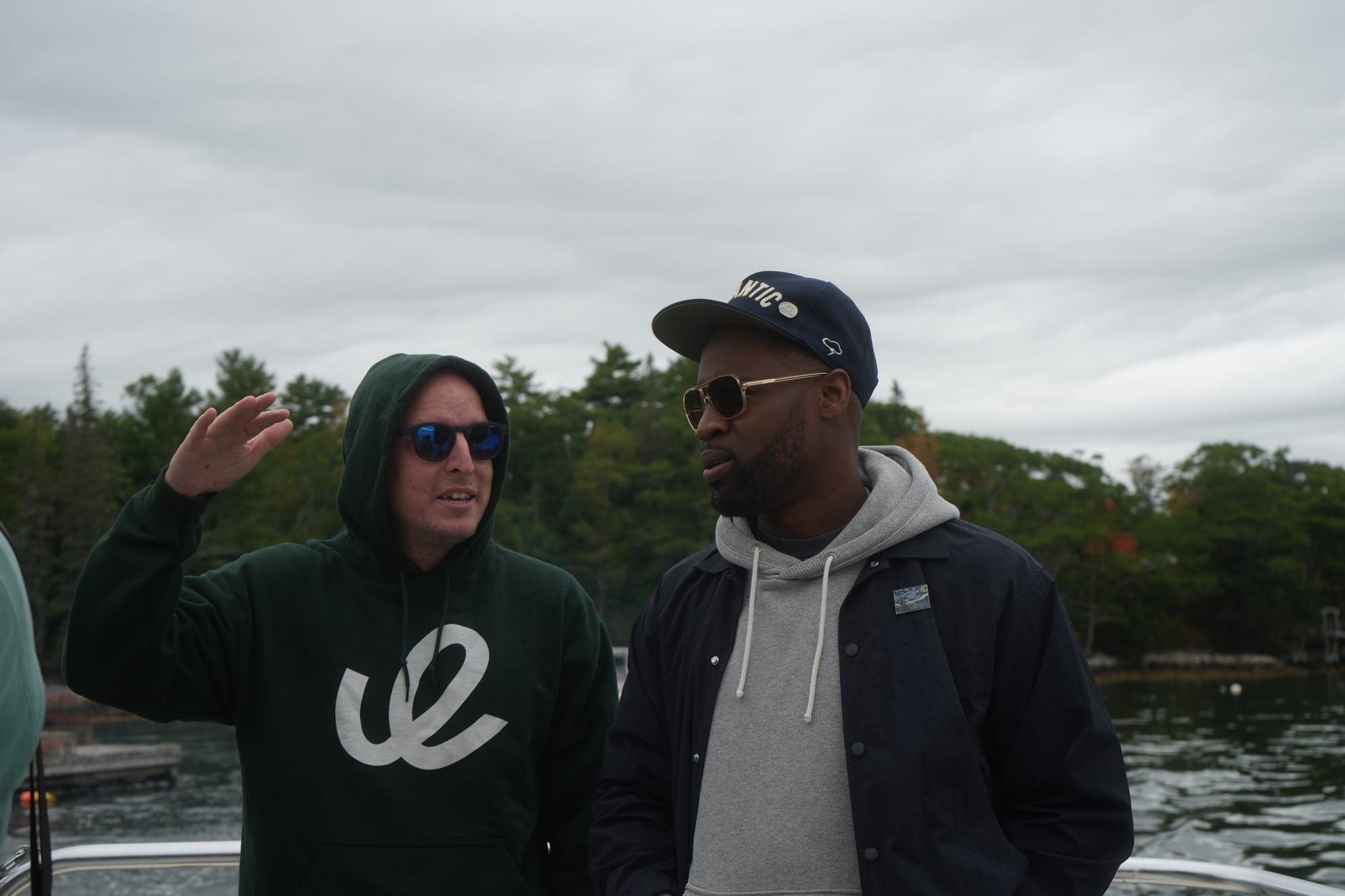


I’m Isaac Saul, and this is Press Pass: Our once-a-month, members-only newsletter that pulls back the curtain on the inner workings of Tangle.
When I started Tangle seven years ago, it was just me and the blinking cursor on a blank Google document.
As I look back on the newsletter editions I wrote during the early years of Tangle, a few things stand out: 1) The writing is more raw and less polished. 2) The newsletters are shorter and more digestible (some just a six- or seven-minute read). 3) My personality shines through in unvarnished ways that feel different from how it does now.
There are downsides to each of these. Raw, less polished writing is also writing begging for an editor. Mistakes and typos and outright errors went undiscovered. The newsletters were shorter, yes, but also sometimes lacked nuance — and typically didn’t go any deeper than our short-form competitors. I had to do all the research and writing and editing by myself, and it showed. And sure, my personality shined through, but at times it needed to be reined in; what was left was often too much Isaac and not enough viewpoint diversity or professional polish.
I never expected we’d be where we are today: hundreds of thousands of daily readers, tens of thousands of paying members, and recognition from all across the country (and world) for what we’re building. I certainly never expected to have over a dozen full-time employees and an entire staff of writers and editors.
As the Tangle brand has grown, my personal brand has taken a back seat, for good reason. I’ve wanted to introduce the distinct viewpoints from our team: Ari Weitzman, Will Kaback, Audrey Moorehead, Kmele Foster, Carina Pacheco, Russell Nystrom, Isaac Wood, and more. I’ve wanted to bring in outside writers to contribute to our publication. I’ve wanted to let Jon Lall, Aidan Gorman, and Michele Teodori create new content for YouTube — pursuing stories well suited for a visual medium and putting their own spin and perspective on them. We have done all that, and I’m supremely proud of what my colleagues and I have built.
Concurrently, I also take up less space in Tangle’s editorial process and have fewer opportunities to share what’s on my mind. I’m both happy and fulfilled by this development, and glad for a semblance of work-life balance. Yet I’m also eager to share more of my ideas that never make it to print. I have so many opinion essays outlined and just sitting in my drafts folder, so many thoughts I just flush down the toilet of X rather than turn into a YouTube video or fleshed-out piece. I have a lot of ideas I want to stress test with the public, yet somehow fewer and fewer spaces to share them despite running a growing news organization. It’s an odd and paradoxical downside of building a team.
I’ve been thinking about how to recapture some of what made those early editions so popular while also preserving the professional excellence we’ve developed today. We have some stuff in the works that I’m excited to roll out in the coming weeks: I’m planning to launch a separate newsletter under my name to share occasional opinion essays on stories we don’t get to in the typical week of Tangle. We’re also thinking about how to make the daily Tangle newsletters more digestible — reducing the word count a bit and cutting some sections people don’t tend to read. We also hope to keep featuring new voices, both from inside Tangle and out.
But in the immediate term, we have one big offering we’re excited to announce:
We’re launching the Isaac Saul YouTube channel.
When we first started the Tangle YouTube channel, I was adopting takes I had written for the newsletter, and we were having some success. But it was also a ton of work to manage while I was writing most of the newsletter every day. As the team grew, we offloaded the YouTube channel to our executive producer Jon Lall and other contributors, and I took a backseat.
As that happened, the team started producing original explainers and original on-the-ground reporting. Today, the Tangle YouTube channel is publishing some of the most compelling, well-produced content in political video journalism.
And now I have more available energy because I’m writing fewer takes. So, starting today, we are launching a dedicated YouTube channel for some of that work. We’re going to kick the channel off by populating it with my own takes on the news — original opinion essays in video format. Some will be adapted from the newsletter with the goal of attracting a new, younger YouTube audience, while others will be totally fresh analysis of issues we don’t wade into anywhere else in the Tangle ecosystem.
Looking forward, I plan to start an interview series to sit down for long-form conversations with the people in the political world whose views I think are worth engaging. And we may even start hosting our flagship talk show Suspension of the Rules on this new channel under a new name. There are a lot of exciting developments on the horizon.
Our kickoff video is already live: my take on what’s happening in the Big Bend region of West Texas. I’ve written before about the importance of this region to me, and my connection to it. But this video is a swing at discussing the planned border wall there and my thoughts about the arguments being put forward to support it. Give it a watch, and subscribe to the channel while you’re at it.
Of course, standing up a new channel, even one with just my name, is the work of a team — and one of the key contributors making the Isaac Saul YouTube channel happen is going to be Michele Teodori, our latest hire on the YouTube team. And Michele is today’s featured employee.
Meet Mic.
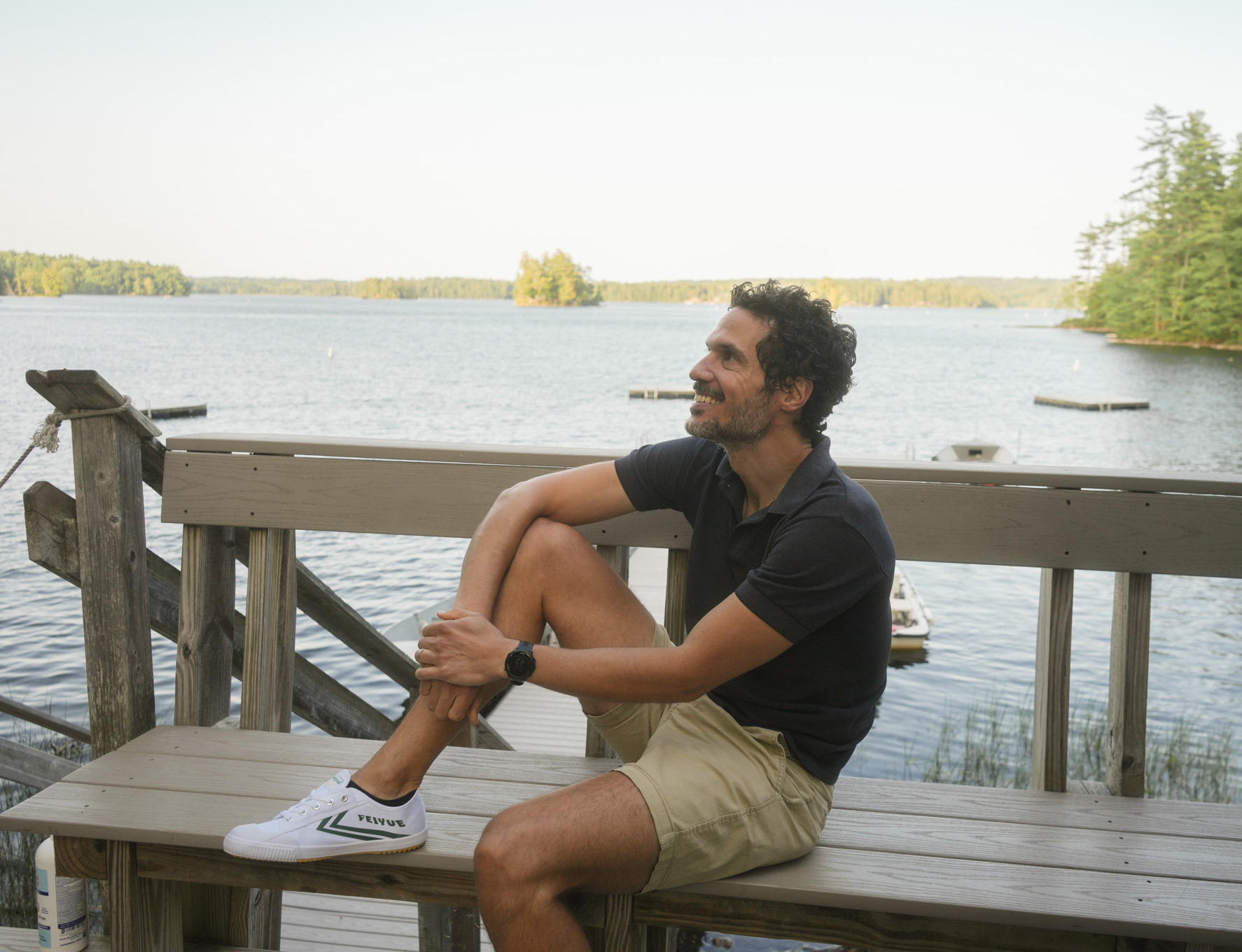
One weird thing about working at a remote company is that you can spend extensive time in the trenches with someone before actually meeting them in person.
Michele — or “Mic” (pronounced “Mick”) — was one of those people for me. I interviewed Mic with Jon back in June during our West Virginia retreat, and right away, we could tell that he had a genuine passion for our mission, that he’d be a fast and hungry editor, and that he’d add a ton of experience to our team.
As the last part of our interview process, we sent several finalists a raw cut of me pontificating on my Trump corruption piece on camera. It was an unscripted 20 minutes of me rambling — genuinely one of the worst shoots I’ve ever done — shot in a stuffy shared office space with bad lighting and a worse background. We asked each candidate to turn the footage into a quality, ready-to-publish YouTube video, not expecting much but wanting to see what they could turn around, how fast, and how much they could improve an otherwise mediocre product.
The video Mic turned in was genuinely awesome. It had perfect pacing, great music and interspersed all manner of news clips to cover up my worst moments from the shoot and make me look and sound like a confident, intelligent pundit. If I hadn’t littered the video with some factually inaccurate riffing, we may have actually published it. I’ve always known what a good editor can do to my writing, but it was fun seeing what a good video editor could do to my very bad in-studio shoots.
It wasn’t until our retreat in Maine a couple of weeks ago that I actually got to meet Mic in person. This year’s retreat was special because, for the first time, we told Tangle employees they could bring their partners or family members — so we had kids, wives, husbands, girlfriends, and boyfriends all tagging along. Mic came solo, but I had the joy of watching him play with my son and the other kids who came along for the trip, and he exuded the kind of warmth that just makes you certain someone is a great person (he’s also a dad himself, so I had a great time picking his brain for fatherhood tips).
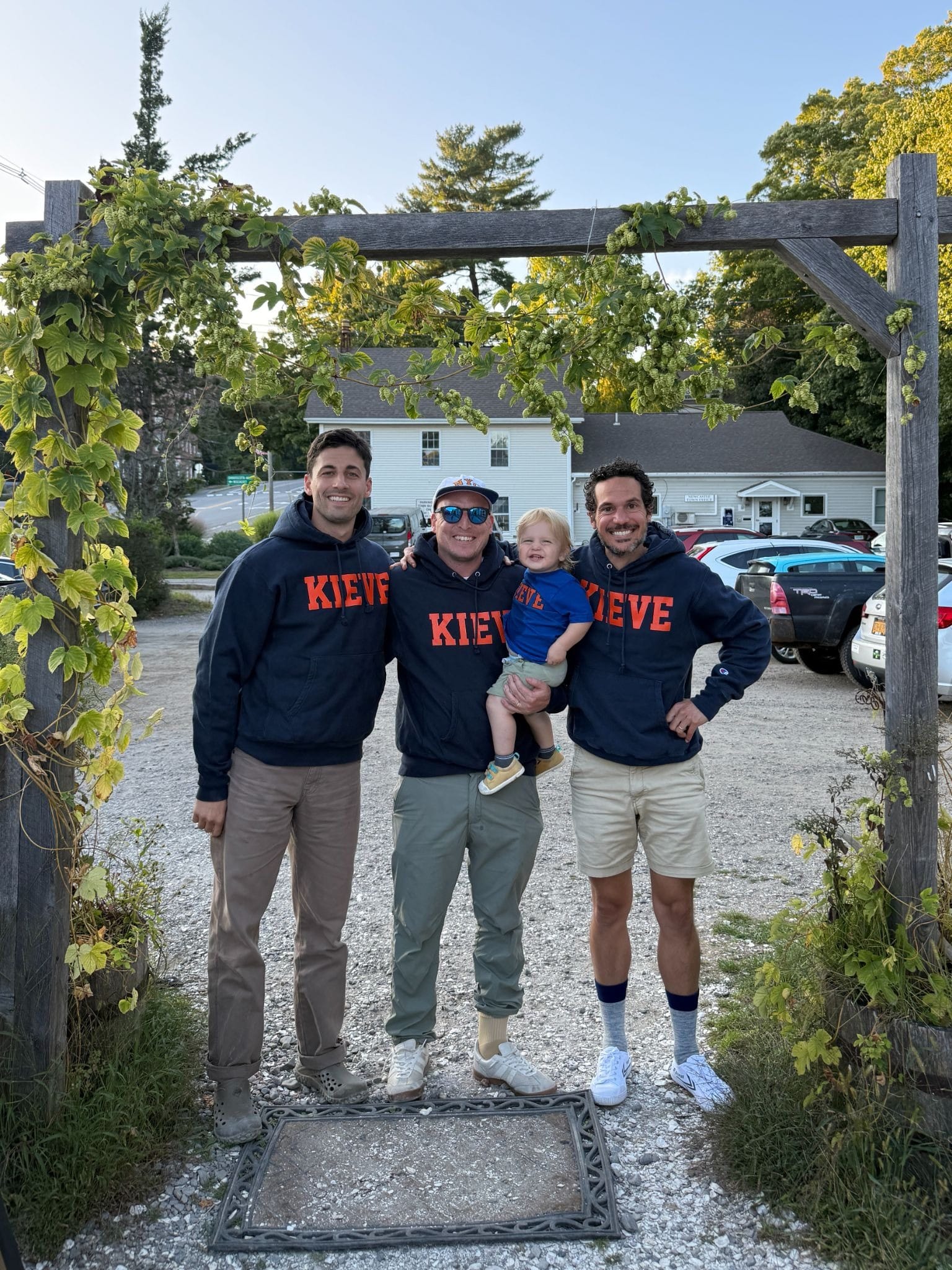
I also got to watch him work (another oddity of remote work life is that you often miss that part of the job). On the first day we were in Maine, we recorded a rare in-person episode of Suspension of the Rules. Mic and Aidan dutifully played with a few shots in front of a fireplace and helped give us the rustic Maine vibe before launching into one of the best episodes of the show we’ve recorded. Then, as most of the team retreated to the bonfire to share a few drinks and spend some quality time together, Mic locked into his computer and turned around a multi-shot, multi-track episode in mere hours. He missed a few drinks but got noticed by just about everyone — a genuine “beast mode” moment for an editor who we are all coming to rely on more and more.
With today’s announcement about the new Isaac Saul YouTube channel, Mic and I are embarking on a new journey together with Jon and Aidan — and it felt appropriate to use this month’s Press Pass to introduce him to all of you.
Q: Can you start by telling us a bit about your hometown and upbringing?
I was born in Florence, Italy, the third and last child of two high school sweethearts who went on to study medicine and, along the way, developed a coffee addiction that's still going strong today. I grew up with the smell of the second or third cup my dad would make for my mom at breakfast, the first ones having already been served and sipped in bed before they started their day.
When I mention I'm from Florence, people picture Renaissance paintings, marble statues, and dreamy architecture. But when you live there, it's really just a small Italian city trying to modernize and move beyond the unmatchable beauty of its past. Half of it is frozen in time, busy preserving the achievements of centuries ago; the other half is forever searching for a new identity, one that isn't defined entirely by a glorious but distant history. What still ties me to my hometown is the tension between those two sides, plus a somewhat inexplicable obsession with Fiorentina: the eternally average local soccer club that tries every year to climb to the top of Serie A, Italy's top league, and seldom succeeds. My mom took me to the stands as a kid to watch my first matches, describing each player on the pitch by name and role. Those were the years of Gabriel Batistuta in his prime. How could I not fall in love with the whole thing?
Politics was front and center throughout my formative years. My father voted for the PCI (the Italian Communist Party) right up until the Berlin Wall fell. In Cold War Italy, the Communist Party was the only real alternative to the Christian Democrats, the centrist Catholic party that dominated Italian politics for decades. But the Communists could never actually govern, since Washington wasn't about to let a NATO member be run by a party with ties to Moscow. For my dad, voting for the largest communist party in the Western world was a relatively safe way to express dissent, even though he felt nothing but horror toward the Soviet Union.
My mom's politics, on the other hand, were as pragmatic as her character. She always carried what I now consider a healthy, if potentially dangerous, dose of populism, doubting the real intentions of the political establishment.
Caught between the two, I've always found it hard to belong to any side, and I often feel lost among the sheer number of parties on the Italian political spectrum. I found hope in what could have been the grandest political project ever: a United States of Europe. I was 15 when the Euro currency was adopted, and it felt like an inevitable step toward a bigger, stronger European Union. Needless to say, it didn't work out as I'd hoped. When French voters sank the European Constitution in 2005, I realized I'd spent a good chunk of my life learning French for… what? The final blow was Brexit in 2016. I was living in London at the time, and that's when I channeled my inner Joan Didion and said “goodbye to all that.”
Q: Why did you decide to work at Tangle?
I didn't think a place like Tangle could exist, let alone succeed and carve out a real presence in today's media ecosystem. A news outlet that takes every side seriously, explains the arguments fairly, and still finds an audience? It sounded too good to be true.
Political analysis has been one of my favorite subjects since I started working in journalism, so when I saw that Tangle was expanding its video operation, I couldn't resist the urge to dive back in. Tangle's mission of speaking to readers across the whole political spectrum is exactly the kind of work I'd always hoped to contribute to.
Then I met Isaac and Jon during the interview process, and I realized how much I'd missed working with passionate, driven people who put the human side of the story first. So when I checked my inbox and saw that Jon had offered me the job of video editor, I knew I'd found the right place to put my skills to work.
Q: What's the hardest part of your job? What's the part you enjoy most?
I believe video editing is a lot like writing. The only thing that counts is answering the same questions over and over again: Is the viewer still with me? Are they paying attention, or have I lost them? Can I make this bit more interesting so I can carry them to the next part of the story? The same story can be told a hundred times, and each version can be more engaging than the last just by adjusting the pacing of the cuts, the music, the order of the scenes, the visuals on screen, or a well timed pause.
The hardest part is recognizing when a story is stalling or not driving its message home. After working on something for hours, it's really hard to look at it with fresh eyes. In those moments, my brain can't tell chocolate from poop, pardon the comparison. That's when I rely on my colleagues for notes I can trust. I've learned to be ready to “kill my darlings,” as they say, so I'm never precious about cutting something if it makes a video flow better.
The part I enjoy most is the act of creation that editing unlocks: choosing the right music, scanning hours of B-roll for the best shots, trimming an on-camera segment down to its most essential moments.
Q: You are our first-ever European-born employee. What have you enjoyed about moving to and living in the United States? And what do you miss most about Italy?
Moving to the U.S. has meant joining the young American experiment, the opposite of the identity I left behind, which feels totally defined by its history. These aren’t easy times in which to be American, but this is still a country where people collectively believe the future can be brighter than the past. That conviction is why I’m here.
What I miss most about Italy is the instant familiarity I feel walking down the street of almost any Italian city or town. Everything is within reach, and social life happens outdoors: You run into someone you know, they stop for a minute to talk, and then you both go on your way. And of course, I’d love to watch Fiorentina play at the stadium every now and then.
My debut video.
Alright: We need your help.
Today is day #1 of the new Isaac Saul YouTube channel. We want to make it special. The absolute best thing you can do is 1) Go watch our video start to finish and “like” it, which tells YouTube it’s a great piece of content that keeps people around (this should be easy, because it is!) and 2) Subscribe to the channel when you’re done. That’s it. Thank you!

Member comments