





Testing. Testing. Testing. Is this thing on? Is anyone reading this? Is the grid still up? I’m Isaac Saul, writing today from my bunker — er, studio — in New Jersey. Today I’m breaking down the latest slate of tech outages and AI warnings from across the country, eating some crow about something I got very wrong, and updating my assessment of how worried we should be. Plus, the stories we decided not to cover this week and a viral book series taking over the Cleveland Browns locker room.
It’s a 12-minute read. Time to batten down the hatches.
Will Kaback, Audrey Moorehead, Carina Pacheco, Russell Nystrom, Isaac Wood, and Bailey Saul edited or contributed to today’s newsletter.
Support independent journalism and save some cash this year with 40% off an all-access membership. It includes access to every newsletter and podcast we've ever produced, as well as access to our comments section and members-only exclusives.
Suspension of the Rules.
A “software Beirut”? Apps and emails and agencies going down? Advisories to stockpile supplies? On this week’s Suspension of the Rules, Isaac, Kmele, and guest host Audrey Moorehead break down AI-related fears and how they’re thinking about the past week’s news. You can watch here:
The latest episode
Quick hits.
- President Donald Trump met with Chinese President Xi Jinping and Russian President Vladimir Putin in China. The three discussed nuclear-weapons risks, United Nations reforms and plans to supply more oil to global markets, among other topics. (The meeting)
- Anthropic launched as a public company on the Nasdaq with a valuation of approximately $1.5 trillion. (The IPO)
- Defense Secretary Pete Hegseth signed a military cooperation deal with Venezuela. Hegseth called it “a reestablishment of our defense partnership.” (The deal)
- Denmark’s parliament ratified a security agreement with the United States over Greenland. (The ratification)
- Israeli forces conducted an operation in a central area of Gaza to address an “immediate and direct threat” from Hamas. Hamas accused the military of violating the U.S.-brokered ceasefire. (The operation)
Hey guys, Isaac here —
You know I love good food, and I’m always up for cooking a great meal. But let’s be honest: Between work, family, and everything else life throws at you, sometimes just figuring out what’s for dinner feels like a chore.
That’s why I love ButcherBox. It’s built for real life: high-quality meat delivered right to your door, ready whenever you need it. No last-minute grocery runs or sacrificing quality on busy nights.
I was using ButcherBox before they became a Tangle partner, and it’s become a staple in my kitchen. Having quality meat stocked in the freezer makes getting a great meal on the table that much easier.
Right now, new members get FREE steak and bacon for life + $20 off with code TANGLE.
Today’s topic.
The technology outages. Over the past week, a slew of outages across industries, service providers, and government agencies have heightened concerns about vulnerabilities in U.S. technology systems and the threat of artificial intelligence-driven cyberattacks. The notable examples include:
- A multi-day global outage of Microsoft’s Outlook service, which the company said was caused in part by a “latent defect” in its systems
- The Federal Aviation Administration calling a nationwide ground stop for most flights due to communications issues between planes and air traffic controllers
- United Airlines delaying flight departures for several hours due to a temporary system outage
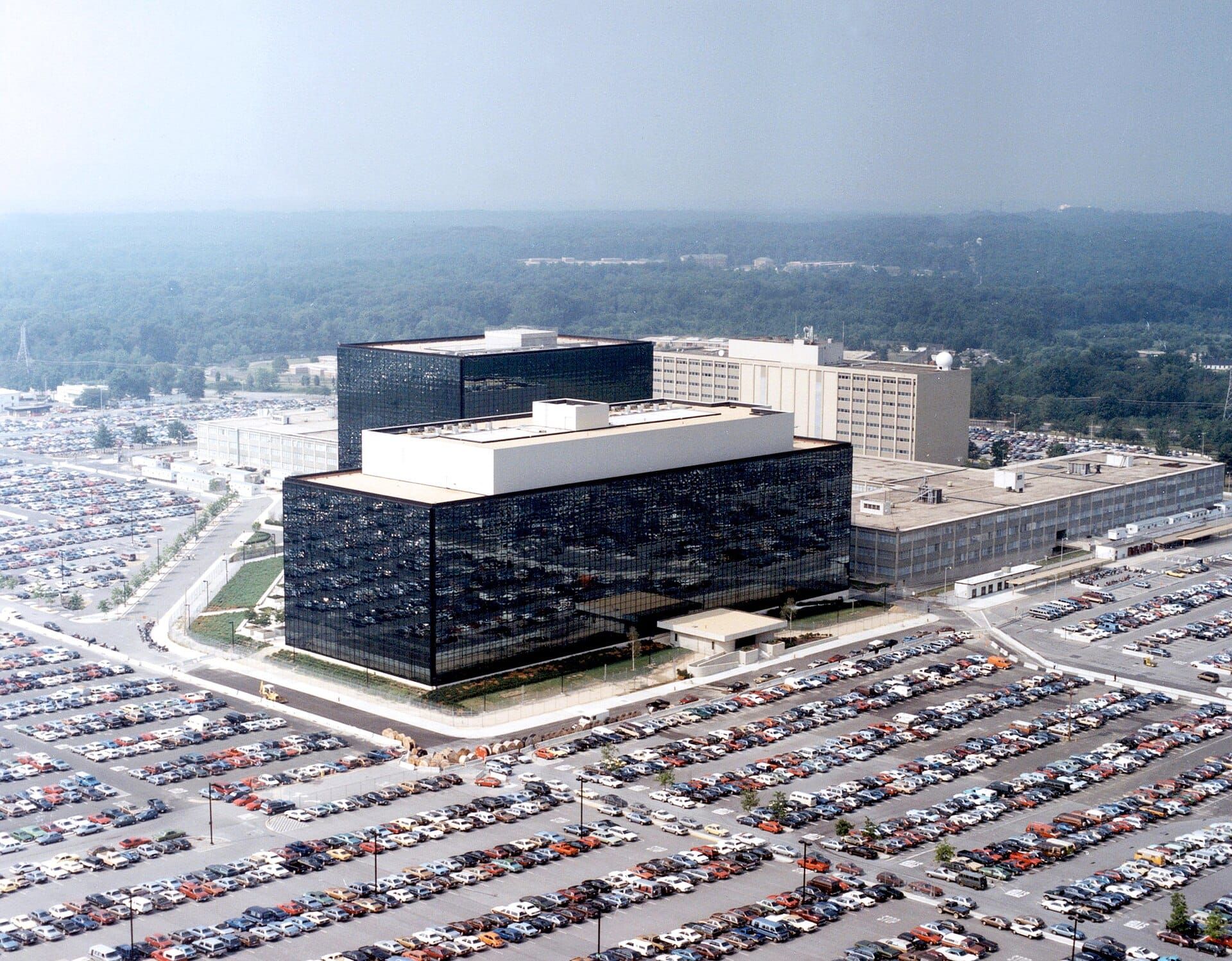
- An outage of a classified network used by the National Security Agency for internal communications
- A software issue affecting JPMorgan Chase’s online banking system
- An interruption to human resources management company Workday’s services
- An outage to Apple services, including the App Store, Apple Pay, and iCloud
- A cyberattack on 178 websites — including Zoom, CNN, Salesforce, and Ikea — that attempted to steal cryptocurrency and hack iPhones
Aside from the attempts to hack the 178 websites, affected companies and the federal government have maintained that the issues were not cyberattacks or connected to one another. However, some experts have said to expect more outages in the near future as companies seek to patch vulnerabilities in their technology in response to AI-related threats. On Monday, the Google Threat Intelligence Group released a statement saying “the era of autonomous attacks has arrived,” adding, “Bad actors are now using autonomous LLM frameworks to continuously scan software updates, figure out what flaw was patched, and build an attack for it — all without human involvement.”
The Trump administration says the outages are not linked. “We have no indication that these incidents are related, that they’re coordinated,” Director of National Intelligence Jay Clayton said. “We also have no indication that they’re [the] result of a state-sponsored malign actor.” Furthermore, during a House Homeland Security Committee hearing on Wednesday, Homeland Security Secretary Markwayne Mullin said, “I’m 98% confident that this has nothing to do with our adversaries hacking or going after our systems.”
Below are views from the left and right on the outages, followed by Executive Editor Isaac Saul’s take.
|
What the left is saying.
|
In The Atlantic, Ian Bogost suggested the “incidents could be related — unless they are not.”
“The proximity of these events makes them feel related. And maybe they are, in a way,” Bogost wrote. “Computer systems of all kinds have always gone down briefly. It happens every day. Why, suddenly, are people pretending that they expect every one of these machines to always work properly? Seeking, finding, decoding, and interpreting information that would answer these questions proves difficult.”
“The ignorance I am earnestly expressing about the nature of these events might later be proved foolhardy if a more widespread underlying circumstance reveals itself to be responsible, or even contributory,” Bogost said. “It would be both irresponsible to claim that I hold greater knowledge than the none that I actually possess, and embarrassing, besides, to be proved wrong. And so the door to a Widespread Problem must remain open to the unknowable future.”
In The Nation, Elie Mystal said “make America function again!”
“The United States is not failed, but it’s far from functional,” Mystal wrote. “Republicans run for office on the claim that government cannot work, and then spend their time in power destroying government just to prove that they were right. Neoliberals help Republicans by ceding critical government functions to the private sector, which in turn ignores the public good in an all-consuming chase for greater margins and profits.”
“The problem is not that we’re reliant on technology; humans have always relied on technology… The problem is that the tech is no longer made to be reliable. The tech is made to make money,” Mystal said. “[AI] is a technology that few people understand, and worse, the ones who do understand it are warning us that they can’t control it. We’re also using the AI to replace human workers, so when the AI breaks, our only choice is to ask the AI how to fix it.”
In CNN, Stephen Collinson wrote about “what should really scare Americans.”
“There’s no public evidence that any of the recent incidents were due to cyberattacks by a hostile power or criminal organization,” Collinson said. “Fears over whether this string of meltdowns might be the work of some unknown adversary, while understandable, may be a distraction from more material questions. The past five days have raised vulnerabilities that speak to a disorienting moment in a transition to a volatile and potentially dangerous new technological era.”
“Explaining how he’d fix the air traffic control network on Monday, Trump delivered a metaphor for a political method specifically designed to create instability rather than calm. [Trump said,] ‘We essentially want to blow it up,’” Collinson wrote. “If that’s his plan, the transition to the world of AI… will be rocky. This is a moment when anxious citizens need transparency, honesty and consistency from their government. So far that’s lacking, which is another kind of system failure.”
|
What the right is saying.
|
On his Substack, Erick-Woods Erickson said “I’d sleep better if it were the hackers.”
“If you know anything about the FAA, you should never presume hacking. Always presume incompetence and old equipment. This is an agency that still runs on floppy disks,” Erickson wrote. “The rest of it, I am convinced, is connected. Over the past couple of weeks, [several companies] announced they would be rolling out updates to keep AI agents from working inside their systems on behalf of consumers.”
“AI is finding holes in their systems faster than anyone expected, and they know that if their AI can find those holes, someone else’s AI can find them too,” Erickson said. “A cyberattack would at least mean someone, somewhere, was competent. What we actually have is critical infrastructure held together by old code and people scrambling to patch it before the real attacks come, and making a mess of it in the process. That is much harder to sleep through.”
In The American Spectator, Itxu Díaz argued “we need to know more.”
“One thing is becoming clear: we have entered an era of great uncertainty,” Díaz wrote. “I don’t believe, despite everything I’ve read on social media, that an out-of-control AI is causing all the world’s ills… I do believe AI is opening unexpected doors for the most dangerous hackers, who are not the ‘lone wolves’ but those working within the intelligence services of the world’s most dangerous nations, or those lurking in the back rooms of the most bloodthirsty terrorist groups.”
“We need answers, both from the major corporations affected and from governments. It is obvious that something has gone wrong in recent days, but it is not enough for the authorities simply to say that this is not a terrorist attack,” Díaz said. “I refuse to believe that no one is responsible for this string of disasters. It is one thing to reject conspiracy theories, but quite another to force us all to embrace Goofy-style thinking.”
In RedState, Ward Clark wrote about technology’s “fraying spots.”
“Our modern, high-tech society is utterly dependent, now, on a vast, interconnected, technical system, run by software, increasingly managed by artificial intelligence (AI) and dependent on our vast and aging power grid and telecommunications network,” Clark said. “It’s inevitable that we will see glitches in the system from time to time, and some of those, as Secretary Rubio assures us, are not the work of malign actors or hackers.
“Small disruptions can have large impact. The FAA’s technical problems caused a ground stop that had air travel around the nation tangled up for days. Outages at Apple and Microsoft could have easily caused big problems for business and personal accounts alike,” Clark wrote. “Related or not, what these incidents have revealed is that a small stone tossed into our collective online pool can cast some really outsized ripples. That’s something that’s worth bending a few brain cells to, and to prepare for.”
|
||||
|
||||
|
Reminder: This is where we share a personal opinion. If you have feedback, criticism or compliments, leave a comment or reply to this email.
|

Back in April, Anthropic announced a new AI model called “Mythos” and said it was too dangerous to be released to the public.
The company’s general message was: We built a product that’s so good at finding security vulnerabilities that we can’t release it publicly right now. Instead, we’ll launch a project (named Glasswing) to give American businesses a head start to shore up their security vulnerabilities before the public gets access to these tools. Anthropic said it expected other models to catch up in the coming months, at which point we’d see a slew of new tech vulnerabilities and cyber intrusions pop up across the world.
I saw this story through a simple lens: Anthropic was like a company selling a security system while telling you it had just identified all these fresh ways a burglar could break into your home. It was fear-mongering. Before, I’d been skeptical of these companies’ claims about their products; now, I was outright scornful. It felt like a marketing ploy from a bunch of people who were getting very good at talking about how powerful and advanced their product was.
I also wrote this:
If, over the next few months, everyone from Amazon to Chase to Meta starts scrambling to prepare for a new security threat, that will confirm to me that this threat is real. If these guys all play with the model and nothing really changes, I’ll assume that the threat was overhyped.
Well, it’s now been a few months. I pride myself on being an open-minded person willing to admit when I’m wrong and change my mind when presented with new evidence. Today, I have to admit: The threat is beginning to look very, very real. So it’s time for me to eat some crow and update my assessment.
Based on our knowledge right now, the wave of outages, tech issues, and general all-encompassing tech fragility across various sectors is not the result of rogue AI bots. It isn’t cybercriminals, and it’s not Iran or China, either. It appears to be exactly what Anthropic said would happen. A bunch of large corporations, institutions, and tech companies are using rapidly developing AI tools to identify their own security issues. Then they are trying to update, patch, and fix those issues. And in many cases, they are breaking things along the way.
That’s really it. That’s the story: AI-assisted corporations and institutions are in a race against AI-assisted threats, and everyone is moving so fast that our already fragile systems are beginning to crack.
It isn’t your imagination that this is happening more frequently, either. Yes, part of it is that we are just noticing these failures — and this tech fragility — more. But we are also actually experiencing a higher frequency of outages. Rohit Krishnan, a Wharton fellow and author of Building God: Demystifying AI for Decision Makers, put together a helpful chart mapping rates of tech outages from the last 10 years. It shows we are not at all-time highs, but we are in a period of much higher system failures than normal. According to Krishnan, we haven’t seen this volume of disruptions across sectors since 2013.
All of this has me seriously reconsidering my rather blasé attitude about the rapid development of AI. Among other things, in recent writings, I’ve said that on a scale of 1 to 10, with 1 being the very early stages of AI capabilities and 10 being AI as a fully realized technology, I think we are closer to a 7 than a 3. In other words, these models weren’t going to get much better than they are now.
That thesis is looking less likely every day. The models and products are continuing to improve rapidly, and we are not getting many signals that they are slowing down. Mythos was just one marker on the highway, but Anthropic's warnings about what models like it would do appear to be accurate.
I’ve also been skeptical about how dangerous it would be to allow these products to hit the open market. But a collection of events has changed my opinion there, too: I’ve had several conversations with friends, readers, and experts in the space who convinced me I should be more worried than I am. I listened to Bill Gates’s recent interview with Ezra Klein, which genuinely scared me, not least because Gates himself seemed so thoroughly afraid. The Google Threat Intelligence Group then warned this week that the “era of autonomous attacks has arrived,” and we are now up against a “hacker that doesn’t eat, sleep, or get tired, and never stops searching for a way in.” And through all of this, I’ve been watching news story after news story about all the ways major industries seem unprepared for this moment.
Think about it this way: The FAA called a national ground stop, the NSA had an internal communication system crash, and online banking service issues popped up all in just the last week. Each was (purportedly) caused by attempts to update or patch vulnerable systems. Which has me thinking: If the people trying to be helpful can so easily break the things they are working to improve, what does that say about the odds that actual AI-assisted cyber criminals (or, God forbid, rogue AI agents) will have much trouble bringing all these institutions to their knees?
Given all this, I feel much less confident about our potential to prevent a banking collapse, rogue AI from escaping containment, or government systems from being compromised. All of a sudden, a multi-week grid collapse or the potential for the U.S. military to be kneecapped in a “cyber incident” doesn’t seem so far-fetched. It’s honestly starting to feel a little Pollyannaish to think it won’t happen.
There’s no “but” here. I’m frustrated and a little uneasy to say that I don’t have an optimistic landing. I take solace in people like John Hultquist, the chief analyst at Google Threat Intelligence Group, who said this week, “Things are going to go offline periodically as the world manages a generation of tech debt. It will be a nuisance, but it will be okay.” I hope it’s as simple as that, but I can’t say I share his optimism anymore.
The people leading the AI revolution seem hellbent on pushing forward no matter the cost, despite their constant warnings that they might wipe out all of humanity. The government leaders responsible for regulating away the dangers of these kinds of technologies are busy obsessing over what we call them, or are totally in cahoots with the AI leaders themselves, or are so technically illiterate that any attempt to be helpful is nearly useless. And the rest of us common folk are just along for the ride.
So here’s to hoping the techies, nerds, and their billionaire bosses know what they’re doing. Because it’s starting to feel like the game is afoot. And I can’t say I’m keen to find out who wins.

Take the survey: Do you think outages will grow more disruptive to daily life? Let us know.
Disagree? That’s okay. Our opinion is just one of many. Write in and let us know why, and we’ll consider publishing your feedback.
The road not taken.
Democrats’ votes for House and Senate leadership, President Trump’s trip to Asia, the U.S. losing its measles elimination status, and a report that Iran is developing plans to target Trump administration officials in Washington, D.C. all merit the full “Tangle treatment.” But our editorial team agreed that each of those stories would benefit from more time to digest (similar to our decision to wait on covering Jensen Huang and Nvidia until this week). The contest between Sens. Chuck Schumer (D-NY) and Chris Van Hollen (D-MD) to be the next Senate majority leader is still playing out, Trump’s trip abroad is still underway, reactions to the measles news are still developing, and details on the Iranian plot are still speculative. We’re keeping tabs on all four stories for next week.
Life gets busy, but eating well doesn’t have to be complicated.
ButcherBox makes it easy to keep high-quality meat stocked in your freezer, so a great meal is always within reach.
Get FREE steak and bacon for life + $20 off your first order with code TANGLE.
The extras.
- One year ago today we covered the hemp ban.
- The most clicked link in our last regular newsletter was our mini-doc on the Great Salt Lake drying up.
- Nothing to do with politics: A timely how-to: different ways to encrypt your email.
- Our last survey: As of 10:00 AM ET, 1,462 readers responded to our survey on the Bipartisan American Affordability and Jobs Act, with 47% saying they somewhat support the legislation. “If it does what it proposes to make it possible to get timely review of projects while taking into account all the inputs, great. Currently we have a system of full employment for lawyers,” one respondent said. “The bill gives too much power to the executive,” said another.
Have a nice day.
The Red Rising series is a hit with millions of readers worldwide — including some football players on the Cleveland Browns. The books have taken the team’s locker room by storm, with linebacker Carson Schwesinger and safety Ronnie Hickman serving as their biggest cheerleaders. The team invited the author, the aptly named Pierce Brown, to attend last Sunday’s game, and he met with Schwesinger, Hickman, and other fans of the series on the team. The next day, they hosted a Q&A and book signing for 200 fans in the Cleveland area. “What I found is how surprised I was that the bonds of common family that are emphasized in the series are represented by this organization,” Brown said. News 5 Cleveland has the story.

Member comments