






 500,000+ readers just today.


The everything, everywhere, all at once corruption story.
Editor's note: By popular demand, we've removed the paywall from this story to make it accessible for as many readers as possible. If you appreciate our work, please consider support us with a membership, which accounts for 90% of our revenue.
My oldest brother has an incredible gift: He’s capable of saying the most incendiary, inappropriate things at the perfect moment and somehow getting a laugh regardless of who he’s in front of.
I’m not quite sure how he does it. But I’ve watched him perfect this art since I was a kid. It used to be most apparent with my parents, who’d sometimes have trouble disciplining him because he could essentially shit-talk his way out of any situation and earn a laugh. As we got older, it felt like this talent elevated to a new tier, like he’d beaten the “mom is mad” boss and moved onto “can I get the priest to crack a smile in the middle of the funeral?”
I’ve been thinking about this skill a lot recently. This innate ability some people have to do something in a particular way that disarms everyone around them, and then the way some people try to replicate that behavior in the exact same context, with the exact same approach, and get disastrous results (I think, often, about trying some of the jokes I’ve heard my brother make to my mom, knowing full well they would never quite land, though I can’t say exactly why).
Anyway, in April, The New York Times broke the story that President Donald Trump’s daughter and son-in-law are negotiating a luxury hotel with Syrian billionaires who are simultaneously lobbying the president to lift economic sanctions on their country. I’ll write that sentence again just in case it didn’t land the first time: President Donald Trump’s children are negotiating a luxury hotel with Syrian billionaires who are simultaneously lobbying the president to lift economic sanctions on their country.
I can’t explain why that story doesn’t have quite the same punch as, “According to The New York Times, Hunter Biden is negotiating a Biden-branded luxury hotel with Syrian billionaires; those Syrian billionaires are also lobbying President Joe Biden to lift economic sanctions on their country.” Yet I know that, for some reason, the real story we’re living through right now — the one where Trump’s kids are funneling money directly to their family fortune while the U.S. government hands out favors in return — just doesn’t seem to get any traction with the public.
I consider myself a pretty fair-minded guy whose politics are quite moderate. And I still believe the Hunter Biden story deserved as much attention as it got. I spent years following the laptop and gun charges story, and I found the details both alarming and unsavory. If you click the “Hunter Biden” tag on our website, you’ll see more than 20 stories that involve the president’s son from the four years of the Biden administration. We wrote about everything from the suppression of the laptop story to the Twitter files to the business deals Hunter tried to loop his dad into to his prosecution for gun possession, and I spent most of those four years demanding more answers than we were getting.
I don’t regret pursuing or publishing any of those stories. There was plenty of smoke, and Biden wrapped his time in office by abusing the power of the pardon to ensure there would never be real accountability if there was criminality. But I’m disheartened and frustrated now to see that right-wing writers, Trump voters, and Republican politicians who cheered me on when I was investigating potential Biden corruption are now just ignoring the comparably gargantuan scandals of (alleged) corruption we’re witnessing now.
On some level, I can understand the discrepancy: There’s so much news, and so many allegations about Trump that it becomes easy to tune it all out (both for his supporters and critics). News fatigue is real, and when we consume the news we are often fed content from organizations and individuals that share our politics.
But, to state it plainly: After reviewing the evidence of the first 15 months of President Trump’s second term, I believe the president is profiting off the office and making foreign policy decisions based on business interests to a level we’ve never seen or even conceived of before, and apparently nothing is being done to stop it.
I can’t level that claim directly and unambiguously because we haven’t really had the basic facts adjudicated, since Republicans in Congress have opted for complete and utter fealty to Trump in every manner imaginable. There is no oversight, or accountability, or even the slightest inclination to ask about these actions in the majority party. The Trump administration has also dismantled many of the federal watchdogs responsible for prosecuting fraud, grift and corruption, so few of its actions have been probed in any meaningful way.
Instead of indictments, congressional investigations, or public hearings, the best we are left with is great reporting from journalists, the occasional leak from the administration, a right-wing writer here or there willing to say the real thing out loud, and then a whole lot of “Occam’s razor” questions like, “Which is likelier, that the person who made a massive financial bet on oil prices 20 minutes before Trump announced a ceasefire knew about it or just got extraordinarily lucky?”
During President Joe Biden’s term, the Department of Justice could say, at least, that it had investigated the president’s son. Republicans in Congress also conducted a yearslong investigation into the Hunter Biden business ties and how they might link back to the president. Here, though, we have nothing; every story I’m about to point to has not produced even a unified statement of concern from, say, a half dozen Republican senators worried about government corruption.
Remember, Hunter’s story was about drawing a $50,000/month salary while his dad was vice president and then allegedly trying to arrange some business ventures he might cut Joe Biden in on once he was out of office. Republicans’ yearslong investigation never turned up any hard evidence of the latter, though there was enough smoke I still think the story was plausible.
Today, we’re talking about the president’s children launching multi-billion dollar business ventures — several of them — while the president is in office, and then explicitly exchanging all manner of domestic policy victories, foreign policy concessions, and literal pardons in the construction of those deals. Trump himself has all but admitted this is happening. He told The New York Times that “nobody cared” when he tried to separate his family business from his administration during his first term, so he isn’t even trying now.
I have tracked these stories with one of my senior editors for the last year and a half. The list of things that have happened is so long and shocking when you see it all together that I’m not entirely sure how to present it. I’ve gone back and forth; maybe I should build a flow chart? What about a spreadsheet? Should this be a YouTube video, instead of a written piece? Will anyone actually read the entire thing? Can anyone actually process this level of self-dealing, corruption, and shadiness at once?
Ultimately, I decided that the best I can do is try to write all these instances down in an engaging way that might grab your attention and wake us all up from whatever stupor we’re in. So… here goes.
Let’s start with the cryptocurrency.
Perhaps the largest vehicle for Trump’s self-dealing has been his foray into cryptocurrency. This is a complicated space that I will try to make as straightforward and simple as possible.
In 2024, the Trump family launched a crypto company called World Liberty Financial. Trump is listed as a “co-founder emeritus.” By December of 2025, they had profited roughly $1 billion from proceeds while holding $3 billion in unsold cryptocurrency tokens, amassing a fortune larger than their entire real estate portfolio. At the same time the president was pushing his family’s new crypto venture, he was cutting crypto regulation, touting the potential of private digital currencies to help the U.S. economy, and promising to unleash the industry he and his family were simultaneously profiting from.
But the president wasn’t only directly making money in an industry he was deregulating; the Trumps benefitted through intermediaries, too. Last summer, World Liberty Financial bought a publicly listed firm and raised $750 million from investors to buy its own cryptocurrency, WLFI. The Wall Street Journal tepidly described this setup as an “unusually circular transaction with the same party as buyer and seller” that could net the Trump family an additional $500 million.
Essentially, the Trump family launched a cryptocurrency firm while deregulating the crypto industry, then bought a separate firm that it used to buy its own cryptocurrency while also raising three quarters of a billion dollars from investors to buy that same cryptocurrency.
Just days before he was inaugurated, Trump also launched a personal “memecoin” called $TRUMP. Memecoins are cryptocurrencies made about internet jokes, pop culture moments, or viral trends. They have no underlying value or technological purpose; the value of the coin is driven entirely by social hype. Trump created hype for his memecoin by launching it months after being elected and just three days before being inaugurated. He promoted $TRUMP on social media and, while president, even held a dinner for the top 220 holders of the coin at one of his golf resorts in Virginia. He held another one at Mar-a-Lago this past weekend. The initial coin offering released 200 million tokens of its billion-token supply to the public on the first day. The price skyrocketed 300% overnight and hit an all-time high of $74.27 on January 19, right before Trump’s inauguration. $TRUMP has since cratered, losing 97% of its value (for context, if you had bought $1,000 at its peak, your $1,000 would now be worth about $30).
Trump, naturally, profited. The exact figures are hard to pin, but The Financial Times estimated that the scheme netted him personally about $350 million, while Trump’s holdings of the coin through a separate partnership could be worth billions more. It wasn’t just the president, either; First Lady Melania Trump launched her own memecoin, which also skyrocketed in value before a massive sell-off that she profited from (what people in the industry call a “rug pull”). Most of the people who bought and held the coin based on the hype the Trumps created ended up losing most of their money, but the coin’s creators got rich (or, in this case, richer).
This cryptocurrency foray hasn’t just been a vehicle for self-enrichment, but also a vehicle for quid pro quos. Perhaps the most obvious and overt involved Justin Sun, a crypto billionaire who was being investigated by the SEC for fraud. Sun, in the midst of his investigation, bought $75 million of WLFI — the World Liberty Financial coin — and then became an adviser at the company. Shortly after that investment, the SEC backed off its investigation and settled with him for $10 million, a small fraction of the expected penalties he was set to pay (on top of potential prison time). Of course, it’s possible that the SEC, an organization now openly being influenced by the president, just happened to back off its investigation in the weeks following Sun’s $75 million investment into Trump’s crypto firm.
It’s also possible that the two events are related.
The crypto story, though, hardly ended there. In late April, CBS reported that Sun was suing the Trump administration’s World Liberty Financial, alleging fraud. That’s right: Sun, whose initial case has since concluded, has now turned around and sued the Trump family, alleging that the president and his sons are illegally blocking him from selling his digital tokens that are worth as much as $1 billion. Sun also claims that World Liberty Financial tried to pressure him into investing in its stable coin, and that the company froze his tokens after he refused to commit more money to the business.
It’s hard to identify the villain.
Sun’s apparent quid pro quo to get out from under government oversight is just one example. Changpeng Zhao, the founder of Binance, was pardoned by President Trump shortly after Zhao helped boost WLFI’s prominence by allowing the currency to be traded on the crypto exchange Binance, which Zhao started. After the pardon, Zhao became one of the Trumps’ business partners, boosting the family’s crypto empire while skating serious charges that he allowed money to flow to terrorists, cyber criminals, and child abusers on his platform.
If that’s not enough, more shocking news broke this week. According to The Wall Street Journal, World Liberty Financial inadvertently partnered with two men the U.S. government had sanctioned a month before for helping run a transnational criminal syndicate that had stolen billions of dollars from Americans through online scams. To repeat: Last fall, the Trump administration announced criminal charges against a transnational criminal syndicate for stealing billions of dollars from Americans in online scams. A month later, two of the men it sanctioned partnered with the Trump family’s crypto company.
The evidence of crypto investments from foreign nationals operating as de facto bribes doesn’t end there. Consider the story of Sheikh Tahnoun bin Zayed Al Nahyan, the brother of the United Arab Emirates (UAE) president and one of the most powerful politicians in the Middle East (he’s served as the UAE’s national security advisor since 2016). He stewards an empire of wealth worth roughly $1.5 trillion, and a firm closely tied to him secretly signed a deal for a 49% stake in WLFI worth $500 million — including $187 million paid upfront to Trump family entities just days before Trump’s inauguration. Shortly after Trump took office, the administration undid a national security block that would have prevented the UAE from getting up to 500,000 advanced Nvidia AI chips.
Some right-wing writers, like National Review’s Andrew McCarthy, have been brave enough to take this story head-on — but many have ignored it.
Sometimes, the favors happen en masse. The crypto industry as a whole was a top donor to Trump’s 2025 inauguration fund, and the SEC then dropped or paused over a dozen cases against crypto firms, or simply handed them huge access to government-directed crypto entities. Several of those cases, like Sun’s, were tied directly to donations. Coinbase donated $1 million; its lawsuit was dropped. Ripple ($4.9 million) and Solana ($1 million) had their tokens added to the national Digital Asset Stockpile.
I want to pause here to remind people that we spent all four years of the Biden administration talking about Hunter Biden’s alleged $50,000 a month salary while working at an energy firm in Ukraine, and the possibility that he was setting up some business deals for his father after he left the vice presidency. Rep. Marjorie Taylor Greene (R-GA) introduced articles of impeachment alleging Biden “abused the power of the Office of the Vice President, enabling bribery and other high crimes and misdemeanors, by allowing his son to influence the domestic policy of a foreign nation and accept various benefits—including financial compensation—from foreign nationals in exchange for certain favors.”
Conversely, the final tally of investments from parties with conflicts of interest into crypto assets personally managed by the Trump family safely enters the range of billions of dollars — a scale of thousands of millions, in just one sector and in just over one year, while the president was actually in office.
It’s not just cryptocurrency.
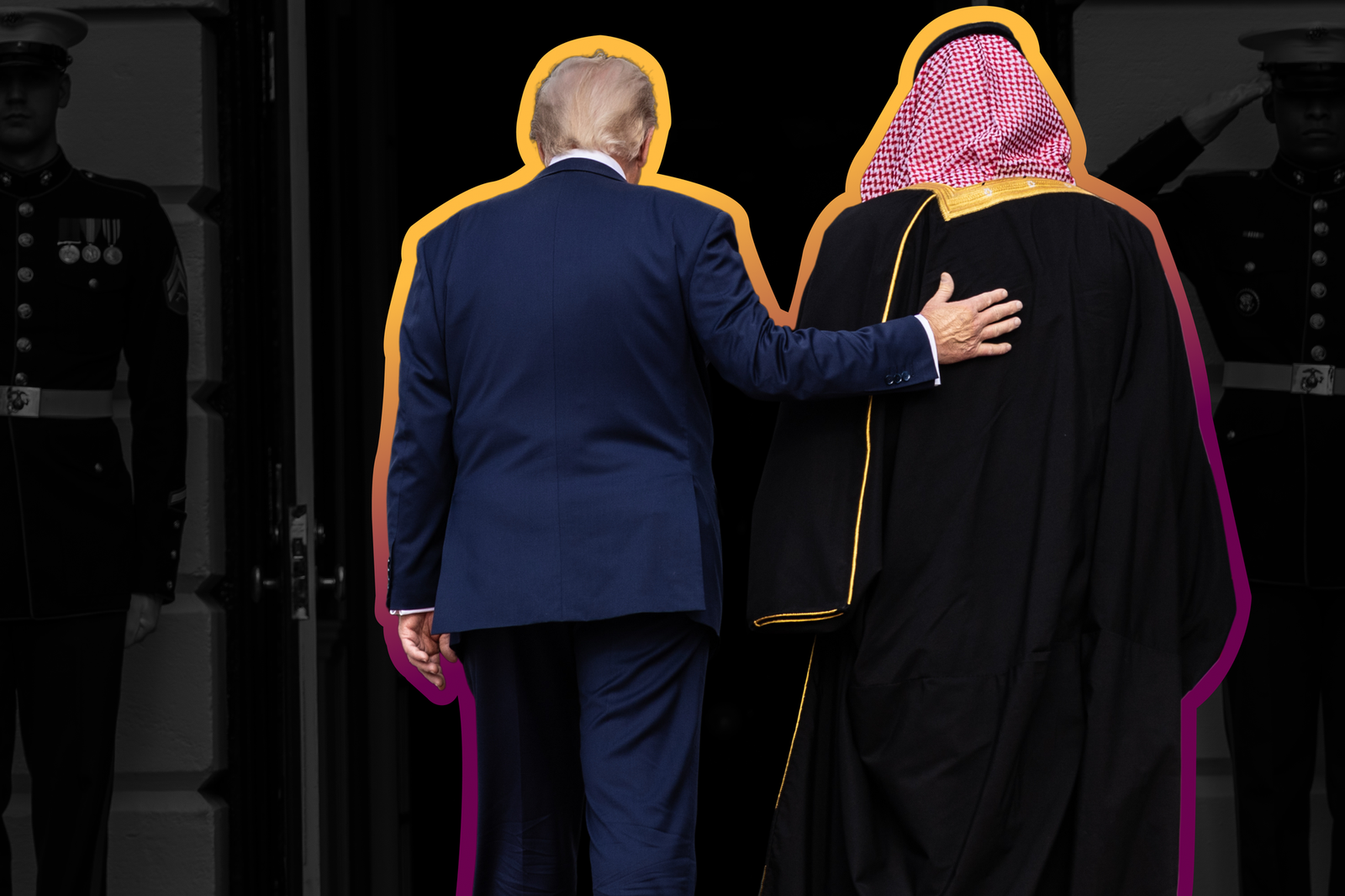
Much of the self-dealing, appearance of corruption, and conflicts of interest have little or nothing to do with cryptocurrency. Jared Kushner, the president’s son-in-law, is now representing the U.S. in the Middle East as a negotiator to end the Iran war, despite having no congressionally approved title or position in the administration. He also operates Affinity Partners, a private equity firm that received $2 billion from Saudi Arabia’s sovereign wealth fund in 2022.
One might expect that the war in Iran, whose end Kushner is attempting to negotiate, and whose future Saudi Arabia has a direct stake in, might dissuade him from pursuing these business interests. Instead, it’s actually drawn him toward the opportunity. Here is The New York Times:
Jared Kushner, one of the U.S. government’s chief negotiators in the Middle East, is trying to raise more money for his private equity firm from governments in the region.
Mr. Kushner, President Trump’s son-in-law, has spoken with potential investors in recent weeks about raising $5 billion or more for Affinity Partners, his investment firm, according to five people with knowledge of the talks who were not permitted to speak publicly about the discussions.
In 2024, Kushner defended the investment from the Saudis, claimed it wasn’t a conflict of interest, and demanded his critics “point to a single decision we made that wasn’t in the interest of America.” Here, I’ll remind you that the Saudis are both investing in Kushner’s firm and pushing the president to continue investing U.S. taxpayer dollars and U.S. soldiers in the war against Iran, their regional enemy. Trump, you’ll notice, is doing just that.
Again: Kushner has not been formally accused of any criminality. Congress is not even investigating these conflicts of interest. But are we to believe that the president’s son-in-law is not considering, say, a $2 billion investment in his private fund while operating as a government representative in the Middle East? Are we supposed to think the president and his chief negotiator are not having their decision-making impacted, even marginally, by the Saudis’ investments?
This single conflict of interest would be a major scandal in any other administration. If none of the crypto self-enrichment and quid pro quos existed, or if this were the only financial complication at hand, it would still be grounds to question the integrity of the administration’s foreign policy, and it would be worthy of months if not years of hearings and investigations. But it’s really just the tip of the iceberg.
The Saudis were also hosting their international golf tournament at Trump’s Doral and Bedminster properties while Trump was approving a nearly $142 billion arms deal with Saudi Arabia, ignoring concerns from his own Pentagon about selling them F-35 fighter jets. Trump even named Saudi Arabia a major non-NATO ally. Even more, the Trump organization is partnering with the Saudis on Trump Tower Jeddah and other Saudi real estate developments.
By popular demand, we've removed the paywall from this story to make it accessible for as many readers as possible. If you appreciate our work, please consider support us with a membership, which accounts for 90% of our revenue.
Then there’s Qatar, which offered Trump a $400 million luxury airplane to be used as Air Force One while simultaneously making investments in his crypto venture — all culminating in favorable U.S. arms sales worth $1.96 billion in March of 2026. Eight foreign governments have hosted or sponsored events at Trump properties in the first year of his second term.
Trump’s hotels also serve as a vehicle for profiting from diplomatic relations. Foreign government officials visited Trump properties 60 times during Trump’s first year back in office and paid millions in direct payments to those properties. Trump International Hotel received approximately $3.7 million from foreign governments. Oh, and Trump also happened to select the Trump National Doral Miami hotel to host the December G20 summit later this year.
All of this is material conflict of interest or outright corruption that has been documented through publicly disclosed deals, investigative reporting, FOIA requests, and more. But there are plenty of other concerns that we don’t have clarity on. For instance, some traders have been making massive, seemingly irrational bets on Trump reversing course on major policy decisions just minutes before those reversals are made public. These people are trading on things like an announcement that tariffs would be paused or a ceasefire in Iran — with timing that only administration insiders could have anticipated.
Even arguing about whether the president has committed any crimes or engaged in corruption or self-dealing is almost beside the point; my own thoughts don’t really matter. More pressing is that the president lied to voters — both his supporters and his opponents. In January of 2025, Trump released an “ethics agreement” detailing how he’d handle his personal business interests while in the White House. The agreement itself is close to meaningless; it has no teeth, makes no promises to divest assets, and unlike the agreement from his first term, does not prohibit him from striking new deals abroad while president.
Yet it did make a promise that the Trump Organization would not strike any deals directly with foreign governments apart from “ordinary course transactions.” And still, even that tiny little narrow promise — it appears the Trumps broke it.
Here, I’ll interject with one more reminder: When Hillary Clinton was first lady, she endured a weekslong scandal over reports that she had once made nearly $100,000 from investing $1,000 in cattle futures — an investment she’d made a dozen years before Bill Clinton became president. By the time Trump ran for office in 2016, under the “drain the swamp” mantra of rooting out corruption by other politicians, he excoriated the Clintons for… taking money from Saudi Arabia and other Middle East monarchies. That money, which Trump criticized her for accepting, was going to the Clinton Foundation — a philanthropic fund run by the Clintons. The money Trump is taking now goes directly to private businesses he owns.
It’s not just foreign entanglements, either.
A lot of what I’ve written so far has involved the Trump administration simultaneously dictating foreign policy while also taking funds, in some form, from foreign governments, leaders, or wealthy foreign actors. Yet plenty of this is happening domestically, too.
For instance: The Trump Organization launched Trump Mobile, a branded phone that costs $499 and an additional $47.45/month for the “47” plan. The Trump organization does not manufacture the phone or provide cell service (the phone itself has yet to be released, and the network will be operated by Liberty Mobile Wireless). Instead, Trump licenses his name to the deal and then promotes it using the presidential brand while he is in office — all at a cool profit.
Wherever you look, there’s another potential profit. Last spring, the Trump family opened an exclusive club in Washington called “Executive Branch” that charges $500,000 per membership. The parent company of Trump’s social media platform, Truth Social, even launched as a publicly traded organization with his initials, DJT, as its ticker; Trump himself holds a huge stake in the company and the stock’s value has fluctuated based solely on Trump’s political fortunes. Shoot, the president’s son, Eric Trump, went on Fox News and graciously received congratulations about his own company receiving a $24 million Pentagon contract.
Just yesterday, while I was finishing up this story, The Financial Times reported that the Trump sons had taken a stake in the Kazakh mining company that just won a $1.6 billion contract from the Trump administration. Then, hours later, a Bloomberg story landed in my inbox about the U.S. Air Force agreeing to buy an undisclosed number of interceptor drones from a company backed by President Trump’s sons. During a talk I did with college students at St. Olaf College in Minnesota this morning, one of the students asked me about the president’s son Donald Trump Jr. investing in and advising the gambling and prediction market companies Kalshi and Polymarket. I didn’t even know about it. I’d just spent the past week writing and researching claims of corruption against the Trump family, and I’m still discovering glaring new examples every day.
You might be thinking: Where are the people who are supposed to be enforcing laws against this kind of self-dealing and corruption?
Good question.
More than a dozen Inspectors General have been fired since Trump took office. Those are the independent watchdogs responsible for rooting out fraud, waste, and corruption across the federal government. The DOJ has issued guidance paring back its Foreign Agents Registration Act enforcement, meaning malign foreign influence is being prosecuted at a much lower rate. Trump also suspended the anti-bribery enforcement law known as the Foreign Corrupt Practices Act for four months, then reinstated a narrower version of the law with approximately half of the previous bench of prosecutors to enforce it. He also rescinded Biden’s executive branch ethics requirements on his first day in office; the administration essentially operates without published guidelines to point to for how the Trump family does business with foreign governments and entities.
All the other quid pro quos.
While Trump’s behavior amounts to obvious self-dealing or, in some cases, conflicts of interest, other investments he’s received have shown a direct pattern of pay-to-play benefits — simple monetary quid pro quos.
Trump and Vice President JD Vance lobbied Congress to exclude them from a ban on stock trading. Trump took roughly $50 million for his inauguration fund from organizations facing federal enforcement action, including Bank of America, Capital One, JPMorgan, and Toyota. Each of those companies was facing federal investigations that were either paused or frozen in the wake of the donations. Apple donated $1 million to the fund, then Trump exempted Apple products (manufactured in China) from tariffs — a decision that likely saved the company billions of dollars.
Perhaps most explicitly, Jeff Bezos, owner of The Washington Post and founder of Amazon, agreed to finance a promotional film about Melania Trump’s life that netted her an estimated $28 million. This, along with the Post’s editorial board taking on a more conservative bent, appears to have yielded some results — now Trump is openly musing about rebooting The Apprentice on Amazon, with Don Jr. as the star.
During Trump’s first term, frustrated by the Post’s negative coverage of him, he regularly targeted Bezos by pushing aides to increase U.S. postal shipping rates on Amazon. This time around, Trump and Bezos appear to be on good terms. The same is true of Qatar, which Trump once denounced as a terrorism sponsor yet now counts as an emerging ally.
It’s not just financial deals, either; Trump’s pardons have all but declared it open season for corruption all across the country. The president has given special latitude to Republican members of Congress who have been convicted of serious crimes.
Chris Collins, the first House member to endorse Trump in early 2016, was convicted of insider trading — a straightforward scheme where he sat on a corporate board and tipped off his son to dump shares before non-public news became public. Trump pardoned him. Duncan Hunter, another early Trump endorser, pleaded guilty to using campaign funds for personal expenses. Trump pardoned him. And, of course, there is George Santos, who brazenly lied about his own biographical information and committed wire fraud and identity theft; Trump commuted his sentence (and canceled remaining fines and restitution payments) after telling Newsmax he was open to the pardon because Santos was “100% for Trump.”
That’s only a partial list for Trump’s second term — if you go back to his first term, you could add in Steve Stockman, Rick Renzi, Robin Hayes, Duke Cunningham, and more. Consider this remarkable statistic: According to GovTrack’s Legislator Misconduct Database, at the end of his first term, Trump had pardoned a majority of all Republican Congressmen convicted of felonies in the 21st century. These Congressmen — convicted of defrauding donors, taking bribes from the military industrial complex, and stealing money from charities — they are the swamp. Yet Trump gave them a pass.
Those free passes go far beyond Republican members of Congress, too. Todd and Julie Chrisley, two reality TV stars convicted of defrauding banks for $36 million, were pardoned after their daughter spoke on stage at the RNC. Sheriff Scott Jenkins was pardoned before he began his 10-year sentence for bribery. Lawrence Duran, a Medicare executive convicted of a $205 million fraud scheme, was granted clemency. Jason Galanis, convicted of securities fraud and defrauding the Oglala Sioux National of $60 million, had his sentence commuted. Former Tennessee House Speaker Glen Casada and his chief of staff Cade Cothren were pardoned after their convictions for public corruption.
The most egregious example is probably Trevor Milton, who donated $1.8 million to Trump’s re-election fund heading into the 2024 race. Milton was found guilty of securities and wire fraud for lying to investors about nearly all aspects of his company’s technology; Milton famously showed investors a video of a functional truck his company had developed that was actually rolling down a hill. After his conviction, he owed $676 million in restitution to the victims of his scheme. Trump’s pardon wiped that restitution out. Milton’s defense attorney is former Attorney General Pam Bondi’s brother, and when asked about the pardon, Trump said he’d never heard of him until someone recommended his pardon, adding, “They say the thing that he did wrong was he was one of the first people that supported a gentleman named Donald Trump for president.”
The list goes on and on and on. Fraudsters and corrupt politicians all being let off the hook — all for no reason other than their support for Trump or connection to someone in his orbit. In some cases, as with Milton, Trump purports to have pardoned them without even knowing who they are — either a blatant lie or an admission of how recklessly he’s wielding one of his most unchecked powers.
This system has created an entire pardon economy, in which people close to Trump — including formerly pardoned people themselves like former Illinois Gov. Rod Blagojevich (D) — now charge exorbitant fees to secure a pardon from Trump. If you’re a rich, corrupt executive or former Congressman who screwed over investors or donors and are about to go to jail, you just need a million dollars and the phone number of someone like Blagojevich, who then goes to the president and helps set you free. This is not an exaggeration; it’s happening right now.
An indisputable portrait.
Together, this story paints a picture that I find impossible to deny: Trump is swimming in self-dealing, corruption, and quid pro quos. His defenders will note that other presidents have profited from the office before; this is true. They may further posit that rules like the Emoluments Clause are rarely enforced; this is also true.
But they can’t or shouldn’t deny that we’ve never seen anything like this. We’ve never seen the scale, the brazenness, or the volume of the self-enrichment, corruption, and betrayal of ethics. Trump is using the presidency to make himself exorbitantly rich, even when the strategies to do so cost his supporters hundreds of millions of dollars, eliminate restitution for victims of fraud, or could impact critical foreign policy decisions like whether or not to continue a new war (that is costing taxpayers billions). Rather than drain the swamp, as he promised, the president is pardoning and freeing the swampiest denizens of Washington, D.C. (and the country), and signaling to the rest of them that they can insider trade, take money from donors, and enjoy all manner of bribes and self-dealing so long as they keep supporting and paying the man in the White House.
He appears to be running the most corrupt administration in American history.
Worse yet, the evidence presented here is really just a look into only what we know has happened since January 20, 2025. Even with all my tracking, organizing, reporting, research and writing, I still can’t capture it all. To give just one example that broke since I began writing this: Trump has promised for months on end that his new ballroom was going to be privately funded through donations. He solicited private donations to fund it (which were also vehicles for people to win the president’s good graces) and collected that money. But then, just this week, the president announced that he’d also be asking Congress for $400 million to fund the ballroom. How does one quantify something like this? Corruption? Broken promises? Both? Something else?
I think about all this and come back to my brother. Why is it, really, that his vulgar, dead-pan humor works so well when it lands so flat from others? Part of it is the trust — the goodwill he earns in other ways with me or his audience. Part of it is the brazenness — the risk he’s taking, the discomfort and shock that makes the joke exciting and funny in a way that draws a laugh. These qualities feel analogous to Trump in some ways; he’s earned and built a deep reservoir of trust with his supporters. The brazenness of his operation as a president is part of the Trump appeal.
Yet the comparisons should really end there.
The long-term effects of laughing at an inappropriate joke are much less important, and dangerous, than the downstream effects of accepting a president and federal government openly enriching themselves and their friends with no accountability.
Perhaps the trust in President Trump and the fun of it all has led so many of his supporters to ignore what is happening right in front of our eyes. Maybe the firehose of stories has overwhelmed his opponents to the point they don’t even know how to begin considering repercussions. But as we watch the president perpetrate a century of scandal in just 15 months, we’re left looking around in bewilderment at the response. Will the members of Congress who wrung their hands over Hunter Biden do something now? Are we ready for a future where we’ve normalized this level of grift? Is this kind of behavior no longer disqualifying?
As I sit staring at the blinking cursor in my “Trump corruption” Google doc, just waiting for the next tip to come in or the next story to ping across my feed, I can’t help but wonder — are there enough of us left who actually care?
Writing articles like this takes time, resources, well-paid staff and lots of support. By popular demand, we've removed the paywall from this story to make it accessible for as many readers as possible. But if you found it useful, please consider support us with a membership, which accounts for 90% of our revenue, unlocks ad-free content, gets you signed up for our daily newsletter, and ensures we can continue to do this work in the future.