






I'm Isaac Saul, and this is Tangle: an independent, nonpartisan, subscriber-supported politics newsletter that summarizes the best arguments from across the political spectrum on the news of the day — then “my take.”
Are you new here? Get free emails to your inbox daily. Would you rather listen? You can find our podcast here.
Today’s read: 14 minutes.
Behind the scenes.
Once a month, we release a members-only newsletter called Press Pass that pulls back the curtain on our work, shares insider updates on our business, and lets you in on the big debates and events taking place behind the scenes. Each edition also includes a profile of a team member. This month, Isaac wrote about his experience engaging with Gen Z on college campuses, and we profiled Senior Editor Will Kaback. You can check it out here.
Quick hits.
- Rep. Eric Swalwell (D-CA) announced his resignation from Congress as he faces multiple sexual misconduct allegations. Swalwell continues to deny the accusations, but also said he “must take responsibility and ownership for the mistakes I did make.” (The resignation) Separately, Rep. Tony Gonzales (R-TX) announced his intention to resign from Congress after acknowledging an affair with his former staffer. (The resignation)
- U.S. and Iranian officials may return to Pakistan later this week to resume negotiations over the war. (The report)
- A federal judge dismissed President Donald Trump’s defamation lawsuit against The Wall Street Journal, which the president brought in response to the outlet publishing a letter allegedly sent by Trump to convicted sex offender Jeffrey Epstein for his 50th birthday. The judge found that Trump’s suit did not claim “actual malice” to meet the requirement to pursue defamation claims. However, the judge said the president can amend his lawsuit and re-file it. (The ruling)
- Authorities charged a 20-year-old man with attempted murder and other charges for allegedly throwing a Molotov cocktail at OpenAI CEO Sam Altman’s house. Prosecutors said the man was also carrying a list of artificial intelligence company leaders when he was arrested. (The charges)
- Liberal Party victories in Canada’s special elections on Monday secured a majority government for Canadian Prime Minister Mark Carney, allowing him to pass legislation without opposition party support. (The results)
This Earth Month, a little fish food goes a longgggg way.
Blue Circle Foods uses microalgae in the diet of its farmed Atlantic Salmon to seriously reduce pressure on wild fish stocks.
In this shortened food chain, the protein and Omega-3s from microalgae go straight to the salmon, reducing the need for smaller feed fish.
For every pound of Atlantic Salmon raised, Blue Circle takes less than half a pound of fish out of the ocean. Plenty of fish in the sea?
Today’s topic.
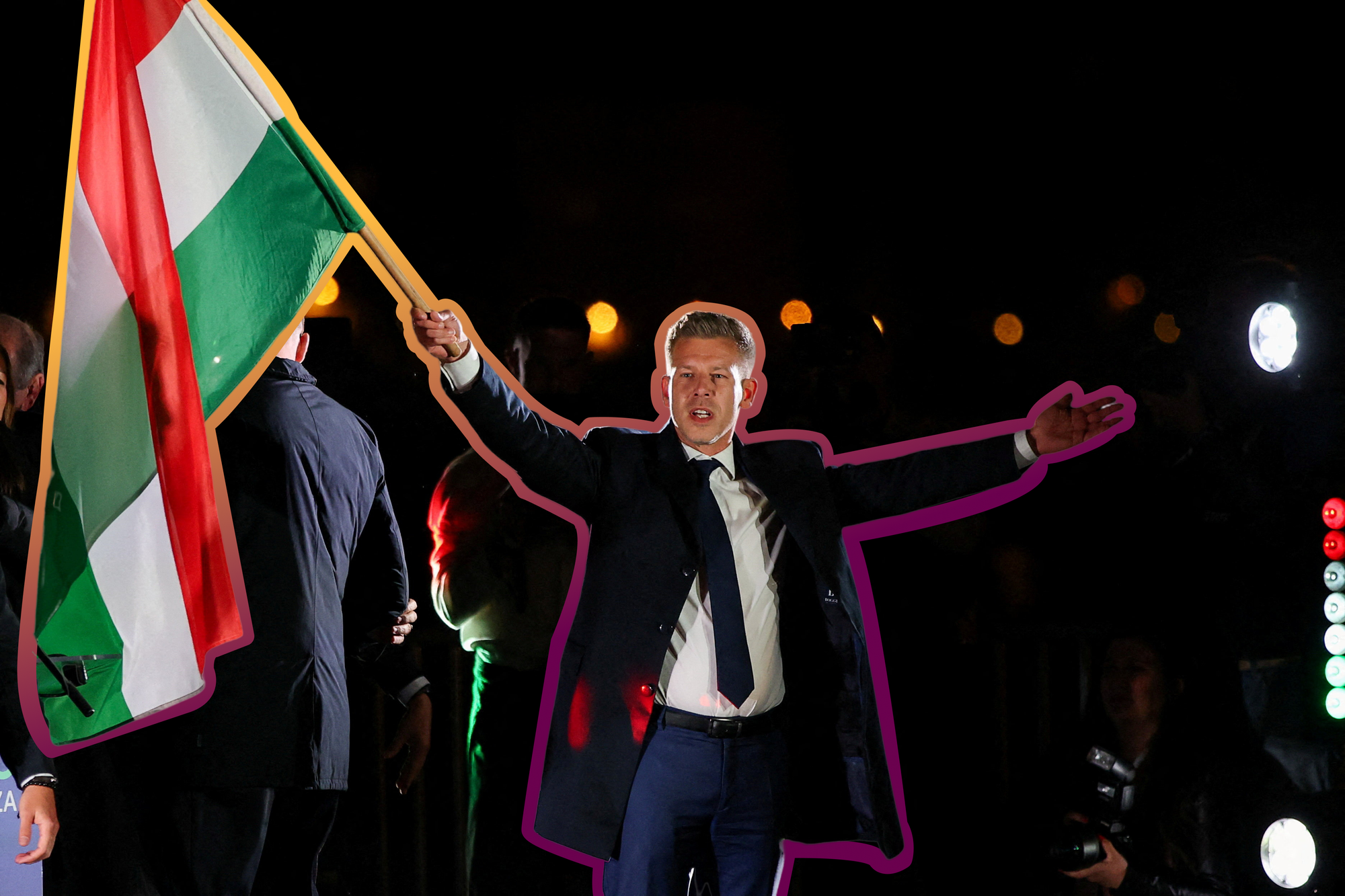
The elections in Hungary. On Sunday, Péter Magyar’s Tisza Party defeated Prime Minister Viktor Orbán’s Fidesz Party in Hungary’s parliamentary elections, unseating the 16-year incumbent. With 98% of the vote counted, Orbán and Fidesz had won 56 parliamentary seats, while Magyar and Tisza Party won 137 seats, giving it a two-thirds supermajority. Orbán had been supported by the Trump administration, which viewed him as a key ally in the European Union (EU).
Back up: Hungary holds parliamentary elections every four years, allowing citizens with a Hungarian address to vote for both a local representative and a national political party (citizens living abroad can only vote for a party). The 199 seats in the country’s National Assembly are divided between local district winners and proportionally among national party members based on vote totals. If a party achieves a two-thirds supermajority, it can enact changes to Hungary’s electoral system and some parts of its constitution.
Orbán, 62, served as prime minister for one term from 1998–2002, returned to power in 2010, and has served in that role since. During his time in office, Orbán championed conservative policies, including crackdowns on immigration and rollbacks of progressive social initiatives. He also opposed many EU policies and developed a friendly relationship with Russia and President Vladimir Putin, speaking out against European aid for Ukraine. Many critics accused him of weakening Hungary’s democratic institutions by expanding executive control over the judiciary and suppressing independent media, among other actions. Orbán himself explicitly rejected the principles of liberal governance, saying in 2014 that he was building “an illiberal state, a non-liberal state.”
Orbán has developed a strong relationship with President Donald Trump, who pledged on Friday to “use the full Economic Might of the United States to strengthen Hungary’s Economy” if Orbán’s Fidesz Party maintained its majority. Vice President JD Vance campaigned for Orbán last week, telling a crowd at a rally, “I admire what you’re fighting for… I am here because President Trump and I wish for your success, and we are fighting right here with you.”
After the majority of votes were tallied on Sunday, Orbán conceded the race but said he will remain active as an opposition leader. Magyar, 45, is set to become the new prime minister just two years after leaving the Fidesz Party to revive the Tisza Party over what he said was widespread corruption under Orbán. Tisza is viewed as a center-right party, but it supports stronger ties with the EU and rejects Russian influence. In a victory speech on Sunday, Magyar said, “We have liberated Hungary and have taken back our country.”
Also on Sunday, European Commission President Ursula von der Leyen congratulated Magyar, writing, “Hungary has chosen Europe. Europe has always chosen Hungary. A country reclaims its European path.” Neither President Trump nor Vice President Vance has commented on the result.
Today, we’ll break down the results of Hungary’s elections, with views from the right, left, and writers in Hungary. Then, Associate Editor Audrey Moorehead gives her take.
What the right is saying.
- Some on the right see warning signs for Trump in Orbán’s loss.
- Others say Orbán’s political ideas will survive beyond his time in power.
In National Review, Henry Olsen said “Orbán’s total defeat.”
“It’s not hard to figure out why Orbán was decisively rejected. His government had allowed cronyism — the opposition calls it corruption — to flourish. That was made worse by the fact that the economy has been stagnant for four years, registering almost no real GDP growth,” Olsen wrote. “Magyar proved to be politically talented, rallying disaffected Fidesz voters and the old opposition to his side. He ran on a platform that borrowed elements from Fidesz — anti-Ukraine war, opposition to migration — with criticisms about corruption, the slow economy, and problematic relations with the European Union.”
“The result should alarm President Trump and Vice President Vance. They committed American prestige to support Orbán and got annihilated. Their intervention did not help Orbán, but it certainly hurt Trump even more with the European leaders whose support he needs in the Middle East,” Olsen said. “The Hungary results should also impel Trump and Vance to look at the state of their own electoral prospects. Orbán kept trying to change the subject rather than deal with the issues voters actually cared about, like growth and inflation. Similarly, the economy consistently ranks as the most important issues among voters stateside.”
In Rod Dreher’s Diary on Substack, Rod Dreher wrote about “Orban going, but Orbanism coming to Europe.”
“Magyar is not a figure of the political Left, which remains unpopular in Hungary. What he basically offered voters is ‘Orban, but without the corruption.’ On the key issues that infuriate Brussels about Orban’s Hungary — his hardline on migrants and asylum seekers, and his adamant desire to keep Hungary out of the Ukraine war — there’s no difference between Orban and Magyar, except that Magyar might even be tougher than Orban on migration,” Dreher said. “When he takes power, Magyar is going to have to either disappoint his allies in the EU establishment, or disappoint millions of his voters. Personally, I expect him to be the cat’s paw of Brussels.”
“It is undoubtedly true that populist, sovereigntists, and national conservatives have lost their most visible champion. But again, this result does not discredit the cause. Orban lost because the economy is poor and his party was far too tolerant of corruption. Hungarians are no more in favor of mass migration and European involvement in the Ukraine war today than they were yesterday,” Dreher wrote. “In fact, Orban’s tragedy is that European voters are finally coming around to his point of view on the importance of strong borders… Orban may be going, but Orbanism is coming to western Europe.”
What the left is saying.
- The left celebrates Orbán’s loss, and many see it as an embarrassment for Trump.
- Some see Magyar’s victory as a blow against illiberal forces globally.
In Salon, Andrew O’Hehir said “MAGA and Putin bet big on Hungary’s election — it backfired.”
“As Hungarian journalist Ivan L. Nagy puts it, Orbán survived for so long through an ingenious pattern of ‘shadowboxing’ against an ever-shifting cast of ‘make-believe enemies,’ telling the conservative and nationalistic elements of the Hungarian public that only he can save them from dark-skinned immigrants, European bureaucrats, meddling American liberals, the globalist plots of Hungarian-born George Soros, LGBTQ activists, ‘gender ideology’ and wokeness,” O’Hehir wrote. “This time around, it seems that Hungarian voters were more concerned about their stagnant economy.”
“Orbán’s downfall… will feel like a major setback to various strands of the transatlantic right, especially to leading figures of the ‘national conservative’ movement like Vance, Stephen Miller, Peter Thiel and Tucker Carlson,” O’Hehir said. “If Vance’s trip to Budapest shifted the campaign at all, it only amplified the scale of Orbán’s defeat. Whatever happens in Hungary from here on out, the story is familiar: The left is powerless and almost invisible, but the far right once again turned out to be its own worst enemy.”
In The Atlantic, Anne Applebaum wrote “illiberalism is not inevitable.”
“Orbán’s loss brings to an end the assumption of inevitability that has pervaded the MAGA movement, as well as the belief — also present in Russian President Vladimir Putin’s rhetoric — that illiberal parties are somehow destined not just to win but to hold power forever, because they have the support of the ‘real’ people,” Applebaum said. “As it turns out, history doesn’t work like that. ‘Real’ people grow tired of their rulers. Old ideas become stale. Younger people question orthodoxy. Illiberalism leads to corruption.”
“Nobody is pretending this will be easy. Fidesz still dominates many Hungarian institutions and businesses, and the party’s friends and supporters will do their best to undermine a Tisza government. Orbán also leaves behind a fiscal mess,” Applebaum wrote. “But whatever happens next, this election represents a real turning point. For most European governments, this result is a relief: We can’t know yet what kind of government Tisza will create, but it won’t be one that functions as Russia’s puppet in Europe, blocking EU funding for Ukraine or European sanctions on Russia.”
What writers in Hungary are saying.
- Some writers worry that Magyar is arrogant and out of touch.
- Others say Magyar has an opportunity to reassert democratic norms in Hungary.
In Hungary Today, Dániel Deme criticized “Péter Magyar’s victory speech.”
“[Magyar] characterized his win as no less than the ‘victory of truth against lies,’ saying that the election is a reflection of Hungarians’ decision to reject deceit and betrayal. With hubris bordering the obscene, he even compared his electoral success to the Anti-Habsburg revolution of 1848-49 and, in a manner that will be taken as an insult to the memory of our anti-communist freedom-fighters, to the Hungarian uprising of 1956,” Deme said. “With his trademark pomposity he called his party’s success a golden date in Hungarian freedom, a victory over those who have allegedly oppressed and betrayed them.”
“One of the biggest genuine failures of the Orbán government was its inability to bring people guilty of corruption, sexual violence, or fraud to justice, both from the left and from the right of the political spectrum,” Deme wrote. “[But] the bullying tone that we have heard on election night is only an innocent taster to what is to come. And albeit Tisza’s voters might feel that this is ok, or even desirable as long as it solely affects the Orbán crowd, it requires a generous amount of naivety to think that with time, and a very short one for that, they themselves will feel the consequences of this shift towards the politics of envy and retribution.”
In The New York Times, Stefano Bottoni called Orbán’s defeat “an astounding achievement.”
“For the past 16 years, Mr. Orban has built a complex system of institutional traps designed to hard-wire his power and paralyze any successor. At the heart of this system is the 2011 fundamental law, which replaced the Constitution and can be amended only by a two-thirds majority in Parliament,” Bottoni said. “Mr. Orban didn’t stop there. He and his party appropriated large sectors of the economy, allocating public resources, including both national and European funds, to supporters… Taken together, it adds up to a tightly bound clientelist system.
“But the economy has been stagnating since the pandemic, with few remedies in sight. The trade deficit with China has quadrupled in the past decade, increasing to over $10 billion from $2.6 billion; inflation skyrocketed to 25 percent during the pandemic and household consumption levels remain low… That has laid the ground for Mr. Orban’s defeat,” Bottoni wrote. “Hungary now has a golden opportunity. The Tisza party’s success shows that democracy can be peacefully restored by the people, even against entrenched incumbents and when great powers intervene to help their protégés… Rather than a laboratory of autocracy, Hungary could become a lighthouse of democracy.”
My take.
Reminder: “My take” is a section where we give ourselves space to share a personal opinion. If you have feedback, criticism or compliments, don't unsubscribe. Write in by replying to this email, or leave a comment.
- Hungary’s election can teach us about modern conservatism in the West — especially in the United States.
- JD Vance shares Orbán’s postliberal beliefs that only a strong government can deliver needed cultural and economic change.
- Magyar’s victory shows how Western conservatism can evolve to avoid postliberalism.
Associate Editor Audrey Moorehead: Viktor Orbán’s loss has local implications for Hungary, of course. But it also has global implications — and particularly acute lessons for the United States — while representing the next chapter in the Western world’s relationship with liberal democracy.
First, though, a slight detour.
As I’ve written about in Tangle before, I grew up in the conservative small town of Lynchburg, Tennessee. Basically every adult I knew growing up was a conservative; I don’t think I even knew it was possible to be anything else until I got social media in middle school. To me, conservatism was just the way of life. I developed an interest in American history as I grew up, particularly through reading about Abraham Lincoln and George Washington, and the values that motivated my family and neighbors began to resonate with me.
I was always a bit nerdy about this stuff compared to others in the community, but I still understood our political convictions to be cut from the same cloth. The people in my town genuinely loved our country and loved its political project. My dad or granddad might not quote Thomas Jefferson at you, but they’d speak highly of the importance of a small federal government, expansive personal freedoms, and high public order. That was as true for my family as it was for any other in Lynchburg.
When I went to college, I was exposed to a very different environment — the overwhelmingly liberal Harvard University. I wasn’t super politically involved at first, but I soon wanted to join some of the conservative organizations on campus to meet more people who had the values I’d been raised with. I also hoped that maybe they were a little nerdy about it, like me.
Soon enough, though, I began encountering a peculiar problem. In one club meeting, I mentioned that some policy proposal seemed too expansive of government power; a club leader replied that small government had never been a conservative priority. In another club, I was mocked for declaring the greatest achievement of the Western world to be the Enlightenment.
The more time I spent around these Harvard conservatives, the more I came to understand that many of them were operating within a different kind of “conservative” framework — a set of ideas that I now would describe as postliberalism.
Postliberalism is the idea that the liberal project of the West, exemplified by the Enlightenment-era values I cherish of personal freedoms and free exchange, is fundamentally flawed — that late-stage liberalism produces a fragmented and stratified society, and that those late stages are upon us. Postliberals argue that liberal democracies like the U.S. system eventually produce great economic inequality, and the insistence on freedom of religion leaves citizens without a clear purpose for life. Instead, in order to create a more equal, more virtuous society, we need to return to older systems of government that can express more power over a nation’s moral agenda — such as a more explicit promotion of Christian values — while emphasizing the government’s duty to provide economically for its citizens.
Vice President JD Vance is probably the most prominent postliberal in American politics. I read his 2016 memoir Hillbilly Elegy to better understand his meteoric political rise after his VP nod in the summer of 2024. In the book, Vance eloquently and hauntingly describes the economic and personal destitution of his Rust Belt hometown and its residents. He attributes these dire straits to a fundamental cultural problem with the people themselves — they were stuck in a dependent, victim mindset, unwilling to abandon the honor culture that so badly harmed them.
But somewhere along the line, Vance changed his tune. By the time he ran for Senate in 2022 and on the Trump ticket in 2024, he started attributing white working-class Americans’ problems to wider society. He argued that the American government had failed them, and that Americans ought to vote for a government that would A) offer more economic assistance and B) promote strong cultural values.
That is the same message that Viktor Orbán spent his sixteen years in power in Hungary advancing. He proclaimed the importance of a government that would promote Hungarian pride and defend Western Christian morals. That message made Orbán so attractive to American right-wing intellectuals, like Vance or Rod Dreher, because it expressed the same postliberal vision they thought would revitalize the West. And their shared messaging prompted Vance’s enthusiastic endorsement and campaign support in the leadup to this year’s Hungarian elections.
Of course, Viktor Orbán wasn’t elected on some promise to create a postliberal society. Instead, he was elected — and consistently reelected — because he struck a chord with the populist anxieties of the people of Hungary. After a single term as prime minister at the turn of the century, Orbán returned to power in the wake of the 2008 financial crisis, when he and his Fidesz Party promised economic revitalization. Over the years, he continued to win by appealing to Hungarian anxieties over illegal immigration during Europe’s migrant crisis. He didn’t make his illiberal actions, like packing the Supreme Court or amassing media control, the centerpiece of his political campaigns; instead, he focused on the real anxieties of the citizenry. But the illiberalism was a fixed, load-bearing plank in his platform.
That focus on citizen anxieties, more than any other feature of the philosophy, is what makes postliberal populism so compelling. Viktor Orbán and JD Vance speak to real anxieties among the people they represent. My postliberal college classmates were responding to the real-world issues they saw: family members and communities in poverty, politically voiceless, in mental and spiritual crisis. Even the members of my community who aren’t political junkies or self-identified postliberals feel a genuine discontent with modern life — and for them, Trump and Vance’s campaign message, which promised a revival of their social values as well as their economic status, resonated more deeply than Kamala Harris’s message.
I, for one, still believe in the liberal democratic project of America. But if we want to preserve that project, we have to be able to understand people’s real anxieties and concerns about cultural fragmentation while defending liberal democracy as the best way to address them.
I think Péter Magyar, as a right-leaning politician himself, provides a roadmap for Western conservatism that avoids postliberal ideology. Magyar shares some of Orbán’s more restrictive immigration policies, and he promised voters that his party would seek a solution to their economic woes. But Magyar also emphasized in his campaign and his victory speech the importance of allying with the rest of Europe, of resisting the influence of the definitively autocratic Russia, and of rooting out the corrupt and anti-democratic dealings that had flourished under Orbán. In short, Magyar was successful because he both understood the anxieties that had led to Orbán’s rise as well as the anxieties about Orbán’s governance itself.
Magyar’s victory, and Orbán’s defeat, shows that postliberalism isn’t the inevitable evolution of conservatism. Indeed, it provides a roadmap for American conservatives who still believe in the Enlightenment principles the United States was founded on and oppose the slide into authoritarianism that popular discontent makes possible. Any Republican who wants to challenge JD Vance for party leadership in 2028 can use Magyar’s methods: sympathize with discontent, criticize the excess, and provide a vision of a path forward that emphasizes American ideals and the heritage of liberal democracy itself.
Orbán’s graceful concession contains lessons for Americans, too. Despite much worry and hand-wringing over democratic erosion in Hungary, Orbán was still voted out of power through the democratic process. He’s leaving quietly and respectfully, with well wishes to Magyar’s party. I think that, too, is a lesson for the United States. Respectful political disagreement is still possible, Western democratic values can withstand criticism and assault, and postliberalism cannot overwhelm the marketplace of ideas.
Take the survey: What do you think are the implications of Hungary’s election? Let us know.
Disagree? That's okay. Our opinion is just one of many. Write in and let us know why, and we'll consider publishing your feedback.
Your questions, answered.
Q: If mail-in voting continues, how will that be affected if USPS shuts down? Also, if private delivery companies (UPS for example) replace USPS what guarantees would there be to ensure steps to avoid fraud?
— Roxanne
Tangle: It’s impossible to say exactly how mail-in voting would be impacted if the United States Postal Service (USPS) is no longer operational. A lot would still need to happen for that to become a reality, but the agency is facing a protracted financial crisis that could come to a head in the next year.
At this time, FedEx and UPS say they are not able to consistently reach remote areas to ensure ballots are delivered and picked up. On the flip side, the USPS has a “universal service obligation" requiring it to offer affordable service to everyone. While Amazon has been floated as a potential candidate to add delivery coverage, they do not accept packages from residential mailboxes — and as of now, Amazon relies on the USPS to deliver millions of packages a year.
Oversight from public entities gives USPS an added layer of assurance to handle the extremely high stakes of mail-in voting. If it were to shut down, other private carriers likely wouldn’t be able to deliver to many remote customers and would likely face more oversight in order to be able to deliver mail-in ballots.
However, this is all still hypothetical. Although the USPS is reportedly considering service cuts to manage an ongoing funding crisis, it is currently staffed to pick up and distribute mail from all residential mailboxes six days a week. The USPS may raise some of its prices or ask Congress to remove some restrictions on its retirement funds to remain solvent, rather than cut its service.
Want to have a question answered in the newsletter? You can reply to this email (it goes straight to our inbox) or fill out this form.
Numbers.
- 9.6 million. Hungary’s approximate population as of 2024, according to the United Nations.
- 7.5 million. The approximate number of registered voters in Hungary.
- 79.6%. The percentage of registered voters who participated in Sunday’s election.
- 69.7% and 69.6%. Voter turnout in Hungary’s 2018 and 2022 parliamentary elections, respectively.
A Shorter Food Chain, A Fuller Ocean
Traditional salmon farming requires pounds of wild fish just to grow one pound of salmon.
Blue Circle flips that ratio by feeding their Atlantic Salmon microalgae —delivering protein and Omega-3s without raiding the ocean's food chain. The result: less than half a pound of fish taken per pound raised.
This day in history.
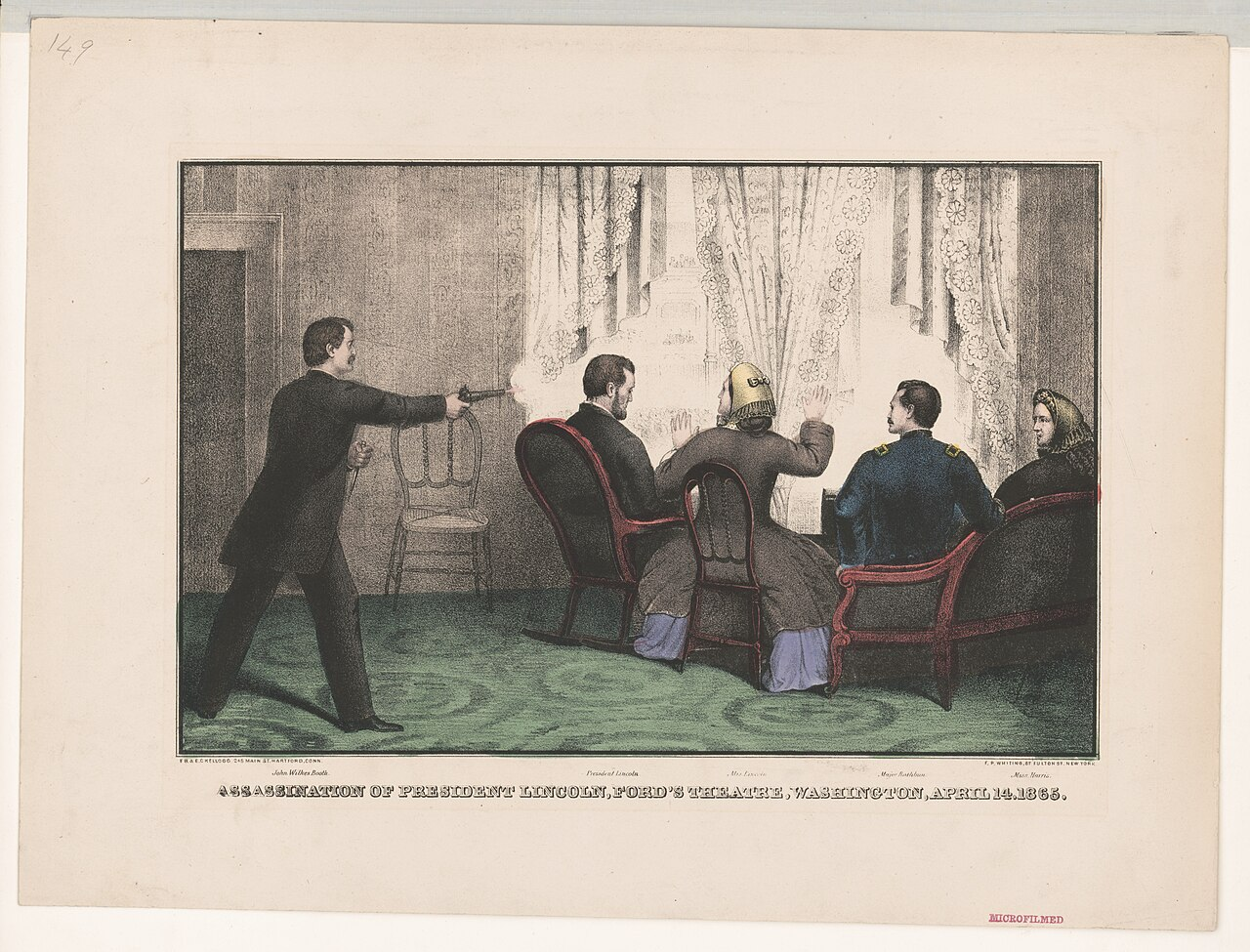
On April 14, 1865, while watching a play with his wife at Ford’s Theatre, President Abraham Lincoln was shot in the back of the head by Southern actor and Confederate sympathizer John Wilkes Booth. After a brief scuffle with Major Henry Rathbone, who was attending the performance with the president, Booth leapt from the president’s box onto the stage and shouted the Virginia state motto: “Sic semper tyrannis” (a line credited to Marcus Brutus during the assassination of Julius Caesar, meaning “Thus always to tyrants”). Booth fled the scene amid the resulting confusion. Meanwhile, the wounded president was carried from the theater to a house across the street. Despite attempts to save his life, the president died there in the early morning of April 15. Lincoln’s death, just a month into his second term and two days after the formal surrender of the Confederacy, ultimately changed the course of the planned Reconstruction of the nation.
The extras.
- One year ago today we wrote about Kilmar Abrego Garcia and Mahmoud Khalil.
- The most clicked link in our last regular newsletter was our Friday mailbag edition.
- Nothing to do with politics: In honor of National Gardening Day, explore the Global Seed Vault in the Arctic Circle.
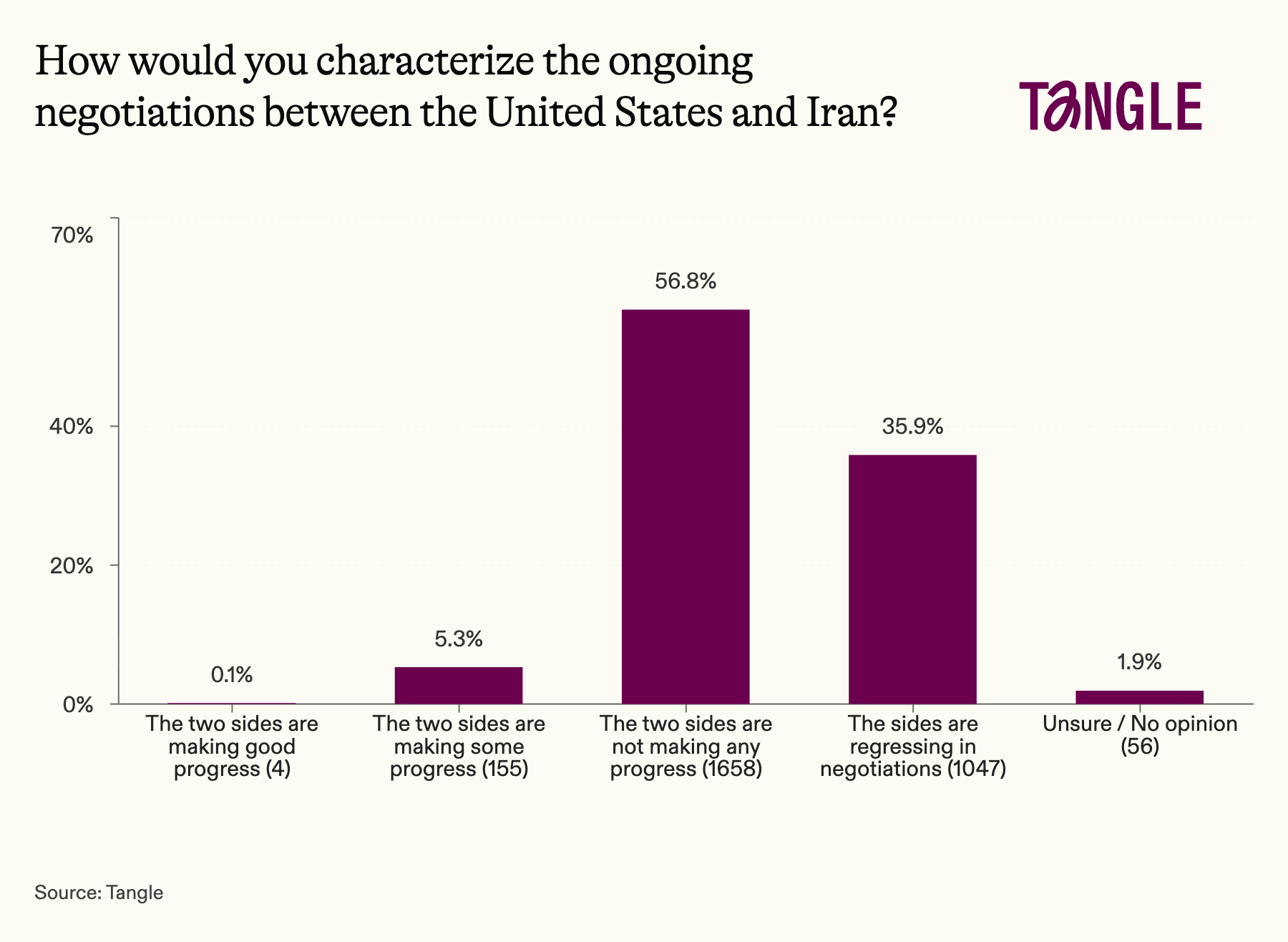
- Our last survey: 2,920 readers responded to our survey on negotiations between the U.S. and Iran with 57% saying the two sides are not making progress. “It is nearly impossible to negotiate in good faith with a totalitarian regime,” one respondent said. “Peace requires negotiation and right now both sides don’t believe they need to compromise on anything,” said another.
Have a nice day.
For years, in some Philadelphia schools, children were not getting recess or breaks during their day; the problem was so bad that children in some schools reportedly wore diapers. Two years of advocacy from the parent group Lift Every Voice Philly has changed things for the better. The Philadelphia school board has agreed to reforms, including guaranteed daily recess and unrestricted bathroom access for students. For parent Carrera Wilson, the win was transformative. “I just was a parent that cared and didn't like what was going on in my kids’ school,” Wilson said. “And now I can actually go home and tell my kids, look on the news, Mommy did this. We won this.” Chalkbeat has the story.

Member comments