This is the Tangle Sunday Edition, a brief roundup of our independent politics coverage plus some extra features for your Sunday morning reading.
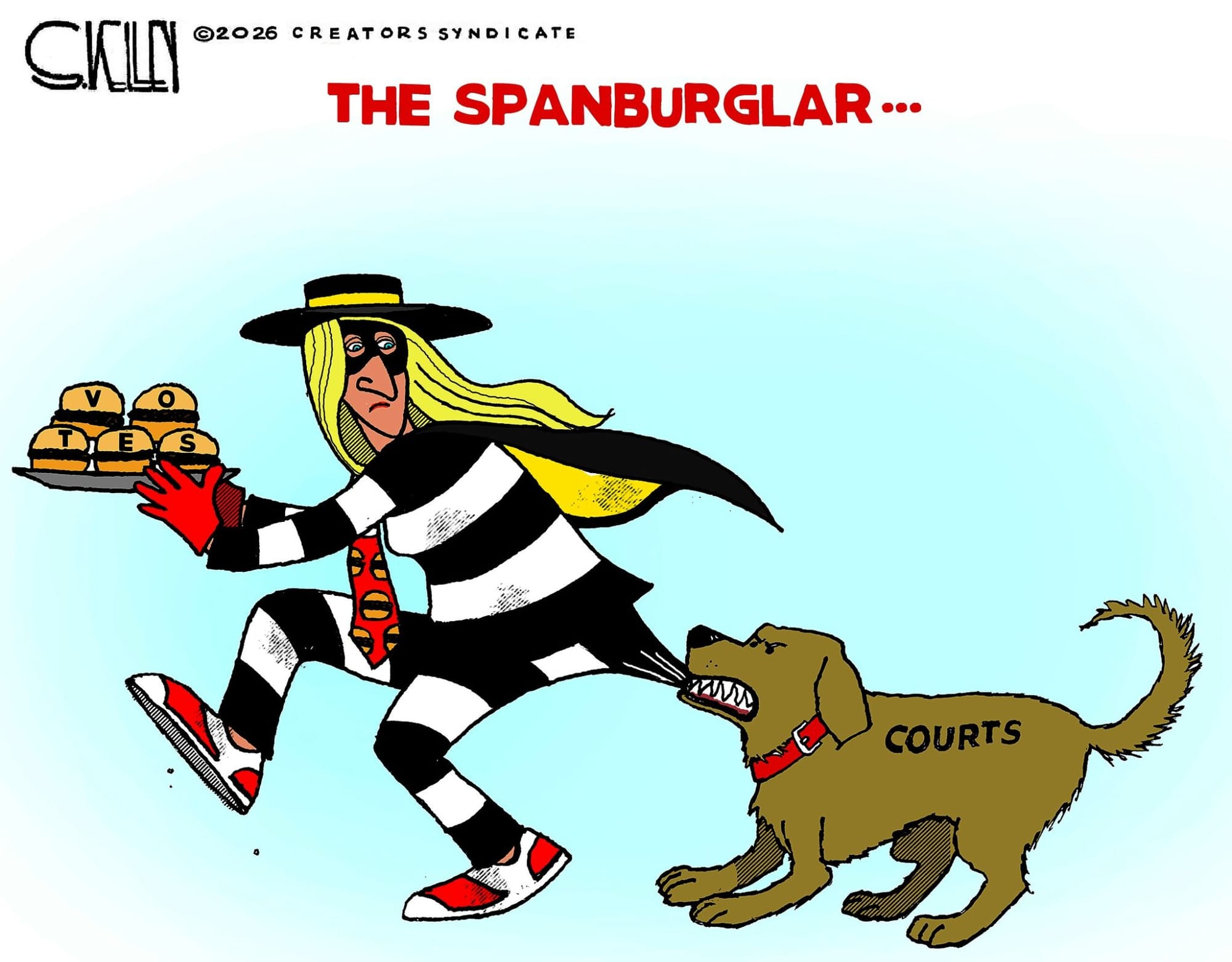
What the right is doodling.
Steve Kelley | Creators Syndicate
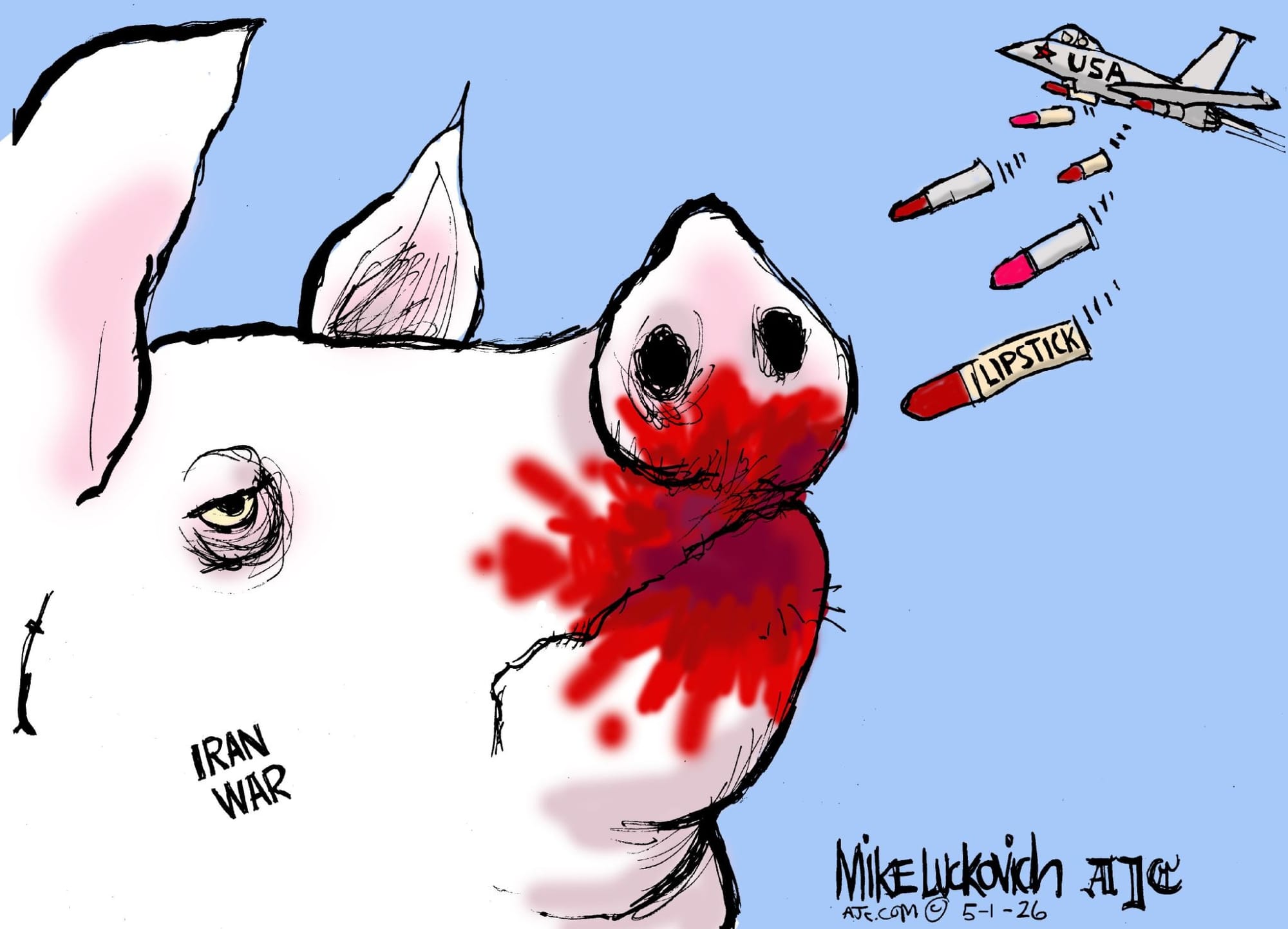
What the left is doodling.
Mike Luckovich | Creators Syndicate
An overwhelming response.
Our Friday edition detailing the way President Donald Trump has been profiting off the presidency has garnered hundreds of reader requests to drop the paywall. We make over 80% of what we write available for free, and gating our most in-depth reporting is the only way we can successfully operate as a business.
Still, when the demand is this large, we feel the need to supply.
We’ve dropped the paywall to our Friday edition, and it can now be read by — and shared with — anyone. You can find that Friday edition here.
Suspension of the Rules
Isaac, Ari, and Kmele take on partisan gerrymandering and the Supreme Court’s decision on the Voting Rights Act in the latest episode of Suspension of the Rules. After you finish reading today’s edition diving deep on the topic, check out the latest video for more discussion — plus an exploration on the recent assassination attempt against President Trump, the White House ballroom, and a dramatic “fight me, bro” challenge issued by a former Tangle interview guest. Watch the new episode here!
Monday, April 27.
The White House correspondents’ dinner shooting. On Saturday, April 25, a gunman fired shots at the Washington Hilton Hotel, which was hosting the White House Correspondents’ Association (WHCA) dinner. The Secret Service evacuated President Donald Trump and other senior leaders, and none of the guests were injured. One Secret Service officer was shot while engaging the suspect outside the ballroom, but he was wearing a bulletproof vest and was not seriously wounded. The gunman allegedly sent a manifesto to his family before the attack, suggesting that he intended to kill the president and other administration officials. He was charged with attempting to assassinate the president, transportation of a firearm and ammunition in interstate commerce with intent to commit a felony, and discharge of a firearm during a crime of violence.
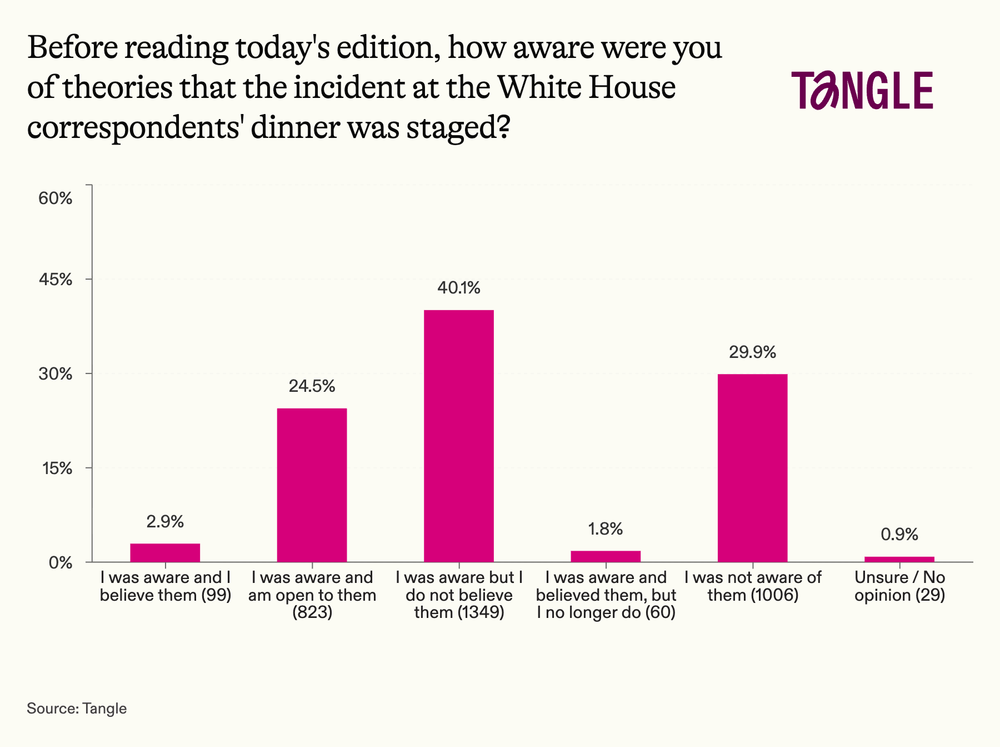
Our take: “Unfortunately, we’ve had many opportunities to explore aspects of political violence in past coverage. Something that stands out to me this time is how many Americans dismiss these events as fake. Tackling these theories head-on is crucial, and we need a holistic effort.”
Reader Survey:
Tuesday, April 28.
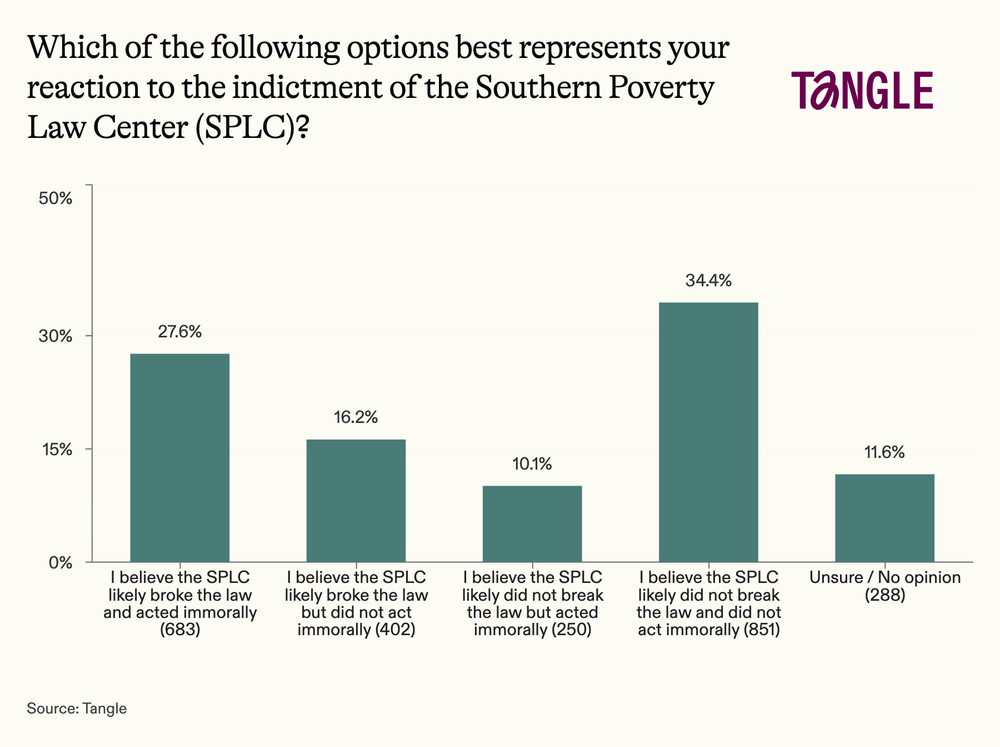
The Southern Poverty Law Center indictment. On Tuesday, April 21, the Justice Department announced an 11-count indictment charging the Southern Poverty Law Center (SPLC) with financial crimes, including wire fraud and making false statements to a federally insured bank. Acting Attorney General Todd Blanche said the nonprofit organization secretly sent over $3 million to informants inside extremist groups without telling donors what their money was being used for. The SPLC denies any wrongdoing and plans to fight the charges.
Our take: “The SPLC almost certainly paid informants, and an indictment to determine criminal wrongdoing seems justified. Some of the SPLC’s recent actions, and its evolution over time, invite uncomfortable questions. The DOJ certainly has a political motive here, but that doesn’t discount the possibility of wrongdoing.”
Reader Survey:
Wednesday, April 29.
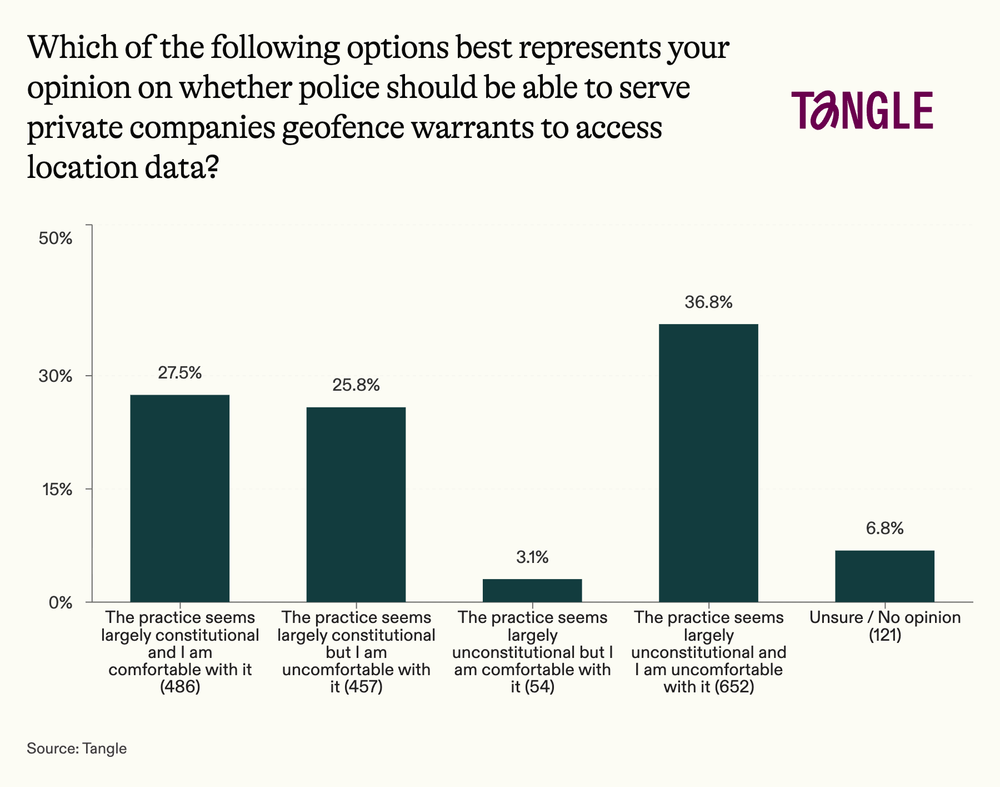
Geofencing before the Supreme Court. On Monday, April 27, the Supreme Court heard oral arguments in Chatrie v. United States, a case exploring whether the practice of scanning cell phone data of individuals based on proximity to a crime is constitutional. The case is the first time the Supreme Court has considered the use of “geofence warrants,” which enable the police to cast wide digital dragnets to investigate a suspected crime. The justices appeared split on the decision after two hours of arguments; the Court is expected to issue a decision before the end of the summer.
Our take: “The general concept of geofencing seems constitutional to me. Whether the government can get data from a third party, and what data they can get, complicates the issue considerably. I hope the Court provides some guidelines on what data the government isn’t allowed to access.”
Reader Survey:
Thursday, April 30.
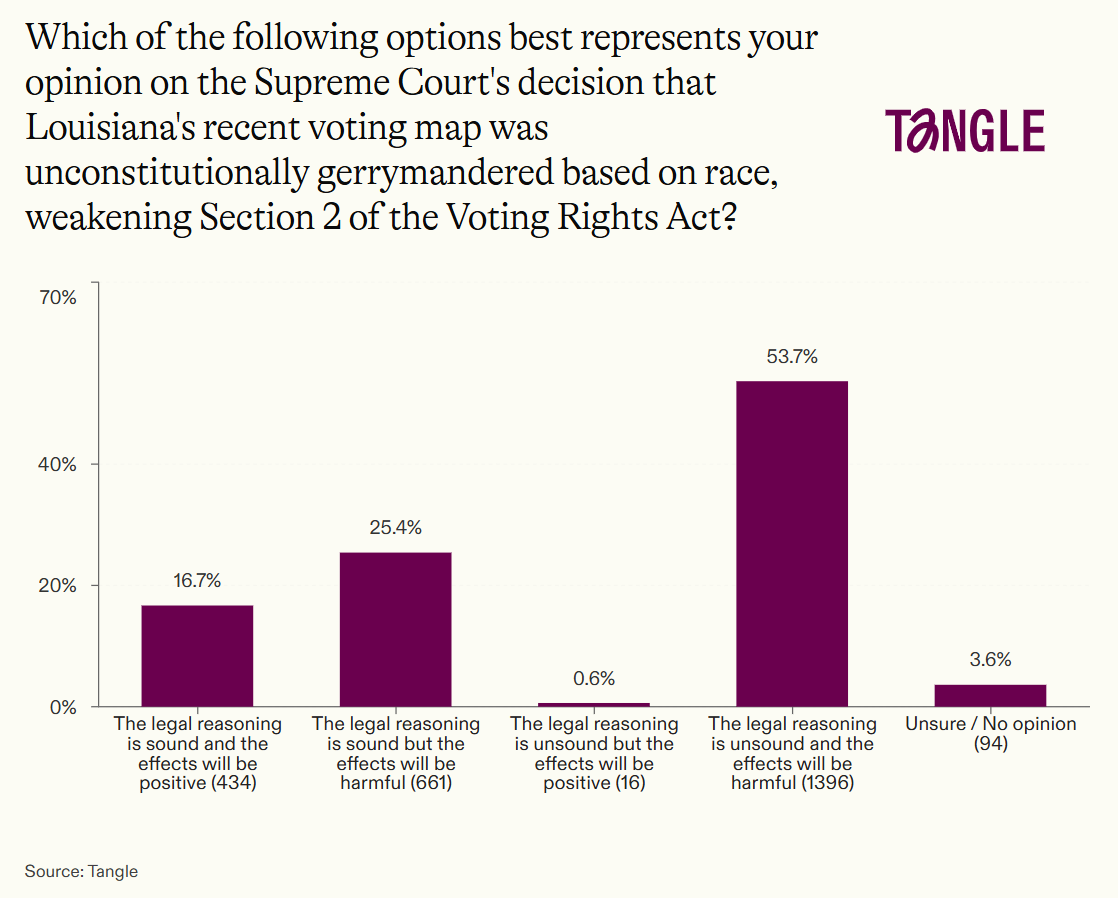
Louisiana v. Callais. On Wednesday, April 29, the Supreme Court ruled 6–3 that Louisiana must redraw its congressional map, finding that one of the state’s majority-black districts was unconstitutionally gerrymandered based on race. The decision weakens — but does not strike down — Section 2 of the Voting Rights Act, which prohibits voting practices that discriminate on the basis of race or color. In the wake of the decision, several states could move to redraw their congressional maps based on the Court’s guidance, an effort that is expected to benefit Republicans.
Our take: “We should understand the systems in place before we try to change them. The VRA was originally a necessary protection against racial discrimination, but more recently, it has mostly protected us from partisan gerrymandering. If we want to solve the gerrymandering problem, Congress needs to act, not the courts.”
Reader Survey:
Friday, May 1.
In this week’s Friday edition, Executive Editor Isaac Saul dives deep into the biggest story of this presidential administration: The allegations of corruption, ranging from shady business deals, foreign policy influences, and an apparent presidential pardon economy. You can read Isaac’s piece here — now available to everyone.
Further reading.
We’ve covered political violence, grand jury indictments, Fourth Amendment rights, and the Voting Rights Act before. Plus, read some of Tangle’s early reporting on the Hunter Biden stories — before the mainstream media was willing to cover it. Take a look at our past coverage below:
Here’s a rundown of the major stories that have broken since our newsletter on Thursday.
On Thursday, the House passed (by a voice vote) a package to fund the Department of Homeland Security — excluding Immigration and Customs Enforcement and Border Patrol — through September. President Trump then signed it into law, ending the department’s partial shutdown after 76 days. (The funding)
On Thursday, President Trump announced Dr. Nicole B. Saphier as his new pick for surgeon general. Saphier is the director of breast imaging at Memorial Sloan Kettering Cancer Center Monmouth and a former Fox News medical contributor. The president withdrew his previous nominee, Dr. Casey Means, after she had garnered insufficient support in the Senate. (The announcement)
On Thursday, the Commerce Department reported that the personal consumption expenditures price index rose 0.7% from February to March and 3.5% on a 12-month basis. The department also reported that U.S. gross domestic product grew 2% in Q1 2026, up from 0.5% in Q4 2025. (The reports)
On Thursday, Maine Gov. Janet Mills (D) suspended her Senate campaign, effectively ensuring that Graham Platner, who has built a substantial fundraising and polling advantage, will win the Democratic primary. Mills said that her campaign did not have the financial resources to continue. Platner will face Sen. Susan Collins (R) in the general election. (The suspension)
On Thursday, the Senate voted unanimously to pass a ban on senators trading on prediction markets, such as Kalshi and Polymarket, amid rising concern over insider trading. (The vote)
On Friday, the 5th U.S. Circuit Court of Appeals temporarily blocked mail-order distribution of mifepristone, a drug used to induce abortions. On Saturday, Danco Laboratories, a company that produces the drug, asked the Supreme Court to pause the circuit court’s order. (The order)
On Friday, President Trump said he would increase tariffs on automobiles from the European Union to 25%, writing in a social media post that the EU was “not complying” with the trade deal reached last summer. (The tariffs) Separately, President Trump announced he would remove tariffs on some whiskey imported from the United Kingdom, following King Charles III’s visit to the United States. (The removal)
On Friday, the Pentagon announced that the U.S. would withdraw about 5,000 troops from Germany, following President Trump’s threats of withdrawal earlier this week after German Chancellor Friedrich Merz criticized the Iran war. (The withdrawal)
On Saturday, Spirit Airlines announced it is going out of business and ceasing operations, citing the impact of high oil prices amid ongoing financial challenges. (The shutdown)
Reader essay.
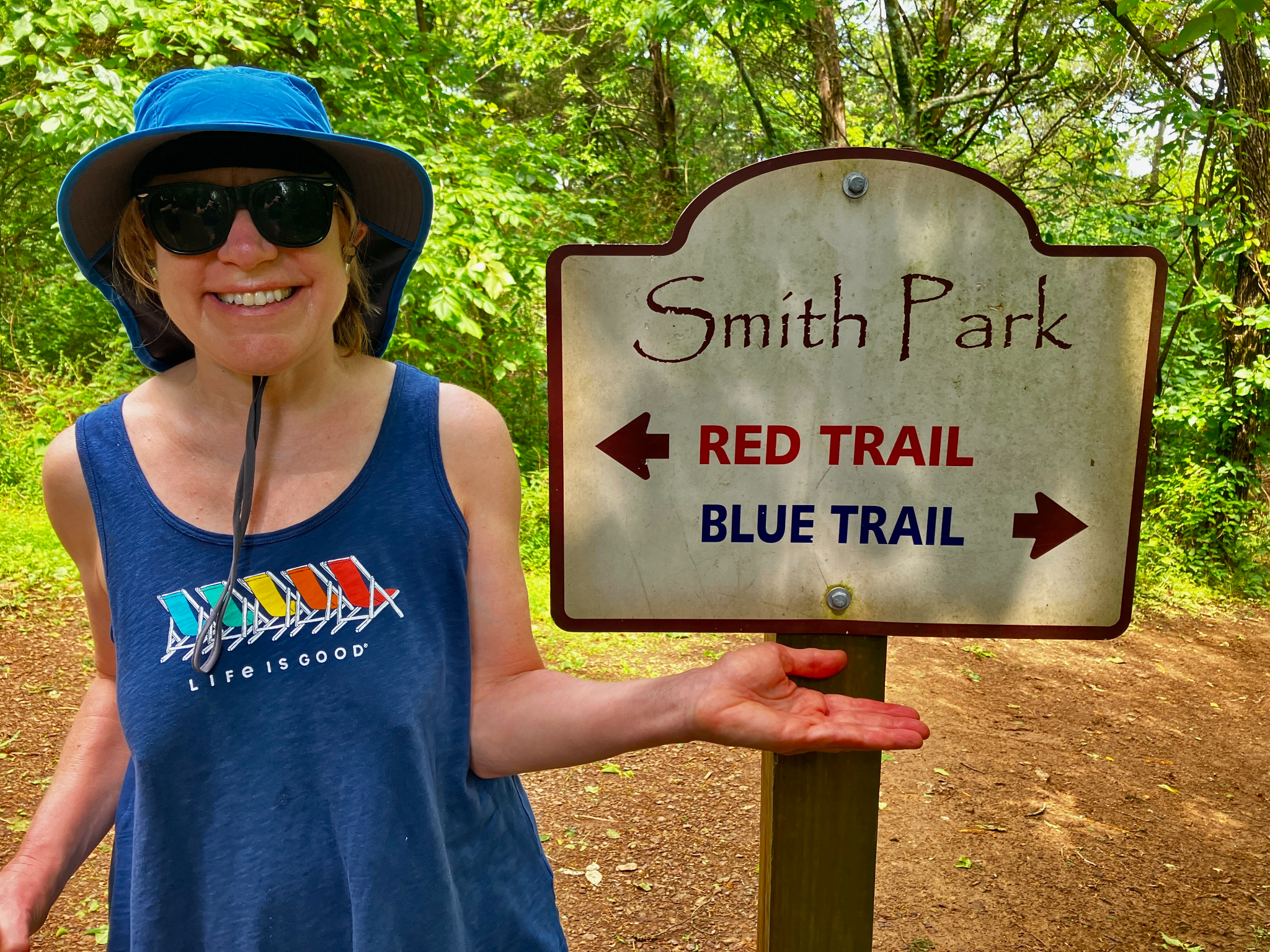
Photo from Beth Malow
Tangle reader Beth Malow has noticed something: It’s super easy to be pulled into echo chambers and tribes, to stop believing in reaching across the aisle, and to convince ourselves that exposure to different points of view is dangerous. But Beth thinks otherwise — instead, our political differences prove the importance of bridge-building… if you can call it that.
This post is for paying subscribers only
Sign up now and upgrade your account to read the post and get access to the full library of posts for paying subscribers only.