


I'm Isaac Saul, and this is Tangle: an independent, nonpartisan, subscriber-supported politics newsletter that summarizes the best arguments from across the political spectrum on the news of the day — then “my take.”
Are you new here? Get free emails to your inbox daily. Would you rather listen? You can find our podcast here.
Today’s read: 15 minutes.
California’s Republican candidate for governor.
As the midterms approach, we’ll interview some candidates from across the political spectrum who are in high-profile, fascinating races. In California, Republican Steve Hilton — a former Fox News host and British politico — is on track to become a general election nominee. Hilton knows he’s an underdog, but he sat down with Tangle Executive Editor Isaac Saul to share why he’s focusing on deregulation, the climate agenda, and housing in his campaign to turn California red:
Quick hits.
- The suspect in the shooting at Saturday’s White House correspondents’ dinner was formally charged with attempting to assassinate President Donald Trump. (The charge) Separately, President Trump and First Lady Melania Trump called on ABC to take action against late-night host Jimmy Kimmel over a joke he made two days before the dinner, referring to the first lady as having “a glow like an expectant widow.” (The comments)
- Florida Gov. Ron DeSantis (R) shared a redrawn map of the state’s congressional districts that aims to net Republicans four additional seats in the U.S. House. The state legislature begins a special session on Tuesday and will consider whether to take up the proposal. (The map)
- Four Senate Democrats sent a letter to Defense Secretary Pete Hegseth about the Iranian strike on a U.S. base in Kuwait, which killed six service members at the start of the Iran war, raising questions about whether the base had adequate defenses for a potential attack. (The letter)
- Organizers in California say they have enough signatures to secure a ballot measure on an initiative to pass a one-time 5% wealth tax on state residents with net worths of $1 billion or more. If confirmed, the measure would be on the ballot in November. (The initiative)
- Mexican authorities arrested a top leader of the Jalisco New Generation Cartel, one of the country’s most powerful organized crime groups. The arrestee, Audias Flores, was considered a potential successor to Nemesio “El Mencho” Oseguera, who was killed in an operation in February. (The arrest)
If some extra money wouldn't hurt — you're not alone.
Between inflation, gas prices, and life happening, a lot of people are scrambling for ways to fatten their bank account without taking on a second job.
The thing is, most of us are leaving money on the table. We're talking $300 from shopping smarter at Amazon, $225/month watching movie previews, even getting companies to forgive chunks of credit card debt.
Some of this sounds like internet nonsense, honestly.
But millions of people are already doing it. The Penny Hoarder compiled the most practical ways to pocket extra cash this month.
Today’s topic.
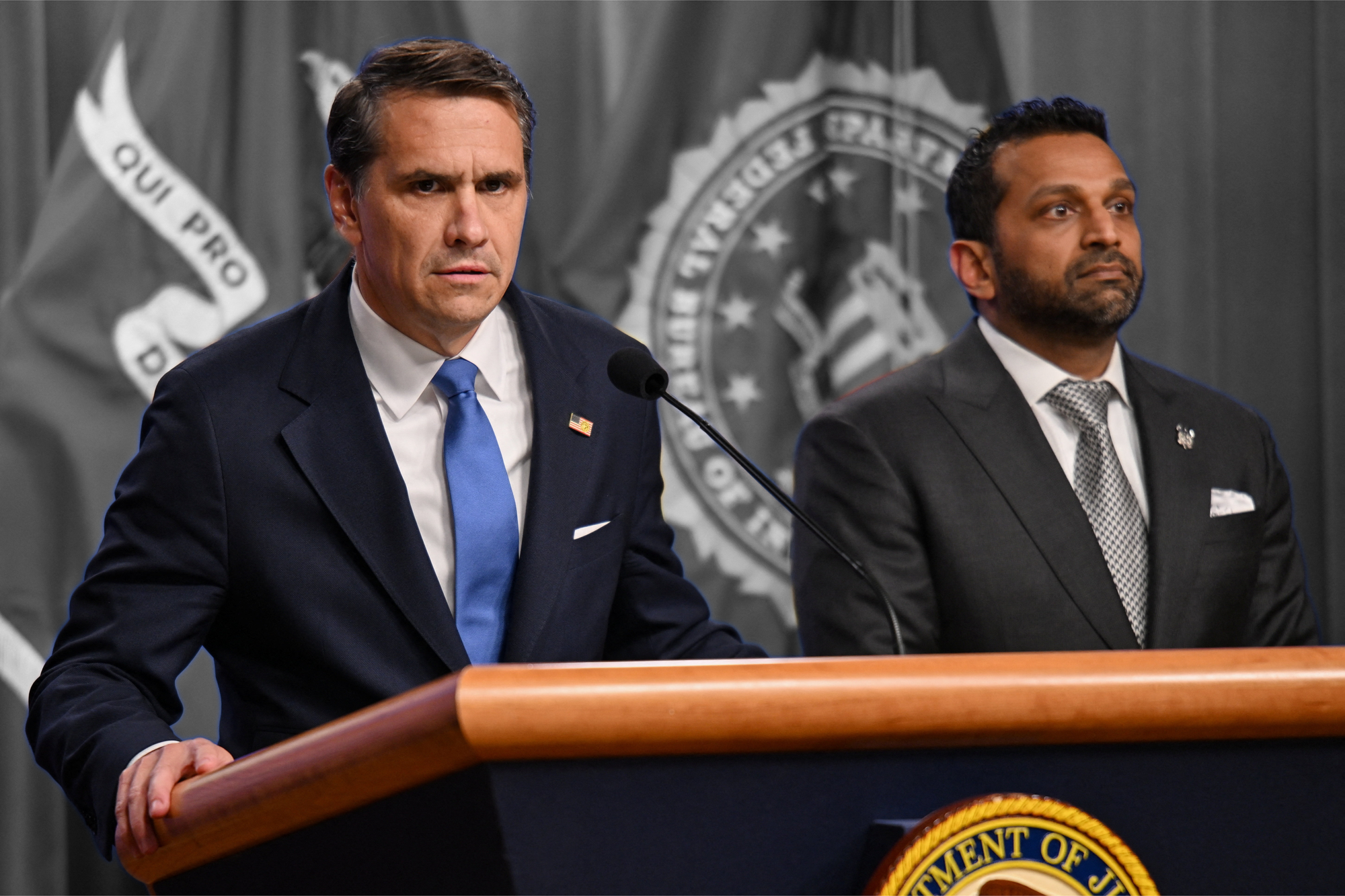
The Southern Poverty Law Center indictment. On Tuesday, April 21, the Justice Department announced an 11-count indictment charging the Southern Poverty Law Center (SPLC) with financial crimes, including wire fraud and making false statements to a federally insured bank. Acting Attorney General Todd Blanche said the nonprofit organization secretly sent over $3 million to informants inside extremist groups without telling donors what their money was being used for. The SPLC denies any wrongdoing and plans to fight the charges.
Back up: The SPLC rose to prominence in the 1970s for its legal work in civil rights cases, as well as in countering extremist groups like the Ku Klux Klan (KKK). Over time, it has expanded its work to include education programs and reports on alleged hate groups. However, many on the right have grown skeptical of its judgment in labeling some groups and beliefs as extremist, saying that it unfairly equates traditional conservative or religious views with hate.
According to the indictment, between 2014 and 2023, the SPLC maintained a network of informants who were part of groups like the KKK and the Aryan Nations. These informants relayed information that was used in the center’s reports and databases. In one instance, the center allegedly paid a member of an online group that was part of the planning of the 2017 “Unite the Right” event in Charlottesville, Virginia; the individual “made racist postings under the supervision of the SPLC and helped coordinate transportation to the event for several attendees.” Acting Attorney General Blanche described the alleged practices as “manufacturing racism to justify [the SPLC’s] existence.”
The Justice Department argues that these informant payments misled donors based on statements on the SPLC’s website that described its mission as seeking to dismantle extremist groups. Separately, it says that SPLC employees used “fictitious entities” to open bank accounts to pay informants without revealing the source and nature of the funds, which entailed making illegal false statements to banks. If convicted on some or all of the counts, the center could face a significant financial penalty.
SPLC Interim President and CEO Bryan Fair rejected the charges, suggesting the Trump administration was targeting the group for political reasons. “They have made no secret of who they want to protect, and who they want to destroy,” he said. He acknowledged the existence of the informant program but said it was a crucial initiative to gather intelligence on extremist groups and did not run afoul of the law.
Some legal experts have questioned the strength of the charges, noting that public statements about its mission may be too broad to prove that the SPLC deceived donors. Others suggest the bank fraud charges are more compelling but could require a second grand jury to correct technical errors in statutes used to bring the initial case.
Today, we’ll share views from the right and left on the indictment. Then, Managing Editor Ari Weitzman gives his take.
What the right is saying.
- The right says the indictment reveals the hypocrisy of the SPLC’s work.
- Some argue the center’s credibility should be permanently tarnished.
- Others criticize the media’s reporting on the indictment.
The Washington Examiner editorial board wrote “the Left’s hate fraud factory [is] exposed.”
“The motive for the SPLC’s funding of hate groups is simple: Without high-profile hate incidents in the news, the SPLC cannot raise the donations it needs to remain relevant. It has a deeply corrupting vested interest in continued social division and appears to have fomented it. It is why the group has been so eager to expand its definition of hate,” the board said. “The SPLC now claims it was paying these violent extremist groups only to protect staff and inform the public, but it also says it stopped all such payments in 2023. That raises an obvious question: If the payments were necessary to protect staff in 2023, why are they no longer needed today?
“Or is the real problem that the SPLC got caught promoting the very hate it claimed to oppose and is now saying whatever it can think of to cover up its role as an agent provocateur and fraudster? The SPLC built its brand by selling fear, and now the mask is off,” the board wrote. “If the indictment’s allegations are true, and that would certainly be in keeping with the loathsome character that the SPLC has displayed for several decades, this was not civil rights work. It was a racket: inflame extremism, exploit the fallout, cash the checks, and smear opponents.”
In The New York Post, Maud Maron said the SPLC “weaponized hate — and hurt the innocent.”
“In 2023, the Southern Poverty Law Center slapped a target on ordinary parents’ backs. That’s when it added Moms for Liberty, Defending Education, and 10 other parents’ rights groups to its list of ‘anti-government extremists’ — feeding them directly into the SPLC’s widely circulated ‘Hate Map,’ alongside neo-Nazi organizations and the Ku Klux Klan. Those designations deserve another look in light of Tuesday’s bombshell Department of Justice announcement,” Maron wrote. “I know from experience that left-wing protesters were emboldened to harass and even physically attack the parents who were associated with the SPLC-smeared groups. Its dishonest label was a powerfully effective tool to damage reputations and sow discord.”
“It’s perfectly reasonable for an organization like the SPLC to pay a member’s fee or to buy an event ticket to access a questionable group’s online material, track its activities or record a speaker. Directing and supervising the very racism you claim to be combating is not so easy to excuse,” Maron said. “By both paying old-school racists to stir up enmity and expanding the pool of targets they could sully as ‘hateful,’ the SPLC was engaged in a two-pronged effort to keep hate alive.”
In National Review, Becket Adams criticized “the media’s Herculean effort to obscure the details of the SPLC indictment.”
“It is possible to hold these two seemingly opposing positions at the same time: that the Justice Department’s case against the Southern Poverty Law Center may be legally questionable, and that the underlying charges are eminently scandalous and newsworthy,” Adams wrote. “It’s all deeply embarrassing for the SPLC, if not outright criminal. Yet you’d hardly know this from following mainstream press coverage. You’d know mostly that a supposedly noble and esteemed anti-racist group is tied up somehow in Trump administration chicanery.”
“‘The Southern Poverty Law Center was indicted for paying sources to infiltrate hate groups, a tactic federal agencies have used for decades,’ reported USA Today. Not even close. ‘Justice Dept. Charges Prominent Civil Rights Group With Financial Crimes,’ reported the New York Times, experimenting with the idea of a headline that says nothing at all,” Adams said. “The DOJ’s case against the SPLC may or may not be too thin to survive… [but] it shouldn’t prevent newsrooms from simply reporting the news, but it has been like pulling teeth trying to find the facts of this story.”
What the left is saying.
- The left is skeptical of the charges, with many calling the Justice Department’s case fundamentally flawed.
- Some say the case is a distraction designed to appease Trump’s base.
- Others suggest the SPLC’s work is needed now more than ever.
In Just Security, Andrew Weissmann wrote about “the poverty of the DOJ indictment.”
“[The charges] may sound superficially plausible in a press release against an organization dissimilar to the SPLC, but nothing in the speaking indictment against the Center appears to meet the legal standard required of the two sets of legal charges,” Weissmann said. “Suppose the U.S. repeatedly paid a member of ISIS to disclose information about upcoming ISIS terrorist plans concerning American people and places. The U.S. obtains such information and uses it to thwart these attacks. Would it be correct to say the U.S. is trying to promote ISIS and its attacks? Of course not. But that is the precise theory of the DOJ indictment against the Center.”
“The indictment speaks about millions of dollars being used to pay informants for information, and suggests a scheme awash with donor money for almost a decade, from ‘2014 to 2023.’ But when you get to the actual wire fraud charges, the amounts dwindle to a combined total of a paltry $13,905 on a single day in 2023,” Weissmann wrote. “No explanation has been given by Blanche, Patel, or others for the huge discrepancy between the introductory language (which is not the gravamen of the criminal charges) and what is actually charged… On its own terms, the indictment is frail and deficient. Time will tell if this is not worth the paper it is written on, and is serving a very different extra-legal purpose.”
In MS NOW, Michael Edison Hayden explored “what the DOJ’s Southern Poverty Law Center indictment is really about.”
“Imagine, for a moment, believing the SPLC — or any other civil rights organization — needed to fraudulently manufacture racism to sell it in today’s America. Just two months ago, the president shared an artificial intelligence-generated video depicting his Black predecessor and his predecessor’s Black wife as primates,” Hayden said. “In early 2025, the Trump administration suspended refugee admissions from majority non-white countries while investing in a special program to fast-track white South African Afrikaners into the United States. Racism is not a rare commodity in this country to be manufactured.”
“These charges look like a piece of political theater to shore up a wayward MAGA base beleaguered by the scandal around Jeffrey Epstein and an increasingly unwieldy debacle in Iran. It’s a MAGA base that understands the SPLC as one of the primary villains in its propaganda stories and enjoys seeing it suffer,” Hayden wrote. “If the DOJ argues that paying informants furthers hate, and that this makes the use of paid informants fraudulent, won’t the SPLC’s lawyers simply demonstrate how those efforts contributed to these groups no longer being around? If the SPLC propped up the National Alliance to defraud donors, why is it essentially defunct?”
In Salon, Austin Sarat argued “[the] SPLC indictment lends support to hate groups.”
“Conservatives have charged the organization with abandoning its mission. In their view, the SPLC crossed a red line when it labeled some right-wing organizations, including the Family Research Council, Center for Immigration Studies and Alliance Defending Freedom, as hate or anti-government extremist groups,” Sarat said. “The ideologies being monitored — which include, according to Axios, views that are ‘anti-immigrant, anti-LGBTQ, sexist, racist or bigoted against religions’ — make up an important part of Donald Trump’s political base.”
“Blanche’s attack on the SPLC is politics masquerading as law. It is reprisal and revenge against a group that had the temerity to oppose hate wherever it originates,” Sarat wrote. “And don’t be fooled: If the SPLC can be brought to heel, the hate it opposes will have one less roadblock before it reaches Black and brown Americans, immigrants, women, the LGBTQ community, people with disabilities and others. Today, as in the past, they need the kind of champion the SPLC has been.”
My take.
Reminder: “My take” is a section where we give ourselves space to share a personal opinion. If you have feedback, criticism or compliments, don't unsubscribe. Write in by replying to this email, or leave a comment.
- The SPLC almost certainly paid informants, and an indictment to determine criminal wrongdoing seems justified.
- Some of the SPLC’s recent actions, and its evolution over time, invite uncomfortable questions.
- The DOJ certainly has a political motive here, but that doesn’t discount the possibility of wrongdoing.
Managing Editor Ari Weitzman: The indictment against the SPLC lists several different counts of wire fraud, money laundering, and conspiracy to conceal money laundering. Behind those allegations are three core claims: First, the organization sent roughly $3 million over a decade to members of the KKK and other extremist groups for the purposes of informing on their organizations, including $270,000 (over eight years) to a person who helped organize the 2017 Unite the Right event in Charlottesville, Virginia. Second, the SPLC criminally deceived donors by fundraising with the goal of “[dismantling] violent extremist groups” but instead using funds “to pay high-level leaders of violent extremist groups.” Third, the SPLC broke the law in disbursing these payments, using fictitious companies with generic names like “North West Technologies” or “Rare Books Warehouse” to fund bank accounts paying out informants who at times themselves broke the law.
Whether or not the SPLC did those things, and whether those actions constitute fraud, is for the courts to decide. But we can look at those core claims and draw some reasonable inferences about them based on what we know.
To begin to understand this situation, we have to understand the SPLC’s history. In 1971, lawyers Morris Dees and Joe Levin founded the SPLC as a civil rights legal defense organization, taking pro bono cases in Alabama representing those with civil rights grievances who had difficulty paying for legal representation. Over time, the SPLC grew from a small legal defense nonprofit to an organization that strategically crushed the KKK and other white supremacist groups through lawsuits. After nearly a decade of litigation, the SPLC won a consent decree in Brown v. Invisible Empire, Knights of the Ku Klux Klan in 1989, requiring Klansmen to pay damages, perform community service, and refrain from white supremacist activity.
As the SPLC grew more successful, it broadened its targets, but “monitoring” the Klan was always a supporting part of this mission. In 1981, it started a tracking system called “Klanwatch,” with a defined scope and direct tie-in to the nonprofit’s mission of prosecuting civil rights cases. Then in 1998, Klanwatch was rebranded as The Intelligence Project, reflecting the organization’s shift from tracking the KKK to gathering information about an array of extremist and white supremacist organizations. And the SPLC continued to win cases. In 2000, Dees secured a $6.3 million judgment against the Aryan Nations after some of its members shot at and attacked a couple who had stopped to look for a lost wallet outside its headquarters in Coeur d’Alene, Idaho.
Most people don’t know that the SPLC’s use of informants is a decades-old technique — and one used by other civil rights groups. For example, the American Jewish Committee infiltrated neo-Nazi groups to better understand how they operate and communicate with each other. But while that information might not be common knowledge to the average person, SPLC donors may have had a better idea of what was going on. In that regard, the second of the indictment’s core allegations — that the SPLC was defrauding its donors with a bait and switch — is flimsy.
But the indictment’s first claim — that the SPLC was paying members of the KKK — appears rock solid. The Justice Department gathered specific codenames of informants, identified the accounts used to pay them, and even found details of the transactions themselves. The SPLC isn’t even denying that they did this. And the third claim, the one that transitions these facts into criminal allegations of fraud, appears to have some legs to stand on. The SPLC seems to have lied to banks in creating these accounts; the obfuscated payments could have been tax violations; and one of the informants the SPLC funded allegedly stole 25 boxes of documents from the neo-Nazi group National Alliance.
All of that will be worked out by the courts over time. But right now, in the court of public opinion, we can discuss two larger questions today. First, did the SPLC “funnel money” to the extremist groups? And second, is the DOJ right to bring this case? On the first question, the answer seems to be an uncomfortable “sort of.” Paying informants is very far from funding the KKK itself; but if the facts of the indictment are correct, then the SPLC materially supported an informant while they were helping organize the 2017 Charlottesville rally. A person was killed at that event. It drove a wedge into the country that we’re still recovering from. If the SPLC had any role in supporting people who planned that event, no matter their intention, it’s a serious betrayal of their core mission.
To answer the question of whether the DOJ is right to bring this case, let’s dive into some of the more recent history to explore the different biases at play.
In 2007, the SPLC founded its blog “Hatewatch,” which in 2015 described itself as a blog that “monitors and exposes the activities of the American radical right.” The new branding reflected an increase in the scope of the SPLC’s purview, which broadened to include prisoners’ rights, immigrant/worker protections, and LGBTQ rights. In support of this mission, the SPLC began identifying political activist organizations that supported anti-gay agendas. That led them to designate the Alliance Defending Freedom (ADF) as an anti-LGBT hate group in 2016, and — now infamously — to put Turning Point USA (TPUSA) on its “Hate Map” in May of 2025, four months before Charlie Kirk’s assassination.
Over time, the SPLC shifted its focus from defending the civil rights of poor Alabamians to pushing back against a broader definition of right-wing extremism. This change can actually be traced as far back as 1986, when the entire legal staff of the SPLC resigned over the organization’s shift in focus to a broader political fight. At the same time the SPLC altered its internal focus, it continued to exaggerate the threat of the KKK in order to raise money externally. The Montgomery Advertiser was named a Pulitzer finalist for documenting that shift in 1995, along with revealing reports of the SPLC discriminating against black employees. And in a stunning twist, SPLC’s co-founder Morris Dees was fired in 2019 amid sex- and race-discrimination complaints.
On one hand, the organization’s evolution is understandable. The SPLC understands its mission as protecting civil rights and has a history of directly confronting groups who infringe on those civil rights. As such, it makes sense that it would see LGBTQ legal protections as within its purview and groups that question the extent of those legal rights as its new enemies. However, that stance has taken the SPLC to a new modus operandi that is almost unrecognizable from its original mission. No longer a legal tool for fighting extremist hate groups, the SPLC now puts itself into political fights by promoting its Hate Map and applying the “hate” label to conservative groups like TPUSA and the ADF.
To put my cards on the table, I’m more often than not on the other side of the things TPUSA and the ADF push for — I want less religion in public spaces and I’m staunchly in favor of protecting LGBTQ rights. But it goes too far to lump TPUSA and the ADF into the same category as the KKK and neo-Nazis. Obviously so. But the SPLC decided to label them as hate groups, which opened itself up to counter-attacks.
It should be clear to everyone that this indictment is, at least in part, a counter-attack — and that the recent history the SPLC has had with conservative groups like TPUSA and the ADF put it on the Trump administration’s radar. As we’ve written about before, any auspices of DOJ independence under President Trump are long gone, and so far in his second term the department has shown a willing eagerness to go after political enemies. The SPLC is a clear candidate. For that reason, the indictment against it makes me uncomfortable.
Still, this indictment is a lot more substantial than other straightforward political hits, like the James Comey indictment and the Jerome Powell investigation. And the overall contours of the case against the SPLC look incredibly dark: An organization with a history of paying informants, of internal tensions over its direction, and of using questionable practices to drum up support for its causes is accused of sending millions to members of the very organization it became popular fighting against. That seems to me to be enough to justify a prosecution by an independent DOJ — but that’s not the DOJ we have.
That’s frustrating. The SPLC is responsible for some bedrock civil rights litigations, and a high-profile lawsuit that targets what is ultimately a pretty small amount of money could provide the perfect course correction for an organization that needs it. Instead, the SPLC can dismiss the entire case as a political witch hunt and preserve its reputation. A sane world would invite some accountability; instead, I expect they’ll be using the DOJ indictment as fundraising tomorrow.
Take the survey: What do you think of the indictment against the Southern Poverty Law Center? Let us know.
Disagree? That's okay. Our opinion is just one of many. Write in and let us know why, and we'll consider publishing your feedback.
Your questions, answered.
Q: I’m curious. Who writes Trump’s speeches?
— Toni from San Diego, CA
Tangle: The president has a large speechwriting and communications team, but we’ll focus on a few individuals who have been the architects of many of Trump’s highest profile speeches.
Ross Worthington is Trump’s top speechwriter, serving as the White House director of speechwriting. He became a speechwriter for Trump in 2016, working with Stephen Miller and others to shape the president’s message. Worthington also helped draft Trump’s speech on January 6, 2021 and was subsequently subpoenaed by the House committee appointed to investigate the January 6 Capitol riots. Worthington would later rejoin Trump’s team in the lead-up to the 2024 election, assisting not only with speeches but policy platform development and debate preparation.
Trump has also had several former speechwriters who still play a role in crafting the administration’s messaging. Vince Haley, who is now the director of the Domestic Policy Council, previously co-led the speechwriting department with Worthington towards the end of Trump’s first term. During the 2024 campaign, he worked as Trump’s director of policy and speechwriting. While Haley is no longer officially a speechwriter, he is known to have a strong grasp of policy, and the president notably relied on him for sections of the 2026 State of the Union. When Worthington and Haley co-led the speechwriting team in the first term, the entire team fell under the supervision of Stephen Miller. In the second Trump administration, Miller seems to play a less active role in speechwriting but still advises on major speeches such as the State of the Union address.
Finally, Trump’s most prolific speechwriter is himself. If you’ve watched Trump speeches, you will know that he has a tendency to stray off script — or “weave,” as he likes to call it. Any list of individuals who write Trump’s speeches would be incomplete without the president.
Want to have a question answered in the newsletter? You can reply to this email (it goes straight to our inbox) or fill out this form.
Numbers.
- 1971. The year the Southern Poverty Law Center (SPLC) was formally incorporated.
- $786.8 million. The SPLC’s approximate net assets in fiscal year 2024.
- $129.1 million. The SPLC’s approximate revenue in fiscal year 2024.
- $270,000. The approximate amount an SPLC informant was allegedly paid between 2015 and 2023 for sharing information on an online right-wing organizing group, according to the Justice Department.
- $1 million. The approximate amount a different SPLC informant was allegedly paid between 2014 and 2023 for sharing information on the National Alliance neo-Nazi organization.
You're probably overpaying for half the things you buy.
Your car insurance, credit cards, Amazon purchases — companies are banking on you not noticing.
We found a list of ways to stop getting ripped off and start pocketing that money instead.
Some could save you thousands. See which ones apply to you.
The extras.
- One year ago today we covered the arrest of a Wisconsin judge.
- The most clicked link in our last regular newsletter was our Friday edition about Christian nationalism.
- Nothing to do with politics: Some of the most captivating choreography in a music video we’ve seen in a long time.
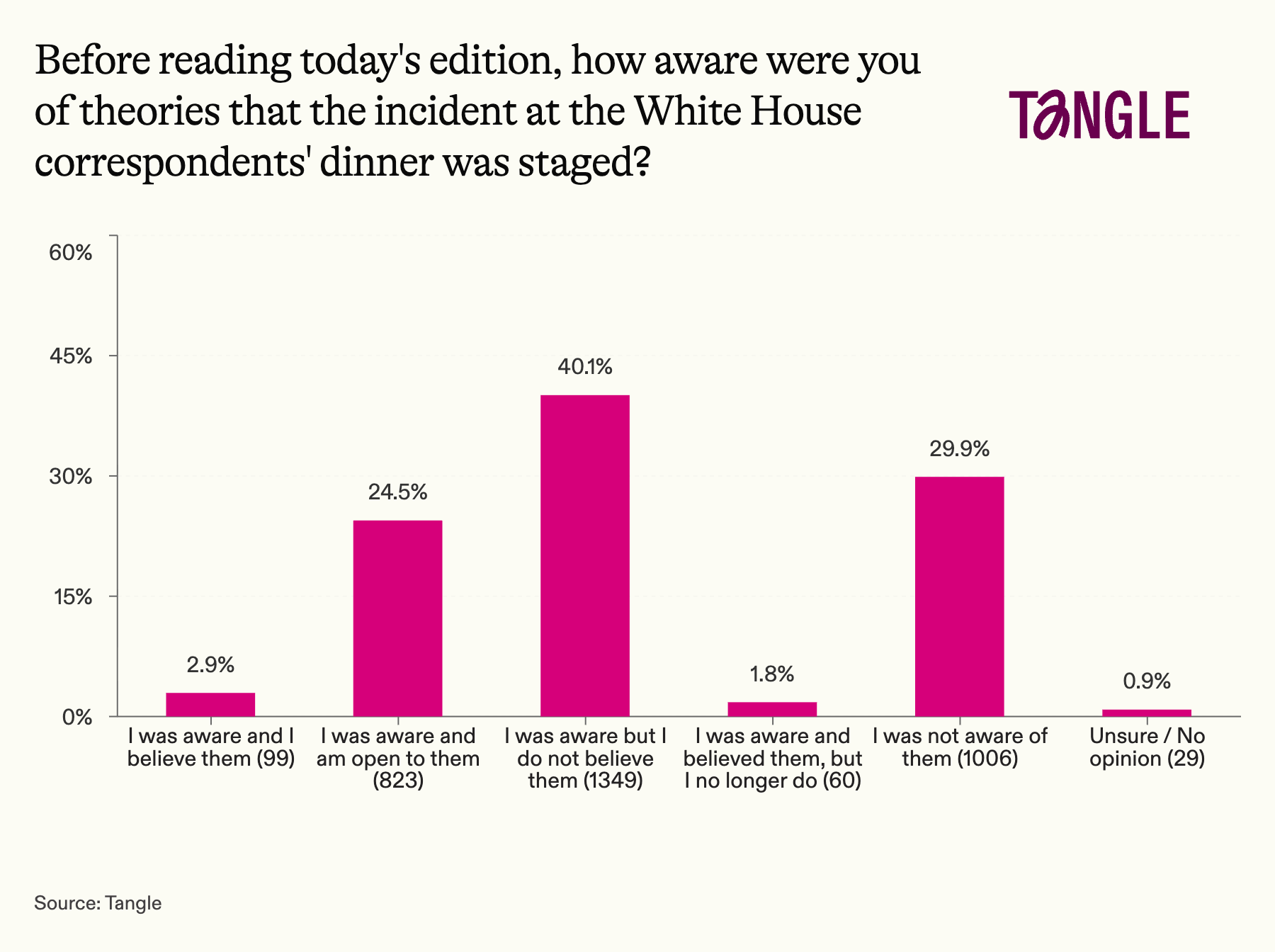
- Our last survey: 3,366 readers responded to our survey on theories that the shooting at the White House correspondents’ dinner was staged with 42% saying they were aware of the theories but did not, or now do not, believe them. “I’m open to them, but there’s not really any evidence beyond the weird pivot to ‘and this is why I need a ballroom,’” one respondent said. “I considered that it might’ve been staged, but before long was convinced it wasn’t,” said another.
Have a nice day.
In July 2022, the 988 suicide prevention hotline rolled out nationwide. Since then, suicide rates among people aged 15–34 have dropped 11% below historical projections, preventing an estimated 4,372 deaths. A Harvard Medical School study in JAMA found the effect strongest in states with the highest volume of hotline usage. The hotline, which replaced a 10-digit number, has fielded over 25 million contacts since launching — and it comes with $1.5 billion in crisis center funding. “The implication of that is that sustained funding for this program matters,” Dr. Vishal Patel, an author on the Harvard study, said. The New York Times has the story.

Member comments