






I'm Isaac Saul, and this is Tangle: an independent, nonpartisan, subscriber-supported politics newsletter that summarizes the best arguments from across the political spectrum on the news of the day — then “my take.”
Are you new here? Get free emails to your inbox daily. Would you rather listen? You can find our podcast here.
Today’s read: 14 minutes.
Get more from Tangle!
We try to make opening every newsletter exciting, and today we’re adding a little extra excitement with a special membership offer: A 25-hour window to get 25% off our yearly subscription bundle. We’re calling it our “25 for 25” sale. That’s ad-free newsletters, ad-free podcasts, and every single piece of members-only content we’ve ever published in the past and will publish in the future — Friday editions, Sunday editions, special interviews, podcasts, transcripts, Press Pass, and more. You unlock everything, all for just $6.25/month for the first year. But it all expires at 1 PM ET tomorrow. Grab it here.
Quick hits.
- President Donald Trump said he is extending the ceasefire with Iran “until such time as their leaders and representatives can come up with a unified proposal,” adding that the U.S. blockade of Iranian ports will also continue. Earlier on Tuesday, the president had suggested he opposed extending the ceasefire. (The announcement) Separately, Iranian state media reported that Iran seized two container ships in the Strait of Hormuz on Wednesday, claiming the ships were operating without required permits. (The seizures)
- Virginia voters approved an amendment to the state constitution allowing legislators to proceed with redrawing the state’s congressional map for the remainder of the decade. The change, which passed with 51.6% support, is expected to result in 10 Democratic districts out of 11. (The results)
- Kevin Warsh, President Trump’s nominee for Federal Reserve chair, testified before the Senate Banking Committee, telling lawmakers that he viewed the central bank’s independence as “essential” and that the president had not pressured him to push for lower interest rates. (The hearing)
- Rep. Sheila Cherfilus-McCormick (D-FL) resigned from the House shortly before the chamber’s Ethics Committee gathered to discuss sanctions for multiple campaign finance violations. Cherfilus-McCormick is also charged with stealing $5 million in Covid-19 disaster relief funds. She is the third House member to resign since April 13. (The resignation)
- The Justice Department indicted the Southern Poverty Law Center (SPLC), a civil rights organization, on 11 counts, including defrauding donors. The organization allegedly paid members of neo-Nazi groups millions of dollars to act as informants for a now-defunct program to monitor threats from extremist groups, an effort the Justice Department said was concealed from donors. The SPLC denied any wrongdoing and said it was being targeted for political reasons. (The indictment)
22 Things To Cut When Living On Retirement (Many People Ignore #11)
Whether you’re already enjoying retirement or just eyeing the exit ramp, the math of a fixed income can feel like a daunting puzzle. The rising cost of living often turns "relaxing" into "calculating," but your golden years shouldn’t be defined by what you can’t do.
The good news?
You don’t need a radical lifestyle overhaul to find breathing room. Often, it isn't the big-ticket items that drain a nest egg; it’s the steady drip of outdated services and inefficient accounts.
Efficiency isn't about deprivation — it's about intentionality.
Our partner, FinanceBuzz curated a list of simple cutbacks and financial tools to help you reclaim your budget for what actually matters.
Today’s topic.
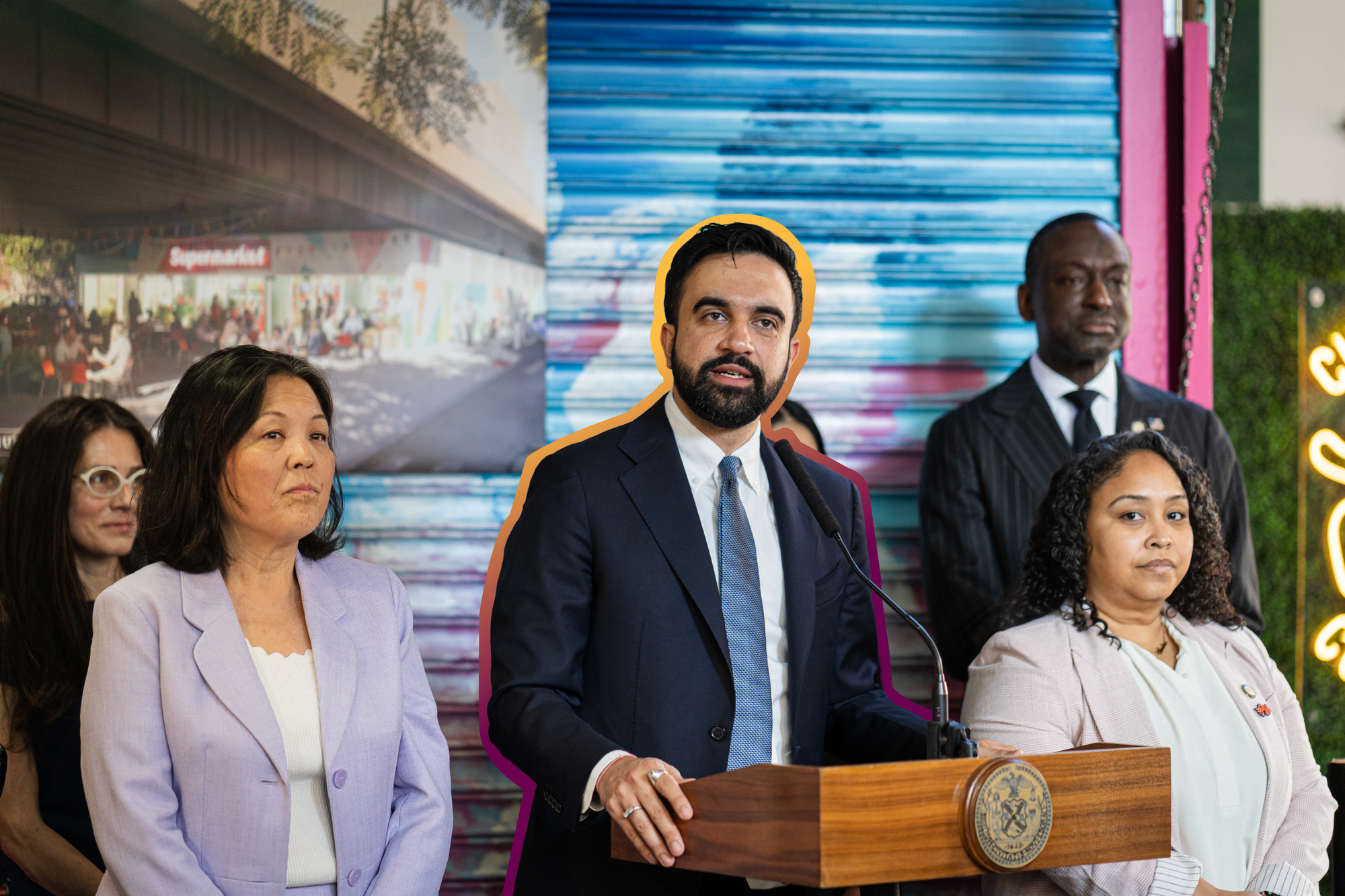
A wealth tax proposal in New York City. On Wednesday, April 15, New York City Mayor Zohran Mamdani (D) and New York Gov. Kathy Hochul (D) proposed a pied-à-terre tax, an annual surcharge on New York City residences valued above $5 million owned by those who primarily live outside the city. Mamdani and Hochul claim the measure would raise $500 million in annual revenue to help address the city’s budget shortfall; if enacted, it would be the first pied-à-terre tax in New York’s history.
Back up: Mamdani was elected mayor in 2025 on a platform featuring several proposals to increase taxes on the city’s wealthy residents to help pay for improved public services, including an increase in the state corporate tax rate and a two-percentage-point rate hike on residents making over $1 million per year. However, he has not proposed a tax on pied-à-terres (a term for luxury vacation homes) until now. Several countries have imposed versions of this tax.
The press release from the mayor’s office said, “The measure targets ultrawealthy out-of-city residents and global elites who use New York City real estate as a vehicle for wealth storage rather than as homes.” The release and a video from Mamdani promoting the idea both singled out hedge fund manager Ken Griffin’s $238 million pied-à-terre in Manhattan as an example of the tax’s targets.
Later that day, Mamdani said the plan is a step toward a key campaign promise to raise taxes on the wealthy. “I always said that I believed in the importance of taxing the rich. This is taxing the rich,” he said. “A pied-à-terre tax has been something that has long been fought for in the city but hasn’t been possible to get over the finish line.”
By law, the mayor is obligated to address the city’s budget deficit, which totals approximately $5.4 billion. While the tax would only address a portion of that shortfall, Mamdani and Hochul say it would help the city move toward that goal without having to enact large-scale cuts to social services. The Democratic-majority state legislature must pass the tax as part of the state budget currently being negotiated, but Democratic leaders in the state House and Senate responded favorably to the announcement.
Critics of the plan — and wealth taxes more generally — say the measure would impose undue burdens on wealthy New Yorkers who already pay high taxes and whose presence in the city contributes to its economy in myriad ways. Others warned that the plan could drive wealthy residents out of the city, while luxury real estate groups claimed it would hurt the industry.
Today, we’ll share views from the left and right on the pied-à-terre tax proposal and the “tax the rich” movement. Then, Managing Editor Ari Weitzman gives his take.
What the left is saying.
- Most on the left support the tax, calling it a prudent way to raise government revenue.
- Some say the measure rightfully targets the ultra-wealthy’s excess.
- Others frame the tax as a win for Mamdani and the democratic socialist movement.
The New York Daily News editorial board called the measure “the right tax.”
“Mayor Mamdani wanted the state to impose higher income taxes and corporate taxes and Gov. Hochul is wisely offering him a pied-à-terre tax. He is smart to take it. He should now also drop his calls for the other tax hikes,” the board wrote. “If a perennial concern with progressive taxation is the potential of driving well-off New Yorkers out of the city, this policy threads that needle by targeting people who are, by definition, not full-time New Yorkers. The people who have bought second homes or investment properties in New York City have done so precisely because it is the city that it is — a global hub of business and culture — meaning that an extra tax bump is something they’ll eat happily.”
“Wealthy people with homes they own that they don’t use a majority of the time, from Trump to Russian oligarchs to Gulf royals to more ordinary folks, enjoy and benefit from the enormous services and amenities that the city offers, and their properties are only worth what they’re worth as a result of the vibrancy created by the community around these properties, a community that needs the investment taxes can allow,” the board said. “Plus, it’s only fair that if they’re spending a significant chunk of their time not contributing to local economic activity and avoiding state and local taxes, then they can pay a little bit more on their assets to even things out.”
In USA Today, Sara Pequeño argued “Mamdani’s pied-à-terre tax proves you really can tax the rich.”
“While progressives are celebrating the implementation of ‘tax the rich’ policies, others are losing their minds over the possibility of people paying a tax on their multimillion dollar vacation homes and investment properties,” Pequeño wrote. “It’s hilarious that some netizens are so willing to go to bat for the wealthiest people in the world who are driving up the cost of housing in New York City — especially those who don’t live here… why shouldn’t the ultrawealthy people who can afford a vacation home here have to pay for it?”
“It doesn’t seem to be the rich who can afford second homes being priced out of New York City — it’s the people who were raised here who can no longer afford to call the city home,” Pequeño said. “More than 125,000 non-Hispanic Black residents have left the city over the past 20 years, according to a 2023 analysis from Gothamist, due in part to the city’s affordability crisis. Meanwhile, the number of millionaires in the city has grown by 45% over the past decade to nearly 385,000.”
In Jacobin, Liza Featherstone said the tax is “a victory for Zohran Mamdani and the socialist movement.”
“The announcement is a real victory for the socialist left and would never have happened without its tireless organizing to elect Mamdani, nor would it have happened without the campaign to ‘tax the rich,’ which has continued since he’s been in office, as New Yorkers have rallied, lobbied, and relentlessly dogged the governor at public events,” Featherstone wrote. “At the same time, the socialist movement is rightly viewing the new tax as a beginning rather than an end of a longer project of redistributing the city’s staggeringly unequal wealth and of building a New York where everyone can thrive.”
“It’s not too late to tax the rich more this year. Budget negotiations in Albany are not over; at present lawmakers are mired in discussion on climate policy, which Hochul wants to ignore, and car insurance, her favorite topic. So there’s a long way to go before settling big questions of revenue,” Featherstone said. “The Left will continue to demand more redistribution and revenue — income and corporate taxes.”
What the right is saying.
- The right strongly opposes the measure, with many arguing it is economically unsound.
- Some criticize Mamdani’s “tax the rich” rhetoric.
- Others say the tax will drive away wealthy residents.
The Wall Street Journal editorial board explored “a New York tax on out-of-towners.”
“The details are still being worked out, but the Hochul administration says the goal would be to raise $500 million a year by taxing 13,000 homes. That’s a big bite taken from a small number of people, who might easily decide that keeping a place in New York isn’t worth the cost,” the board said. “‘They’re part of our skyline, but those people are not part of our city,’ [Hochul] said Wednesday. Got that, longtime Manhattan banker or law partner who now has a primary residence elsewhere? New York’s Governor says you are not part of her city. Ms. Hochul’s focus is supposed to be on improving the state so that they want to come back.”
“Albany debated the pied-à-terre idea in 2019, and there was concern it might crash the market for luxury properties. The tax rates in that proposal ranged from 0.5% on value above $5 million to 4% above $25 million. According to a Journal analysis, something like half of the revenue would have come from only 280 homes above the top threshold, with an average tax bill of $846,000. Their property values might have fallen by 46%,” the board wrote. “Class warfare is ugly as politics, but it’s terrible as economics, and if New York drives away more wealth, voters won’t like the result of living in a city that’s downwardly mobile.”
The Free Press’s editors argued “scapegoating the rich won’t fill a $5.4 billion budget hole.”
“Economies stagnate when they’re layered with policies that slowly sap their productivity and orderliness — some red tape on business here, budget cuts to policing there. That’s what New York City Mayor Zohran Mamdani is risking with his latest tax proposal,” the editors said. “Mamdani singles out billionaire financier Ken Griffin in the video, exclaiming the $238 million price tag of his penthouse and putting the building on camera. It’s as if to say, There’s the enemy, New Yorkers, looking down on you from his spare palace.”
“The heckling is akin to the current wave of ‘eat the rich’ progressivism, which is pushing Democrats everywhere to embrace wealth taxes, and has even turned deadly on the movement’s fanatical fringe. Luigi Mangione’s alleged murder of UnitedHealthcare’s CEO appears to have been motivated by a similar kind of two-dimensional view of how the rich relate to the masses,” the editors wrote. “The purpose of the tax may not be to pay for anything at all. By pushing it forward, Mamdani is keeping a promise to supporters via signaling. It’s politically savvy, but economically risky.”
In City & State New York, New York City Councilmember Joann Ariola (R) wrote “I’m not a millionaire, but I am against more taxes on the rich.”
“The highest tax bracket in New York is already shouldering nearly half of the income tax burden in the state. This is an enormous share and provides us with much-needed funding for an array of programs and public works,” Ariola said. “But when the members of this tax bracket change their address and stop paying their income taxes to the Empire State, the government will be left with no other option than to push that burden down to the middle and working classes.”
“If we want to actually expand the tax base and bring more money into the city, we need to provide incentives for the wealthy to return. Because, as the numbers show, many of those with the means to do so will and are simply packing up and moving just across state lines, and this leaves the working classes and the middle-class civil servants who are too invested in the city to just up and leave shouldering the burden,” Ariola wrote. “Eventually, if we keep adding more taxes, we will eventually run out of rich people’s money.”
My take.
Reminder: “My take” is a section where we give ourselves space to share a personal opinion. If you have feedback, criticism or compliments, don't unsubscribe. Write in by replying to this email, or leave a comment.
- I support the idea of taxing out-of-state residents, but New York should be careful to avoid easy pitfalls.
- Local tax codes are complicated, and many wealthy property owners already pay a lot in taxes.
- If done well, this proposal could end up raising revenues while targeting only those who can afford to pay.
Managing Editor Ari Weitzman: Tax policy is complicated, and Gov. Hochul and Mayor Mamdani’s joint proposal is no exception. But by and large, I think this is a great idea in theory. Now, execution will be everything.
I’m a fan of progressive tax policies — taxing people who have more to pay feels very fair to me. I don’t know if this policy will raise $500 million, and it doesn’t solve the city’s budget problems on its own, but I also don’t think it will have the large problems a lot of the critics say it will. Remember, these are part-time residents who already demonstrated they will pay at least $5 million once and $60,000 in taxes every year to take advantage of what New York City has to offer; I doubt an additional $30,000 annually will meaningfully change the behaviors of people in that category.
In fact, I called for almost this exact policy in January when responding to President Trump’s proposal to raise the tax rate on corporate investors, saying we should instead increase the tax rate on second homes — specifically at local levels. I argued that targets of such a policy should be “very wealthy people who already own and live in a primary residence but also own vacation properties that are often vacant in areas with housing shortages,” adding that doing so would increase both revenue and supply (by acting as a disincentive to owning investment properties).
I’d been harboring this idea for a while, and after writing about it in Tangle, I got a lot of well reasoned pushback. Now that Mamdani and Hochul are considering doing this in the real world, I want to test the proposal against the pushback that I received.
First, this should only be considered a revenue-raising proposal to raise revenue, not one that will impact housing availability. When I pitched my idea to tax second homes, I optimistically stated that I could see people who buy up rental properties getting dissuaded from doing so or being motivated to rent them out. Counterarguments have convinced me that likely isn’t the case. Second homes make up only 4% of U.S. housing stock, a figure that is decreasing, and many of these properties are already rented out. Increasing taxes on them could have a marginal effect on encouraging more local home ownership, but it’d likely contribute to raising rents (let’s put a pin in that for now).
Mamdani and Hochul are pitching this as a revenue-raising policy, so they’re already ahead of me. Which brings me to the next point: Additional taxes on expensive second homes already exist to some degree.
In Vermont, where I live, the state offers a homestead tax exemption for people who live in their primary residence. This means my home state already taxes second homes at a higher rate, they just frame it as a discount to residents of their primary homes. Vermont is not alone; 37 other states offer similar exemptions, including New York. However, it is a marginal policy in the Empire State, only offering annual tax savings of $293 for most home owners. So while a similar policy in other states effectively is an extra tax on second-home owners, that’s not true of New York.
But that doesn’t mean that New York doesn’t already tax these properties to a high degree. New York City divides its properties into four categories — one-to-three unit residences, properties with more than three units, utilities, and all others. These properties are then taxed at different rates, complicating the existing tax policy.
Class 1 properties (basically single-family homes or small apartments) are taxed at 19.84%, while Class 2 properties (large rental buildings and investment condos) are taxed at 12.44%. However, Class 1 homes are taxed on only 6% of their value while Class 2 properties are taxed on 45% of their value, making the effective tax rate of these Class 1 properties much, much lower: ~1.2% of market value compared to ~5.6% of market value.
That’s a lot of numbers, so let’s take an example. Say I own a $5 million, four-story brownstone in New York City. If I am the owner and occupant of that property, I am only assessed taxes on 6% of its value, or $300,000. My tax rate of 19.84% means I pay about $60,000 in taxes, an effective rate of ~1.2%. If I break that property into four units and rent them out, I am assessed taxes on 45% of the building’s value, or $2.25 million. My tax rate of 12.44% means I pay about $280,000 in taxes, an effective rate of ~5.6%. That’s a difference of well over $200,000.
But would the pied-à-terre tax apply to properties that are identified as Class 1, or Class 2? As it stands today, that would depend a lot on the individual property. If it’s the former, then great — a surcharge on these properties can help raise revenues on a set of people that can afford it and who already aren’t paying as much in taxes as a landlord of an average small building in New York City (a cost that gets distributed among the residents). But if it’s the latter, then the surcharge essentially becomes a double tax on people who are already paying a great deal for their properties.
So far, the pied-à-terre proposal isn’t very specific on its application. I can understand that — it’s early, and the proposal that eventually gets introduced to the legislature will have to fall somewhere between the catchy “tax on $5 million homes owned by people who don’t live here” and the complicated reality of the existing tax code. But I hope is that the actual policy Hochul and Mamdani end up pitching looks something like this:
Clarify the classification. Pied-à-terres owned by out-of-state millionaires and real-estate investors don’t make sense as Class 1 properties, because these owners shouldn’t receive the benefits intended for most home owners. However, pied-à-terres aren’t a great fit as Class 2 properties, either, which is meant to encompass larger residences and apartment buildings. If a $10 million brownstone is in the same category as a 200-unit apartment building, then future changes to the tax code will either raise rents for the working class or keep taxes down for the rich. Instead, investment properties, pied-à-terres, and luxury apartments would be better suited in their own category.
Tweak the rates, don’t apply new charges. If these properties are simply put into their own bucket where the assessment rate is about as high as Class 2’s and the tax rate is about as high as Class 1’s, then I think Hochul and Mamdani accomplish the revenue target they want while keeping the code (relatively) simple, avoiding unintended regressive consequences, and without applying targeted thresholds. A “$5 million pied-à-terre tax” sounds catchy, but creating sharp cliffs like that both leaves money on the table (what about $4 million?) and creates a line for investors to avoid. Instead, using stepwise increases within this new classification will generate more revenue and be more progressive.
Cut the personal attacks. This is more of a messaging note, but the way the policy is messaged is a central part of it. As The Free Press editors wrote (under “What the right is saying”), filming marketing material outside one person’s house makes them the single target for class resentment and creates a genuinely dangerous environment. Mamdani is playing up class resentment in a way that we’ve seen fail, to deadly effect, with political extremism. People like Ken Griffin shouldn’t be treated as enemies while you’re asking for more money out of them.
Ultimately, the devil is in the details. New York has a potentially great idea on its hands — one that could increase its tax revenue with a minimal impact on full-time New York City residents — and I’ll be very interested to see how this idea evolves.
Without even touching the mayor’s reckless, creepy, joker-esque video framing Ken Griffin — who’s committed no crime and is accused of no wrongdoing — as a Bad Guy, the policy is less a straightforward scheme to make the wealthy pay their fair share than it is a complicated, unenforceable tax mess that sounds good on paper but will not work in practice.
Take the survey: What do you think about the proposed pied-à-terre tax? Let us know.
Disagree? That's okay. Our opinion is just one of many. Write in and let us know why, and we'll consider publishing your feedback.
Your questions, answered.
We're skipping the reader question today to give our main story some extra space. Want to have a question answered in the newsletter? You can reply to this email (it goes straight to our inbox) or fill out this form.
On this day in history.
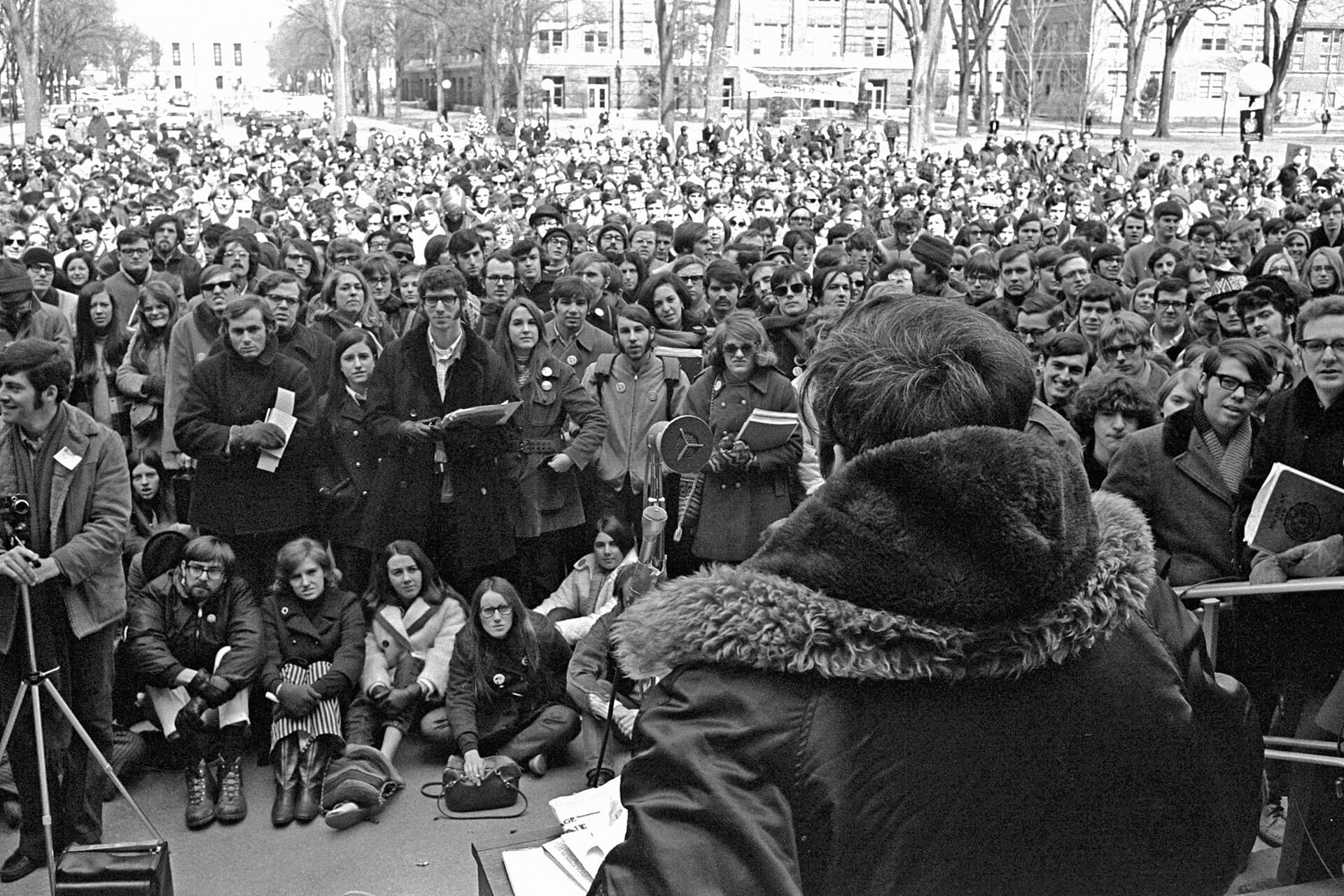
An environmental "teach in" in Michigan in 1970 | Wikimedia Commons
Today is Earth Day — let’s take a look back to see how that designation began.
On April 22, 1970, thousands of college campuses nationwide held classes, demonstrations, and protests to raise awareness of industrial air and water pollution, a concern popularized in part by Rachel Carson’s 1962 book Silent Spring. 20 million Americans, roughly 10% of the U.S. population at the time, took part in the event. Behind the effort was Wisconsin Sen. Gaylord Nelson (D), who recruited California Rep. Pete McCloskey (R) to serve as his co-chair and activist Denis Hayes to organize the campus rallies. Sen. Nelson originally proposed calling the event “Environmental Teach-In,” but by the time April 22, 1970, rolled around, organizers and national media had widely adopted “Earth Day,” a name coined by legendary advertising writer Julian Koenig. “Our goal is a new American ethic that sets new standards for progress, emphasizing human dignity and well being rather than an endless parade of technology that produces more gadgets, more waste, more pollution,” Sen. Nelson said in an address to a crowd in Denver, Colorado, on the first Earth Day.
Retirement Shouldn't Mean Constant Math
Fixed income plus rising costs turns relaxation into calculation. But the real drains aren't usually big purchases — they're outdated services and inefficient accounts quietly bleeding your nest egg.
FinanceBuzz compiled 22 simple cuts and tools to reclaim your budget for what actually matters.
The extras.
- One year ago today we wrote about the death of Pope Francis.
- The most clicked link in our last regular newsletter was our video about Chinese fishing vessels.
- Nothing to do with politics: An injured turtle gets its own wheels.
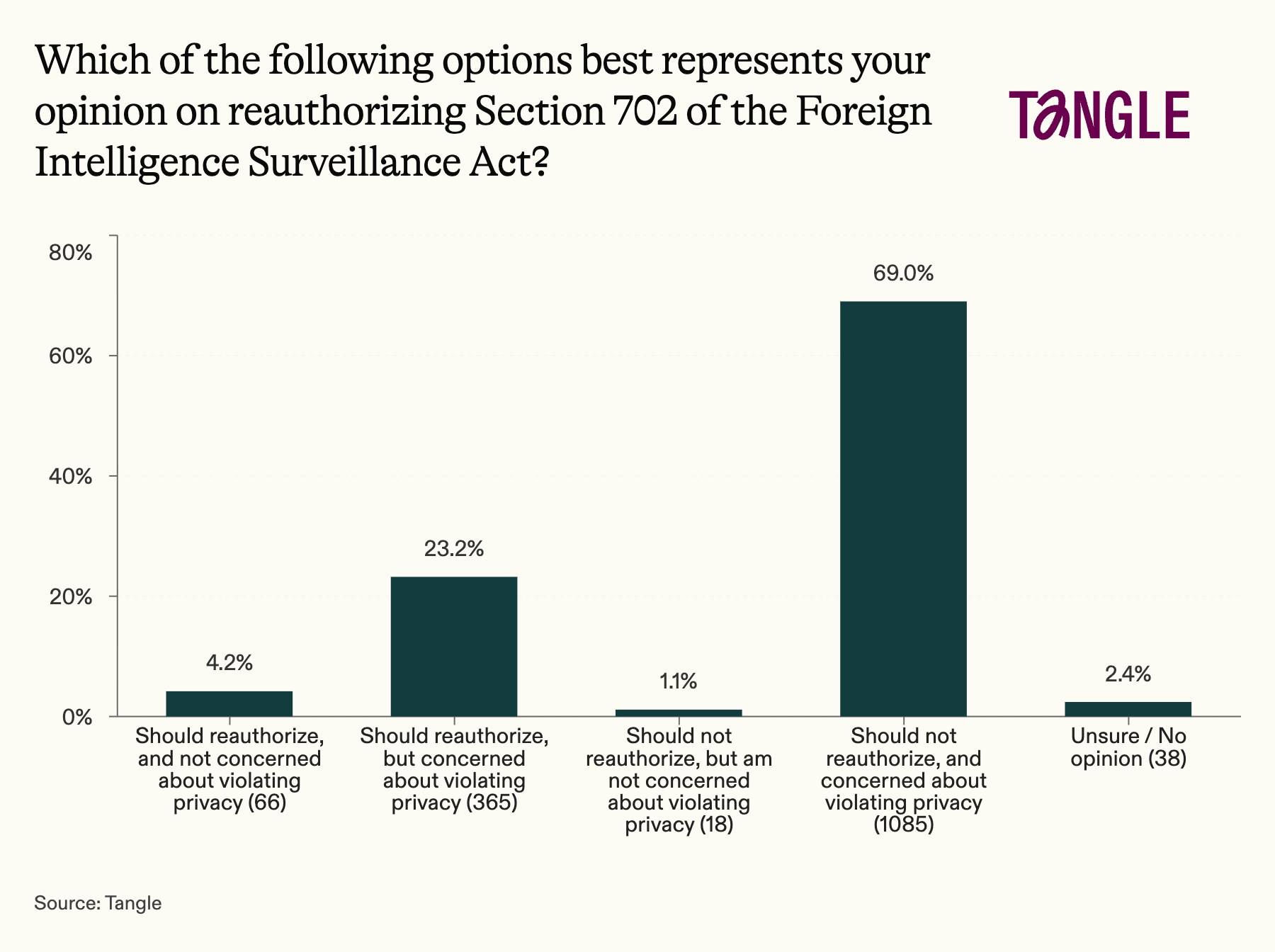
- Our last survey: 1,572 readers responded to our survey on renewing Section 702 of FISA with 70% saying Congress should not reauthorize it. “A warrant is a minimum reform. How hard is it to get a warrant from a FISA court anyway? That needs reform too,” one respondent said. “If you’re not talking with foreign criminals then you have nothing to worry about,” said another.
Have a nice day.
With 18,000 land mine-related deaths in Cambodia in the past half-century, one nonprofit, Apopo, has turned to using African giant pouched rats, whose small size and powerful sense of smell allow them to locate hidden mines quickly and safely. One of these rats, Magawa, stood above the rest, locating over 100 mines in his five-year career. He died in 2022, and Cambodia unveiled a seven-foot statue earlier this month to honor his work. “Magawa was one of the best rats we’ve ever had. Magawa was calm and focused … he was gentle and friendly with his handlers. He just had the perfect temperament,” Michael Raine, a program manager at Apopo, said. The Washington Post has the story.

Member comments