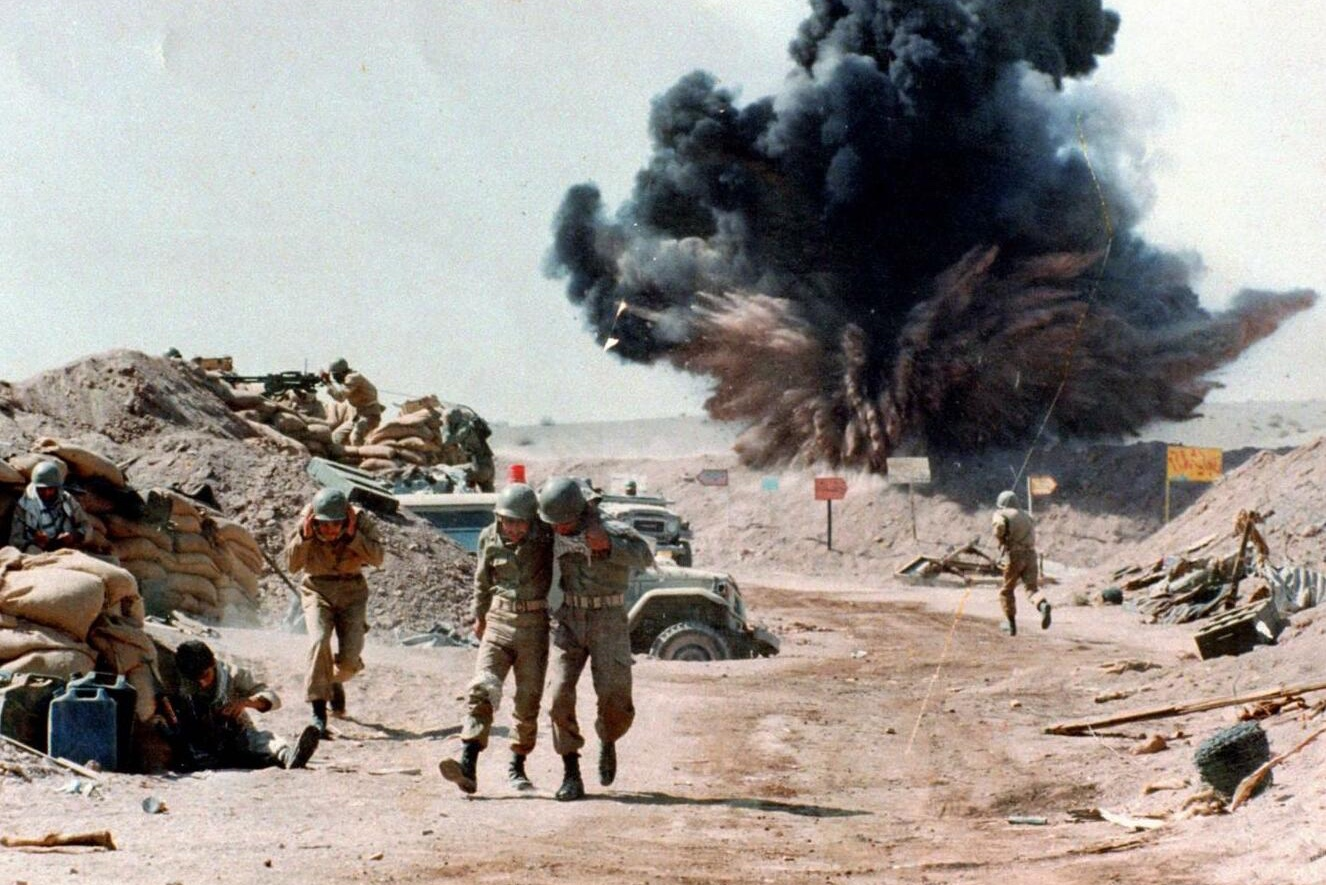
Soldiers help each other during the 1980 Iran–Iraq War | Bhavya Mathur, Wikimedia Commons
This is the Tangle Sunday Edition, a brief roundup of our independent politics coverage plus some extra features for your Sunday morning reading.
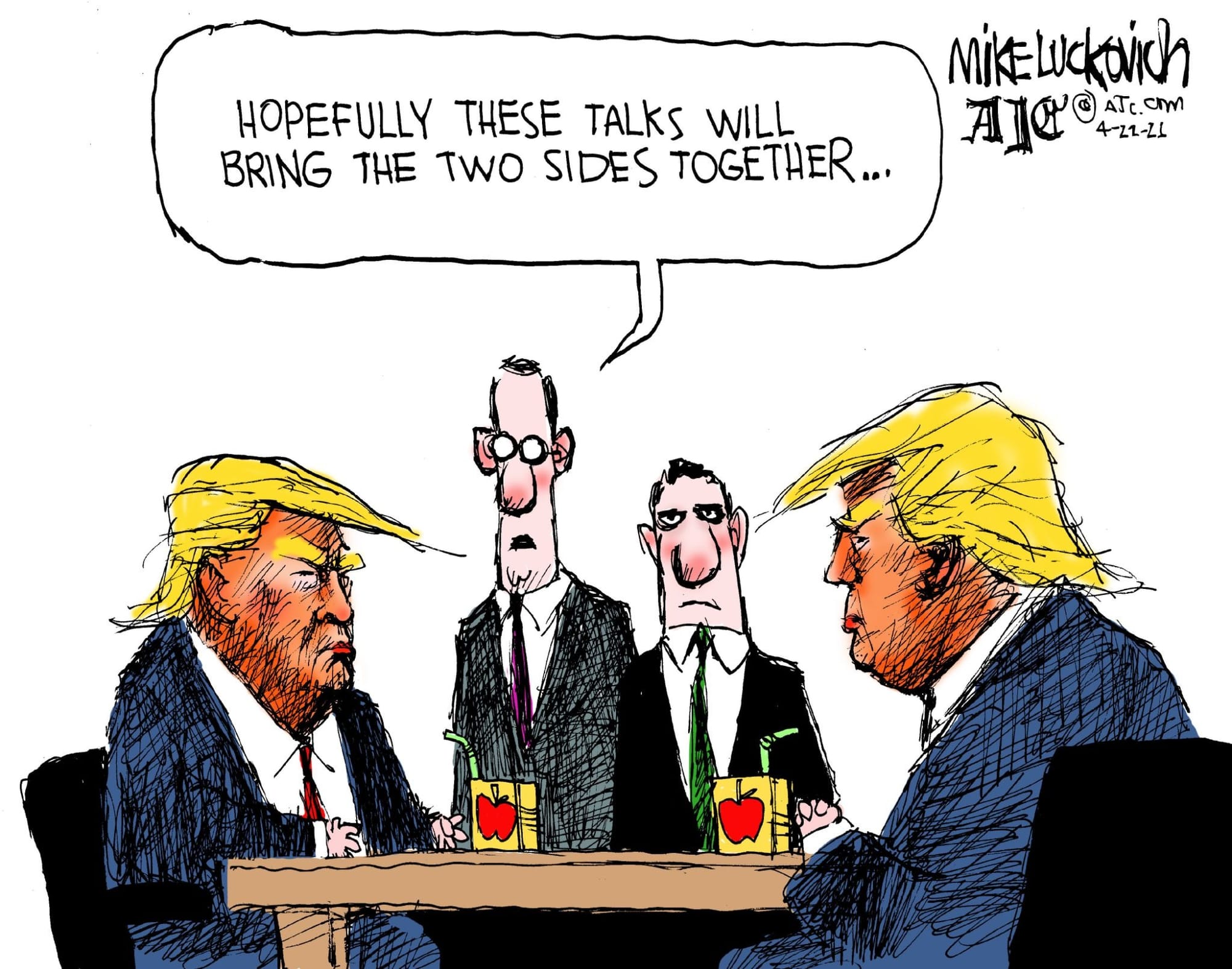
What the left is doodling.
Mike Luckovich | Creators Syndicate
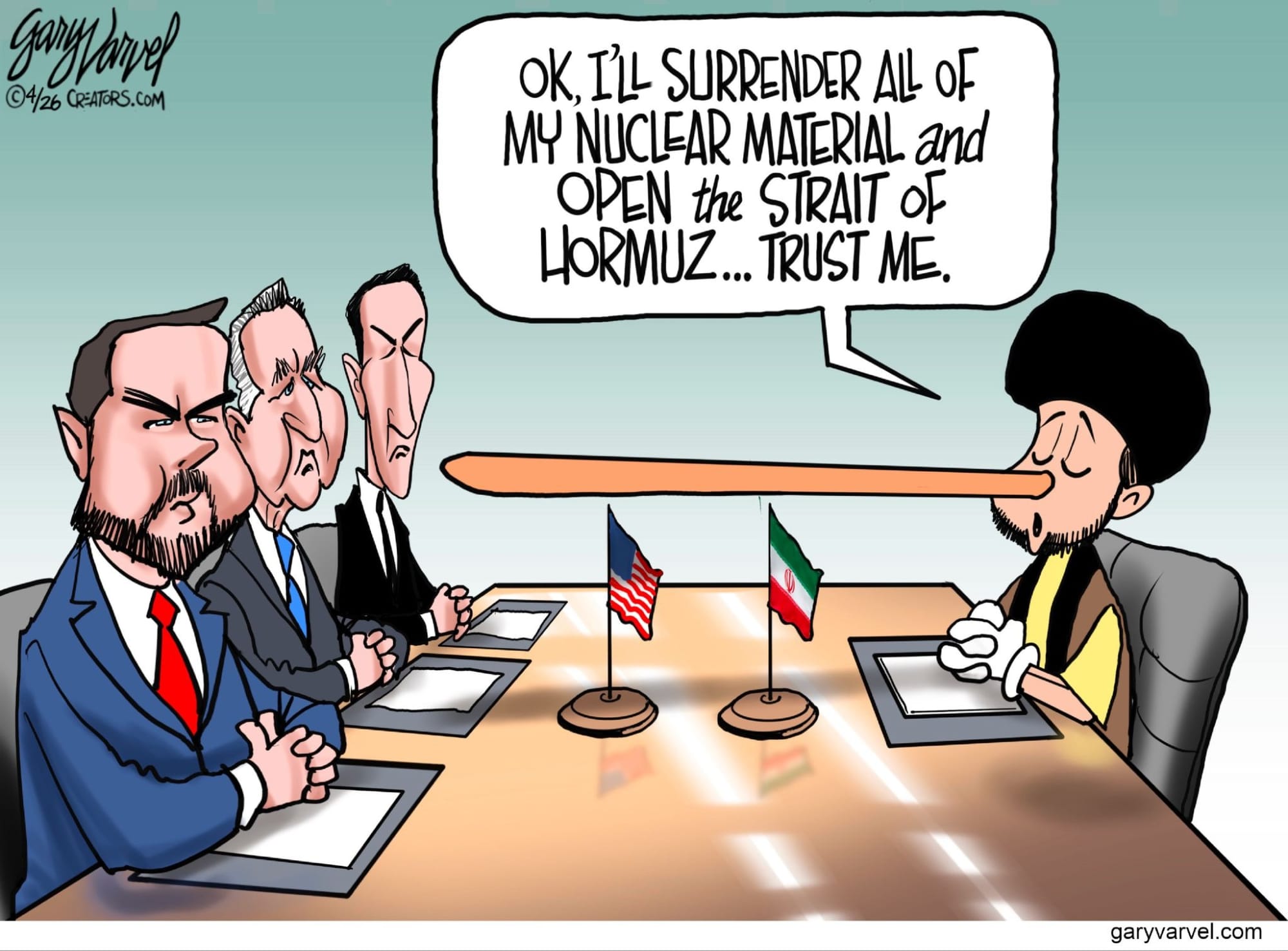
What the right is doodling.
Gary Varvel | Creators Syndicate
Suspension of the Rules
On this week’s episode, Isaac, Ari, and Kmele discuss the Virginia redistricting vote — and the gerrymandering war that surrounds it. Plus, is Trump pivoting for the midterms? How are voters responding to the war and the economy? Are any cabinet members on the way out? Will Kmele finally have something to complain about? Find out here!
Monday, April 20.
The latest from Iran. On Sunday, April 19, President Donald Trump said that the U.S. fired on and seized an Iranian-flagged cargo ship attempting to pass through the Strait of Hormuz from the Gulf of Oman. The vessel is the first ship seized by the U.S. Navy since it began blockading the gulf on April 13. Iran said on April 17 it would remove all restrictions on commercial ships passing through the strait, then closed the waterway again on April 18 in response to the ongoing U.S. military blockade. That day, gunboats linked to Iran reportedly opened fire on two ships attempting to transit the strait.
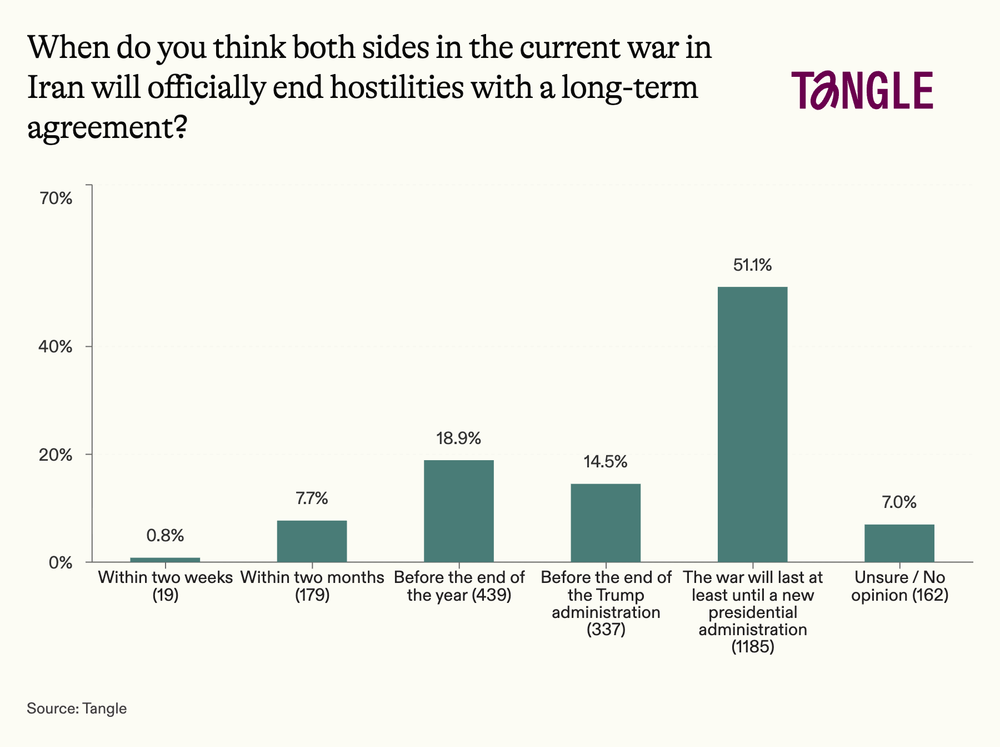
Our take: “Instability within Iran’s government is contributing to instability of peace talks. Iran’s new leadership is more extreme and more willing to use its force than the leaders the U.S. killed, and the situation is much more tenuous. All told, I don’t see a way this war ends any time soon.”
Reader Survey:
Tuesday, April 21.
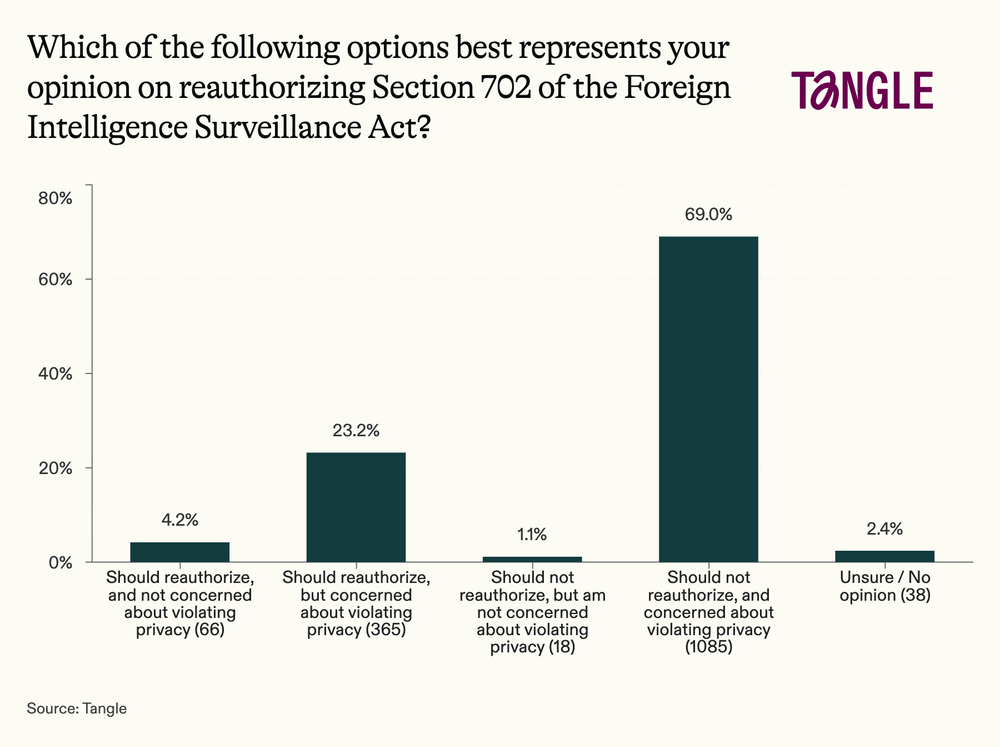
Congress’s temporary FISA reauthorization. On Friday, April 17, the House and Senate passed a short-term renewal of Section 702 of the Foreign Intelligence Surveillance Act (FISA), reauthorizing the law until April 30. Republican leadership pivoted to the stopgap measure after a group of 20 House Republicans voted against an 18-month extension that President Donald Trump had endorsed. Congress is now expected to debate adding new privacy measures to the law before the April 30 deadline.
Our take: “I opposed Section 702 authorization under Biden, and I still oppose it today. Fear of bad actors should not justify a blanket authority to violate our rights as Americans. Even if Congress reauthorizes Section 702, I believe our intelligence agencies should learn to operate within these constraints.”
Reader Survey:
Wednesday, April 22.
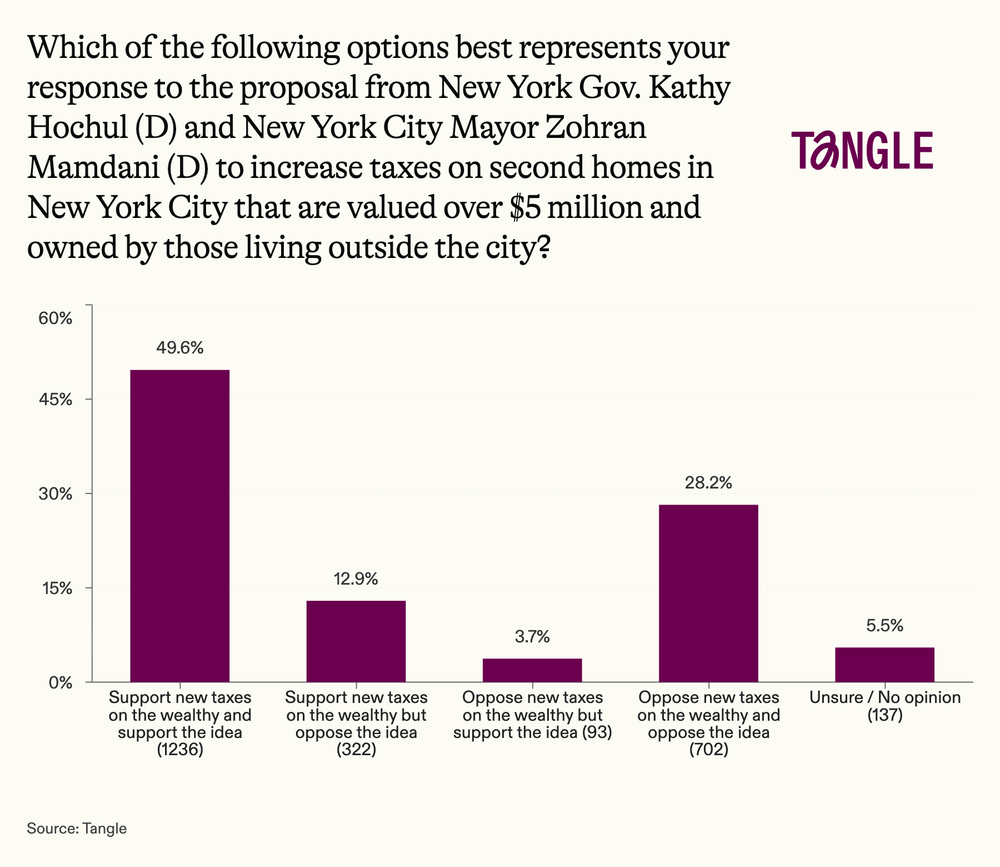
A wealth tax proposal in New York City. On Wednesday, April 15, New York City Mayor Zohran Mamdani (D) and New York Gov. Kathy Hochul (D) proposed a pied-à-terre tax, an annual surcharge on New York City residences valued above $5 million owned by those who primarily live outside the city. Mamdani and Hochul claim the measure would raise $500 million in annual revenue to help address the city’s budget shortfall; if enacted, it would be the first pied-à-terre tax in New York’s history.
Our take: “I support the idea of taxing out-of-state residents, but New York should be careful to avoid easy pitfalls. Local tax codes are complicated, and many wealthy property owners already pay a lot in taxes. If done well, this proposal could end up raising revenues while targeting only those who can afford to pay.”
Reader Survey:
Thursday, April 23.
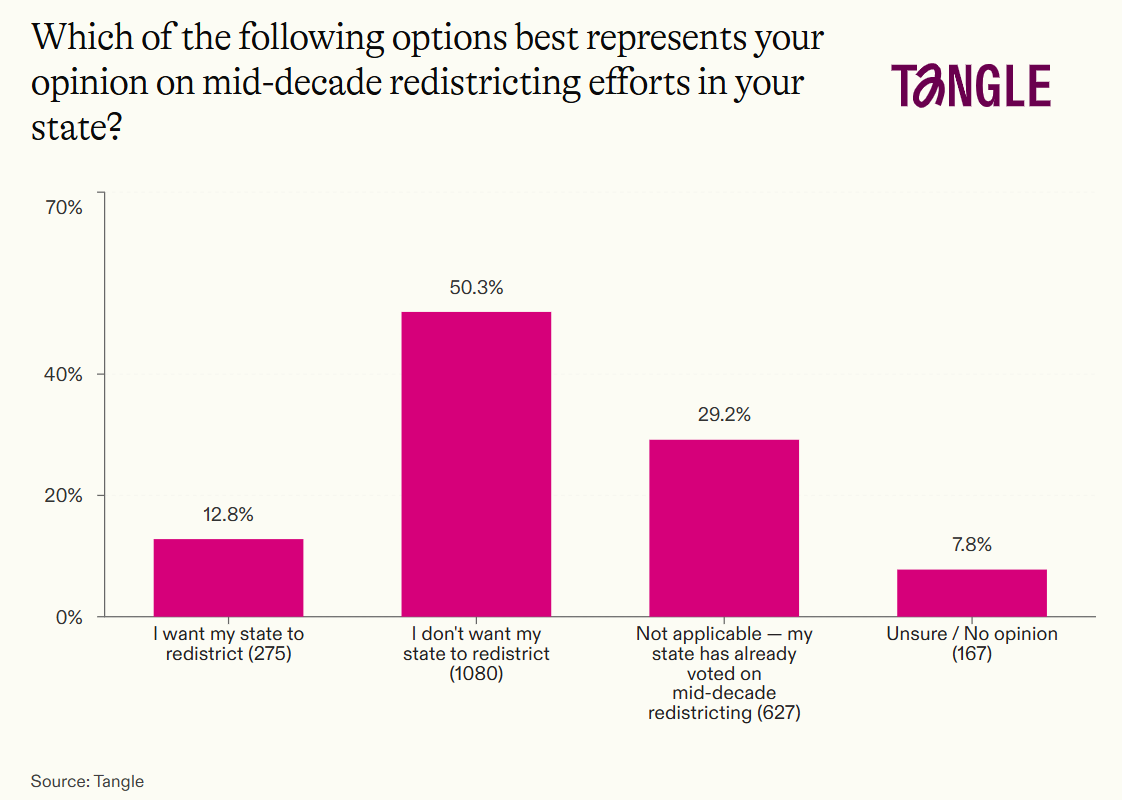
The redistricting referendum in Virginia. On Tuesday, April 21, Virginians voted 51.5%–48.5% to approve a constitutional amendment allowing the state to redraw its congressional map ahead of the 2026 midterms. The new map will shift several districts in Democrats’ favor, potentially turning the current 6–5 split to a 10–1 advantage. The referendum comes amid a broader mid-decade redistricting push by Democratic- and Republican-controlled states that began last summer in Texas, and it is facing a challenge in the Virginia Supreme Court.
Our take: “Virginia Republicans have valid grievances — as do national Democrats. State votes were never intended to be pass-through elections on national politics, and gerrymandering is degrading the whole political system. The edge so far seems to favor Democrats, and Republicans may want to reconsider another round in Florida.”
Reader Survey:
Friday, April 24.
In this week’s Friday edition, Associate Editor Audrey Moorehead explores Christian nationalism, looking back at the arguments that inspired the separation of church and state and parsing out the various strains of American Christianity. Audrey explores the difference between Christians in government and Christian governance, answering the question of what is — and isn’t — Christian nationalism. You can read Audrey’s piece here.
Further reading.
We’ve covered relations with Iran, government surveillance, New York City revenue policies, and redistricting before. Plus, read a previous Tangle editor’s take on the role of faith in American society. Take a look at our past coverage below:
Here’s a rundown of the major stories that have broken since our newsletter on Thursday.
On Thursday, President Donald Trump posted on Truth Social that he has ordered the U.S. Navy to “shoot and kill” any Iranian vessels believed to be deploying mines in the Strait of Hormuz. He also said that U.S. minesweepers were in the process of clearing the waterway of mines and directed them to triple their level of activity. (The post)
On Thursday, Acting Attorney General Todd Blanche signed an order directing the Drug Enforcement Administration (DEA) to change the classification of medical cannabis from a Schedule I to a Schedule III drug. The Biden administration initially launched a review of cannabis’s classification, and President Trump signed an executive order in December 2025 directing the DEA to expedite the rescheduling process for the substance. (The order)
On Thursday, Warner Bros. Discovery shareholders approved the company’s merger with Paramount Skydance, a key step in completing the deal. (The approval)
On Thursday, the Justice Department announced that a U.S. Army Special Forces master sergeant had been arrested for allegedly using confidential government information for personal gain (among other charges) linked to bets placed on a prediction market related to the operation to capture Venezuelan leader Nicolás Maduro in January. The Justice Department says the sergeant was involved in the planning of the operation and placed approximately 13 bets totalling $33,000 the week prior to Maduro’s capture. (The arrest)
On Thursday, the U.S. hosted peace talks between Israel and Lebanon, with the sides agreeing to a three-week extension of their ceasefire, which was set to expire this Sunday, April 26. (The extension)
On Friday, the U.S. Fifth Circuit Court of Appeals lifted an injunction on a 2023 Texas law that allows state and local law enforcement to arrest unauthorized migrants who cross the Mexico border. The injunction had been in place since 2024. (The order)
On Friday, U.S. Attorney Jeanine Pirro announced the Justice Department is ending its probe into Federal Reserve Chair Jerome Powell over the renovation of two Federal Reserve buildings. Pirro said Powell has asked the central bank’s inspector general to look into the cost of the projects. (The announcement)
On Saturday, President Trump canceled plans for son-in-law Jared Kushner and U.S. special envoy Steve Witkoff to visit Islamabad for peace talks with Tehran. (The cancellation)
On Saturday, President Trump was rushed from the stage after shots were fired at the White House Correspondents’ Dinner in Washington, D.C. No public official, journalist or other guest was injured, though a Secret Service agent was reportedly shot but protected by a bulletproof vest. The FBI says it has a suspect in custody. (The incident)
Reader essay.
Soldiers help each other during the 1980 Iran–Iraq War | Bhavya Mathur, Wikimedia Commons
Twenty years ago, after the United States launched the war in Iraq, Tangle reader Brian Gilette wanted to understand what made a war just or unjust. He developed a five-part rubric for this evaluation and applied it to the war at the time, concluding that the war was unjust. Today, Brian applies his five-part rubric to the war in Iran.
This post is for paying subscribers only
Sign up now and upgrade your account to read the post and get access to the full library of posts for paying subscribers only.