












 500,000+ readers just today.


Virginia joins gerrymander war.
I'm Isaac Saul, and this is Tangle: an independent, nonpartisan, subscriber-supported politics newsletter that summarizes the best arguments from across the political spectrum on the news of the day — then “my take.”
Are you new here? Get free emails to your inbox daily. Would you rather listen? You can find our podcast here.
Today’s read: 14 minutes.
Corrections.
In yesterday’s “On this day in history” section, we had two unfortunate errors. First, we referred to Rachel Carson’s Silent Spring as a novel when it is in fact a nonfiction science narrative. Second, we misidentified Pete McCloskey as a U.S. senator from California, when he was in fact a U.S. representative. These errors were missed during our fact-checking process, and we will be paying extra attention to our newer sections in the future.
These are our 155th and 156th corrections in Tangle’s 360-week history and our first corrections since April 15. We track corrections and place them at the top of the newsletter in an effort to maximize transparency with readers.
Our latest Suspension of the Rules.
On our most recent episode, Isaac, Ari, and Kmele discuss the Virginia redistricting vote — and the gerrymandering war that surrounds it. Plus, a 30,000-foot view of the political landscape: Is Trump pivoting for the midterms? How are voters responding to the war and the economy? Are any cabinet members on the way out? Will Kmele finally have something to complain about?
All will be answered in today’s episode!
Quick hits.
- Navy Secretary John Phelan has left his position. Defense Secretary Pete Hegseth reportedly fired Phelan due to tension between the former secretary and Pentagon leadership. Navy Under Secretary Hung Cao will now serve as acting Navy secretary. (The departure)
- The Trump administration is reportedly nearing a deal to loan Spirit Airlines up to $500 million in exchange for a potential stake in the company. Spirit is in the midst of its second bankruptcy process since 2024 and facing heightened financial pressure due to elevated jet-fuel prices. (The report)
- Rep. David Scott (D-GA) passed away at 80. He was elected to the House in 2002 and was running for a 13th term in 2026. (The passing)
- Jay Bhattacharya, the acting head of the Centers for Disease Control and Prevention, canceled the release of a study that reportedly showed Covid-19 vaccines significantly reduced the likelihood of emergency room visits and hospitalizations from Covid. Bhattacharya objected to the study’s methodology, suggesting it misrepresented the vaccine’s effectiveness. (The cancellation)
- The Senate voted 50–48 to adopt a budget resolution, setting up a vote on a budget reconciliation package next month. Republicans plan to use the process to fund Immigration and Customs Enforcement and Border Patrol through 2029, which will require a simple majority to pass. (The vote)
Protect against rising vet costs with pet insurance
The cost of veterinary services has been rising recently, with some common surgical procedures costing up to $7,000.
Pet insurance can help cover accidents, illnesses and even routine care, with some plans reimbursing up to 90% of costs.
Money.com's Best Pet Insurance list can help you find affordable coverage starting at just $10 a month so you can focus on what matters most — your furry friend's well-being.
Get a personalized pet insurance quote today and save thousands on costly vet bills.
Today’s topic.
One more hour: Yesterday, we launched our first-ever 25 for 25 — 25% off our yearly bundle subscription for 25 hours. The offer expires at 1:00 PM ET today. It gets you unlimited, ad-free access to our podcast, newsletter, and website. Grab it here.
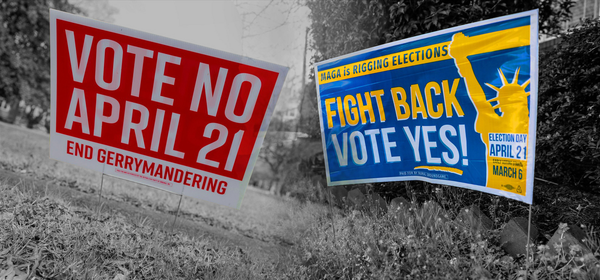
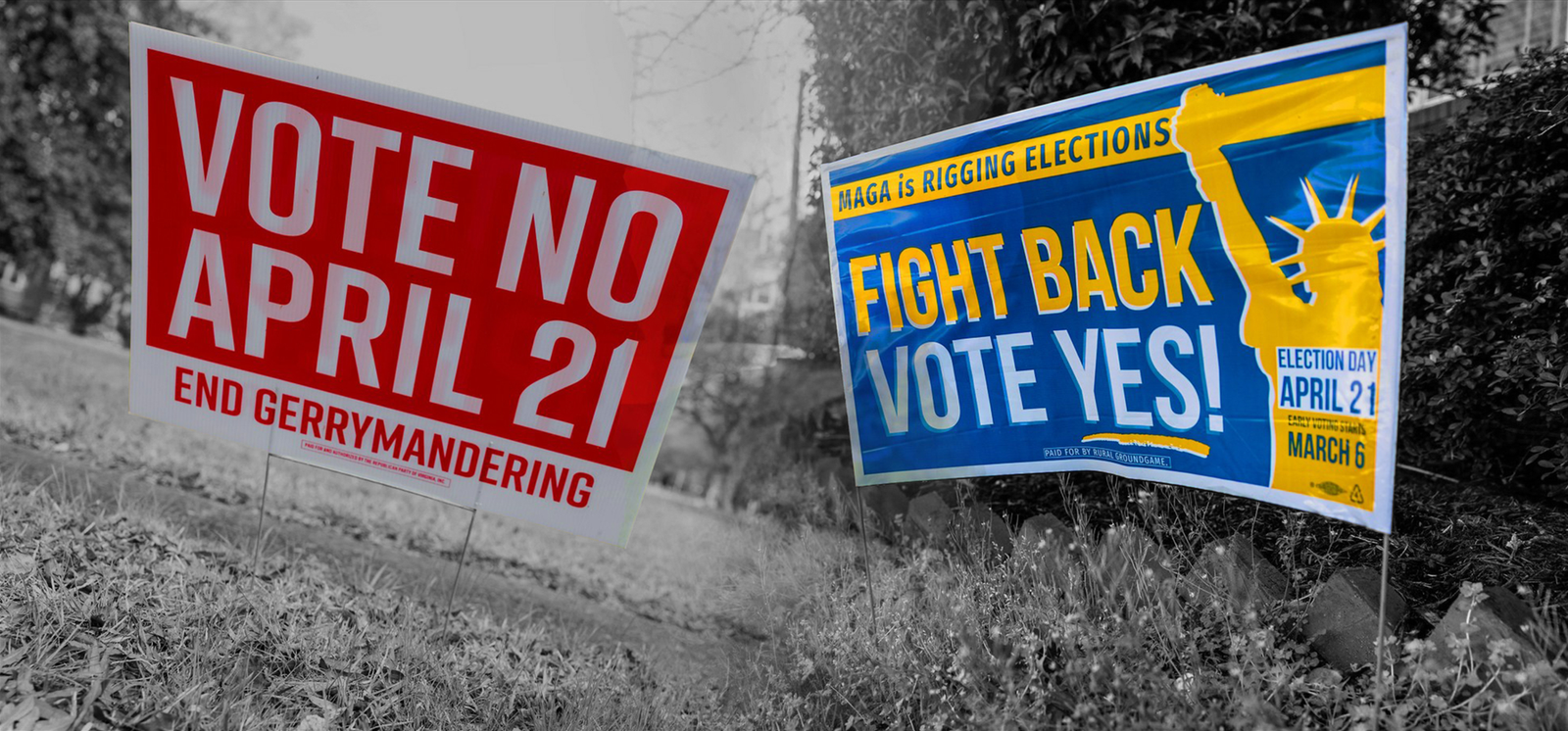
The redistricting referendum in Virginia. On Tuesday, Virginians voted 51.5%–48.5% to approve a constitutional amendment allowing the state to redraw its congressional map ahead of the 2026 midterms. The new map will shift several districts in Democrats’ favor, potentially turning the current 6–5 split to a 10–1 advantage. The referendum comes amid a broader mid-decade redistricting push by Democratic- and Republican-controlled states that began last summer in Texas, and it is facing a challenge in the Virginia Supreme Court.
Back up: In late July, President Donald Trump called on Texas lawmakers to redraw their congressional map ahead of the typical decennial redistricting cycle in an effort to gain additional Republican seats in the House. The state legislature approved the plan, prompting California to pursue its own redistricting to boost Democratic representation. Six states (including Virginia) have now implemented new maps as a result of mid-decade redistricting, and several others are considering doing so.
The Virginia referendum asked voters to vote yes or no on a constitutional amendment creating a one-time exception to the state’s redistricting system, which uses a bipartisan commission and court review to redraw congressional district lines at the start of each decade. The change is designed to be temporary — and pegged as a response to mid-decade redistricting actions in other states — and Virginia would revert to its normal process at the end of the decade. However, the new map will be in effect for both the 2026 and 2028 House elections.
Democrats significantly outspent Republicans in support of the measure, with prominent figures like former President Barack Obama endorsing the effort. Critics, such as former Virginia Gov. Glenn Youngkin (R), have said the process of getting the amendment on the ballot was unconstitutional and called on the state supreme court to strike it down.
Despite Tuesday’s results, several challenges to the redistricting effort remain. In particular, two lawsuits allege that the wording of the ballot question was misleading, and the plaintiffs have appealed their case to the Virginia Supreme Court. The court allowed the question to remain as written for the referendum but has yet to issue a final decision; if it rules in favor of the plaintiffs, it is unknown how the decision would impact the redistricting outcome. Separately, on Wednesday, a circuit court judge blocked the referendum results from being certified, finding that the amendment process and ballot language were handled improperly. State Attorney General Jay Jones (D) said his office will immediately appeal.
Virginia Democrats celebrated the result. “Virginia voters have spoken, and tonight they approved a temporary measure to push back against a President who claims he is ‘entitled’ to more Republican seats in Congress,” Gov. Abigail Spanberger (D) said. Republicans expressed disappointment but recommitted to push forward with legal challenges. “The ballot box was never the final word here,” Delegate Terry Kilgore (R) said. “Serious legal questions remain about both the wording of this referendum and the process used to put it before voters.”
Today, we’ll share views from the right, left, and Virginian writers about the referendum. Then, Associate Editor and Virginia resident Russell Nystrom gives his take.
What the right is saying.
- The right is disappointed by the results, with many calling out Democratic hypocrisy on gerrymandering.
- Others say Republicans must fight fire with fire.
The Washington Post editorial board wrote “Virginia plunges America deeper into the gerrymandering abyss.”
“Democratic leaders have long fancied themselves as champions of democracy and fair elections. But many of these politicians, including former president Barack Obama, made a more cynical calculation in Virginia,” the board said. “For them, disenfranchising Republican voters is the only way to counterbalance the desperate attempts by Republicans in other states to save their congressional majority. They’re right that the GOP started this fight by trying to pick up five House seats in Texas through gerrymandering, but they can spare us the false sanctimony about democratic norms going forward.”
“None of this was necessary. Democrats in Maryland ended their legislative session this month without passing new maps to eliminate the sole Republican in the state’s eight-member House delegation. Bill Ferguson, the Democratic president of the state Senate, withstood a nasty pressure campaign led by Gov. Wes Moore (D),” the board wrote. “Republican legislators in Indiana similarly defeated a gerrymandering scheme despite threats of retribution from Trump. If only more legislators were willing to stand on principle.”
In The Daily Caller, Mary Rooke said the result reveals a “hard truth” for the GOP.
“For decades, Republican populists have been handicapped by the so-called ‘principled conservative’ wing of the GOP. The Democratic success with Virginia’s redistricting teaches a lesson that the old hats can no longer ignore,” Rooke wrote. “Either use the power the voters gave you to enact their will and mandate, or sit back like the impotent fool you are and watch Democrats erase any chance for you ever to govern again.”
“There can be no room for pretending that norms and principles play a role in a discussion where the other side has zero intent to play fair,” Rooke said. “The lesson for the so-called ‘principled conservatives’ is actually quite simple. They can either willingly fall in line with the populist movement and help save America from the modern-day Bolsheviks in the Democratic Party, or they can cling to their norms like a life raft as the greatest country ever formed sinks into the ocean.”
What the left is saying.
- The left sees the result as a rebuke of Trump, even as many worry about the long-term impacts of gerrymandering.
- Others say the redistricting fight is far from over.
In The Atlantic, Russell Berman described “Trump’s enormous gerrymandering blunder.”
“When President Trump last summer implored Republicans to launch a nationwide gerrymandering blitz to pad their narrow House majority, the fight he started did not seem fair,” Berman wrote. “This morning the landscape looks a lot different, after Virginia voters yesterday approved a lopsided new House map that could hand Democrats an additional four seats that Republicans currently hold… Democrats have now succeeded in drawing districts that will likely yield them nine more seats this fall, at least matching what Republicans have been able to achieve in states that they control.”
“Trump’s move to open this new front in a centuries-old gerrymandering war between the parties looks like an enormous tactical blunder. Republicans have appeared taken aback by the ferocity with which Democrats have responded — and the speed with which they’ve set aside their drive to ban gerrymandering in the name of good government,” Berman said. “In both California and Virginia, Democrats swamped the opposition in campaign spending, using the redistricting referenda to rile up a party base seeking any opportunity to push back against an unpopular administration.”
In MS NOW, Paul Waldman suggested “this was the easy part.”
“The theory of the successful initiatives in California and Virginia is that only by punishing Republicans for their mid-decade redistricting can the GOP be persuaded to pull back from the unfair system it has constructed,” Waldman wrote. “In other words, this is a step toward some kind of grand bargain in which the parties will agree on a future with more competitive elections. Unfortunately, that will still be a tough sell for the GOP, which might reasonably conclude that if the point where we have arrived for this year’s midterm election is its worst-case scenario, gerrymandering will continue to work to its advantage.
“That raises the practical problem at the end of this tit-for-tat. If Democrats’ goal is to force Republicans to come to the table to negotiate a post-gerrymandering future, Republicans will have to conclude that the current system is costing them a chance at power,” Waldman said. “And if Republicans simply refuse to change their ways, what then? Will Democrats in California and Virginia keep their word to revert back to independent redistricting commissions, which would be unilateral disarmament if the redistricting wars are still going on?”
What Virginia writers are saying.
- Some Virginian writers argue the amendment is an affront to the state’s prior embrace of bipartisan redistricting.
- Others say the decision is rightfully being left to voters.
In The Richmond Times-Dispatch, Jason Miyares (R) and Eric Cantor (R) wrote “Virginia voters already chose fair maps. Now Washington money wants a do-over.”
“In 2020, Virginians did something rare in politics. We changed the rules on ourselves. By a two-to-one margin, more than 2.8 million Virginians amended our Constitution to end partisan gerrymandering and create a bipartisan redistricting commission, which became a national model. The maps the commission drew, and the courts approved, included the preservation of historic minority-majority districts and served as a source of pride,” Miyares and Cantor said. “Republicans and Democrats alike said the same thing: voters should choose their politicians, not the other way around.”
“Now, just a few years later, the political class is asking for a do-over — because they don’t like the outcome. The April 21 referendum would scrap the spirit of that 2020 reform and pave the way for a congressional map designed to produce 10 Democratic-leaning seats and just one Republican-leaning seat. That’s not ‘fair maps.’ That’s a mid-decade power grab dressed up in the language of reform,” Miyares and Cantor wrote. “Sixty-six percent of Virginians voted for a bipartisan commission, transparency and an end to back-room map drawing. They did not vote for a six-year partisan detour that hands the pen back to politicians and their national funders.”
Before the vote, The Virginian-Pilot and Daily Press Editorial Board explored voters’ decision on the “fate” of the amendment.
“Whatever one thinks about the issue, the important thing is that this will be decided by the people — not by elected officials in Richmond or Washington, and not by those who have poured tens of millions into the campaigns. Virginians will decide what’s best for Virginia,” the board said. “Contrary to how advocates on both sides of the debate over Virginia’s proposed constitutional amendment frame it, neither party can claim the moral high ground when it comes to drawing district lines.”
“Typically decisions about the maps governing elections are made well out of public view. Redistricting has long been a process defined by opacity, with lawmakers drawing lines that protect incumbents and, for the party in power, seek to preserve the status quo,” the board wrote. “President Donald Trump ordered Republican states to draw new lines in advance of November’s election in an attempt to retain power in the U.S. House; Democratic-led states, including Virginia, have moved to counter that effort and offset any potential GOP advantage… Now that decision is in the hands of voters.”
My take.
Reminder: “My take” is a section where we give ourselves space to share a personal opinion. If you have feedback, criticism or compliments, don't unsubscribe. Write in by replying to this email, or leave a comment.
- Virginia Republicans have valid grievances — as do national Democrats.
- State votes were never intended to be pass-through elections on national politics, and gerrymandering is degrading the whole political system.
- The edge so far seems to favor Democrats, and Republicans may want to reconsider another round in Florida.
Associate Editor Russell Nystrom: Last summer, as President Donald Trump urged Texas to become the first domino to fall in the mid-cycle redistricting arms race, Democrats warned him that they would respond in kind and that he may come to regret it. In my home state of Virginia, where I’ve lived my entire life, the response was loud and immediate.
And to be honest, I’m not sure how I feel about that response. Despite every other ad on TV being about the race, spending on this issue eclipsing the GDP of at least one country, and being elbow-deep in coverage of the event, I wasn’t 100% sure of the choice I made when I voted — and I still feel that way, about 36 hours later.
Middle and high schools across the country have what they describe as a “zero tolerance” policy with respect to fighting. That means that if one student punches another student in self-defense, or in response to bullying, that student would be punished equally to the aggressor. That policy, rightfully, has drawn significant criticism; there are times when standing up for yourself is necessary and the right thing to do. By the same logic, I’m fine with Democrats standing up to Trump on redistricting and gerrymandering in response. I think if they didn’t fight fire with fire, Republicans would see it as an opportunity to push gerrymandering even further, knowing they wouldn’t face any resistance. But at the same time, the situation in Virginia just feels gratuitous, and both parties nationally have been in a race to the bottom on this issue (which Virginia Senate President Pro Tempore Louise Lucas (D) has been explicit about wanting to win).
Virginia Republicans have plenty of fair grievances, a couple of which resonate with me. First, they are absolutely right to complain that the referendum language is needlessly slanted. There have been lots of articles about this, but many don’t include the text of the referendum itself (emphasis added): “Should the Constitution of Virginia be amended to allow the General Assembly to temporarily adopt new congressional districts to restore fairness in the upcoming elections, while ensuring Virginia’s standard redistricting process resumes for all future redistricting after the 2030 census?”
Anecdotally, I even had a friend — who is a Democrat but not very politically active — tell me after voting that she was surprised at how biased the question was, asking how it could even be legal. The language certainly seems like an attempt to influence voters. “Fairness” aside, Democrats may have committed a grievous tactical error by including it. I doubt the text actually swayed many opinions, and now that language is facing legal challenges that could imperil Democrats’ new map. I think the Virginia Supreme Court will uphold the new map against legal challenges (and I don't think the challenge on wording is even the most threatening legal challenge this referendum faces), but regardless, Democrats have needlessly dragged this out and given Republicans extra legal and political attack angles.
Second, it’s hard to swallow the reality that a vote of 51.5% was able to effectively strip Virginians in four of our 11 congressional districts from fair representation in Congress. Our founders feared an outcome like this and tried to design our system against it. And as Virginia writer Matt Glassman pointed out in his blog, another negative byproduct of the gerrymandering wars is that we are increasingly treating state legislatures — the people responsible for making congressional maps — as a pass-through for national politics. We should be electing our state legislatures based on the policies they will set for the state, not as a proxy election for what a state’s congressional delegation will look like.
A grievance that doesn’t resonate with me is President Trump’s recycled claim that this election was stolen with fraudulent mail-in ballots. This pattern is so predictable that it almost feels redundant to even notice it. But we should notice. When an election goes Trump’s way, he finds no reason to bring the results into question (unless it is to say that it was rigged in a blue state). Meanwhile, if it goes against Trump, the election is always rigged in some form. The deep irony of this messaging is that both parties are objectively trying to rig the 2026 election in certain states. That’s the whole point of the gerrymandering wars, and President Trump kicked it all off himself nine months ago in Texas.
When Democrats warned Trump they would respond in kind to Texas’s redistricting, I thought they were bluffing. I didn’t think it was plausible that Democrats could match Republicans in a redistricting tit-for-tat. The number of states where Republicans could mobilize was simply too much to match, right?
Now, I think the Democrats might have been right all along. One lesson we can learn from that is both Democrats and Republicans actually hadn’t gerrymandered as much as they could have, meaning plenty of them — until now — had opted for a more ethical, honest route. Yet the main events of the last few months paint a picture of a rapidly deteriorating situation:
Since Texas’s measure last summer, Republicans have also redistricted in Missouri and North Carolina, likely gaining a seat in each. Ohio rejected calls for a more extreme gerrymander, and instead their redistricting commission agreed in October to a change that moved two Democratic-held seats towards Republicans, making one a lean Republican district and the other a toss-up. At the same time, they also moved a Democratic seat from toss-up to lean Democratic. Meanwhile, Republicans in Indiana rejected Trump’s call to redistrict altogether, while it became clear Republicans in Kansas would not be able to override a veto from their Democratic governor.
On the Democratic side, California and Virginia approved maps designed to pick Democrats up five and four seats, respectively. Additionally, Democrats gained a surprise seat in Utah, after a state judge ruled that the map Utah approved in 2021 violated a voter approved state law aimed at reducing partisan gerrymandering.
That may all sound like a wash: Republicans purposely gerrymandered to gain nine seats, and Democrats did the same. That's how a lot of headlines were written as it was happening. But the headlines don’t tell the whole story.
In Texas, Republicans took three seats that were safely Democratic and made Republicans heavily favored in two and moderately favored in another. They then took a couple of seats Trump won by single digits but were represented by Democrats and moved them a shade redder. Democrats could win up to three of these seats, and they are even favored in one of them. In North Carolina, Rep. Don Davis’s (D) district is once again being changed to favor Republicans, but it is still by no means out of reach for the battle-tested Democrat. Ohio sent two seats in the Republican direction, but they are still winnable for Democrats and one seat was even tilted blue. Missouri is the one state where the effect is obvious, taking a safe Democratic seat and making it a safe Republican seat.
While too many seats were affected in California to break it all down here, of the five Republican-held seats that were shifted towards Democrats, Republicans probably only have a chance in two of them — and are favored in none. In Virginia, all four Republican seats targeted are now lean or likely Democratic seats.
Putting all this together, with a national environment in 2026 that is likely going to work against Republicans, the results of the gerrymander war so far seem to favor Democrats. I think they’ll win each of these nine seats, plus a couple of the seats that Republicans tried to gerrymander in their own favor.
I can only hope that after all this, both sides take stock of where we are, realize this was not worth it for anyone, and pick a different path. Florida is the next state to watch — with the state legislature holding a special session to consider redistricting next week. Maybe they will realize that nine months after Texas started this redistricting war, the total electoral balance isn’t that different from where we started, but the entire country is worse off for it.
Take the survey: Would you support a redistricting effort in your state? Let us know.
Disagree? That's okay. Our opinion is just one of many. Write in and let us know why, and we'll consider publishing your feedback.
Your questions, answered.
Q: I had a thought this morning, what’s going on with Ukraine–Russia peace negotiations? Seems like that went by the wayside when Trump hit the Iran war button?
— Katherine (submitted through Subtext)
Tangle: The U.S. has been involved in facilitating peace talks between the two countries, but the start of the war in Iran at the end of February caused the U.S. to put planned March talks on hold.
Last week, Russia carried out its deadliest attack in Ukraine in 2026, killing 18 people in a series of drone strikes across the country. A few days later, Ukraine struck oil refineries and other facilities in Russia following a U.S. waiver on sanctions against Russian oil. Also over the weekend, a Moscow-born man opened fire on civilians in Kyiv, killing seven before he was killed by police on the scene; the incident is being investigated as an act of terrorism.
The European Union finalized a €90 billion (roughly $105.4 billion) loan package to Ukraine on Thursday, and it is expected to impose additional sanctions against Russia. The loan had been proposed last year, but had been tied up by objections from Hungary and Slovakia, partly relating to concerns over the Druzhba oil pipeline, which ceased operation for months due to damage caused by Russia. However, Ukrainian President Volodymyr Zelensky announced that Ukraine completed repairs on the pipeline on April 21, allowing it to resume operation and clearing the way for the final approval of the loan package.
Zelensky has asked Turkey to host further peace talks, reportedly pushing for direct talks between Zelensky and Russian President Vladimir Putin. The two sides have yet to agree to another round of scheduled talks, though we are keeping an eye on the story and plan to give it some full newsletter attention soon.
Want to have a question answered in the newsletter? You can reply to this email (it goes straight to our inbox) or fill out this form.
The road not taken.
Most of our discussion over the topics to cover this week focused on one issue: Ukraine. We’re cognizant of the fact that we haven’t provided an in-depth update on the war since last fall, favoring frequent updates on the current U.S. war in Iran, explorations of domestic issues, and occasional “flex topics” (less immediate stories that feature interesting policy debates). One flex topic in particular came close for us this week: moving the U.S. Department of Agriculture headquarters out of D.C. However, we couldn’t justify choosing that topic over Ukraine — and while we think an update on the war is overdue, we ultimately found the issues of the wealth tax in New York City and the gerrymandering referendum in Virginia to be far more politically salient.
The war in Ukraine has fallen off our list week after week, which gives us a great deal of pause. We don’t want to treat Ukraine as the kind of “ambient war” Isaac fears the Iran conflict may turn into. To help provide some coverage, we gave an update in response to a reader question today; we will continue to revisit the latest happenings in the war as candidates for a full feature.
Which type of pet insurance do you need?
Accident & illness policies, accident coverage, and wellness riders all offer varying degrees of protection.
View Money's list of best pet insurance providers of 2026 to find the best fit for you.
The extras.
- One year ago today we wrote about Pete Hegseth’s uncertain future.
- The most clicked link in our last regular newsletter was the list in the free version sponsored by FinanceBuzz for things to cut in retirement.
- Nothing to do with politics: More complicated than the web of high school romances is this chart of the relationships between penguins at the Kyoto Aquarium.
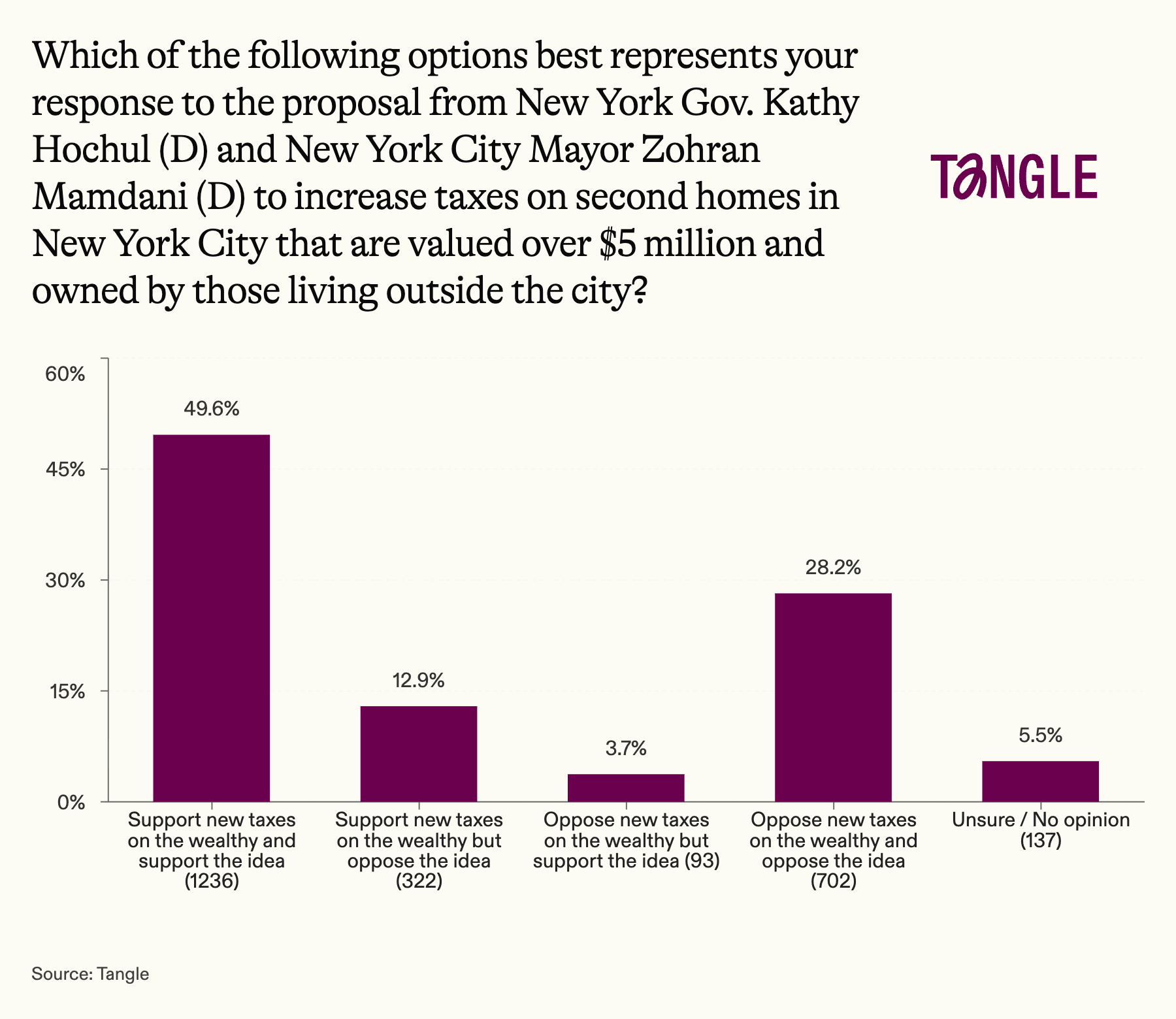
- Our last survey: 2,490 readers responded to our survey on the New York City pied-à-terre tax with 50% supporting the specific proposal and new taxes on the wealthy more broadly. “Refine the existing property tax classification system to reach this end goal,” one respondent said. “Long-term consequences will be negative for the city, it sets a bad precedent,” said another.
Have a nice day.
The number of American pedestrians who died in the first half of 2025 declined 11%, the largest annual drop since the Governors Highway Safety Association (GHSA) began tracking these deaths 15 years ago. Pedestrian deaths from January to June of 2025 totaled 3,024 incidents, still above pre-pandemic levels but below the totals for the first six months of any year since 2020. “Now is the time to double down on what works — more and better infrastructure, enforcement to deter dangerous driving behaviors, engaged and informed communities, and vehicles designed to protect people on foot,” said Jonathan Adkins, CEO of GHSA. “An all-in strategy to address pedestrian safety will help us build on this recent momentum and save even more lives.” GHSA has the story.