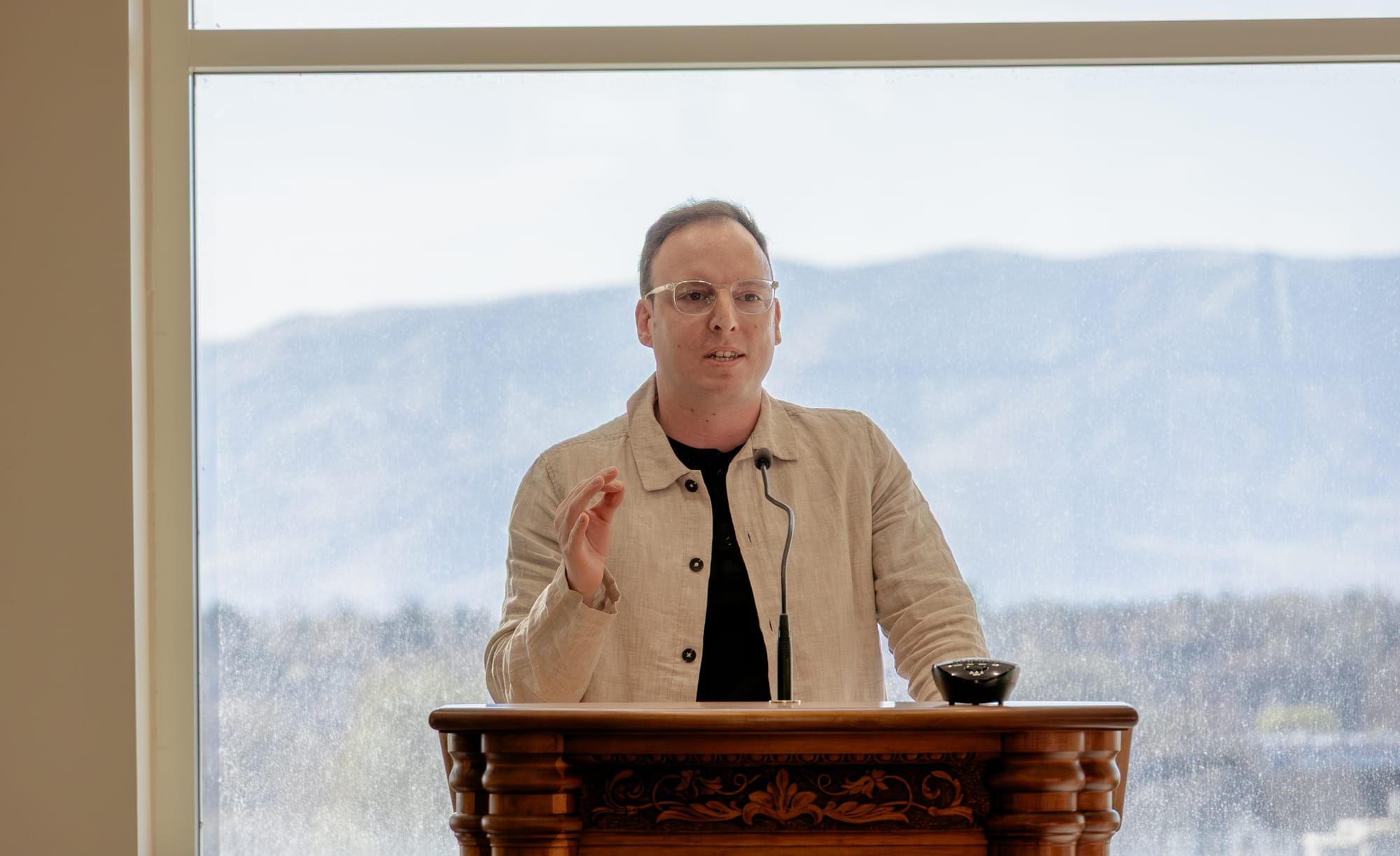
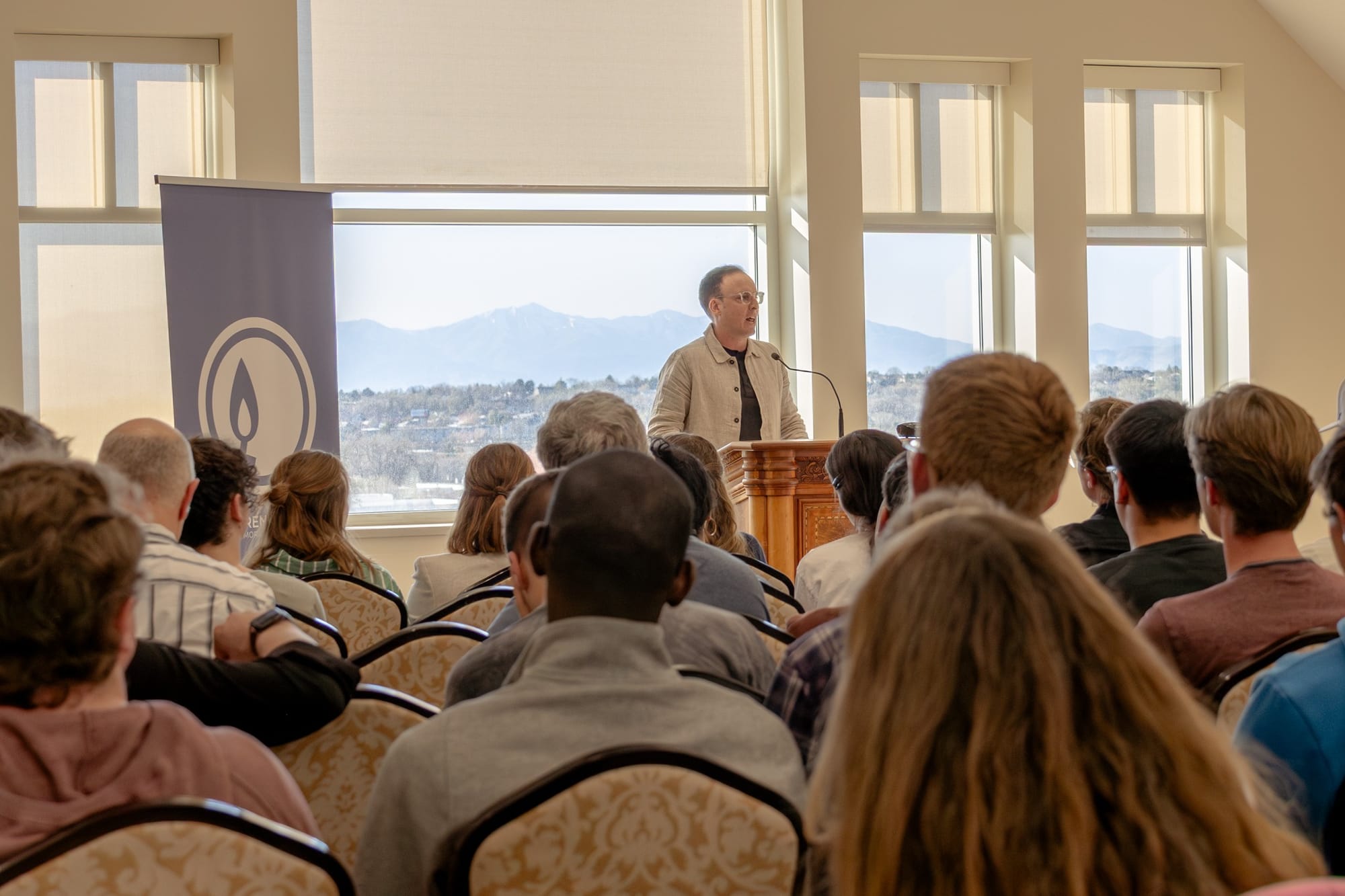
Tangle Founder Isaac Saul speaking to college students at BYU | Image: Madison Robinette
I’m Isaac Saul, and this is Press Pass: Our once-a-month, members-only newsletter that pulls back the curtain on the inner workings of Tangle.
One seemingly never-ending genre of writing is the kind where people above the age of 30 fret constantly over everyone under the age of 30.
Having grown up myself now, I’ve felt the allure of writing to this genre. What is wrong with these kids? I catch myself thinking, and sometimes saying. They’re stuck online all day. They’ve got robot friends. They don’t take any risks, party, socialize, drink, or have fun. Do they make memories? Or fall in love? Do any of them read? Will any of them have kids? They’re so screwed! We’re screwed!
I’m not sure exactly what happens, or why, but you want to eat this stuff up like kibble right around the time you turn 30. I can’t even remember precisely when or how I came to this concrete view, but one day I just believed that there was something wrong with them, and that it was irreparable and terrifying.
I vividly remember the first time this belief was really punctured: We were hiring an associate editor in 2024 to join the team, and roughly a third of the applicants were Gen Z. I was surprised that so many of them could maintain eye contact, carry on conversations, and make quippy comments. Genuinely, 90% of the applicants in this age bracket were people I wanted to work with, or would have been happy doing so.
Then I found myself surprised at being so surprised.
And after we hired one of them, Lindsey Knuth, I had to admit that she was… normal. I find some of Lindsey's habits and how she views the world inherently peculiar (and I occasionally need her to translate Gen Z trends and knowledge), but she’s undeniably smart, well adjusted, and capable. The same goes for Audrey Moorehead, another Gen Z associate editor on our team. And Russell Nystrom, who manages our social media channels. And Aidan Gorman, one of our video editors. And then I thought, “Hey, wait a second — how’d they all end up so good? I thought these kids were inherently broken!”
I’d already been disabused of my Old Man routine by the time I began regularly hitting college campuses to give talks last year, but those experiences have killed the notion altogether. And yeah, I’m getting a biased sample of kids who share my values — after all, they’re attending my lectures or applying for jobs at Tangle. But through family, friends, the younger siblings of my peers or the young kids of my own older friends, I know a lot of the Gen Z cohort. So I’ve replaced the lost generation trope with another: The kids are alright.
This past month, I spoke at Rowan University in central New Jersey; Brigham Young University in Provo, Utah; and tonight I’ll be at Davidson College in Davidson, North Carolina. The Rowan and BYU talks were a blast. At Rowan, I got to meet with four separate classes and had a private lunch with some faculty. The kids asked smart, thoughtful questions, and were highly engaged in every setting. All of them seemed hungry for information they could trust, and were open about where they might find it. Their cynicism about the corporate media was ubiquitous.
At BYU, which was inarguably one of the most beautiful campuses I’ve ever seen, most of the students I heard from described a clear sense that they aren’t being told the full truth when consuming the news. They recognize the mainstream media has its flaws, but they don’t trust influencers or social media stars, either. They embraced calls for decency and were enthusiastic about calls to examine their biases and think about how to be better media consumers.
Tangle Founder Isaac Saul speaking to college students at BYU | Image: Madison Robinette
On both campuses, I asked students questions like “when was the last time you changed your mind about a political view you hold,” “where do you get your news,” and “what comes to mind when you think about the news.” What I gathered is that these students aren’t generally in the habit of changing their minds; they get their news mostly from Instagram and YouTube (podcasts and TikTok are popular, but newsletters are nearly non-existent), and all of them feel depressed, anxious, overwhelmed, or tired when they think of the news.
Inevitably, when I leave these speaking gigs, I find myself thinking a few things:
This post is for paying subscribers only
Sign up now and upgrade your account to read the post and get access to the full library of posts for paying subscribers only.