This is the Tangle Sunday Edition, a brief roundup of our independent politics coverage plus some extra features for your Sunday morning reading.
What the right is doodling.
Gary Varvel | Creators Syndicate
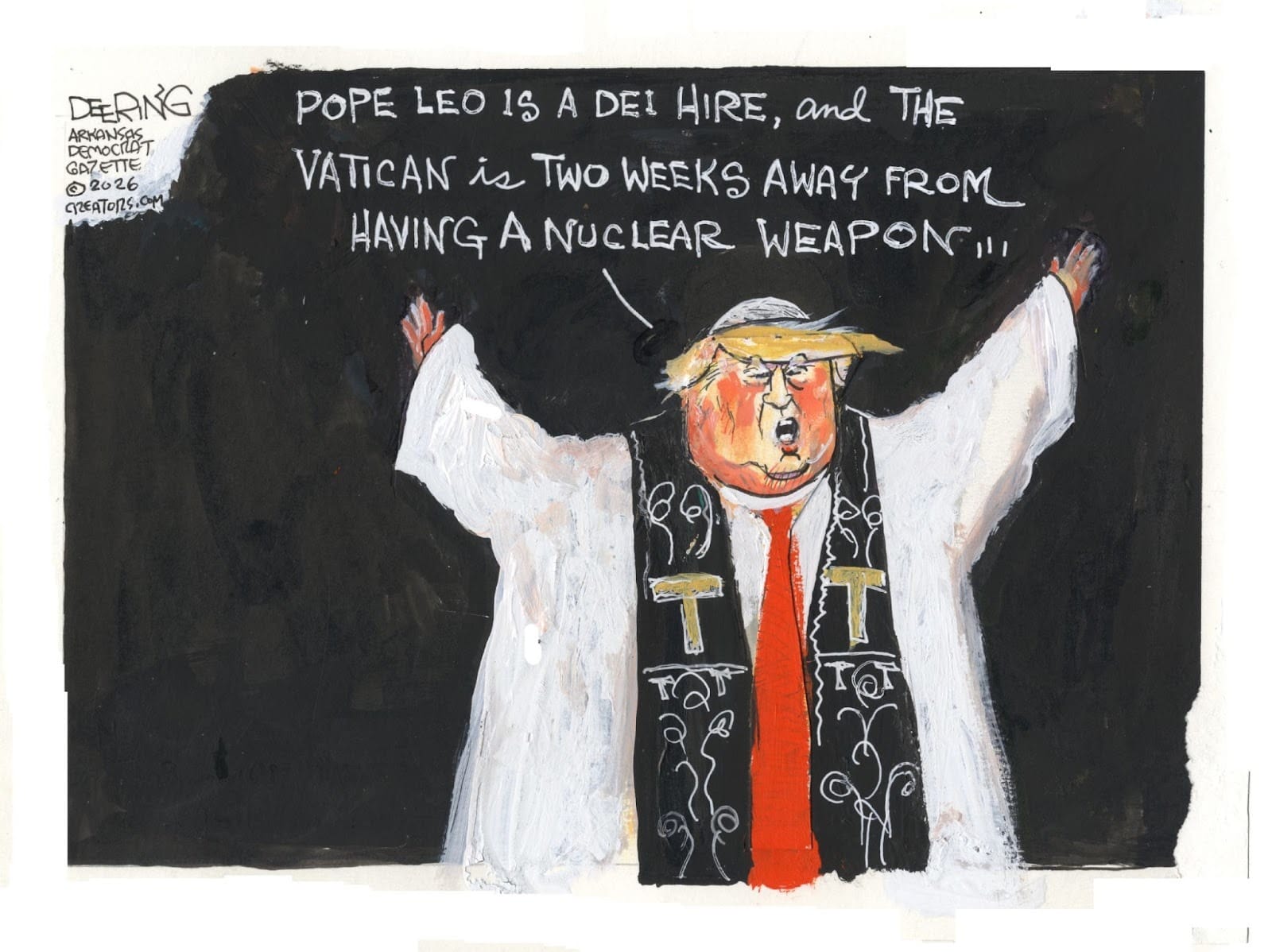
What the left is doodling.
John Deering | Creators Syndicate
Suspension of the Rules
On this week’s episode, Isaac, Ari, and Kmele talk about growing divides on the right and the Eric Swalwell scandal. Plus, some discussion about demons? You can check that out here!
Monday, April 13.
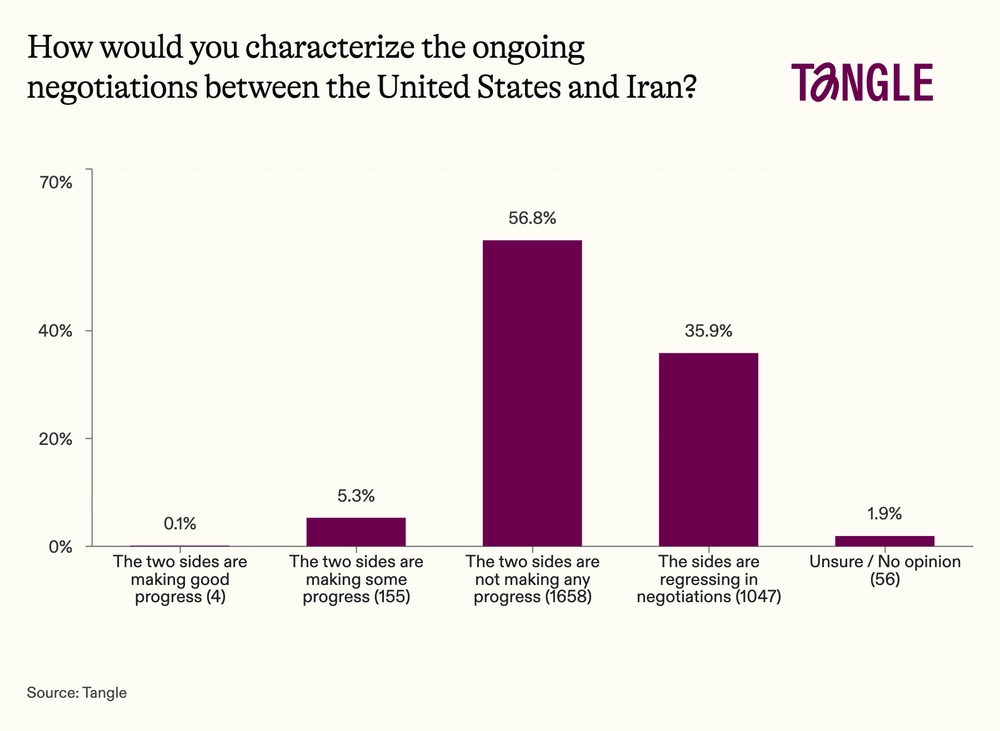
Negotiations with Iran. On Sunday, April 12, President Donald Trump announced that the U.S. Navy will impose a blockade on the Strait of Hormuz after peace negotiations with Iranian officials failed to produce a breakthrough. While Iran has largely restricted transit through the strait over the past month, it has allowed some ships to pass through by paying a toll; in other cases, vessels linked to friendly nations like China have been granted passage. President Trump suggested the U.S. blockade will shut down the waterway entirely, though U.S. Central Command later said the blockade would not apply to ships passing through the strait to or from non-Iranian ports. Note: Ceasefire negotiations are expected to resume in the coming days.
Our take: “Negotiations so far seem unproductive. Trump instituting a blockade in the Strait of Hormuz invites more questions, and makes global shipping more tenuous. I worry economic disruptions are on the horizon if talks don’t produce agreements, and soon.”
Reader Survey:
Tuesday, April 14.
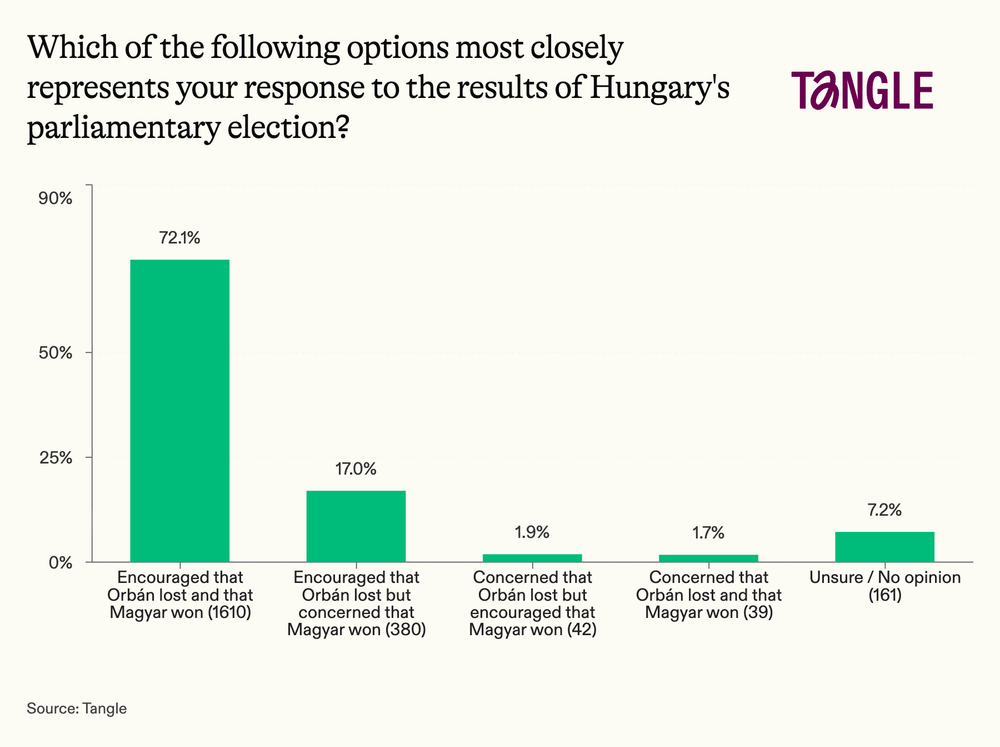
The elections in Hungary. On Sunday, April 12, Péter Magyar’s Tisza Party defeated Prime Minister Viktor Orbán’s Fidesz Party in Hungary’s parliamentary elections, unseating the 16-year incumbent. With 98% of the vote counted, Orbán and Fidesz had won 56 parliamentary seats, while Magyar and Tisza Party won 137 seats, giving it a two-thirds supermajority. Orbán had been supported by the Trump administration, which viewed him as a key ally in the European Union. After the majority of votes were tallied, Orbán conceded the race but said he will remain active as an opposition leader.
Our take: “Hungary’s election can teach us about modern conservatism in the West — especially in the United States. JD Vance shares Orbán’s postliberal beliefs that only a strong government can deliver needed cultural and economic change. Magyar’s victory shows how Western conservatism can evolve to avoid postliberalism.”
Reader Survey:
Wednesday, April 15.
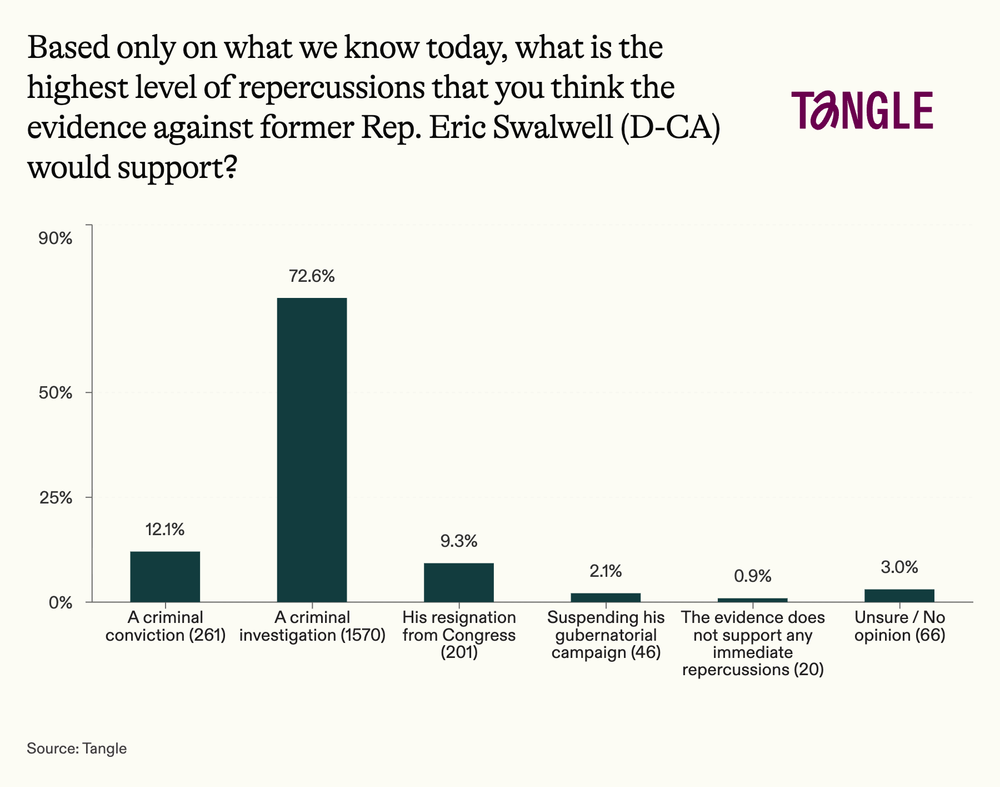
The Swalwell accusations. On April 10, a former staffer for California gubernatorial candidate Rep. Eric Swalwell (D-CA) accused the Congressman of making unwanted advances, sexual assault, and rape. Three other women also came forward to accuse Swalwell of sexual misconduct, describing a pattern of sending explicit messages through Snapchat. On Tuesday, April 14, a fifth woman, Lonna Drewes, came forward to accuse Swalwell of drugging and raping her in a hotel room in 2018. Swalwell denies the allegations, but apologized for “mistakes in judgment” and dropped out of the gubernatorial race after losing prominent endorsements. On April 14, Swalwell officially resigned from Congress. Rep. Tony Gonzales (R-TX), who was embroiled in a separate sexual misconduct scandal, resigned later on the same day.
Our take: “Resignation is the right step for both Gonzales and Swalwell — the legal ramifications can come in time. The fact that these consequences took so long to arrive reflects poorly on both parties and the media. That said, serious stories take time, and these outlets rightly solidified their reports before releasing them.”
Reader Survey:
Thursday, April 16.
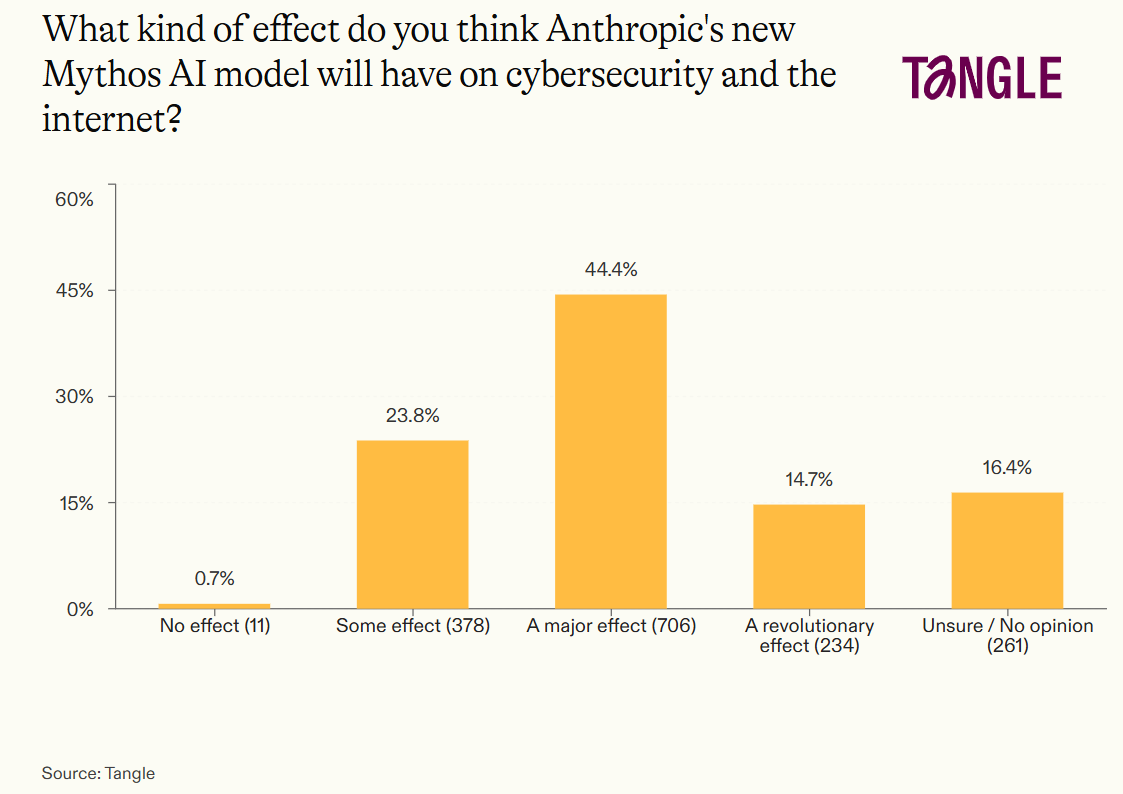
Anthropic’s latest artificial intelligence model. On April 7, artificial intelligence (AI) company Anthropic announced that it would not release its newest AI model, called Claude Mythos Preview, to the general public, citing potential security risks. Instead, Anthropic released the model to a select group of about 50 companies that will test its capabilities in a defensive security initiative known as Project Glasswing. According to the company, Mythos’s capabilities represent a “step change” in AI performance. During early testing, Mythos demonstrated advanced capabilities to identify and exploit previously undetected cybersecurity weaknesses across a wide range of servers and operating systems.
Our take: “I’m skeptical about a lot of AI hype, and this story is no exception. After talking with an expert, though, I can see how Anthropic could be trying to responsibly prepare for the release of a powerful tool. Lots of people are jumping to conclusions based on press releases, but I’ll wait to judge until I see the evidence myself.”
Reader Survey:
Friday, April 17.
In this week’s Friday edition, two Tangle editors debate the issue of data centers. Managing Editor Ari Weitzman argued that more data centers should be built, while Associate Editor Lindsey Knuth wrote that data center construction should slow down. This is a brand-new format in Tangle, and you can check it out here.
Further reading.
We’ve covered relations with Iran, international elections, misconduct allegations, and tech industry developments before. Plus, since we tried out a new debate format in this week’s Friday edition, we’re looking at what makes arguments good or bad. Take a look at our past coverage below:
Here’s a rundown of the major stories that have broken since our newsletter on Thursday.
On Thursday, a federal judge issued an order blocking above-ground construction of President Donald Trump’s planned White House ballroom. On Friday, a federal appeals court overturned the order, allowing all construction to continue. (The order)
On Thursday, President Trump nominated Dr. Erica Schwartz, who served in the military and as deputy surgeon general during the first Trump administration, as director of the Centers for Disease Control and Prevention. (The nomination)
On Thursday, President Trump announced a 10-day ceasefire between Israel and Lebanon following U.S.-brokered talks. The ceasefire went into effect on Friday at midnight. (The ceasefire)
On Thursday, Russia carried out its deadliest attack in Ukraine this year, killing at least 17 people in a series of drone and missile strikes on the Ukrainian capital Kyiv. (The strikes)
On Thursday, authorities announced that former Virginia Lt. Gov. Justin Fairfax (D) allegedly shot and killed his wife then himself following a domestic dispute. Fairfax’s wife had filed for divorce last year, and a judge had ordered him to move out of their home. (The shooting)
On Thursday, Analilia Mejia (D) defeated Joe Hathaway (R) in a special election to fill New Jersey Gov. Mikie Sherrill’s (D) House seat. Mejia’s victory narrows House Republicans’ majority to 218–214. (The election)
On Friday, Congress approved an extension of Section 702 of the Foreign Intelligence Surveillance Act until April 30. The act allows some federal agencies to collect and analyze communications outside of the United States without a warrant. (The extension)
On Friday, Iran announced the reopening of the Strait of Hormuz to all commercial traffic, saying the waterway would remain open for the duration of the U.S.–Iran ceasefire. (The reopening) However, on Saturday, Iran said it was closing the strait again and reportedly fired on tankers in the waterway. Iranian officials said they will keep the strait closed as long as the U.S. blockade continues. (The update)
On Saturday, U.S. officials announced plans to begin boarding Iran-linked oil tankers and commercial ships in international waters. (The plans)
Reader essay.
The author in an archway | Image from Jo Madnani
This week, Tangle reader Jo Madnani shares her experiences as a first-generation immigrant daughter of a first-generation immigrant — and how those experiences taught her about the power and pain of resilience.
This post is for paying subscribers only
Sign up now and upgrade your account to read the post and get access to the full library of posts for paying subscribers only.