









Making sense of February's job numbers.
I'm Isaac Saul, and this is Tangle: an independent, nonpartisan, subscriber-supported politics newsletter that summarizes the best arguments from across the political spectrum on the news of the day — then “my take.”
Are you new here? Get free emails to your inbox daily. Would you rather listen? You can find our podcast here.
Today’s read: 13 minutes.
Did you know?
We’ve got more offerings than just the Tangle newsletter. The daily email is where you get long-form, deeply considered analysis of the day’s big issues. But for up-to-the-minute coverage, breaking news, video clips and snap analysis from our team, you should follow our Instagram and sign up for Subtext. Both are completely free and provide two of the best ways to connect personally with the Tangle staff and community. For even more community engagement, check out our Reddit page.
Quick hits.
- The U.S. military carried out what Defense Secretary Pete Hegseth called its “most intense day of strikes” in Iran. U.S. Central Command also said it had attacked 16 Iranian vessels believed to be laying mines near the Strait of Hormuz. (The updates) Separately, White House Press Secretary Karoline Leavitt said that the U.S. Navy had not escorted an oil tanker through the strait after Energy Secretary Chris Wright said that it had in a now-deleted post. (The post)
- Clay Fuller (R) and Shawn Harris (D) will advance to a runoff in a special election to fill the seat vacated by former Rep. Marjorie Taylor Greene (R) in Georgia. President Donald Trump endorsed Fuller, a district attorney. (The results)
- Senate Majority Leader John Thune (R-SD) said Senate Republicans lack the votes to abolish the filibuster or force Democrats to use a talking filibuster (requiring them to actively hold the Senate floor in debate) in an effort to pass the SAVE America Act. (The comments)
- The Senate voted 89–9 to advance a bill that aims to increase the speed and lower the cost of new home construction. The chamber is expected to hold a final vote on passage in the coming days. (The bill)
- Two suspects allegedly discharged firearms at the U.S. consulate in Toronto on Tuesday morning and fled the scene. Authorities said no one was injured, but the shooting is being investigated as a national security incident. (The incident)
Why does ChatGPT know THAT about you? Erase it.
A quick search might reveal more than you’d expect: your address, phone number, mortgage details — even your family members. Creepy, right?
The real problem? It’s not just marketers poking around. Identity thieves, scammy data brokers, and shady AI scrapers are all in the mix. Even ChatGPT knows everything about you.
That’s where Incogni comes in. Their Unlimited Plan scrubs your sensitive info from data broker sites so it doesn’t show up in Google searches or AI chat responses.
Fast, affordable, and automatic. No tedious forms. No awkward calls. Just fewer strangers knowing your business.
Use code TANGLE for an exclusive 55% off. Because privacy shouldn’t be optional.
Today’s topic.
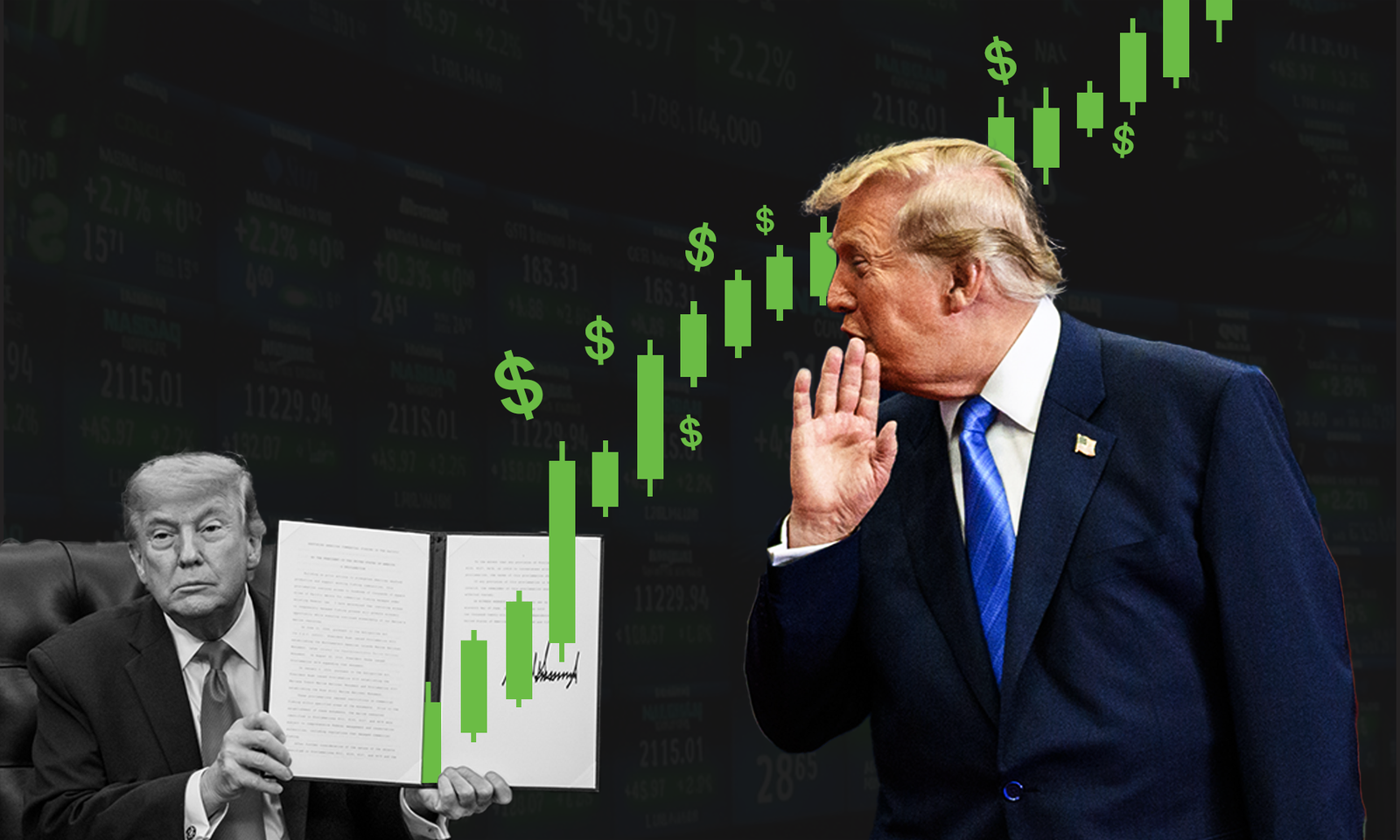
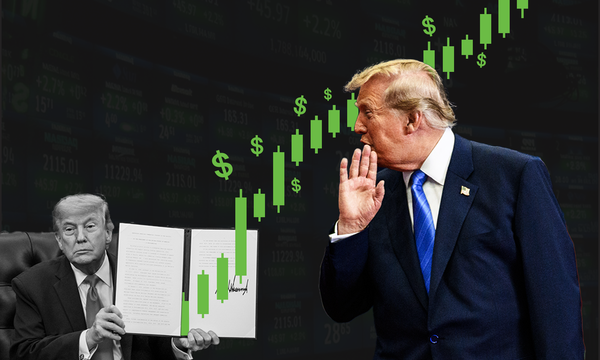
The February jobs report. On Friday, the Bureau of Labor Statistics (BLS) reported that nonfarm payroll employment decreased by 92,000 in February and unemployment rose from 4.3% to 4.4%. Healthcare, along with leisure and hospitality, accounted for the majority of losses, though the BLS recorded losses in nine of the 14 sectors it tracks. The numbers fell short of economists’ expectations, raising concern about the stability of the labor market.
Back up: The BLS is the agency within the Department of Labor responsible for measuring market activity, working conditions, price changes, and productivity in the U.S. economy. Every month, the bureau compiles an employment report from a monthly survey of about 631,000 worksites selected to represent all U.S. employers. The initial numbers released by the BLS are based on partial data for the first portion of a month and revised as data from more worksites and the rest of the month become available.
The losses in the healthcare industry — which has grown significantly in the past 12 months — come after a weeks-long strike by roughly 31,000 Kaiser Permanente employees in Hawaii and California, which ended on February 24. In Friday’s report, the BLS also revised job data for December and January. December’s payroll figure was lowered by 65,000, from a gain of 48,000 to a loss of 17,000. January’s gains were decreased from 130,000 to 126,000.
“I think it just tells us that the hopes that the labor market was steadying, maybe that was too much,” Mary Daly, president of the Federal Reserve Bank of San Francisco, told CNBC. “We also have inflation printing above target and oil prices rising. How long they last, we don’t know, but both of our goals are risks now and we have to keep our eyes on both.”
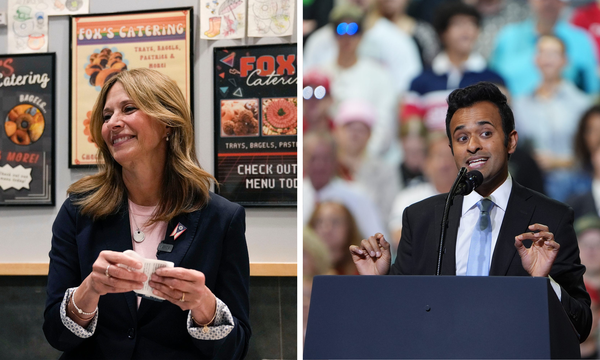
Labor Secretary Lori Chavez-DeRemer said the economy is still strong and February’s poor jobs numbers are not part of a broader trend. “While record-breaking strikes and bad winter weather dragged down February nonfarm employment, the unemployment rate held steady,” Chavez-DeRemer wrote in a statement.
Democratic lawmakers suggested the drop in employment is due to President Trump’s mishandling of the economy. “The warning signs about this economy have been flashing for months,” Ways and Means Committee Ranking Member Richard E. Neal (D-MA) said. “Now the data has caught up with [Republicans], and the verdict is clear: Trump’s policies are a disaster for the economy.”
Today, we’ll explore reactions from the right and left to the latest employment numbers, followed by Managing Editor Ari Weitzman’s take.
What the right is saying.
- The right is mixed on the jobs report, with some arguing the economy isn’t as bad as the report suggests.
- Others suggest the jobs numbers reflect bad policy.
- Some argue the numbers show that public sentiment was right all along.
In The Daily Caller, Alfredo Ortiz argued the “American economy [is] much stronger than [the] jobs report suggests.”
“February job loss is due to several factors that don’t reflect the strength of the underlying small-business economy. Mainly, the worst winter storm since 1996 paralyzed the Northeast, trapping people in their homes, shutting down job sites, and closing retail doors,” Ortiz said. “Generally, the Bureau of Labor Statistics highlights such large external events affecting job creation in a special section of the jobs report. But not this time. Any analysis of the February jobs report needs to include this angle. However, BLS did note another external factor responsible for job losses: widespread strike activity in the healthcare sector… A decline in healthcare jobs is overdue and not necessarily a bad thing.”
“However, in positive news, the jobs report shows real wages continue to rise, increasing 3.8% over the last year, more than 50% faster than inflation. That’s a stark contrast to the Biden administration, when living standards declined month after month,” Ortiz wrote. “This real wage growth is helping Americans overcome the Biden affordability crisis. Republican small business tax cuts — including restored immediate expensing, a permanent 20% Main Street deduction, and locked in lower rates — will set the economy up for a strong 2026 as the spring hiring season begins.”
The Wall Street Journal editorial board responded to “a Friday economic panic attack.”
“There’s no denying the February report was lousy… The question is what to make of the declines,” the board said. “The monthly job data has been noisy lately, and the household survey was less gloomy. That survey showed the number of workers employed part-time for economic reasons declined by some one million over the past two months, and the unemployment rate has remained more or less steady at 4.4%.”
“The labor market has been cooling, with healthcare and social assistance driving most gains,” the board wrote. “Job growth notably stalled after President Trump began his tariff barrage last April, which created economic uncertainty and raised business costs. His immigration raids have reduced the supply of workers, especially in construction. Many employers say that an aging population and skills gaps make it hard to find workers in the trades. Rising productivity — 2.8% in the last year — may also mean employers need fewer workers and could explain why wage growth has remained strong despite a slowdown in hiring.”
In The Washington Post, Jim Geraghty said “look who is wrong about the economy now.”
“In his 2024 State of the Union address, Biden boasted, ‘Our economy is literally the envy of the world.’… Yet Americans were unimpressed, with both the aging Biden and the state of the economy during his term,” Geraghty wrote. “Then Donald Trump took the presidential oath of office for a second time and declared, ‘The golden age of America begins right now.’… But the net effect was no change, and overall, in the Pew Research Center’s latest survey, just 28 percent of U.S. adults rate economic conditions as excellent or good, while 72 percent say they are only fair or poor.”
“Friday’s job numbers brought evidence suggesting that the gloomy types accurately saw weakness in the economy that the official numbers obscured,” Geraghty said. “Why are Americans economically gloomy? Because it feels like the pace of change has accelerated well beyond our ability to keep up. We can live with a dynamic economy, but we also want some stability and predictability in our lives. A president and his administration can’t control a lot of things about the economy, but they can usually control their own statements, decisions and policy choices.”
What the left is saying.
- The left broadly argues Trump’s tariffs and military actions are hurting the job market.
- Some suggest weather could have affected the month’s numbers.
- Others say Trump’s immigration tactics haven’t benefited U.S. workers.
In MS NOW, Philip Bump argued “Trump’s bragging about the economy doesn’t match reality.”
“Trump’s re-election in 2024 was powered heavily by the surge in prices that followed the emergence of the Covid-19 pandemic, a surge that Trump promised to reverse. But — in part because he couldn’t — he hasn’t,” Bump said. “As a result, only 33% of Americans approve of his handling of the cost of living, with two-thirds disapproving… [Trump] and his administration’s insistence that economic problems are fleeting, that ‘affordability’ is an invented issue or that an economic boom is imminent — or underway — simply doesn’t match Americans’ actual experience.”
“Friday’s jobs report showed a decline in employment, rather than ongoing growth. [Trump’s] decision to launch military strikes on Iran upended the always unsteady market for oil, rippling out into markets broadly,” Bump wrote. “The extent to which presidential policy affects the economy has long been debated, but in this case and at this moment, it’s clear that Trump himself is having a robust effect on the trends he is pretending don’t exist.”
For The Center for Economic Policy and Research, Dean Baker said “Bad jobs report: blame it on the weather.”
“It wasn’t that February weather was especially bad… But January’s weather was likely better than a normal January. This could help to explain the better-than-expected jobs numbers in January,” Baker wrote. “The weather was better than normal in the Northeast and Midwest in the second half of December and first half of January. This means that businesses that might ordinarily be forced to close for a few days because of snow were able to stay open throughout the period..”
“Let’s take December to February together, so we remove the impact of an unusually mild January,” Baker said. “Average job growth over these three months was 6k. Many of us are debating how much job growth we need, in the absence of immigration, to keep pace with the growth of the labor force. Most estimates put the number in the range of 30-60k a month… And we did see some evidence of labor market weakening in the February report, most obviously in the slight uptick in the unemployment rate to 4.4 percent.”
In Bloomberg, Justin Fox suggested “the native-born jobs boom was a mirage.”
“An estimated 130,985,000 native-born Americans had jobs in February, according to the employment report released Friday,” Fox said. “That is better than nothing but a far cry from the huge gains in native-born employment that the Bureau of Labor Statistics was reporting last year… I argued a couple of times last year that the native-born jobs boom was a statistical mirage, so in some sense it’s nice to see my suppositions confirmed. But it’s also a dispiriting indication that the Trump administration’s deportation campaign doesn’t seem to have left anybody better off, at least not yet.”
“The mirage resulted from the interaction between how the BLS estimates population for the purposes of its employment reports and the effects of the administration’s deportation campaign,” Fox wrote. “I suspect the employment numbers are still being skewed a bit by immigrants both legal and illegal avoiding CPS survey takers or fudging their answers out of fear of being turned in to immigration authorities. But for the moment at least, the illusion of a native-born jobs boom has vanished.”
My take.
Reminder: “My take” is a section where we give ourselves space to share a personal opinion. If you have feedback, criticism or compliments, don't unsubscribe. Write in by replying to this email, or leave a comment.
- February’s report is bad, and it implies a poor economic outlook.
- However, some extenuating circumstances soften the blow and show a stronger economy than the report suggests.
- Overall, our economy is straining — but not on the verge of collapse.
Managing Editor Ari Weitzman: There’s no way around it: This is a very bad jobs report.
The U.S. economy lost 92,000 jobs in February. Unemployment ticked up to 4.4%, its twelfth consecutive month above 4% (or thirteenth, if counting October 2025, when no report was released). Figures for January and December were revised downward by a combined 69,000. Meanwhile, the latest CPI was up 2.4% over the last 12 months as the Fed continues to chase its elusive post-pandemic 2% inflation benchmark, and consumer sentiment — even after four straight months of improvement — remains well below where it was a year ago.
Extrapolating from whole data, it’s relatively easy to forecast gloom on the horizon for the U.S. economy. The silence from the usual, pro-Trump pundits following this report speaks as loudly as the almost gleeful descriptions of just how bad Trump’s promised “golden age” has been from the president’s usual critics. The negative case for the economy is easy to make, and it looks like this:
Going back to Joe Biden’s presidency, economic sentiment has been low. A lot of that was driven by inflation, as well as concerning personal financial metrics, like the high cost of gasoline and low rate of personal savings. After some improvement at the end of Biden’s term and the beginning of Trump’s, gasoline is once again high while personal savings are going back down. Trump’s deportation agenda is driving out low-wage employees, which we can see in the lethargic agriculture and hospitality industries. And since healthcare has been the only reliably strong sector, the economy is in a tenuous position; one large strike could (and did) set our numbers back and cause ripple effects that can’t be absorbed elsewhere. Two more disruptions are poised to deliver a twin coup de grâce to our economy: tariffs and war.
In theory, if tariffs were working, investment in manufacturing would increase, along with federal revenues, to counter job losses from fired federal workers. That investment would take time, at least a year, to show up in jobs reports. Instead, February’s numbers are the worst sign yet for that theory. 11,000 jobs were lost from transportation and warehousing and 12,000 were lost from manufacturing. We could be getting the worst of all worlds: Manufacturing continues to post losses, federal employees are losing their jobs, revenue from tariffs is flatlining and will likely have to be repaid, and yet the federal budget expands.
Today’s economic environment is one of disruption and uncertainty, which will discourage investors from building in America and make it unlikely for those gains to show in future reports. The jobs numbers bear that out, and there’s no end to this policy of disruptive or theoretical tariffs in sight. Even though the Supreme Court recently found Trump’s “reciprocal tariffs” unconstitutional, the president responded by announcing more tariffs under different authority. Many of us were bracing for the impact of tariffs to come as a traumatic thud; instead, it’s been a weight around the ankles of the economy, constantly slowing progress.
Meanwhile, the war in Iran is causing the price of crude oil to spike. If the war continues — and it doesn’t show any sign of stopping — those prices will remain high. Remember, high crude oil prices mean more than high gas prices. Oil is the price of economic agency. More expensive oil means higher shipping costs and higher manufacturing costs, along with higher commercial travel. If tariffs are a weight around the ankles, then oil prices are another around the neck. And there’s only so much weight we can take.
That’s the negative case. But if I were to make the positive case, it’d look like this:
We should be careful not to read too much into one report. For one thing, the decrease from January to February coincided with bad weather — when the weather’s bad, we’d expect to see job site cancellations that impact exactly the industries that showed signs of struggle. Second, the job “losses” in healthcare may actually signal some job gains when you account for the now-concluded 31,000-person strike at Kaiser Permanente. Not only were those losses temporary (and will show up as growth in the next report), but striking workers are a sign of a labor force with leverage. This temporary disruption ended as a net positive for workers in this industry, with significant progress toward better salaries and benefits. Lastly, as I wrote the last time we covered jobs data, the Bureau of Labor Statistics has quietly improved its predictive model, so we should expect these numbers not to face as much of a dreaded downward revision as past reports numbers have (January was revised downward by only 4,000 jobs, and it’s entirely possible these figures get revised upward in next month’s report).
When you zoom out even further, you can see a job market starting to stabilize. Not only are hourly wages and inflation moving in the right direction, but job losses are starting to flatten out. As Robert Armstrong wrote in The Financial Times, “As a measure of cyclical activity in the job market we like to look at private employment without healthcare and social assistance. On that front, you can see an improving trend — towards less job losses — in the six-month rolling average, but you have to squint a bit.” Furthermore, hourly wages are continuing their post-pandemic rate of increase; put differently, wage growth is outpacing inflation, and it has been for the past two years. On top of that, if you were particularly bullish on artificial intelligence, you could even see productivity gains from AI in the latest jobs numbers. All in all, the labor market may be bearing some strain, but it has strong legs and is getting stronger.
So, is the February report a signal of a strong jobs market or a weak one? Saying this doesn’t take a lot of skill as a media analyst, but you can easily look at these negative and positive cases and say that both are true. The labor market is lopsided towards a few industries, immigration is hurting some sectors, and tariffs and war are going to seriously drag down our economy (all things you can criticize Trump for). But wage growth remains high, business investment is healthy, and our metrics are improving (all things you can credit Trump for). February’s report is the starkest sign of the negative impacts of Trump’s policies so far, but beneath the most recent developments is a stable economy. Or, to quote Armstrong again, “We have a pretty good understanding of why we are in a sluggish job market (Covid hangover, bad trade policy, immigration control) and why the economy is growing (high business investment, strong household balance sheets supporting consumption).”
I hesitate to make economic predictions because I am not an economist and, even if I were, that’s a great way to look like a fool. But in the interest of accountability, I’ll go out on a limb and say that I don’t see even this objectively bad report as a sign of an imminent recession. I’ve heard (and written about) the fears of a coming recession since the pandemic recovery began; yet, here we are, on year five of asking when the other shoe is going to drop.
Maybe a prolonged war will provide the final straw. The longer the Strait of Hormuz is choked, the likelier that is. But until all that weight starts to really buckle the labor market’s back, I’m going to continue to believe that it won’t.
Take the survey: What do you think the latest jobs report tells us about the U.S. economy? Let us know.
Disagree? That's okay. Our opinion is just one of many. Write in and let us know why, and we'll consider publishing your feedback.
Your questions, answered.
Q: Do you assess the understandability of the Tangle newsletter? Do you aim for a certain grade level? Do you do anything special to make sure it is understandable?
— Ken from Lisbon, WI
Tangle: Generally speaking, we have two sets of standards: one for neutral reporting (like what you’ll find in our story summary and “Under the radar” sections), and one for editorial language (as we use in a “My take,” and sometimes in answers to reader questions).
We occasionally decide to avoid or choose one word or another because we want the writing to feel more accessible, but that isn’t common. In our editorial language, we just try to write in a way that feels as if we are talking to you. That kind of writing should feel personal, and as such it will tend to be a little less academic and a little more informal.
Our editing process includes people who have been steeped in a story and those who haven’t — some editors spend the day before publication researching, editing, and writing the newsletter; others come to it with fresh eyes that morning. This dynamic helps us get the relevant facts and points across while also making sure that any reader, whether uninformed or expert, won’t be confused. If something doesn’t make sense to us while editing, that’s a sign that we should clarify. But — crucially — we will never choose to leave something out because we think it might be too hard for our readers to understand.
Want to have a question answered in the newsletter? You can reply to this email (it goes straight to our inbox) or fill out this form.
Under the radar.
On Tuesday, the Food and Drug Administration (FDA) approved leucovorin as a treatment for cerebral folate deficiency (CFD), a rare genetic mutation. While the agency announced in September that it was also exploring the efficacy of leucovorin for treating children and adults with autism spectrum disorder (ASD), an FDA official said on Tuesday that it had not found sufficient evidence that the medication could treat autism symptoms. CFD shares several features with autism, but the FDA’s review of leucovorin found it produced the “largest effect sizes” for CFD, prompting them to rule out approval for treating ASD symptoms. CNBC has the story.
AI Already Knows Your Address, Phone Number, and More
That data didn't come from nowhere — brokers sold it, scrapers grabbed it, and now it trains models like ChatGPT.
Incogni's Unlimited Plan automatically removes your info from broker sites, keeping it out of search results and AI responses. No forms, no calls.
Numbers.
- 54. The number of months since the unemployment rate was above 5.0%, in August 2021.
- 22. Since August 2021, the number of months in which the unemployment rate was above 4.0%.
- 12. The number of consecutive months (excluding October 2025, when no employment report was issued) that unemployment has been above 4.0%.
- 36,000. The average number of jobs added by the health care sector per month over the past 12 months.
- –10,000. The change in federal government employment in February.
- –330,000. The change in federal government employment since October 2024.
The extras.
- One year ago today we wrote about Columbia University and Mahmoud Khalil.
- The most clicked link in yesterday’s newsletter was the daily geography game.
- Nothing to do with politics: The Miami Heat’s Bam Adebayo just achieved one of the most improbable statistical feats in basketball history.
- Yesterday’s survey: 3,780 readers responded to our survey on the military actions in Iran with 61% opposing intervention generally and the current U.S. and Israeli methods specifically. “We are slowly but surely turning Iranian citizens against the US and its principles,” one respondent said. “If the US doesn’t neutralize or eliminate the Muslim regime in Iran, it will bounce back somehow and come after us,” said another.

Have a nice day.
In February, a woman left her dog tied to a ticketing counter at Harry Reid International Airport in Las Vegas, Nevada, while she allegedly tried to catch a flight. The woman was later arrested, but the dog was placed into foster care and left unclaimed after a 10-day hold period. Fortunately, police officer Skeeter Black, who responded to the first call about the dog being tied up at the airport, stepped in to adopt the pup, now nicknamed “Jet Blue.” In a social media post, the police department said, “What began as a heartbreaking act of abandonment has turned into a powerful example of compassion, teamwork, and community partnership.” NBC News has the story.
500,000+ readers just today.