













Lindsey Graham’s passing.
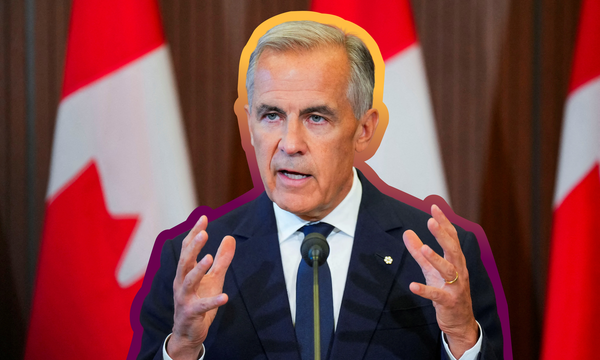
Good Monday morning, this is Isaac Saul. Flags across the country are flying at half-staff today to honor the late Sen. Lindsey Graham, a sentence that was inconceivable when my work day ended on Friday. Today, we’re diving into Graham’s legacy, his shocking death, and the difficulty of capturing the full picture of a public figure after they’ve died.
Also in today’s edition, we cover the Prairieland incident and an under-the-radar story about the January 6 case against members of the Proud Boys. Don’t forget to check out Friday’s reader mailbag, too, if you missed it. Today’s email is a 13-minute read.
Quick hits.
- BREAKING: Immigration and Customs Enforcement agents were reportedly involved in a shooting in Biddeford, Maine, that left one person dead. The Department of Homeland Security has not commented on the incident as of 11:30 AM ET. (The report)
- The U.S. launched new airstrikes against Iran near the Strait of Hormuz, following an Iranian attack on a cargo ship in the waterway. Iran declared over the weekend that the strait is now closed. (The latest)
- Sen. Mitch McConnell (R-KY) released a statement saying that his multi-week hospitalization was the result of a fall that rendered him “briefly unconscious” but said he did not break any bones, suffer a concussion, have a heart attack, or have a stroke. The senator said he has been moved to a rehabilitation facility and is not yet ready to return to the Senate. (The update)
- Rep. Ro Khanna (D-CA) said he was detained by Israeli settlers while visiting the West Bank, adding that Israeli soldiers later arrived and sided with the settlers. The Israeli military disputed the claim and said the soldiers had been dispatched to help reopen the road for Khanna and his group. (The incident)
- President Trump fired two Democratic members of the Election Assistance Commission, which assists election administration officials nationwide. The commission’s final member, a Republican, resigned. (The firings)
- The 21st Century ROAD to Housing Act, a housing affordability bill passed last month, became law on Saturday without President Trump’s signature. Trump said he did not sign the bill in protest of Congress’s failure to pass the SAVE America Act. (The bill)
No Guesswork at the Grill
Grocery store meat asks you to take a lot on faith — vague labels, murky sourcing, no real way to know what you’re buying. If you’ve ever stood in the aisle second-guessing, you know the feeling.
ButcherBox takes that off your plate. They work with farms and fisheries held to some of the strictest third-party standards in the business: 100% grass-fed beef, wild-caught seafood, no antibiotics or added hormones.
It shows up at your door, ready for whenever you fire up the grill.
One less thing to second-guess this summer.
Use code TANGLE to get $60 off your subscription plus free meat of your choice.
Today’s topic.
Lindsey Graham’s death. On Saturday evening, Sen. Lindsey Graham (R-SC) passed away at age 71 after what his office called a “brief and sudden illness.” The nature of the illness was initially unknown, though news outlets reported that emergency services were dispatched to a Washington, D.C. home owned by Graham and administered treatment to a man suffering from cardiac arrest. On Sunday, Graham’s office said a preliminary examination found he died of “aortic dissection due to arteriosclerotic cardiovascular disease.”
Back up: Graham, an Air Force veteran, was elected to the U.S. House in 1994, then to the Senate in 2002. During his Senate career, he was known as a foreign policy hawk and a key ally of President Donald Trump, becoming one of the president’s closest advisers after initially opposing him during the 2016 election. He was also a staunch supporter of Ukraine and Israel, helping secure military aid for both countries in their conflicts with Russia and Hamas, respectively. Beyond foreign policy, Graham chaired the Senate Budget Committee and Judiciary Committee over the course of his career.
In a Truth Social post on Sunday, President Trump called Graham “one of the greatest people and Senators I have ever known.” Senate Majority Leader John Thune (R-SD) remembered the senator as “a trusted adviser and colleague to me and many others,” whose “influence on the federal judiciary, our national defense, and his beloved South Carolina will be felt for generations.”
Separately, Israeli Prime Minister Benjamin Netanyahu wrote, “Israel has lost one of its greatest friends. America has lost a great patriot. I have lost a beloved friend.” Ukrainian President Volodymyr Zelensky, with whom Graham met last week during a visit to Ukraine, said the senator “was a true defender of freedom and the values that make our world safer,” noting his ten trips to Ukraine since the start of Russia’s full-scale invasion in 2022.
South Carolina Gov. Henry McMaster (R) will name a replacement to serve out the remainder of the senator’s term. Graham, who was running for reelection in 2026, had won the Republican nomination in June, and now the state party must hold a new primary this summer to choose a replacement candidate for the November midterms. Several Republican candidates, including Rep. Nancy Mace (R-SC), are reportedly interested in running. On Monday, Trump recommended that McMaster appoint Graham’s sister, Darline Graham Nordone, to serve out the term.
Today, we’ll share reactions to Graham’s passing from the right and left. Then, Executive Editor Isaac Saul’s take.
What the right is saying.
- The right mostly praises Graham as an effective and charismatic politician.
- Some say the senator’s greatest strength was finding areas of consensus.
- Others note Graham’s prudent alliance with President Trump and MAGA.
National Review’s editors said Graham was “a fierce advocate for what he believed.”
“We had our disagreements with him over the years, particularly over his persistent support for ‘comprehensive immigration reform,’ but there was never any doubt about his intelligence or energy,” the editors wrote. “He was famously an interventionist, sometimes to a fault. The bedrock of his foreign policy was an abiding and correct belief in the goodness and efficacy of American power. He supported the U.S. alliance system and promoted democracy abroad. He was a steadfast friend of embattled allies Ukraine and Israel, and an unremitting enemy of tyrants of every coloration.”
“[Graham] knew the importance of staying on Trump’s good side for sheer electoral reasons. On top of everything else, he was a sure-footed pol, who trod an independent path on issues while never losing touch with his South Carolina voters. They sent him to Washington repeatedly over the course of three decades, first to the House in 1994 and then to the Senate beginning in 2002,” the editors said. “His death is a loss to the Senate and to those conservative causes to which he was devoted. Graham forged a political career that mattered, and he did it with great verve.”
In Townhall, Kevin McCullough called Graham “the consensus senator.”
“[Graham] earned the trust of people who agreed on almost nothing else. In today’s Washington, where relationships rarely survive disagreement and loyalty often lasts only until the next news cycle, that is an accomplishment worth remembering all by itself,” McCullough wrote. “He knew exactly what people were saying about him. He knew the political winds weren’t blowing his direction. And yet he walked into the next hearing and calmly made the case again. Whether you agreed with him or not, you never had to wonder where he stood.”
“What struck me wasn’t that everyone agreed with him. They didn’t. What struck me was that he never changed his message to fit the audience. He believed America needed a stronger military. He believed weakness invited aggression. He believed our alliances mattered. He believed American leadership was indispensable,” McCullough said. “Those weren’t talking points he dusted off for one audience and shelved for another. They were convictions, and they remained his convictions whether he was speaking to 12 people in a living room or 12 million people on television.”
In The Washington Examiner, W. James Antle III wrote that Graham was “one of the most influential, if unlikely, leaders in Trump’s Washington.”
“It looked like Graham and his brand of hawkish foreign policy was going to be completely marginalized within Trump’s GOP. McCain was sidelined before his death in 2018. So eventually were similarly inclined Republicans who had served in Trump’s first administration,” Antle said. “Instead, Graham forged a close personal relationship with Trump and arguably managed it better than any Republican lawmaker over the past decade. This kept Graham at the forefront of the party and movement even as populism, nationalism, and ‘America First’ swept the GOP.”
“Graham’s influence can be seen in the war in Iran and Trump’s off-and-on support for Ukraine in its war with Russia, which the president had vowed to end in his second term… When it counted, Graham held more sway with Trump than pundit Tucker Carlson or former Rep. Marjorie Taylor Greene,” Antle wrote. “Long before Trump, Graham was a quotable and media-savvy Capitol Hill player with friends across the political spectrum who was nevertheless maddening to those who rejected his expansive views on immigration and foreign policy.”
What the left is saying.
- Most on the left are critical of Graham’s political legacy, though some acknowledge his positive contributions to the Senate.
- Some argue the senator’s fealty to Trump cancels out any positive traits.
- Others acknowledge how Graham deftly navigated the Trump era to secure policy wins.
In his Substack, Robert Reich remembered “the best things” about Graham.
“One of the best things I can say about Graham is that he counseled Trump to remain supportive of Ukraine, even when Trump wanted to abandon the nation. Graham had been one of Ukraine’s staunchest backers in Washington. He died just hours after returning from Ukraine, where he met with President Volodymyr Zelensky,” Reich said. “He told reporters in Kyiv on Friday that a bipartisan group of senators had reached an agreement with the White House to impose new sanctions on Russia in an effort to end that country’s long-running war with Ukraine.
“I’ve criticized Graham as an opportunist and worse. I remember being impressed with the position he took in [2016], when he was one of the few Republicans to say publicly that Trump was unfit to serve as president… Yet Graham emerged as one of Trump’s key Senate supporters, defending Trump’s conduct and policies,” Reich wrote. “Where is the line between opportunism and pragmatism? After January 6, 2021, Graham appeared to break with Trump, saying on the Senate floor, ‘Count me out. Enough is enough.’ A few months later, he acknowledged Trump’s continued hold over the Republican Party. ‘Can we move forward without President Trump? The answer is no,’ he said. ‘I’ve determined we can’t grow without him.’”
In The Daily Beast, David Rothkopf called Graham “evil’s shape-shifting enabler.”
“Donald Trump, a man whose name is now synonymous with corruption and hatred, called Graham ‘a true American patriot.’ Meanwhile Democrats in Washington, praised his warmth or recounted aspects of their friendship with him, calling him a ‘good man.’ The disconnect reveals more about what is wrong with Washington, D.C., than it does about Graham,” Rothkopf said. “The acceptance of those in the D.C. club of evil, because its proponents were pleasant to them at cocktail parties, is one of the greatest problems America faces.”
“They have lost sight of the fact that an evil man who would laugh at their jokes or send them a note on the occasion of a child’s wedding or graduation is still evil. Graham was a man who understood this and thrived in that environment. Few prominent figures in Washington have managed to be so public and yet such masters of personal opacity,” Rothkopf wrote. “‘Good guys’ do not advocate for evil, for the destruction of U.S. institutions, for stripping away the rights of Americans, for the most corrupt government in U.S. history, for allies of our enemies. You can’t be a ‘good guy’ and enable Trump as he brings our democracy to its knees.”
In Vox, Benjy Sarlin wrote “Lindsey Graham sacrificed his reputation to Donald Trump. He got plenty in return.”
“More than perhaps any senator — even the currently ailing Mitch McConnell — Graham embodied the transition from an older era of the Republican Party and Washington politics to the Trump era we live in now,” Sarlin said. “Graham’s career arc also showed why so many Republicans of so many different stripes were tempted to embrace Trump. The senator ultimately succeeded in steering an inexperienced, ideologically malleable, and easily flattered president toward many of his own lifelong priorities.”
“Graham died with a budget, a judiciary, and an entire world order that were all shaped in part by his influence over Trump. But he also leaves behind a deeply unsettled party as Trump enters his lame-duck period,” Sarlin wrote. “On foreign policy, the Iran war failed to achieve its goals, and many hawks have been disappointed in Trump’s efforts (currently imperiled) to negotiate a ceasefire and potential peace agreement with the regime they hoped to permanently remove. The war’s unpopularity and its close association with Israeli leader Benjamin Netanyahu have also helped fuel an ongoing bipartisan backlash to America’s close relationship with Israel — another cause Graham championed.”
My take.
Reminder: “My take” is a section where we give ourselves space to share a personal opinion. If you have feedback, criticism or compliments, don't unsubscribe. Write in by replying to this email, or leave a comment.
- Graham’s career offers plenty for his supporters and detractors to highlight.
- The senator’s principles constantly shifted for political expedience, which I found deeply frustrating.
- Graham’s absence will immediately be felt in U.S. policy on Ukraine, Iran, and election security legislation.
Executive Editor Isaac Saul: As it was for many Americans, the news of Lindsey Graham’s sudden death was shocking for me — especially just a few days after I published an entire piece on our aging Congress, how many members have died in recent years, and the overdue need for Sen. Mitch McConnell (R-KY) to step down. At age 71, the South Carolina Senator presumably had many more years of public service to offer.
Like any politician of consequence, Graham’s legacy is complicated.
If I wanted to, I could focus solely on the admirable parts of Graham’s life. He came from working-class roots, growing up in the back room of a bar and restaurant his parents ran when he was a child. He adopted his younger sister when both his parents died in the span of 15 months, put himself through law school, and then dedicated his life to public service; he served in the Air Force, then in the South Carolina Air National Guard, and finally as a reservist until 2015, while simultaneously building his career in Congress. He was, famously, in love with being a senator: He was always adept at finding ways to reinvent himself and capture influence throughout his Senate career — be it the “Three Amigos,” the “Gang of Eight,” as a Trump opponent, or as a Trump loyalist.
On policy, he had a reputation for working across the aisle. When President Trump called into Meet the Press on Sunday upon news of Graham’s death, he noted how Graham “had a unique ability” to “deal with Democrats.” Sen. Cory Booker (D-NJ) remembered Graham as someone who could “get things done that other people couldn’t” when he was on your side. Graham, like former President Joe Biden, was an institutionalist who understood how the Senate worked and how to get things done even with politicians who were, publicly, your sworn enemies. His willingness to make concessions drew the ire of right-wing figures like Rush Limbaugh, particularly during the Obama era.
If I wanted to, I could focus on the negative consequences of his closely held views. Most of his critics will emphasize the enormous amount of death and destruction that can be attributed to his hawkish wishes — and canned lines about him never seeing a war he didn’t love will abound. There’s some truth here. Graham was an unapologetic interventionist, and when America was gearing up to drop bombs, he rarely seemed interested in considering, let alone acknowledging, the downsides. Yet this trait sometimes served him well: He was on the right side of the Russia–Ukraine war from the jump and has nudged the current administration toward a more robust defense of a country that deserves it. He was well known for actually visiting the war zones and countries where the U.S. had a big impact, evidenced by his tenth trip to Ukraine in the final week of his life. He also staunchly defended the vital NATO alliance, even in the face of Trump’s criticism.
Or, if I wanted to, I could just judge Graham by his enemies, noting that Iranian and Russian state TV celebrated the news of his death.
This is all to say, if you want to remember the senator as a consensus-builder, a warmonger, a conservative hero or a craven opportunist, his career offers plenty to latch on to. What some liberal critics call “evil shape-shifting” could easily be relitigated as brilliant politicking, and what conservative pundits describe as smartly managing his relationship with the president could easily be relitigated as soulless self-advancement.
For me, it’s hard to eulogize Graham in black-and-white terms. He was, candidly, one of the most frustrating politicians I have ever observed. I’ve spent most of the last six years loathing nearly everything he’s done. Often caricatured by his opponents as some kind of spineless hick (or, worse, subjected to crass smears about his sexuality), what really made Graham so frustrating was that he clearly wasn’t spineless. He was craven. He was a smart, calculated, unrepentant seeker of power. He was a warmonger who spoke about our troops like they were dispensable cattle.
More than anything, he was duplicitous. Before Trump was first elected, Graham described him as a kind of bigoted, corrupt, xenophobic monster who would lead to Republicans’ destruction. He likened Trump’s nomination to “being shot in the head” and refused to vote for him. After Trump won the election in 2016, Graham slowly but surely began to cozy up to him, eventually becoming one of the biggest sycophants in Trump’s orbit, which is no small feat (just last month, Graham joked that Trump wasn’t “far behind God” among those he was grateful to).
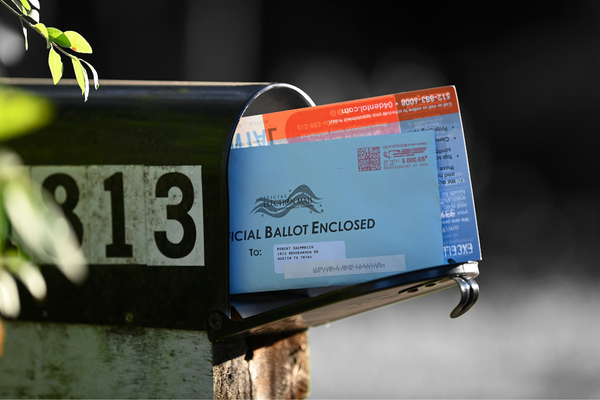
Graham, of course, knew exactly what he was doing. He told The New York Times Magazine in 2019 that his goal in cozying up to Trump was “to try to be relevant.” In 2020, Graham was a willing participant in Trump’s efforts to subvert the 2020 election results, calling Georgia Secretary of State Brad Raffensperger and appearing to suggest to him that he throw out legally cast mail-in ballots. Graham denied allegations of this attempt to throw the election for his preferred candidate by saying he was only asking how Georgia’s signature verification process worked as part of his official capacity on the Judiciary Committee, a defense I never believed.
And then, when January 6 happened, Graham jumped ship. He said he was “done” with Trump, implicitly blamed him for the violence at the Capitol (despite his own role in casting doubt on the results), and pleaded with the country to move on. “Enough is enough,” he said.
Four months later, Graham decided the party could not move forward without Trump, and reverted to courting the president’s favor.
After Trump won his second term, Graham was under serious pressure to reject some of the more unqualified and disreputable Cabinet nominees Trump put forward. Graham actually had the gall to tell voters that “the best indication of what I will do in the future is what I have done in the past,” which is one of the more ironic statements he could have offered. Nothing about his principles, aside from his view that American intervention was just and necessary, was consistent.
After his death, Trump mused that Graham loved being a politician so much that he never could have done anything else. If Graham ever lost an election, Trump remembered joking to the senator, he didn’t know if Graham would live very long. Trump meant the joke as a compliment about Graham’s dedication to his job, but I think it’s a true account of what mattered most to the man: He sought power and influence at nearly any cost, and he usually got it.
Given the scope of his influence, I’ll be interested to see how Graham’s death changes the trajectory of the country. He was, after all, one of the few interventionists close to Trump who had his ear. He was capable of crossing the aisle in our deeply divided Congress. And he was, according to the president, preparing to help the Senate move on the SAVE America Act, a consequential and controversial voting bill that would require citizens to present documentation confirming their citizenship when registering to vote and photo identification to vote in federal elections.
Without his influence, how will the president treat Ukraine? What new direction could the war in Iran take? How capable will Senate Republicans be of advancing their agenda? What happens to the SAVE America Act? As we consider Graham’s life and legacy, these are the areas where his absence could be felt most acutely.
Take the survey: How will you remember Sen. Graham’s legacy? Let us know.
Disagree? That's okay. Our opinion is just one of many. Write in and let us know why, and we'll consider publishing your feedback.
Your questions, answered.
Q: Can you comment on the Prairieland incident? What I’ve heard makes the government’s response seem so extreme. It makes me wonder if I’m missing some nuance.
— Risa from Chicago, IL
Tangle: The Prairieland incident was a shooting on July 4, 2025 that left one police officer injured outside of Prairieland Detention Center in Alvarado, Texas. U.S. District Attorney for the Northern District of Texas Nancy Larson said that “10 to 12 individuals dressed in black, military-style clothing began shooting fireworks and engaging in acts of vandalism at the facility,” intending to draw immigration authorities into an ambush. When officers arrived, Larson said, one individual fired 20 to 30 rounds at police and correctional officers, hitting one officer. The individuals fled the scene but were later apprehended.
In July 2025, 10 people were arrested in connection with the incident and charged with attempted murder of a federal officer; in November that year, prosecutors added terrorism-related charges. Nine of these defendants went to trial, maintaining that they only intended to stage a peaceful protest; all nine were found guilty of terrorism-related charges, among others. One defendant, charged with providing material support to terrorists, entered a plea deal and testified that he only intended to attend a noise demonstration using fireworks, saying he became uneasy with the protest once correctional officers and police officers arrived on the scene. Six additional defendants pleaded guilty to providing material support for terrorists.
The shooter, who was convicted of attempted murder of a police officer, received a 100-year prison sentence, while others convicted of terrorism charges faced sentences of 30 to 70 years.
There are layers of nuance to consider in both the protesters’ activities and the government’s response. For one thing, while several of the protesters may have intended to stage a peaceful demonstration, the use of fireworks as a “noise protest” and the damage done to a government building seem counterproductive to that goal. Given that both fireworks and weapons were on the scene, it’s not hard to imagine things could have been much more tragic.
The shooter’s sentence is harsh but defensible for a crime of this nature. However, the heavy sentences handed down to individuals who were present, but did not themselves use fireworks or fire on law enforcement officers, appear excessive. These defendants’ 30- to 70-year sentences were well above the average sentence of about 19 years for similar convictions.
Want to have a question answered in the newsletter? You can reply to this email (it goes straight to our inbox) or fill out this form.
Numbers.
- 1992. The year Lindsey Graham first won elected office, winning a seat in the South Carolina House of Representatives.
- 23. The approximate number of years Graham served in the U.S. Senate.
- 4. The number of committees Graham served on in the Senate at the time of his passing.
- 54.4%–44.2%. The margin of Graham’s victory over Jaime Harrison (D) in South Carolina’s 2020 Senate election.
- 56.8%. The percentage of votes Graham received in the South Carolina Republican Senate primary in June 2026.
- +3. Graham’s polling lead over Democratic candidate Annie Andrews in the South Carolina Senate race in a June 2026 Impact Research poll.
Under the radar.
On Friday, a federal judge permanently ended the cases against four members of the Proud Boys, a far-right militant group, for their actions at the Capitol on January 6, 2021. Dominic Pezzola was convicted of assaulting police, robbery and destroying government property, while Ethan Nordean, Joseph Biggs, and Zachary Rehl were convicted of seditious conspiracy, conspiracy to obstruct certification of the 2020 presidential election, and other crimes. The Trump Justice Department moved to vacate these convictions and dismiss the cases in April following President Trump’s mass clemency for January 6 rioters. District Judge Timothy Kelly, a Trump appointee, granted the motion on Friday, though he noted his reluctance to do so. “Because the decisions to issue the Executive Order and to abandon this prosecution… are solely the Executive’s, no one should mistake the Court’s granting of the Government’s motion for its agreement with those decisions,” Kelly said. Fox News has the story.
Isaac’s Go-To for Summer BBQ
Isaac swears by ButcherBox for summer — high-quality meat and seafood, delivered straight to your door. No last-minute store runs, no compromises. “It’s easier and better quality than running to the store every time.” — Isaac Saul, Tangle founder
Less hassle, better grilling. Get started today.
The extras.
- One year ago today we had just published Isaac’s essay on five things he got wrong about President Trump.
- The most clicked link in our last regular newsletter was the report on President Trump leaving the NATO summit on the old Air Force One.
- Nothing to do with politics: Take this quiz to see how well you know regional American dishes.
- Our last survey: 4,516 readers responded to our survey on age limits for Congress with 37% saying they would support an age limit for candidates over 80. “Term limits are more important than age and would solve both problems,” one respondent said. “Let the voters decide if a candidate is too old or feeble or feeble-minded for the job,” said another.

Have a nice day.
On July 3, Kelsey Pfendler, 32, rowed into the Ala Wai Boat Harbor, completing a record-breaking feat of endurance and perseverance. On May 21, she began her journey in Monterey, California, then spent 43 days rowing across the Pacific Ocean by herself. Not only did she become the first American woman to row solo from California to Hawaii, she was also the youngest woman. Not only was she the youngest woman, she was also the fastest woman. Not only was she the fastest woman, she was also the fastest ever, beating the men’s record of 52 days. Along the way, Pfendler raised money for the Whale Foundation, a nonprofit supporting the Grand Canyon river guiding community (her occupation when she’s not breaking rowing records). Hawaii News Now has the story.
500,000+ readers just today.