


Hope you all had a good weekend. This is Managing Editor Ari Weitzman, writing today’s take while the rest of the Tangle team settles in at home after their travel from West Virginia. The team Slack has been eerily quiet since last Friday, giving me a specific flashback to this one time in elementary school when I was feeling sick in the morning and came in late, after the rest of my class had left for a field trip. So while everyone was enjoying the Carnegie Science Center, I was in an empty room next to the principal’s office catching up on homework. Has that ever happened to you? Just me?
It sounds like the live event in West Virginia was a blast, and the team is buzzing about the warm welcome they got in Berkeley Springs. I was sad to miss the roundtable discussion on artificial intelligence, which I have plenty of opinions on and was eager to tussle with Editor-at-Large Kmele Foster about. Like you all, I’ll be keeping an eye out for the video when it drops.
Today, though, we’re talking about the war in Iran and oil in Venezuela. It’s a geopolitical edition, it’s a 14-minute read, and we cover a lot of ground.
Quick hits.
- President Donald Trump announced that the U.S. military killed the alleged leader of the Tren de Aragua gang in an airstrike in Venezuela conducted in coordination with the Venezuelan government. (The strike)
- Sen. Mitch McConnell (R-KY) was hospitalized for an unspecified reason on Sunday. His team said he is “receiving excellent care” but has not shared further details. (The hospitalization)
- Anthropic announced it had disabled its Fable 5 and Mythos 5 artificial intelligence models in response to a U.S. government directive to restrict access to the models for all foreign nationals. The company said it blocked access for all users to ensure compliance. (The directive)
- Elon Musk became the world’s first trillionaire after SpaceX, the company he founded and leads as CEO, began trading as a public company on Friday. (The debut)
- The annual G7 Summit, which brings together leaders from the United States, Canada, France, Germany, Italy, Japan and the United Kingdom, begins today in France. Countries are expected to discuss topics including the wars in Iran and Ukraine, online safety, and artificial intelligence. (The summit)

The Subscription Isaac Didn’t Expect to Keep
Anyone that knows me, knows I love good food — but with my busy schedule and having a baby at home, I started defaulting to a lot of takeout. Searching for something that was equally convenient, I genuinely started using ButcherBox, before they were a partner of Tangle.
What is it? Butcherbox delivers high-quality meat straight to my door from farms that raise animals in healthier, lower-stress environments. The convenience alone is worth it — a box shows up once a month and then I’m the guy grilling impressive steaks instead of dialing for pizza.
The quality also has genuinely surprised me. This isn’t the kind of mystery protein that’s been sitting on a shelf for months. It’s meat with higher levels of omega-3s, and no antibiotics, growth hormones, or unnecessary additives.
So yes, I’m proud to have ButcherBox as a Tangle partner. And right now, Tangle readers can get $60 off across their first three boxes and have quality meat delivered to their door as soon as next week.
Use code TANGLE to get $60 off plus free meat in every box for a year.
Today’s topic.
A tentative deal with Iran. On Sunday, Pakistani Prime Minister Shehbaz Sharif, who has served as a mediator in peace discussions between the United States and Iran, announced that the two countries reached a deal to end their conflict. The Pakistani leader said that both countries would immediately cease military operations and formally sign a memorandum of understanding (MOU) on Friday, though the text of the memorandum has not been released.
Back up: The U.S. and Israel launched a coordinated military campaign against Iran on February 28, 2026. After more than five weeks of fighting, the two sides agreed to a ceasefire on April 7. In the months since, the U.S. and Iran have each conducted sporadic military operations, including exchanging airstrikes last week after a U.S. helicopter collided with an Iranian drone. Tensions heightened on Sunday before the deal was announced after Israel carried out a strike against Hezbollah near Beirut, the capital of Lebanon.
President Donald Trump confirmed the deal shortly after Sharif’s post, adding that the Strait of Hormuz would immediately be reopened and the United States’s blockade would end. However, he later clarified that the strait would not be reopened until the signing of the deal on Friday.
The deal’s details remain unclear, as Iran and the United States publicly disagree about the requirements. The deal reportedly does not include a long-term agreement on the future of Iran’s nuclear program, with negotiations towards a nuclear accord planned to begin after the deal is signed on Friday. However, Iran has said that these talks will not commence until the U.S. meets a series of demands, including releasing billions of dollars in frozen Iranian funds. “This is completely not true,” a U.S. official told CNN regarding Iran’s claim. “This is a pay for performance deal and no frozen funds will be released without the Iranians implementing their commitments.”
The agreement also calls for the cessation of military operations on all fronts, including in Lebanon. Israel’s National Security Minister Itamar Ben-Gvir said in a statement that Israel will not pull troops out of areas it has seized within Lebanon. “Israel is not subordinate to the United States, and we are an independent and sovereign state,” Ben-Gvir said.
Today, we’ll share arguments from the right, left and writers in the Middle East on the potential peace deal, followed by Managing Editor Ari Weitzman’s take.
What the right is saying.
- The right is mixed on the agreement, with some saying the terms appear favorable for the U.S.
- Others suggest the president is trying to save face with a lackluster deal.
In The New York Sun, Conrad Black argued the deal “looks like an unambiguous success for America and Israel.”
“If the end of the Iran War, just announced, brings the removal or destruction of the enriched uranium and permanent and verifiable guarantees that Iran will not seek to become a nuclear military power, as announced, and if it also contains verifiable promises not to subsidize international terrorism, which has been hinted at, then it has unambiguously been a successful war for America and Israel,” Black wrote. “The more than $1 trillion damage done to Iran and the complete destruction of its air defenses and navy and most of its offensive missile and drone capacity only cost eight American combat fatalities.”
“Mr. Trump never explained the war properly and fluctuated in his enunciation of his war objectives and strained both credulity and public patience as he oscillated between draconian threats and confident predictions of imminent peace,” Black said. “Yet any version of the outcome of this war that is now believable is a major strategic victory in denying Iran nuclear weapons, driving a number of Arab states into the arms of the Israelis, and curtailing Iran’s ability to generate terrorism, all at minimal cost in American lives. It is an undoubted Trump victory, and no one will remember recent gas prices on midterm election day.”
In The Free Press, Eli Lake wrote “Trump gives Iran a lifeline and calls it peace.”
“This is not a treaty, not a deal, and not a peace agreement. It’s a memorandum of understanding to negotiate the terms of a broader peace over the next 60 days. Put another way, it is yet another ceasefire,” Lake said. “Iran has not agreed to anything with regard to its nuclear material, ballistic missiles, or support for terrorist proxies throughout the Middle East. As for Trump’s statements early on in the war encouraging the Iranian people to seize their institutions and rise up against their oppressors, that objective has been placed inside a memory hole.”
“Trump has bent to Iran’s positions through the haphazard negotiations that led to the memorandum of understanding. For example, the president has now acceded to Iran’s demand to link Israel’s war against Hezbollah, its proxy in Lebanon, to the broader U.S.-Iran deal, something Trump initially resisted,” Lake wrote. “When he launched the war in February, Trump was on a roll… Now a battered and impoverished Iranian regime can see a light at the end of the tunnel. The conflict has now moved from the battlefield to the negotiating table.”
What the left is saying.
- Many on the left argue the U.S. failed to achieve its military objectives in Iran.
- Others say Iran emerges from the conflict stronger than before.
In Zeteo, Andrew Perez and Asawin Suebsaeng called the deal “a humiliation for Trump and Netanyahu.”
“The initial goal of the U.S.-Israeli war in Iran was to topple the Iranian regime. That didn’t happen. The administration claimed the war would only last a few weeks. It stretched well beyond three months. The conflict only created more leverage for Iran, which successfully closed the Strait of Hormuz — stopping the flow of oil, causing energy prices to spike, and throttling the global economy,” Perez and Suebsaeng said. “Israel appeared to try to torpedo the deal on Sunday by launching a new round of attacks on civilians in Beirut… This time, however, the U.S. and Iran apparently managed to forge an agreement. As of Sunday, this peace deal would purportedly extend to Lebanon, where Israel has been leveling towns and villages.”
“If this latest agreement is serious, Netanyahu and Israel could easily try to blow it up. And Netanyahu has made clear with the supposed ‘ceasefire’ in Gaza that he may not feel bound to abide by any such deal negotiated by Trump. On the other hand, Netanyahu’s attacks on Lebanon appeared to help pave the way for Sunday’s agreement, rather than scuttle it,” Perez and Suebsaeng wrote. “And Trump and administration officials do seem eager to end this disastrous war, and there is a good reason to do so. If the Strait of Hormuz remains closed, oil reserves in the U.S. and elsewhere could soon reach crisis levels, with vast economic consequences.”
In The New Yorker, Robin Wright suggested “Iran can hold America hostage in either war or peace.”
“Iran has demonstrated its ability to hold out, sometimes for years, for what it wants, while the U.S., with its two- and four-year election cycles, has limited patience. Washington countered Tehran’s seizure of the Strait with its own blockade of any ship coming from or going to Iran — but the conflict is costing U.S. taxpayers an estimated two billion dollars a day,” Wright said. “Late on Friday night, Iran announced that Tehran and Washington were in the final stages of an agreement that would temporarily end conflicts in both Iran and Lebanon… That basically means that the U.S. will not engage in any actions to undermine or topple the Islamic Republic — in other words, there will be no attempt at ‘regime change.’”
“The agreement also establishes that, in the future, the Strait will remain under Iranian control and never revert to its prewar status. All commercial traffic will have safe passage, but Iran will eventually impose a ‘service fee’ for transiting vessels. Both of these stipulations… would be momentous, long-term gains for Tehran,” Wright wrote. “Trump also appears — again and again — to want to craft a victory narrative for his constituency. But a memorandum of understanding, despite its diplomatic title, is only a broad set of principles that still need to be laboriously negotiated, especially the nuclear program, which was the main reason that the U.S. and Israel originally went to war on February 28th.”
What Middle East writers are saying.
- Some in the Middle East say the deal would have wide-ranging consequences for the region.
- Others worry that Netanyahu could still derail the ceasefire.
In Arab News, Abdulrahman Al-Rashed described “the US–Iran agreement’s most alarming clause.”
“One of these provisions, according to leaked information, is a mutual regional nonaggression agreement. It divides the region into two camps and forces the countries of each camp not to attack those of the other,” Al-Rashed said. “It stipulates that Iran and its allies will refrain from attacking the US and its allies, while the US and its allies will likewise refrain from attacking Iran and its allies. This is an ambiguous provision that requires analysis. First: who exactly are the allies?”
“Israel, the Gulf states and Jordan are considered US allies. The first conclusion is that if Iran signs such an agreement — whether in the framework agreement or in a final accord — it would effectively be signing a deal that ends its 40-year war against Israel. This is not the only surprise or shock,” Al-Rashed wrote. “The second conclusion is that this hypothetical clause would make Hezbollah a recognized and protected actor, undermining the unprecedented efforts being exerted by the Lebanese state. The same applies to the Houthis, which Yemen’s legitimate government and other Yemeni forces seek to remove from Sanaa and eliminate.”
In Haaretz, Esther Solomon said “Netanyahu may set the Middle East ablaze.”
“One doesn’t need to be a grizzled diplomat or cynical pundit to see that this deal-in-the-making has the ingredients to be a disaster for Israel’s national security — you just need eyes and a pulse. It appears that the details of Iran’s nuclear program have been kicked down the road to be dealt with in the next negotiating period of 60 days,” Solomon wrote. “For Netanyahu, this is a failure on multiple fronts. The last year of U.S.-Israeli attacks were supposed to be a culmination of his decades-long obsession to comprehensively defang Iran’s capacity to threaten Israel.”
“Instead, it seems more likely that Iran will emerge from its sanctions-laden financial deep freeze with the capacity to pump far more cash and munitions into developing its missiles and proxies,” Solomon said. “Sadly, what’s bad for Netanyahu’s election chances ends up being bad for the Middle East, because he will only seek more extreme methods to win… In election season, everything — from the independence of the judiciary and the media, to West Bank settlement expansion, to the lives of Palestinians and Lebanese — is for sale to his ragtag coalition.”
My take.
Reminder: “My take” is a section where we give ourselves space to share a personal opinion. If you have feedback, criticism or compliments, don't unsubscribe. Write in by replying to this email, or leave a comment.
- Why would we expect this latest agreement to bring about lasting peace?
- Negotiations and ceasefires have repeatedly failed throughout this war, and an artificial timeline won’t make them succeed.
- Cynically, I don’t expect the conditions for real peace to even exist until after the midterms.
Managing Editor Ari Weitzman: I’ll be direct: I highly doubt that this current round of talks will bring a lasting peace between Iran and the United States.
In order to reach a long-term peace, Iran, Israel and the United States all have to agree on the Iranian nuclear program, Iranian sanctions, Iranian control of the Strait of Hormuz, and Iranian support of its proxies in the Middle East. In order to negotiate on those issues, each side is motivated to see different points in time as the original status quo. The U.S. may want to define the status quo as the period after the U.S. struck Iranian nuclear sites in June 2025 when Iran’s nuclear program was vastly depleted — for the purposes of nuclear discussions, at least. Iran may want to define it as when the U.S. and Iran agreed to a ceasefire in April — at least with regard to control over the Strait of Hormuz. And Israel seems to be saying the status quo is intolerable — Iran cannot be allowed to have materials to build a nuclear weapon or to continue to support its proxy networks in Lebanon, Gaza, or Yemen.
Each topic under discussion is thorny on its own; the nuclear deal alone will take a long time to hammer out. Neither President Trump nor Israel will want to agree to any nuclear deal that’s softer (or perceived as softer) than President Obama’s Joint Comprehensive Plan of Action (JCPOA), and the Iranian regime is clearly willing to accept economic pain on behalf of its citizenry to maintain its leverage in the strait. However, the U.S. and Iran don’t need to solve the “nuclear question” right now, they just need to agree to halt hostilities. And as much as I’d like to see this war come to a close, I doubt they’ll be able to agree to that much, for a few reasons.
First, there doesn’t seem to be a lot of mutual understanding in this memorandum of understanding (MOU). The U.S. and Iran have each said that the signing of the MOU will kick off a 60-day negotiating window, during which Iran and the U.S. will lift their dueling naval blockades. They also agree that the ceasefire will commit the two sides to discussing a nuclear deal and sanctions relief. From there, though, the stories diverge. The U.S. says that in simply signing the MOU, Iran is committing to dropping its pursuit of a nuclear weapon. Iran insists it is only committing to discussing its nuclear program, along with sanctions relief. Also, Iran says the U.S. will pay $300 billion to help with reconstruction… oh, and the U.S. will accept Iranian sovereignty over the Strait of Hormuz and future imposition of fees. Even on the preconditions for peace talks, Iran and the U.S. seem far apart.
Second, let’s bear in mind that the United States has some pressing reasons to want to communicate that an agreement has been reached. The G7 summit starts today, with Iran and Russia on the agenda, and President Trump’s history at global summits indicates he’ll want to have some achievement in hand to show enemies and allies alike.
Zooming out, Trump also has domestic concerns to worry about. Inflated gas prices at home are increasing economic anxiety, which is hurting his party’s polling coming into the midterms. All this gives me reason to doubt that Trump’s motivation is really to set the groundwork for a lasting peace, rather than achieve a short-term win that can bring gas prices down and boost Republicans’ midterm prospects.
Third, whether the MOU applies to Israel is unclear. Iran is saying that the agreement will suspend all fighting, including exchanges between Hezbollah and the Israel Defense Forces. The United States says the ceasefire applies to Hezbollah, but that Israel has the right to respond if Hezbollah initiates an attack. Israel says it isn’t bound at all, pledging to maintain a presence in Southern Lebanon. You’d think that for even a basic ceasefire to hold, each side would agree on who exactly it applies to. Otherwise, the ceasefire will likely proceed in name only, with constant violations throughout.
Which brings me to my last point: The agreement that was in place between April and June was hardly fruitful. Since the beginning of the ceasefire, the U.S. and Iran never really seemed to be ceasing their fire. The UAE, Kuwait, and Israel all reported missile and drone attacks on their territories the day the ceasefire was signed. Kuwait accused Iran of further drone strikes on April 10. Iran called the April 13 U.S. naval blockade a “prelude to a violation of the ceasefire.” On May 5, Iran also called the U.S. announcement of operation “Project Freedom” — to escort ships through the Strait of Hormuz — a violation (Trump walked back the announcement shortly after).
Iranian forces launched missiles, drones and small-boat attacks on three U.S. warships on May 7, and the U.S. then struck Iranian military sites in Southern Iran and Tehran in response. On May 25, the U.S. performed “defensive strikes” on missile-launch sites in Southern Iran and boats in the Strait of Hormuz. On June 7, Iran launched ballistic missiles at Israel, and Israel retaliated with strikes in Southern Beirut, Lebanon. Most recently, tensions flared when the U.S. and Iran exchanged fire on June 10.
If all of that happened during a ceasefire, then it’s clear that the sides involved in the war don’t have the requisite trust in a mutual agreement to even temporarily suspend fighting. Iran’s definition of a ceasefire seems to allow for drone strikes on U.S. regional allies and unfettered attacks from its proxies. Trump’s definition seems to be “shooting in a more moderate manner.” Either definition accepts a lot of exchanging of fire. When you add in all the reasons to doubt this current MOU, why would anyone expect it to be any different? You wouldn’t.
But what would you expect? Iran understands the political leverage this year’s elections give it in negotiations, and the U.S. and Israel have obvious military superiority, creating a strange kind of stalemate that can’t be resolved by talking our way out of it. Obviously, that reflects poorly on the decision to enter this conflict in the first place, but now President Trump is well and truly on the horns of a dilemma: either accept a peace plan that leaves us in a worse position than we were in before the war, or commit more time, energy, and resources to get us to a better one.
If there’s one thing we can all agree on with Trump, it’s that he won’t be eager to accept a deal that he can’t sell as a win. That really only leaves one option. This may be cynical, but I expect we’ll do the short-term ceasefire dance until at least after the midterms, when Iran will lose its electoral leverage and a less restrained Trump will be able to follow through with Project Freedom to ensure safe passage through the Strait of Hormuz. Regardless of how we got into this conflict, any real end to it will be hard won — and short-term declarations of peace are going to keep coming and going.
Take the survey: How would you characterize the progress in negotiations between the U.S. and Iran? Let us know.
Disagree? That's okay. Our opinion is just one of many. Write in and let us know why, and we'll consider publishing your feedback.
Your questions, answered.
Q: With the U.S. controlling Venezuela’s oil, why haven’t we been able to increase production and reduce oil prices regardless of the Mideast situation?
— Gerard (submitted through Subtext)
Tangle: To start, the premise is correct. In January, after a successful military operation to capture Venezuelan President Nicolás Maduro and bring him to the United States to stand trial, the U.S. took control of Venezuelan oil exports. At the same time, the average price of a gallon of regular gasoline has increased from $2.83 per gallon in January to $4.07 per gallon today.
After Maduro’s arrest, the Department of Energy said that it had “begun marketing” Venezuelan oil on the global marketplace for the benefit of the U.S. and Venezuela, that it had selectively rolled back sanctions to allow for easier disbursement, and that it would begin to modernize and expand production for near-term growth. At the time, Venezuela was exporting an average of 120,000 barrels of oil to the United States per day, down from the pre-Maduro daily average of 800,000 in 2013.
As things stand now, the U.S. controls the sale and exports of Venezuelan oil. The Council on Foreign Relations estimated the value of these exports at nearly $8 billion as of April, and crude oil exports from Venezuela to the United States have increased to a daily average of 407,000 barrels.
So, to answer your first question, the United States has been able to significantly increase oil production from Venezuela. However, these increases are small relative to the national daily demand of over 20 million barrels. Furthermore, since heavy Venezuelan crude requires more processing than the approximately 400,000 barrels that came to the U.S. through the Strait of Hormuz, a larger increase in production from Venezuela would be needed to offset the Middle East oil.
The Trump administration plans to invest in Venezuelan oil production to stabilize gasoline prices in the long term, but that investment will likely require years to pay off.
Want to have a question answered in the newsletter? You can reply to this email (it goes straight to our inbox) or fill out this form.
Under the radar.
The Supreme Court is expected to issue rulings in 20 cases before the end of June, including decisions on a slew of high-profile issues. Among other ongoing cases, the Court has yet to rule on President Trump’s executive order limiting birthright citizenship, the president’s move to terminate temporary protected status for people from several countries, states’ attempts to restrict transgender athletes’ participation in sports, and mail-in ballot counting rules. The next slate of opinions is expected on Thursday, and some decisions could have an immediate impact on the 2026 midterms. The Hill has a preview of the biggest remaining decisions.
Why Isaac Stopped Buying Most of His Meat at the Grocery Store
It’s always past 6:00 PM before I think about dinner. That’s where ButcherBox comes in. High-quality meat shows up at my door, lives in the freezer, and saves me dialing for takeout each day and going to the grocery store. I’m proud to offer Tangle readers $60 off their first three boxes.
Use code TANGLE to get $60 off plus free meat in every box for a year.
This day in history.
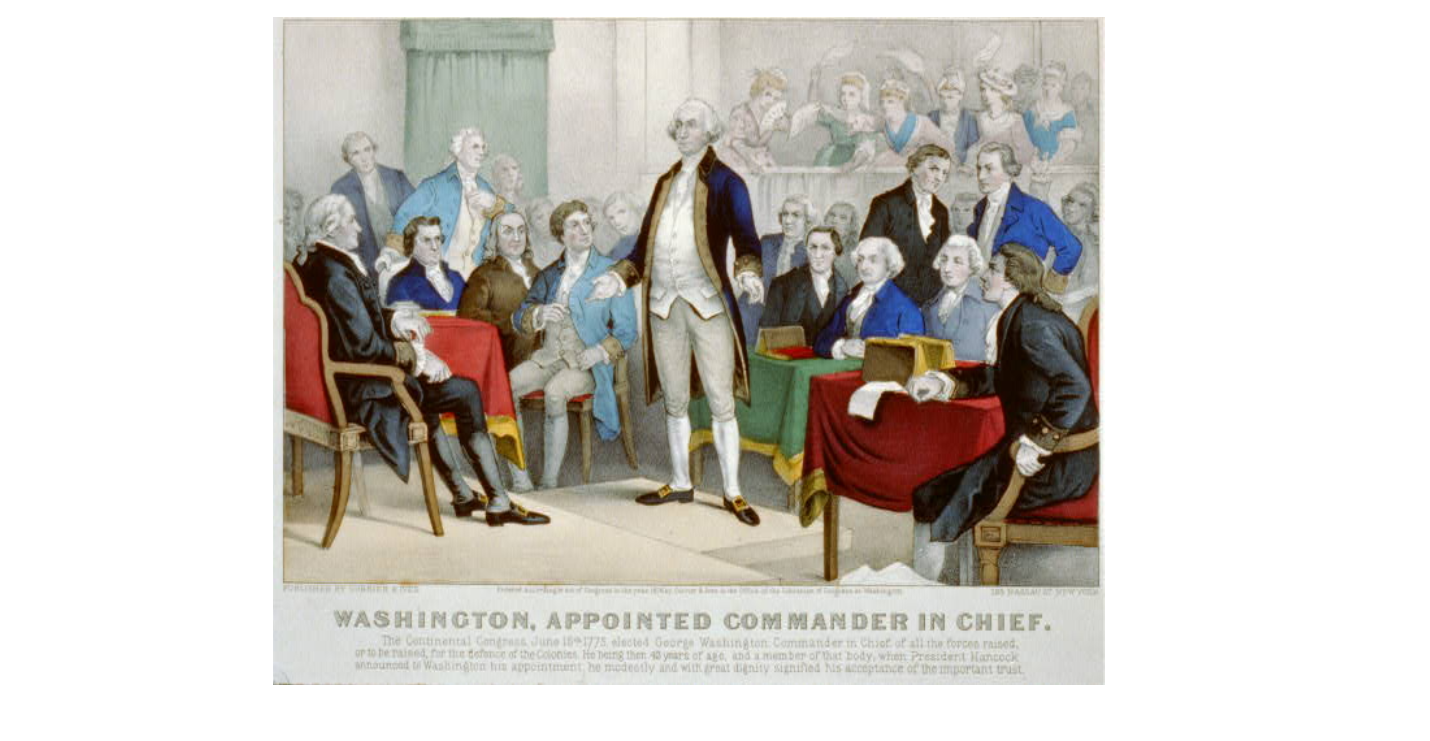
In the aftermath of the battles of Lexington and Concord in April 1775, the Continental Congress deliberated over whether to send out a call for more militia formation or finally raise a standing army to combat the hostile incursions of British troops.
Massachusetts delegate John Adams urged Congress to raise a full army, hoping to unify the northern and southern colonies in the cause of resistance. One Virginia delegate — an officer who had served as a colonel in the Virginia regiment during the French and Indian War just 17 years earlier — arrived at deliberations in full military dress, conspicuously signaling his support for such a plan.
On June 14, 1775, the Continental Congress issued an order to raise a standing army from Pennsylvania, Maryland and Virginia to aid Massachusetts colonists in the siege of Boston; their next objective was to choose a man to lead that army. Attention turned to that same Virginian veteran delegate. On June 15, 1775 — 251 years ago today — the Continental Congress appointed George Washington to lead the first colonial army in Boston. Despite his initial reluctance to lead, Washington would accept the job and assume command on July 3 in Cambridge, Massachusetts.
The extras.
- One year ago today we had just published a special edition on Israel striking Iran.
- The most clicked link in our last regular newsletter was our latest episode of Suspension of the Rules.
- Nothing to do with politics: Every World Cup goal so far — ranked.
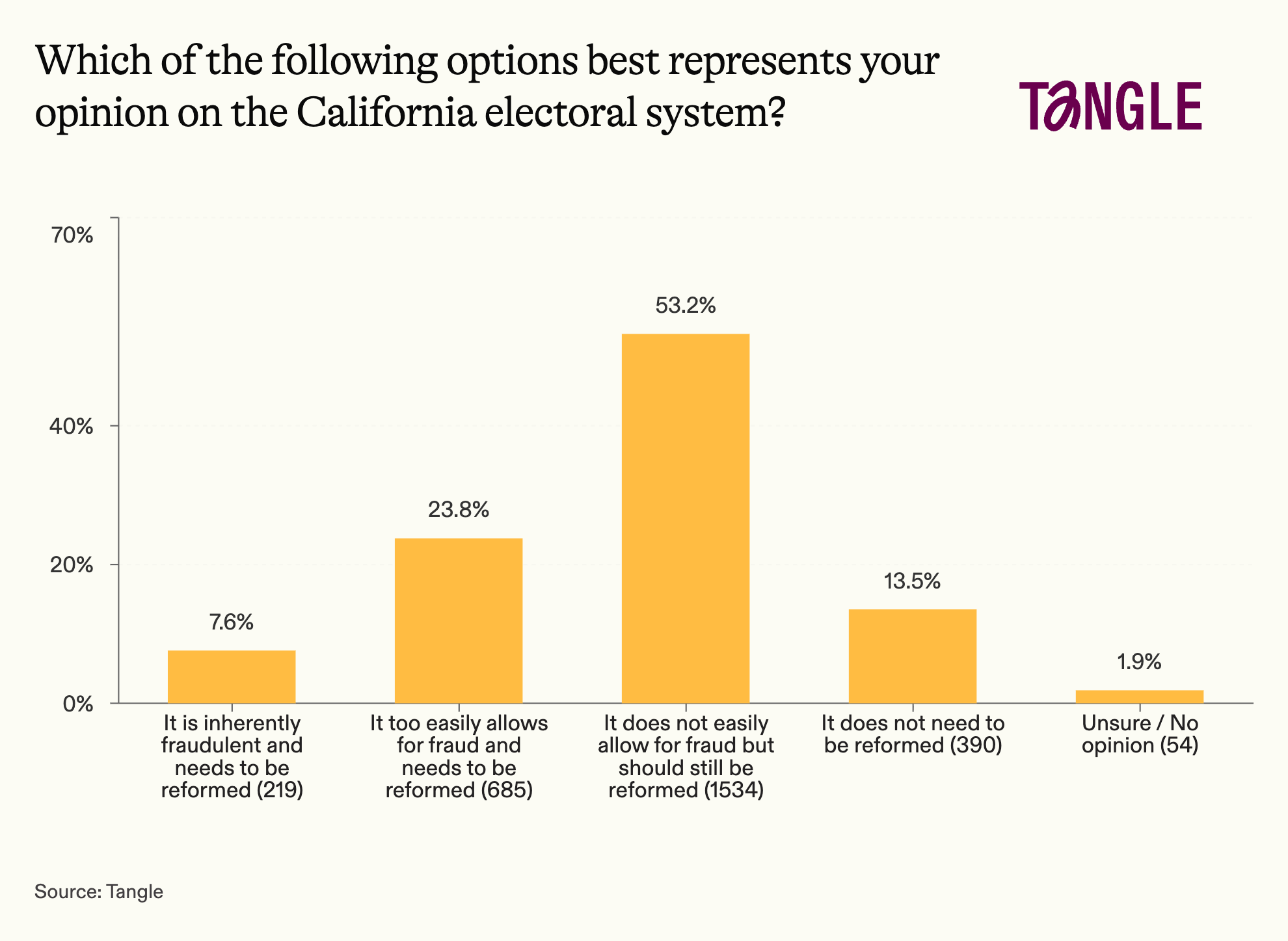
- Our last survey: 2,882 readers responded to our survey on California’s electoral system with 53% saying it doesn’t easily allow for fraud but should still be reformed. “Nothing that takes that long to count ballots should continue,” one respondent said. “California is doing the right thing. They are working hard to ensure that people’s votes count… Could it be faster? Maybe? Does it need to be faster? Not to appease you or the other people complaining about it,” said another.
Have a nice day.
Since 1973, every freshman at St. Benedict’s Preparatory School in Newark, New Jersey, has had to check off the same grueling requirement before becoming a sophomore: a five-day, 55-mile hike along the Appalachian Trail. Many of the school’s kids come from urban environments and have never hiked or camped before. But in the spring, they train together, learning different skills that will allow them to collaborate and succeed on their journey. Then in May, they head into the mountains with only each other to rely on. At the end, they cross a wooden bridge to meet their teachers on the other side. “When life gets difficult, it’s something you can refer back to,” administrator Glenn Cassidy said. “There’s a lot of rainy days in life.” Upworthy has the story.

Member comments