






I'm Isaac Saul, and this is Tangle: an independent, nonpartisan, subscriber-supported politics newsletter that summarizes the best arguments from across the political spectrum on the news of the day — then “my take.”
Are you new here? Get free emails to your inbox daily. Would you rather listen? You can find our podcast here.
Today’s read: 15 minutes.
Your criticism, Isaac’s response.
“When an article takes off, I write a follow-up piece addressing those criticisms and questions. I do this because I think engaging with our audience is an important way to gain trust and an important exercise in humility and intellectual honesty.”
— Tangle Executive Editor Isaac Saul
On Friday, we published a roundup of feedback to Isaac’s recent report exploring potential corruption in the second Trump administration. Isaac offered his response to some of the most common criticisms he received and answered a few questions his piece prompted. You can read it here.
Quick hits.
- President Donald Trump rejected Iran’s response to a U.S. proposal to end the war between the countries, calling it “TOTALLY UNACCEPTABLE!” (The rejection)
- The Centers for Disease Control and Prevention (CDC) activated its Level 3 response — the agency’s lowest level of emergency activation — following the hantavirus outbreak on a cruise ship. During a Level 3 response, CDC experts on the virus lead the effort to monitor the outbreak with their staff and potential assistance from the Emergency Activation Center. (The latest)
- The Labor Department announced that the U.S. economy added 115,000 jobs in April while the unemployment rate remained at 4.3%. The monthly jobs total was lower than March’s but higher than the 55,000 jobs predicted by analysts polled by The Wall Street Journal. (The numbers)
- Russian President Vladimir Putin told reporters that he thinks the Ukraine war is “coming to an end,” adding that he was open to discussing new security deals for Europe. The comments followed Russia’s annual Victory Day parade celebrating the Soviet Union’s victory over Nazi Germany. (The comments)
- Israeli Prime Minister Benjamin Netanyahu said in an interview that he wants to “draw down to zero” U.S. financial support over the next ten years. (The remarks)
Today’s topic.
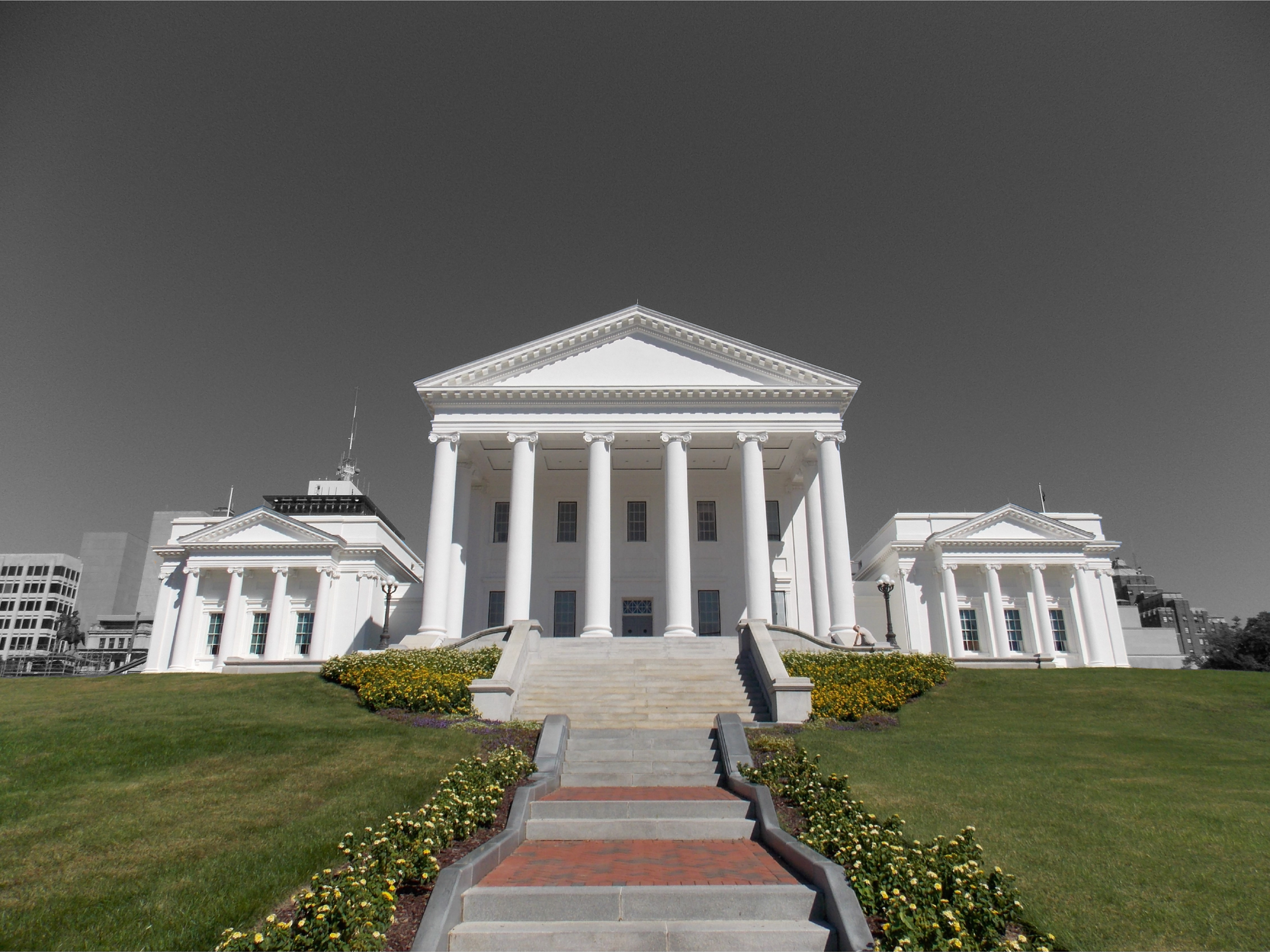
The Supreme Court of Virginia’s redistricting ruling. On Friday, the Supreme Court of Virginia struck down a redistricting measure recently passed by voters that would have allowed the legislature to adopt a new congressional map designed to give Virginia Democrats a 10–1 advantage in the U.S. House. In a 4–3 decision, the court found that the process of putting the measure on the ballot violated the state constitution, affirming a county judge’s ruling. The decision will keep the current map — under which Democrats have a 6–5 advantage — in place for the 2026 midterms, though state Democrats said they will appeal to the U.S. Supreme Court.
Back up: On April 21, Virginians voted 51.7%–48.3% to approve a constitutional amendment creating a one-time exception to the state’s redistricting system to allow it to redraw its congressional map. The new map would have been in place for the 2026 and 2028 elections, but the amendment stipulated that the state would revert to its standard process of redistricting via a bipartisan commission and court review at the start of the 2030s.
In the Supreme Court of Virginia’s ruling, the majority wrote that the amendment violated Article XII Section 1 of the state constitution, which requires the state’s General Assembly to “twice vote in favor of a proposed amendment at two separate legislative sessions with an intervening election of the House of Delegates.” In this case, the General Assembly first voted to propose the amendment on October 31, 2025, roughly five weeks after early voting had begun for Virginia’s House of Delegates. Therefore, the court held, the amendment did not meet the “intervening general election” requirement, as roughly 1.3 million voters had cast their ballots without having an opportunity to evaluate lawmakers’ stance on the amendment.
The dissenting justices argued that the state constitution defines an “election” as a single day — Election Day — and since the General Assembly voted to propose the redistricting amendment before that day, Article XII Section 1 was not violated.
After the ruling on Friday, House Speaker Don Scott (D) and Attorney General Jay Jones (D) filed a motion asking the state supreme court to pause implementation of its ruling while they appealed to the U.S. Supreme Court.
If Democrats’ appeal fails, the party would be positioned to only gain up to six House seats in the midterms from mid-cycle redistricting in California and a state court ruling in Utah; Republicans could gain up to 14 seats from mid-cycle redistricting in six states, most recently Florida and Tennessee.
Today, we’ll share views from the left and right on the ruling. Then, Executive Editor Isaac Saul gives his take.
What the left is saying.
- The left strongly opposes the ruling, arguing the amendment process didn’t violate Virginia’s constitution.
- Some say the majority’s rationale fails under scrutiny.
- Others call on Democrats to fight the decision.
In Vox, Ian Millhiser described “the glaring error in the Virginia Supreme Court’s gerrymandering decision.”
“In essence, the majority argues that Virginia voters who opposed the amendment were disenfranchised because they were denied an opportunity to vote for lawmakers who oppose it in the 2025 state legislative elections,” Millhiser said. “But there’s a pretty glaring problem with this disenfranchisement argument: The amendment was submitted to the voters in a referendum. Virginia voters were, in fact, given an opportunity to cast an up or down vote on the redistricting amendment. And a majority of them voted to approve it.
“If Virginia’s constitution called for a simpler amendments process, where two subsequent votes of the state legislature were alone sufficient to amend the constitution, then the majority’s argument would make more sense. In that case, the election held between those two legislature votes would be state voters’ only opportunity to weigh in on the amendment,” Millhiser wrote. “But under Virginia’s actual constitution, voters are given a direct opportunity to vote on a constitutional amendment. So it makes no sense to say that they were denied an opportunity to express their view on the amendment by the timing of a legislative vote.”
In Above the Law, Joe Patrice wrote “Republicans spend 30 pages trying to explain why ‘election’ doesn’t mean ‘election.’”
“Mere days after the United States Supreme Court declared that the Voting Rights Act cannot be invoked to bar racially discriminatory gerrymandering as long as state legislators make a halfway plausible claim that the new districts were drawn for purely political purposes, the Virginia Supreme Court overturned a statewide election to approve purely political maps,” Patrice said. “Tennessee, Alabama, South Carolina… all actively redrawing their maps behind closed doors to strip Black voters of meaningful suffrage. Virginia sent their maps to the electorate, and after it passed, the state supreme court scrambled to rewrite the rules to erase the whole election.”
“Virginia’s robed GOP activists embraced the Opposite Day role, jettisoning several years worth of Republican messaging that ‘early voting is fake’ and ‘elections mean election day!’ to pronounce with a smirk that as soon as early voting begins, nothing a legislature does can be ‘before the election,’” Patrice wrote. “The majority grasps at historical hearsay that the purpose of the rule is to allow voters to make a single-issue vote for their next representative based on the possibility of a ballot measure.”
In The New York Times, Jamelle Bouie argued “Democrats who are soft on Republicans have got to go.”
“Key Virginia Democrats quickly acquiesced to the decision. Don Scott, the speaker of the House of Delegates, said, ‘We respect the decision of the Supreme Court,’ while Gov. Abigail Spanberger said that she was ‘disappointed’ but didn’t challenge the ruling or the court’s authority. This is a mistake,” Bouie said. “To start, the ruling is absurd… The effect of this new definition of ‘election’ would be to vastly complicate the state’s judicial system, as the Constitution forbids courts from pulling voters into the judicial process ‘during the time of holding any election at which he is entitled to vote.’”
“There is also the fact that the court had a chance to halt the process earlier this year. It didn’t. To then invalidate the referendum when it won is to suggest that the law here was less important than the politics,” Bouie wrote. “But more than the absurdity of the ruling is the basic principle. The referendum wasn’t just an election; it was the people of Virginia exercising their right to amend their Constitution as they see fit. On what basis can the State Supreme Court, a creature of that Constitution, invalidate a sovereign decision of the whole people?… The correct response is to fight back in the name of the people, who made their choice in a free and fair contest.”
What the right is saying.
- The right supports the court’s ruling, saying Democrats gambled on a flawed process and lost.
- Some frame the decision as a win for constitutional law.
- Others warn Democrats could respond by embracing more radical proposals.
The Washington Post editorial board argued the court was “right to strike down [the] unconstitutional gerrymander.”
“Friday’s 4–3 decision may be technical and procedural, but the reasoning is solid. The Virginia Constitution includes clear requirements for any amendments, which were intended to make changes difficult,” the board wrote. “The justices concluded that [the constitutional] requirement wasn’t met because the state’s General Assembly voted for the first time on Oct. 31, four days before Election Day, to put the constitutional amendment to voters. By that time, more than 1.3 million people had already cast ballots, about 40 percent of the total vote. The election was well underway.”
“Prominent Virginia Democrats reacted disingenuously to the high court’s ruling by focusing on its timing… Attorney General Jay Jones complained that the decision ‘overturns’ election results and ‘silences the voices of the millions of Virginians who cast their ballots,’” the board said. “[Jones] is the one who insisted the court wait until after the election to judge the merits of the challenge… He believed a usually friendly court wouldn’t dare defy his party’s interests, and the case would be moot anyway if the measure failed. The result of Jones’s imprudent legal strategy is that national Democratic groups wasted $64 million to narrowly pass a referendum that the court was going to strike down all along.”
In The Daily Wire, Ken Cuccinelli wrote “Virginia’s constitution held — and Democrats’ power grab failed.”
“[Democrats’] scheme was as cynical as it was procedurally reckless. During a disputed Special Session, they rammed through a proposed constitutional amendment on a party-line vote — one that would temporarily suspend the bipartisan redistricting commission and let the General Assembly redraw congressional districts to their liking,” Cuccinelli said. “The Court rejected the Commonwealth’s tortured argument that ‘election’ means only Election Day — a single 24-hour period, rather than the entire 45 days of voting that Virginia allows (also thanks to the Democrats).”
“So where does this leave Virginia? The Court’s 2021 nonpartisan maps — the ones that earned an ‘A’ from independent analysts — remain in full effect for the 2026 congressional elections. Virginia will continue to have a 6–5 congressional delegation split, with districts drawn fairly and without a partisan thumb on the scale,” Cuccinelli wrote. “Today’s ruling is a reminder that constitutions matter, that process matters, and that no political party — no matter how large its legislative majority or campaign war chest — is above the law.”
In The New York Post, Jonathan Turley said “Virginia’s gerrymander flop leaves Democrats frustrated — and dangerous.”
“[Democrats are] facing a potentially catastrophic reversal of fortune… Once [Virginia Gov.] Spanberger sought to eradicate Republican representation, total war broke out — and now red states like Florida and Tennessee have moved forward with their own redistricting. On top of the fact that GOP states have more room for partisan gerrymandering, the Virginia Supreme Court decision comes on the heels of the US Supreme Court’s ban on racial gerrymandering,” Turley wrote. “To make matters worse for the Democratic Party, a new census in 2030 will correct the mistakes that erroneously awarded them multiple districts after the 2020 census.”
“That prospect of a political apocalypse has Democratic strategists pushing for radical changes in Washington before it’s too late. Top priority: packing the Supreme Court as soon as they retake power. As Virginia has shown, an independent court can unravel the best-laid plans,” Turley said. “Last week, [Minority Leader Hakeem] Jeffries declared the Supreme Court ‘illegitimate’ as he blasted its ban on racial gerrymandering. After the Virginia court’s ruling, the frustrated Democratic establishment is ever more likely to echo him — and to go beyond.”
My take.
Reminder: “My take” is a section where we give ourselves space to share a personal opinion. If you have feedback, criticism or compliments, don't unsubscribe. Write in by replying to this email, or leave a comment.
- This ruling is obviously a big win for Republicans and a huge blow to Democrats.
- On one hand I’m glad for that, because I cheer anytime a gerrymandering attempt fails.
- On the other hand I’m discouraged, because Trump and Republicans instigated this war and now they’re being rewarded for it.
Executive Editor Isaac Saul: I’ve written and spoken a lot about gerrymandering in the last few months, and it’s fair to say I feel quite conflicted.
I have a visceral, intense loathing for all manner of gerrymandering across the country — a process that allows politicians to pick their voters rather than the other way around. I blame President Donald Trump for opening up a new front in this war through mid-decade redistricting, then escalating it further by forcing state leaders to play ball or face the consequences. And as I look for an off-ramp, I’m left thinking the only way any of this ends is if the gerrymandering gets so bad both sides realize it’s in their best interest to back off. In Virginia specifically, that means I’m in the uncomfortable position of rooting for gerrymandering, as a response to previous gerrymandering, to create an even national map.
This ruling leaves me deeply conflicted. It is an obvious electoral victory for Republicans, and it’s bad news for Democrats. Yet it’s also a good outcome for democracy and a bad outcome for my long-term hope, which is that both parties see clearly that gerrymandering is a bottomless pit and start to back away.
For Republicans, the electoral victory is clear. Democrats tried to gerrymander a purple state from a 6–5 congressional make-up to 10–1 in their favor, and the court’s rejection of the ballot measure to create that map gives Republicans either an edge or a shot at winning at least four competitive House seats they otherwise would have been very likely to lose. Paired with new maps in Florida and Tennessee, the last few weeks have very much tilted the gerrymandering wars in Republicans’ favor. I had been hoping for a draw so that Trump’s escalation would blow up in his face. That looked likely a week ago, but it’s ancient history now. Barring another dramatic twist in this saga, the president’s plan is working.
The court’s decision is obviously a bad outcome for Democrats — not just because of the national map advantage Republicans just fell into, but also because Democrats sunk a lot of time, effort, money, and political capital into trying to get their amendment through. It looks like they aren’t giving up, either; some members of the party are now considering a truly radical plan to lower the age limit for state supreme court justices, remove every justice currently on the court, replace them, and re-try the map. That would mean dumping more money, more time, and more political capital into an effort to disenfranchise their own voters, with the added spice of breaking every possible norm along the way.
As for democracy, this is still a good outcome for Virginia. Gerrymandering is a scourge, and a 10–1 map in a purple state is a genuine absurdity. The court’s reasoning for striking down the map was technical and understandable. To me, it was also beside the point. As Ian Millhiser wrote (under “What the left is saying”), both sides had textual evidence in their corner, so the court could have justifiably ruled either way. It seems to me the court applied the technical rule the way it was supposed to here, specifically for this kind of moment, yet the rule itself feels almost unworkable. Are we really saying we don’t want voters to have any fast-moving power, even referenda, as a tool on their belt?
Ultimately, Democrats tried to rush this through, effectively deny millions of Republicans competitive elections, violate a 2020 voter-led effort to ensure independent map-making, and they failed. Plenty of people suspected they might fail, too, yet they barrelled ahead anyway. A court checking that kind of indulgence means other state parties should think twice about sinking tens of millions of dollars into efforts to undermine our representational democracy.
Yes, this ruling helped a national party that is currently gallivanting across the country gerrymandering — and yes, unlike other gerrymanders, voters approved Virginia’s measure in a very narrow statewide referendum. But it was still a play to rob voters of fair representation. Even acknowledging the will of a slim majority of Virginia voters, gerrymandering is still a cancer on democracy — in that sense, I’m glad this effort failed.
Writers like Jamelle Bouie (under “What the left is saying”) criticized Democrats for “acquiescing” to a state supreme court ruling. Sorry, but no: If the left wants to criticize Trump and Republicans for attacking or ignoring the courts (which they should!), they can’t then publicly bemoan that Democrats aren’t doing the same thing anytime they get a really big ruling they don’t like. Bouie also complained that the court didn’t stop all this earlier, yet it was Democrats who insisted the court wait until after the referendum election to rule on the legal challenge.
And, finally, this is a terrible outcome in the effort to make President Trump pay for his mid-decade redistricting push. As I wrote in my deep dive on gerrymandering back in 2022, while both sides gerrymander, the practice more often produces advantages for Republicans. If Alabama, Louisiana and South Carolina re-draw their maps (which they likely will), Democrats will have to win the combined national popular vote by roughly four points in the midterms just to flip the House of Representatives.
To be clear: Trump did not invent gerrymandering, and he isn’t the root cause of it. But right now, we are in the midst of one of the most egregious, unjustifiable, extralegal gerrymandering binges in American history. And Trump started it. He launched this war with pure cynicism, and for a moment it looked like it was all going to blow up in his face. Now, it looks like it may actually work out for him the way he wanted it to.
To call this frustrating or upsetting is an understatement. The Supreme Court has effectively said that it can’t do anything about partisan gerrymandering, only that it would overturn racial gerrymandering, even though it’s often impossible to tell one from the other. This means our only hope under the current circumstances is that state-level politicians do the right thing. Yet when Indiana Republicans stood up to Trump and refused to gerrymander, they ended up being ousted by their own national party’s money and attacks.
I’m not rooting for Democrats to get an electoral advantage, but I was hoping that Democrats’ response would be successful enough that President Trump might back down. Yet, in their effort to punch the proverbial bully in the mouth, Democrats had to undo the progress of independent commissions in California and Virginia, which led to one of their maps being thrown out.
Meanwhile, the new Florida map Republicans just drew is an obvious violation of the state’s anti-gerrymandering law. Now, it’s Florida’s turn: Will its state supreme court do the right thing? Six of the seven justices were appointed by Republican Gov. Ron DeSantis, who just approved the map, so I’m skeptical.
The result is that both sides wade deeper and deeper into this grotesque practice, wherein one side seemingly always ends up getting an advantage, our state- and local-level representation only matters as a rubber stamp for national political interests, our national and presidential races swallow up everything, and the legitimacy of the entire system that is supposed to make our country so special is strained further and further. All the while, a president who has shown a reckless disregard for the law, the courts, and the decorum of our system ends up “winning,” or forces his opponents to meet him in the mud to just further degrade our national polity.
I wish I had some good news, but I really don’t. A few weeks ago, our best-case scenario was that millions of voters in California, Texas and Virginia would have their voting power diluted, and that both parties would back off. Now, we’re going to bull ahead on this unrighteous path with no bottom in sight.
How does one resolve this apparent dilemma? Personally, I’d try to separate out the distinct issues: First, at the Virginia level, voters who wanted to see how the legislative session proceeded before voting weren’t deprived of that opportunity simply because early voting was available (meaning, definitional issues aside, I disagree with the practical element of the state Supreme Court’s decision). Second, at the national level, the temporal parameters that define “the election” are in dire need of definition. I wouldn’t be at all surprised if the Supreme Court believes it is their place to step in to provide those parameters, either by hearing a challenge to this decision or by issuing a broad ruling in the upcoming decision in Watson v. Republican National Committee.
Take the survey: What do you think of the Supreme Court of Virginia’s ruling? Let us know.
Disagree? That's okay. Our opinion is just one of many. Write in and let us know why, and we'll consider publishing your feedback.
Your questions, answered.
We're skipping the reader question today to give our main story some extra space. Want to have a question answered in the newsletter? You can reply to this email (it goes straight to our inbox) or fill out this form.
Under the radar.
According to preliminary data from the Centers for Medicare and Medicaid Services, Affordable Care Act (ACA) enrollment for 2026 decreased to approximately 23 million, roughly one million fewer enrollees from the year prior. A separate analysis by the consulting firm Oliver Wyman found that enrollment in HealthCare.gov dropped by approximately 8% from 2025, while enrollment in state-based exchanges increased 2%. The drop follows the end of the pandemic-era enhanced ACA credits, which Democrats unsuccessfully sought to extend last year during a 43-day government shutdown. Experts and state officials suggested the enrollment decline will continue through 2026 and beyond. The Hill has the story.
Numbers.
- 6. The number of state constitutions Virginia adopted between 1776 and 1970.
- 54. The number of amendments to the state’s constitution as of January 1, 2026.
- 12. The length, in years, of a justice’s term on the Supreme Court of Virginia.
- 3. The number of justices on the Supreme Court of Virginia who were elected when Republicans controlled both chambers of the state’s General Assembly.
- 3. The number of justices who were elected when control of the General Assembly was split.
- 1. The number of justices who were elected when Democrats controlled both chambers.
The extras.
- One year ago today we had just published a Friday edition asking whatever happened to the baby formula shortage?
- The most clicked link in our last regular newsletter was the recently released note purportedly written by Jeffrey Epstein shortly before his death.
- Nothing to do with politics: Exploring the myth of photographic memory.
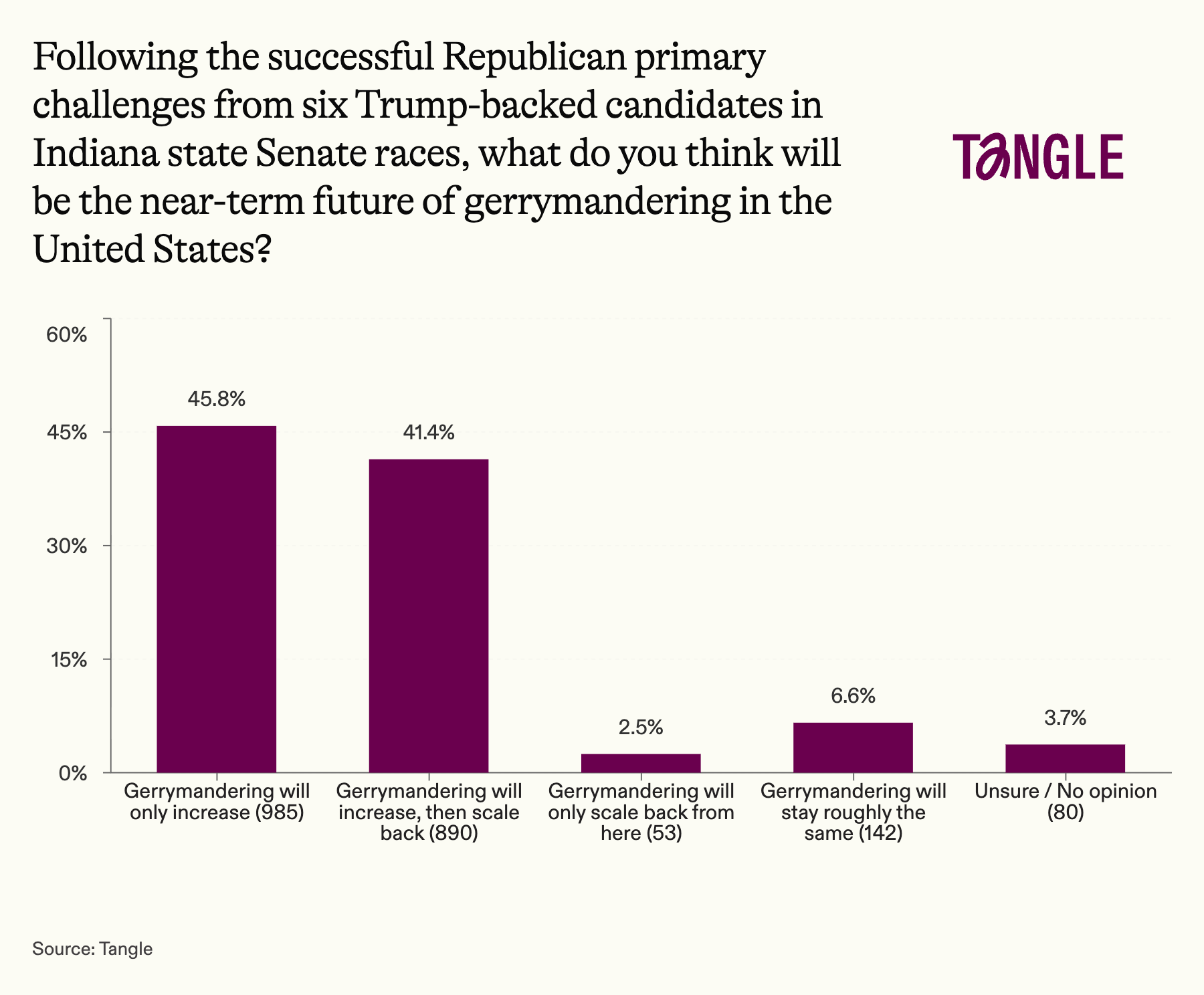
- Our last survey: 2,150 readers responded to our survey on Trump-backed challengers winning in the Republican Indiana state Senate primary with 46% saying that gerrymandering will only increase. “My hope is it decreases from here, reality will more likely see it grow then reverse,” one respondent said. “I feel like political temper is like a pendulum, it’s swinging pretty far, but our descendants will swing it back — maybe too far, too,” said another.
Have a nice day.
A retired chicken farmer in Australia gathered rocks from a nearby quarry for a garden wall — and unknowingly mortared a 240-million-year-old fossil into it. Researchers from UNSW Sydney and the Australian Museum have now formally identified the specimen as Arenaerpeton supinatus, a four-foot-long salamander-like river predator from the Triassic period. The fossil was remarkably well preserved, with faint traces of skin still present in the stone. “We don’t often find skeletons with the head and body still attached, and the soft tissue preservation is an even rarer occurrence,” PhD candidate Lachlan Hart said. Scientists say the fossil is one of the most significant finds in the state in decades. Science Daily has the story.


Member comments