






Happy Wednesday. This is Senior Editor Will Kaback, slightly bleary-eyed after another packed night of midterm primary results. Sometimes I feel a little too invested in the outcome of elections that hit my radar just 24 hours before, but I also enjoy getting to learn about the unique issues (and personalities) that animate races across the country. Last night, I was paying especially close attention to Alaska, where I traveled in May to report on the state’s unique election system.
Today, we’re sharing our latest video on the Reflecting Pool and digging into the reported challenges aboard the USS Abraham Lincoln during its record-setting deployment in the Middle East. It’s a story that, to me, serves as a microcosm of the Iran War. After my take, we answer a timely reader question on cross-party voting.
It’s a 14-minute read.
The real story of the Reflecting Pool.
By now, you’ve almost certainly heard about the controversy over President Trump’s renovations to the Reflecting Pool in Washington, D.C. But while most news reports have focused on alleged vandalism and administration infighting, questions remain about what, exactly, went wrong. In our latest video, Associate Producer Aidan Gorman reports from the National Mall:
Quick hits.
- Rep. Byron Donalds advanced in Florida’s Republican gubernatorial primary and will face former Rep. David Jolly in the general election. Incumbent Rep. Cory Mills (R) lost his primary, and democratic socialist Angie Nixon defeated former National Security Council aide Alex Vindman in the Democratic Senate primary. (The results) Separately, former Rep. Mary Peltola (D) and Sen. Dan Sullivan (R) advanced in Alaska’s all-party Senate primary; the other two candidates who will advance in the top-four system are still to be determined. (The results) In California, no winner has been declared in the special election to replace former Rep. Eric Swalwell (D), who resigned in April amid sexual misconduct allegations. (The race)
- A federal judge denied a request to delay the planned termination of Temporary Protected Status for Ethiopian nationals, allowing the Trump administration to proceed with ending the protections. (The ruling)
- Disney and ABC sued the Federal Communications Commission, alleging First Amendment violations in the agency’s decision to launch an investigation into the broadcaster related to concerns about its diversity, equity, and inclusion initiatives. (The suit)
- The Department of Defense directed 30 U.S. universities to audit their connections and partnerships with foreign entities identified by the government as risky or hostile. (The directive)
- President Donald Trump paused the implementation of 50% tariffs on Canadian goods for three days, saying that the countries had reached a deal to potentially avert the new duties. (The pause)

Isaac here — one thing I’ve learned running Tangle is that two people can read the same news and walk away with completely different understandings of what happened.
That’s why I like Ground News. It pulls together coverage from across the political spectrum and shows you how different outlets are framing the same story. My favorite feature is the Blindspot Report, which highlights stories getting significant attention from one side of the media ecosystem while receiving little coverage from the other.
If you want a better sense of not just how stories are covered, but which stories are being emphasized or ignored, check out Ground News.
We’ve partnered with Ground News to offer Tangle readers an exclusive 40% off their Ground News Vantage Subscription.
Today’s topic.
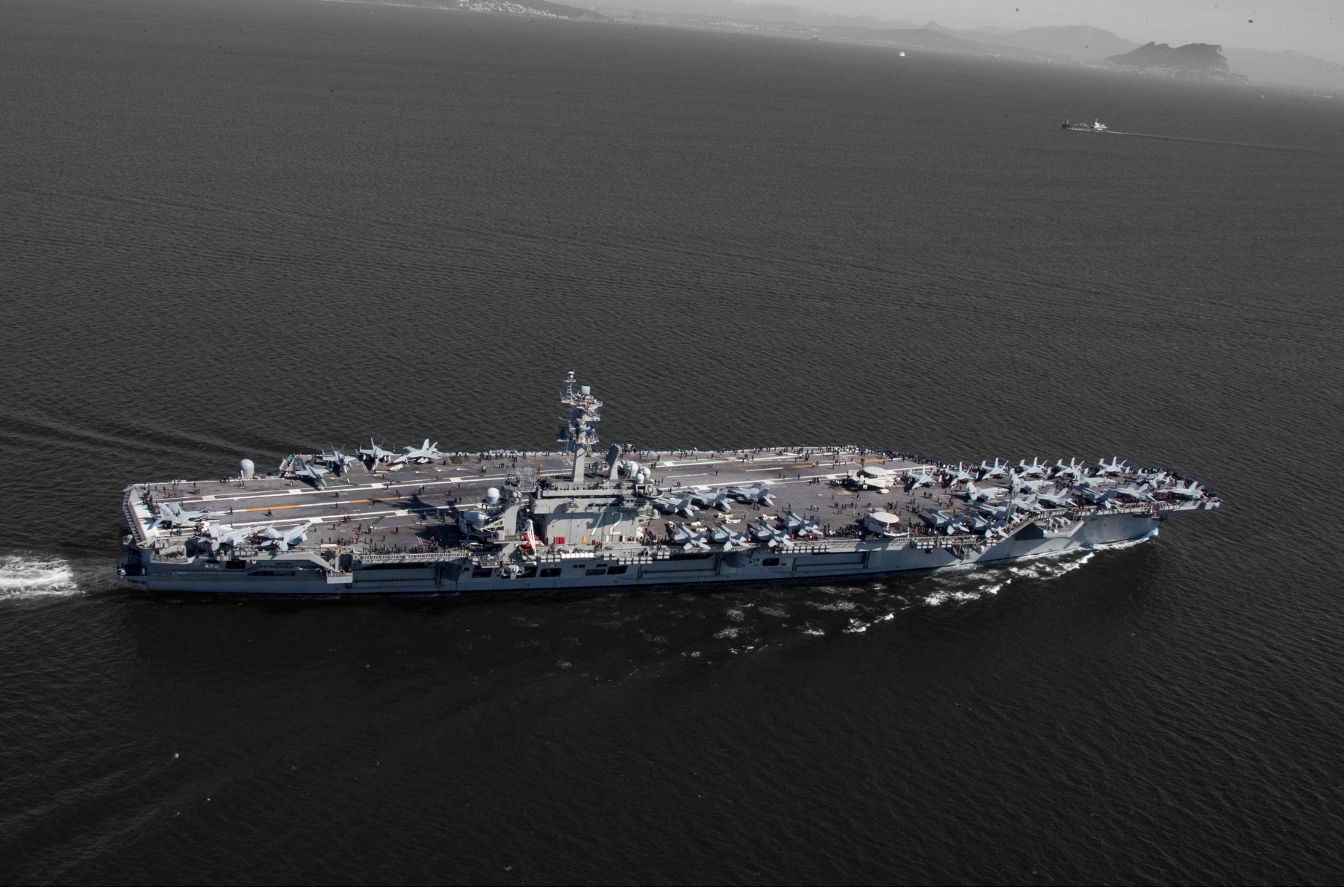
The USS Abraham Lincoln. On Friday, Acting Navy Secretary Hung Cao announced that the aircraft carrier USS Abraham Lincoln (CVN-72) is returning to the United States as part of a “planned rotation.” Cao’s announcement follows weeks of reporting on strained conditions aboard the ship, including food and supply shortages, mental health struggles among sailors, and multiple sailors reportedly attempting to jump overboard. Aside from brief stops in Guam in December and Oman in July, the carrier has been operating for 271 days at sea without its crew taking a port call. The Japan-based USS George Washington (CVN-73) is set to relieve the Lincoln.
Back up: The USS Lincoln is a Nimitz-class aircraft carrier crewed by roughly 5,000 service members and based in San Diego. In November 2025, it left port on what was originally planned as a standard deployment in the Pacific. As tensions with Iran heightened in January, the carrier was redirected to the Middle East to support efforts in the region. The Lincoln has remained deployed in the region to assist Operation Epic Fury, and the carrier’s strike group has been supplied by the Diego Garcia base 2,200 miles away in the Indian Ocean throughout the conflict after a local Navy logistical base in Bahrain was damaged.
Family members have described food shortages and broken showers and toilets contributing to unsanitary conditions on the ship, and the Navy confirmed that one sailor assigned to the Lincoln’s air wing went overboard in early August. The sailor was recovered within roughly an hour, and the Navy considered the incident a “mental health episode.” Commander of the U.S. Central Command Admiral Brad Cooper visited the Lincoln on Saturday, applauding the carrier’s officers for “stepping up and making mental health and crew resilience a leadership priority.”
Several congressional Democrats have criticized the carrier’s prolonged deployment and the war with Iran in general. “These reports warrant immediate attention, but they also raise a broader question: whether the Navy can sustain the operational tempo now being demanded of its carrier force,” Sen. Richard Blumenthal (D-CT) said.
U.S. Central Command pushed back on characterizations of poor conditions aboard the ship, saying in a statement that the “Sailors and Marines of the Abraham Lincoln Carrier Strike Group remain resilient and resolved” after over 260 days at sea, 10,000 aircraft sorties, and 1.5 million pounds of ordnance expended. Acting Secretary Cao echoed that message in his Friday statement, saying, “Unfortunately, the media are trying to paint our warriors as victims. Not only is that dishonest but it takes away the focus on the enemy.”
Senior Editor Will Kaback will give his take below, after we explore what the right and left are saying about the USS Lincoln’s deployment.
|
What the right is saying.
|
In The Free Press, Elliot Ackerman criticized “the cynical coverage of conditions on the USS Abraham Lincoln.”
“[The response to recent reports] perhaps should be the level of concern this country always gives to the suffering and safety of the volunteers who make up its military, but usually is not,” Ackerman wrote. “In this case, however, the wall-to-wall coverage of the Lincoln and the reported suicide attempt seemed to serve a different purpose. Critics of President Donald Trump pointed to the incident as evidence of his mishandling of the war in Iran, a conflict he had said would last weeks but has extended into months with no clear end in sight. Now, the criticism goes, that mismanagement is placing the troops under intolerable levels of strain.
“This is a tidy argument against Trump, but ultimately a cynical one. Sadly, a service member trying to kill himself on deployment is an all too regular occurrence. Each year, we lose 470 to 525 uniformed service members to suicide; that number jumps more than tenfold when you include America’s 18 million veterans,” Ackerman said. “This crisis has run straight through George W. Bush, Barack Obama, the first Trump term, and Joe Biden. It did not spike with this president…To use the personal crisis of a single sailor as political ammunition does nothing to help or to support our troops; it is vulgar, an adjective that Trump’s critics often apply to him.”
The Wall Street Journal editorial board said the situation reveals “a crisis in U.S. naval readiness.”
“Democrats this week are expressing outrage over press reports of low morale and tough conditions aboard the USS Abraham Lincoln, the aircraft carrier deployed for 250 days, much of it supporting President Trump’s military action in Iran,” the board wrote. “Some 200 consecutive days at sea is a physical and mental sacrifice. And if Democrats are so concerned, perhaps they could expedite passage of the $17 billion for U.S. military operational costs that the Administration requested?”
“The underlying problem is that the U.S. burns naval power faster than it produces it,” the board said. “A stressed carrier force is a sign that the U.S. doesn’t have sufficient naval assets to cover U.S. interests around the globe. It will require sustained resources to expand the fleet, with a more diverse mix of ships, and to recruit the sailors needed to man them. If Democrats don’t want to help, and they probably don’t given their sharp move to the left, this is a worthy priority for Republicans in Congress.”
In RedState, Teri Christoph offered a “reality check on Navy life.”
“Adm. Brad Cooper visited the much-talked-about USS Abraham Lincoln (CVN-72) over the weekend, meeting with Sailors and Marines aboard the aircraft carrier as it comes to the end of what he called one of the most consequential deployments of the modern era,” Christoph wrote. “They’ve been kept busy, to be sure, which required its deployment to be extended. And that’s where all the ‘non-troversy’ about the Lincoln began… The carrier has been at sea for just under nine months and ports of call have been few of late because of the situation with Iran, so of course the Sailors and Marines get stir-crazy from time to time.”
“Out of the 5,000 crew aboard, some are going to have more serious issues and some are going to complain to mom that the food isn't like her home cooking. That's life in the military,” Christoph said. “Cooper, however, didn't describe a crew in collapse. He described Sailors and Marines who have endured an exceptionally demanding deployment, carried out thousands of combat missions, and have every reason to be proud of what they’ve accomplished. This echoes what Acting Secretary of the Navy Hung Cao said on Friday — the real story is that the crew of the Lincoln ‘crushed the mission.’”
|
What the left is saying.
|
In MS NOW, retired Lt. Col. Rachel E. VanLandingham wrote “sailors and their families deserve compassion from Pete Hegseth, not denial.”
“The more this administration denies and deflects, the more the American people should stand up and pay attention. Because the stakes are enormous,” VanLandingham said. “Of course, fighting wars is hard, and those in uniform always will shoulder the most direct impact, but good leaders consider the effect of their decisions on service members and do everything possible to ensure not only adequate defenses from threats such as missile and drone attacks but also appropriate logistical support to those in harm’s way.”
“Significant logistical failures aboard the Lincoln and other warships deployed to the Persian Gulf have been reported since the start of this rushed conflict, and despite ample time to fix those failures, such reports continue,” VanLandingham wrote. “It seems reasonable to conclude that reports of our service members’ ongoing injuries not only stem from poor initial planning for a rushed war but also by the administration’s operating culture of denying and hiding problems. Gaslighting and blaming the media are hallmarks of Trump and Hegseth. But problems are only resolved when they are acknowledged and dealt with openly.”
In The Atlanta Journal-Constitution, Rep. Derrick Jackson (D-GA) argued “American sailors on USS Abraham Lincoln deserve leadership, not neglect.”
“I have walked in the steel-toe boots of the young sailor working 12-hour shifts on steel decks, and I have stood four-hour watch as an officer making operational calls in high-stress, hostile waters. I know what it takes to maintain readiness under pressure,” Jackson wrote. “Our sailors are reported to be facing severe mistreatment, escalating burnout, and a toxic, unaddressed crisis of morale… In the military, we preach that ‘people are our greatest asset.’ But when leadership, especially in Washington, D.C., turns a blind eye to deteriorating morale, those words ring hollow.
“Morale is not a luxury item — it is an absolute prerequisite for combat readiness. High operational stress paired with low morale leads directly to severe sleep deprivation, compromised decision-making, and operational errors that put lives and multi-billion-dollar assets at risk,” Jackson said. “Our young sailors do not expect luxury in a combat zone. They expect discipline, clear purpose, and hard work. But they also expect leadership that matches their sacrifice with accountability, dignity and care. Expecting service members to absorb endless strain without responsive action is not toughness — it is a failure of command.”
In The Nation, Jeet Heer said “Trump’s loose grip on reality could sink the Navy’s ships.”
“The roots of the critical situation aboard the Lincoln go back to poor military planning by Donald Trump and Pete Hegseth in the run-up to the Iran disaster. They had assumed that overwhelming US airpower would lead to a quick victory, comparable to the coup the US was able to pull off in Venezuela in January. This scenario radically underestimated the resilience and capability of the Iranian government,” Heer wrote. “[Iran’s attacks on military bases] meant the sailors on the Lincoln had to receive food from farther away and had no easy access to shore leave.
“While the supply chain issue has been slowly mended, for a time it meant a rapid deterioration in living conditions,” Heer said. “The crisis on the Lincoln is one of Trump’s own making. It’s a result of his deeply irresponsible handling of military affairs… Trump is alarmingly detached from reality. He has no concern for the flesh-and-blood sailors who serve in his Navy, much less the countless civilians killed in his imperialist wars. His main concern is visual display: having cool World War II–style aircraft carriers that can make aesthetically pleasing explosions.”

- Anyone can read the USS Abraham Lincoln’s story to confirm their priors.
- Yes, conditions are tough — and yes, conditions on a carrier are always tough — but the deeper story here is a poorly prepared administration.
- I’m now beginning to wonder how much longer we’re prepared to keep up the war effort.
I never served in the military, so I can’t claim to know the experience of the crew aboard the USS Abraham Lincoln (or, really, any service member). But the reports from friends and family of crew members in recent weeks suggest an environment strained by deteriorating morale amid a protracted, open-ended conflict. One Tangle reader (who asked to remain anonymous) shared pictures from their brother, who is currently aboard the ship, of the food that crew members have been eating in recent weeks:

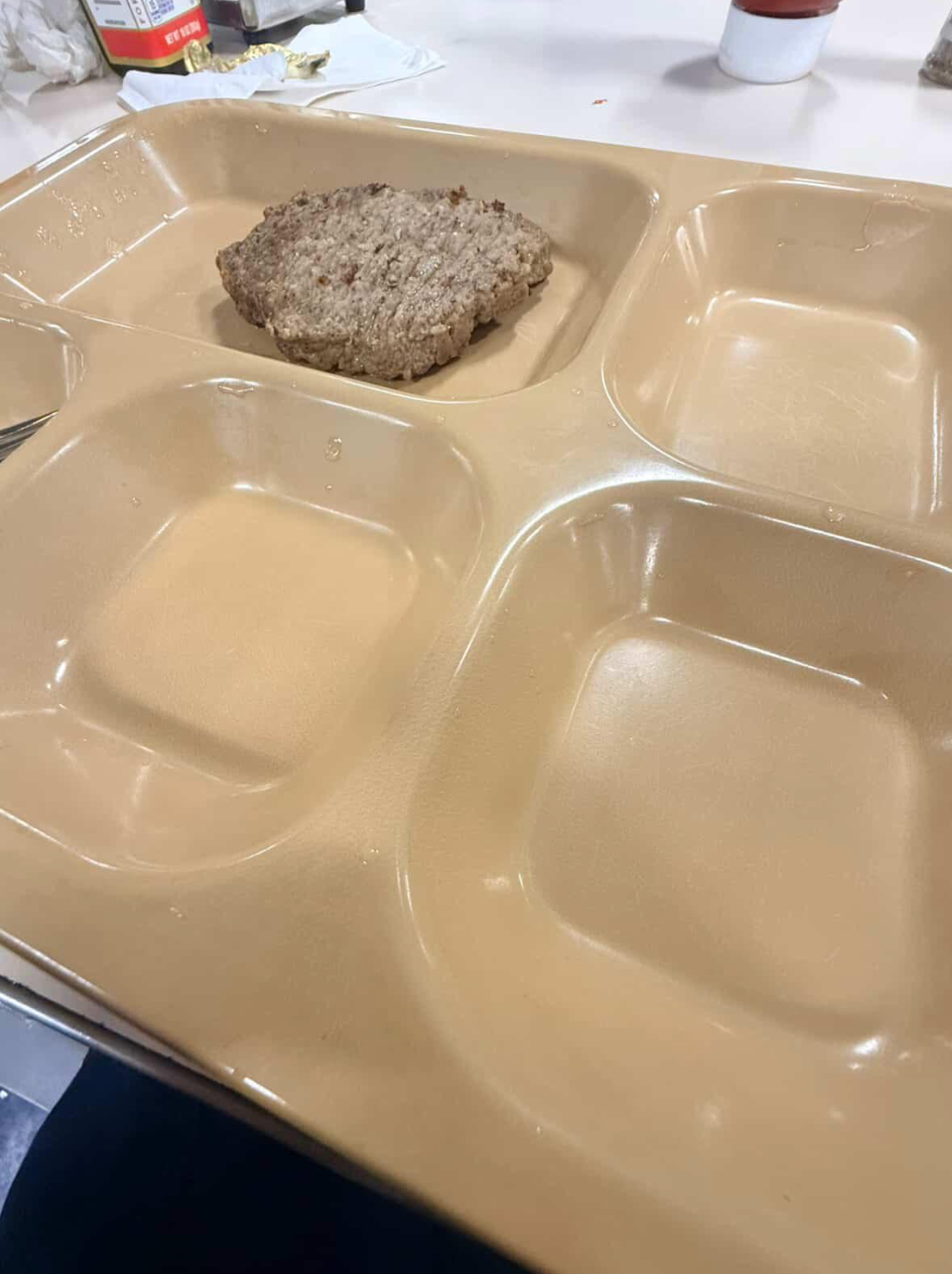
Rations aboard the USS Lincoln — Photo via anonymous Tangle reader
I know I would struggle with this food alone, and the thought of sitting down for this meal after a long, high-stress day in an active combat zone is even more difficult. Obviously, military service isn’t supposed to be easy, and this is just one experience on a ship of 5,000 crew, but these stories are a reminder of the sacrifice that service members make.
Zooming out, the reports of challenges aboard the USS Lincoln have (unsurprisingly) led commentators to amplify the aspects of the story that confirm their priors while brushing off the ones that don’t.
The Wall Street Journal editorial board argues that the ship’s real problem is a lack of naval preparedness that predates the conflict and illustrates the need for more congressional funding. Others, like Elliot Ackerman in The Free Press, draw on their own service to note that mental health struggles, hygiene issues, food shortages and other discomforts are a fact of life during deployments, pushing back on the media’s framing of them as challenges somehow unique to the Iran War.
On the war-critical side, writers like retired Lieutenant Colonel Rachel E. VanLandingham criticize the Trump administration’s dismissal of all reports about conditions on the ship as callous and say military leaders are failing the crew. The Nation’s Jeet Heer and others blame the ship’s issues on President Trump’s decision to wage a war that’s depleting military resources without a clear plan for success. Some conservative writers have made similar points.
None of these perspectives is “wrong.” Extended aircraft carrier deployments have become more common in recent years, putting a strain on the normal ship rotation schedule and impacting naval readiness even before the Iran War began. Would more money fix that? I’d like to see the Pentagon pass an audit first to better understand why roughly $1 trillion in annual military spending still isn’t enough, but regardless, the Navy clearly has issues that predate this current conflict.
Similarly, rough conditions and mental health challenges are, unfortunately, part of life on these ships. As Ackerman wrote, “Suicide in the ranks and the strain deployments place on service members and their families have proven endemic for decades, under both Republican and Democratic administrations.” I asked my uncle, who served two six-month deployments on aircraft carriers as a naval flight officer during Operation Iraqi Freedom, about his experience, and he described the ship as “a floating prison” that can be “torturous” after months at sea.
Of course, the war’s critics are also right that some aspects of the Lincoln’s deployment are unusual and reflect poorly on the Trump administration. While other carriers have deployed for longer, the Lincoln set a record for consecutive days at sea — it’s been sailing for over 270 days without a port call to disembark and recharge, which would typically occur every 30–45 days. And much of that time was spent in combat operations, adding stress and danger to the already grueling stretch (my uncle told me combat periods were “ten times more intense,” and he still has nightmares about his experiences).
The challenges on the Lincoln may not have been acute if the U.S. military’s normal supply hub in Bahrain hadn’t been effectively neutralized by Iran early on. Since the only other proximate port, on the Gulf of Oman, is too close to Iran, the ship has been relying on resupplies from the distant island of Diego Garcia, making transport of goods like fresh fruit and vegetables untenable. Recalling all of the Trump administration’s talk of a rapid, dominant victory in the war’s early days, it’s easy to see conditions aboard the Lincoln as a casualty of hubris — the administration seemed unprepared for the possibility that Iran could execute such a damaging opening salvo.
Even acknowledging the Navy’s preexisting issues and that many of the emotionally resonant elements of this story are endemic to any aircraft carrier deployment, I find the ship’s situation uniquely worrisome against the backdrop of our decisions in Iran.
First, aircraft carrier rotation cycles are already out of sync, and this extended deployment will exacerbate the problem. Ideally, the Navy wants its 11 nuclear-powered carriers to operate on a 36-month cycle that includes an eight-month deployment. After its deployment, the ship returns home for maintenance, another takes its place, and the others progress through training and preparation phases.
As I mentioned earlier, deployments that creep over that eight-month window are becoming more common, meaning more stress on sailors and supplies. But it also means ships will now overlap in their maintenance and reset periods. I talked with Retired Vice Admiral Robert B. Murrett, whose 34 years of service included multiple aircraft carrier deployments, and he told me, “Any time you deploy multiple carriers [to the same region], as we did in Operation Desert Storm, with three carriers in the Red Sea and three carriers in the Persian Gulf, it takes a couple of years to actually get back to the point where you'd like to be.”
Second, and relatedly, the U.S. now has to pull the USS George Washington out of the Pacific to replace the Lincoln. A carrier strike group is the centerpiece of any modern naval presence, and moving one is like moving an entire military base. Former military leaders and foreign policy analysts have both highlighted the costs of redirecting the Washington; after its time in the Middle East, the Washington will itself need to return home, potentially leaving the U.S. with a reduced presence in the Pacific for over a year. When a similar drop-off occurred during the Biden administration, China mobilized a carrier and other ships to the Philippine Sea in a show of force against Japan, the Philippines, and Taiwan. Now, China will have a similar opportunity — at a time when our interests in the Middle East are in tension with theirs, and when U.S. relationships with our allies in the Pacific are being tested.
Third, and most concerning to me, is the message this incident sends about the future of the Iran War. I haven’t held back my thoughts in prior writing about the conflict: I think starting the war was a massive blunder that has turned out worse than I expected. Our missile stockpiles are already reportedly depleted, and now the war’s impact on troop morale is spilling out into the public. Recent attacks don’t seem to have affected Iran’s posture, and I’m starting to wonder: Can we keep this up much longer?
The 60-day deadline for a peace deal expired on Monday, and the prospect of any kind of negotiated resolution feels as remote as ever. We can keep up airstrikes and maintain a stalemate in the Strait of Hormuz, but again, for how long? And to what end? The administration is hardly attempting to define what “victory” looks like anymore. I’m grateful to the crew of the Lincoln who have served the country in trying conditions for these past five months, but is the military prepared — logistically, monetarily, or emotionally — to ask the crew of the Washington for five months more?
I doubt it.
Take the survey: Are you concerned about U.S. military readiness? Let us know.
Disagree? That’s okay. Our opinion is just one of many. Write in and let us know why, and we’ll consider publishing your feedback.
Your questions, answered.
Q: I moved to Michigan from Connecticut three years ago and was shocked to discover that one need not be a registered party member to vote in the primary. All voters are eligible. One is given a ballot with two columns: Dems on the left and Reps on the right. One can only vote in one column, but the choice is theirs. Abdul El-Sayed’s victory [in Michigan] is framed as a referendum on the direction of the Dem party. But is that accurate? I’ve heard that many Republicans voted in the Dem primary because they felt that Mike Rogers could more easily prevail against El-Sayed.
— Sue from Ann Arbor, MI
Tangle: Abdul El-Sayed defeated Haley Stevens in the Michigan Democratic Senate primary on August 4 by 15,713 votes, or just over 1%. Michigan, along with 18 other states, has some kind of open primary, meaning Democrats, Republicans, and unaffiliated voters can vote in the national party primary of their choice. However, voters aren’t required to list their party affiliation when they vote, so we don’t have official data on how many crossover voters (Republicans voting in Democratic primaries, or vice versa) actually participated in this Democratic primary.
In theory, Republican voters could have significantly impacted Michigan’s Democratic primary, but they also had several reasons to vote in their own party’s elections instead. The state may not have had a competitive Republican Senate primary, but it did have a contested gubernatorial primary and several contested House primaries.
In its final poll prior to the election, Emerson found that of 700 likely Democratic primary voters, 13 (1.8%) respondents said they were Republicans and 21 (3.1%) said they voted for President Donald Trump in the 2024 election. We can’t extrapolate too much from such a limited sample, but these numbers show that at least a small portion of crossover voters likely participated in the primary.
We also don’t know how all these possible Republican participants voted. Some might have voted for El-Sayed thinking he’d be a weaker general election candidate, but others could have voted for Stevens to minimize the odds of a further left candidate like El-Sayed going to the Senate. While it is certainly possible enough Republicans voted for El-Sayed to tip the results, a lot of variables prevent us from knowing for sure.
Want to have a question answered in the newsletter? You can reply to this email (it goes straight to our inbox) or fill out this form.

FYI: Today’s newsletter is sponsored by Ground News, one of our favorite tools for understanding how the media covers the news. Ground News lets you compare reporting from outlets across the political spectrum and highlights stories that may be getting disproportionate attention — or being ignored altogether. Their flagship newsletter, The Blindspot Report, is a great way to broaden your perspective.
Tangle readers can get 40% off a Ground News Vantage subscription here.
Numbers.
- 11. The number of aircraft carriers currently maintained by the U.S. Navy.
- 3. The number of carriers currently deployed.
- 200. The number of days during its 271-day deployment that the USS Abraham Lincoln has been in a combat zone as of August 14.
- 326. The number of days the USS Gerald R. Ford was deployed following military operations in Venezuela in 2026, the longest deployment of a U.S. aircraft carrier in the last 50 years.
- 332. The number of days the USS Midway was deployed in 1972-73, the longest-ever deployment of a U.S. aircraft carrier.
The extras.
- One year ago today we covered President Trump’s federal takeover of the D.C. police.
- The most clicked link in our last regular newsletter was the rundown of peculiar historical pets.
- Nothing to do with politics (kind of): A daily game that challenges you to guess how senators voted on past legislation.
- Our last survey: 3,247 readers responded to our survey on Flock cameras, with 49% supporting significant restrictions on law enforcement’s use of the cameras. “If a camera is going to make my community and driving safer, it should be a yes for all of us. But strong restrictions are definitely needed,” one respondent said. “We are losing a piece of what it means to be human if every action is recorded to be used against you at some point in time in the future,” said another.

Have a nice day.
Anoa, the world’s smallest buffalo species, is endangered, with fewer than 2,500 estimated to be alive in the wild. However, a conservation program in Europe is aiming to stabilize the population, and in July, that effort got a small but important boost when an anoa calf was born at Chester Zoo in England. The calf, Mentari, weighed approximately 15 pounds and stood about 20 inches tall at birth; she is expected to grow to weigh 330–660 pounds and stand approximately 35 inches at the shoulder as an adult. While the conservation program has a long way to go, the zoo said that each new birth is a key step in the process of “build[ing] a healthy, genetically diverse population and giving this remarkable species the best possible chance of survival.” IFLScience has the story.

Member comments