




Happy Tuesday, this is Executive Editor Isaac Saul. We’ve got a full day of content coming your way. This morning, I shared my final Senate predictions (plus the Tangle staff picks) in a members-only edition of Grain of Saul. In this newsletter, we’ll break down everything you need to know about the races for the House, Senate, and governor’s offices.
After you read today’s midterms preview (and cast your own ballot, if you haven’t already!), join us on YouTube for our special election livestream, which begins at 7:00 PM ET. Ari, Kmele and I will be joined by some special guests to report and interpret the results as they come in. Thank you to our sponsor Incogni, who can help you make sure your private information remains private and off the internet.
Today’s edition is a 15-minute read.

Quick hits.
- The U.S. launched strikes on Iran’s Qeshm Island, which houses an underground missile site, naval base, and desalination plant. (The strikes) Separately, Iran’s foreign ministry shared a list of demands for the U.S. to meet to reopen the Strait of Hormuz. (The demands)
- The Supreme Court declined the Trump administration’s request to intervene in its attempt to block California from counting ballots cast by approximately 20,000 alleged noncitizens. (The rejection)
- Special Envoy Steve Witkoff said the U.S. will mediate peace discussions between Russia and Ukraine in Abu Dhabi, United Arab Emirates, next week. (The talks)
- Supermarkets across Europe reported freezer malfunctions believed to be caused by cyberattacks, resulting in large quantities of spoiled food. (The latest)
- The Food and Drug Administration approved a generic version of an HIV-prevention shot, helping make the low-cost option available in 120 low- and middle-income countries. (The approval)
Ever wondered what’s cooking behind the alternative media curtain during a midterm election? Grace Weinstein, The Recount’s intrepid senior correspondent, is spending election night immersed with some of the right wing’s most notable creators.
The curiosity continues later this week, when she’ll take you through one of the left’s biggest gatherings of social media stars.
Make sure you’re tapped in.
Today’s topic.
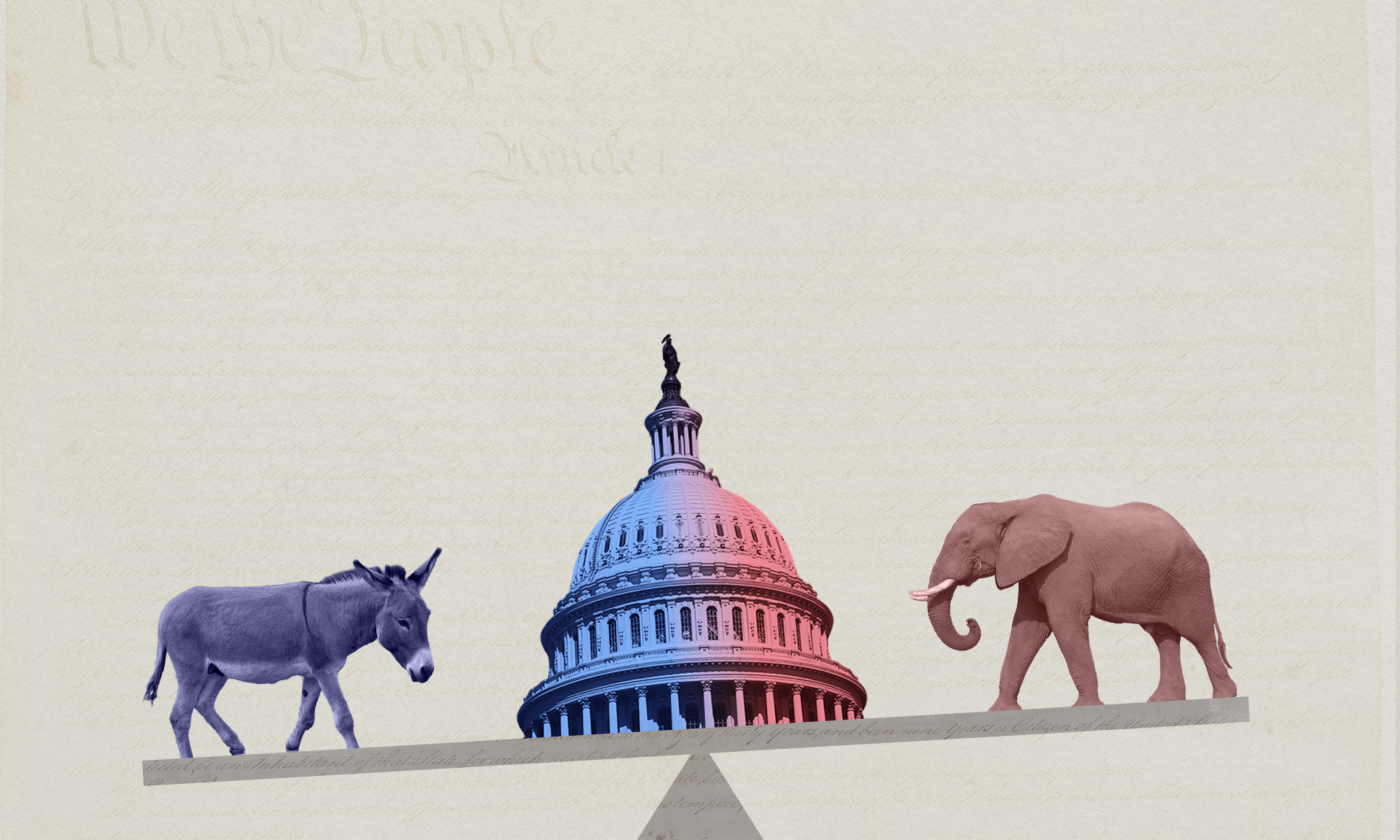
Today is Election Day. Control of 35 Senate seats, 36 governorships, and all 435 House seats will be decided in this year’s midterms, in addition to a slew of state ballot initiatives and legislative seats. Republicans currently hold the U.S. House and Senate, but Democrats seek to flip one or both chambers to check President Donald Trump for the final two years of his term.
57,526,926 Americans have cast mail-in and early in-person votes, according to NBC News. 46% of those ballots came from registered Democrats and 35% from registered Republicans. Early and mail-in voting in Senate battleground states has mostly exceeded turnout in the 2022 midterms; Texas’s total is 41% higher, Michigan’s is 26% higher, and Maine’s is 25% higher. Furthermore, in many states, the makeup of the early voting electorate is more Democratic than in 2024.
The first polls will close at 6:00 PM ET in Indiana and Kentucky; Florida will be one of the first states to report substantial results.
The latest polling averages in closely watched House and Senate seats show Democrats with an edge in most races. Additionally, forecasters project Democrats to flip the House and Senate and win a majority of gubernatorial seats. Sabato’s Crystal Ball rates 239 House seats as at least “lean Democrat” and 196 as at least “lean Republican,” and its final Senate ratings project Democrats to win 53 seats. Cook Political Report has six Senate races still rated as toss-ups but expects Democrats to “handily” retake the House. Nate Silver’s Silver Bulletin gives Democrats an 82.4% chance to win the Senate, a 96.4% chance to win the House, and a 90.2% chance to reach a majority of governorships.
Below, we’ll share an overview of 10 key Senate races, followed by a mix of House races, gubernatorial races, and ballot initiatives the Tangle staff is watching tonight.
Key Senate races.
Alaska
Former Rep. Mary Peltola (D) is challenging incumbent Sen. Dan S. Sullivan (R), who is running for a third term. Alaska uses a top-four primary system in which the four candidates receiving the most votes (regardless of party) advance to the general election. Voters then rank those candidates in order of preference.
Gerald Heikes (R) and Daniel J. Sullivan (no affiliation) are the other two candidates on the ballot; the unaffiliated Sullivan’s candidacy has set off controversies and legal challenges linked to reports that Democratic operatives recruited him to run to create ballot confusion with Sen. Sullivan.
Aside from the ballot controversy, fishing has emerged as a key issue in the race; Peltola has accused Sen. Sullivan of allowing out-of-state fishing businesses to undermine Alaskan workers, while Sullivan has touted his work to support the sustainability of local fisheries.
Iowa
In Iowa, Rep. Ashley Hinson (R) and state Rep. Josh Turek (D) are running for the seat currently held by Sen. Joni Ernst (R), who is retiring after 12 years in the Senate. Hinson has represented Iowa in Congress since 2021 and was endorsed by President Trump last year. The state has not sent a Democrat to the Senate since Tom Harkin retired in 2015, but Turek — a four-time Paralympian — had the slight edge in polling in the race’s final days.
The farm economy and healthcare are key issues in the race. Turek has accused Hinson of spiking commodity prices by voting in favor of tariffs five times. He has also hit his opponent repeatedly for voting for the One Big Beautiful Bill Act, which included Medicaid cuts. Hinson’s campaign has countered that Turek skipped a vote on the Iowa farm bill and voted to impose “Green New Deal mandates” on farmers.
Registered Republicans in Iowa outnumber registered Democrats 37.0% to 28.6%, but the state has long held an independent reputation; 33.7% of voters are unaffiliated.
Kansas
In Kansas, incumbent Sen. Roger Marshall (R) is facing a challenge from Adam Hamilton (D), the pastor of the largest church in the state. Each candidate’s campaign has been dominated by criticisms against the other.
Marshall’s handling of unpaid medical bills owed to his physician’s practice has become a major issue in the campaign; debt collection on bills from the senator’s patients has resulted in 81 arrests. In a recently released ad, Marshall argued that the debt-collection narrative was inaccurate and said he never had anyone arrested. Conversely, Marshall has attacked Hamilton for his handling of an incident where a counselor at a camp hosted by the Church of the Resurrection — which Hamilton is the co-founder and lead pastor of — inappropriately touched two campers in 2005.
The key policy debates in the race have included rising diesel and beef prices, the war in Iran, and health care. While Kansas has not elected a Democratic senator since 1932, the state is known to have more moderate conservatives who have voted for Democratic governors in the past.
Maine
Sen. Susan Collins (R) is seeking a sixth term. Her opponent, former state Sen. Troy Jackson (D), was selected in a special nominating convention after the original Democratic nominee, Graham Platner, dropped out following a sexual assault allegation.
Collins has campaigned on her record of securing federal investments for Maine as a member of the Senate Appropriations Committee, while also casting herself as a political independent. Jackson, a former logger, has focused on cost-of-living issues and strengthening unions and supports progressive issues like Medicare for All.
President Trump’s tariffs on Canada have been among the race’s key issues. Collins opposes the duties and claims to have convinced Trump to lift tariffs impacting Maine industries. Jackson has criticized Collins and Republicans in the Senate for not doing more to block the duties.
Michigan
Former Rep. Mike Rogers (R) faces off against public health administrator Abdul El-Sayed (D) in Michigan’s race to replace retiring Sen. Gary Peters (D).
Rogers represented Michigan’s 8th Congressional District from 2001 to 2015. In 2024, he lost the race for Michigan’s other Senate seat to Democrat Elissa Slotkin by 19,000 votes. El-Sayed defeated moderate Democratic Rep. Haley Stevens and state Sen. Mallory McMorrow in the closely contested Democratic primary in August.
During the campaign, both candidates have focused on economic issues facing Michigan voters; El-Sayed has used the slogan “money out of politics, money in your pocket, Medicare for All” to encapsulate a variety of economic policy proposals. Rogers has also emphasized economic issues, particularly improving healthcare access and opportunities for homeownership.
The race has received renewed attention after Haley Stevens rescinded her endorsement of El-Sayed and endorsed Rogers, arguing that El-Sayed had not sufficiently distanced himself from antisemitism.
Nebraska
Independent Dan Osborn is challenging incumbent Sen. Pete Ricketts (R), who served two terms as governor before being appointed to the Senate by his successor. In 2024, Ricketts won a special election by 25 points to keep the seat. Also in 2024, Osborn lost the election for Nebraska’s other Senate seat to Sen. Deb Fischer (R), but he outperformed Kamala Harris and lost the election by just under seven points.
The race has turned on personal attacks as much as issues. Osborn, a former labor leader, has framed the race as “the billionaire versus the mechanic,” citing the Ricketts family’s wealth. Ricketts, meanwhile, has repeatedly called his opponent “Democrat Dan,” tying the unaffiliated Osborn to the financial support he’s received from Democratic groups.
On policy, Ricketts has generally backed President Trump’s tariffs and says he wants to keep using them to protect Nebraska agriculture. Osborn has run on support for consumer protections and restrictions for data centers.
Ohio
Ohio is holding a special election to replace Vice President J.D. Vance. Sen. Jon Husted (R), Ohio’s former Lieutenant Governor and Secretary of State, is the incumbent; he was appointed by Ohio Governor Mike DeWine (R) to fill the vacancy. Sherrod Brown (D), the former three-term senator, is challenging Husted for the seat; Brown was unseated by Sen. Bernie Moreno (R) in 2024.
Sen. Husted is endorsed by Trump, who has frequently praised the former University of Dayton football star’s record and athletic build. His campaign has focused on cutting taxes and promoting job growth. Brown is attempting to tie Husted to the Trump administration and claims the president has exacerbated affordability issues.
Whoever wins will only serve the remaining two years of Vance’s original term and will defend the seat in 2028. Ohio has trended steadily red over the past decade, and both Republicans and Democrats view the race as a critical tipping point for the Senate majority.
South Carolina
Sen. Darline Graham (R) is running against Dr. Annie Andrews (D) in South Carolina’s Senate race. Graham’s brother, Sen. Lindsey Graham (R), died in July while running for reelection; Gov. Henry McMaster (R) appointed Darline Graham to serve the remainder of his term. She decided to run to fill the seat for a full term, winning the special primary for the Republican nomination in August.
Annie Andrews, a pediatrician, won the Democratic nomination; she has focused her campaign on affordability issues, drawing on her professional and personal experience to highlight healthcare access in particular. Graham, meanwhile, has emphasized her public service in South Carolina and her stances on cultural issues.
While South Carolina is considered a solid Republican state, recent polling shows Graham and Andrews in a close race.
Texas
Texas State Rep. James Talarico (D) and Texas Attorney General Ken Paxton (R) are locked in a tight competition for the Texas Senate seat. The race began with contested primaries in both parties. Talarico narrowly beat U.S. Rep. Jasmine Crockett (D-TX) by appealing to suburban and rural moderates, while Paxton benefited from a last-second Trump endorsement in his runoff battle against the incumbent Sen. John Cornyn (R-TX).
Paxton is running on a MAGA-aligned platform, anchored on strict border security, energy deregulation, and conservative social policy. Talarico, a former public school teacher and seminarian, has countered with a faith-rooted economic populist message. Paxton has been criticized for his record of personal and political scandals, while Talarico has faced criticism for past statements on racial and transgender issues.
Over $570 million has been spent on the election, making it the most expensive non-presidential race in U.S. history. Talarico has maintained a slight polling edge in the race’s final days; Texas has not elected a Democratic Senator since 1988.
Chances are you spend time asking yourself how this country got so broken. What if that’s the wrong question?
Who Broke It, a newsletter from The Recount’s senior correspondent Grace Weinstein, profiles the strange, new personalities who have come to redefine our politics and broader culture in the 2020s.
Make sure you’re tapped in.
Staff corner.
We asked each member of our editorial staff to analyze a House race, gubernatorial race, or ballot initiative they were watching closely. Here is what they came up with.

|
Ari Weitzman
|
OH-07.
Everything in the Ohio 7th House race is a recursion on an existing theme. It seems like forever ago, but it was only in August when Republican House candidate Rep. Max Miller resisted calls to drop out of the race amid abuse allegations from his ex-wife, Emily Moreno. Also, former White House Press Secretary Stephanie Grisham had previously accused Miller of abuse. Also, Emily Moreno’s father’s former opponent, Sherrod Brown (D), is back in the pole position of a key Senate race. Also, OH-07 is composed mainly of a key demographic to watch across the entire election: Middle-class, suburban, white voters are the central part of this Trump+11 Ohio district. And yet, Democrat Brian Poindexter — who has his own… distinctive past scandals — is running even with Miller.
Just as the themes are familiar, the questions this race is asking us are ones we’ve been asking over and over for the past ten years: How much support does a MAGA candidate have among this demographic? How much does candidate quality matter? And what role will the anti-incumbent effect play? This race is close to a true coin flip, and we’ll all be looking at this district to provide answers to those questions on November 4th.
Vermont governor.
This race for executive control in my home state is, in my unbiased opinion, the hardest governor’s race to model and predict this year. Incumbent Republican Gov. Phil Scott is running for a sixth term in deep, deep blue Vermont, against a challenge from surprising newcomer progressive Amanda Janoo. Vermonters keep sending Scott back to Montpelier despite, if not because of, his position squarely in the state’s political minority. He’s issued far and away more vetoes than any governor in the state’s history and has proven himself to be intensely focused on fiscal conservatism, making a school redistricting plan central to his budget-tightening proposal and gubernatorial campaign. And Janoo is hammering him on it (along with a back-to-the-office government workplace controversy), saying the state should offer more healthcare and more housing services to meet voters’ needs. Even as Janoo’s Democratic primary opponent painted her as idealistic and inexperienced, it would be foolish to dismiss her as naive — she’s a Cambridge-educated economist who has contributed to making Ukraine’s wartime economy more resilient.
In a state this blue, with two candidates who oppose Trump, the current administration will probably not factor into the results as heavily as it will in other battleground states. Instead, this race looks like a true referendum on the issues: the new-school progressive versus the last of the Rockefeller Republicans. Whose economic vision will Vermonters find more appealing?

|
Will Kaback
|
Alaska Ballot Measure 2.
Alaska’s Ballot Measure 2 would repeal an initiative passed by voters in 2020 that created top-four open primaries, ranked-choice voting general elections, and campaign finance disclosure rules. A similar effort to repeal only the top-four primaries and RCV narrowly failed in 2024, and opponents of the system are trying again this year.
Earlier this year, I traveled to Alaska to speak with advocates on each side of this ballot measure, and opinions on the state’s election reform were sharply divided. The one thing both sides seemed to agree on was that this is the last shot for repeal — if it fails this year, it probably won’t be taken up again. If it succeeds, it would be a massive blow to the national election reform movement.
It’s going to be close. The latest polling found a 48%–48% split, and the 2024 initiative was decided by fewer than 750 votes out of roughly 321,000. We also likely won’t know the outcome right away; election reform group Unite America has advised that, if it is indeed close, the result could take two weeks or more to determine because of Alaska’s large absentee ballot-receipt window.
Florida governor.
Florida Gov. Ron DeSantis (R) is one of the most celebrated elected officials on the right, but he’s term-limited, and Republicans are trying to elect a new chief executive to maintain the state’s GOP trifecta.
Rep. Byron Donalds (R) and former Rep. David Jolly (D) (who served in Congress as a Republican) won their respective primaries decisively, and what was expected to be a straightforward victory for Republicans has turned into a closer-than-expected contest. Earlier this week, Axios reported that early-vote data shows registered Democrat turnout much closer than in previous cycles, causing one Republican insider to declare, “We’re white-knuckled.” Early vote numbers among black and Hispanic Floridians, the latter of whom swung toward the GOP in 2024, have surged and could be decisive in the governor’s race and other key contests.
Donalds will very likely win this race (the latest polling gives him a solid edge), but if it’s as close as the early vote totals suggest it could be, the result could serve as a harbinger of Democratic fortunes across the country. Florida’s election system is famous for its fast reporting, so we should know the answer early in the night.

|
Audrey Moorehead
|
TN-09.
Tennessee was among a spate of states that redistricted in the aftermath of Louisiana v. Callais, the Supreme Court case that restricted race-based districting in April. Prior to redistricting, Tennessee’s 8–1 map featured one majority-black district in Memphis; lawmakers split the city across three districts in one of the strongest Republican gerrymanders of the cycle. Republicans are expected to win all nine House races in Tennessee, but Democrats have the best shot of an upset in TN-09, the newly redrawn district that unites parts of the state’s far western corner with my hometown in Middle Tennessee.
The race is a face-off between progressive state Rep. Justin Pearson — renowned for his status as one of the “Tennessee Three,” a group of lawmakers who faced expulsion from the chambers after a raucous gun control protest in the aftermath of the Covenant School shooting — and Trump-endorsed state Sen. Brent Taylor, who faced an October surprise sexting scandal (Taylor dismissed the allegations as “youthful indiscretions”). Pearson’s campaign has raised $4 million, more than any other Tennessee House candidate, and has focused on motivating Memphis voters who feel their votes have been diluted. However, his chances to win the seat remain vanishingly slim, as Pearson’s progressive messaging is unlikely to win over solid Trump voters. Nevertheless, the race’s final margin will be an important signal of how safe the gerrymandered seat will be for Republicans in future elections.
California Proposition 40.
California’s Prop 40 represents a major milestone for progressives; if enacted, it will become the first-ever wealth tax targeted at billionaires. The proposal is a one-time 5% tax on Californians who held over $1 billion in assets at the beginning of 2026; the collected funds will be predominantly directed toward healthcare programs. Proponents argue the tax targets only those who benefited from federal tax reforms and will help California hospitals stave off the impacts of federal healthcare cuts. Opponents argue the one-time tax will decrease tax revenue in the long run as it will cause billionaires to leave California and leave systemic healthcare funding issues unaddressed.
Early polls found likely “Yes” votes exceeding “No”; however, October polling found support for the measure declining. Notably, California voters are also deciding on Propositions 41 and 42, reforms to California’s tax systems that could nullify Proposition 40 if either gains more votes than Prop 40.

|
Carina Pacheco
|
D.C. Initiative 86.
In the nation’s capital, this year’s hottest issue is not a political race but a ballot initiative. About foie gras.
Today, voters will consider Initiative Measure No. 86, officially titled the “Prohibiting the Force-Feeding of Birds Act of 2026” and known colloquially as the foie gras ban. The issue: whether to prohibit the force-feeding of poultry and ban the commercial sale and distribution of force-fed poultry liver products, the most popular of which is foie gras.
Proponents of the ban argue that force-feeding methods amount to animal cruelty, while opponents, including chefs, restaurateurs and culinary groups, have come out strongly against it. Many argue the ban overreaches by restricting culinary freedom and infringing on food tradition, and say that foie gras is being unfairly singled out.
NY-17.
In the suburbs of New York’s Lower Hudson Valley, incumbent Rep. Mike Lawler (R-NY) is in a tight battle for reelection against Democratic challenger Cait Conley.
Lawler has represented his district since 2023, and he has made a name for himself as a moderate pragmatist who cares about affordability and bipartisanship. He was in the news earlier this year as the target of a drunken antisemitic rant by Sen. Rand Paul’s son William at a bar in Washington, D.C., despite Lawler not being Jewish. His opponent, Conley, is a Hudson Valley native; U.S. combat veteran; and graduate of West Point, MIT, and Harvard. Her career involved high-level counterterrorism, cybersecurity, and infrastructure security work.
NY-17 is one of the few districts that voted for Kamala Harris in 2024 while sending a Republican to Congress, making it a target for national Democrats aiming to flip the House and for Republicans’ defensive efforts.

|
Russell Nystrom
|
VA-02.
If you’re interested in political rivalries or races that may be the tipping point in the House of Representatives, Virginia’s second Congressional District is worth watching. The election is a rematch of then-state Sen. Jen Kiggans’s (R) 2022 unseating of Rep. Elaine Luria (D) as Republicans took back the House during Joe Biden’s presidency. Four years later, the situation is reversed: Luria is the challenger, and instead of an unpopular Democrat, the president is an even less popular Republican.
The district, spanning much of Virginia’s coastal region, went for President Trump by just 0.2% and will serve as an interesting barometer for how the Iran war is being received by military members and families. VA-02 is home to one of the highest concentrations of active-duty troops and veterans in the country. Additionally, both candidates are former members of the Navy with divergent views on the war: Kiggans has repeatedly voted against measures to limit Trump’s war powers, while Luria has launched a salvo of attacks on both Trump and Kiggans over Iran.
Nevada governor.
Few things are harder in politics than unseating a sitting governor. But Joe Lombardo (R) did just that in 2022, and he may now meet the same fate. Just as with VA-02, there are plenty of parallels to be drawn here: Lombardo won in 2022 by tying his opponent, former Gov. Steve Sisolak (D), to President Joe Biden and inflation. Nevada Attorney General Aaron Ford (D) is now essentially running the same playbook.
The race will answer another interesting question: How well can a more moderate Republican walk the tightrope of courting Trump’s base without alienating Nevada’s large base of independent voters? While Lombardo appeared with Trump at a rally in August, he’s rarely mentioned the president during subsequent events and has said that their relationship has allowed him to convince the president to keep large-scale immigration raids out of the state. If independent voters think of Lombardo as a more moderate Republican, he will probably win. But if they instead think of him as Ford has portrayed him, it could be a bearish night for Republicans.

|
Isaac Wood
|
Oregon governor.
Oregon hasn’t had a Republican governor since 1987, but in 2022 state Sen. Christine Drazan (R) came within 4 points of beating out Gov. Tina Kotek (D). And that was with 8% of votes going to independent candidate Betsy Johnson. This year, Drazan and Kotek are in a rematch, but this time with a much smaller third-party presence.
On the campaign trail, Drazan criticized Kotek’s “record of failure” and called her housing-focused approach to homelessness a “short-term bridge,” championing addiction and mental health treatment instead. Meanwhile, Kotek has defended her housing-first approach and painted herself as the only candidate who will defend the state against President Trump.
Oregon’s electorate is deep blue, but the state’s independent voters could also lead a turn toward a candidate offering different solutions to the state’s protracted homelessness problem.
Tennessee Amendment 1.
One of Tennessee’s three ballot initiatives proposes an amendment to the state’s constitutional right to bail (except in capital offense cases). If passed, it would allow courts to hold defendants without bail if they are accused of certain crimes, including “an act of terrorism” and “aggravated rape of a child.”
Defenders of the initiative say it will help ensure public safety and note that judges would not be required to deny bail, and they would have to state their justification on record. Critics of the amendment question whether that decision-making power should be put in the hands of judges. This type of amendment is not unique to Tennessee. States take three different constitutional approaches to pretrial release, and 24 states include similar amendments to the one Tennessee is voting to adopt — including Texas, Vermont, Oklahoma, Illinois, Alabama, and New Jersey.
Amending the Tennessee constitution requires a majority vote in one legislative session, a supermajority vote in another legislative session, and more “yes” votes than half of all votes cast in the governor’s race. This amendment passed the first two requirements; now Tennessee voters will have the final say.

|
Isaac Saul
|
PA-01.
As a Bucks County native, this is the race I’m paying closest attention to. I think PA-01 will be a big indicator of how the overall night will go. Republican Rep. Brian Fitzpatrick won in 2018, 2020, 2022, and 2024 in one of the most divided districts in the country. So he’s survived midterms in the Trump era. As one of the most independent members of Congress, the question is whether voters will punish him simply for having an “R” next to his name in an unfavorable environment.
Bob Harvie is the Democratic challenger. He is a former social studies teacher who has managed to survive on the county board of commissioners since 2020, and — like Fitzpatrick — has a bipartisan reputation and won elections under Trump. He’s made his entire race about affordability, and we’ll see if that’s enough to unseat someone as consistent as Fitzpatrick. The latest polls showed Harvie up 2%, but a Republican poll from September had Fitzpatrick up by as many as nine points.
Arizona Proposition 144.
In Arizona, Proposition 144 would add language to the state constitution saying only citizens can participate in Arizona elections. It would create the requirement that voters must show government-issued proof of identity to cast a ballot in an election, regardless of whether they’re voting in-person or through another method (Arizona voters already have to show ID in person, but it’s in a state statute, not the constitution).
The same proposition also bans foreign nationals from contributing to elections and requires voters to have the right to have their votes tabulated at their voting location on election day.
I’m curious if an election reform bill like this — with more stringent voter ID rules and bans on foreign contributions — will get across the finish line in a swing-state midterm election where Democrats are expected to outnumber Republicans.
Some final analysis.
No matter what happens tonight, it’s hard to deny that the current state of play is remarkable.
Two years ago, the Democratic Party seemed to be on life support. They’d just lost a presidential election to Donald Trump for a second time, in a post-Covid, post-January 6 world. They didn’t just lose — they lost all seven swing states and the popular vote, after bungling the transition from President Joe Biden to his Democratic successor.
In my newsletter the day after Trump won in 2024, I shared 22 thoughts about his victory. #16 was this: “Some free advice for Republicans: Political fortunes change quickly in our country, and the biggest changes often come in the wake of unbridled over-confidence.”
So here we are. Article after article in 2024 looked ahead at the 2026 Senate map and confidently predicted Republicans would have a comfortable Senate majority for years to come. Conventional wisdom held that, come 2026, Democrats’ best-case scenario was flipping Maine and North Carolina and getting the GOP majority down to 51.
Two years later, Democrats appear to be running away with statewide races in Georgia, North Carolina, and New Hampshire. They have good odds of winning in Maine and Michigan. They’re in toss-up races in Alaska, Iowa, Ohio, and… Texas? Kansas? And Republicans are now playing defense in Nebraska and South Carolina, too.
Political fortunes change quickly in our country.
It’s hard to know for sure where we are. So many analysts have been burned by the polls that everyone seems hesitant to believe the data. Still, nobody contests that Democrats have the House locked up. From there, in my mind, are three scenarios: 1) The polling is roughly correct (or underestimating Democratic support), and we get the blue tsunami, with Democrats winning 53 or more Senate seats. 2) The polling is directionally correct but still undercounting Republicans, and we get a narrow Democratic Senate majority or a 50–50 split. 3) The polls are still vastly undercounting Republicans, and Democrats narrowly win back the House but do not retake the Senate.
Option 1 would obviously be the most earth-shifting — if Democrats win in Texas, Kansas, Ohio, Nebraska or South Carolina, we’ll genuinely have to re-think our electoral maps going forward. This morning, I published my final Senate predictions in A Grain of Saul, with my staff’s picks attached as well. For more analysis on these critical races, go check it out.
Later on, we’ll be livestreaming as we watch the election results pour in tonight. Don’t forget to tune into our YouTube channel for live coverage starting at 7:00 PM ET.
Have a nice day.
This election cycle, one woman has traversed rural Alaska by snowmachine and boat to encourage participation in this year’s elections. Aucha Kameroff began her journey in February and has since traveled hundreds of miles and visited over 25 communities; at each stop, she shares voter registration and turnout numbers with residents, then discusses how their vote could impact the issues that matter most to them. “We went village to village, the least expensive way, and we were with the people, for the people, because of the people. And that’s the way to do it,” Kameroff said. KOTZ has the story.





Member comments