



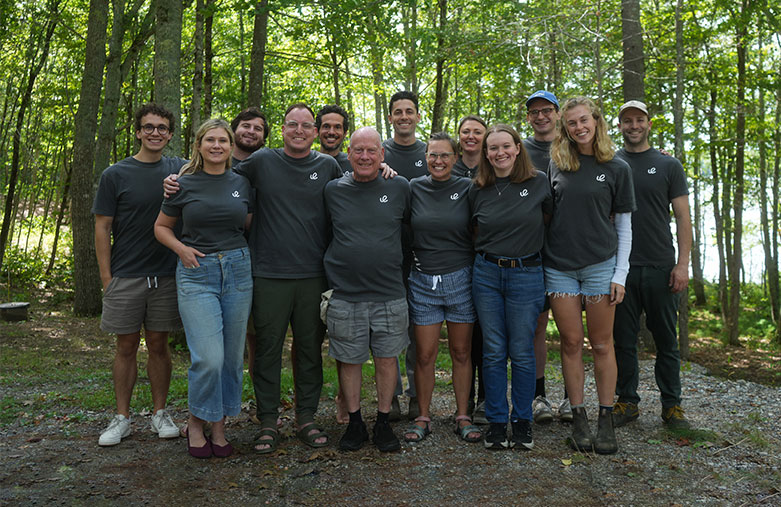



Happy Wednesday, this is Senior Editor Will Kaback. This time next week, we should have a solid idea of the balance of power in Congress and the country’s outlook for the next two years. I can’t believe November 3 is six days out, but it also feels like it’s still a year away. I’m looking forward to gathering in person with most of the Tangle team next week for our midterms coverage — and to digesting and analyzing the results with this community.
We’ve spotlighted several key contests in recent weeks, and today we’re focusing on the Maine Senate race. We wrote a lot about former Democratic nominee Graham Platner before (and immediately after) he dropped out, but this will be our first time covering the matchup between Sen. Susan Collins and Troy Jackson.
After we break down the race’s outlook, we tackle a reader question about Todd Blanche and Trump’s anti-weaponization fund. Then, a story on a surprising archaeological discovery.
It’s a 13-minute read.
Ari Weitzman, Audrey Moorehead, Carina Pacheco, Russell Nystrom, Isaac Wood, Isaac Saul, and Bailey Saul edited or contributed to today’s newsletter.
The hidden cost of the data-center boom.
In recent Tangle editions, we’ve covered artificial intelligence, AI hacks, data centers, data center moratoriums — if it’s related to the AI boom (or bubble), we’ve been on it. In our new YouTube video, Associate Producer Aidan Gorman follows another lead: Are utility bills going up to pay for data centers in other states? To find the answer, Aidan takes to the road and follows a new electric line from an existing coal plant in West Virginia through a planned substation in Maryland to data centers in Virginia. You can check it out here:
Our latest YouTube video
Quick hits.
- No party has emerged as the clear winner of Israel’s elections, with weeks of negotiations over establishing a governing coalition expected to follow. (The results)
- The State Department confirmed that Brazilian presidential candidate Flávio Bolsonaro and his family have fled the country for the United States and will be granted U.S. entry visas. (The update)
- A federal grand jury declined to indict former Trump White House aide Cassidy Hutchinson for allegedly lying to Congress about President Donald Trump’s actions on January 6, 2021. (The decision)
- The Federal Bureau of Investigation raided the Los Angeles home of a political donor linked to former Rep. Eric Swalwell (D-CA) as part of an investigation into the former congressman. (The raid)
- Centers for Disease Control and Prevention Deputy Director Jennifer Shuford announced she is stepping down in November after roughly four months in the position. (The announcement)
Here’s how to stop Google and ChatGPT from sharing your private info.
With a quick search, you’d be shocked to find out what anyone can find out about you on Google or ChatGPT. Your phone number, home address, and what you owe on your mortgage are just the beginning.
Anyone deeply researching can access details about your family members, health records, financial accounts, employment history, and even your Social Security number.
When you remove your sensitive data with Incogni, you reduce the risks not just from targeted marketing spam but also identity theft, financial manipulation, and insights into your most private circumstances.
And it’s easy and cheap with Incogni’s Unlimited plan. It will remove all that data for you, so that you’re safe from being found by simple Google search results or AI conversations.
Use code TANGLE today to get an exclusive 55% discount on unlimited removals from anywhere that exposes your data.
Today’s topic.
The Maine Senate race. In a Senate race that could determine the majority in the upper chamber, Democrat Troy Jackson holds a narrow polling lead over Republican incumbent Sen. Susan Collins in Maine. Democrats need a net gain of four seats to win a Senate majority, and Collins is the only incumbent Republican senator running for reelection this year in a state that Kamala Harris (D) won in 2024. The Cook Political Report, Inside Elections and Sabato’s Crystal Ball all rate the race a toss-up, but Jackson holds a 1.2-point lead over Collins in the most recent RealClearPolitics polling average. As of Wednesday morning, 220,000 Mainers have cast early votes in the election, with registered Democrats outnumbering Republicans nearly 5:2.
Back up: In July, Democratic candidate Graham Platner dropped out of the race after Jenny Racicot, a former girlfriend, accused him of raping her in 2021. Platner had won the Democratic primary in June with 72% of the vote. Delegates at a special nominating convention in Bangor chose Jackson to replace Platner on July 25.
Jackson, 58, is a former logger who first ran for office as a Republican in 2000 before becoming a Democrat in 2004. He served in the Maine Legislature for nearly two decades, spending six years as Senate president. His platform includes support for Medicare for All and ending U.S. military support for Israel, and he has pledged to reject corporate PAC money. Republicans have criticized Jackson’s progressive views and questioned his temperament, pointing to an incident in 1988 when he punched a man, reports of outbursts against his state Senate colleagues, and a recent debate moment in which he told Collins to “shut up.”
Collins, 73, is seeking a sixth term as senator. She has campaigned on her bipartisan credentials, seniority on the Senate Appropriations Committee, and opposition to President Donald Trump’s signature tax and spending law. However, critics have scrutinized Collins for not casting votes that meaningfully opposed the president. Also, in September, ProPublica reported that the FBI had planned to investigate her ties to a defense contractor whose former CEO went to prison over illegal donations to her campaign. Collins called the report false.
Maine is this cycle’s most expensive Senate race per capita, with roughly $200 million in ad spending. Republicans have spent close to $114 million, while Democrats have spent approximately $81 million. Outside groups account for 79% of all spending in the race.
Today, we’ll go over what the left and right are saying about the Maine Senate election. Then, Senior Editor Will Kaback gives his take.
|
What the right is saying.
|
In Fox News, David Marcus argued the race will determine “the future of the GOP.”
“If Troy Jackson does manage to topple Collins, the message to Republicans in Maine and New England will be that centrism doesn’t work, that they need bare knuckle brawlers more like Rep. Brandon Gill of Texas, than bipartisan peacemakers like Collins,” Marcus wrote. “[Some Republicans] see moderate Republicans as more of an obstacle than an asset. But most in the GOP concede that holding the Senate for Trump’s final two years in office outweighs the broader ideological intraparty fights.”
“Win, lose, or draw for Collins, in the future it will be younger Republican politicians… who will have to define what a Republican is in Maine, New England, and to some degree in America as a whole,” Marcus said. “If Maine Republicans can save Susan Collins once again, it will show that the GOP really can, at least in part, and unlike Democrats, embrace moderate and centrist positions — a point that could play heavily in their favor as both parties try to define themselves for the post-Trump age.”
In PJ Media, Matt Margolis said “Troy Jackson choke[d] in debate.”
“Collins crushed Jackson by exposing his thin legislative record, while he showed a lack of polish,” Margolis wrote. “She saved her one prepared question for the résumé he’s running on. ‘In your more than 20 years in the legislature, more than one third of your bills were unanimously rejected in committee… If you can’t find one person in your own party to vote for your bills when you were the Senate president in Maine, how do you think you’re going to get things done in a closely divided Senate as the most junior senator?’ she asked.”
“Collins spent the rest of the evening reminding voters what seniority buys them,” Margolis said. “Jackson is not an inspiring candidate, and he has put his foot in his mouth more than once. He ducked the question when asked whether he is a socialist, and he is out of step on voter ID… Democrats likely need to flip Maine to have any chance of taking the Senate, and polls show the race basically tied. But here’s the problem for them: past polling in Collins’ races often had Democrats up several points before she won handily. A tie suggests Jackson is in trouble.”
In USA Today, Nicole Russell suggested “Collins may have met her match in Maine.”
“Collins has trailed Jackson for weeks… She’s been through this before. In 2020, polls showed Collins trailing Democrat Sara Gideon, but she ended up winning by nearly 9 points,” Russell wrote. “Maine women could decide the race. In 2020, women made up nearly 60% of the electorate, according to NPR. They voted for Joe Biden for president by 23 points, but they also backed Sen. Collins, by 3. Jackson leads among women this time, though narrowly.”
“Abortion is an obvious point of contention, and Collins walks a tightrope on it. She supports abortion rights, but her 2018 Senate vote was crucial to Brett Kavanaugh’s confirmation to the Supreme Court,” Russell said. “But like the rest of the country right now, Maine voters, women included, seem more worried about affordability than abortion… On that issue, Collins’ ties to Trump could keep Jackson — who purports to be a champion of the working class, albeit while supporting contradictory policies — in a dead heat through Election Day.”
|
What the left is saying.
|
In The New Republic, Jason Linkins wrote “make Susan Collins pay for her big abortion lie.”
“Somehow or another, [Collins] has managed to carve out an identity for herself as a moderate Republican, despite being a Trumpist par excellence. She’s voted with Trump 92 percent of the time,” Linkins said. “But if there is one arena in which Collins’s mendacity shines, it’s in her unearned pro-choice pretensions… Collins was asked to account for her pivotal confirmation vote for Supreme Court Justice Brett Kavanaugh, whose presence on the high court all but ensured the gutting of Roe: ‘I’m very disappointed in his vote to overturn Roe v. Wade,’ Collins attested. ‘There was no way for me to anticipate that.’
“It’s pretty weird that this one Maine senator was unable to ‘anticipate’ something that the right has been working toward for the past half-century, building out an entire right-wing legal movement and funneling anti-abortion judges through the pipeline of the federal judiciary,” Linkins wrote. “How much more clarity does Susan Collins need? Hopefully, in a few short weeks, we won’t need to keep asking her.”
In Jacobin, Branko Marcetic said Collins’s record is “making injured workers’ lives harder.”
“Susan Collins has been the senator from Maine for twenty-nine years,” Marcetic wrote. “One of the most impactful measures on Maine workers that she took happened well before she first went to Washington. In an episode that’s little remembered today, in the late 1980s and early ’90s, Collins led the way on a set of reforms to Maine’s workers’ compensation system that saw the state government shut down for the first time in its history and led to major cuts to injured workers’ benefits.”
“Collins has carved out a reputation as a moderate in the Senate,” Marcetic said. “But as her early role in cutting benefits for injured Maine workers recalls, Collins has also had a long history as an ideologically driven servant of the business sector… If Collins survives another reelection campaign this November, it will be yet another Harry Houdini–like political escape for a politician adept at putting a moderate face on a record that has been devastating for US workers.”
In The Atlantic, Tyler Austin Harper described “the contradictions of Troy Jackson.”
“Jackson seems to be attempting to pair a left-leaning, economically populist package with ‘woke’ cultural ideals, which working-class voters tend to reject,” Harper wrote. “On economic issues, Jackson is in sync with the working-class and rural voters he says he is championing. Sixty-three percent of Americans without a college degree and 76 percent of those who make less than $50,000 a year say that the government should be responsible for ensuring health-care coverage, for example.
“On cultural matters, however, Jackson is out of step with many of those he claims to be giving a voice to. Most Americans without a college degree say that protecting gun rights is more important than gun control… These Americans are also more likely than college graduates to express negative views about illegal immigration,” Harper said. “If socialists and populists… are so wedded to progressivism that they do not compromise with the working class, the question is not simply whether such a left can win. The question is whether it truly remains left at all.”
|
||||
|
||||
|
Reminder: This is where we share a personal opinion. If you have feedback, criticism or compliments, leave a comment or reply to this email.
|

Maine is a state of 1.4 million people whose most populous city has less than 70,000 residents and whose identity, like its compatriots in nearby Vermont and New Hampshire, is defined by a fierce independent streak. It’s a land of blueberries and potatoes, mountains and thru-hikers, loggers and lobstermen, forests and ocean. It’s my birthplace, too — and where I spent formative seasons in the Midcoast and North Woods regions.
When you know and love a place like I do Maine, it’s odd to hear it discussed in a political context so divorced from your experience. But for the past year, beginning with the first of the Graham Platner controversies, the state has been at the center of contentious, high-stakes national stories, all of which are now coming to a head.
The winner of Troy Jackson vs. Susan Collins could determine control of the Senate and, by extension, the course of the country over the next two years. All of this comes on the heels of Platner, the original Democratic nominee, dropping out after a sexual assault allegation and Jackson taking his place in a hastily organized nominating convention. Collins, for her part, is battling for her political life after nearly 30 years in the Senate.
I think the polls showing the race as neck and neck are accurate, but I would give Collins the edge. I think of the Maine senator the same way Isaac thinks of Republicans in Texas: I expect she’ll win until she doesn’t.
Still, Collins faces significant headwinds. This is her first election since the Supreme Court struck down Roe v. Wade, and many pro-choice Mainers view her as at least partially responsible for that outcome because she voted to confirm Justices Neil Gorsuch and Brett Kavanaugh. She also voted to confirm some of the second Trump administration’s most controversial cabinet members, including Robert F. Kennedy Jr., Tulsi Gabbard, and Kristi Noem. And more recently, she’s been linked to an alleged pay-to-play scheme involving a top donor (she denies any wrongdoing and hasn’t been charged).
The electoral salience of these stories may vary, but her biggest problem might just be the national environment. President Trump’s approval rating has reached new lows, and in tight races across the country, Democrats are tying their opponents to the president’s record, while Republicans are trying to distance themselves from it. That dynamic applies in Maine, too: Jackson’s ads stress Collins’s voting alignment with Trump, while Collins positions herself as “America’s most bipartisan senator.” A defining question of this race is which message will be more persuasive.
And what does it mean to be “bipartisan and independent” in 2026? In many ways, it looks like Collins. GovTrack puts her almost squarely at the center of its Ideology–Leadership chart and reported that she joined bipartisan bills most frequently relative to the full Senate. A recent Bangor Daily News analysis found that, in her Senate career, Collins has cast 56 deciding votes resulting in the preferred Democratic outcome, the most votes by any senator against their own party from 1997–2026. In the 119th Congress, she’s broken from Republicans in 28.9% of votes. Along with Sen. Lisa Murkowski (R-AK), Collins has “walked the walk” most often on bucking her party.
At the same time, those numbers need context. For one, while 56 “decisive” votes with Democrats sound like a lot, they came over a roughly three-decade career — about two per year on average. In the second Trump administration, she’s voted with Democrats just four times on decisive votes and cast 19 deciding votes to confirm Trump nominees. Furthermore, not all votes are equally meaningful; for instance, she voted against the One Big Beautiful Bill Act, but only after casting an important procedural vote that helped it advance through the Senate. Breaking with the GOP on relatively minor matters (or when her vote won’t affect the outcome) helps burnish her independent image, but on the most consequential decisions — Supreme Court justices, cabinet nominees, tax cuts — she usually sticks with her party. Collins has the numbers to back up her claim to bipartisanship, but I doubt that will mean much to voters who only remember her most impactful votes.
With all this being said, I give Collins the edge in this race because I think she has an advantage that’s rarely discussed in national coverage: her influence in Congress. Collins is the current chair and longtime member of the Senate Appropriations Committee, a position she’s used to secure huge federal investments in Maine’s roads, bridges, ports, airports, water systems and broadband networks, as well as funding for rural hospitals, biomedical research, and health care workforce development.
Having her in the Senate — especially when Republicans are in the majority — means having a powerful advocate capable of helping the state punch above its weight. To me, this value proposition explains Collins’s staying power more than anything else, and it makes her formidable regardless of the national environment. For all the focus on how Trump, Platner, the economy and cultural issues have shaped the race, it could come down to fundamental self-interest and which candidate is best equipped to do the work of representation.
Even though I see Collins as the favorite, Jackson still has a very realistic path to victory. On paper, he offers many of Graham Platner’s positive traits without the controversy. As a logger and lifelong resident of the tiny town of Allagash, Maine, his working-class roots run deep. He’s a progressive whose campaign is focused on affordability, Medicare for All, abortion access, and strengthening unions. And he’s adopted much of Platner’s stick-it-to-the-man messaging.
And yet, in crucial ways, he’s missing Platner’s strengths. For all the former candidate’s flaws, Platner was a genuine force in the primary — friends in Maine of varying political stripes frequently told me about how Platner felt energizing and distinct. Even after he dropped out, I saw “Platner for Senate” signs lining the road in solidly conservative Piscataquis County this summer. He packed rallies, won support from high-profile elected Democrats, and trounced the sitting governor in the primary. Jackson isn’t that person; he’s an acceptable substitute in an unusual situation but not someone who could have won the nomination on his own. As Tyler Austin Harper (under “What the left is saying”) noted, Jackson’s campaign has tried to raise his national profile, but it hasn’t figured out how to package his progressive beliefs with the moderate, man-of-the-people image required to win in a competitive state like Maine. Their efforts often come off as cringey and inauthentic.
The question for Jackson, then, is whether he can do enough to capitalize on the favorable national environment and voters’ desire for a change after three decades with Collins. The incumbent senator has built a career on surviving challenging circumstances. If any Republican is positioned to pull off a battleground win on a night that could otherwise go well for Democrats, it’s Susan Collins.
Take the survey: Who do you think will win? Let us know.
Disagree? That’s okay. Our opinion is just one of many. Write in and let us know why, and we’ll consider publishing your feedback.
Your Personal Data Is One Search Away From Anyone
A quick search reveals what strangers can find about you — phone number, home address, mortgage details, even family members and financial accounts.
Incogni’s Unlimited plan removes your sensitive data from Google and AI results, protecting you from identity theft and targeted scams.
Your questions, answered.
I recently saw a social media post from a legal “expert” who said that the $1.776 billion weaponization reimbursement fund may not be dead, even though Todd Blanche assured members of Congress it was. Their reasoning was:
“Since it was a settlement/agreement between two parties, both parties have to agree and sign off on any changes to the settlement. Blanche has only said it was dead, nothing has been signed or filed.”
Sounds like it was a ploy/sound bite to get him through confirmation, but is not truly dead?
— Troy from Garfield, MN
Managing Editor Ari Weitzman: First, here’s a quick refresher on this saga: In January, President Donald Trump, with his sons and the Trump Organization, sued the Internal Revenue Service for $10 billion after their tax information was leaked. In May, the Department of Justice (DOJ) settled the case by agreeing to create a new $1.776 billion anti-weaponization fund to give monetary relief to people who have suffered from lawfare. In August, after pushback from Republican members of Congress, and ahead of a vote to confirm him as attorney general, acting Attorney General Todd Blanche officially rescinded the fund.
However, the end of “Citizen Trump v. Trump Administration” may not mean the anti-weaponization fund is fully dead. At least that’s the logic used by Judge Leonie Brinkema in the Eastern District of Virginia, who noted that Blanche had not said under oath that the fund was abandoned and blocked the fund from being implemented in June. She kept that order in place after Blanche issued a written order rescinding the fund, reasoning that the DOJ could find other ways to reinstate previously blocked funds to provide settlements for those convicted on January 6th.
As it stands, with Judge Brinkema’s block in place (and a separate investigation underway), the anti-weaponization fund looks highly unlikely to be reinstated. It’s possible that Attorney General Blanche only killed the fund to get the votes of outgoing Republican Sens. Thom Tillis (NC) and John Cornyn (TX), but that would be quite the gambit. It would mean Blanche was planning to reinstate a massively unpopular fund in the future, with a likely more hostile Congress, against a judge’s order, and despite an ongoing investigation into the settlement.
It’s possible that the acting attorney general wanted to give his boss wiggle room to pursue the fund, but I doubt it was a “ploy” that he meant to overturn later — even after being confirmed, he wouldn’t have the authority to approve it carte blanche (sorry, I couldn’t resist). More likely, Blanche killed the fund so he could get Senate approval and to allow Trump to extract some other form of favorable settlement from the lawsuit.
Want to have a question answered in the newsletter? You can reply to this email (it goes straight to our inbox) or fill out this form.
The extras.
- One year ago today we covered the $40 billion Argentina bailout.
- The most clicked link in our last regular newsletter was our sponsored article about seven things to avoid spending money on.
- Nothing to do with politics: Huck some disc in this pixel-art ultimate frisbee game.
- Our last survey: 2,273 readers responded to our survey on President Trump’s $8 billion aid program for farmers, with 58% saying the aid will help farmers in the short term but not the long term. “In the long term, encouraging poor farming practices increases prices and postpones the inevitable,” one respondent said. “We need a completely new approach to our agricultural programs here in the United States, but I just don’t see how that’s going to happen without some serious disruption to our food supply and our production and processing mechanisms,” said another.

Have a nice day.
The Lismore Historical Society of Lismore Island, Scotland, hoped that an archaeological dig at the site of a 13th-century cathedral could teach them more about their island home’s history. Using community funding, grants and donations, archaeologist Dr. Clare Ellis led a dig surrounding the site — and discovered evidence of a much older monastic community. Archaeologists now believe they’ve discovered the site of Lios Mór, a major 6th-century monastery that had previously been lost to legend. “It’s not always the community themselves coming up with the ideas [for archaeological discovery],” University of Aberdeen professor Gordon Noble said. “Here, it was very much a bottom-up approach of the heritage society coming up with a plan, working with professionals — and lo and behold, what a great series of discoveries they’ve made at the site.” The Guardian has the story.

Member comments