





Happy almost weekend. I’m Isaac Saul, packing my bags to head to Cleveland, Ohio, tonight. I’ll be at The City Club on Friday at 11:00 AM ET — a great honor bestowed on past presidents, activists, and journalists alike — for a live interview by NPR reporter David Folkenflik. If you want to come out in person or watch via livestream, check it out here.
In the meantime, Israel just had its elections. It’ll take weeks of wrangling for the next government coalition to come into focus, but we’ve got enough information to break down what just happened. Plus, an under-the-radar story about the death of a federal judge and its impact on a huge, global trial. It’s a 12-minute read.
Ari Weitzman, Will Kaback, Audrey Moorehead, Carina Pacheco, Russell Nystrom, Isaac Wood, and Bailey Saul edited or contributed to today’s newsletter.
Election night coverage.
This Tuesday, Tangle’s hosting an evening of midterm elections coverage, sponsored in part by the folks at Incogni. Executive Editor Isaac Saul and our team will break down the results as they come in and welcome guests like Adam Mockler, Batya Ungar-Sargon, Dave Weigel, Noah Rothman, and more. We’ll be livestreaming from our YouTube channel, so check in here at 7:00 PM ET on Election Night.

Isaac will also be joined by Managing Editor Ari Weitzman and Editor-at-Large Kmele Foster for part of the night, as he is every week for the Suspension of the Rules podcast. This week, the three discussed the breaking news out of Alaska, some viral Midterm campaign moments, and what ballot initiatives have caught their eyes. Listen to or watch the latest episode!
Quick hits.
- The Federal Open Market Committee voted 10–2 to leave the central bank’s benchmark interest rate unchanged at 3.75%–4.00%. The two dissenting policymakers voted to raise the rate by 0.25%. (The vote)
- A district judge ruled against the Trump administration’s effort to separate 20,000 mail-in ballots in California it believes were sent to noncitizens, finding the act would “threaten an ongoing election due to unproven allegations.” (The decision)
- The New York Times reported that operatives supporting Alaska Senate candidate Mary Peltola (D) and senior aides at the Democratic Senatorial Campaign Committee worked to recruit candidates named Dan Sullivan to undermine Sen. Dan Sullivan’s (R) reelection campaign. (The report) Following the report, President Donald Trump called for Peltola to be criminally charged and removed from the ballot. (The response)
- A high-speed train collision in Spain killed at least 68 people and injured dozens more. The incident is the second high-speed train accident in Spain in 2026. (The crash)
- Defense Secretary Pete Hegseth reportedly removed Lt. Gen. Brett Sylvia, a top adviser to Joint Chiefs of Staff Chairman Gen. Dan Caine. (The removal)
“Follow your passion.” “Go with your gut.” Career advice is full of slogans; almost none of it is based on evidence. Much of it is actively harmful, and as a result, many people are squandering their impact.
80,000 Hours is the first book to look at what the data actually says about having a fulfilling and impactful career. It covers why “follow your passion” gets things backwards, which skills will increase in value in the age of AI, and why the highest-impact work is in areas most people have never considered.
Get your free copy of their in-depth career guide at 80000hours.org/tangle.
Today’s topic.
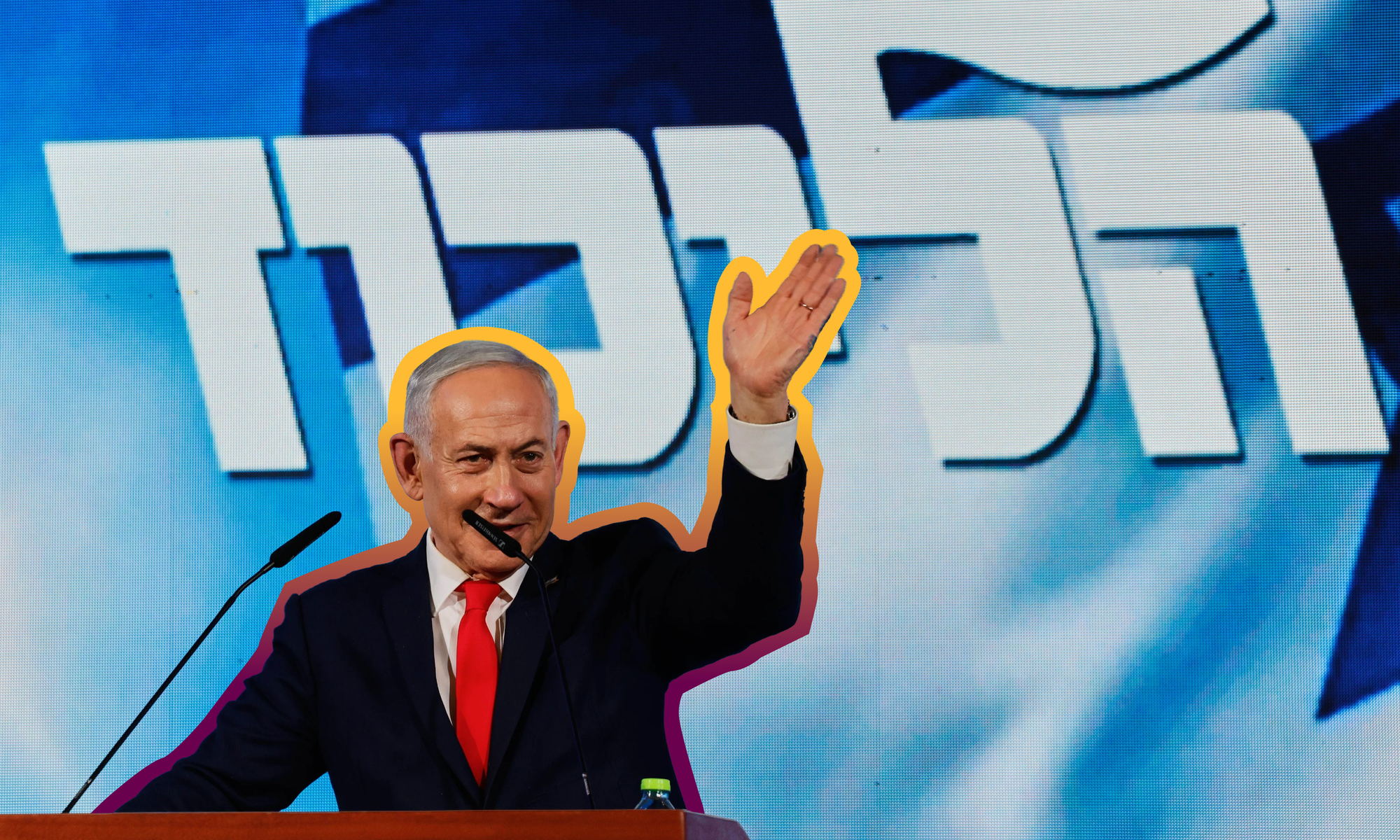
Israel’s elections. On Tuesday, Israel held its first elections since Hamas’s October 7 attacks in 2023. With approximately 96% of ballots counted, Israeli Prime Minister Benjamin Netanyahu’s Likud party has won more seats than any other party in Israel’s Knesset but will fall short of the 61 seats needed for a majority. The results set the stage for what is expected to be weeks of negotiations over a new governing coalition and Netanyahu’s future.
Back up: Elections for the Knesset, Israel’s parliament, are held every four years. As with other parliamentary systems, individual representatives do not run for office directly; instead, national parties are assigned seats proportional to the share of the vote they receive. No Israeli party has ever won an outright majority, so party leaders must agree to a coalition government and choose a prime minister. The sides have roughly 100 days to form a government. If that process fails, Israel must hold another election within 90 days of the deadlock.
Netanyahu’s current coalition includes far-right and ultra-Orthodox Jewish leaders who have been outspoken advocates for Israeli military operations in Gaza and across the Middle East after October 7. The prime minister’s main competitor is former Israeli military Chief of Staff Gadi Eisenkot and his center-right Yashar party. Two parties predominantly representing Arab Israelis made significant electoral gains and may now attempt to join a governing coalition.
The election’s key issues included policy toward Palestinians and Iran, exemptions from mandatory military service for ultra-Orthodox Jewish men, and judicial reform. It was also viewed as a referendum on Netanyahu’s leadership pre- and post-October 7, as well as his handling of Israel’s multi-front regional conflicts.
Currently, pro-Netanyahu parties are projected to win 53 seats, while opposition parties are expected to win 48. Roughly 78% of eligible voters participated, the highest share since 1999. Arab Israeli voters, in particular, turned out at above-average rates, and the Arab-led parties Ra’am and the Joint List are projected to win 19 combined seats in the Knesset. On Wednesday, Eisenkot said the high turnout should push party leaders to reach a governing agreement, saying, “It would be a mistake to hold another election.”
Also on Wednesday, Netanyahu claimed that Arab parties had “stolen” the election and called for investigations into “election theft in many Arab polling stations.” Israel’s Central Elections Committee said it is reviewing all election-fraud allegations.
Today, we’ll share views from the left, right, and Israeli writers on the elections. Then, Executive Editor Isaac Saul’s take.
|
What the left is saying.
|
In The New York Times, Ezra Klein said “Netanyahu won the Middle East and lost the world.”
“Most Israeli Jews now see the world the way Netanyahu has long seen it. That is Netanyahu’s great victory. But it is matched by his great loss: Much of the world now sees Israel the way Gazans see it,” Klein wrote. “More limited counterterrorism approaches would have allowed Israel to hunt Hamas’s leaders without squandering the sympathy and horror the world then felt on Israel’s behalf. Restraint would have kept the focus on Hamas’s attack.
“But Netanyahu wanted to risk more to achieve more. He flattened Gaza in search of a nebulous ‘total victory’ over Hamas — a goal prioritized over the lives not just of Gazans but of the Israeli hostages,” Klein said. “For all the damage Israel has meted out against its enemies, the Iranian regime stands. Hezbollah stands. Hamas stands. And America’s special relationship with Israel is drawing to its end.”
In Bloomberg, Marc Champion wrote about a “test [on] Israel’s democracy.”
“Two things can be said about Israel’s election on Tuesday, even though it may be days or weeks before it becomes clear who will next lead the country,” Champion said. “The first is that, as an exercise in participatory democracy, this vote was immense. An unprecedented 77% of eligible voters cared enough to vote in what amounted to a referendum on Prime Minister Benjamin Netanyahu’s responsibility for, and response to, the Hamas attack of Oct. 7, 2023.
“The second is that this democracy could well be extinguished depending on what happens next,” Champion wrote. “A different government could halt Netanyahu’s assault on democratic institutions, in particular the courts, as well as his administration’s incitement of Palestinians through violence, and the aggressive settlement policies that are removing options for some form of peaceful coexistence… This choice is binary. It will decide which Israeli state — the secular-democratic whole or the Jewish, majoritarian one — is to be the actual Israel.”
|
What the right is saying.
|
The New York Post editorial board said “Israelis have delivered their verdict.”
“Projections early on election night showed Netanyahu’s coalition with fewer seats than the ‘ditch Bibi’ alliance,” the board wrote. “Obama-era officials and armchair ‘experts’ jumped to declare that Israelis had delivered a ‘rebuke’ of Netanyahu and his war strategy. Within hours, the results were reversed: Israelis had rallied behind their prime minister; the opposition… appears to have depended too heavily on the hopes of Netanyahu-haters in the media and abroad.”
“Netanyahu should take one result to heart: The Arab parties did extraordinarily well. That refutes claims of ‘apartheid,’ but it also sends a message that hateful rhetoric from far-right Jewish politicians, and vigilante actions by extremist settlers, must end,” the board said. “In the end, Netanyahu prevailed because voters respect strength. He defeated Hamas and Hezbollah, brought back the hostages, and put Israel back on a path of economic growth. Regardless of who governs in the end, the Israeli people back Netanyahu’s tough approach to Iran.”
In the Washington Examiner, Eric Wargotz argued against “tearing [the Israeli government] down right now.”
“Almost everyone seems to agree that it is time for a change in [Israel’s] leadership. Critics are loudly calling for a new government to heal the country’s social fractures, mend broken trust, and move past recent trauma,” Wargotz wrote. “That frustration makes sense. However… forcing a sudden political shake-up during a massive, multifront war is dangerous. In a true crisis, national survival and critical U.S. strategic interests both depend on stability.
“We must keep the current command structure intact while aggressively fixing mistakes from within… If the current government drops, it will likely be replaced by an unstable mix of opposition parties,” Wargotz said. “Spending months arguing over how to build a new coalition creates a dangerous power vacuum. During that gap, major military choices, joint intelligence work, and delicate hostage talks get stuck in political limbo. This paralysis directly undermines U.S. operational planning in the region, and Israel’s enemies will instantly exploit the hesitation.”
|
What Israeli writers are saying.
|
In the Middle East Eye, Meron Rapoport called the election a “wake-up call.”
“The Palestinian citizens of Israel have taught the liberal secular Zionist camp a lesson. These opposition parties were under the illusion that they could win a majority by being nationalistic, opposing the ultra-Orthodox community and associating themselves with the military. Now it is very clear that they cannot win an election without the Arabs,” Rapoport wrote. “This may open an understanding among the Jewish secular liberal camp.”
“It has two choices: live forever under Netanyahu or someone of his ilk or come to an understanding with the Arab parties and voters,” Rapoport said. “It is too early to say what will happen. The success of the Palestinian parties could prompt the right wing to do everything in its power to make sure Arab voters cannot impact elections like these ever again… Or, the liberal secular camp can turn away from its racist heritage.”
In The Jerusalem Post, Shir Perets said “it’s time to set ego aside.”
“There are some ideals we cannot stray from in a post-October 7 world, and the next Knesset cannot set itself up to be held hostage by one faction,” Perets wrote. “The solution is simple: Eisenkot and Netanyahu must set their differences aside to form a true unity government… Such an arrangement would require significant compromises from both leaders, who have spent the campaign presenting competing visions for Israel's future.
“[Their] differences cannot simply be dismissed as personal animosity or political ego. They concern fundamental questions about accountability, democratic institutions, national security, and the direction of the state,” Perets said. “The coming negotiations will test not only the two leaders’ willingness to compromise, but also whether their respective parties and potential coalition partners are prepared to accept such an arrangement… We voted for peace and unity. It's up to them to deliver it.”
|
||||
|
||||
|
Reminder: This is where we share a personal opinion. If you have feedback, criticism or compliments, leave a comment or reply to this email.
|

In a lot of ways, it’s hard for me to understand how Benjamin Netanyahu has survived.
Many Western writers look at these Israeli elections solely through the lens of the events in Gaza — the debate over what constitutes a genocide or ethnic cleansing, Netanyahu’s culpability, and the ramifications of Israel’s response to October 7. I think Ezra Klein (under "What the left is saying”) put this Western perspective perfectly: “Most Israeli Jews now see the world the way Netanyahu has long seen it,” but “much of the world now sees Israel the way Gazans see it.”
This rings true for me.
Meanwhile, within Israel, a single perfect line to describe the electorate’s enduring support of Netanyahu is elusive. Even if Israelis have adopted the prime minister’s view of this moment — that Israel is isolated, surrounded by enemies on multiple fronts, and must respond to any threat with absolute force — how is he the leader Israelis are turning to? Netanyahu allowed the greatest security failure in modern Israeli history to happen on his watch. The attack was carried out by a group Netanyahu has been propping up for years in an effort to divide Palestinians. His excuse was, essentially, “I was sleeping.”
From a purely political standpoint, consider Netanyahu’s actions since: He has blocked investigations into the events of October 7, denied responsibility, and deflected blame onto others. In the wake of October 7, Israel has been thrust into — as Netanyahu himself has put it — a “seven-front war.”
Safety and security, this is not. Yet Benjamin Netanyahu survives.
His popularity is particularly tough to reconcile given his chief opponent in this race. Gadi Eisenkot is not some peace-and-love lefty Israeli. He is a former general. He shares many of Netanyahu’s hawkish views, including that shows of force — even in civilian areas — can be powerful deterrents. He is now staunchly opposed to any Palestinian state and promised, if his party took power, to propose a plan to remove Hamas from power within 18 months.
At the same time, Eisenkot is also one of Netanyahu’s staunchest and most credible critics. He was the IDF’s chief of staff from 2015 to 2019, and he joined the emergency war cabinet after Hamas’s October 7 attack in 2023. Once he got an inside look at Netanyahu’s operation, he left the cabinet and called out the lack of a post-war strategy. He alleged Netanyahu was prolonging the war for his own political survival (a theory I’ve also espoused in Tangle) and criticized him for not making a deal to release the hostages sooner. He also claimed Netanyahu was “shaking like a leaf” after the attacks, frozen in fear and unsure of what to do.
Even starker is the contrast of the war’s impact on the two. Eisenkot’s children fought in the war, and one of his sons was killed (he also lost two nephews). The eulogy he gave at his son’s funeral was aired across the country and became a symbol of the pain many Israelis were experiencing in the immediate aftermath of Hamas’s attack.
Imagining that this person would place behind Netanyahu, whose eldest son is a notorious internet troll and podcast host who spends most of his time in Miami, doesn’t comport with my basic understanding of electoral politics. Which of these people is going to better connect with the Israeli public? Which of these people is a real security leader?
According to the Israeli electorate, it’s Benjamin Netanyahu.
Like any political phenomenon, Netanyahu’s survival can’t be attributed to one thing. Some have pointed to the fact Eisenkot is a Mizrahi Jew, of Moroccan descent, and would have been the first non-Ashkenazi Jew to become prime minister. I’m sure that impacted the way he connected with voters, and Netanyahu’s media allies have made it a story.
Others point to the ultra-Orthodox wing of Netanyahu’s coalition trying to avoid military enlistment. Netanyahu has said it’s an issue to resolve post-coalition building; Eisenkot has made clear he wants them to serve like everyone else.
Most likely, though, is that I am just disconnected from the mood on the ground in Israel, which is in favor of a “no-compromise” war. I’ve written a lot about struggling with my identity as a Zionist Jew in the post-October 7 world — how radicalized the right wing of Israel’s politics has become, and how the collective punishment of Gazans in response to the October 7 attacks (and the support for that response) has made me feel distant from people whom I used to align myself with. I haven’t set foot in Israel since I lived there in 2013, but it’s clear to me the mindset of Israelis has undergone a radical change. I get it; my mindset as an American Jew, with more awareness of the threats around me, has changed, too.
With that obstinate mood in Israel, Eisenkot’s relative level-headedness might be a weakness. One of the things Eisenkot is most famous for is his insistence, in 2016, on investigating an Israeli sergeant who shot and killed a wounded Palestinian attacker in Hebron. Other politicians wanted to shut the investigation down, but Eisenkot insisted a trial and investigation were necessary for the integrity of the IDF. He’s also opposed illegal settlements in the West Bank, calling out “Jewish terrorism,” and has said there must be a state investigation into how October 7 happened.
To me, all of this indicates a man with a moral compass who cares about the integrity of the Israeli government and has the integrity to be a leader. But to many Israelis, it probably indicates softness — a pliability — that isn’t fit for this moment. Eisenkot has portrayed the image of a warrior and unifier, while Netanyahu has portrayed a no-mercy belligerent ready to take on the world. He can certainly argue his merciless attitude has worked: Israel just had its first 12-month span this century without a single rocket being fired from Gaza. It enlisted the U.S. in its war with Iran. It has devastated Hamas and beaten back Hezbollah in Lebanon. Netanyahu is running on these positive outcomes he achieved through maximum force. And a plurality of Israelis just showed us which image is connecting with them more in this moment.
Of course, this wasn’t a two-man race. The Arab-Israeli bloc turned out in historic fashion, which Netanyahu has responded to with the Trumpian play of alleging fraud (the turnout is historically high, but I suspect that’s due to the rampant anti-Arab sentiment being promulgated by Netanyahu’s coalition, not fraud). Aside from reminding the West that Israel is a messy, pluralistic state with many ethnicities and faiths participating in the democratic process, the Arab-Israeli turnout could force some uncomfortable coalition building and compromise in the coming weeks. The opposition bloc and Arab parties easily outnumber Netanyahu, yet Eisenkot would never partner with them wholesale. So how many Arab parties is he willing to partner with? And can he maintain his support through those negotiations? After everything that’s been said, would he consider a unity government with Netanyahu as an alternative?
Predicting how these coalitions will form is genuinely beyond my understanding of Israeli politics (or anyone’s, frankly). But I do understand that today, in one of the highest turnout elections in Israeli history, voters had a choice to end Netanyahu’s multi-decade grip over their country’s politics. After everything we’ve seen, I hoped they might decisively choose it — they didn’t, and the future now depends on a closed-door coalition arithmetic that nobody can predict.
Take the survey: What do you think of the election result? Let us know.
Disagree? That’s okay. Our opinion is just one of many. Write in and let us know why, and we’ll consider publishing your feedback.
Under the radar.
Alvin K. Hellerstein, a senior judge of the U.S. District Court for the Southern District of New York, passed away on Wednesday at 92 years old. President Bill Clinton appointed Hellerstein; the judge served on the bench from October 1998 until his death and oversaw a series of cases in the aftermath of the 9/11 attacks. More recently, Judge Hellerstein presided over the case of Venezuelan President Nicolás Maduro following the leader’s capture and extradition to New York City. Maduro’s case was reassigned on Wednesday, at random, to Judge Analisa Torres of the Southern District of New York. The New York Times has the story.
You’ll spend roughly 80,000 hours of your life working. That makes your choice of career one of your most important decisions.
80,000 Hours is a nonprofit that’s spent over a decade researching the question: How can you find a fulfilling career that does good? Everything they provide is free, forever.
Get your free copy of their in-depth career guide at 80000hours.org/tangle.
The extras.
- One year ago today we covered the NBA gambling scandals.
- The most clicked link in our last regular newsletter was our new YouTube video on the hidden impacts of the data-center boom.
- Nothing to do with politics: The Milwaukee Brewers won their first World Series on Wednesday. Here’s the final out.
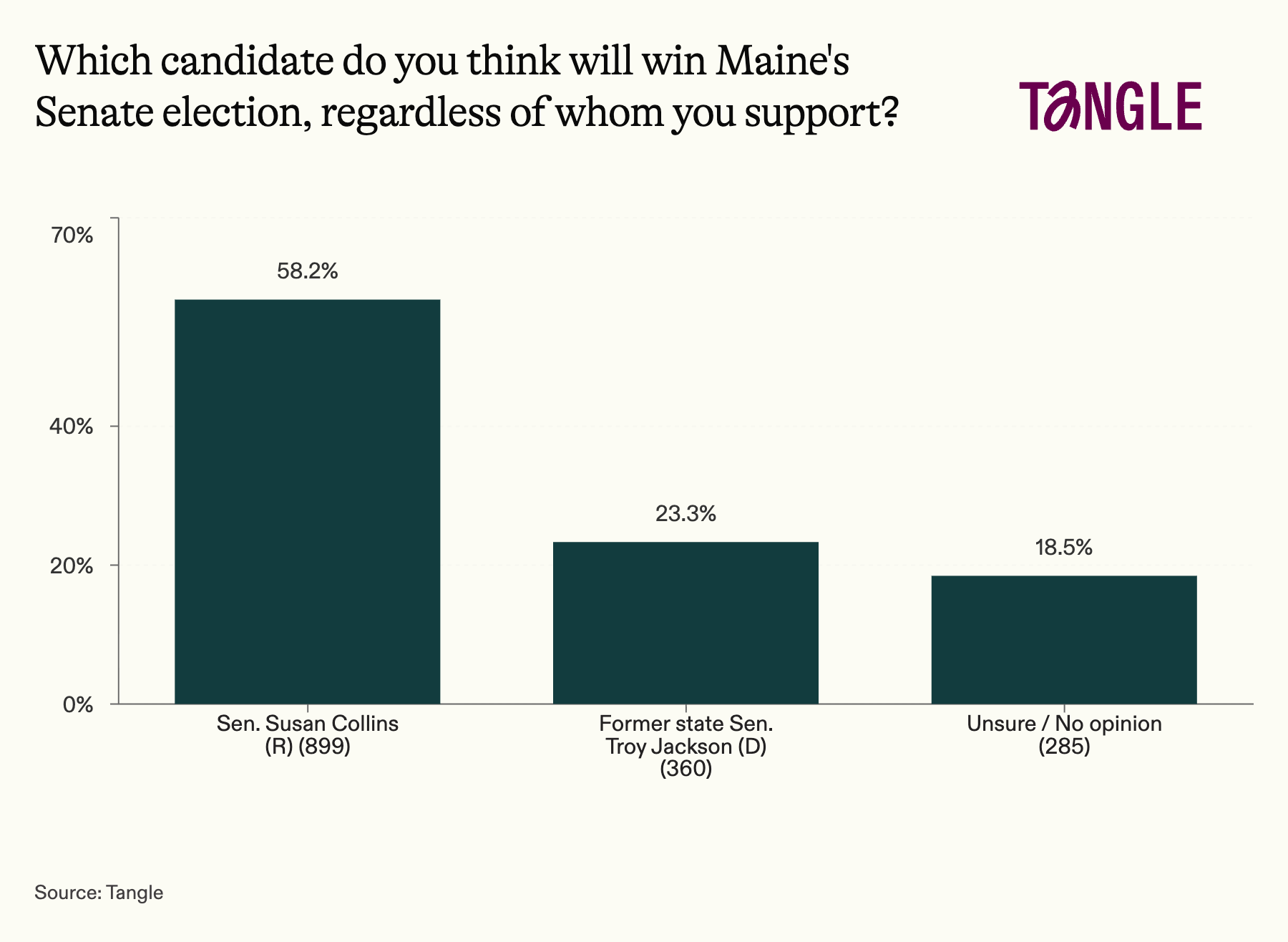
- Our last survey: 1,544 readers responded to our survey on Maine’s Senate race, with 58% saying they think Sen. Susan Collins (R) will win reelection. “Sen. Collins’s position on the Appropriations Committee has proven a real boost for Maine. Voters love politicians who can actually bring home the bacon,” one respondent said. “Jackson will win. Trump fatigue will elevate him above his challenges,” said another.
Have a nice day.
The city of Carmel, Indiana, is recognizing the heroism of two of its younger residents: Maddox Larger, 15, and his brother Grant, 14. The boys saw an older woman struggling with her two grandchildren near the edge of a retention pond; her two-year-old was in a stroller that had partly sunk into the pond while her 4-year-old grandchild was strapped to her back. The brothers jumped in and pulled the grandmother and the older child to safety. Maddox then dragged the stroller out of the water and unbuckled the toddler, who wasn’t breathing, and administered back slaps until the child started breathing again. Carmel will honor the brothers at its Nov. 16 council meeting. “Their heroic efforts made the difference between a tragedy and a miraculous outcome,” police Sgt. Matt Keinsley said. WTHR has the story.

Member comments