



Good Wednesday morning. I’m Isaac Saul, Tangle’s founder and executive editor, and I believe this is the first time in seven years that I haven’t written a “My take” until Wednesday morning (at least, that is, when I haven’t been on vacation or paternity leave). That’s a testament to my astute colleagues who wanted to step into the arena for our first two topics this week, and it’s left me with plenty of pent-up writing energy I’m excited to deploy today. The timing is good, because we have a complicated and consequential Supreme Court ruling on mail-in ballots to jump into.
Separately, we have a new YouTube video about Flock cameras, plus an under-the-radar story on the State Department potentially revoking 200,000 visas. It’s a jam-packed 14-minute read.
All about Flock cameras.
A few months ago, you may not have heard of them at all. Now, Flock cameras are everywhere — especially in Northern Virginia, where Associate Producer Aidan Gorman lives. In our latest YouTube video, Aidan takes a trip around his neighborhood and talks with law enforcement to investigate the reach and presence of Flock cameras.
Check it out here:
We look into Flock cameras for our latest video
Quick hits.
- Sen. Darline Graham (R) won the runoff in the special primary to select a Republican candidate for South Carolina’s Senate race. Graham was appointed to serve the remainder of her brother Lindsey Graham’s (R) term and is running for a full six-year term. (The result)
- Central Intelligence Agency Director John Ratcliffe traveled to Moscow, Russia, on Tuesday. The U.S. has not commented on the purpose of the visit, but a Kremlin spokesperson said Ratcliffe met with Russian intelligence officials. (The visit)
- Pennsylvania health officials said two unvaccinated people who had been infected with measles have died, the first measles-related deaths in the United States this year. (The deaths)
- The Department of Homeland Security’s inspector general’s office found that a Federal Emergency Management Agency crew broke the law in 2024 when it skipped 11 homes with signs supporting then-candidate Donald Trump while taking part in Hurricane Milton recovery efforts. (The report)
- Meta agreed to a $16.7 billion settlement with a coalition of state attorneys general to resolve a case concerning harms to children and teens allegedly caused by the company’s social media platforms. Meta must also make several changes to its apps’ functions as part of the agreement. (The settlement)
One Subscription Isaac Actually Uses
Hey, it’s Isaac. I love to cook, and I’m addicted to the grill and my crock pot — I’m always looking for fun new recipes to try. ButcherBox makes it easy, delivering high-quality meat right to your door. There’s plenty of room to customize your box, switch things up month to month, or even let them surprise you with a few picks.
The quality is excellent, the convenience is hard to beat, and having a freezer stocked with steaks, burgers, and chicken makes an impromptu summer barbecue considerably easier.
It really is one of the few subscriptions I genuinely value.
Today’s topic.
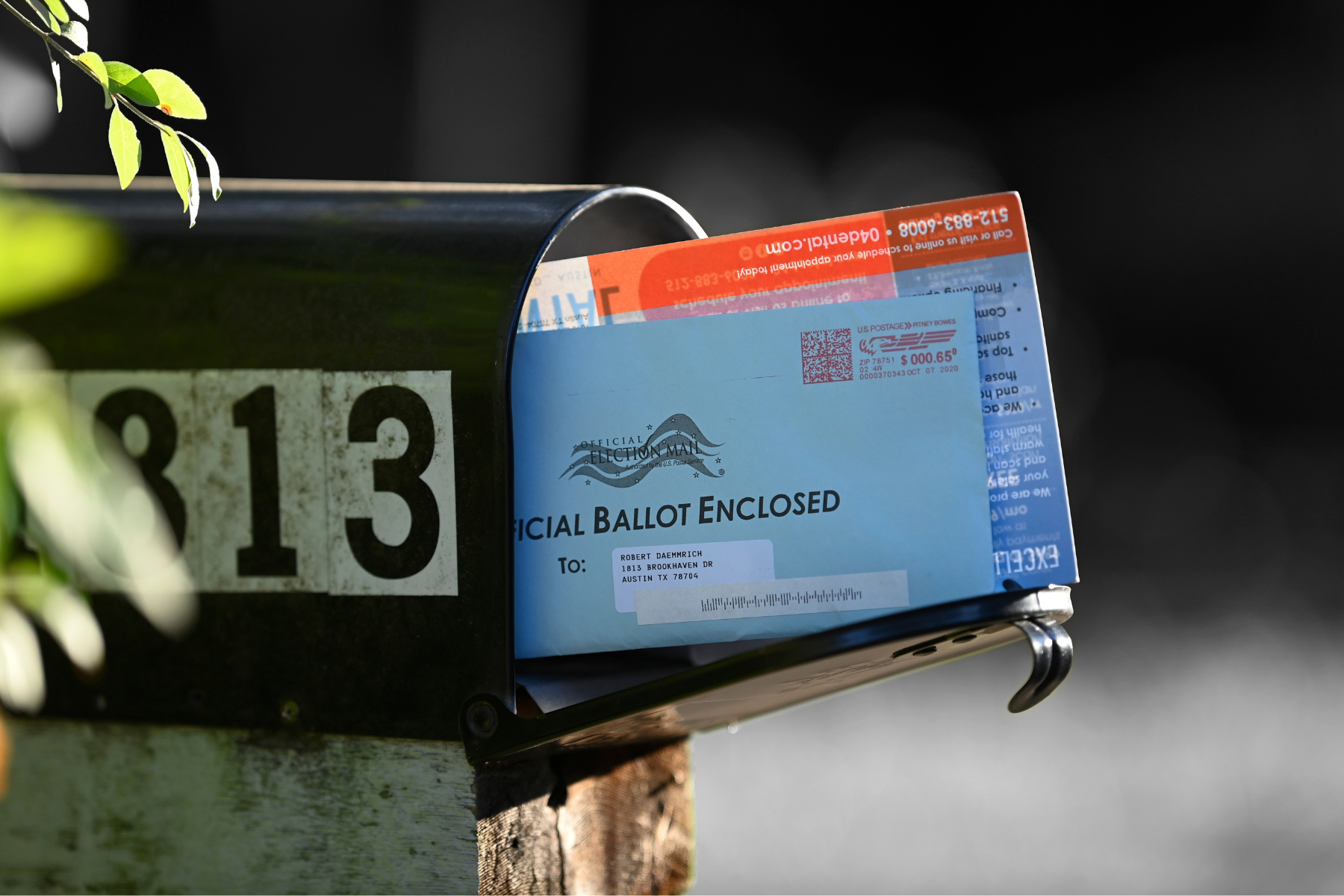
The Supreme Court’s latest mail-in voting decision. On Monday, the Supreme Court stayed a federal injunction on President Donald Trump’s executive order requiring the U.S. Postal Service (USPS) to change its rules for mail-in ballots. The Court’s unsigned opinion did not address the legality of the executive order; instead, the Court found that the states challenging it lacked standing to do so. The three Democratic-appointed justices dissented. A separate injunction blocking implementation of the executive order remains in place. In compliance with President Trump’s order, on August 21, USPS published a finalized rule specifying it would not deliver mail ballots in states that do not share voter data with it.
Back up: On March 31, President Trump issued Executive Order 14399, directing the Department of Homeland Security to maintain lists of eligible voters in each state. Separately, the order requires USPS to receive a list of eligible mail-in voters from each state before transmitting that state’s mail-in ballots. In June, following a challenge from 23 states and Washington, D.C., District Court Judge Indira Talwani blocked the order’s implementation in those jurisdictions. The First Circuit Court voted 2–1 to uphold Talwani’s order in July; the Trump administration then appealed to the Supreme Court to stay the injunction. Judge Talwani issued a second ruling barring USPS from taking steps to implement the executive order on August 11.
In Monday’s opinion, the majority sided with the Trump administration, writing that the injunction was premature because the states had challenged the order before USPS implemented it. The majority wrote that the states’ claims of harm relied upon an insufficient “chain of inferences.” However, the majority also said that “if the Postal Service’s final rule harms the States, they may challenge that rule,” and noted that its decision did not mean “that any measure taken by the Government to implement the Order will necessarily be lawful.”
Justice Sonia Sotomayor wrote a dissenting opinion, joined by Justice Elena Kagan; Justice Ketanji Brown Jackson issued a separate dissent. Justice Sotomayor argued that “the respondent States have standing based on the credible threat that the Government will initiate investigations and prosecutions because they refuse to use the lists.” Justice Jackson wrote that the majority’s decision conflicts with the Court’s Purcell principle, a standard establishing that courts should not interfere with election law shortly before elections to avoid confusion.
Judge Talwani’s second injunction against USPS remains in effect. On Tuesday, the judge ruled that USPS’s finalized rule issued last week violated that injunction.
Below, you’ll hear from the right and left about the Supreme Court’s decision. Then, Executive Editor Isaac Saul gives his take.
|
What the right is saying.
|
In PJ Media, Stephen Kruiser said the ruling “preserve[s] a modicum of sanity.”
“Anything to combat the fraud potential of vote-by-mail is helpful, and this is a good start,” Kruiser wrote. “I'm a tough sell on this issue because I would prefer that the pool of people who are eligible to vote via the mail be drastically reduced. None of the measures discussed or proposed in recent years go far enough, in my opinion. My baseline starts with state laws that allow all-mail elections being struck down.”
“Ensuring that mail-in ballots are sent only to those who are eligible to vote isn't an ‘attempt to seize control,’” Kruiser said. “Vote-by-mail features the least amount of election transparency and therefore offers the greatest potential for fraud, especially in states like California where every voter gets sent a ballot whether it was requested or not… The Democrats have no coherent reason to be opposed to clean voter rolls. Their levels of hysteria when responding to common sense measures like this only make them seem even more guilty of all the things that we accuse them of.”
In National Review, Dan McLaughlin suggested the “decision trades short-term chaos for a long-term setback for Trump.”
“The Supreme Court was on fairly solid ground in throwing out of court the challenges to Section 2 of Donald Trump’s mail-in ballot executive order. But the challenge to Section 3(b) raises more serious issues,” McLaughlin wrote. “The key element of that section directs the Postal Service to refuse to deliver ballots for federal elections mailed by people not verified by DHS as citizens… [State-printed] envelopes need to comply with USPS rules. And the states can’t comply because the rules don’t exist yet.”
“I’ve been critical for some time now — as have been some of the Court’s conservatives — of the Court ducking election-law disputes by constantly declaring them either premature to bring in advance, or too late or moot to bring later,” McLaughlin said. “There’s an air of that here, because the states are concerned that by the time they can bring a case against the USPS rules, it will be too late to print envelopes that comply with them… As with its disposition of Section 2, this is a short-term on-paper win for Trump, but may make it even harder for him to actually do anything that binds the states in the fall, when they can reasonably argue that a late-arriving USPS dictate cannot possibly be complied with.”
In Reason, Damon Root predicted “the legal fighting will continue in the lower courts.”
“[Watson v. Republican National Committee] was a clear rebuke to the Republican-led effort to eliminate a common form of voting by mail. But if you thought that far-reaching decision would be the Supreme Court's final word on mail-in ballots this year, you may want to think again,” Root wrote. “The legal fighting is about to get even fiercer in the lower courts now that the Trump administration has been freed up to begin implementing the executive order. It seems quite likely that the matter will be back before the justices sooner or later for a more definitive resolution.”
“The Trump administration clearly wants greater control over federal elections,” Root said. “But the Constitution already gave that authority to the states, subject to additional regulation by Congress, not by the executive. Will those federalism principles now prevent Trump from wielding the executive branch to ‘guarantee the midterms’ for the GOP? As of this writing, the Supreme Court has yet to cast its final vote on that pressing constitutional question.”
|
What the left is saying.
|
In Vox, Ian Millhiser argued the ruling “revived Trump’s attempt to sabotage the 2026 election.”
“While the Court’s new decision in Trump v. California is troubling, it’s not necessarily a sign that the justices will permit Trump’s illegal order to take full effect. The Court’s actual holding in California is that two lower federal courts moved too quickly when they blocked the executive order. But California does not opine on whether the order is actually legal,” Millhiser wrote. “Still, the Court’s decision to reinstate this order, even temporarily, is likely to confuse state election officials who are racing to prepare for an upcoming election.”
“It would be one thing if Trump tried to impose new envelope design requirements that will take effect in future elections. But there’s simply no time for states to design compliant envelopes, get those designs approved by USPS, order dozens of pallets worth of these envelopes, and distribute them to voters in time for the 2026 midterm elections,” Millhiser said. “Trump has literally issued an executive order that, if implemented, might prevent many states from holding the midterm elections in the first place.”
In Balls and Strikes, Jay Willis wrote “Trump v. California does not give Trump everything he wants.”
“A key component of President Donald Trump’s plan for preserving the Republican Party’s power and influence is making it as difficult as possible for Democrats to vote,” Willis wrote. “By simultaneously mandating the creation of Trump-approved eligibility lists and targeting state officials who allegedly issue ballots to ineligible voters, the White House is sending a clear message to its political enemies: Use its list, or else.”
“Trump v. California does not guarantee that the Postal Service’s rule will take effect before November. Thanks to a separate injunction in the case brought by the voting rights groups, Trump’s executive order is still on ice,” Willis said. “The basic problem, though, is that by kicking the can down the road, the Court is reserving for itself the option to overrule lower court rulings that are not as deferential to Trump as the justices would like.”
In Election Law Blog, Justin Levitt said “none of this will actually matter.”
“The answer to ‘what happens next’ is different for lawyers (and law professors) than for the public. For lawyers, it’s likely to be a bit of a roller coaster for a minute. For the public, the path is likely to look much (much) smoother,” Levitt wrote. “The USPS rule is likely to stay blocked, although by new orders responding to the final rule rather than by orders responding to the Executive Order. There may be a lag of a few hours or a day or two, but I don’t think there will be much of a gap. Then there’s going to be a flurry of applications for stays of those orders.”
“The next 24–48 hours will be a mess of people filing things and courts reacting to people filing things. But the primary part that reaches the public is whether USPS will deliver ballots,” Levitt said. “And the upshot of all the lawyering to come over the next few days is that multiple courts will almost certainly stop USPS from claiming the authority to pick and choose which ballots to deliver. There’s an injunction in place right now, and even if that goes away for a hot second for technical legal reasons, there will be another in place before anyone has time to blink.”
|
||||
|
||||
|
Reminder: This is where we share a personal opinion. If you have feedback, criticism or compliments, leave a comment or reply to this email.
|

From 2016 to 2019, before Covid upended nearly every facet of American life, Trump’s style was so over-the-top, his norm-breaking was so constant, that I (and many others) regularly overreacted to news stories about him or his administration. Those three years were anything but normal, but I remember my mindset sometimes veering into hysteria. I’ve reflected on this before, and I’ve tried to learn from it.
As we entered his second term, I tried to temper some of my more reactionary thoughts and deliberately analyze him more slowly and carefully. The result, I think, is that I’ve been making the opposite mistake: I’ve heard Big Scary Things he might do and thought he won’t actually do that… only for him to actually do that. I’m determined to be a quick study here, and I don’t want to make the same errors for the final two thirds of his second term. So I won’t downplay the stakes or underestimate his follow-through.
Donald Trump is using every tool he can to limit or eliminate mail-in voting.
For now, every American’s access to mail-in ballots is exactly the same today as it was last week. That’s the most important thing to come out of the recent decision: Nothing has changed. The Supreme Court basically just said, “There’s a rule, the rule hasn’t gone into effect, so you can’t challenge it before then.” And it only said that to one of the two parties (the state challengers) who are trying to stop Trump’s executive order.
To me, and to anyone else who thinks Trump’s order went too far, that’s the good news. I didn’t find the Court’s rationale all that convincing, but I can live with it. The bad news is pretty much everything else.
For starters, it’s important to reiterate what Trump’s order (and the USPS rule) may actually do. SCOTUSblog has an instructive summary:
The focus of the case was on three different provisions of the order. The first instructs the Department of Homeland Security to create lists of the adult U.S. citizens in each state and to send those lists to states at least 60 days before a federal election. The second provision commands the U.S. attorney general to “prioritize the investigation and, as appropriate, the prosecution of State and local officials… who issue Federal ballots to individuals not eligible to vote in a Federal election.” And the third provision requires states to give the U.S. Postal Service a list of voters to whom the states intend to send mail ballots, and it prohibits the USPS from mailing ballots to voters who are not on the lists of “enrolled” voters that the USPS will create.
This might sound benign, and in some ways it is. The president is well within his rights to tell the Department of Homeland Security to compile lists of citizens in each state. It’s not even unreasonable for him to direct investigations into state and local officials who issue federal ballots to people who shouldn’t be allowed to vote (though “prioritizing” those investigations is almost certainly a tactic to pressure or threaten election officials). But the third provision — directing the U.S. Postal Service to only send out pre-approved mail-in ballots and to maintain a list of voters who are eligible to vote — is alarming.
Without even getting into the unconstitutionality of this action, it is simply impractical. The USPS is not designed to take on such work — especially not before the November elections. Nearly one third of all American voters vote by mail (including President Trump), and the majority of them are Democratic voters. USPS would need to build a mechanism to manage all those voters, put teams in place to manage the data and coordinate with states, and also ensure that states entered the required information for each eligible voter (after USPS approves envelope designs to use in these elections). Then they’d need systems set up to scan, sort and manage those ballots (about 50 million of them), and they’d have to tell voters how to receive a ballot, how to check if they’re eligible, how to challenge their eligibility, and how a post-election audit would work.
All of this would have to be coordinated nationally — so rules would need to apply equally to Oregon, where nearly every voter casts a ballot by mail, and Arkansas, where just 2% do.
Also, early voting begins next month. And the USPS is currently managing a fiscal crisis.
Ironically, complying with Trump’s order would create the greatest election security threat we’ve ever had. Under our current system, manipulating votes requires changing both digital and paper ballots; infiltrating the new system would only require corrupting the database responsible for sending one third of all Americans their ballots. That means any foreign power, federal government worker, or random hacker who could get inside whatever system USPS builds could then upend our elections. With apologies to all my postal-worker readers, this is the same USPS that seems incapable of reliably forwarding me my mail when I change addresses.
I want to remind everyone that the president just warned us that China had stolen U.S. voter data and that our elections were under threat. He greatly exaggerated that threat, and the documents he released actually showed our elections are quite secure and have been safe from foreign influence. Yet now he wants to set up a system that is more vulnerable to hacking?
Am I hearing that correctly?
Looking ahead, I find it very unlikely that the Supreme Court lets such a rule go into effect. USPS has also said it will not take action to implement the rules unless the Supreme Court rules in its favor. The court’s decision on Monday was that the states did not yet have standing to sue, despite the rule having been finalized on Friday. Georgetown Law professor Steve Vladeck called this “bollocks,” and I’m inclined to agree. The Court’s rationale was that the states could not demonstrate harm; the states (and the dissenting justices) argued that they would need to begin preparing now if they wanted to have a chance of implementing the rules, which is correct — and given that, the case was “ripe” and ready to be ruled on. I could see reasonable people disagreeing on the Court’s rationale, given that the rule had not been issued. But then, on Friday, the USPS issued its rule. It was exactly what the states feared and what Trump’s executive order called for, yet the Court’s order on Monday bizarrely did not acknowledge that the final rule now existed.
It’s one thing for the Court to say “this executive order only directs the development of future policy, and we want to see what that policy is.” But it feels decidedly different when such a ruling is released after that policy becomes public, validating the exact concerns the plaintiffs raised.
Still, the Court clarified that it was not making a determination on the legality of the rule, and it didn’t even touch the other injunction preventing it from going into place. I find some solace in that, and in the mountain of impending litigation that will almost certainly ensure this rule never becomes law. I simply can’t wrap my head around the Court allowing November chaos by deferring to the administration, or the blatant illegality of what the rules direct USPS to do, or the infringement on states’ rights to administer their own elections, and so forth.
Even if this rule doesn’t go into effect, though, the effort has to be contextualized with the Trump administration’s broader actions. The president’s polling numbers are underwater. 33% of Americans approve of how he’s doing his job, and just 13% of Americans “strongly approve” (including only 35% of Republicans). These are the lowest numbers I can recall him having — in either term. Rather than respond to that unpopularity by resolving the war in Iran or tackling kitchen-table issues for Americans, he is turning his attention to something else:
How he can use his existing power to gain advantages for his party in our elections.
I normally give the benefit of the doubt, here — our elections can certainly be improved, and I’m open to some of Trump’s suggestions to improve them. I’ve become supportive of voter ID laws, and I even think the specific suggestions to make uniform how USPS handles mail-ballots would be a positive if states could enact them in an orderly and voluntary manner. Even the legal experts who think this rule is illegal also think elements of it have merit.
But as I said earlier, I don’t want to underestimate Trump’s grander intentions. Look at the track record: Rather than win the votes of American citizens, the president launched a nationwide gerrymandering war to keep his House majority. He’s been obsessively pushing the SAVE America Act, a massive election-reform bill that would make it more difficult for thousands — if not millions — of eligible voters to cast ballots. He’s declined to rule out declaring a national emergency before the 2026 election, sparking speculation he may deploy National Guard troops to polling places in the name of election security. Most recently, he used a national address to cast doubt on the legitimacy of the entire system, framing his preferred legislation as the only thing that could rescue it.
This isn’t particularly subtle.
All of it comes six years after the president refused to accept defeat in 2020, pushed federal and state officials to refuse to certify his loss, and then egged on rioters at the Capitol.
So while I am still holding onto my confidence that this particular gambit will fail, I’m unabashedly alarmed at this administration’s broader strategy: a full-court press to gain any advantage it can in the upcoming election. That demands everyone’s attention — and a judicial branch that is proactive about protecting our sacred system.
Take the survey: Do you plan to vote by mail in 2026? Let us know.
Disagree? That’s okay. Our opinion is just one of many. Write in and let us know why, and we’ll consider publishing your feedback.
Under the radar.
On Monday, the Associated Press reported that the State Department is planning to revoke the visas of up to 200,000 noncitizens who are in the United States on business and tourism visas and seeking asylum. If carried out, the action would be the largest single mass revocation of visas in U.S. history. A spokesperson said the State Department is coordinating with the Department of Homeland Security on the effort, adding that “the number of revocations remains dynamic and will be done on a rolling basis.” While the specifics of the plan are yet to be announced, those who have their visas revoked may not face immediate deportation and could instead be recategorized in the immigration system. The Associated Press has the story.
Get Free Meat for a Year. Responsibly raised meat from animals raised in healthier, lower-stress environments — never with antibiotics, growth hormones, or harmful additives. Delivered straight to your door. Isaac approved.
Use code TANGLE to get $60 off and choose one free protein for a year.
The extras.
- One year ago today we covered an appeals court throwing out the $527 million civil fraud penalty against President Trump.
- The most clicked link in our last regular newsletter was Ari’s explanation of the term “Tyrsday.”
- Nothing to do with politics: The late Dolly Parton’s family has asked fans to honor her legacy by donating to her Imagination Library, a global book-gifting initiative.
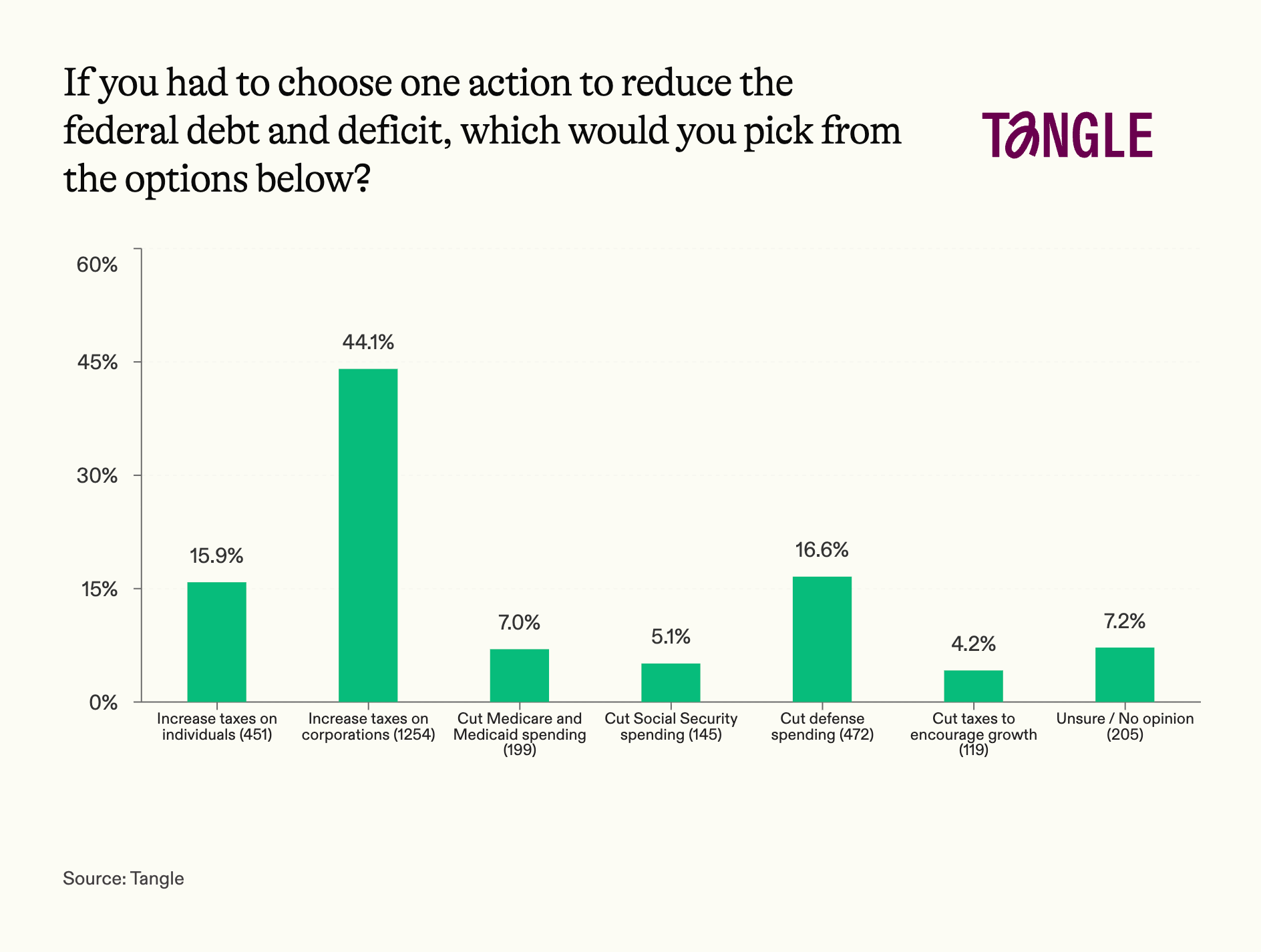
- Our last survey: 2,835 readers responded to our survey on the national debt, with 44% saying they would increase taxes on corporations as their first move to reduce the debt. “I would do ‘all the above’ except cut taxes to encourage growth,” one respondent said. “There is no tax increase that will solve the problem if we don't cut spending,” said another.
Have a nice day.
In 2010, complications from diabetes left Liu Peijin’s wife partially paralyzed, and repeated hospital stays failed to slow her decline. Liu, a 69-year-old former serviceman from Shandong province, decided he didn’t want her final years to be spent going in and out of a hospital. Instead, he set out with her to chase a dream they’d held since their newlywed days: touring the country together in an outfitted campervan. Over the past decade, they’ve visited 31 regions throughout China; Liu says the travel has kept his wife’s coordination and speech intact and made her “100 times” more spirited than she was in a hospital bed. “We would rather die on the road than in a hospital bed,” the couple agreed. Now home from their latest trip, they’re already planning the next one. The South China Morning Post has the story.

Member comments