







Happy Tuesday. I’m Isaac Saul and I’m resisting the urge to talk about the officiating in the Spurs vs. Knicks game last night. Worse than bad NBA finals officiating, though, is professional sports teams betting against themselves on prediction markets. Which is now a thing we have to deal with. A Spanish La Liga soccer club reportedly placed a multi-million dollar bet against itself in a game where, if it had lost, it would have been knocked down to a lower-tier league, which would mean millions of lost revenue. They created an insurance policy for themselves, then ended up squeaking by 1–0 to stay in La Liga.
That’s a reminder of why you should never bet against yourself, or something. At least that’s my positive take on it. Speaking of betting on yourself: You can read about my latest decision to bet on myself in the brand new Press Pass that’s currently sitting in your inbox.
In this edition, we’re diving into a local-gone-national story: The Delaney Hall immigration detention center, which is not a far drive from my new home in New Jersey. Plus, a reader asks about voting. It’s a 14-minute read. Let’s do it.
Quick hits.
- Iran and Israel said they had ceased attacks on one another after several rounds of airstrikes. However, Iran said it could resume attacks if Israel continues strikes against Hezbollah in Lebanon. (The pause) Separately, U.S. Central Command said that a U.S. helicopter crashed near the Strait of Hormuz. Both crew members were rescued, and the cause of the crash is under investigation. (The crash)
- The Justice Department filed cases seeking to denaturalize 17 people who immigrated to the United States and became naturalized citizens, alleging that they concealed criminal records or committed fraud when applying for citizenship. (The cases)
- A federal judge struck down President Donald Trump’s $100,000 fee for H-1B visa recipients, finding the fee amounted to an illegal tax that bypassed Congress. Previously, the H-1B visa fee rarely exceeded $5,000. (The ruling)
- The Agriculture Department announced that three new cases of New World screwworm have been confirmed in animals in the U.S., including the first case outside of Texas. The total number of confirmed cases in the U.S. is now five. (The cases)
- Vice President JD Vance referred allegations against Minnesota Gov. Tim Walz (D) and state Attorney General Keith Ellison (D) to the Justice Department’s fraud division, seeking a criminal investigation into their handling of alleged social services fraud in the state. (The referral)
The Gift Dad Will Actually Use
Why is everyone talking about this new tiny gadget?
Because after years of carrying a portable speaker and wireless charger separately, the solution is finally here.
Meet the Sound Charge — the highly anticipated portable speaker and wireless phone charger that packs incredible sound into a device barely bigger than a hockey puck. Small enough to fit in your pocket, yet powerful enough to fill a beach, golf course, backyard BBQ, or workout with crystal-clear music that resonates.
And when your phone needs power, it has that covered too. Just stick it to the back of your phone magnetically and charge. Why carry a speaker and a charger when you can carry one device that does both? The Sound Charge isn't just another gadget — it's the gadget every dad wishes he had for Father's Day.
Tangle readers get a special 45% off today only with code 45TANGLE.
Today’s topic.
Protests at Delaney Hall. In recent weeks, federal and state law enforcement officials have clashed with protesters gathering outside Delaney Hall, a federal immigration detention center in Newark, New Jersey. At least 90 people have been arrested over the course of the protests, including 61 on the night of Sunday, May 31, on charges including assaulting federal officers, disorderly conduct, rioting and resisting arrest. The demonstrators allege poor treatment of detainees, which federal immigration officials deny.
Back up: In February 2025, the federal government entered a 15-year, $1 billion contract with The GEO Group, Inc., a private prison and mental health facility operator, to reopen Delaney Hall as an immigration center; it had been operating as a halfway house since 2017. The facility has a permitted capacity of nearly 1,200 beds for detainees, making it one of the largest detention centers on the East Coast, and it has housed a daily average of 891 detainees as of April 2, 2026. Since its reopening, Delaney Hall has faced several public controversies, including ongoing accusations of poor living conditions, the high-profile arrest of Newark Mayor Ras Baraka (D) outside the facility in May 2025, the escape of four detainees in June 2025, and the death of one detainee in December 2025.
On May 22, Delaney Hall detainees reportedly began a hunger and labor strike to protest poor living conditions. Shortly afterward, immigration-advocacy groups began organizing demonstrations outside the facility. Tensions between demonstrators and federal officials escalated on May 25, when protesters attempted to block the rumored transfer of one detainee to another facility. Sen. Andy Kim (D-NJ), who was in attendance and had publicly criticized Delaney Hall’s conditions, was caught in pepper spray at one point during the encounter.
Democratic state officials have sharply criticized Immigration and Customs Enforcement’s (ICE) oversight of Delaney Hall, including its alleged lack of transparency on the conditions for detainees. On June 2, New Jersey Attorney General Jennifer Davenport (D) filed a lawsuit against GEO Group, requesting that the company allow the New Jersey Department of Health to inspect the facility.
New Jersey Gov. Mikie Sherrill (D) visited Delaney Hall on Monday, though she criticized the “limited” tour she received. “I was not allowed to meet or speak directly with the detainees, which continues to raise serious questions about the real conditions of the facility and the treatment of those held there,” Sherrill said.
The Department of Homeland Security (DHS) has denied that Delaney Hall detainees are facing poor living conditions or conducting a hunger strike and criticized politicians and activists for spreading false claims and endangering ICE officers at the facility. “These types of smears are inciting violent riots outside the ICE facility in New Jersey,” DHS Acting Assistant Secretary Lauren Bis said in a statement. “[Detainees] are provided 3 meals a day, medical care, and receive full due process.”
Today, we’ll get into what the left, right, and New Jersey writers are saying about the ongoing protests at Delaney Hall. Then, Executive Editor Isaac Saul gives his take.
What the left is saying.
- The left criticizes Delaney Hall’s detainment practices, arguing they violate detainees’ rights.
- Some say that recent protests mark a shift in strategy against deportations.
In Balls and Strikes, Madiba K. Dennie said the strike exposes “a massive Thirteenth Amendment crisis.”
“Forcing immigrant detainees to work for their captors isn’t just exploitative. It’s unconstitutional,” Dennie wrote. “The Thirteenth Amendment explicitly prohibits slavery and indentured servitude, except ‘as a punishment for crime whereof the party shall have been duly convicted.’ But immigration detention is a form of civil confinement. People held in detention centers are simply waiting — behind bars — for the resolution of their immigration cases. This is punitive in practice, but not in law, as they are incarcerated, but not in prison.”
“The strike at Delaney Hall is not an isolated incident. In recent weeks, hundreds of other immigration detainees across the country have participated in similar strikes,” Dennie said. “Since reentering the White House, Trump has waged an aggressive campaign to detain and deport people of color — building more detention infrastructure, arresting more people, and releasing fewer. And as the immigration detention population grows, so too does the nation’s Thirteenth Amendment crisis.”
In The Guardian, Moira Donegan argued the protests are “different in kind.”
“The protests outside Delaney Hall in New Jersey evoke the street clashes in Minneapolis earlier this year,” Donegan said. “But the Delaney Hall uprising is different in kind, because it represents an escalation of organizing and resistance by imprisoned immigrants themselves… They are not relying on risks taken by citizens and permanent residents who have more freedom because they are less easy to deport. They are instead taking their cause upon themselves.”
“In this sense, they represent a maturation of the movement to resist the federal government’s mass deportation machine: the activation and radicalization of the most vulnerable,” Donegan said. “Will it work? That might be up to those of us on the outside. Violence is already allegedly ongoing inside Delaney Hall, where the organized strikers, after all, have nowhere to run… The immigrants’ courage is matched only by the severity of their limited options. Ultimately, the pressure for change will have to come from the outside.”
What the right is saying.
- The right says protesters have sparked violence and threatened public safety.
- Some accuse the left of spreading misleading information about Delaney Hall.
The Washington Times editorial board called the protests a “siege.”
“Clearly, the agitators want another Minneapolis, where riots against Immigration and Customs Enforcement led to two accidental deaths,” the board wrote. “Democrats and their media allies had a field day with those tragedies, indicting what they called a ‘rogue agency.’ For the left, enforcing federal immigration law is a provocation. In Newark, agitators went out of their way to provoke an ICE response. Night after night, they have clashed with agents and police sent to enforce a curfew.”
“Lately, they have upped the ante. One ICE officer was bitten on the arm. Others were punched and kicked. Another protester screamed at an agent that he would kill him, his wife and his family. The man was identified by facial recognition and arrested by the FBI,” the board said. “Those being held at Delaney Hall include murderers, rapists and pedophiles — or, to Democratic politicians, ‘our neighbors’... At times, the public has been skeptical of ICE tactics, but anarchy in the streets is changing things.”
In Fox News, David Marcus said Democrats are spreading “blatant lies.”
“Democratic elected officials and far-left agitators have teamed up in the past week to manufacture a chaotic crisis at Delaney Hall… and it is a conflagration fueled almost entirely by blatant lies,” Marcus wrote. “Perhaps the worst of these lies, because it is a direct smear against law enforcement, is the absurd idea, floated by Gov. Mikie Sherrill (D-NJ) that ICE and its agents actually want to be attacked by agitators to use it as a pretext for a larger presence in Newark… Does Sherrill think these agents want to be bitten?”
“Ultimately, the purpose of all these lies above is to support this one: More and more Democrats insist that ICE must be shut down, and just as in Minnesota, are building a case to simply not enforce our immigration laws at all,” Marcus said. “Notice that these Democrats never offer a supposedly more humane way to enforce the democratically enacted federal laws on immigration, and it is increasingly clear that their desire is simply not to enforce them at all.”
What New Jersey writers are saying.
- Some in New Jersey compare the detention center to past mechanisms of forced labor.
- Others criticize protesters for ineffective strategy.
In the New Jersey Herald, Michael Gottesman said “Delaney Hall is a moral stain on NJ.”
“People who have not been convicted of crimes, people who are often being held for civil immigration proceedings — not criminal sentences — are allegedly cleaning facilities, performing kitchen work, and maintaining operations for pennies an hour while a private corporation profits from keeping labor costs near zero,” Gottesman wrote. “That may satisfy the technical definitions buried inside detention contracts and federal loopholes. But morally, what exactly should we call it?”
“America has a long and ugly history of exploiting captive labor. We should be extremely cautious whenever incarcerated or detained populations become a source of cheap labor benefiting private entities. That concern becomes even more urgent when many detainees are still awaiting hearings, seeking asylum or fighting deportation cases,” Gottesman said. “These are human beings with constitutional rights and human dignity — not inventory on a balance sheet… And history teaches us that systems built on dehumanization rarely stop where they begin.”
In NorthJersey.com, Alex Nussbaum asked “was the Delaney Hall chaos fueled by cops or outside agitators?”
“On news sites and social media accounts, the public saw protesters clad in black, faces masked, screaming and cursing at law enforcement, shouting through bullhorns inches from officers' faces,” Nussbaum wrote. “[Gov. Mikie] Sherrill has called for Delaney Hall's closure but also warned of ‘people coming from out of state to create chaos and dangerous situations.’ Progressive activists seethed over the reference. They wondered why clashes outside the facility were suddenly getting media attention when they'd spent over a year trying to call attention to callous conditions inside its walls.”
“So which Delaney Hall narrative is the right one? Eyewitness accounts from demonstrators, as well as from two NorthJersey.com journalists… paint a picture of a crowd that yes, was angry, but which was mainly fleeing from or reacting to heavy-handed measures deployed by state police,” Nussbaum said. “But clearly, some protesters came ready for a fight, if not looking for one… Images tell a powerful story, one that could overwhelm the one that immigration advocates have about Delaney. It is a mistake that the movement will keep repeating if it can't focus its anger with discipline.”
My take.
Reminder: “My take” is a section where we give ourselves space to share a personal opinion. If you have feedback, criticism or compliments, don't unsubscribe. Write in by replying to this email, or leave a comment.
- Conditions at the New Jersey facility — and across detention centers — should be closely examined.
- The violent clashes are both driving attention and interfering with on-the-ground aid.
- The real story here is that our immigration system is still in need of serious reform.
Executive Editor Isaac Saul: One of the most frustrating things about these “protest vs. cop” stories is how quickly the central issue gets swallowed up by the national press.
To remind everyone: The story at Delaney Hall did not start in late May with a hunger strike, or when protesters first clashed with police, or when a New Jersey senator was caught in a mist of pepper spray while trying to mediate a dispute. This story has been bubbling for more than a year, and even years before that. Delaney Hall was an immigration detention center from 2011 to 2017, then became a drug rehabilitation center. It only became a private detention center again in 2025, after a New Jersey law prohibiting local jails and private facilities from signing new or renewed contracts to operate federal immigration detention centers was struck down in 2023.
Many in northern New Jersey consider Delaney Hall a blemish on the state. Voters and residents don’t want immigrants being held in detention centers in their backyard, and the concrete lots in a snarl of highways outside the Newark Airport where the detention center is located is a poster child for failed government promises.
Partisan bickering has distracted from the fundamental question here: Are the immigrants at these centers being treated well? Or, even more baseline, is this what we want to do with immigrants who are allegedly here illegally?
Remember: Delaney Hall is not a prison. Over 10,000 people were detained at the facility between May of 2025 and March of 2026. A large share are accused of being in the country without authorization — either coming to the U.S. illegally or overstaying visas, which would obviously be deportable offenses. Many are legal residents or visa holders; some are asylum seekers. More than 70% have no criminal record, and only 12% have criminal convictions (the rest are accused of crimes that have yet to be adjudicated).
The allegations about what’s happening inside the detention center are pretty straightforward: The facility is overcrowded, detainees are being fed spoiled food, illnesses are breaking out and not being treated adequately, and some detainees are being denied prescribed medication. Many of these detainees are likely legal residents or longtime residents of the U.S., and some said they feel “kidnapped.” Hunger-striking detainees also said they’ve been retaliated against, and small slights like officers restricting TV access because the news was showing protesters or larger punishments like halting visitation hours have all been reported.
In defense against the allegations of poor living conditions, the federal government and conservative pundits have said that the facilities are up to snuff. As legal commentator Jonathan Turley wrote, “The problem [with these allegations] is an actual federal inspection that found the facility to be in compliance with virtually every standard.” Turley was referencing a Fox News story about an unclassified investigation into the facility that the outlet exclusively obtained (and which is now public, but redacted). Fox reported that in August 2025, the DHS Office of Professional Responsibility (OPR) found the facility in compliance with 17 of 22 standards, and the violations were for issues like ice buildup in freezers or not recording suicide checks for a sufficient amount of time. Turley and Fox are saying that New Jersey Gov. Mikie Sherrill (D) and Democratic protesters are turning this molehill into a mountain.
This sounds like a reasonable defense, but it’s actually a smokescreen. First, the inspection happened last August — nearly a year ago. The report makes no mention of the “hunger strikes” that are now central to this story, because there were no hunger strikes lasting over two days last August. It does cite infractions for environmental health and safety and food service, two claims that are still central to the protests. More to the point, reports about the worsened conditions really ramped up over the last few months, starting when the detention center’s average daily population peaked in December.
Second, federal inspections rarely find anything but “acceptable” conditions. The Office of Detention Oversight (ODO) rated facilities acceptable or above in 238 out of 241 inspections, despite also finding issues with water quality or food safety. One El Paso center had 49 deficiencies citing excessive use of force, disease and other unsafe conditions, yet the ODO still gave the camp an “acceptable/adequate” rating and recommended ICE work with the new contractor to resolve outstanding deficiencies. This pattern drew a critical report from the Government Accountability Office last year, which suggested the inspection programs were unhelpful and that DHS and ICE needed to reform them.
Detention centers are often given advanced notice of a coming inspection, which makes violations like those found at Delaney Hall actually quite rare. For example: One of ICE’s private inspection contractors, Nakamoto, has a 40-standard framework per inspection; yet only 18 ICE facilities have ever failed to meet even a single standard, and 17 of the 18 failed just one. One ICE official said the inspections are “very, very, very difficult to fail” and “useless.”
So, that the facility is meeting some federal standards could just as easily be an indictment of those standards as proof of its humane conditions. Again: These facilities are not prisons. They are not supposed to be punitive — they are supposed to serve an administrative function to house people while immigration cases play out.
All of this brings me back to my overarching position on immigration in our country: Allowing unchecked illegal immigration is a humanitarian disaster of its own. Many of these migrants are sitting in what is effectively a prison because our system is so backlogged that we cannot adjudicate and process their immigration claims in anything close to a timely fashion. This is why I credit Trump for reducing illegal immigration at the border, and it’s why I criticize him and Congress for not taking advantage of this moment with actual systemic reform to solve crises like this one.
Another interesting and under-discussed angle on this story is the peculiar alignment between some of the on-the-ground protesters and the conservative pundits above. Having spoken to a handful of people who were involved in the protests over the last year (including a few neighbors of mine in North Jersey), a lot of people are asking, “Who are these agitators?”
From my conversations, I’ve observed that the typical Delaney Hall protesters are not some rioters in gas masks and clad in all black. They’re church members, community organizers, teachers, parents — people in Newark and from the surrounding communities who have been demonstrating for more than a year. I spoke to one family friend who got involved through a group he went to Nicaragua with a few years ago. He said they started out by donating clothes to family members of the detainees so they could meet the visitation guidelines of the facility (some visitors were being turned away for showing up in torn jeans), and that turned into donating diapers, food, full sets of clothes, and medical supplies to detainees’ families.
Now that the facility has been upended by police clashes, these well intentioned, on-the-ground volunteers — people looking out for families without their husbands or fathers who provided a primary source of income — are actually being shut out by confrontational protests and the overwhelming police presence. The sick irony of the whole thing is that while the clashes with police have raised national awareness about Delaney Hall, it’s also hampered the local efforts to actually deliver aid. It’s no coincidence that Sherrill has accused outside protesters of coming in and causing a mess, comments that upset some liberal commentators but echoed what volunteers have said to me.
Ultimately, the Delaney Hall story is not about law enforcement banging heads with protesters, and it’s not about a senator getting pepper sprayed. It’s about the reality that we’re putting people in what are effectively prisons who have not been accused of or convicted of crimes that require incarceration; it’s about government accountability that’s hard to trust, a broken immigration system we refuse to fix, and our desperate need to find the balance between enforcing the law and treating people — whether they’re here legally or illegally — with some basic humanity.
Take the survey: Are you concerned about conditions at immigration detention centers? Let us know.
Disagree? That's okay. Our opinion is just one of many. Write in and let us know why, and we'll consider publishing your feedback.
Your questions, answered.
Q: I have a question for you all. I will be a first-time voter this fall and I don’t even know where to begin. What are we voting for, how do we know where to vote, and so on? The process feels overwhelming and no one seems to want to talk about it when I ask.
Please let me know what you think!
— Isabell from Milo, Iowa
Tangle: First off, congratulations on taking the steps towards casting your first ballot! We are big proponents of voting; even though the process can be confusing, if you can mentally categorize the elections — and what you have to do to participate in them — it becomes a lot clearer.
In broad strokes, our government is broken down into three levels: federal, state, and local (which includes county, city, and municipal governments). Then almost every election has two phases: the primary election, when voters decide on the eventual candidates, and the general election, when those candidates compete against each other. There are some exceptions and complications to that: each state runs its primary process differently, some races don’t have primaries, and ballot initiatives happen outside the primary system entirely — letting voters decide on issues themselves, like recent measures to allow for mid-decade redistricting that California and Virginia put to public votes.
But if you have this in your head, you’ve got 99% of it: three levels of election, and two steps to the process.
So, how do you make sure you can vote? In most states, you can register to vote and choose your political affiliation when you get a driver’s license. You can also go online to register to vote in your state. Iowa, like most states, runs a site where you can check your voter registration and sign up. Whether or not you participated in Iowa’s primaries, you’ll still be able to vote in the general election. You should also consider registering to participate in the presidential primaries — Iowa has a special role in that process.
Federal elections, and most state elections, fall on the first Tuesday in November in every even-numbered year (again, with some exceptions), with the presidential election coming every four years. Local and special elections may vary. You can see what’s on your ballot this year on websites like Vote411 or Ballotpedia, and your state’s and municipality’s websites usually make this information accessible, too. We hope you learn about the candidates and punch your ballot this November!
Want to have a question answered in the newsletter? You can reply to this email (it goes straight to our inbox) or fill out this form.
A deeper look.
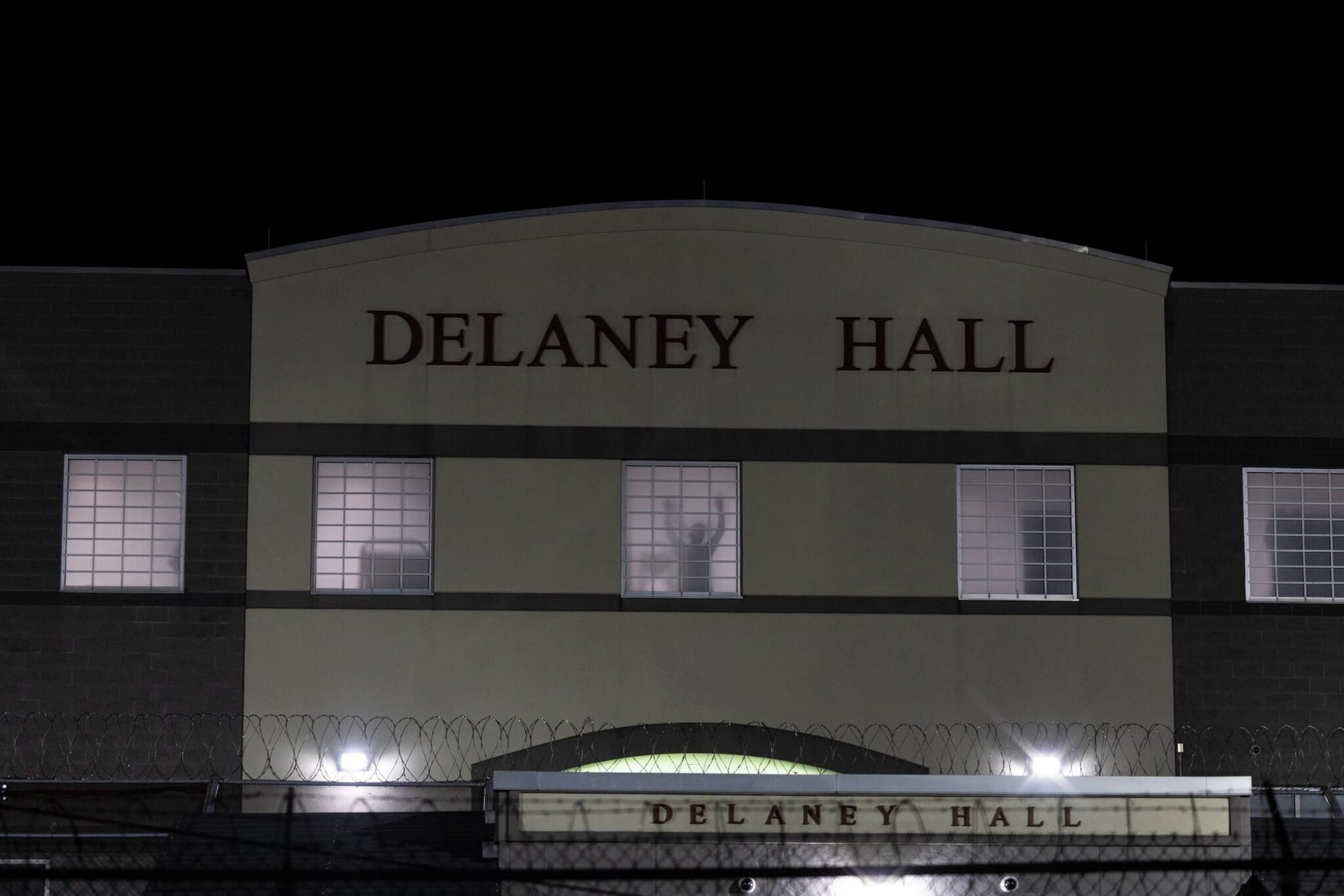
Delaney Hall, originally named after prominent addiction expert and nutritionist Geraldine O. Delaney, has shifted owners and purposes several times since its opening in 2000. In its early years, the facility was a “halfway house” for individuals transitioning back into society from stays in other facilities for minor offenses. From 2011–17, private corrections company Community Education Centers (CEC) ran Delaney Hall as a halfway house and immigration detention center for unauthorized immigrants with and without criminal convictions; CEC was acquired by the private prison company the GEO Group in 2017.
Nearly four decades after GEO Group was awarded its first detention center contract, it has become one of the country’s two largest private prison operators, overseeing 51 facilities and processing centers with a roughly 62,000-bed capacity. Private prisons house over 90% of the United States’s detained immigrant population, according to the most recent ICE data from August 2023, up from roughly 79% in 2021.
In 2023, President Joe Biden’s Department of Homeland Security sent out a request for information on possible detention sites in the Newark area, and GEO Group proposed Delaney Hall, which had returned to being a halfway house after the company lost its contract for the facility in 2017. After a protracted legal battle, ICE signed a 15-year contract with GEO Group on February 26, 2025. The contract is set to expire in February of 2040.
One Gadget. Two Jobs.
A portable speaker and wireless charger in one. The Sound Charge is small enough for your pocket, powerful enough for the beach, golf course, or backyard BBQ, and snaps magnetically to your phone when it’s time to recharge.
The extras.
- One year ago today we covered the Los Angeles protests.
- The most clicked link in our last regular newsletter was a look into why human eyes are so white.
- Nothing to do with politics: The oldest bar in every state, including one even older than its home state itself.
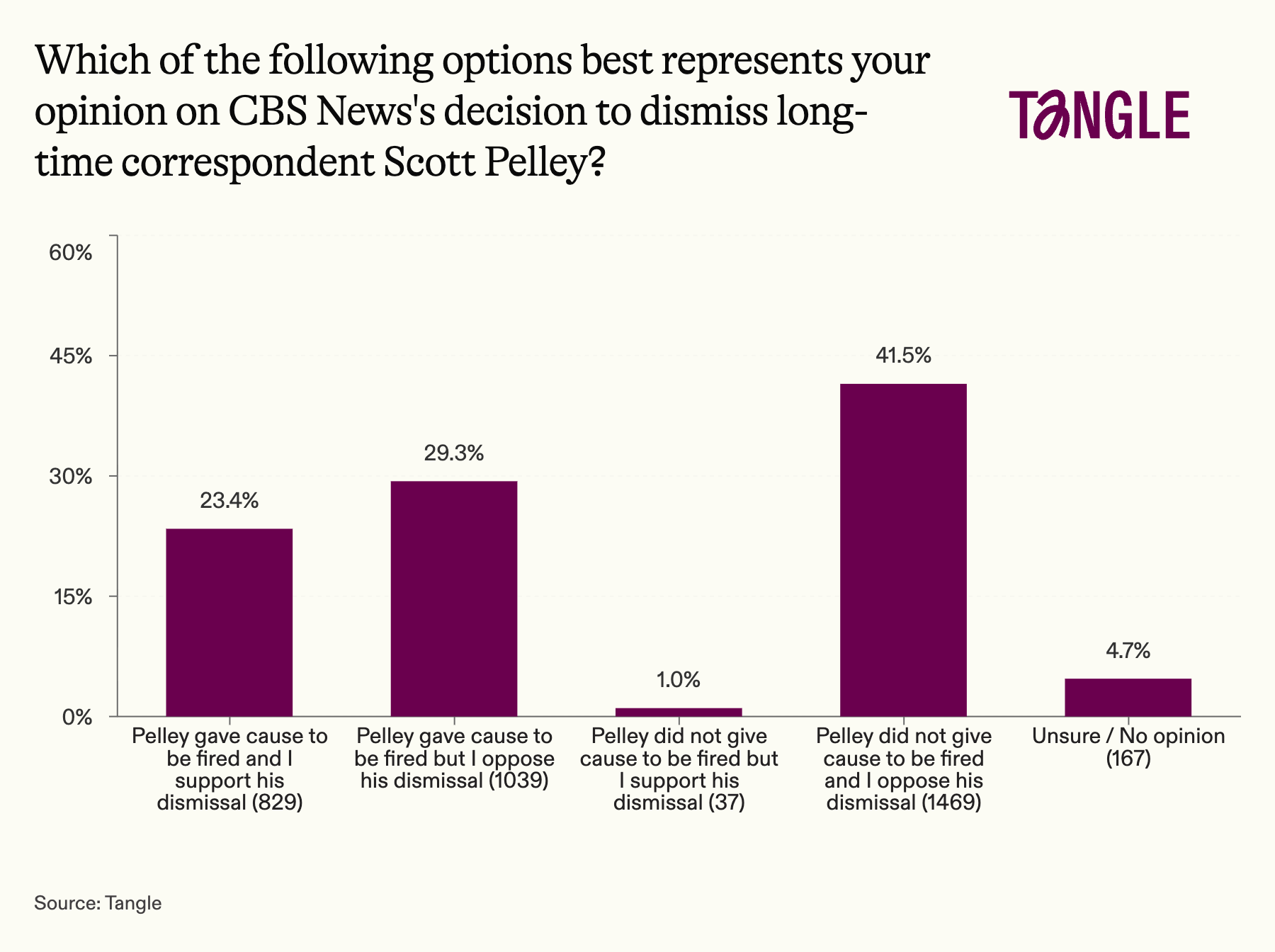
- Our last survey: 3,541 readers responded to our survey on Scott Pelley’s firing with 42% saying Pelley did not give cause to be fired and opposing his dismissal. “It was unthinkable to him that even sharp, biting questions in a staff meeting would lead to his firing. That kind of exchange was a part of the culture (emphasis on was),” one respondent said. “Pelley has valid grievances but he was gunning for a public dismissal that lands him a new job,” said another.
Have a nice day.
For more than 300 years, New Zealand sea lions were gone from the mainland — hunted to extinction on the coast and pushed to remote Subantarctic islands so far south that the species barely survived. Then, in 1994, a single female wandered back to Dunedin, a town on New Zealand’s Otago coast, to give birth to a pup. Researchers called her “Mum.” She returned for two decades, raising 11 pups and founding a matriline of roughly 20 Dunedin females who now give birth under campground cribs, herd surfers, and occasionally push through café doors to investigate indoor pools. “I just want to see them thrive,” Jordana Whyte of the New Zealand Sea Lion Trust said. “I want to see them be our neighbours for the long term.” A statue of Mum now stands at St. Clair Beach. New Zealand Geographic has the story.

Member comments