Dear readers,
As Tangle continues to grow, one of my goals is to expand our stable of writers. We want more people writing under the Tangle banner who can represent the center, center-left, center-right, the progressive left, the MAGA right, and those of us (like me) who just find ourselves complicated, confused, and mixed up in today’s political alignment.
One such fascinating person is Megan Phelps-Roper, the political activist and writer who is best known for leaving the Westboro Baptist Church. The church, founded by Phelps-Roper’s grandfather, is widely regarded as a hate group. Her departure from the church — and then role as one of its chief critics — became a national news story. A few weeks ago, Phelps-Roper and podcast producer Andy Mills reached out to me about a new show they were working on — one in which she revisits her childhood upbringing and reflects on what she’s lost by leaving the church. I was fascinated by the pitch, and excited to learn that Phelps-Roper was interested in writing about it for Tangle.
So, today, I’m thrilled to share her essay reflecting on her departure from the Westboro Baptist Church, but also the ways in which she feels like her religious upbringing has never left her — and how she’s trying, in some ways, to return to it. I hope you enjoy.
Best,
Isaac
When I was a kid, my mom would convene our family to do some “reading” in the living room.
That was always what we called it — never “Bible study,” which is what we were actually doing. We had these gatherings almost every night for as far back as my memory goes.
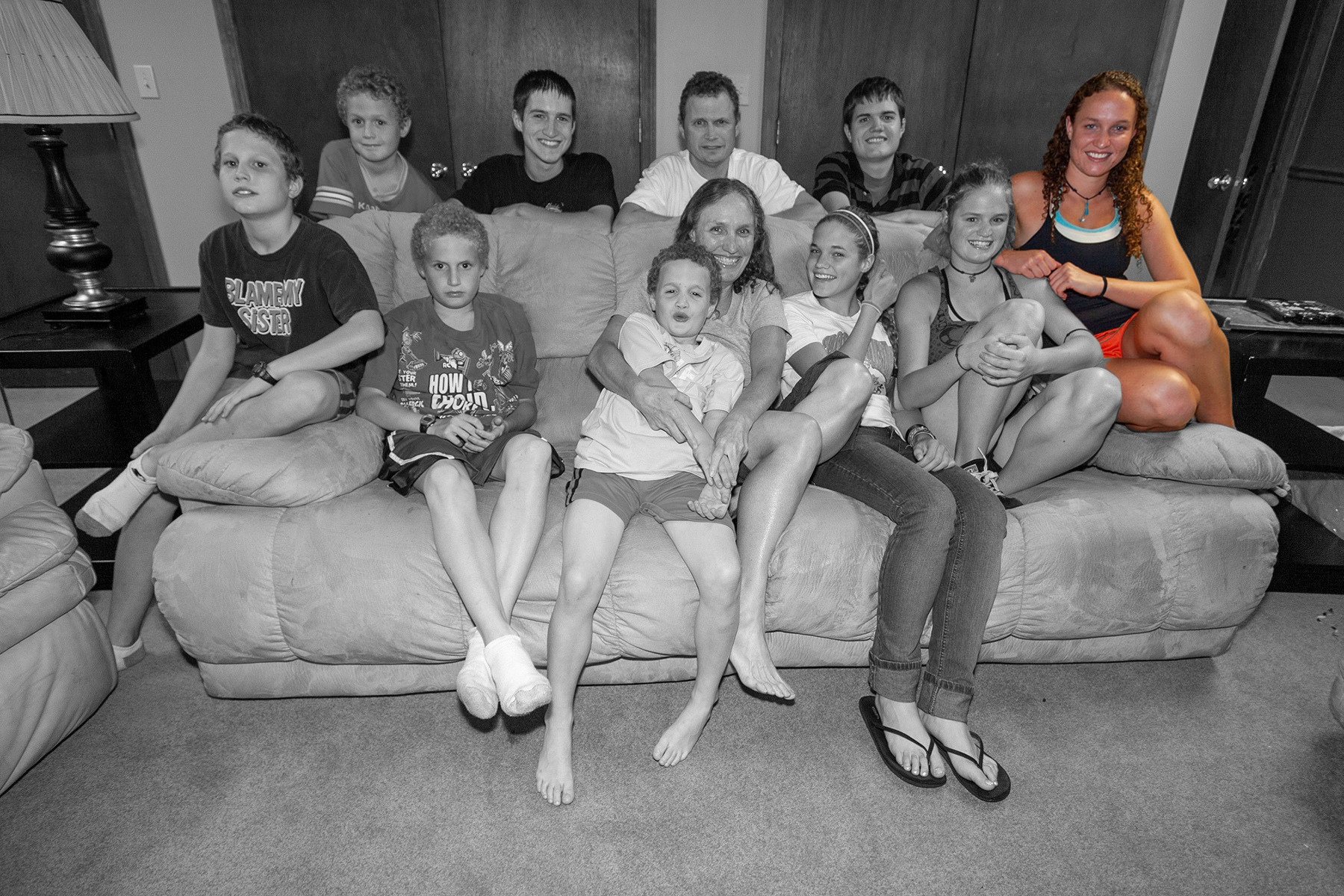
Those of us who were old enough to read would bring our Bibles — or later our laptops or phones — and take our places in our rectangle of couches. We had enough seats to accommodate what would eventually be 11 kids: Sam, Josh, Megan (me), Bekah, Isaiah, Zach, Grace, Gabe, Jonah, Noah, and Luke.
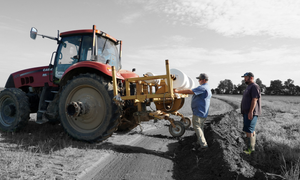
My mom would sit at one end and lead us on a never-ending quest through the pages of the Old and New Testaments. Our dad would join us whenever he could, but he had to first navigate a 90-minute commute from Kansas City, where he supported our family as a human resources professional — and those long drives got in the way more often than he would have liked.
Regardless of whether my dad was there, my mom’s fervor is what propelled our study of the scriptures. To her, the Bible was the place to go for answers — all of them. It contained a solution to every question or problem that life might throw at a person.
And so, year after year after year, we’d revisit the same stories again and again. That may seem like a tedious undertaking, but with each retelling we kids would come back with more life in us. More experience. More understanding of the stories being told, more curiosity about the people in them and their motivations. And, maybe most importantly, we’d come back every year with more of a desire to understand the God who was presented to us as a kind of cosmic puppet master — the one pulling every string behind the scenes along the way, ensuring the stories unfolded exactly as He desired.
Sometimes, my mom would read aloud to us. Sometimes the kids would take turns. But always, she was the one interpreting. She would take the abstruse language of the 1611 King James Bible and try to make it real for us, often in very dramatic fashion. She would speak emphatically, with such urgency and such conviction that these ancient stories began to feel immediate, almost as though they were happening in the present, right now. As though the power in them — the God they were describing — was among us in that very room.
Take Noah and the flood, a story often found in the pages of a modern children’s Bible with sweet little cartoon animals ambling up the gangplank two-by-two. My mom would remind us that once all those animals and exactly eight humans were safely aboard, the fountains of the great deep erupted, the windows of heaven opened, and the rain began. For forty days and forty nights, it rained.
I remember how she tried to convey to us what the reality might have been for all of the humans who were not on the ark. With her Bible in hand, she leaned forward in her seat, eyes wide, her voice rising precipitously as she described mothers scrambling for higher ground to save their families. And then she narrated the eventual moment when those women would have to make a choice: drown with their children — their toddlers, their newborn babies — or abandon them to try to save themselves.
In the end, she told us, those mothers would drown, too. No matter how high they climbed, “the waters prevailed.” She would have us pull up images of famous paintings that depicted the violence and chaos of that scene: people clawing their way up trees and mountainsides, lashing together boats, hoping for some way to escape the wrath of God that was raining down upon them for their sins.
And then having the breath of life snuffed out of them anyway.
I was 26 when I left the Westboro Baptist Church. You may know it by its colorful protest signs and its most infamous slogan: “God Hates Fags.” The church my grandfather founded became best known for picketing funerals — of American soldiers, of children, of strangers — with placards announcing that God hates the mourners and killed their loved ones as vengeance for their sins. I held those signs from the time I was five, and I became a committed and zealous defender of our message. But when I took the church’s message to Twitter in my twenties, I encountered kind strangers who compelled me to see things differently.
When I left Westboro, I lost almost everything and everyone that mattered to me: my parents, most of my 10 siblings, and the rest of my family who were still as intimately tied to the church as I had been all my life. I lost the only home I’d ever known, and nearly every person I’d been close to or loved by.