









 500,000+ readers just today.





The U.S.–Canada trade war escalates.
Happy Monday — hope the nascent week is off to a good start. This is Senior Editor Will Kaback. We’ve got a packed one today, so I’ll get right into it. Our main story is on the breakdown of trade negotiations between the U.S. and Canada, leading to a new round of tariffs over the weekend. Then, we’ve got a reader question about the status of tariff refunds and a great closing story about how NASA has extended the life of the NASA Voyager 1 and 2 missions.
We also broke our three-month correction-free streak (see below), but here’s to starting anew in today’s 14-minute edition.
Correction.
In Thursday’s edition on President Trump’s vaccine executive order, we listed Michael Steele under “What the left is saying.” While Steele is a frequent critic of the president (and endorsed Joe Biden (D) in 2020), he was the former chair of the Republican National Committee, served as lieutenant governor of Maryland as a Republican, and still considers himself a member of the GOP. Under our categorization standards, we should have listed him under “What the right is saying” and used a different piece for the left.
This is our 158th correction in Tangle’s 367-week history and our first correction since May 14. We track corrections and place them at the top of the newsletter in an effort to maximize transparency with readers.
The verdict on DOGE.
In Friday’s members-only edition, Executive Editor Isaac Saul published an in-depth retrospective on the Department of Government Efficiency (DOGE) roughly one month after it formally shut down. Isaac explored whether DOGE followed through on its core promises of reducing government spending and improving efficiency, while also documenting the ripple effects of its harder-to-quantify actions. You can read the piece here.
Note: Our Monday–Thursday newsletter is free, but you’ll be asked to subscribe to read the full Friday edition.
Quick hits.
- President Donald Trump said the U.S. will exempt up to 300,000 metric tons of ground beef imports from tariffs for the next three months, claiming that the beef will be sold at 25% below current market prices. (The announcement)
- Supreme Court Chief Justice John Roberts issued a ruling allowing above-ground construction of President Trump’s White House ballroom to continue while the Court considers the legal challenge to the project. (The decision)
- The Iranian rial dropped to a record low of 2.02 million to the U.S. dollar. The Trump administration plans to announce new economic sanctions on Iran on Monday. (The value)
- A federal judge struck down the Trump administration’s planned ban on visas for immigrants from 75 countries, finding that Secretary of State Marco Rubio did not have the authority to impose the ban. (The ruling)
- Gary, Indiana, Mayor Eddie Melton (D) said that approximately 9,000 residents remain without power nearly two weeks after a storm knocked out power to the area. Indiana Gov. Mike Braun (R) criticized the Northern Indiana Public Service Company for delays in their response. (The latest)
It’s Not Your Fault
There’s a reason the news leaves you overwhelmed and anxious. Your brain was never built to carry the weight of the world’s news.
If you feel any shame about that, stop right there. The overwhelm isn’t a you problem, it’s a news problem.
That’s why The Pour Over exists... the brain-friendly news source. It’s a free, 3x/week newsletter that delivers the biggest stories of the day to your inbox, paired with brief biblical reminders, all in five minutes. Because they’re in the peace business and not the outrage business, there’s no bias, no spin, no agenda. Just the news your brain can actually handle.
Join 1.5 million Christians who switched to news that:
- tells you what happened, not how to think about it
- leaves you feeling peaceful, not overwhelmed
- might even make you laugh
P.S. Did we mention it’s $0?
Today’s topic.
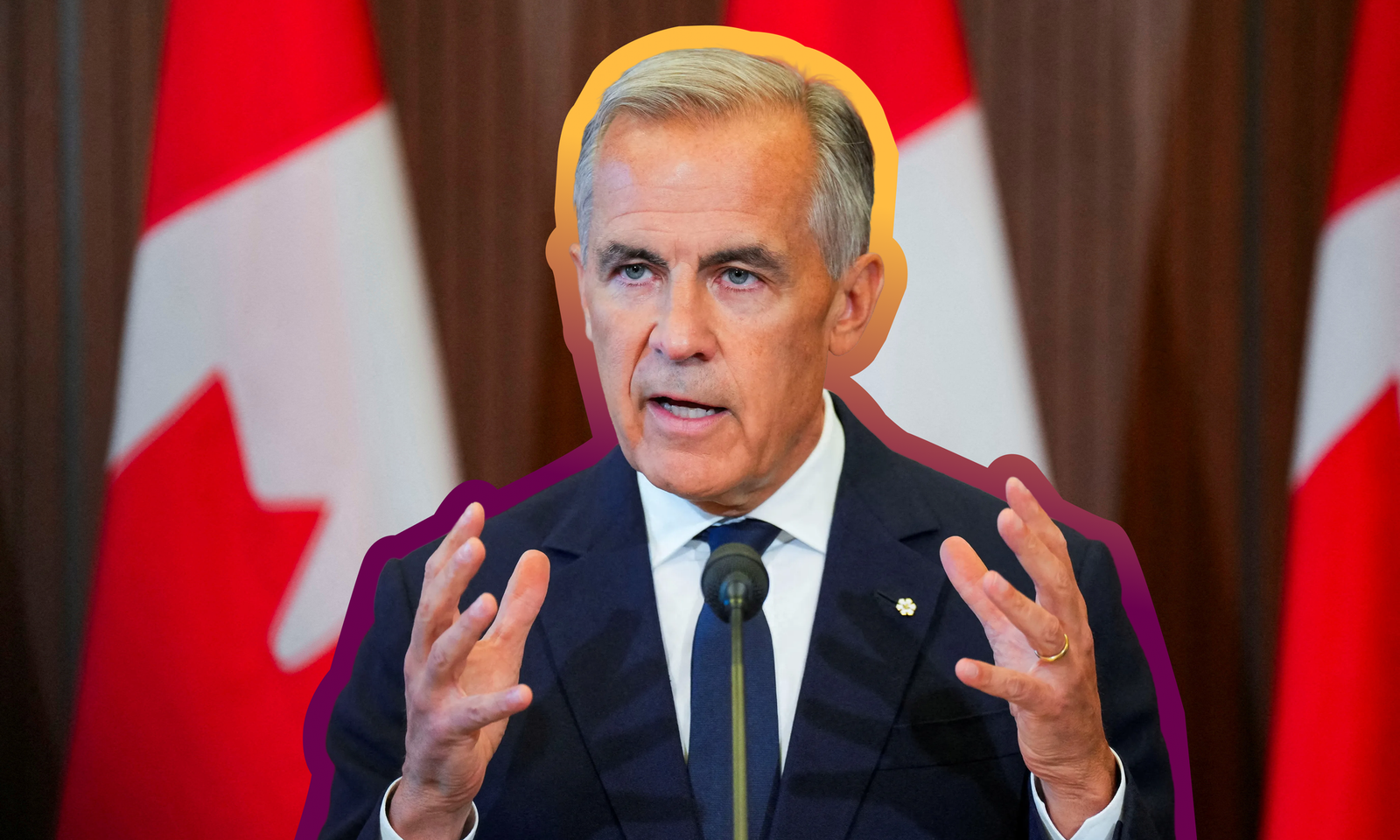
New tariffs on Canada. On Saturday, the United States imposed 50% tariffs on roughly $20 billion of Canadian goods, including lumber, dairy products, clothing, and alcohol. Canadian Prime Minister Mark Carney said that Canada would match the U.S. tariffs “dollar for dollar,” with retaliatory duties set to begin on September 8. Though Canada has not officially released information on its tariff plans, Carney said the duties would target U.S. “steel, dairy, appliances, agricultural equipment, pulp and paper, and electronics.” On Monday, U.S. President Donald Trump wrote on Truth Social that the U.S. would increase tariffs on “all Cars, Trucks, both large and small, Automotive Parts, and Steel” to 50% on January 1, 2027.
Back up: The United States and Canada have been engaged in an intermittent trade war since February 2025, when President Donald Trump first signed an executive order imposing 25% tariffs on most Canadian goods for the country’s alleged role in fentanyl trafficking and illegal immigration; Canada announced retaliatory tariffs before both countries agreed to a one-month pause. Throughout 2025, the U.S. tariffed specific commodities — including steel, aluminum, and copper — and imposed 35% duties on an array of Canadian goods. Canada has imposed similar tariffs in retaliation. A Supreme Court ruling invalidating President Trump’s “reciprocal tariffs” blocked the generalized import duties on Canadian goods, but it did not affect the more targeted tariffs on specific sectors.
In March 2025, the U.S. and Canada agreed to tariff exemptions for certain goods covered by the U.S.–Mexico–Canada Agreement (USMCA), a trade deal negotiated during President Trump’s first term. At a July 1 meeting, the U.S. declined to renew the USMCA for another 16 years, meaning that the agreement remains in effect but will be subject to more frequent reviews and renegotiations.
In late July of this year, the White House announced 50% tariffs on Canadian goods, including goods previously exempted by the USMCA, that would go into effect in mid-August. President Trump claimed that Canada had unfairly discriminated against American producers, and he enacted the new tariffs under Section 338 of the Tariff Act of 1930. Following the announcement, Canadian Prime Minister Mark Carney agreed to direct negotiations with the United States.
On August 19, President Trump delayed the imposition of tariffs for three days, claiming a deal with Canada was imminent; however, Canada withdrew from negotiations on Friday, citing last-minute demands from the U.S. that Prime Minister Carney called “unfair, uneconomic, and called into question the reliability of any deal.” On Saturday, after U.S. tariffs went into effect, Carney claimed in a press conference that the U.S. had “attacked” Canada and the two countries were at war over trade. U.S. Trade Representative Jamieson Greer said in a Saturday interview that there are currently no plans for the two countries to resume negotiations.
Below, you’ll hear from the right, left, and Canadian writers on the latest round of tariffs. Then, Senior Editor Will Kaback gives his take.
|
What the right is saying.
|
In PJ Media, Catherine Salgado said “[the] Trump Administration corrects the record on Canadian tariffs.”
“Negotiations for a trade agreement collapsed between Canada and the United States as the former demanded a continuation of an agreement rigged in its favor, and the U.S. was not willing to continue providing all the favors while receiving none,” Salgado wrote. “The Canadians, like American leftist media and other foreign powers, are counting on Americans not knowing that foreign countries habitually impose extortionate tariffs on American goods, but lose their minds whenever America tries to impose any tariffs on foreign goods.
“For decades, this completely lopsided and unjust system has been boosting the economies of other nations at Americans’ expense, even as foreign goods flood into our market and help undermine our industry… The Trump administration is trying to correct all this,” Salgado said. “Despite having the most favorable access to the United States market of any other country… and receiving the most friendly propositions from the Trump administration, including tariff reductions on goods such as steel and lumber, Canada keeps making the foolish decision to throw tantrums.”
The Wall Street Journal editorial board argued “Trump’s decision to escalate a tariff brawl with Canada makes no economic or political sense.”
“[Trump] cited longstanding grievances over how Canada treats U.S. dairy. Press reports say the Trump team raised other issues during recent negotiations, including Canada’s treatment of U.S. tech companies and digital taxes. Most of these issues could have been addressed as part of a renegotiation of the U.S.–Mexico–Canada Agreement,” the board wrote. “But Mr. Trump doesn’t want to update the deal. He wants to rewrite it unilaterally.”
“Mr. Trump’s latest round of border taxes will hit an array of consumer goods, construction materials and manufacturing components,” the board said. “Republicans are already getting pounded on the campaign trail over his tariffs and inflation. One reason for Mr. Trump’s frigid approval rating is that voters believe Mr. Trump is waging blunderbuss wars without a strategy, and on trade they’re right.”
|
What the left is saying.
|
In his Substack, Robert Reich wrote “Trump declares war on Canada.”
“The very idea of a trade war with Canada — our neighbor, our ally, our closest friend, a nation that’s peaceful and whose people have a reputation for kindness — is absurd. But Trump is doing it anyway,” Reich said. “The obvious effect will be to make it more expensive to build houses in the United States. Couple this with the rise in long-term interest rates… courtesy of Trump’s war spending, his tax cuts mainly for the rich and big corporations, and the giant corporate AI debt (encouraged by Trump) — and the result will be to make housing even less affordable than it already is.
“This is another example of Trump’s perverse rage. I say ‘perverse’ because I’ve come to believe that his insanity is expressing itself in ways deliberately contrary to what’s expected of a president of the United States… which makes him want to do it all the more,” Reich wrote. “He’s lost his war in Iran, most Americans are struggling financially, his mass deportations are unpopular — so what does he do? He flips the finger at Canada because Canada is exactly the kind of nation that an American bully targets.”
The Economist suggested “the costs of defying Donald Trump are mounting for Canada.”
“Carney is governing through paradox. Canada’s largest trading partner, the United States, is led by an unreliable man who uses trade barriers as a weapon. For Canada, diversification of trade partners is wise, but takes time. Building infrastructure needed to serve new markets requires significant investment. And yet little would do more to get that investment flowing than a trade deal with the United States,” the author said. “The political risk that comes with signing a trade deal that Canadians cannot stomach is far higher than that from Mr. Trump’s tariffs.
“But however bad Mr. Trump’s deal might have been for Canada in the long run, declining it and letting new tariffs come into force will hurt in the short term. The Canadian economy at last grew by 0.8% in the second quarter of this year, having contracted and stagnated in 2025 after the first round of tariffs. Unemployment hit a two-year low of 6.4% in July, but inflation was creeping up,” the author wrote. “Mr. Carney must hope that American politics, and its own cost-of-living issues exacerbated by higher prices on Canadian imports, push Mr. Trump back to the negotiating table with a mind, at last, to give Canada some stability.”
|
What Canadian writers are saying.
|
In The Globe and Mail, Tony Keller argued “no deal was better than this deal.”
“The Carney government ultimately decided to call Mr. Trump’s bluff, in the hope that doing so can pave the way to a less-bad outcome. There will be short-term pain. There may be long-term pain. But there is no zero-pain, all-gain option on the table,” Keller said. “Mr. Trump has never offered a return to tariff-free trade between our two countries. That’s not what he’s after. The talks were about how much higher U.S. tariffs would go, relative to the pre-2025 status quo of near-zero tariffs, and what Canada would give and get in return.”
“The past month of Canada-U.S. negotiations were about how much more unfavourable of a trade relationship we could be forced to accept. The White House was pushing to see how much higher a tariff barrier Canada would agree to, relative to pre-2025, and what we’d concede to avoid even worse,” Keller wrote. “Calling Mr. Trump’s bluff has pushed the matter onto the front page and the top of the news hour… Our best path of persuasion is at the back door of the White House — through pressure brought by American businesses, American politicians and American voters.”
In the Toronto Star, Jim Coyle said “an honourable deal with Donald Trump is all but impossible.”
“Trade agreements are excruciatingly complex documents. But values and principles are clear. The reality is that it was likely all but impossible to make an honourable pact with a U.S. administration that trades in dishonour, deceit, disrespect, bullying, abuse and irrational lurches in position from day to day and moment to moment,” Coyle wrote. “It was clear, the prime minister said, that under President Donald Trump America’s ‘signature was written in pencil.’ What sentient member of the human race paying attention over recent years would not agree?”
“How does anyone deal sanely, after all, with a president who has at various times based his tariff truculence and hostility to Canada on cross-border fentanyl smuggling, or TV ads featuring former president Ronald Reagan, or smoke from wildfires, or provincial refusal to stock American alcohol or whatever other figment flickers across his consciousness on a given day?” Coyle asked. “What America wanted amounted to Canadian concessions on autonomy and the capacity to execute decisions on its own trade policy. As the prime minister said, the question was clear: Were we or were we not masters in our own house?”
|
||||
|
||||
|
Reminder: This is where we share a personal opinion. If you have feedback, criticism or compliments, leave a comment or reply to this email.
|

We’ve ridden the tariff rollercoaster for so long now — particularly with Canada — that it’s difficult to follow where, exactly, the latest twist sits on the broader track. The ride felt near the end after the Supreme Court’s ruling in February, but the past month has demonstrated that it’s far from over. At present, the U.S.–Canada trade relationship has degraded to what could be an all-time low, and it’s fair to wonder whether this latest round of hostilities can make anything worse. Unfortunately, I think it can.
To start, two points of context are key for understanding why these negotiations appear to have broken down and opened a new front in the trade war with our northern neighbor.
First, the justification for the tariffs — Section 338 of the Tariff Act of 1930 — is new. The law permits the president to tax countries deemed to be engaging in “discriminatory” trade practices, though no president has invoked the power before now. This avoids the Supreme Court’s block on tariffs issued under the International Emergency Economic Powers Act, while also applying to imports under the U.S.–Mexico–Canada Agreement that Trump had previously left untouched. The new duties are certain to face legal challenges. Opinions vary on whether they’ll stand up in court, but the tariffs will likely be in effect during the months (or years) spent litigating them.
Second, the Trump administration has consistently taken antagonistic stances toward our historical allies, particularly with Canada. Consider just a few of the most notable barbs: President Trump has made frequent remarks about making Canada “the 51st state” and said, “Canada lives because of the United States.” He has accused Canada of playing a “central role” in trafficking fentanyl into the United States, despite less than 1% of fentanyl in the U.S. coming from Canada. And he has not hesitated to escalate his economic threats, calling the USMCA (which his first administration negotiated) “irrelevant” and deciding not to renew the agreement in July. As Jim Coyle wrote (under “What Canadian writers are saying”), these direct provocations to Canadians will impede, if not prevent, any good-faith negotiation.
Against that backdrop, I’m not surprised that the prospective deal fell apart on Friday, despite reports earlier in the week that it was on track. We don’t know exactly what derailed the discussions; auto industry tariffs were reportedly a sticking point, but Carney also alluded to “[U.S.] threats on the French language and Quebec culture and Canadian culture.” Whatever the reason, it’s almost beside the point — the past year-and-a-half of U.S. insults, gamesmanship, and posturing set the stage for the latest blowup.
Where does that leave us?
President Trump isn’t making up longstanding trade barriers with Canada; the country has put in place its own tariffs to protect select industries. Specifically, it uses a tariff-rate quota (TRQ) system for its dairy, chicken, turkey and egg industries, imposing duties of up to nearly 300% on these products after an import quota is met. TRQs have been at the center of U.S.–Canada trade disputes going back decades, including negotiations over the USMCA and North American Free Trade Agreement. Separately, the U.S. International Trade Administration has identified trade barriers involving alcohol sales and raised technical concerns about how Canada regulates certain products. Trump isn’t the first president to object to Canada’s trade practices, either; Presidents George W. Bush and Barack Obama each tussled with the country over lumber.
The obvious difference between those administrations and this one is the scope of the response. Where Bush and Obama raised targeted objections, Trump has indicted Canada’s entire approach to trade. Where past administrations worked through diplomatic channels, Trump has litigated the dispute in public. Where it was once unthinkable that trade disagreements could endanger the broader U.S.–Canada relationship, our president is now lobbing disparaging comments about annexation, and the Canadian prime minister is giving speeches about the end of the U.S.-led world order. Now, I’m not saying past approaches were perfect — evidently, they didn’t resolve underlying trade issues, which indicates the challenge of addressing those root problems and navigating constantly shifting trade dynamics across administrations. Trump may have been directionally correct that a more aggressive, less diplomatic posture was necessary to shake things up. But in practice, this approach has taken the form of bullying, antagonism and coercion, and now we can see exactly where that’s led us.
The path of mutually assured harm is now laid out before us. The specifics of Canada’s retaliatory tariffs are still to be announced, but the U.S. duties now in effect seem designed to hurt as many Canadian exports as we can. That includes everything from houseplants, honey and hockey pads, to milk and molasses, to beer, brandy, and basketwork. Remember, these are all in addition to the existing mutual tariffs on aluminum, steel, automobiles, and more. And now, as of this morning, Trump is threatening to increase many of those duties to 50% on January 1, 2027.
So, yes, things can — and may very soon — get worse. Still, I retain some hope (call it fantasy, call it naivete) that each side will find a way to back down before the worst consequences begin. Even though these negotiations have become dominated by personal animus, the economic realities of an all-out trade war could have a sobering effect when that time comes.
As The Economist noted (under “What the left is saying”), Canada struggled with growth, inflation and unemployment last year as a result of new U.S. tariffs, and cost-of-living issues remain prominent. Meanwhile, in the U.S., the Federal Reserve estimated in April that tariffs implemented through November 2025 raised personal consumption expenditure prices for core goods by 3.1% through February 2026. That isn’t entirely due to goods subject to Canadian tariffs, but a separate analysis by the Bank of Canada found that the price of those goods outpaced that of non-tariffed goods by 6%. I’m holding out hope that the prospect of even more pain (ahead of the U.S. midterms, no less) is enough to bring Trump back to the table.
Whether or not that happens, this entire saga has felt like an own goal. Explanations for these duties have been inconsistent, and often conflict with other actions. Case in point: In the same breath that Trump punishes Canada for protectionism in its agricultural sector, he announces a plan to exempt 300,000 metric tons of imported ground beef from tariffs to artificially lower beef prices — to the detriment of U.S. agriculture. All the while, his tariff regime has come at enormous cost to the country; monthly refunds from the ill fated “Liberation Day” duties have outpaced the revenue collected from tariffs since May.
I don’t believe President Trump is interested in assessing these facts or considering a new course. In reality, tariff fights will probably play out through the remainder of his term. With Canada, the president’s frequent policy pivots mean an all-out trade war isn’t a done deal, but this moment is a new low in the relationship. And it could soon go lower. In the long run, everyday Americans and Canadians will bear the brunt of those consequences.
|
||||
|

Take the survey: When do you think the U.S. and Canada will reach a trade agreement? Let us know.
Disagree? That’s okay. Our opinion is just one of many. Write in and let us know why, and we’ll consider publishing your feedback.
Your questions, answered.
Q: What has happened to the money that the government has refunded companies since the tariffs were ruled unconstitutional? Has the government paid refunds?
— Anonymous from Richland, WA
Tangle: Yes, the government has started paying refunds.
In total, the Trump administration said it collected $168 billion from 330,000 importers through IEEPA tariffs before they were struck down in February. As of July 31, $100 billion of that money has been returned. Corporate giants have begun reporting that the government is sending money back — and that money is hitting their bank accounts. Walmart says it got $2.9 billion, and Apple got $2.2 billion, and Ford got $1.3 billion. Home Depot, Nike, Amazon and Target also received hundreds of millions of dollars in tariff refunds. Some small businesses have reported refunds, too.
However, consumers who paid higher prices due to the tariffs shouldn’t expect direct refunds of their own. Some companies have made vague promises about using the refunds to keep prices down or getting the money back to consumers. But the hair-pulling reality is that many consumers paid higher prices to corporations to cover the tariffs, and now the government is paying that money back to the corporations who raised those prices. Consumers won’t see a dime unless corporations find a way to calculate what they owe (which is a complicated and potentially impossible process) and then deliver it.
However, there is some hope for people who paid tariffs to shipping companies like UPS and FedEx. Those companies often explicitly noted how much the tariffs forced them to raise prices. So the calculation is done, and not returning the money could open them up to lawsuits. FedEx announced it will refund $800 million to customers, and both companies have opened online portals for refund requests. One woman who spoke to NPR said a UPS representative told her that it received a refund from the Trump administration and was working on a refund to pass on to her.
For now, this is how things stand: The government is issuing refunds to companies. Very few have said if or how they plan to pass that money on to consumers, so it’s safe to assume that most of it will stay with those corporations and small businesses.
Want to have a question answered in the newsletter? You can reply to this email (it goes straight to our inbox) or fill out this form.
Numbers.
- $872.3 billion. The total approximate U.S. goods and services trade with Canada in 2025, a 4.6% decrease from 2024, according to the U.S. Trade Representative.
- $48.3 billion. The U.S. goods trade deficit with Canada in 2025, a 21% decrease from 2024.
- $16.1 billion. The estimated annual value of the imports affected by President Trump’s new 50% tariffs on Canadian imports (before behavioral changes by either side), according to a Tax Foundation estimate.
- 56%. The percentage of Canadians who say they want their federal government to take a hard line and make no additional concessions in trade negotiations with the United States, according to an August 2026 Léger poll.
Headlines Weighing You Down? There’s a Better Way
The Pour Over delivers politically neutral news for Christians — just enough to stay informed, with Biblical reminders that keep the Good News in focus. No anxiety spiral, no rage bait. 1.5 million readers trust their approach.
It’s free, it’s funny (sometimes), and the welcome email might actually make you smile.
The extras.
- One year ago today we had just published a mailbag edition on our three days inside Congress with a U.S. representative.
- The most clicked link in our last regular newsletter was our latest episode of Suspension of the Rules.
- Nothing to do with politics: A collection of confessions about how people use AI.
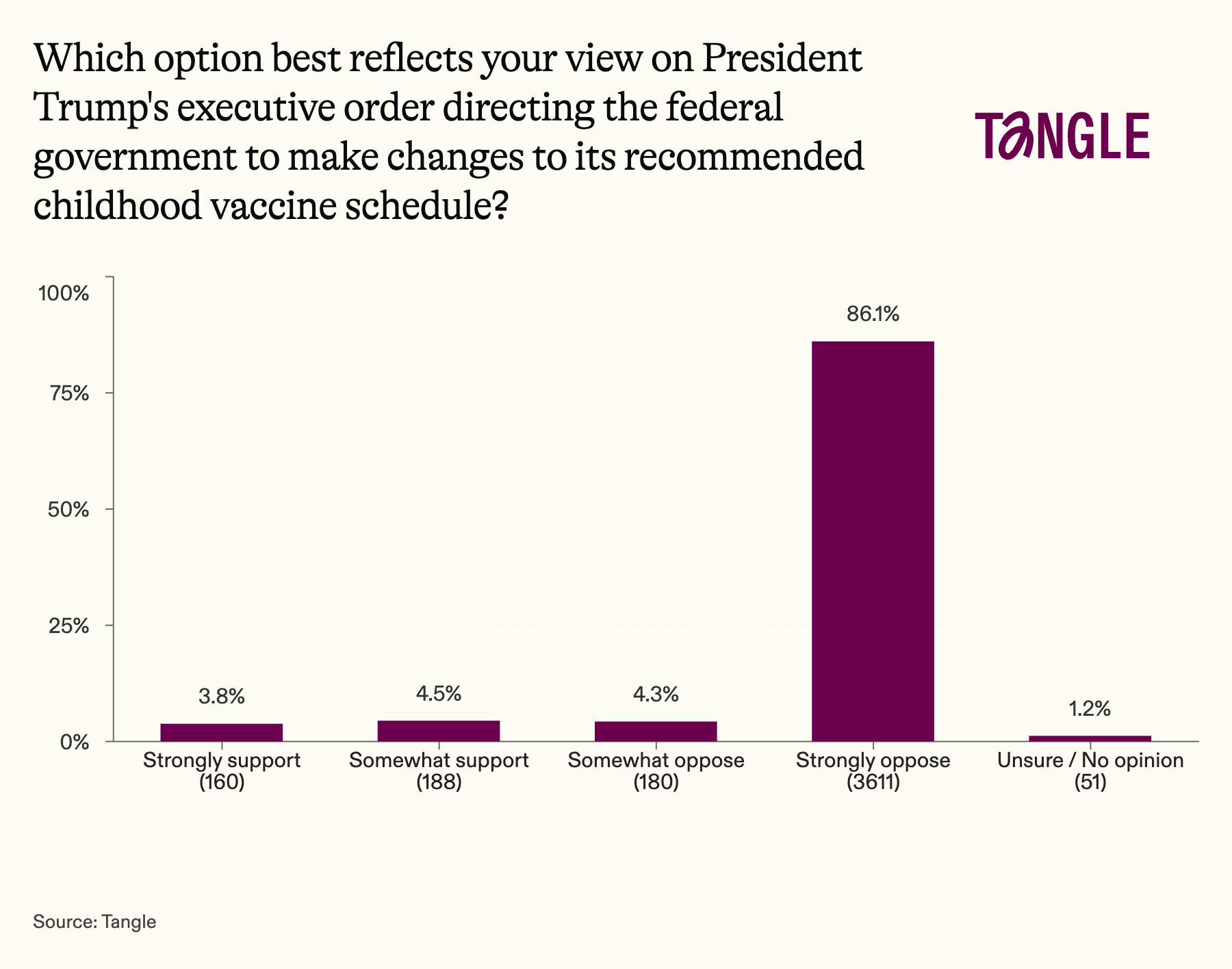
- Our last survey: 4,190 readers responded to our survey on President Trump’s executive order on the childhood vaccine schedule, with 90% saying they oppose the changes. “The policy should be made by doctors looking at evidence, not by politicians,” one respondent said. “Since the states mandate vaccine schedules, I don’t think this will have the impact most are concerned about in the long run,” said another.
Have a nice day.
The NASA Voyager 1 and 2 missions, launched in 1977 to explore Jupiter and Saturn, were expected to last for five years. At 49 years old and counting, both spacecraft have greatly exceeded their original missions and are now the farthest man-made objects from Earth. However, NASA has gradually had to turn off instruments on each Voyager to conserve power as the plutonium that powers them slowly decays. Recently, NASA was preparing to shut down another instrument on Voyager 2, but engineers came up with a new approach — by reconfiguring where the power onboard goes, they were able to reduce demand, buying the spacecraft even more time. The engineers are now planning to perform the same reconfiguration on Voyager 1. Scientific American has the story.