




















 500,000+ readers just today.



The case for the Democratic Socialists of America.
Note: You are reading a preview of a members-only Friday edition. To read it in full, you’ll be asked to subscribe.
As I look around today’s media landscape, something occurs to me: It’s becoming a hobbyhorse of political commentators to beat up on the Democratic Socialists of America (DSA). Both moderate Democrats and Republicans attack it constantly, as do independents. And in my own writing, I’ve overtly criticized the DSA. Indeed, it’s hard to find writers unapologetically defending DSA — especially in the mainstream press.
So, in late July, I put out a call on social media for a writer who would pen a piece for Tangle that was different — for a writer who would make the case for the DSA, its platform, and its record. A few hours later, Ross Barkan shot me a direct message.
Ross is a writer I respect and whose work I’ve followed for a long time. He challenges my worldview and does it respectfully and convincingly. I was thrilled he reached out, and excited to see what he would come up with.
However, just days before we were set to publish Ross’s piece last month, New York Magazine dropped his column amid allegations of plagiarism. We paused the publication of his piece, corresponded with Ross about the decision, and waited to learn more about the accusations. Now that the dust has settled, it appears Ross was most directly accused of improper citations of others’ work (i.e., linking to their writing but not delineating between their ideas and his own) — rather than stealing work wholesale. Ross has acknowledged making mistakes in past columns and apologized for what he described as “not us[ing] citations as aggressively as I should have and… not paraphras[ing] well enough.” However, he has also disputed some of the claims; several writers have come to his defense and questioned significant elements of New York Magazine’s review.
Today, I’m glad to share Ross’s essay making the case for why voters — Democrats, Republicans, and independents — should give democratic socialists a chance and welcome them to the political landscape. He eagerly engaged with our pushback and edits, and I’m confident these ideas are demonstrably his own. I’m excited to read your feedback and thoughts.
Best,
Isaac
The case for the DSA.
by Ross Barkan
Everyone, suddenly, can’t stop talking about the Democratic Socialists of America (DSA).
The largest socialist organization in the United States by far, it has enjoyed several surges of growth over the last decade. Since at least Bernie Sanders’s first presidential campaign in 2016, Americans have been familiarizing themselves with those three red letters, and wondering what exactly the DSA means for them and their families.
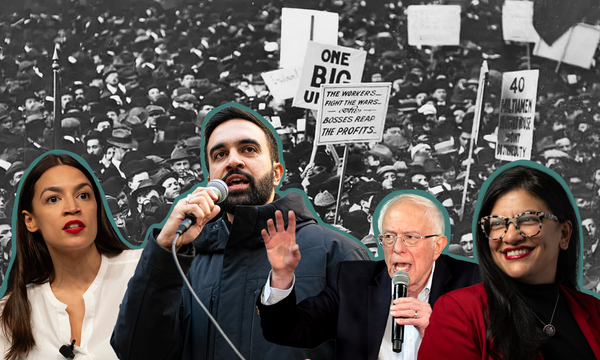
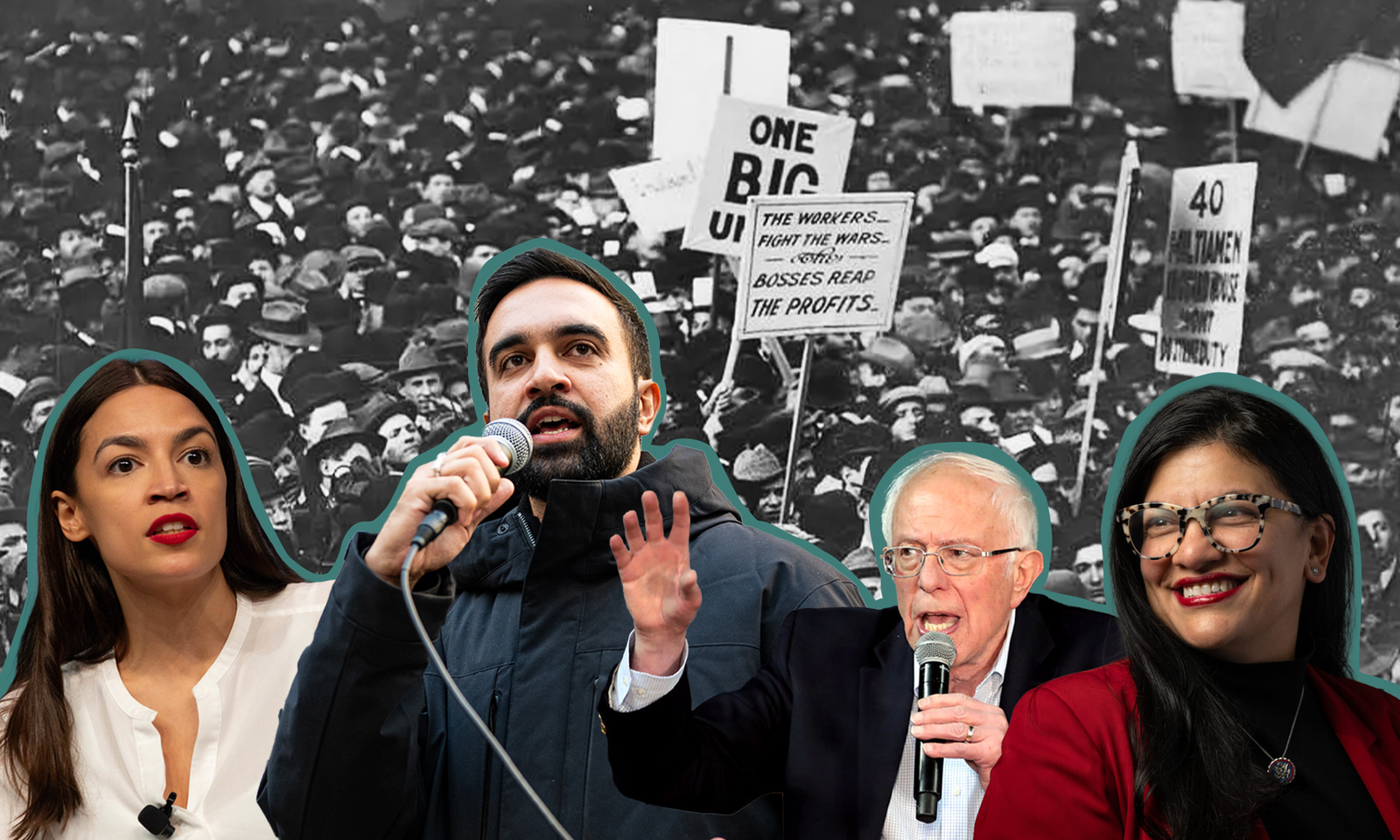
This moment, though, feels different. The DSA is larger than it’s ever been — with more than 120,000 members nationally — but the raw numbers alone don’t tell the story. Through the electoral victories of its top politicians, the DSA has penetrated the popular consciousness, leaving the Democratic and Republican establishments (along with a good deal of conventional media and punditry) scrambling to respond. The party now has a globally famous politician in New York City Mayor Zohran Mamdani. And its congressional caucus will expand next year if (or when) Chris Rabb, Melat Kiros, Darializa Avila Chevalier, and Claire Valdez win their heavily favored November contests, joining Alexandria Ocasio-Cortez and Rashida Tlaib in the House.
The punditry class often portrays the DSA as radical, dangerous, and anti-American. And those criticisms don’t come from just the right, either. Moderate Democrats have openly rebuked the DSA, declaring that the Democratic Party ought to stay explicitly in support of capitalism. Third Way, the centrist political organization, has promised to spend at least $15 million in an effort to damage and defeat DSA candidates. Democratic leaders, meanwhile, are hunting for ways to get the socialists out of their party. Jamie Harrison, the former chairman of the Democratic National Committee, said recently that those who “hate the Democratic Party” should not “run for our nomination,” a statement given generally but pretty clearly directed to socialist candidates. “Don’t use our infrastructure. Don’t ask Democrats to invest their time, money, and energy in your campaign,” Harrison posted on X.
Longtime Democratic strategist James Carville, meanwhile, declared he’ll exit the party if Hasan Piker, the DSA-aligned anti-Israel streamer, gains more influence. “I have no intention of ever being in the same political party with that guy,” Carville said. “I think that a majority — overwhelming majority of Democrats agree with me, but this idea that we’re going to seize the means of production and this — just go look at the DSA platform.”
Carville gets some of that right. The national DSA platform includes planks that are alienating to a large majority of Americans. Most voters do not want to abolish borders, prisons, and the Senate. They do not want their police departments gutted. To many Republican voters, the DSA is a virulent force that wants to destroy America. DSA members hate all the holidays, hate the flag, and fundamentally want to recreate the worst conditions of Soviet communism. Megan Romer, the co-chair of DSA, recently went viral for a Fox News interview where she defended these ideas, including a world without prisons. Francesca Hong, the unsuccessful DSA gubernatorial candidate in Wisconsin, once called to “cancel” Thanksgiving. If a DSA critic wants to reject the organization and movement, they can easily point to these examples. Or they can just note that no functioning nation on Earth — including those with generous, socialist welfare states — has rid itself of borders and prisons. And while I believe far too many people in the United States are in prisons and the system rehabilitates far too few, it would be a disaster if murderers and criminals and fraudsters were permitted to walk free with no consequences for their actions.
Popular perceptions of the DSA are thus grounded in some truth, but the organization and its people remain greatly misunderstood by both Republicans and Democrats. DSA candidates keep winning, and not by some fluke of a few low-turnout races or a dismissable big-city phenomenon. I am a writer and journalist deeply familiar with the DSA, and my time observing the organization — and even briefly participating in its politics — has lent me unique insights into its rise. In 2018, I ran for a state Senate seat as a Democrat in New York City, where I grew up and still live. I joined the DSA and tried (and failed) to win its endorsement. My unsuccessful campaign would have been totally devoid of historical relevance if not for my decision to hire a young, unknown political organizer named Zohran Mamdani.