









The California primary elections.
Happy Thursday. One more work day, then it’s Friday, which is basically Saturday, which makes this pretty much the weekend. Right? I’m Isaac Saul and today I’ll be your guide to California’s set of unusual elections. Yesterday, I spent the afternoon recording our weekly podcast Suspension of the Rules, in which I got to warn the world about flesh-eating livestock parasite screwworm. Unlike hantavirus and monkeypox, I think this actually has a good chance of becoming a major problem. We also talked about Republicans in the Senate standing up to Trump and dove into today’s main topic, which is the (potentially?) ascendant political right in California. Go watch the episode here, then subscribe to our YouTube channel to show how much you like us.
We’ve also got a reader question about tax refunds today and a breakdown of the stories we decided not to cover this week. Finally, a very special happy birthday to Tangle Associate Editor Lindsey Knuth, who decided to celebrate by avoiding all her colleagues and taking the day off work. My feelings aren’t hurt, I promise. It’s a 13-minute read, let’s jump in.
We’re coming to the stage!
In 10 days, Isaac and a panel of sharp thinkers are coming to West Virginia to discuss the societal effects of artificial intelligence. They’ll tackle questions like, What would happen if AI disappeared today vs. five years from now? Who makes a stronger case between the cynics and the optimists? Could we ban AI even if we wanted to? It’ll be a scintillating chat, and you can be in the room where it’s happening if you get your tickets now.
Quick hits.
- BREAKING: John Bolton, who served as national security adviser during the first Trump administration, has reportedly agreed to plead guilty to mishandling classified information. Bolton could receive a sentence of up to 60 months in jail and a fine of up to $2.25 million as part of his plea deal. (The plea)
- Iran carried out airstrikes in Kuwait, killing at least one person and injuring 63, in addition to striking the country’s international airport. The attacks could further strain U.S.–Iran peace negotiations. (The strikes) Separately, the House voted 215–208 to pass a war powers resolution aimed at limiting the Trump administration’s ability to carry out further unilateral military action against Iran. Four Republicans joined all Democrats in supporting the measure. (The resolution)
- The House voted 218–204 to advance a security package with over $1 billion in new military aid for Ukraine and new sanctions on Russia, among other provisions. Six Republicans, one independent, and all Democrats voted to pass the measure. (The package)
- President Donald Trump said he will nominate Acting Attorney General Todd Blanche to succeed Pam Bondi as attorney general. (The announcement)
- The Trump administration proposed 10%–12.5% tariffs on 60 economies that it claimed have failed to ban goods produced with forced labor, justifying the duties under Section 301 of the Trade Act’s provisions against foreign trade practices harming U.S. commerce. (The proposal)
- Agriculture Secretary Brooke Rollins said that a case of New World screwworm was detected in a 3-week-old calf in Texas, raising concerns about a potential outbreak among U.S. livestock. (The case)
Most people don’t know they’ve been hacked until it’s too late.
Not because someone emptied their bank account overnight.
Because identity theft often starts quietly — a credit card opened in your name, a loan application you never submitted, a change to your credit report you didn’t authorize.
Coveron (formerly NordProtect) helps you catch those warning signs early by monitoring your credit and alerting you to suspicious activity.
And if things go sideways, Coveron includes financial protection benefits designed to help eligible victims recover from:
- Identity theft
- Online fraud
- Cyberattacks and cyber extortion.
Today’s topic.
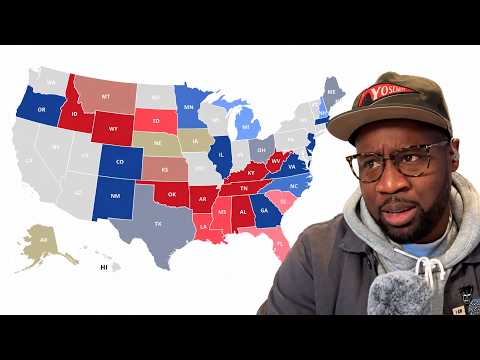
The California primaries. On Tuesday, California held its primary elections, headlined by the gubernatorial and Los Angeles mayoral races. With 56% of the votes counted in the gubernatorial primary, conservative commentator Steve Hilton (R) leads former Health Secretary Xavier Becerra (D) with 27.6% and 25.6% of the vote, respectively. Businessman Tom Steyer (D) is third with 19.8%. Separately, with 62% of the votes counted in the Los Angeles mayoral primary, Mayor Karen Bass (D) leads all candidates with 35% and will advance to the general election. Former reality television star Spencer Pratt (I) has earned 29.9%, and City Councilmember Nithya Raman (D) is third with 22.8%; the race for the second spot in the runoff is still too close to call.
California allows all elections to be conducted by mail, and all ballots are valid if postmarked by Election Day and delivered to county elections offices within seven days of the election; because of this system, some races may take weeks to determine a winner.
Back up: In 2011, California implemented a top-two primary system for state constitutional offices, state legislative offices, and U.S. congressional offices (presidential elections use party primaries). Under the system, all candidates for an office are listed on a single primary ballot, and the two candidates receiving the most votes — regardless of party — advance to the general election. In the Los Angeles mayoral primary, if any candidate receives 50% or more of the primary vote, they win the election outright; if not, the top two vote-getters progress to a runoff in the general election.
California Gov. Gavin Newsom (D) is term-limited, and several candidates are vying to fill his office. In the months preceding the primary, state Democrats worried that the significant number of prominent party members in the race would splinter the vote and allow two Republicans to advance. However, President Donald Trump’s endorsement of Hilton, a former Fox News anchor and conservative political strategist, boosted his candidacy, while former Rep. Eric Swalwell’s (D) exit from the race amid sexual misconduct allegations cleared a key portion of the Democratic field. While the race is still too close to call, Becerra and Hilton are favored to advance.
Mayor Bass, who served in Congress from 2011–2022, is running for a second four-year term as Los Angeles’s mayor. She has faced scrutiny for her handling of the Southern California wildfires, which devastated large areas of the Los Angeles metropolitan area over more than three weeks in January 2025, killing at least 31 people and destroying thousands of homes and other structures.
Pratt, a first-time candidate known for starring on the reality television show The Hills, lost his home in the fires and focused his campaign on criticism of Bass’s response and her perceived shortcomings on crime and homelessness issues. Raman presented herself as a progressive alternative to Bass, highlighting housing affordability challenges and lackluster city services. Major news desks have projected Bass will advance to the general election, while Pratt and Raman are in a close contest for the second spot.
Today, we’ll share what the left, right, and California writers are saying about the races. Then, Executive Editor Isaac Saul gives his take.
What the left is saying.
- The left sees the governor’s race as a crucial decision for California Democrats.
- Others criticize the state party for lacking the energy of its past.
In The Guardian, Norman Solomon said Democrats face a “huge crossroads in [the] California Governor’s race.”
“The next governor of deep-blue California will almost certainly be a Democrat. But what kind of Democrat?” Solomon asked, “[Tom] Steyer promises to upend corporate power and give California a sustained progressive jolt. If he wins, the country’s largest state party will probably go through a major ideological challenge… [Xavier Becerra] is central casting for the kind of political sensibilities that have dominated the state party, which internally boosts identity politics above (rhetoric aside) such considerations as economic justice, labor rights, public health, environmental protection, or peace.”
“The rivalry between Becerra and Steyer can also be understood as a skirmish in a nascent conflict between [Gov. Gavin] Newsom and [Rep. Ro] Khanna, whose evident presidential ambitions have more than a little riding on this election,” Solomon said. “If Steyer becomes governor, presumably allied with Khanna, that could boost the congressman’s uphill quest to overtake Newsom for the Democratic nomination.”
In The American Prospect, Harold Meyerson asked how California politics “[became] so lackluster.”
“At least as far back as 1910, when Progressives swept to power and remade the state, California politics have been movement politics and oppositional politics,” Meyerson wrote. “The kind of intensity of belief and support that powered [the rise of AOC and Zohran Mamdani], and has historically powered the movements that once fed into and shaped California’s Democratic Party, has been absent from California politics this year, save in a number of hyperlocal races.
“If such a movement can cohere around the wealth tax proposal that will be on November’s ballot, that might provide the kind of boost it needs to begin to grapple with the state’s dysfunctional two-tier economy,” Meyerson said. “Absent that, California Democrats will have politics without passion (save when repelling ICE’s marauders) and without plausibly passionate candidates.”
What the right is saying.
- Many on the right say Californians rejected progressive candidates in key races.
- Others suggest Spencer Pratt offers a model for a post-Trump GOP.
The Wall Street Journal editorial board wrote about “November portents from the primaries.”
“While the mail ballots in California are still coming in, it’s not too soon to detect a modest backlash against bad progressive governance… Mr. Hilton would have an uphill battle given California’s Democratic tilt. Yet he’ll have plenty of material, starting with how the state’s high taxes and burdensome regulations drive away businesses and people,” the board said. “Billionaire Tom Steyer was a more distant third… Mr. Steyer backs the California wealth tax that’s on the November ballot, while Mr. Becerra says he’s opposed.
“In the Los Angeles mayor’s race, incumbent Karen Bass was at roughly a third of the vote, no show of strength. Spencer Pratt, running on a reform agenda, was several points ahead of socialist councilwoman Nithya Raman,” the board wrote. “The surprising enthusiasm for Mr. Pratt’s campaign is about more than AI videos showing him as Batman. It reflects how many residents are angry over the city government’s many failures. Mr. Pratt might get five months to make the case that he can fix it.”
In The American Conservative, Scott Greer described “Spencer Pratt’s GOP.”
“While [Spencer] Pratt has his own style, he’s made his name in a similar way Trump did back in the 2016 campaign. In contrast to his opponents, Pratt knows how to entertain,” Greer said. “One of Pratt’s core issues is LA’s homeless problem. In stark contrast to his opponents, he’s not a fan of the homeless. He lashes out at the city’s leaders for allowing drugged-out ‘zombies’ to wander the city streets uninhibited… None of his opponents would ever dare talk about the issue in these terms. But Pratt does, and that’s why he’s getting so much support in deep-blue LA.”
“There’s a lot of discussion over what the GOP will look like when Trump leaves office. It’s commonly thought that it may replace the persona of Trump with a more coherent ideology of ‘Trumpism,’” Greer wrote. “Pratt shows a different path. It will retain Trump’s entertaining combativeness, but in a style that’s not a direct copy of the president. It won’t be particularly ideological, besides opposing leftists, criminals, illegal aliens, and the homeless. It will be pragmatic and at peace with most cultural trends… In this scenario, Trumpism will be more of a style than a cohesive ideology.”
What California writers are saying.
- Some say the election will result in more of the same for California.
- Others advocate for Hilton and Pratt as changemakers.
In the Los Angeles Times, Mark Z. Barabak said the governor’s race will end in “the most consistent and predictable of ways.”
“California has never elected a female governor. That won’t change in November. Voters have never much cared for rich people trying to buy the state’s highest elected office. They still don’t. The California electorate has typically favored experience over youth, and favored bland and boring over razzle and dazzle. It continues to do so,” Barabak wrote. “For all the speculation about one political party or the other being shut out in Tuesday’s primary, the November runoff may very well turn out to be a thoroughly conventional Democrat vs. Republican matchup.”
“[Xavier] Becerra has a political persona that could be marketed as a sleep aid… But Becerra’s even-keeled demeanor seemed the perfect prescription following the overnight implosion of Eric Swalwell’s scandal-scarred campaign,” Barabak said. “It was not likely. But the mere prospect of Democrats being shut out of the November runoff was enough to guarantee such a scenario would never happen in this reliably blue state.”
The California Post editorial board called Steve Hilton and Spencer Pratt “the change California needs.”
“[The primaries are] a judgment day for politicians who failed to defend our communities from wildfires, homelessness, crime, and drugs,” the board wrote. “Steve Hilton has been working on solutions for California — for many years. He’s not just a critic who complains about the state and predicts doom. He looks for practical answers, and policies that we could adopt today, if we had the political will… Ideas like suspending the gas tax; ending income taxes under $100,000; and investigating fraud in state government.”
“Spencer Pratt wasn’t looking to run for mayor. He was thrust into it, when his community went up in flames… And what should have been a minor disaster, at worst, became the costliest natural disaster in American history,” the board said. “[Pratt] decided to do something about it, so that no one in LA would ever have to face that kind of unnecessary loss again… Pratt’s campaign represents a chance for voters to tell Mayor Bass and other elected officials that there is a political price for failure.”
My take.
Reminder: “My take” is a section where we give ourselves space to share a personal opinion. If you have feedback, criticism or compliments, don't unsubscribe. Write in by replying to this email, or leave a comment.
- California’s political scene is far more interesting than most people believe.
- Establishment candidates are sinking everywhere, and the chances of a California upset are real.
- Even if the leading Democrats win the governor and Los Angeles mayoral races, anti-establishment candidates are still leaving their marks.
Executive Editor Isaac Saul: At a moment when a deeply unpopular Republican president is in the White House, one might think that elections in California’s midnight-blue political scene would be uneventful.
But that couldn’t be further from the truth.
Counterintuitively, California has more registered Republicans than any state in America (Texas may have more Republican voters, but due to differences in the electoral systems, California has more registered Republicans with 5.8 million). This number, of course, is due to the state’s size (Republicans still make up just 25.1% of its registered voters), but it means conservatives in the state always have a chance to make some noise, particularly with a “top-two” primary system.
This year, California’s gubernatorial race and Los Angeles’ mayoral race are both drawing national interest, thanks to some attention-grabbing Republican candidates.
In the gubernatorial election, Steve Hilton is framing his candidacy as a last chance to “save” California, insisting to voters that it’s time to make a change after 16 years of Democratic leadership. I interviewed Hilton on the Tangle podcast a month ago, and I can see why he’s got a foothold. He’s a likable guy who can speak deftly about his love for America, why he immigrated here from England, and what California “used to be like” when he arrived. His platform focuses on over-regulation, cost of living, homelessness, and unemployment in the state — all areas where Gov. Gavin Newsom is ripe for criticism.
I think Hilton grossly exaggerates the negative impacts of policies designed to mitigate environmental harm, and I think his decision to downplay climate change as a legitimate issue will likely turn off most California voters. But he’s grounded his campaign in real, tangible policy issues instead of the culture war stuff that dominates so much of U.S. politics, a smart move that bucks the trend of dark-horse candidates focusing on culture-war issues.
He’s also got the benefit of a discombobulated opposition. Newsom is a deeply polarizing figure. Rep. Eric Swalwell was leading in most polls until he dropped out amid allegations of sexual harassment. Former Rep. Katie Porter, once considered a frontrunner, never re-found her footing after a pair of embarrassing videos went viral. That left Tom Steyer and Xavier Becerra as the likely frontrunners.
Steyer is known for his stilted personality, which doesn’t compare favorably to Hilton’s effusive style. He also had an impractical and bizarre presidential bid in 2020, which cost him $340 million and earned him just 270,000 votes. The self-funded billionaire has already dumped more than $200 million of his own money into this race, positioning himself as a kind of “class traitor” to voters — the anti-billionaire’s billionaire. His website calls for higher taxes on corporations and billionaires like him, and he’s generally running to the left of Newsom — who in recent years has become a check on the state’s progressive bent — at least on most of the big issues.
Becerra, meanwhile, has by far the most experience of the bunch, but he’s also the most establishment-approved and politically moderate — in today’s climate, that’s more a liability than a strength. He was a California representative for more than two decades, then served as the state’s attorney general, and then served as Health secretary during Biden’s presidency. Neither Hilton nor Steyer is really close in terms of qualifications, though experience also means baggage — and Becerra will have the distinct disadvantage of having to defend Biden’s record, Newsom’s record, and his own record as attorney general throughout the campaign.
Do I think Hilton has a chance in this environment? Not really. Becerra, even with his political baggage, will point to the over one hundred lawsuits he’s filed against President Trump and the expansion of healthcare under Biden as evidence he’s ready to fight for California Democrats. He oozes competence on the campaign trail, and though he has fewer sweeping plans for government expansion than Steyer, that might be a leg up in this environment. It’s hard to think of anyone better equipped to navigate California’s governing structure. For most of the state’s registered voters who aren’t Republicans, I imagine that’ll be a more compelling package than being a Trump-endorsed former Fox News host banging on about how awful California is and how much climate change policy is to blame.
A few hundred miles south of Sacramento, another race defined by dissatisfaction is capturing a lot of people’s attention. In Los Angeles, Mayor Karen Bass (D) may end up in a head-to-head with Spencer Pratt, who is running as an independent and stumping hard against Bass’s record on homelessness, drug use, government spending, and wildfire accountability. Pratt is currently second in the runoff election, though votes are still being tallied and City Councilmember Nithya Raman (D) is still very much in the running.
Running as an incumbent used to be a strength, but these days it often feels like an albatross. Grievance politics are ascendant, and coming off as anti-establishment can mean more than the identifier next to your name. While Bass was in Ghana during the Palisades Fire (despite promising not to travel internationally as mayor) and had overseen cuts to the Los Angeles Fire Department, Pratt and his family lost their home in the fire and have since taken up the fight for some government accountability for what happened.
Pratt’s similarities to Trump extend beyond their shared background on reality TV. He simplifies big issues with flashy ideas, like insisting homelessness can be solved by forcing addicts into treatment. He uses incendiary rhetoric, like claiming housing NGOs in Los Angeles are literally killing the homeless. He even reaches into the bag for nicknames, like calling Bass “Mayor Basura,” using the Spanish word for trash.
If Pratt advances, Bass will have a hard time weathering his attacks about Los Angeles’s $1 billion budget gap, its persistent homelessness problem, and the hard-to-deny failures of the response to the Palisades fire. But Pratt has his own red flags. His sister warned Angelenos that he’s running in pursuit of fame and to sell a forthcoming memoir, and she alleged that he beat her and used to be a member of a cult. He’s a former 9/11 conspiracy theorist who appeared on Alex Jones’s radio show in 2009 to claim the attacks were an inside job. His residency requirements have been called into question after he moved to Santa Barbara. And, as we discussed on the Tangle podcast this week, he has built his entire campaign to address homelessness by flattening this complex crisis that combines housing costs, addiction, mental health, and the justice system into only a drug-addiction problem.
The sum of all this has been rather remarkable. Campaign strategist Luis Alvarado told CBS, “I haven’t seen a race this close in decades, especially in the city of Los Angeles.” Anecdotally, I’ve heard from a surprising number of longtime Democratic voters in Los Angeles — even some progressive voters — who are legitimately considering punching a ballot for Pratt. He raised more money than any candidate in the race, and the way media attention works, I suspect he’ll get tens of millions of dollars worth of free press if he advances.
Is Pratt the favorite? Of course not. He may not even make it to the general election. But, unlike Hilton, I can’t shake the feeling that if he ends up in a head-to-head race with Bass, he’s got an actual shot at upending decades of political assumptions in America’s second-largest metropolis. Even in a loss against Bass, a competitive race could serve as a shot across the bow of the Democratic establishment. I’ll be watching very closely.
Take the survey: Do you think Spencer Pratt could win the Los Angeles mayoral election? Let us know.
Disagree? That's okay. Our opinion is just one of many. Write in and let us know why, and we'll consider publishing your feedback.
Your questions, answered.
Q: Democrats said that the big beautiful bill was gonna raise taxes on everybody but the rich. But I just saw [Treasury] Secretary Bessent on a White House briefing on CNN say that most Americans got a bigger tax refund for 2025. Which is true?
— Carrie from Castle Rock, CO (submitted through Subtext)
Tangle: First off, we should clarify that Democrats weren’t claiming that the One Big Beautiful Bill Act (OBBBA) would raise taxes on everyone except the rich; they argued the bill’s tax cuts would disproportionately benefit the wealthy. But the underlying question of whether this claim can coexist with Bessent’s is a good one — it is actually possible for them both to be true. Yes, many Americans received larger tax refunds in 2025 than in 2024. According to IRS filing data, as of May 8, the average tax refund amount was $3,276 in 2026, while the average tax refund at this time last year was $2,939. The OBBBA’s tax cuts for 2025 are partially responsible for these larger-than-usual refunds because the IRS did not update its withholding tables to reflect those tax cuts. This meant that many Americans ended up having too much money withheld from their paychecks, which meant larger refunds. That won’t happen again in 2027 because the IRS is using new withholding tables that factor in the OBBBA’s tax changes.
However, looking at refunds alone isn’t the best way to measure tax impacts on Americans. Instead, many economists and tax experts look at the overall tax burden, which is usually defined as the total amount that Americans pay through national, state, local, and sales taxes. Here, the true impact of the OBBBA is contested. Some analysts at the Institute on Taxation and Economic Policy argue that for a majority of Americans, the OBBBA’s tax cuts were more than offset by the end of the enhanced Obamacare tax credits at the end of 2025 and the impact of tariffs — while the richest Americans still mostly benefited from the tax cuts. In contrast, experts at the Tax Foundation have argued that the OBBBA results in more money in the average taxpayer’s pockets.
Want to have a question answered in the newsletter? You can reply to this email (it goes straight to our inbox) or fill out this form.
Your Social Security number may already be exposed.
Between data breaches, leaks, and information brokers, millions of Americans have had personal information compromised online. Coveron (formerly NordProtect) helps you stay ahead of identity theft with credit monitoring and alerts for suspicious activity.
Use code TANGLE for 76% off.
The road not taken.
This week, we strongly considered covering the Trump administration’s plans for America’s 250th anniversary celebration, the scrapping of the $1.776 billion anti-weaponization fund, and Scott Pelley’s firing at 60 Minutes. Monday’s edition on the newest Graham Platner controversies seemed fixed, so most of our debate happened on Monday afternoon.
We decided to cover the Trump Accounts over the anti-weaponization fund updates and anniversary celebration because we believed those stories are ongoing, so we agreed to wait before giving them full coverage. Then, our Wednesday and Thursday decisions were basically made for us, despite the rapid developments in the 60 Minutes story on Wednesday afternoon. The Bill Pulte nomination and Spencer Pratt’s competitive performance in the Los Angeles mayoral primary were simply too immediate, multi-dimensional, and impactful for us to skip.
Numbers.
- 61. The number of candidates on the primary ballot for the top two spots in the California gubernatorial race.
- 24 and 12. The number of those candidates registered as Democrats and Republicans, respectively.
- $316 million. The approximate amount of total ad spending and reservations in the race, making it the most expensive governor’s race in history, according to a May 29 analysis by AdImpact.
- 64%. Of that spending, the percentage accounted for by Tom Steyer’s (D) campaign.
- $3.26 million. The total amount of money raised by Los Angeles mayoral candidate Spencer Pratt (I) as of May 22, according to The Los Angeles Times.
- $3.13 million. The total amount raised by Mayor Karen Bass (D).
The extras.
- One year ago today we covered Ukraine’s surprise attack in Russia.
- The most clicked link in our last regular newsletter was the partnered message with Ground News in our free edition.
- Nothing to do with politics: Bartenders opine on what will be the drink of the summer.
- Our last survey: 2,672 readers responded to our survey on President Trump picking Bill Pulte as acting director of national intelligence with 89% strongly disapproving. “DNI needs someone with experience!,” one respondent said. “Another choice putting loyalty over competence,” said another.

Have a nice day.
Dogs have become near-perfect partners for search-and-rescue operations, but they have one key limitation: working underwater. For Michael Hadsell, the president of Peace River K9 Search and Rescue in Florida, the solution to this problem came in the form of an otter. After observing similarities in how otters and dogs are trained, he brought on Splash, an Asian small-clawed otter, and began training him in Peace River’s work. The animal’s natural intelligence, fine-tuned sensory organs, and ability to hold its breath for up to five minutes make it well suited for recovery missions underwater. Over more than 20 missions, Splash has helped find a weapon used in a 25-year-old murder case and located human DNA on a clay brick at the bottom of a lake in a separate murder case. As a reward, he receives pieces of salmon, preferring farm-raised to wild-caught. Good Good Good has the story.
500,000+ readers just today.
The best of your best.