Biking to class on the first day of sophomore year | Photo from Dorothy Swanson Blaker, edited by Candida Hall
This is the Tangle Sunday Edition, a brief roundup of our independent politics coverage plus some extra features for your Sunday morning reading.
Correction.
In the July 12 Sunday edition, we included a quick hit on Sen. Lindsey Graham’s passing that said he was first elected to the Senate in 2003. While Graham took office in 2003, he was elected in November 2002. The senator’s passing was announced early Sunday morning, and in our haste to add this news item to the edition, we misstated this detail.
This is our 7th correction in The Sunday's 135-week history and our first since June 14. We track corrections and place them at the top of the newsletter in an effort to maximize transparency with readers.
What the left is doodling.
Mike Luckovich | Creators Syndicate
What the right is doodling.
Gary Varvel | Creators Syndicate
Suspension of the Rules.
In this week’s episode, Isaac, Kmele and Senior Editor Will Kaback (filling in for Ari) break down the arguments for and against appointing family members to fill the seats of deceased lawmakers, a viral video of Nevada’s governor, and President Trump’s latest election-administration moves. Plus, epidemiologist Katelyn Jetelina fills you in on what you need to know about the cyclosporiasis outbreak. Check it out:
In Partnership with semafor
The world is moving fast. This is how you keep up.
Semafor Flagship identifies the key forces shaping an increasingly interconnected world, giving you the ten most important stories happening around the world each day. In just five minutes, each edition gives you the context and insight required to stay informed and ahead of the curve. Subscribe today.
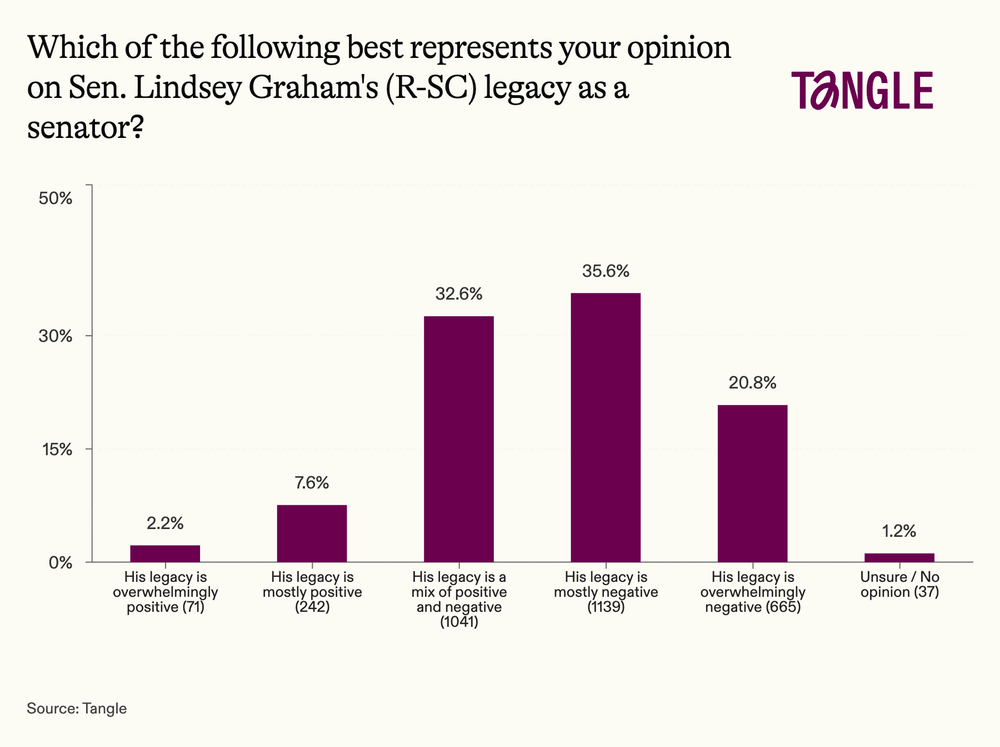
Lindsey Graham’s death. On Saturday, July 11, Sen. Lindsey Graham (R-SC) passed away at age 71 after what his office called a “brief and sudden illness.” The nature of the illness was initially unknown, though news outlets reported that emergency services were dispatched to a Washington, D.C. home owned by Graham and administered treatment to a man suffering from cardiac arrest. On Sunday, July 12, Graham’s office said a preliminary examination found he died of “aortic dissection due to arteriosclerotic cardiovascular disease.”
Our take: “Graham’s career offers plenty for his supporters and detractors to highlight. The senator’s principles constantly shifted for political expedience, which I found deeply frustrating. Graham’s absence will immediately be felt in U.S. policy on Ukraine, Iran, and election security legislation.”
Reader Survey:
Tuesday, July 14.
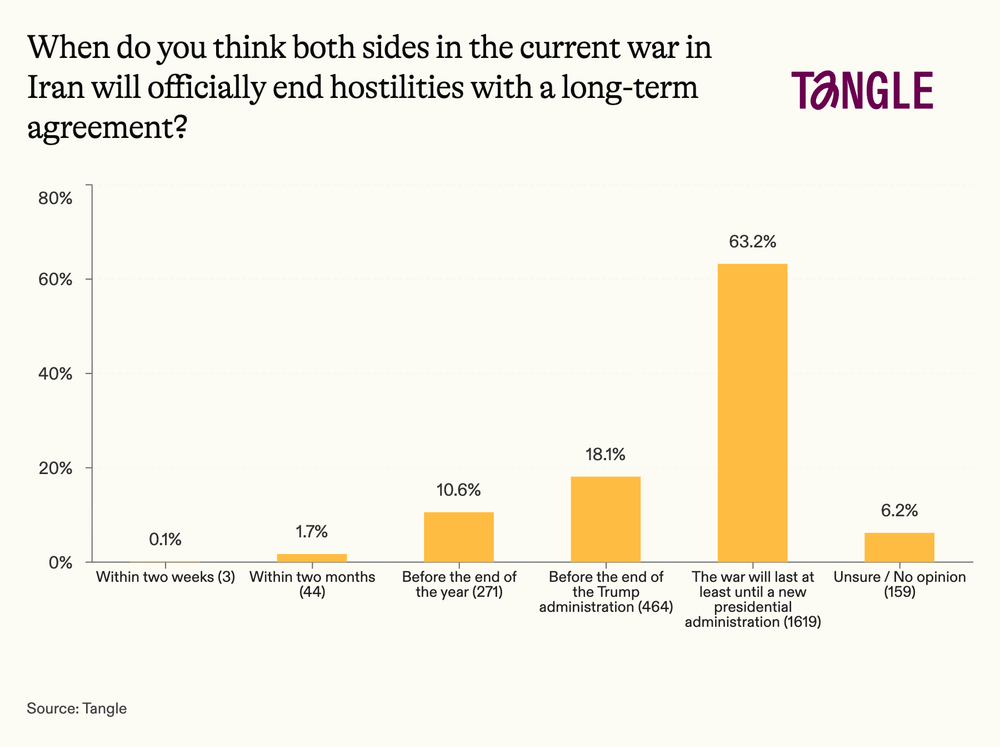
The latest developments in Iran. On Monday, July 13, the U.S. carried out its third straight day of strikes against Iran, the latest in a series of military engagements that began last week. On Friday, President Donald Trump notified Congress that the U.S. had resumed military activities against Iran as of July 7, when U.S. Central Command (CENTCOM) reported engaging in “retaliatory strikes” following Iran’s strikes on vessels attempting to transit the Strait of Hormuz. The resumption of military engagement follows weeks of increasing tensions as peace negotiations stalled.
Our take: “The resumption of fighting is frustrating but not surprising. With the MOU seemingly dead, it’s hard to see a way out of this conflict. Even after nearly five months of war, the fundamentals on each side remain about the same.”
Reader Survey:
Wednesday, July 15.
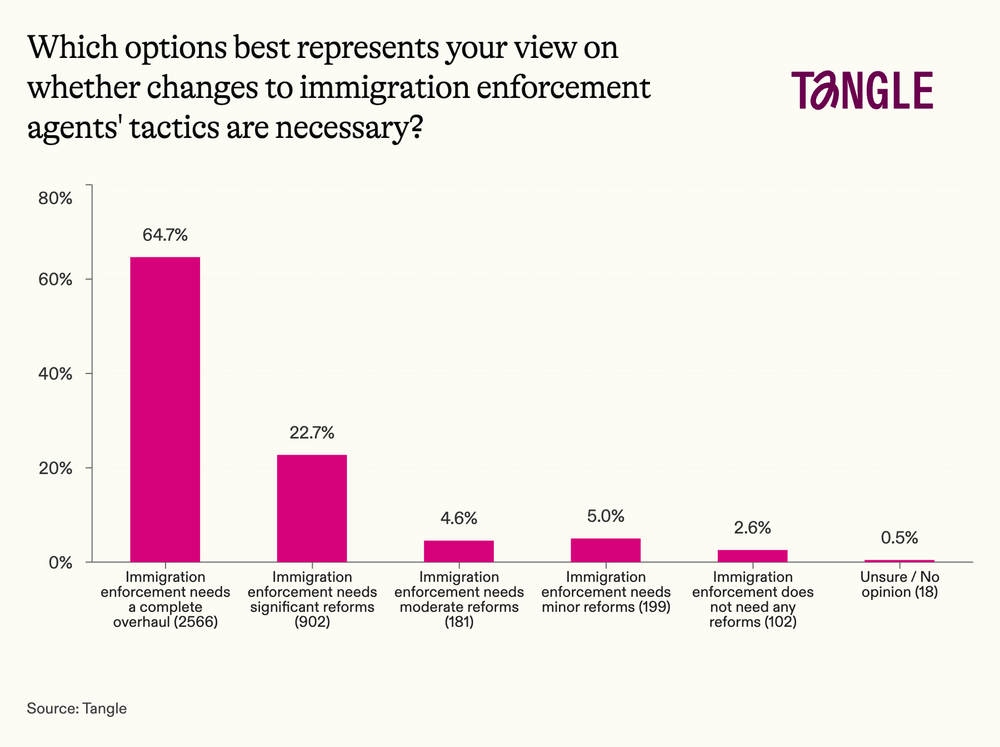
The recent ICE-involved shootings. In the past week, Immigration and Customs Enforcement (ICE) officers were involved in deadly shootings in Texas and Maine. On Monday, July 13, in Biddeford, Maine, an officer shot and killed a man who allegedly disregarded orders to stop his vehicle and attempted to flee. Separately, on Tuesday, July 7, in Houston, ICE agents shot and killed a man whom they accused of “weaponizing his vehicle” during a traffic stop. State and local officials have called for investigations into both incidents.
Our take: “The similarities between the Maine and Texas shootings are uncanny and unnerving. I’m increasingly skeptical of the government’s version of events. It’s clear that immigration enforcement needs changes — and fast.”
Reader Survey:
Thursday, July 16.
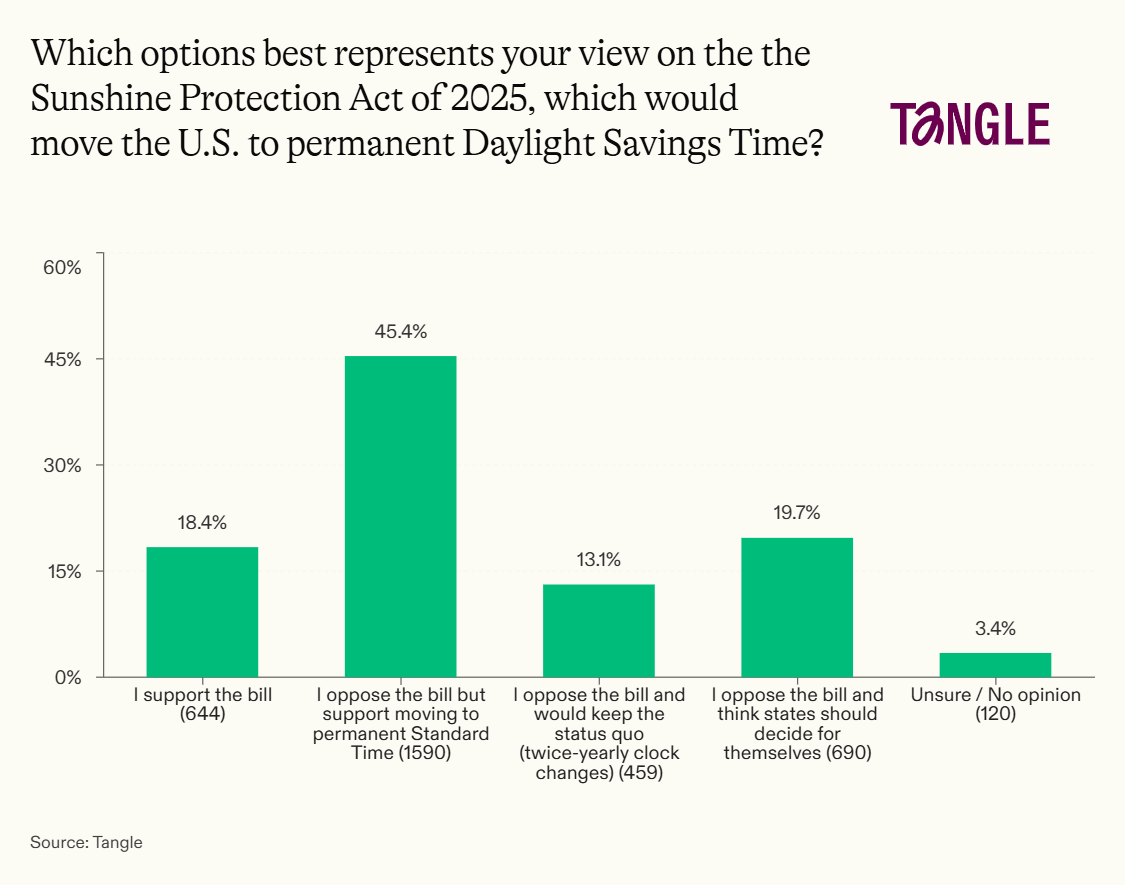
The Sunshine Protection Act. On Tuesday, July 14, the House voted 308–117 to pass the Sunshine Protection Act of 2025, a bill that would make Daylight Savings Time (DST) permanent in the United States. The legislation passed with 114 Democrats, 193 Republicans, and one independent in support and now heads to the Senate. If enacted, the Sunshine Protection Act would apply to all states except those that exempt themselves before the law takes effect. Currently, Hawaii and parts of Arizona do not observe DST (nor do Puerto Rico, Guam, American Samoa, the U.S. Virgin Islands, and the Northern Mariana Islands).
Our take: “Twice-yearly clock changes don’t have to be a fact of life, but I think this bill creates new problems. Permanent DST sounds nice until it’s dark at 9 AM in the middle of winter. A better solution would be to let states decide for themselves.”
Reader Survey:
Friday, July 17.
Are conspiracy theories getting dumber? In just the past month, conspiracy theories surrounding a host of issues — Sen. Mitch McConnell’s (R-KY) health, Sen. Lindsey Graham’s (R-SC) sudden death, the assassination of Charlie Kirk — have caught fire, while old theories about election interference have surged back into prominence. In this week’s members-only Friday edition, Executive Editor Isaac Saul looks into the source of these theories, how they can be disproven, and what might be making them gain traction. You can read his piece here.
What just happened.
Here’s a rundown of the major stories that have broken since our newsletter on Thursday.
On Thursday, news outlets reported that a teleprompter operator for President Trump is under investigation for placing bets related to the president’s speeches on a prediction market, allegedly winning over $100,000. The White House said the operator has been placed on unpaid leave. (The report)
On Thursday, President Trump delivered an address to the nation, suggesting the 2020 election was compromised by fraud and Chinese interference and repeating past allegations about vulnerabilities in U.S. election systems. (The address)
On Thursday, the Trump administration issued a final rule that will allow immigration officers to consider use of public benefits, age, education, skills and health, among other metrics, when considering Green Card applications. The policy reverses a Biden-era rule that only allowed authorities to consider an applicant’s use of cash benefits. (The rule)
On Friday, Iran said it launched strikes against U.S. forces in Syria and Bahrain, following the sixth consecutive day of U.S. strikes on Iranian targets. (The attacks)
On Friday, Homeland Security Secretary Markwayne Mullin suggested that election officials who do not utilize federal government resources to “secure their elections” could face criminal penalties. (The comments)
On Friday, the 3rd U.S. Circuit Court of Appeals struck down New Jersey’s ban on semiautomatic rifles and certain firearm magazines, ruling that the law was unconstitutional. (The ruling)
On Friday, Taco Bell said it had removed lettuce from its restaurants that were linked to a nationwide cyclosporiasis outbreak. (The statement)
On Saturday, U.S. Central Command announced that two U.S. service members were killed and another is missing following Iranian strikes on two military bases in Jordan on Friday. Four other service members were medically evacuated and have since been discharged. (The announcement) Separately, Iran said it had suspended all implementation of its memorandum of understanding with the U.S., accusing the U.S. of violating its commitments. (The statement)
Reader essay.
Biking to class on the first day of sophomore year | Photo from Dorothy Swanson Blaker
Dorothy Swanson Blaker spent her high school career with a scholarship at Phillips Academy Andover, one of the most prestigious boarding schools in the country. Soon, she found herself caught up in the college admissions status game, defining herself by whether she would be accepted by the best colleges in the country. But as the time to go to college drew nearer, Dorothy found herself questioning what was really worthwhile. In this week’s reader essay, she shares how her values changed — and how she ended up right where she was meant to be.
This post is for paying subscribers only
Sign up now and upgrade your account to read the post and get access to the full library of posts for paying subscribers only.