





I’m Isaac Saul, and it’s a somber Wednesday morning. In the wake of Lindsey Graham’s death, the renewed fighting in Iran, and today’s topic — a pair of DHS-involved shootings in Maine and Texas — I can’t say I’m feeling particularly chipper. Covering our country can sometimes be a sad, ruthless and unrelenting pursuit, but it’s critical we don’t look away when the stories get hard. Today, we’ll do our best to untangle these events and offer some clarity.
Separately, we have the history of the Rosetta Stone’s discovery, a feel-good story about World War II veterans, and a jam-packed quick hits section. It’s a 15-minute read. Let’s get into it.

Is ranked-choice voting in trouble?
In 2020, Alaska voted to overhaul its election system, adopting top-four open primaries and ranked-choice voting in the general election. Opponents tried — and failed — to repeal the new system in 2024, but another repeal effort is on the ballot in 2026. Earlier this year, Senior Editor Will Kaback traveled to Alaska to talk with advocates on each side and investigate what Alaskans really think of their new system. We’ll publish the full report next week, but for a sneak preview, you can watch the trailer here:
Quick hits.
- Justices Elena Kagan and Amy Coney Barrett testified before House and Senate committees on the Supreme Court’s budget for fiscal year 2027, telling lawmakers that increases in the budget were “almost entirely for security expenses.” It was the first appearance before Congress by Supreme Court justices in seven years. (The testimony)
- President Donald Trump held a Situation Room meeting to discuss ongoing U.S. strikes against Iran, reportedly focused on expanding the scale of the attacks. (The meeting)
- The House voted 308–117 to pass legislation that would make Daylight Savings Time permanent in the United States. The bill now heads to the Senate. (The bill)
- New York Gov. Kathy Hochul (D) signed an executive order banning the construction of new large-scale data centers for one year, citing the strain these facilities cause on the state’s electric grid. (The order)
- The Centers for Disease Control and Prevention estimated that there are at least 7,000 cases of cyclosporiasis in the U.S., with the highest concentration in Michigan. The foodborne intestinal infection causes severe diarrhea, and the agency is looking into several potential sources of the outbreak. (The latest)
Free Samsung Galaxy A17 5G
You can currently get the new Samsung Galaxy A17 5G for FREE at Metro by T-Mobile when you bring your number and sign up for a qualifying unlimited plan. This deal includes no activation fees AND a 5-year price guarantee on your service. Taxes and Fees are included.
The Galaxy A17 5G is built for longevity and smart performance. It is the first in its class to offer six years of guaranteed OS and security updates. Helpful AI tools like Circle to Search and Gemini bring flagship-level convenience to an accessible price point.
Switching to Metro has never been easier, just bring your number and get the Latest Samsung Galaxy A17 5G for FREE.
*Terms & Conditions apply. Not available if with Metro in the last 180 days. If using >35GB/mo. May notice reduced speeds.
Today’s topic.
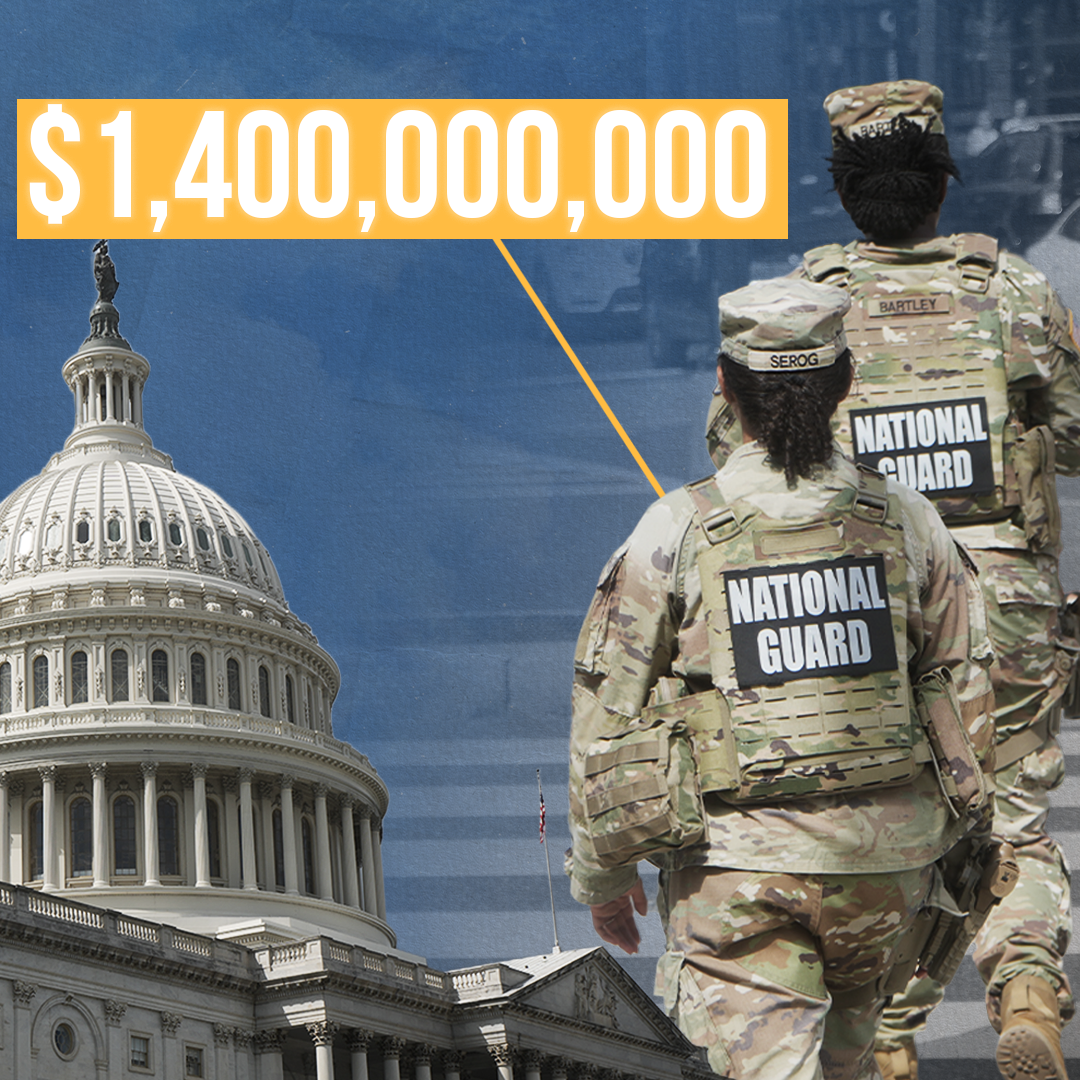
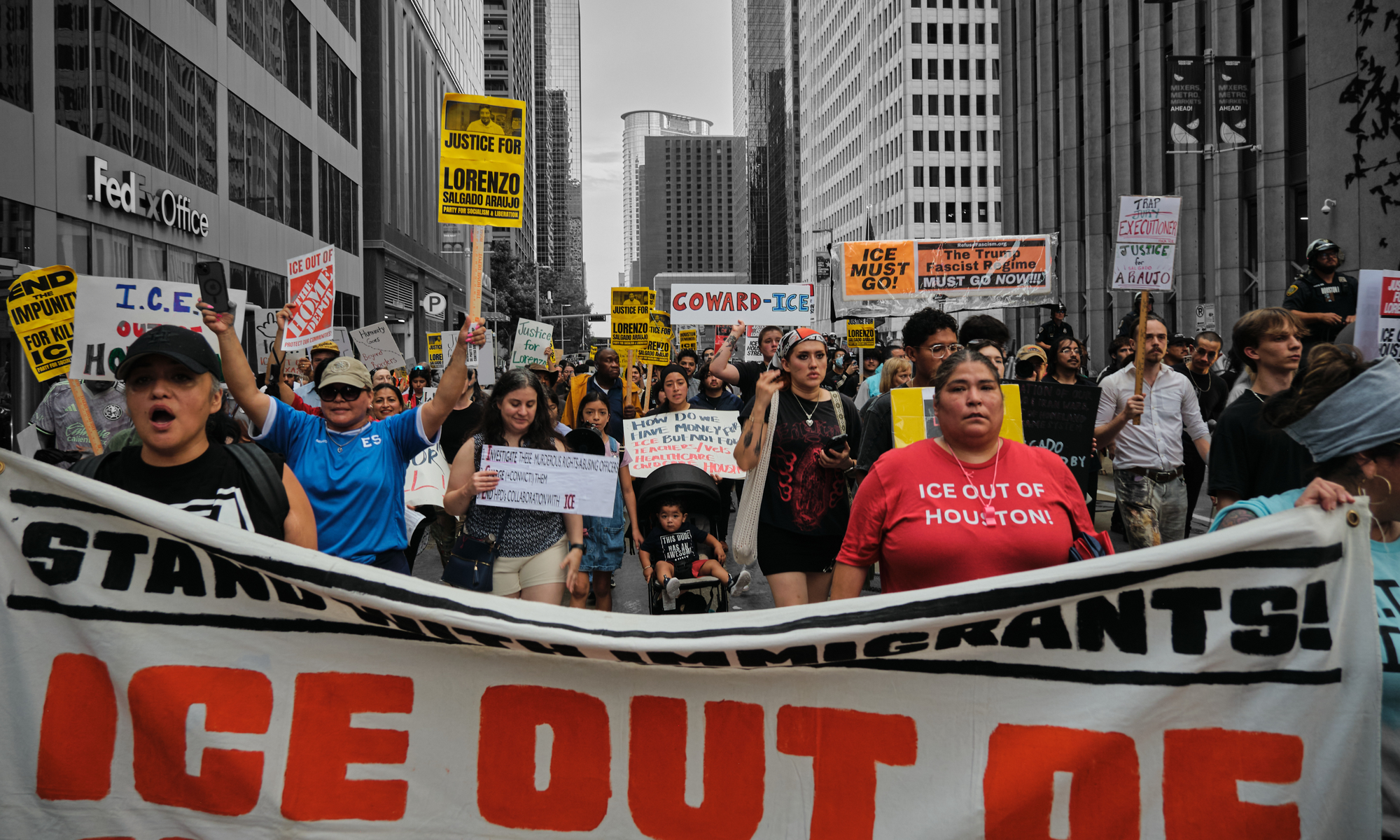
The recent ICE-involved shootings. In the past week, Immigration and Customs Enforcement (ICE) officers were involved in deadly shootings in Texas and Maine. On Monday, in Biddeford, Maine, an officer shot and killed a man who allegedly disregarded orders to stop his vehicle and attempted to flee. Separately, on Tuesday, July 7 in Houston, ICE agents shot and killed a man whom they accused of “weaponizing his vehicle” during a traffic stop. State and local officials have called for investigations into both incidents.
In Maine: The victim was identified as Johan Sebastián Durán Guerrero, 25, a Colombian national. According to Sen. Angus King (I-ME), Durán Guerrero was not the subject of officers’ deportation operations. King said that Department of Homeland Security (DHS) Secretary Markwayne Mullin initially told lawmakers that the man tried to use his vehicle as a weapon, though the department later released a statement that described the victim as “trying to flee the scene” and that the officers “fear[ed] for public safety.” Two Maine-based immigration advocacy groups claimed that Durán Guerrero was legally in the United States, with work authorization and a Social Security number.
Agents were not wearing body cameras when the shooting occurred, and eyewitnesses have disputed DHS’s version of events. On Tuesday, Maine’s Congressional delegation wrote to DHS to request an independent review of the incident, including a timeline of the encounter and an assessment of whether use-of-force procedures were followed. The Colombian Embassy also requested “information and clarification” from DHS.
In Texas: On July 7, Lorenzo Salgado Araujo, a 52-year-old Mexican national said to be in the U.S. illegally, was killed by ICE officers during a traffic stop. DHS said that agents were conducting “a targeted enforcement operation to arrest [an] illegal alien” and attempted to stop Salgado Araujo, after which he ignored verbal commands, rammed the officers’ SUV and “weaponized his vehicle,” prompting an officer to shoot Salgado Araujo in the stomach. He later died at the hospital. Rep. Sylvia Garcia (D-TX), whose district includes the neighborhood where the shooting occurred, said that an ICE official told her Salgado Araujo was not a target in agents’ deportation operation.
As in Monday’s shooting in Maine, ICE officers in Houston were not wearing body cameras during the incident, and no footage of the shooting has emerged. A group of Democratic Texas lawmakers wrote to Secretary Mullin asking for a “complete and transparent account” of the encounter, while Mexican President Claudia Sheinbaum announced she will file criminal complaints in the United States related to Mexican citizens who have died in the custody of U.S. immigration officials, including Salgado Araujo.
In response to the shootings, DHS has instructed ICE Enforcement and Removal Operations agents to temporarily pause most vehicle stops during enforcement operations, except in cases involving serious criminal targets. However, on Wednesday, President Donald Trump reversed that order.
Today, we’ll share perspectives from the right and left on the shootings, followed by Executive Editor Isaac Saul’s take.
|
What the right is saying.
|
In The Federalist, Brianna Lyman said the media buried Lorenzo Salgado Araujo’s “attempt to run over [an] ICE agent.”
“An illegal alien from Mexico was fatally shot Tuesday after he allegedly tried to run over an ICE agent with his vehicle during an enforcement operation, according to the Department of Homeland Security. But you wouldn’t necessarily glean that if you read some of the headlines from members of the propaganda press,” Lyman wrote. “[In a CNN story] instead of leading with the details DHS says led to the shooting, [Dalia] Faheid and [Chris] Boyette begin their story emphasizing [Salgado Araujo’s] family and profession.”
“CNN did not tell readers that [Salgado Araujo] allegedly tried to run the officer over, instead simply saying that [Salgado Araujo] ‘attempted to evade arrest as agents tried to conduct a traffic stop as part of a ‘targeted operation.’ He rammed into a law enforcement vehicle and refused to follow several verbal commands before an ICE agent fired his weapon in self-defense, the agency told CNN in a statement Tuesday,’” Lyman said. “The allegation that [Salgado Araujo] used his car as a deadly weapon prior to being fatally shot is central to the entire story — yet the propaganda press sidestepped or obfuscated it.”
In the Houston Chronicle, Kenny Webster wrote “stop rushing to judgment on ICE.”
“You do not get results by pretending the law only applies to some people,” Webster said. “From what we’ve been told, [Salgado Araujo] was in the country illegally. ICE had every right, and every reason, to pick him up. According to the agents on scene, he ignored commands and used his vehicle in a way that put them in danger. It is possible [Salgado Araujo] did not fully grasp how fast things can go bad when you are behind the wheel and law enforcement is telling you to stop. But cars are weapons too. When someone chooses to use one aggressively instead of complying, the odds of a bad outcome go way up.”
“The second this story broke in Houston, the left’s script started writing itself again: ICE lies. ICE is out of control. This is just like Renée Good and Alex Pretti. It is not that simple… They chose to interfere and resist. And when you do that while a vehicle is involved or while fighting with officers, the risk goes way up. If you comply with law enforcement, your chances of walking away in one piece go way up,” Webster wrote. “His family is grieving now, and they deserve the facts, not people turning his death into a political weapon before anyone knows what actually happened… Figure out what actually went down in Houston. [Salgado Araujo’s] family deserves that much, and so does everyone else.”
In the Washington Examiner, Zachary Faria argued “body cameras can flip the ICE debate.”
“The widespread use of body cameras neutered anti-police sentiment and the Black Lives Matter movement. It should be a top priority of the Trump administration to fit all Immigration and Customs Enforcement officers with body cameras quickly, so as to do the same to the ‘Abolish ICE’ movement,” Faria wrote. “Since public sentiment is against ICE, it is clear that body cameras are the best tool at the agency’s disposal. The widespread adoption of body cameras among police officers proved that the trained professionals tasked with keeping people safe more often than not handle their job exceptionally well.”
“ICE officers need the same thing. Activists can spin whatever tale they want, but it makes a difference when the public can see video of Renee Good being told to get out of her car before she attempts to run over an ICE officer, or when video shows Alex Pretti, with a gun in his waistband, physically fighting with Border Patrol agents,” Faria said. “Both of those videos, courtesy of cellphone recordings, came out late in the narratives. ICE officers equipped with body cameras would have been able to neuter those narratives before they got rolling, and likely would have done the same in Houston and Maine as these latest incidents (with no concrete details) catch fire in liberal media.”
|
What the left is saying.
|
In MS NOW, John Pfaff argued “ICE deserves skepticism.”
“This swift wariness of ICE’s account is well-earned, given the agency’s increasingly documented acts of seeming deception and dishonesty, certainly when it comes to claims of ‘vehicle weaponization’ in particular, but more broadly as well,” Pfaff wrote. “Perhaps most famously, ICE’s claim in Minneapolis that Renee Good attempted to run down ICE agent Jonathan Ross was carefully debunked by the [New York Times].”
“Unfortunately, it is not clear if this growing mainstream distrust of ICE’s defense of violence will translate into any more accountability for ICE, at least in this case. The FBI has already announced that it is investigating the shooting, but framed it [as] looking into an assault on the officers, not by them,” Pfaff said. “But the shifting media tone is important. It both reflects the increasingly low popularity of Trump’s aggressive immigration tactics and will likely push that support lower still. And even if ICE officers face little risk of formal legal accountability, their commanders may not be able to ignore growing political backlash.”
In the Portland Press Herald, John F. Cox III said “law enforcement does not have a carte blanche to kill.”
“Renee Goode’s life mattered. As did Alex Pretti’s. Lorenzo Salgado Araujo’s life mattered too. The life of the person killed by ICE in Biddeford Monday morning mattered,” Cox wrote. “In 1985, the Supreme Court… ruled that the use of deadly force was constitutionality permissible only when, under the totality of circumstances, its use was necessary to prevent the felon’s escape and the officer had probable cause to believe that the suspect posed a significant threat of death or serious physical injury to the officer or others, and where feasible, some warning that the officer was going to shoot was given.
“This last requirement was important, because it afforded a person the chance to choose life — to submit to law enforcement so as to avoid being killed. Applying this standard, the Court ruled that a Tennessee law that allowed police to shoot any fleeing felon, regardless of circumstance, was unconstitutional,” Cox said. “History has shown that the judicial solution simply comes too late for a citizen staring down the barrel of an officer’s gun. It is time to hold federal law enforcement accountable.”
In The Guardian, Jamil Smith asked “how long will ICE be allowed to hide its face?”
“At least two of the surviving passengers dispute [the DHS] account, saying no agent stood in front of the van and that the shots came through its passenger side. No released footage supports the government’s version. Whatever investigators establish about every disputed second, the encounter has exposed something larger,” Smith wrote. “For years, the laziest response to police violence has been that the dead would still be alive had they simply obeyed. That argument was always inadequate. Here, it nearly collapses altogether, because obedience requires recognition.”
“[Salgado Araujo’s] son believes that when armed men in unmarked vehicles pursued him, his father feared they were criminals trying to steal the tools with which he earned his living,” Smith said. “Uniforms, visible names, marked vehicles and cameras are not cosmetic. They are how democratic governments distinguish lawful authority from armed strangers exercising force. A government that conceals its identity cannot demand perfect recognition from frightened civilians. ICE mistook Lorenzo Salgado Araujo for another man. He was expected to identify ICE instantly. Only one side was allowed to make an error.”

The similarities between the Maine and Texas shootings are uncanny and unnerving.
I’m increasingly skeptical of the government’s version of events.
It’s clear that immigration enforcement needs changes — and fast.
Sometimes, in order to see the truth of a situation, it can be helpful to shift the lens you are viewing it through. So I’m going to ask you, the reader, to imagine a hypothetical for me:
Let’s imagine you’ve immigrated to another country — whether for work or retirement or family — and you’re trying to start a new life. This country could be Mexico or Italy or China or Japan; it doesn’t really matter. After you’ve been there for a few years, news breaks that the government is going to begin a massive deportation effort of people from a set of countries, including the one you emigrated from. You’re living there legally, but many other Americans are there illegally, and you’re being warned by friends and family that your legal status may not protect you from discrimination or — worse — detention and violence.
As the deportation efforts ramp up, you see news clips of masked men in unmarked SUVs stopping cars driven by people who look like you, and you’re reading news reports of those people having their rights violated, and in some cases you’re even seeing viral videos of those people — those who look like you — being shot and killed by officers.
Then, one day, an unmarked SUV tries to pull you over. Or, maybe, it just cuts you off on the road before masked agents jump out with their guns drawn. What is your first instinct? Is it to freeze? Is it to comply? Is it to flee? What if your kids are in the car? What if the men are screaming threats at you?
Passing judgment on the victims in these videos feels impossible to me. I’ve spent a lot of time around guns, and I’ve even had one pointed at me twice in my life — once in Israel, by an Israeli soldier (for trespassing), and a second time by a very stupid friend who thought it was funny to shamelessly ignore gun etiquette. It’s hard to describe the clarity and incomprehensibility in those moments — the sharpness of the world around you, the panic in your chest, the evaporation of rational thinking, and the complete takeover by your lizard brain.
Just a simple lens shift like this has a profound effect on me, in a way that I find terribly discomforting.
Now, let’s abandon the hypothetical and look at what is before us: 11 people, including three U.S. citizens, have now been killed by federal agents involved in Trump’s deportation effort since he took office. 22 people have been shot at. Hundreds more have been violently beaten, dragged from cars, or otherwise unjustly detained despite being U.S. citizens or having proper paperwork. In the past week’s ICE shootings in Houston and Maine, the similarities are almost uncanny:
- Neither victim appears to have been the target of immigration enforcement operations when the shootings occurred (Lorenzo Salgado Araujo in Houston was definitively not, while DHS was unclear about whether Johan Sebastián Durán Guerrero in Maine was — though Sen. Angus King (I-ME) said Durán Guerrero was not the target).
- Body cameras were not being worn or were not recording in either case, despite the federal government ramping up funding for such cameras a few months ago after previous immigration enforcement efforts led to people dying.
- In both cases, the federal government has claimed the men used their cars to either try to flee or try to harm a law enforcement agent.
- In both cases, some eyewitness accounts directly contradict the accounts of the federal agents who were conducting the attempted arrest.
- In both cases, there is no clear video or up-close angle that corroborates either account.
The Washington Examiner’s Zachary Faria (under “What the right is saying”), a writer whom I respect, suggested that while “few details are clear” about these most recent cases, it is “more likely that ICE is telling the truth about these incidents” than the “rabidly anti-ICE activists and Democratic politicians.” I have no idea why this would be so. Since 2025, in nearly every high-profile example of federal agents committing violence against citizens or illegal immigrants that we’ve had video evidence for, the eyewitness and video accounts have been much more reliable than the federal government’s.
This was true of Renee Good (whom the feds accused of being a domestic terrorist trying to kill ICE agents with her car) and Alex Pretti (whom the feds claimed was “brandishing” a weapon, a “domestic terrorist,” and tried to “murder federal agents”). In those killings, prosecutors only just got evidence like statements and body camera footage from the federal government, and only after a judge forced them to hand over that evidence. This was true of the “three violent illegal aliens who violently beat a law enforcement officer”: a still-live DHS statement claims the men ambushed the officers before those officers shot them, only for video evidence to show the entire assault allegation was a fabrication. The DHS agent who pulled the trigger is now the subject of criminal charges.
We’ve seen this pattern again and again and again. As I wrote after Good’s death, ICE agents are never supposed to position themselves in front of a vehicle or approach it from the front for precisely this reason. DHS officers are generally prohibited from discharging a firearm at a moving vehicle, unless someone is using their car as a deadly weapon and “no other objectively reasonable means of defense is available.” DHS also has use-of-force rules, which are relatively straightforward and include a baseline “respect for human life” and “the communities we serve,” emphasizing de-escalation tactics as a core component.
In other words: It’s not just on the subjects of these stops to “comply” and do exactly as they’re told; federal agents have agency and rules they must follow, too. And they work for us.
In the cases of Salgado Araujo and Durán Guerrero, there isn’t enough evidence to directly undermine or contradict the DHS statements — at least not yet. It is, literally, eyewitness accounts and grainy video footage versus the word of federal agents and the government. But the information we have is pretty alarming: Neither man had a criminal record. It does not appear either man was the actual target of an enforcement effort. One was here legally on a work permit. Both were parents, raising families here, and by all accounts were upstanding residents of our country, working hard, providing for their families. The idea that either would be compelled to try to kill federal agents with their vehicles one random summer day in July strikes me as absurd.
As I have been saying since Trump took office: Confrontations with immigration officials are only going to get more dangerous. This is America — distrusting government force is in our national DNA. You cannot send armed, masked, unidentifiable men into the streets with minimal training and little oversight and give them carte blanche to stop and detain anyone who “looks like” an illegal immigrant. Not only will some people resist, but some officers will make mistakes. This is not a responsible way to carry out immigration enforcement in the United States. If it were happening in another country, we’d be enraged and call it an authoritarian overreach.
Look at how ICE agents approach a woman — an American citizen — with guns drawn, demanding she comply when there is no crime being committed. Look at an ICE agent, just yesterday, stop their vehicle in front of a car on the highway and then walk up and pepper spray the car’s vents. These incidents are now a daily occurrence. Excessive force, incompetence, unnecessary violence and genuinely authoritarian-looking actions have been happening since 2025, so regularly that I can usually find dozens of clips in minutes on any given day.
As I’ve written again and again, the best way to solve our immigration crisis would be comprehensive reform that pairs a crackdown on illegal border crossings with the expansion of work permits and legal status. We should welcome immigrants here, but do it in an organized and controlled manner. Republicans generally focus on the crackdown without the expansion of legal status, while Democrats generally focus on expanding legal status without the crackdown; Trump, alternatively, has opted for a maximally confrontational mass deportation effort, paired with political rhetoric designed to drum up fear and demonization of anyone who is here illegally.
So as we solve for the future, we also have to solve for the present. The reality now is that millions of immigrants are here illegally and that our current solution to that problem is leading to the violation of basic rights and state-sponsored violence against citizens and non-citizens alike. The only way to stop this madness is genuine accountability. Neither agent in the recent shootings was wearing or using the body cameras that we were assured were being deployed — or if they were, the evidence from those cameras is being suppressed. In either case, that alone should be cause for corrective action. Agents involved in violent encounters — be it with people here illegally, legally, or U.S. citizens — should be taken off duty while investigations play out. Those investigations need to happen independently. States should be doing what Minnesota has tried to do and ensure these federal agents face actual inquiries from outside their own agencies.
All of this needs to start happening now, lest these encounters tear the fabric of our society apart. It is not an exaggeration to say that the tension between U.S. citizens and federal law enforcement agents feels like a ticking time bomb, and it is the federal government’s job to ensure that time bomb doesn’t go off. That means taking active measures to increase trust and decrease the rates of these incidents. Halting all vehicle encounters was a good and sensible start, but President Trump has already reversed that order. Either way, it would have only been a start. The only way forward is more accountability and more rules to ensure American citizens (and residents) are protected.
Take the survey: Does U.S. immigration enforcement need reform? Let us know.
Disagree? That’s okay. Our opinion is just one of many. Write in and let us know why, and we’ll consider publishing your feedback.
This day in history.

On July 15, 1799, during Napoleon Bonaparte’s campaigns in Egypt, French soldiers were digging for the foundation of a fort in the port city of Rosetta — modern-day Rashid — when they found a strange stone in an old wall. Commanding officer Pierre-François Bouchard realized that the stone bore inscriptions in three different scripts; believing it to be of immense importance, he alerted Napoleon to his discovery. Bouchard’s instincts were correct — he had found the Rosetta Stone, which would be the key to deciphering Egyptian hieroglyphics. In 1801, when the French surrendered, the British received the Rosetta Stone alongside other important artifacts as part of the terms of the Treaty of Alexandria. They transported the stone back to England, where it has been displayed in the British Museum since 1802.
Egyptian hieroglyphics passed out of regular use sometime in the 4th century AD, and the ability to read them faded soon afterward. But the Rosetta Stone’s inscriptions were in Ancient Greek, Egyptian demotic script (a simplified form of writing common in daily life), and hieroglyphs. Because the stone’s text was the same in each language, 19th-century scholars were able to read the Greek inscription on the Rosetta Stone. They used the Greek message to decode the meaning of the hieroglyphic inscriptions, first by identifying hieroglyphs that corresponded to the name “Ptolemy.” The stone’s decree is a priestly message, dating back to about 196 BC, declaring that the Macedonian Ptolemy V was the rightful, divine ruler of Egypt.
Are you paying too much for your car insurance?
Insurance rates have climbed, and if you haven’t compared recently, there’s a good chance you're overpaying. Insurify lets you see real quotes from top carriers in minutes, so you know exactly where you stand.
Just enter your car make and ZIP code to instantly pull up rates side by side. No phone calls, no agents, no fees — just a fast, clear look at what’s available in your area.
Drivers are finding rates starting as low as $39/month. The only way to know is to look.
*Average potential savings based on initial quotes received by 151,494 customers seeking insurance through Insurify. Actual savings may vary depending on state of residence, individual circumstances, coverage selections, and insurance provider. Savings and lowest rates do not reflect typical results.
The extras.
- One year ago today we covered President Trump’s pivot on the Ukraine war.
- The most clicked link in our last regular newsletter was our advertisement for FinanceBuzz.
- Nothing to do with politics: Ranking the 30 best boy band songs of all time.
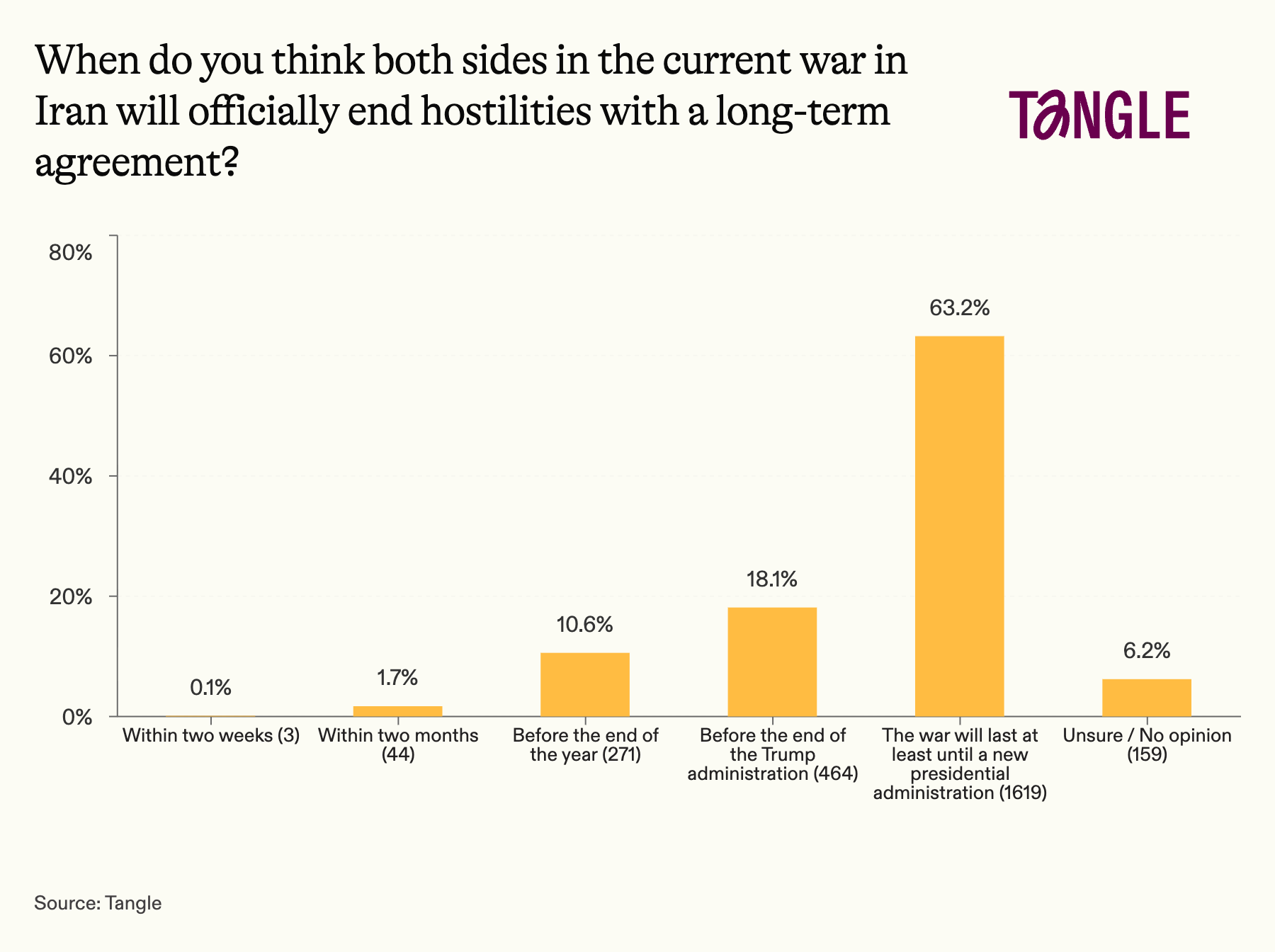
- Our last survey: 2,560 readers responded to our survey on the latest in the Iran war with 63% saying the war will last at least until a new presidential administration. “ It may last for a couple more administrations,” one respondent said. “It's difficult if not impossible to win a war of ideology,” said another.
Have a nice day.
Roughly 16.4 million Americans served in World War II, but as of 2025, just 45,418 were still alive. Rishi Sharma is on a mission to document their stories. For the past decade, Sharma (now 28 years old) has interviewed over 3,000 World War II combat veterans, and he plans to talk to as many of them as he can. The project, called Remember WWII, aims to preserve the memories of the people who took part in one of the most consequential events in human history. “There are real superhero World War II vets out there, and I want to meet them,” Sharma said. CBS Evening News has the story.


Member comments