






This is Associate Editor Audrey Moorehead, and today I enjoyed the early light of the morning sun, which rose at 5:45 AM. I love summer. Speaking of the morning sun, in today’s newsletter I’ll be tackling the bill to make daylight savings permanent, which passed the House with bipartisan support and now heads to the Senate, where it’ll meet slightly more entrenched opposition. Then, I’ll respond to some criticism of my dissent yesterday, and we’ll tell you more about what happened in the last attempt to pass year-round DST in 1974.
It’s a 14-minute read.

The latest Suspension of the Rules.
This week, Isaac, Kmele and Senior Editor Will Kaback (filling in for Ari) break down the arguments for and against appointing family members to fill the seats of deceased lawmakers, a viral video of Nevada’s governor, and President Trump’s latest election-administration moves. Plus, an interview with epidemiologist Katelyn Jetelina on the cyclosporiasis outbreak. Check it out here:
Quick hits.
- The Senate Judiciary Committee held a confirmation hearing for Acting Attorney General Todd Blanche. Blanche defended some aspects of the Justice Department’s recent settlement with President Donald Trump while saying that the $1.8 billion “anti-weaponization” fund initially created in the settlement has been scrapped. He also apologized to victims of convicted sex offender Jeffrey Epstein for mistakes made in document releases earlier this year. (The testimony) Separately, President Trump’s nominee for director of national intelligence, Jay Clayton, testified before the Senate Intelligence Committee, answering questions about election security and recently issued subpoenas to New York Times journalists. (The testimony)
- House Republicans released a framework for a $95 billion reconciliation package that includes funding for defense, food security programs, and state-level voter identification mandates. (The package) Separately, the House rejected a proposal to cut off U.S. aid to Israel in a 104–314 vote, with 10 other lawmakers voting present. 103 Democrats voted in favor of the measure. (The vote)
- Smoke from wildfires in Canada covered large portions of the Midwest and Northeast, prompting air-quality advisories. (The smoke)
- Wholesale prices — as measured by the producer price index — declined 0.3% in June, lower than economists’ expectations. Prices rose 5.5% on an annual basis. (The numbers)
- President Trump will deliver a primetime address at 9 PM ET tonight. The speech is expected to focus on election security and claims of fraud related to the 2020 election. (The speech)
6 Things Frugal People Never Spend Money On
You’ve already cut the obvious stuff. You make coffee at home. You bring lunch instead of buying it. You’ve survived years of financial advice that basically boils down to “have you tried not enjoying anything?”
And yet, the monthly bills keep showing up undeterred.
The Penny Hoarder pulled together a list of six specific things frugal people skip entirely — concrete habits, not vague willpower advice.
Worth five minutes if you want a little more room in your budget.
Today’s topic.
The Sunshine Protection Act. On Tuesday, the House voted 308–117 to pass the Sunshine Protection Act of 2025, a bill that would make Daylight Savings Time (DST) permanent in the United States. The legislation passed with 114 Democrats, 193 Republicans, and one independent in support and now heads to the Senate. President Donald Trump has endorsed the bill, writing in May, “It’s time that people can stop worrying about the ‘Clock,’ not to mention all of the work and money that is spent on this ridiculous, twice yearly production.”
Note: While the technically correct term for DST is “Daylight Saving Time,” Tangle has opted to use the more colloquial “Daylight Savings Time,” a decision we explained here.
Back up: Roughly 40% of countries use DST, a period beginning in the spring when clocks are set forward one hour, offering more evening sunlight during the summer months. In the fall, DST ends and clocks are set back by one hour (reverting to “standard time”), leading to more sunlight in the morning but less in the evening. The utility of the practice is contested: Some studies have shown that the clock change disrupts the body’s rhythms and can lead to negative effects like increased car accidents and heart attacks, while others have found that robberies decline and mental health improves when DST is observed.
If enacted, the Sunshine Protection Act would apply to all states except those that exempt themselves before the law takes effect. Currently, Hawaii and parts of Arizona do not observe DST (nor do Puerto Rico, Guam, American Samoa, the U.S. Virgin Islands, and the Northern Mariana Islands).
Florida’s Congressional delegation has been among the most vocal proponents of the legislation, arguing that the twice-yearly clock changes are unnecessary — and that more daylight in the evenings would benefit the country. “Floridians and Americans across the country are tired of the biannual time change,” Rep. Vern Buchanan (R-FL) said. “Ending the clock change is a commonsense reform that will improve everyday life for millions of Americans.”
Other lawmakers oppose ending DST because it would extend morning darkness in the winter, potentially endangering schoolchildren and impacting many early-morning occupations. In October 2025, Sen. Tom Cotton (R-AR) said observing DST year-round would “push winter sunrises to an absurdly late hour, depriving Americans of morning sunshine that’s essential for our safety and well-being.” Some have proposed permanent standard time instead, which would offer more light in the mornings and align with humans’ circadian rhythms. “If we’re going to make a permanent change that affects every American, we should follow the science and prioritize Americans’ health,” Rep. Mary Gay Scanlon (D-PA) said.
Today, we’ll break down the DST debate, with views from the left and right. Then, Associate Editor Audrey Moorehead gives her take.
|
What the left is saying.
|
In CNN, Aaron Blake described “the downside of making Daylight Saving Time permanent.”
“The move [to permanent DST in 1973] didn’t actually save much energy, according to a later study from the Department of Transportation. But it did produce a series of other changes that, it turned out, were problematic,” Blake wrote. “It put clocks out of sync with Europe, made religious rituals related to sunrises more difficult, and, contrary to popular opinion, wasn’t popular with farmers… The biggest downside of adopting this permanently meant putting children at the bus stop in the cold and dark — which some feared was deadly.”
“Too often, proposals to stop changing clocks are treated like a simple fix for an annoying thing,” Blake said. “[Sen. Tom Cotton (R-AR)] has warned his colleagues to learn the lessons of 1974… ‘Not every human problem has a legislative solution,’ Cotton said last year. ‘Sometimes we have to live with an uneasy compromise between competing priorities and interests. That’s doubly true when considering how the movement of the stars and the planets affects the lives of 350 million souls spread across our vast continental nation.’ That doesn’t exactly fit on [a] bumper sticker. But it’s a good point.”
The Economist said “Daylight Saving Time needs to go.”
“The origin of daylight saving lies in efforts to use less energy in wartime… But the evidence suggests that the costs are surprisingly large, not just because of the immediate disruption to people’s daily lives, but also because of the longer-term biological consequences of moving out of sync with the Sun,” the writer wrote. “The disruption it causes to people’s lives adds up. Immediately after the clock change, the sleep deprivation that follows is associated with a spike in the number of heart attacks, strokes and fatal car accidents. Overdoses and medical errors rise. Even stock market performance suffers.”
“Humans have evolved over millennia to be in sync with the Sun. Light regulates human rhythms. Body clocks rely on bright light in the morning and an absence of it in the evening. Daylight Saving Time… takes people further away from the natural cycle,” the writer said. “Evenings get longer anyway, regardless of whether the clocks change, thanks to Earth’s axial tilt and its orbit around the Sun. Those who really want an extra hour of light in their day could get up earlier rather than imposing costs on everyone else.”
In The Washington Post, Jon Lovett argued for “send[ing] the sun back to the states.”
“I now think this one-time-fits-all policy would be a mistake,” Lovett wrote. “Look at Michigan vs. Maine. Sunrise and sunset in Detroit are almost an hour later than sunrise and sunset in Portland, which means permanent daylight saving time in Maine would be a lot like permanent standard time in Michigan. This is why a national mandate of permanent daylight saving time isn’t the answer. It would force the same policy on states regardless of their latitude or attitude (sorry), and it might cause a backlash that could jeopardize the policy altogether.”
“But there’s a solution that could give the heroic, bipartisan and universally beloved sponsors of the Sunshine Protection Act what they want (and what I want!) without forcing their preference on other states,” Lovett said. “Right now, according to the Uniform Time Act of 1966, states can choose permanent standard time or they can spring forward and fall back. But states can’t choose permanent daylight saving time. All Congress has to do is revise this law to provide for this third option. That’s it… Everybody wins! A few states continuing to switch their clocks while most don’t would be no more complicated than our current system.”
|
What the right is saying.
|
In The Daily Signal, Jennifer Galardi said “it’s time to save standard time.”
“This [issue] is a fundamental tradeoff between public health and commercial interests,” Galardi wrote. “These decisions were not based on human health, grassroots demand, or even policy to save energy… Both major extensions of daylight-saving time were driven by targeted lobbying. In the mid‑1980s, a coalition of commercial interests — retail and Chamber of Commerce groups, outdoor recreation industries, and tourism businesses — pushed Congress to extend DST beginning earlier in April to make more money during the evening hours.”
“Misalignment of clocks from the sun’s natural position in the sky has been estimated to decrease sleep duration by an average of 19 minutes every night throughout the duration of the DST observation,” Galardi said. “Despite the testimony of experts, many in Congress have unabashedly claimed it is great for communities’ bottom line with ‘more business’ to ‘boost the economy.’... The push to standardize what is not standard — or healthy — is a mistake, particularly for certain geographic areas that will suffer the most. Public policy should reflect the natural order — not manipulate it for profit.”
In National Review, Michael Brendan Dougherty argued “against a legislative noonday.”
“First, I hate the insane pretense of the name of the bill itself. As if 435 legislators could, by fiat, do anything about the duration of sunshine, or that they somehow exercise guardianship over Mother Nature,” Dougherty wrote. “Second, I hate the substance of the bill, which is meant to pressure the whole country into permanent daylight saving, under which solar noon would happen in most of the country around 1:00 p.m. and in some places closer to 2 PM.”
“Third, the best argument will be used in the wrong direction. The biannual changing of the clocks really does mess with humans’ circadian rhythm, and there is a documented increase in motor accidents and other problems caused by the law-driven shift in timekeeping,” Dougherty said. “This is a great argument for not changing the clocks twice a year — but it’s not an argument for permanent daylight saving, which would push sunrise to as late as 8:45 AM in some places. Unfortunately, I expect people to demagogue this the other way.”
In Townhall, Jeff Crouere wrote “stop the harmful time-changing ritual.”
“This practice… gives Americans more time in the evening to enjoy sunlight. This helps owners of golf courses, tennis courts, and other outdoor entertainment venues,” Crouere said. “Conversely, it also forces parents to drive their children to school in the dark. With the time change, accidents increase, as do health-related issues. Losing an hour of sleep disrupts our ‘body clocks.’... Along with heart attacks, accidents and workplace injuries, there is undoubtedly a loss of work productivity.”
“Even without daylight saving time, days will lengthen in the spring and summer, giving Americans more time for outdoor activities. The deaths, injuries and lack of productivity are totally unnecessary,” Crouere wrote. “It may have been a promising idea when it was implemented in 1918; however, not in 2026. For most Americans, changing clocks twice a year is both inconvenient and pointless. The answer is to make standard time year-round and end this clock-changing ritual.”

Twice-yearly clock changes don’t have to be a fact of life, but I think this bill creates new problems.
Permanent DST sounds nice until it’s dark at 9 AM in the middle of winter.
A better solution would be to let states decide for themselves.
Changing the clocks twice a year is one of those events that seemed monumentally important when I was a kid — like quicksand or Mount Everest, I assumed biannual time changes would loom over my adulthood. I remember preparing to “spring forward” or “fall back” with my parents by changing all the clocks in the house to make sure we’d still show up at church on time in the morning. As I grew older, I noticed how the outside world changed when the clocks did — in fall, I would go from getting home from school with the evening sun shining to near darkness.
Somewhere along the way, I stopped believing that I’d get stuck waist-deep in quicksand (I don’t live in marshes) or climb the tallest mountain in the world (I have bad ankles), and I also stopped believing that changing clocks was an immutable reality. I learned, instead, that Daylight Savings Time (DST) was largely a product of wartime in the United States, first used during World War I and reinstituted during World War II. (Some people claim that Ben Franklin came up with the idea, but I don’t really think his saying people should get up earlier is the same as saying the time on clocks should literally be altered.)
As a kid, I remember thinking, This is stupid. I didn’t really understand the wartime logic that changing the clock times could preserve energy and resources for military benefit, and even if the logic were true, we weren’t at war anymore. I thought we should stop switching the clocks entirely — we should just fall back one more time, to Standard Time, and never spring forward again. After all, it was standard time; “normal” was basically in the name. But eventually, around the time I got a cell phone that automatically updated the clock change, I mostly stopped caring.
However, now that legislation to make DST permanent is advancing through Congress (again), the issue is back on my mind. And I think lawmakers are making a mistake by choosing permanent daylight savings — should Congress actually choose one over the other at all?
For what it’s worth, Americans are far from a consensus. A February YouGov poll found that 64% of U.S. adult citizens want to end the biannual time change, and neither partisan affiliation nor typical waking times has a major effect on opinion. From there, though, things break down: more Americans (43%) want permanent DST than want permanent standard time (28%).
Interestingly, the YouGov poll also shows that a majority of Americans want the sun to set later in the evenings, but we’re split on daylight in the mornings. Wake-up times play a major role here: Early risers want earlier light, while late risers would prefer the sun to rise later.
Now, I’m no populist, but I’m solidly with the American people on the topic of late evening hours — and that’s what makes daylight savings so great in the summer. I love the sunlight lasting past 8 PM — I enjoy going on evening walks or sitting outside as the sun sets. And during these months, the sun still rises early enough (5:45 AM today) that I get the full benefits of a bright morning while I’m making breakfast and coffee, but not so early that the light wakes me up before I want it to.
But, as many of the writers above mentioned — and as history has taught us — daylight savings during winter is a very different animal. With year-round daylight savings, the sun would rise after 8 AM (or even 9 AM) in large swaths of the country. Adults would go to work, and kids would go to school, in total darkness for several hours, raising obvious safety concerns for kids and adults alike. Traffic accidents are more likely in darkness, and those risks are compounded by cold and ice. Not to mention, I don’t imagine most parents like the idea of sending their kids off to school in full darkness for weeks on end. While Americans right now are split on the merits of early daylight, public opinion is likely to shift rapidly when faced with the severe depths of a permanent DST winter. After all, that’s exactly what happened when President Richard Nixon started a perma-DST experiment in 1974: public backlash during winter was so strong that the experiment was abandoned early.
Beyond the court of public opinion, though, is science: Sleep and circadian rhythm experts nearly unanimously agree that permanent DST will scramble a person’s biological clock — correlated effects include worse physical health, obesity, and a decline in mental health. This is also true of our routine process of switching the clocks twice a year, and it’s why experts are more likely to support choosing permanent standard time over permanent DST.
Even the purported benefits of daylight savings — that it might help us save energy costs by maximizing sunlight hours — don’t really bear out. A 2018 meta-analysis found that on net, electricity savings were just 0.34% when DST applied; it saved more energy in northern latitudes, but locations nearer the equator actually used more energy during daylight savings.
So why did Congress end up choosing permanent DST for its bill to end the clock changes? I think it’s a mix of populism, business practices, and state-level differences. Retail industries believe that evening daylight hours encourage consumer spending and drive up revenues — critical during the already slower winter months. Notably, the Florida delegation is pushing hardest for the change, and it’s hard to blame them when the benefits for their state — more daylight hours for tourist attractions and outdoor recreation — are clear.
Honestly, through all of this, I’ve become more and more convinced that the solution shouldn’t come at the federal level. Like Jon Lovett (under “What the left is saying”), I wonder whether an issue like timing the sunrise and sunset is better left to each state. There’s no reason North Dakotans should deal with 9 AM sunrises during daylight savings so that Floridians can have later evening sun, just as there’s no reason Mainers should deal with 3 AM sunrises on standard time. We have a federalist system for a reason: so that, when appropriate, states solve their own problems.
That doesn’t have to mean that Congress lets every state set its time willy-nilly; instead, it should change the laws already in place. Right now, Congress lets states opt into permanent Standard Time (which Hawaii and part of Arizona have already done), but not permanent daylight savings. A prudent path forward would be for Congress to change that law to allow permanent use of one or the other — while also allowing states that want to have time changes to keep doing so.
Until then, I’m crossing my fingers that the Sunshine Protection Act will fail in the Senate, and that we can keep falling back and springing forward — at least for now.
Take the survey: Should we move to permanent DST, or something else? Let us know.
Disagree? That’s okay. Our opinion is just one of many. Write in and let us know why, and we’ll consider publishing your feedback.
Responding to your criticism.
I was, frankly, a little disgusted by the overall tenor of the response from this community I cherish so much and that is so often elevating good-faith dialogue — the ratio of good-faith arguments to ugly, personal attacks was discouraging. I told Audrey I wanted to write something in response from the perspective of someone who disagreed with her, but she offered some wisdom of her own: My trying to defend her would only reinforce the idea that she was too young or helpless to articulate her own positions. So, I asked her to write a brief follow-up and response.
Before you read it, I’ll just offer this: Writing dissents is incredibly hard. You are forced to put hours of conversation and closed-door editorial debate into a few brief sentences. It’s a new feature in the newsletter, and one lesson I’m taking from this experience is that we should (maybe) give them more space when it’s appropriate.
— Executive Editor Isaac Saul
Associate Editor Audrey Moorehead: First and foremost, I regret that I did not make it much more clear how truly narrow my dissent was. While I did not argue that ICE agents were not at fault in these killings, it’s clear now I should have explicitly stated my position. The use of deadly force is acceptable in only the most dangerous and threatening situations, and I have thus far seen no evidence that the incidents we covered yesterday rose to that standard. I hope these DHS agents are taken off the force while a full investigation takes place, and in the meantime, I’m praying for the families of the victims.
However, I also want to be clear that I stand by my stated position. I absolutely would not fight or attempt to flee if law enforcement sought to detain me. There are four common responses to perceived threats: Fight, flight, freeze, or fawn. I have developed my natural response of fawning, freezing, or de-escalation as a woman who has faced real threats of physical violence from men. As a general rule, women understand that most men are stronger than we are; that men with ill intent abound; and that even though we deserve complete and total safety, we still must take precautions in the event that safety is compromised. My precautions include not walking alone at night; texting friends and family when going on dates; and, when faced with a situation in which I sense danger, remaining calm and attempting to defuse the situation before seeking outside help.
While this is my natural response developed from my own experiences, it is also legal experts’ recommended response for individuals facing ICE detainment. The American Civil Liberties Union advises, “Stay calm. Don’t run, argue, resist, or obstruct the officer, even if you believe your rights are being violated. Keep your hands where police can see them… Stay calm and do not resist or obstruct the agents or officers. Do not lie or give false documents. Prepare yourself and your family in case you are arrested. Memorize the phone numbers of your family and your lawyer. Make emergency plans if you have children or take medication.” The National Immigration Law Center recommends: “Stay calm. Do not run away or try to stop the agents.”
Failing to react in the expert-recommended manner is not the same as culpability for what happens to you; obviously, in the heat of the moment, people can react very differently, which was both the point of Isaac’s hypothetical and the point of my dissenting response. Furthermore, reacting in the recommended manner does not guarantee one’s safety, which I explicitly acknowledged. These truths can co-exist with the fact that sometimes, in order to preserve one’s life, one must endure temporary injustice; and acknowledging the advantage of preserving life by enduring that injustice is not the same as saying the injustice should continue.
A deeper look.
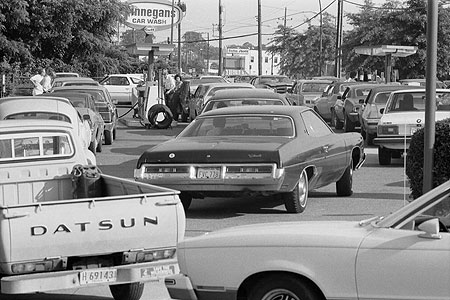
Since 1966, Americans’ clocks have sprung forward and fallen back on schedule — except for one year. In 1973, the Yom Kippur War prompted the Organization of Arab Petroleum Exporting Countries (OAPEC) to impose an oil embargo on the United States. As oil prices climbed, the U.S. looked for ways to limit its usage.
On January 6, 1974, Americans moved their clocks ahead by one hour to Daylight Savings Time, where it was set to remain for two years. The adjustment was initially popular. However, during the first winter under the new law, Americans’ opinions soured: The sun was coming up later, causing children to have to walk to school in the dark, and several schoolchildren were hit by cars. Ultimately, President Gerald Ford signed a law ending the two-year DST experiment, reverting the U.S. to the previous schedule.
6 Things Frugal People Never Spend Money On
You brew coffee at home. You’ve canceled three streaming services and made peace with canceling more. You’ve heard every lecture about lattes and "small habits."
And somehow your bills still look like they’ve unionized against you.
The Penny Hoarder built a practical guide to cutting recurring costs — no misery required.
The extras.
- One year ago today we covered President Trump’s criticisms of then-Federal Reserve Chair Jerome Powell.
- The most clicked link in our last regular newsletter was the trailer for our forthcoming video on Alaska’s voting experiment.
- Nothing to do with politics: A site that lets you open windows all over the world.
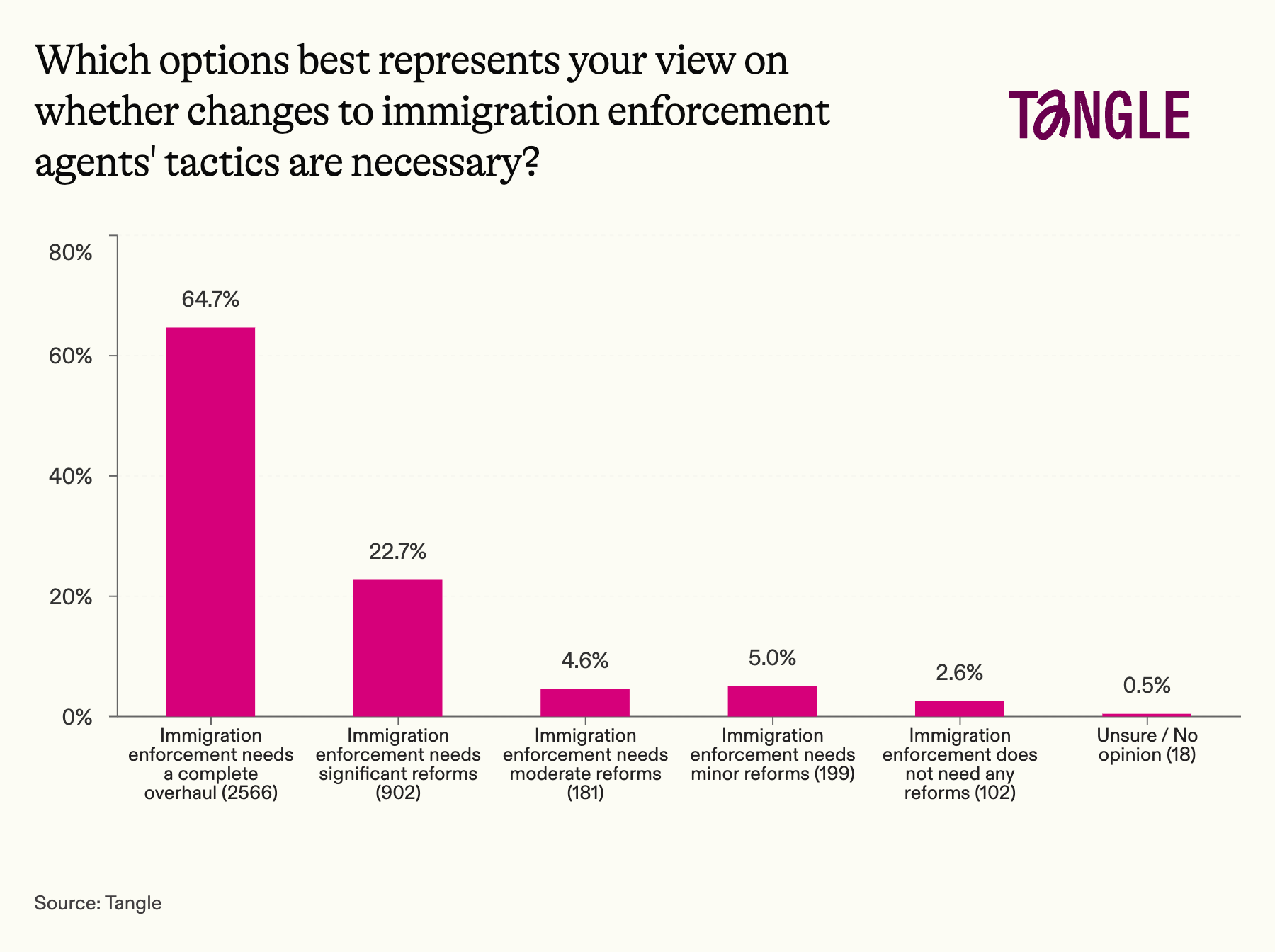
- Our last survey: 3,968 readers responded to our survey on the ICE shootings in Maine and Texas, with 65% saying immigration enforcement needs a complete overhaul. “As a retired [law enforcement officer], ICE has become a complete embarrassment and disgrace,” one respondent said. “I’m all for my rights, but I’m not foolish enough to not comply with an officer’s request,” said another.
Have a nice day.
Aida Kelly was jolted awake just before 1 AM by her poodle, Squilliam, barking insistently. The dog kept running to her bed and back to her owner, refusing to settle. When Kelly finally got up, the smoke detectors were screaming and flames were already spreading through her West Milford, New Jersey, home. Kelly escaped safely with Squilliam while the fire engulfed the structure behind them. The house was lost, but they made it out alive. “He’s my hero, my angel,” Kelly said of the dog who saved her life by seeing something and saying something — loudly and persistently. CBS News has the story.

Member comments