
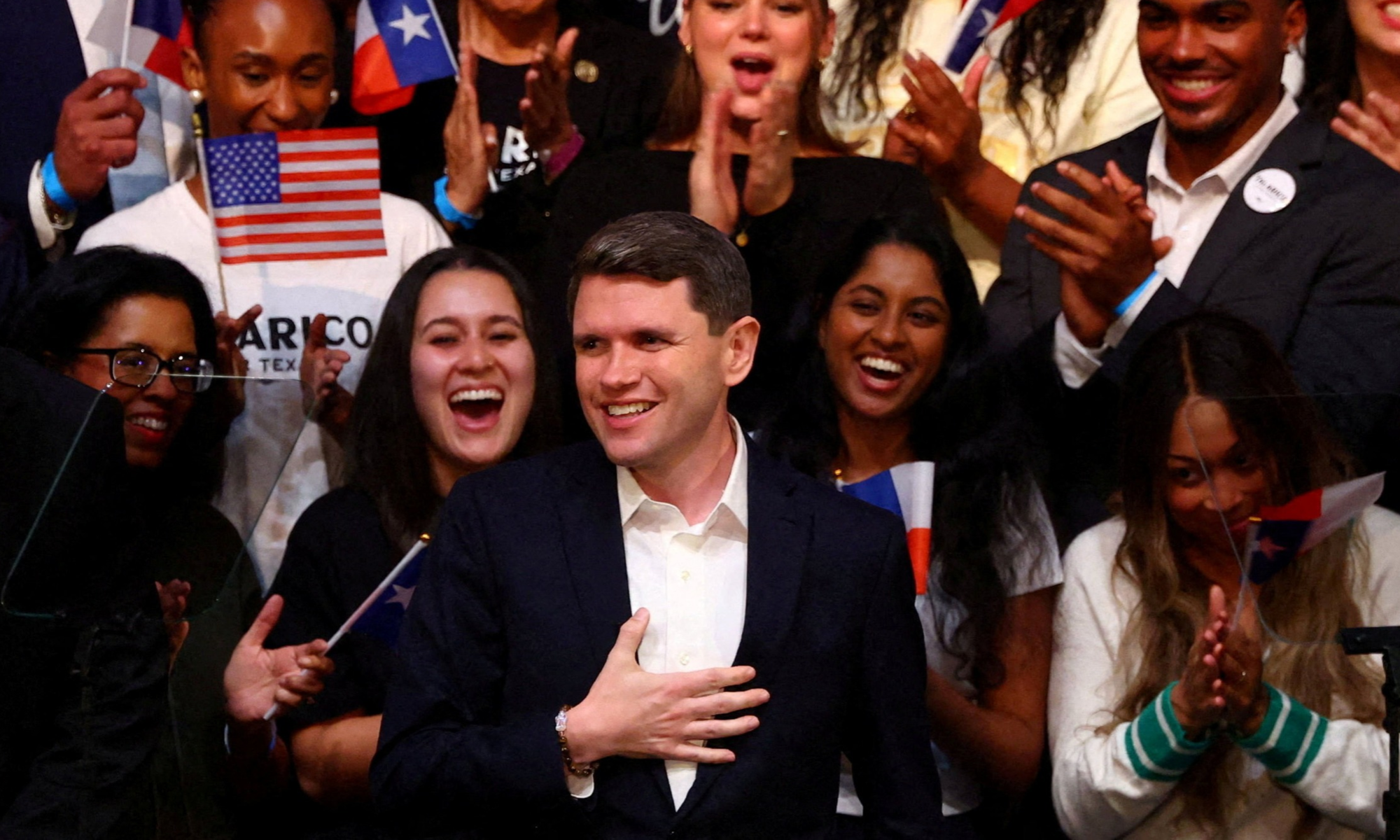


- Obviously, this is a political earthquake. Even the most optimistic of the Democratic optimists did not think last night would be this lopsided. I thought Sean Trende of RealClearPolitics said it best: “If you are watching this and just have a passing familiarity with elections, just understand you’re seeing something special, a 100-year flood. Easily the worst election for a party since 1974.” It’s the largest victory in the national popular vote in any congressional election since at least 1976. Democrats flipped five Senate seats in states where Trump won by double-digit margins just two years ago.
- To that end, let’s get this out of the way now: My final Senate prediction was pretty bad. I was confident enough in the polls to predict a slim, 51-seat Senate majority for Democrats, and wise enough to concede that all signs pointed to a Talarico win in Texas even if I didn’t want to take the risk of picking the state to flip. I also knew that if I was wrong, it would be because of a blue tsunami. But South Carolina? Kansas? Mississippi in play? You never could have gotten those predictions from me. Some of the Tangle staff was overwhelmingly more bullish on Democrats’ odds, and I’m eating my humble pie.
- On that note, the polls were wrong — just not in the direction any of us thought. Right now, the generic ballot appears to favor Democrats by +13. The polling average (which we all had a hard time accepting) was only +9, underestimating Democrats in 14 of the 15 key Senate races, and the average polling error across those states was 4.4 points. Political polling is still not 100% reliable, but in the end it is still a useful tool for the directional feelings of Americans. I feel silly for over-indexing on vibes rather than the information we had before us.
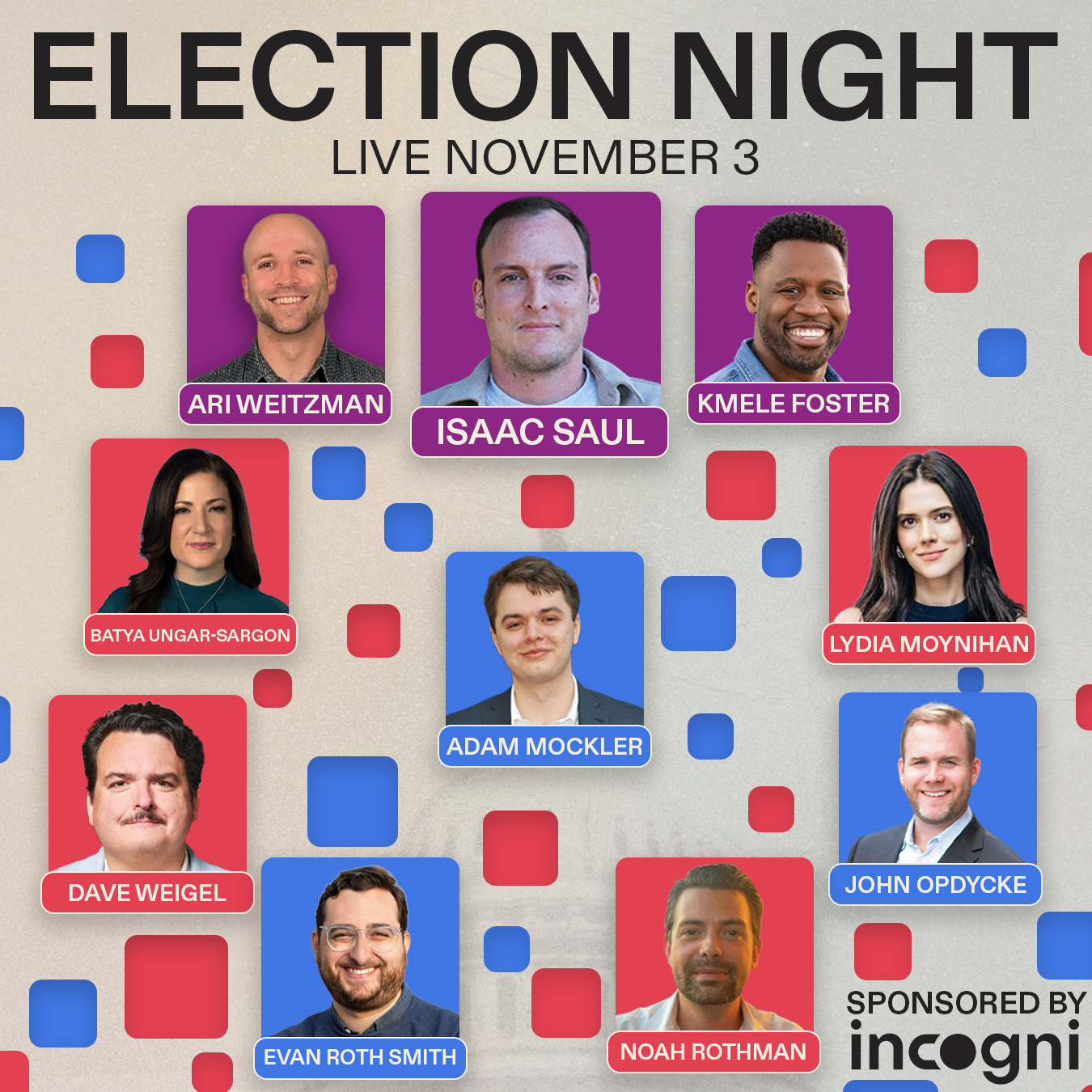
- The results came in so fast and races were called so early that we were genuinely caught flat-footed on our livestream. We had a couple hours of programming planned ahead of when we thought we’d know where the night was headed, and instead we ended up processing a ton of results with our guests in the early slots. Audio issues had to be solved on the fly because we couldn’t pause. I was prepared to be on camera until 2:00 AM ET, and instead the balance of both chambers of Congress wrapped up so fast we basically knew where it was headed by 9:30 PM ET. I feel like I’m still getting my bearings.
- On our stream, Sen. Andy Kim (D-NJ) said something that I just can’t shake: Democrats feel celebratory because they put so much work into winning, but he hopes the party can take a step back and recognize that they had such a strong night because the American people are hurting. They are in pain. “And if we miss that, if we don’t connect those dots, then we’re just going to squander this mandate from the people,” he said. Wise words.
- Speaking of squander, two years ago, after President Trump won the 2024 presidential race by sweeping all seven swing states, one of my 19 thoughts on the election was this: “Some free advice for Republicans: Political fortunes change quickly in our country, and the biggest changes often come in the wake of unbridled over-confidence.” Democrats, take note.
- President Trump and the Republican Party fumbled an unbelievable political opportunity. Bernard Stanford went viral last night for a brilliant summation of the failures, some of which I’ll note here: They had a governing trifecta, had won the national popular vote, swept all seven swing states, and six of nine Supreme Court justices were appointed by Republicans. And yet, two years later, they have very few durable victories. They oversaw one of the least productive Congresses in American history, essentially extended President Biden’s federal budget, passed an unpopular tax bill, and couldn’t even sniff long-term immigration reform. Trump, his family, and his cabinet have openly enriched themselves while Americans struggle. A fresh foreign war, high tariffs, and high deficits now plague the balance sheet. DOGE was a complete and utter failure. Trump’s strongest issue, immigration, became a vulnerability after DHS agents terrorized American towns and killed American citizens on video. Democrats just accumulated more power in a single night than they have in any other election since President Barack Obama’s 2008 victory. It’s hard for me not to feel vindicated, as we’ve criticized the administration for all of these things in Tangle over the past two years and have endured claims that we’re biased or that I have Trump Derangement Syndrome. It turns out that a lot of former Trump voters (and even the vice president!) agree. Now, Republicans will have to endure two years of investigations and gridlock.
- Worse yet, the president seems to have lost all of his best political instincts. He obsesses over ballrooms and the male figure, he refuses to listen to his base on the war, and he deflects cost issues still plaguing the country. He uses his bullhorn to post AI slop, throwing every ally imaginable under the bus, and calls to rename everything “America.” He actually told a rallygoing audience ten days before an election that Americans should accept high gas prices because Big Oil was making money hand over fist. It turns out none of this stuff works on the electorate when you aren’t addressing their needs. Not surprising.
- Given all this, I think it’s fair to say that voters did something Republicans in Congress refused to do: They stood up to Trump. The president broke a core promise with the Iran war. He’s forced tariffs on Americans without congressional authority. He’s permitted — and very likely participated in — rampant, historic corruption. He has not focused on affordability like he said he would. Congress had the power to address each of these issues if only a quorum of Republicans were willing to exercise their authority, but they didn’t have the courage to do it. So voters did it for them.
- Speaking of messaging, the economy is still king. In Senate races in Texas, Ohio and Michigan, Republicans leaned into a closing message of “sorry we screwed up the last two years but trans people and Islamic extremists are worse.” One lesson might be that fearmongering about sharia law and the “threat” of children getting gender reassignment surgery without their parents’ knowledge is not going to eclipse affordability concerns. It got so bad that Republicans started to complain about how many political ads include candidates talking about transgender people, essentially saying the right is now unhelpfully amplifying the issue.
- It deserves no celebration, but it is noteworthy that the president did not challenge the results. He actually called into The New York Times relatively early in the night to insist he was ready to work with Democrats. On Fox News, he was subdued and calm. I’ve seen no prominent figures (outside of Kari Lake) advance election-fraud allegations. All the major Republican candidates gracefully accepted defeat, and some conceded their races before they were even called. It was oddly… normal.
- In 2024, there was a lot of talk about the “they/them” ad that Republicans ran so effectively against Vice President Kamala Harris. I think this cycle’s best ad may have been from Democrat Scott Colom, the Mississippi Senate candidate who hammered his opponent for suggesting voters “pick another protein” due to high beef prices. Colom is the same candidate who stood in line at Trump rallies, met the president’s voters, asked them about their concerns, and talked to them like human beings rather than try to prove them wrong or mock their positions. His race is yet to be called, but he may actually flip the seat blue. This is good politics.
- And yes, you should vote.

- Republicans’ gerrymandering efforts have blown up in spectacular fashion. They spent $50 million trying to win three Florida seats they redrew to favor them — and lost all three. In South Texas, they drew maps relying on their support from Latino men and ended up losing every single district on the border. “Dummymanders” are everywhere we look. Perhaps, again, our politicians should try running on the issues rather than segmenting voters.
- I gave a good bit of attention to independent and third-party candidates in this election, but it does not look like running independents in deep-red states was a very effective strategy. In Idaho and South Dakota, the races were not close at all. In Nebraska, the independent ran behind Democrats in neighboring Iowa and Kansas. Even in Montana, where independent Seth Bodnar may have been able to win had the Democratic nominee dropped out, the better strategy could just have been to run through the Democratic primary. From a purely political and electoral perspective, Democrats may have actually shrunk their map by backing independents against Republicans.
- Not enough people are talking about the larger ramifications of what just happened at the state level. For example: Democrats now have enough state governments to ratify the National Popular Vote Interstate Compact and effectively end the Electoral College. They will be able to redraw congressional maps across the country and hold the line on election-reform bills. State constitutions could be overhauled. The long-term results of this shift could be much, much bigger than people are considering.
- People forget that President Donald Trump was pretty open to working with Democrats after they flipped the House in the 2018 midterms during his first term. While he seems in denial that last night is a referendum on his record, he does seem conciliatory and once again open to working with Democrats out of the gate. Given the way Trump has treated people like Zohran Mamdani, I think Democrats would be wise to approach the president like an open, persuadable leader they may actually be able to work with.
- I proposed a radical theory a few months ago: Decency is about to make a comeback. I’d chalk last night up as a win on that front. Voters in Ohio rejected Vivek Ramaswamy’s indecent ad campaign. Ken Paxton got blown out. Even candidates who ran respectful above-the-belt campaigns, like Colom (who hasn’t won yet) and Ashley Hinson (who lost), outperformed pugilistic candidates like Abdul El-Sayed and Marsha Blackburn. Americans are tired of the mud-slinging, dial-it-up-to-11, nonstop hatred and indecency. I think what we saw last night is a good reminder that you can run on decency and still win.

Member comments