



I’m Isaac Saul, and this is my semi-regular newsletter A Grain of Saul.
At every wedding I’ve ever been to, I’ve found myself on the verge of crying (or actually crying) at one specific moment: When attendees stand for the bride as she comes down the aisle.
There’s something about the sound of everyone realizing she’s there; a quiet audience suddenly rustling to attention, the collective noise of chairs adjusting and suits opening and feet shuffling and the wave of bodies moving; how we all turn toward the back, and there she is — teary-eyed and bashful and, usually, the most radiant and beautiful you’ve ever seen her.
It feels ancient, like something humans have done for centuries, though I have no idea how modern the custom is. When my own bride came down the aisle, and 100 of our closest family and friends stood up to turn and look at her, each smiling and full of love, the two of us made eye contact, and I started crying immediately. It took a great deal of willpower not to break down sobbing and give up on making it through the ceremony.
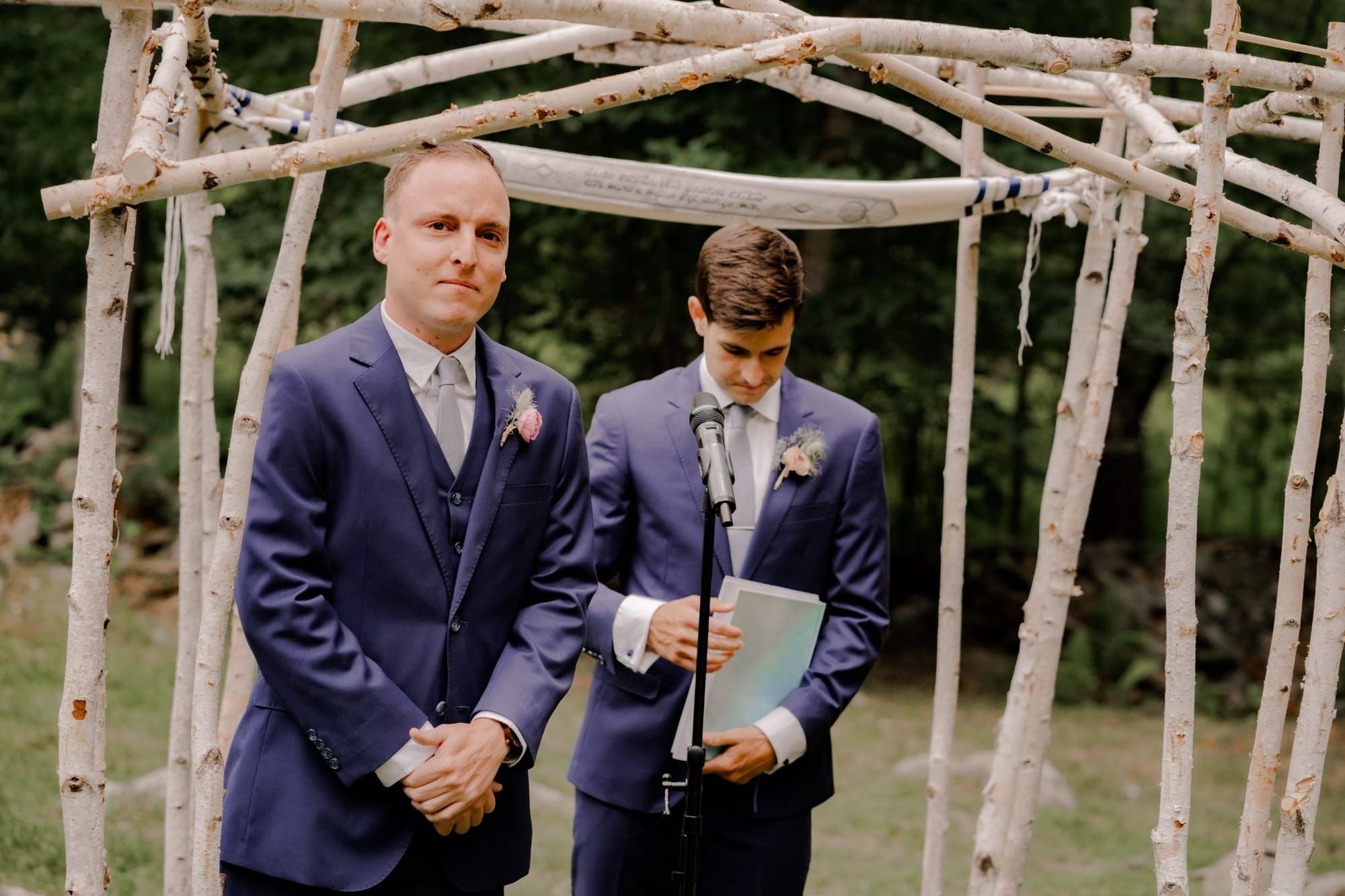
I’m not usually sentimental about these sorts of things, and I don’t have a great explanation for why this moment gets me every time, but it does. The truly magical part is that there’s no rule about standing when a bride comes down the aisle. There’s no law. It’s not typically written anywhere. It doesn’t show up on the invitation and it does not require a wedding officiant’s instruction. It just happens. It’s the norm. When you see the bride appear at the back of a wedding, you get off your butt and stand at attention; everyone knows this. Imagining a future where we’ve forgotten that norm and nobody stands for the bride is genuinely horrifying to me.
Yet, there are plenty of norms like this we are leaving in the dust.
It’s not novel to suggest social norms do a great deal to hold society together, or to suggest fewer people are adhering to them as time goes on. Perception polls consistently find that U.S. adults think people are getting ruder; 47% of U.S. adults say public behavior is ruder now than before the pandemic (compared to 44% who say it’s the same and 9% who say it's more polite). A 2025 IW Group study found 53% of Americans describe society as uncivil versus 26% who call it civil. Similarly, 85% of Americans think civility is worse now than it was 10 years ago, according to the American Bar Association.
But it’s also possible, and just as interesting, that this may just be one giant delusion. Mastroianni and Gilbert’s famous 2023 paper “The illusion of moral decline” found that people all over the world have believed morality — defined as “kindness, honesty and basic human decency” — was declining for as long as researchers have asked the question. Yet people’s reports on their contemporaries’ morality have not declined over time. So: Ask someone if people are generally kind, honest and decent, and they say yes — and those numbers hold steady (and typically high) over time. But ask someone whether kindness, honesty and decency are declining, and they say yes — and have said yes in every decade researchers have asked.
It doesn’t add up.
Furthermore, respondents perceived more decline if you asked them about decline over longer periods of time (like decades instead of years), suggesting that nostalgia — not evidence — drove their perceptions.
So which is it? I happen to think some explanations comport with both public perception of moral decline and the relative moral stability people report: Either people are right that the bar is dropping overall, but fail to notice it in their daily lives; or people are just as kind, but have shed the ritual norms they used to use to express that kindness. I suspect it’s some of both.
I’ll give you an example: A few months ago I was walking down the street with my wife. After we crossed to a new block, I repositioned to get on the street side of her, as I always do, which was an act of courtesy she taught me when I was 24 and we’d just started dating. I still remember vividly her saying “you’re on the wrong side” on one of our first dates, and the embarrassment flooding through to my fingertips in a way that committed me to never again being on the wrong side of this woman I had a very, very big crush on.
As we continued down the sidewalk, an older man sitting in a chair outside his shop said, “You don’t see that much anymore! A man on the right side of his woman!” He laughed. Phoebe took the opportunity to quip that she’d had to teach me that, and we all carried on for a moment, but there was something revealing in it: This older shopkeeper-type, who spends his whole day outside watching people walk by, was genuinely struck by seeing a man move to walk on the street side of his date.
So: If you asked Americans today if men treated the women they dated with respect, maybe roughly the same percentage would say “yes” as people 30 years ago did. But would men be meeting the same standard, like always staying on the street side of their dates? I doubt it. I think that’s how the two observations of Mastroianni and Gilbert’s study — the perception of constantly declining morality and the stability of reports of good behavior — can coexist. Is some nostalgia at play? For sure. But is the bar falling, also? I think so.
I don’t mean to be a Scrooge here, and I know this all reads like the old-man-screaming-at-cloud meme.
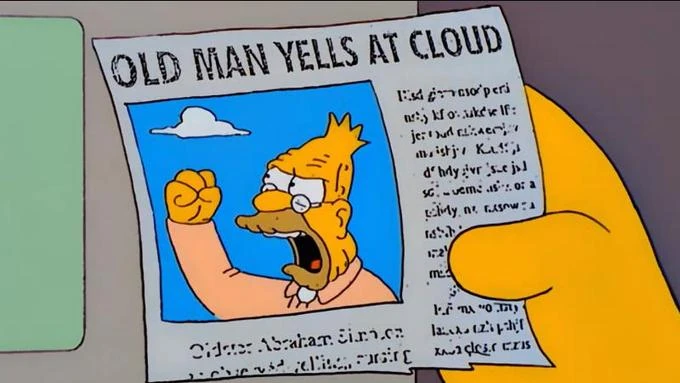
In truth, I’m pretty optimistic about society. I’m fond of asking, “Where are all the lunatics and assholes?” I read about them every day. I encounter them on social media, see clips of them on the internet, and they turn up each night on the evening news. But I rarely ever run into them in my day-to-day life. My neighbors are normal and kind. Strangers are almost uniformly generous, friendly, and helpful. When I travel, people are exceedingly decent and polite most of the time.
The worst thing anyone has done to me in the last week was slow down from 65 miles per hour to a complete stop on I-95 North while trying to switch lanes, which nearly caused a multi-car pileup behind me and would have left my car crumpled with my pregnant wife and 2-year-old son aboard. But I don’t think the person who did that is a bad person, just a horrific driver. And hey, they had their turn signal on!
Even the people I see on a regular basis who are in distress — maybe experiencing a mental health crisis, homeless, or in some kind of personal dispute — seem far more in need of care or generosity than threatening or cruel. I’m optimistic about society in these ways.
But I also think some valuable norms have degraded.
For the last few months I’ve been thinking hard about the cultural norms that I really love, the ones I see regularly broken, and the ones I very much want to revive. So I figured I’d collect and share them, as an act of wishing them back into prominence.
Here are a few:
Stand to greet a person when they enter the room. Refer to strangers or parents’ friends as Mr. and Mrs., and elders as sir and ma’am. If you’re with someone and you run into a person you know, introduce the person you are with so they don’t stand there awkwardly observing your conversation. Say hello to neighbors and people you pass on the street.
Walk slowly and try not to rush past an elderly person in front of you, or wait for the end of the block to do so. Offer to walk them across the street. Never show up empty-handed to a dinner. When a guest arrives at your house, offer them something to drink. Do this for everyone — including, say, a plumber who has come to fix the toilet. Walk a guest to the door when they leave. RSVP to invitations and actually show up if you said “yes.” When someone dies, gets seriously ill, or welcomes a child, deliver a meal.
No phones at the dinner table. No hats at the dinner table. No eating until the host or the oldest sits, or until everyone has their food. Offer a moment of gratitude or prayer before the meal starts — any kind of pause will do. If you’re in a host’s home, offer to help clear the table and clean up when the meal is over.
In public: Hold doors, especially elevators. Give up your seat to the elderly, pregnant women, and anyone with disabilities or kids. Let people off the elevator or train before you get on. For the love of god, please put your headphones on or mute the volume on your phone. Wave thanks to drivers who let you go ahead of them. Return your shopping cart to the little shopping cart parking spot (that’s why it’s there). When you’ve finished making a mess all over yourself at the movies, airport gate or the park, take two minutes to clean it up before leaving. Don’t litter, unless you want to go straight to the underworld upon your death.
Show respect to service workers: waiters, bartenders, cashiers, and flight attendants. Don’t say “hey!” or “yo!” or snap or, as I saw one man do last week, whistle to get their attention. They are not Dobermans. “Miss” or “sir” or “excuse me” with an outstretched hand will do. Say please and thank you. Tip fairly. Make eye contact when you order. Acknowledge them when they refill your drink or clear your plate.
Don’t ghost job candidates or job interviews or dates or friends. Just don’t ghost people. Give (at least) a two-week notice before quitting a job. Write thank-you notes. Call (don’t text) with big news, condolences, or apologies. Try not to curse in front of the elderly or strangers, and definitely don’t curse in front of children. You can, however, ignore children who try to interrupt adults mid-conversation (they can learn to wait their turn).
Some norms, thankfully, seem to be gaining ground, at least in what people say they expect: Asking permission to photograph someone before taking their picture. Taking your shoes off inside someone’s home before they ask you to (or keeping them on if that’s their preference). Respecting physical boundaries, especially in the workplace. This is good. Reversing the trend on the others would be great.
With any luck, a revitalization of these cultural norms could spread upward to our politics. I continue to predict a return to decency, and I think we’ve got a growing amount of evidence it’s coming. But just as our politicians can spread incivility to us, the people can build some momentum that rubs off on them. Our politics are infused with norms and rules that are unwritten or unenforceable, each of them becoming less common by the day.
Most are rooted in a spirit of honoring the office or the country, not the officeholder or the state of the country. Thank veterans for their service. Hand on the heart for the pledge, hat off for the anthem, actually observe moments of silence (there is really no need to start a “USA!” chant). Stand for the president and refer to them as the president, regardless of how you feel. If someone has served as a member of Congress, governor or judge, refer to them as “representative” or “senator” or “governor” or “judge” even if they no longer hold that office.
Let’s start there; then maybe we can get back to normal judicial nominee processes or redistricting schedules or accepting the results of elections or respectfully listening to the State of the Union.
Think about it this way: We don’t stand for the bride, exactly; half the room barely knows her. We are standing for the promise about to be made. We are standing to honor the idea that a bride arriving deserves a room on its feet. Norms honor ideas that are bigger than one person, and they are passed on by honorably adhering to them in public. Nobody taught me to stand for the bride. I watched a room full of adults do it, wedding after wedding, until it was something I did, too.
That’s how norms work, and it’s also how they can disappear. They just get practiced a little less, then a little less, until one day a room full of people stays seated when the bride walks in and nobody notices that anything is wrong.
So pick a few norms and perform them proudly, where the people can see you. Somebody’s watching. Sometimes it’s an old man in a chair outside his shop. Sometimes it’s the next generation with an open mind about how the world should work.
Thanks for reading. We made today’s edition of A Grain of Saul free to all readers, but if you enjoyed it and got this far — and want to read more like it — you can become a Tangle member to unlock future editions.

Member comments