










 500,000+ readers just today.


Democratic socialists headline races across the country.
Happy Tuesday — glad you’re here. This is Senior Editor Will Kaback, gearing up to discuss a topic that’s more personal than I typically write about. If you’ve been reading the news closely over the past few weeks, you might have seen the phrase “democratic socialist candidate” more than usual. It’s not just Bernie, AOC or Zohran Mamdani, either. Political hopefuls associated with the Democratic Socialists of America (DSA) have been rising in the polls — or winning primaries outright — generating a flurry of commentary about whether the Democratic Party is in the midst of a leftward swing. Today, we’re going to look at some of those recent races and what they tell us about the political ecosystem heading into the midterms. I also write a bit about my own political evolution and how it influences my thoughts on DSA.
With an under-the-radar story on fentanyl in New Mexico that shocked the Tangle editors, it’s a 13-minute read.
A conversation with Tim Urban.
Why are otherwise intelligent people unable to resist falling into echo chambers, and how do some get out? That’s what Executive Editor Isaac Saul recently discussed with Tim Urban, the creator of Wait But Why and author of the book What’s Our Problem? A Self-Help Book for Societies. The conversation flows from there, covering the information ecosystem, artificial intelligence, and the future of journalism. Check it out here!
Quick hits.
- Treasury Secretary Scott Bessent announced that the Trump administration will lift sanctions on Iranian oil exports for 60 days, citing progress in peace discussions. Vice President JD Vance also said that Iran had agreed to allow United Nations inspectors to visit its nuclear facilities, but Iran said “no new commitments” had been made. (The updates)
- The Senate voted 85–5 to pass a bill targeting housing affordability. The bill now heads to the House, where it is expected to pass. (The bill)
- Former Federal Reserve Chair Alan Greenspan passed away at 100. Greenspan served five terms as chair under four presidents. (The passing)
- A federal judge blocked the Trump administration from creating a federal database of voter information — including Social Security numbers and citizenship status — as part of a crackdown on alleged noncitizen voting. (The ruling)
- Florida’s Emergency Management director reportedly instructed contractors in the state to begin a “full demobilization” of the immigration detention facility known as Alligator Alcatraz, formally shutting down operations at the center. (The shutdown)
News without the Chaos
The news has been extra chaotic lately. If headlines have been overwhelming more than usual, you’re not alone — but it doesn’t have to be that way.
There’s a better way. The Pour Over delivers the biggest news stories in under 5 minutes, with brief biblical reminders to keep you grounded in what matters most: the Good News. Because staying informed shouldn’t cost you your peace.
Join 1.5M Christians already reclaiming their peace with The Pour Over. It’s free.
P.S. The Pour Over’s not just hopeful, it’s also funny… sometimes. Get their welcome email, and if you don’t smile, they’ll send you a full refund (which is $0, because TPO’s always free).
Today’s topic.
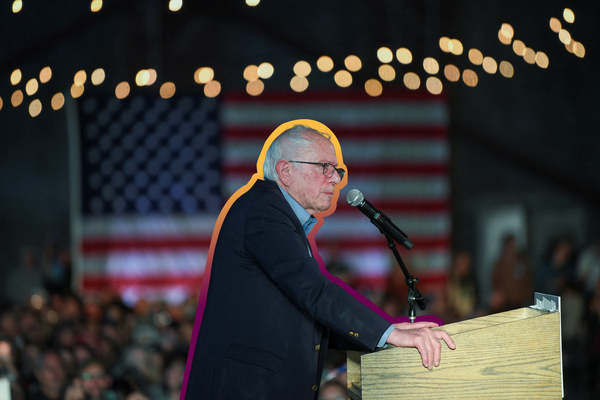
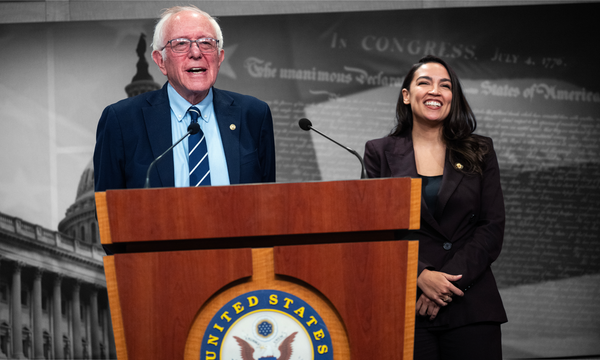
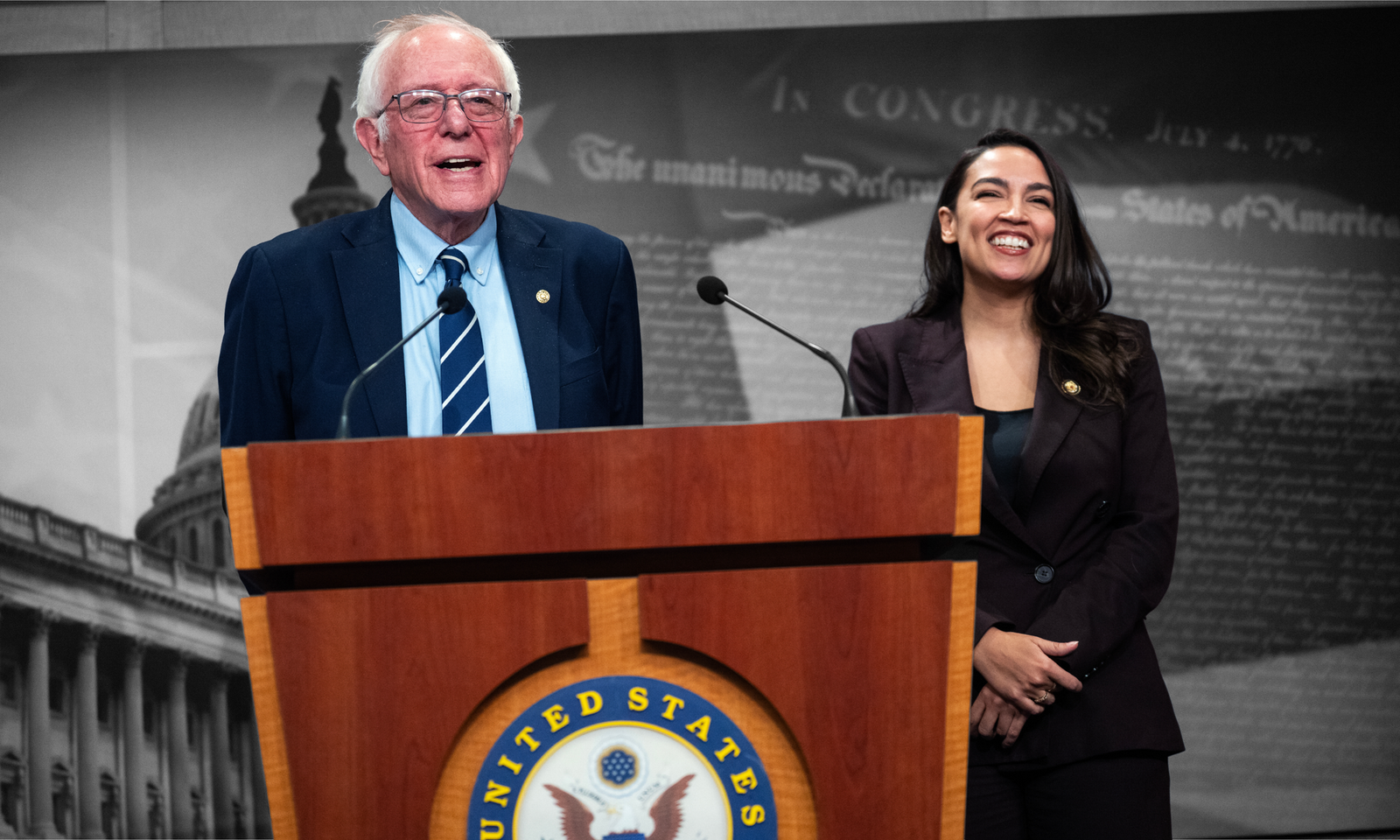
Democratic socialists’ surge. Ahead of the 2026 midterm elections, candidates aligned with the Democratic Socialists of America (DSA) have broken through in primary races for local and national seats. Headlined by figures like Sen. Bernie Sanders (I-VT), Rep. Alexandria Ocasio-Cortez (D-NY) and Rep. Rashida Tlaib (D-MI), democratic-socialist candidates have challenged incumbents in strongly Democratic areas, seeking to pull the party toward more progressive positions on key issues.
Back up: Democratic socialists believe in the political philosophy of socialism, which holds that the state should redistribute wealth and take an active role in societal issues. Unlike socialists or communists, democratic socialists advocate for these goals through the democratic process rather than revolution. DSA traces its origins to the early 1970s, when its leaders organized in opposition to the Vietnam War and, later, the rise of Ronald Reagan. Today, DSA describes its mission as replacing capitalism with a democratic socialist system, exemplified by policies such as single-payer Medicare for All, defunding the police, and the Green New Deal.
In addition to Ocasio-Cortez, Tlaib and Sanders, New York City Mayor Zohran Mamdani (D) has emerged as one of the faces of DSA in the United States. Mamdani defeated former New York Gov. Andrew Cuomo in the city’s mayoral primary last year, then defeated him again (when Cuomo ran as an independent) in the general election. Since then, Mamdani has endorsed DSA candidates in local and federal elections in New York City, including Claire Valdez and Darializa Avila Chevalier, who is challenging a five-term incumbent Democrat in New York’s 13th congressional district primary this Tuesday.
Separately, last Thursday, DSA-endorsed Janeese Lewis George won the Democratic primary for mayor of Washington, D.C., making her the presumptive favorite to win the general election in the heavily Democratic city. Lewis George won the primary by over 18 points, with particularly strong results at polling sites where over 60% of the population is under 35 years old. The week prior, President Donald Trump said the federal government may intervene in Washington, D.C.’s operations if Lewis George becomes mayor.
Elsewhere, in the Los Angeles mayoral election, DSA City Councilmember Nithya Raman advanced to a runoff against Mayor Karen Bass, setting up a general election race between the progressive challenger and the incumbent Democrat. In Maine, Graham Platner, a progressive Democrat who previously aligned himself with DSA, recently won the state’s Democratic Senate primary.
Today, we’ll explore the rise of DSA and DSA-aligned candidates in the United States, with views from the left and right. Then, Senior Editor Will Kaback gives his take.
What the left is saying.
- Many on the left suggest Democrats should embrace new candidates.
- Some argue that socialist policies will continue to be popular among urban constituencies.
- Others warn that far-left candidates can’t successfully run in competitive races.
In The New York Times, Matthew Yglesias argued “the Democrats need a candidate shake-up.”
“The 2024 elections showed that the party is simply not large enough to command a majority of the country,” Yglesias wrote. “Building a newer and hopefully larger tent requires a different set of skills, more willingness to jeopardize parts of the existing coalition, more outsider personnel and ultimately someone willing to run the kind of risky underdog campaigns that put Donald Trump and Barack Obama in the White House.”
“Rebuilding the party and bringing in new people, with less investment in things as they are, will help the party decide what it is about — which policy commitments are genuinely central and which merit flexibility or abandonment,” Yglesias said. “Moving in the direction of fresher faces is going to necessarily mean more ideological conflict rather than less. The process will be contentious and will make existing party leaders uncomfortable.”
In The American Prospect, Harold Meyerson described “why cities go socialist.”
“Mamdani’s, Lewis George’s, and Raman’s political base isn’t confined to DSA members,” Meyerson wrote. “The two issues that both Mamdani and Lewis George most stressed were making child care and homes affordable: issues that all but define the politics of young city residents, issues that highlight the market failures of current American capitalism and the need for higher taxes on the wealthy to provide badly needed social necessities.
“Which is why the future of most American big cities — most certainly, those that attract younger residents — is likely to be social democratic and often run by avowed socialists,” Meyerson said. “The Bernies, Mamdanis, and AOCs won’t be the Democratic Party’s lonesome ends; they’ll be the party’s urban wing. The sooner the Democrats understand that — and the sooner they embrace many of that wing’s policies, however they choose to label them (and themselves) — the better.”
In CNN, Ronald Brownstein said this year’s primaries “are reshaping the Democratic party.”
“The struggle over control of the Democratic Party’s direction has roared to new heights this year… These confrontations have not produced a knockout victory for either side,” Brownstein wrote. “On balance, though, the left so far has outpointed the center in these contests — an advantage it could widen if several Mamdani-endorsed congressional candidates win in New York, as is expected… But Democratic centrists correctly point out that a significant majority of the successful progressive primary candidates are winning in safely Democratic areas.”
“In the competitive seats that will decide control of the House and Senate, the party still largely relies on moderate nominees. And for those candidates, the left’s rise even in safe seats could prove an unwelcome complication,” Brownstein said. “In reliably blue places, Democratic primary voters can support the most liberal candidates without worrying if they will win the general election… In the races that count most, electability remains likely to trump ideology.”
What the right is saying.
- Many on the right are concerned about DSA candidates’ growing influence.
- Some predict that support for progressive politicians will wane once they start governing.
- Others say socialist policies don’t work without force.
In The Daily Signal, Jarrett Stepman suggested the Democratic base wants “full-throated leftism.”
“Democrats are quickly moving away from denying their socialist connections to openly embracing them. That’s a lesson to be learned from a clear trend taking hold in America’s most populous, blue bastions,” Stepman wrote. “The Democratic Party has lurched so far to the Left that in its most secure bastions it’s being taken over by open socialists and Marxists. And there seems to be little resistance… They are using the enthusiasm and organization of groups like the Democratic Socialists of America to outhustle and replace the old party establishment.
“And so far, it’s working, at least in places that Democrats already comfortably control. They are now going to lean into ideas like wealth and property confiscation, into the concept of borderless society that rejects any kind of immigration law enforcement, into many of the radical ideas that the party may have wished for but shrewdly kept quiet about,” Stepman said. “If this trend continues, they soon won’t be the insurgents anymore. They’ll be the establishment. They’ll have the control of a national party with a very clear goal of finally bringing socialism to every corner of the country.”
In The Washington Post, Megan McArdle said “wait for reality to set in.”
“It is a heady moment for the left, because socialism’s tainted brand has recovered from the vivid failures of the Soviet Union,” McArdle wrote. “The challenge is that socialism’s rise is spiky, concentrated in blue cities where affluent (but often downwardly mobile) college graduates cluster. That’s a problem for the Democratic Party, where the excesses of progressive governance are helping to make the party’s brand toxic in the less true-blue areas.
“But it’s also a challenge for the socialists, because cities are the hardest place to execute big plans for new taxing and spending,” McArdle said. “Socialists may wax lyrical about a Nordic-style welfare state, but those states are paid for by heavily taxing the middle class, an idea that is unlikely to gain much purchase with the educated base of the Democratic Socialists of America; today’s college-educated elite is voting for more public services, not less disposable income.”
In The Hill, Emzari Gelashvili argued “most Democrats are frighteningly wrong about [socialism].”
“At protests across American cities, demonstrators have carried Soviet flags, the hammer and sickle on red cloth, as symbols of resistance,” Gelashvili wrote. “I am not going to answer them with statistics or economic theory. I will instead tell them my family’s story. In February 1951, [my grandfather’s] family was loaded onto a cattle car with hundreds of others. Many people were beaten with rifle butts… A young man, maddened by thirst, at one point jumped from his wagon to reach water from a stream — soldiers shot him on the spot.”
“Most Americans associate the word ‘socialism’ with equality and government services — not with deportation lists, sealed cattle wagons, or children hauling earth until they die of heat,” Gelashvili said. “But socialism, in practice, does not work without force and brutality, even if you give it nice adjectives like ‘democratic.’ Socialism is not really a policy or an economic system. It is not Scandinavia. It is a machine whose only function is to destroy anyone sufficiently capable, principled or stubborn enough to threaten those who operate it. It does this legally, bureaucratically and, when necessary, with bullets.”
My take.
Reminder: “My take” is a section where we give ourselves space to share a personal opinion. If you have feedback, criticism or compliments, don’t unsubscribe. Write in by replying to this email, or leave a comment.
- I understand why this new crop of candidates promising radical change is exciting voters.
- The rise of democratic socialism is both a product of and a response to the MAGA movement.
- I’m unsure whether DSA can keep building its influence, but we’ll find out soon.
Senior Editor Will Kaback: Ten years ago, I would have proudly told anyone who would listen that I was a democratic socialist.
Allow me to take you back: One wintry Midwestern afternoon in January 2016, when I was a senior in high school, I was riding in the back of a coach bus rumbling along I-35 from Minneapolis to Des Moines, chattering away with my politically inclined classmates. We were participating in a school program that brought interested students to the Iowa caucuses in presidential election years. For three days, we canvassed for a candidate of our choice, attended rallies for Democratic and Republican candidates, and observed the proceedings on caucus night.
I chose to spend my time with the Bernie Sanders campaign. By happenstance, reporter Ruth Marcus chose to follow my group for a story while we door-knocked, and a picture of my classmates and me lived above the fold of The Washington Post’s homepage when her article published. It was all very cool.
Coolest of all for me was the chance to get out the vote for Bernie. For months leading up to the trip, I had become enamored with the Vermont senator and his calls for reducing wealth inequality, reforming the healthcare system, and pursuing more aggressive strategies to combat climate change. I also liked that he unapologetically called himself a democratic socialist, and I thought people who viewed that label negatively just didn’t understand what it really meant. It doesn’t mean, like, “socialism” socialism, I’d say. It’s just about electing people who want things to be fairer for everyone. On caucus night, I was in the front row at Sanders’s rally and shook his hand after he spoke, full of hope that this moment was the start of bigger things to come.

Today, I no longer see myself as part of the movement, and I’m a lot less assured in my political views than I was back in high school. Still, I understand the draw of democratic socialists popping up across the U.S. For many voters, particularly younger ones, “socialism” isn’t the boogeyman it used to be — in fact, many prefer it to capitalism. Plus, the past year offers plenty for them to be excited about. Aside from Bernie’s enduring influence, Alexandria Ocasio-Cortez is a likely 2028 presidential contender, Zohran Mamdani is confidently leading New York City, and, in just the past few weeks, democratic-socialist candidates have excelled in primaries in Los Angeles and D.C.
In contemporary U.S. politics, once “disqualifying” labels matter less than ever. Branding President Trump a felon did nothing to stop him from winning reelection. Graham Platner (D) and Ken Paxton (R) just won high-profile Senate primaries despite well publicized and wide-ranging controversies. This dynamic, paired with contempt for the second Trump administration and dissatisfaction (or outright disgust) with mainstream Democrats’ response to it, has created fertile ground for democratic socialists to gain a foothold.
Is DSA a response to the MAGA movement? Yes and no. The two movements have undeniable similarities. Both are, at root, economic populist movements. Both seize on an anti-establishment framing — “the swamp” and “globalists” on one side, “the billionaire class” and “corporate elites” on the other. Both have effectively leveraged simple, repeatable phrases to galvanize their bases — “Build the wall,” “America first,” “Medicare for All,” “tax the rich,” and so on. Both frame their movements in binary terms — patriots vs. traitors, or workers vs. billionaires. And both enjoy a certain zeal in taking on institutions once viewed as political power brokers — the media, the experts, the national party leadership.
The differences, of course, are stark. MAGA sees most issues through a national identity lens, while democratic socialists filter their worldview through class and equity. Additionally, while the movement may have borrowed some of MAGA’s playbook (or vice versa), it is ultimately working toward very different goals. And perhaps most saliently, democratic socialism is not defined by a single political leader but rather a nationwide network of candidates at all levels of government.
All of this leaves me conflicted when assessing DSA’s trajectory in this political moment. On one hand, we need to be careful not to extrapolate our sense of the national mood from the results of local elections in deep-blue areas. Candidates like Darializa Avila Chevalier and Claire Valdez in New York City haven’t even secured nominations yet, while Nithya Raman is still an underdog against Karen Bass in Los Angeles. New York City and Seattle have democratic socialist mayors (with Washington, D.C. almost certainly soon to follow), but these are places where more progressive candidates already succeed. And as Megan McArdle noted (under “What the right is saying”), politicians are often forced to trade idealism for pragmatism once they have power, which can lead to disillusionment and infighting within movements that prize ideological purity.
On the other hand, these urban centers are the most populous places in the country, and millions of people rallying around these politicians could represent the early signs of an earnest political shift. The Democratic Party appears ripe for a shakeup, and DSA candidates’ messaging seems to be resonating with the party’s most engaged voters, particularly on immigration, Israel, and healthcare. Here, again, the MAGA movement is instructive. How many Republican politicians felt a false sense of security headed into 2016, thinking GOP voters would never roll the dice on someone as risky as Trump? I get the sense that Democratic voters are equally dissatisfied with their party leadership as Republicans were in 2016, and they’re happy to look elsewhere, “electability” be damned.
Take Graham Platner, who isn’t DSA but whose messaging is similar. I’ve spoken with several friends in Maine who said they happily cast a Democratic primary ballot for the embattled oyster farmer because they think he can provide a necessary jolt to a system they feel is increasingly overrun with corruption and controlled by elderly lawmakers clinging to power. I can understand that position.
But like I said, I’m conflicted. A part of me — that 18-year-old self — hungers for something, anything new on the left. Another part — call it my Tangle brain — thinks that the democratic-socialist movement isn’t representing something new, but a continuation of a form of ideologically rigid politics that has contributed to our current divisions and won’t help us get back on track.
Those dueling feelings also suggest two potential pathways for DSA candidates in the coming months. In the first, the movement continues gaining momentum, with bold ideas on housing, in particular, bringing broader attention and support. In New York City, Mamdani has released a plan to build 200,000 new homes in the next decade, and Valdez, his potential ally in Congress, has put forward proposals to create a federal housing developer and a national housing construction fund. These aren’t overnight solutions, but they strike me as the kind of bold thinking that could garner attention and support. If DSA becomes associated with housing policy reform in the way that MAGA became associated with stronger immigration enforcement, its candidates could gain traction beyond blue cities. Again, labels matter less than ever, and voters might not care about the democratic socialist tag if they think a candidate has good ideas on housing affordability.
In 2016, Trump’s huge rally turnouts and polling strength in early primary states were harbingers of his eventual success. Right now, Sanders and AOC are drawing large crowds of their own in their “Fighting Oligarchy” tour — and not just in big Democratic cities. The turnout for these large-scale gatherings is another signal to pay attention to.
Pathway two is what I might call the “woke” trap. DSA and its candidates unabashedly embrace progressive social policies like transgender rights, police reform, and abolishing ICE. At the national level, voters appeared to reject those policies in 2024, and I don’t think much has changed since then. Even with the unpopularity of the Trump administration, I don’t see evidence of a national appetite for this kind of social progressivism. Just look at how James Talarico is trying to distance himself from 2020-era comments about religion and gender in the Texas Senate race. These candidates won’t be able to sell their economic vision if they’re constantly having to account for their social views. Furthermore, the organization is constantly preoccupied with internal disputes and ideological purity tests. Just look at how AOC — the most promising DSA politician in the country — has been forced to fend off attacks from some within the organization who see her as “selling out” for the mainstream.
Ultimately, the DSA movement has to win elections to remain relevant, and I’m not convinced they’re serious enough about making strategic compromises to succeed at the national level. The 2026 midterms haven’t happened yet, but they’re fast approaching, and we’ll soon have a clearer picture of where DSA stands. Republicans unlocked their populist moment 10 years ago, and the conditions today are ripe for an equal and opposite reaction from the other side of the aisle. Over the next few months, we’ll better understand whether the Mamdanis and Ramans were canaries in the coal mine, or deep-blue outliers.
Take the survey: Do you think a democratic socialist could be a viable presidential candidate in 2028? Let us know.
Disagree? That's okay. Our opinion is just one of many. Write in and let us know why, and we'll consider publishing your feedback.
Under the radar.
Between 2023 and 2025, the Drug Enforcement Administration (DEA) allowed hundreds of thousands of fentanyl pills to enter New Mexico despite surveilling the shipments, according to a recent investigation by The Associated Press. Current and former agents said the lack of seizure was part of a tactic to bring bigger criminal cases against fentanyl traffickers in the state. The DEA responded to the allegations in a statement, saying, “the investigative decisions at issue were lawful, reasonable under the circumstances and consistent with Department guidance.” The investigation also unearthed changes made to the DEA’s fentanyl policy in 2024 that gave agents more discretion in deciding whether to seize pills or preserve an investigation. That same year, the Justice Department’s Office of Professional Responsibility found that the DEA and the U.S. attorney’s office’s inaction regarding unseized drugs posed no “specific danger to public health.” While overdose deaths dropped roughly 14% nationwide last year, they rose by nearly 23% in New Mexico. The Associated Press has the story.
Numbers.
- 145. The total number of DSA-endorsed candidates who are running or have run for election in 2026, according to DSA.
- 16. The number of DSA-endorsed candidates who have won their elections.
- 29. The number who have lost their elections.
- 54%. The percentage of Washington, D.C. mayoral primary votes won by Janeese Lewis George.
- 7. The number of Washington, D.C.’s 8 districts where Lewis George led over other candidates as of Thursday, June 18.
- 29%. The percentage of primary votes won by Los Angeles mayoral candidate Nithya Raman.
The extras.
- One year ago today we covered the U.S. bombing Iran.
- The most clicked link in our last regular newsletter was the new Air Force One jet gifted by Qatar.
- Nothing to do with politics: The full list of the 2026 James Beard Award winners.
- Our last survey: 2,420 readers responded to our survey asking who will be the 2028 Republican presidential nominee with 48% saying Secretary of State Marco Rubio. “Rubio has a more favorable reputation than Vance,” one respondent said. “Vance is too smart for his own good — he’s still trying to figure out what his core values are. Everything he does feels like a stunt,” said another.

Have a nice day.
It had been over twenty years since the Arsenal men’s soccer team won a Premier League title. This year, they won. A hundred miles down the road, over a thousand equines who know nothing about soccer recently started repping Arsenal gear. The team donated footless socks from their old kits to Redwings Horse Sanctuary, which cares for horses, mules and donkeys, to protect them from insects, keep bandages in place, and hold back their hair while their hooves are trimmed. “This was one of the more unusual donations we’ve been offered,” Nicola Knight, Redwings’s head of communications and campaigns, said. “But professional football socks, which these days are often footless by design, can be invaluable.” Nice News has the story.