




I'm Isaac Saul, and this is Tangle: an independent, nonpartisan, subscriber-supported politics newsletter that summarizes the best arguments from across the political spectrum on the news of the day — then “my take.”
Are you new here? Get free emails to your inbox daily. Would you rather listen? You can find our podcast here.
Today’s read: 15 minutes.
Correction.
In Monday’s “Have a nice day” section, we cited a Science Daily story about a retired Australian farmer who accidentally “mortared” a 240-million-year-old fossil into his garden wall. In fact, Mihail Mihailidis did not accidentally mortar the fossil. Mihailidis discovered it in a slab of sandstone he’d bought for a retaining wall, then donated it to science before using it in his construction. While the rest of the story — that scientists had recently formally identified the fossil as Arenaerpeton supinatus — was correct, we unfortunately repeated Science Daily’s misstatement of the facts of the discovery. Thanks to the thorough reader who brought this discrepancy to our attention.
This is our 157th correction in Tangle’s 353-week history and our first correction since April 23. We track corrections and place them at the top of the newsletter in an effort to maximize transparency with readers. (Note: We incorrectly tallied the length of Tangle’s history in our past few corrections, and have corrected that today as well.)
Our latest Suspension of the Rules.
Isaac, Ari and Kmele let loose a bit in today’s episode, discussing Sen. Rand Paul’s son hurling antisemitic remarks at Rep. Mike Lawler and Rep. Alexandria Ocasio-Cortez’s possible political ambitions. Plus, what were some lessons the media should have learned from the Covid-19 pandemic?
Check out the latest here!
Quick hits.
- A Democrat-led resolution to pause the conflict in Iran unless Congress authorizes further military action failed by a vote of 49–50 in the Senate. Republican Sens. Lisa Murkowski (AK), Susan Collins (ME), and Rand Paul (KY) voted with Democrats to pass the resolution, while Sen. John Fetterman (PA) was the lone Democrat to vote against it. (The vote)
- President Donald Trump arrived in China for a two-day summit with Chinese President Xi Jinping. Xi told Trump that discussions between U.S. and Chinese economic and trade teams had been “balanced and positive” but said relations between the countries could be imperiled if the U.S. interferes with China’s policy on Taiwan. (The talks)
- The South Carolina Supreme Court overturned Alex Murdaugh’s conviction for murdering his wife and son, finding that the county clerk of the court where Murdaugh was tried improperly influenced jurors during the trial. Prosecutors intend to re-try Murdaugh, and he will remain in prison while serving a separate sentence for financial crimes. (The latest)
- Vice President JD Vance announced the Trump administration is deferring $1.3 billion in Medicaid payments to California, saying the state has not taken sufficient measures to combat fraud. The vice president warned that other states could also lose funding if they do not address Medicaid fraud. (The announcement)
- The number of surveillance flights conducted near Cuba by U.S. military and intelligence agencies has reportedly increased in recent weeks, which U.S. officials said was part of a planned military buildup in the Caribbean in the near future. (The report)
6 Companies That Send People Money
Most Americans don’t feel financially secure right now.
Prices are up.
Savings are down.
And one unexpected expense can throw everything off balance.
What if your car breaks down, or you have a sudden medical bill?
Ask one of these companies to help….
Today’s topic.
The latest economic news. On Tuesday, the Bureau of Labor Statistics (BLS) released its Consumer Price Index (CPI) report for April, which showed an increase of 3.8% from a year earlier, slightly higher than economists’ expectations. The latest inflation figures represent the highest annual increase since May 2023, up from 3.3% in March. On a month-to-month basis, prices rose a seasonally adjusted 0.6% after rising 0.9% in March. Core inflation, which excludes volatile food and energy prices, rose 0.4% for the month, its highest pace since January 2025.
Reminder: The CPI tracks price fluctuations for 80,000 items in a fixed basket of goods and services, representing everything from gasoline to apples to the cost of a doctor's visit. You can read our coverage of past inflation reports here.
A 3.8% surge in energy prices accounted for over 40% of the monthly increase for all items, while food prices climbed 0.5% and the shelter index rose 0.6%. Airline fares, household furnishings, education and apparel prices all increased in April, while medical care, new vehicles, and communication service prices declined. Separately, the producer price index, which measures the average change in selling prices received by domestic producers, rose a seasonally adjusted 1.4% for the month — its largest monthly gain since March 2022 — and was up 6% on an annual basis.
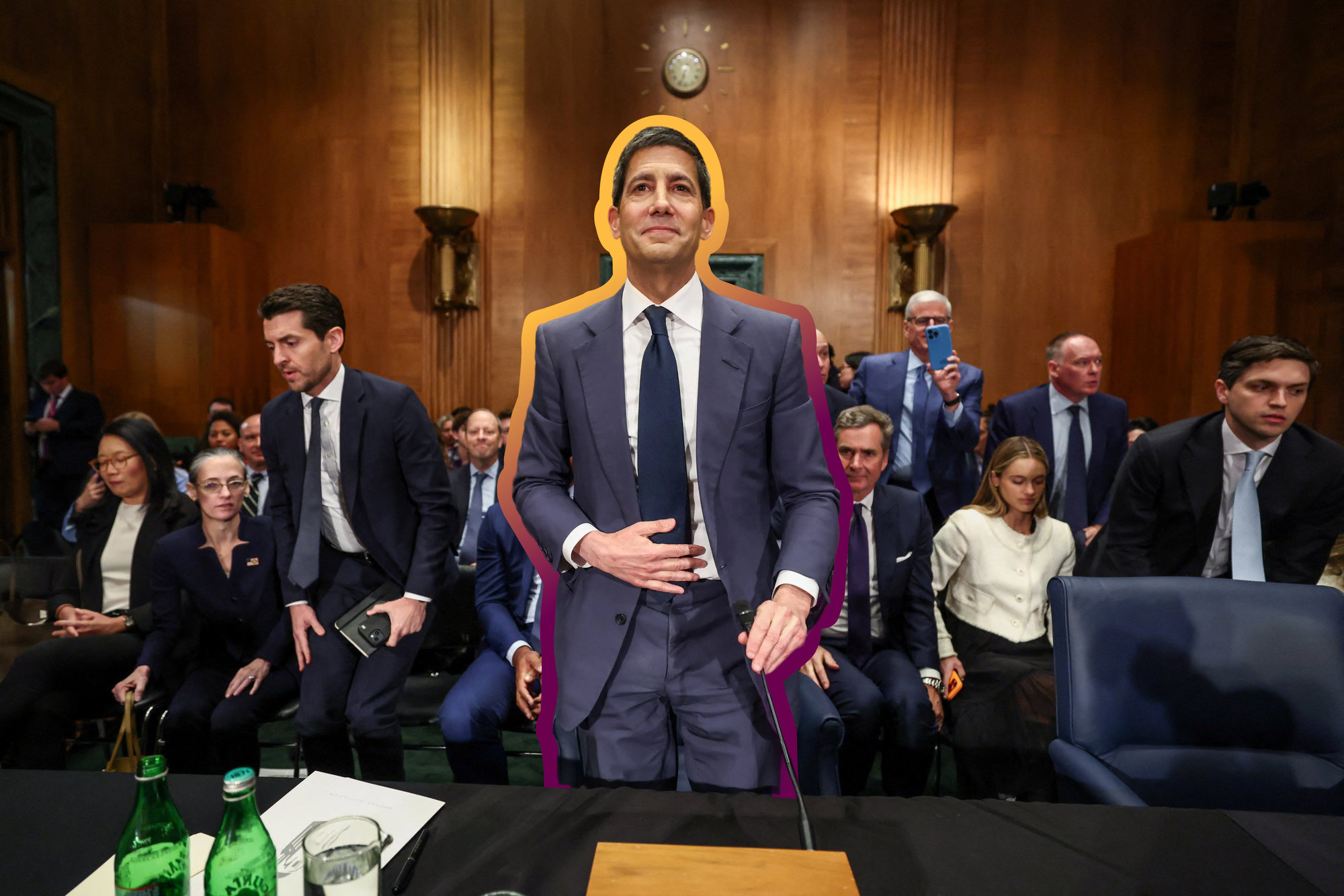
Lastly, on Wednesday, the Senate confirmed Kevin Warsh to be the next Federal Reserve chair by a 54–45 vote. Warsh, 56, served on the Fed’s Board of Governors from 2006–2011 as its youngest-ever governor, acting as a key liaison to Wall Street during the 2008–09 financial crisis.
Warsh is set to take over from current Federal Reserve Chairman Jerome Powell, whose term ends on May 15. President Donald Trump announced his nomination of Warsh in January, but Sen. Thom Tillis (R-NC) blocked the nomination from advancing until after the Department of Justice dropped its probe into Powell for the cost of the renovation to the Federal Reserve’s headquarters. During his confirmation hearing, Warsh faced intense scrutiny from the Senate Banking Committee over whether he would maintain the Federal Reserve’s independence from President Trump, who has publicly pushed for aggressive interest rate cuts and criticized Chairman Powell for opting to keep rates unchanged amid inflation concerns. The Federal Reserve Open Market Committee will next meet to decide on interest rates on June 16.
We’ll get into what the right and left are saying about the latest economic news below, then Senior Editor Will Kaback gives his take.
What the right is saying.
- The right is largely mixed on the economic figures, with some criticizing Powell and hoping Warsh can take a different path.
- Some fault Bidenomics for the bad inflation numbers.
- Others point out that voters are beginning to blame Trump for high prices.
The Wall Street Journal editorial board wrote about “Jerome Powell’s inflation legacy for Kevin Warsh.”
“[Warsh] may be wondering why he ever signed up for this duty. Tuesday’s consumer inflation data for April show he is inheriting one of the most difficult monetary tasks since Paul Volcker took over from G. William Miller in 1979,” the board said. “Some 40% of the [consumer price] increase was related to the Iran war’s energy shock. But that’s little consolation since so-called core prices, sans food and energy, rose 0.4% in April, an acceleration from 0.2% in March, and 2.8% for 12 months.”
“The latest inflation report marks a dispiriting end to Jerome Powell’s eight-year tenure as Fed Chair. The press focuses mainly on President Trump’s relentless attacks on Mr. Powell and praises him as a stalwart of Fed independence. We’ve supported him against those unfair assaults. But Fed chiefs are measured above all by their stewardship of the economy, especially price stability. On those grounds, Mr. Powell’s tenure has been a notable failure,” the board wrote. “The real challenge for Mr. Warsh will be navigating the economic reality he inherits of renewed inflation, an oil shock affecting consumer confidence, and a President who always wants lower interest rates but higher tariffs.”
In The New York Sun, Stephen Moore said “blame Bidenomics and big government for today’s stubbornly high inflation.”
“The new consumer prices report showing a 3.8% price rise in April confirms what Americans have been complaining about for months: Inflation is squeezing family budgets,” Moore wrote. “Oil and fertilizer supply disruptions in the Middle East are driving up prices here at home. Yet that’s only part of the inflation story. Consumer prices overall are up nearly 30% since Covid-19 derailed the American economy six years ago… It’s important to remember why this spurt of rising prices has hit consumers right in the nose — er, wallet — if we are going to solve the affordability crisis.”
“If you’re angry about the high price of nearly everything, Bidenomics is the primary villain… During Covid-19 and its aftermath, Uncle Sam spent more than $4 trillion. Remember the Build Back Better Act, CHIPS and Science Act, Inflation Reduction Act, and other ‘stimulus’ bills? Every penny of that spending blitz was borrowed and essentially printed,” Moore said. “Here’s the impending political and economic danger for Republicans. The solution isn’t just to get the oil flowing through the Persian Gulf. We also have to reduce government spending right now… If Republicans don’t start watching their Ps and Qs, as the old saying goes, we could see another Biden-type inflation surge with voters mad as hell.”
In Cato, Ryan Bourne, Jai Kedia, and Nathan Miller wrote “President Trump’s approval on inflation is now worse than President Biden’s ever was.”
“The Economist/YouGov’s May 1–4 poll shows 25% of Americans approve of the way Donald Trump is handling inflation/prices while 69% disapprove — a net of –44%, lower than any point in either Biden or Trump’s presidencies,” the authors said. “That’s a remarkable development. Biden oversaw an inflation peak of 9%, which Trump hasn’t approached, yet Trump’s disapproval has surpassed Biden’s worst… Voters didn’t just want lower inflation, though; they wanted prices to fall.”
“More recently, inflation has accelerated again. The consumer price index increased 0.6% in April after rising 0.9% in March, meaning prices are up 3.8% in the past year… Some of those price rises were to be expected. War in Iran has driven gasoline prices 28.4% above year-ago levels, and that mostly explains the 20.7% surge in the highly salient airline fares. But the concern with oil shocks is that they can pass through into virtually all other prices,” the authors wrote. “These numbers are particularly problematic for Trump given that this is an election year where affordability will be at the forefront of voters’ minds.”
What the left is saying.
- Many on the left argue that the latest inflation numbers are directly caused by the war in Iran.
- Some argue that the economy is worse for consumers than for large companies.
- Others say the Fed’s power to affect the economy is diminishing, and new Fed Chair Kevin Warsh can’t change that.
In Bloomberg, John Authers said “Warsh could find inflation too hot to handle.”
“US inflation is too hot for comfort. The numbers for April reveal that the headline rise in consumer prices reached 3.8%, continuing an upward trend that started before the Iran war,” Authers wrote. “The greatest problem is, of course, the spike in energy prices driven by the blockage of the Strait of Hormuz. Energy prices are always erratic and there is little monetary policy can do to control them, which is why central banks tend to look at core inflation... However, inflation excluding energy is still rising, while an array of other statistical measures of core price increases are also turning upward.”
“Fittingly, the inflation data dropped just as the Senate confirmed Kevin Warsh as a governor of the Fed, to replace the ultra-Trumpy Stephen Miran,” Authers said. “He arrives just in time for two-year Treasury yields to touch 4%, their highest since June last year, buoyed by the strong market expectation that the fed funds rate cannot move far from where it is now… There are worse inheritances for Warsh. The AI shock is strong enough to help the stock market withstand interest rates where they are, while the combination of rising inflation and stable employment should be enough to convince even the current administration that lower interest rates are not called for just now.”
In MS NOW, Ali Velshi argued that “for many Americans, the recession is already here.”
“The old-fashioned way of thinking about a recession is that it’s two consecutive quarters of negative growth in gross domestic product, GDP being the broadest measure of all economic activity in the country. Not only is that view of a recession outdated, it also may not fit an economy that, for a whole lot of Americans, is already feeling like one that’s in a recession,” Velshi said. “In May, consumer sentiment was the worst it has ever been…So what’s going on? The simplest way to understand it is this: There isn’t one American economy right now, there are two.”
“Economists call this a K-shaped economy, because if you draw it on a chart, the line for wealthier households invested in the stock market is going up (the top of the K), and the line for everyone else is flat or going down (that’s the bottom),” Velshi wrote. “Across every income group, real spending has actually turned slightly negative in recent months. So what’s holding the number up? Two things. The first is the government. Defense spending crossed $1 trillion this year, roughly a 15% jump from the year before, driven in large part by the war with Iran… The second is a major economic boom in a single narrow sector: companies pouring money into building data centers for artificial intelligence.”
In Semafor, Liz Hoffman wrote “the Fed’s most powerful economic lever is losing its edge.”
“[Kevin Warsh is] signalling a willingness to lower interest rates — either because the president wants him to, or because he thinks current conditions justify it. It’s not entirely up to him, and the market is losing faith in that outcome anyway, but the bigger question is whether it would matter,” Hoffman said. “The US economy is less sensitive to interest rates than it used to be. The long shift from manufacturing — which responds to higher borrowing costs (factories are expensive) in a way that services don’t — has blunted one of the Fed’s most powerful economic levers. The ultrarich, whose spending has ballooned, don’t care what money costs. Neither do the tech companies fueling the AI boom.”
“Another kink in that policy-transmission hose is that the Fed only controls overnight interest rates, not the longer-term levels that determine what money costs in the real economy. Expectations of inflation (if you’re a pessimist) or growth (if you’re an optimist) have kept longer-term borrowing costs higher than you’d expect after six rate cuts,” Hoffman wrote. “The economy is being tossed around by supply shocks, which central bankers can’t control, rather than the demand shocks they can. The Iran war is a shock to the supply of oil. AI is a shock to the supply of knowledge. The Trump administration is a shock to the supply of certainty. Put it together and central bankers are pushing on a string, and getting less bang for their buck on interest rates.”
My take.
Reminder: “My take” is a section where we give ourselves space to share a personal opinion. If you have feedback, criticism or compliments, don't unsubscribe. Write in by replying to this email, or leave a comment.
- The economic shocks of the Iran war have fully arrived.
- Inflation could now persist long after the immediate conflict ends.
- Warsh has a tall task ahead of him, and his independence from the White House is a key test.
Senior Editor Will Kaback: Economic policymaking is hard, and it has a tendency to make even the smartest decision-makers look out of their depth when predictions don’t pan out. Tangle has always covered debates about the health of the economy, and I can honestly say — whether I’ve been a reader, researcher, editor, or writer for those editions — that I typically come away struggling to figure out which competing theories I find most persuasive. But every so often, the data from moments like this one tell a clear, simple story.
The war in Iran has disrupted global energy markets, driven up prices, and led to rising inflation here in the United States. Unlike, say, the debate over Bidenomics or the tax policy put forward in the One Big Beautiful Bill, this interpretation doesn’t seem to be a source of disagreement. Opinions vary on whether the potential benefits of attacking Iran justify this disruption, but there’s no longer much debate that this war is directly responsible for heightened economic pain.
The question now is how bad it will get — and for how long.
To state the obvious, the longer the war lasts — and the Strait of Hormuz remains effectively closed — the longer inflation will remain a problem. Unfortunately, that may not be on the immediate horizon. As Isaac documented on Tuesday, the productivity of peace talks (and length of the conflict) is difficult to gauge, but President Trump’s recent comments suggest the fighting could soon ramp back up. Additionally, new reports about Iran’s regained missile capabilities suggest they aren't ready to fold anytime soon.
Alternatively, the U.S. and Iran could soon reach a deal that reopens the Strait of Hormuz and restores some degree of stability to global markets. President Trump is currently meeting with Chinese President Xi Jinping at a high-stakes summit in China, where the two are expected to discuss the war. China is playing a behind-the-scenes, but pivotal, role in the conflict right now. It’s reportedly planning to provide Iran with weapons and could benefit from selective exceptions to Iran’s shutdown of the strait. A Chinese supertanker sailed out of the Persian Gulf yesterday — now, it’s testing the U.S. Navy’s blockade.
The drama on the high seas raises the stakes of a rare face-to-face standoff between the two superpowers. Secretary of State Marco Rubio said Trump will push Xi to take a more active role in mediating an end to the conflict, saying, “It’s in their interest to resolve this.” Rubio is alluding to the economic pain China will continue to experience if the Strait of Hormuz remains closed, but that’s only one input China is weighing. The longer the U.S. remains engaged in Iran, the more the U.S. military’s resources will be depleted. Plus, with each passing day, Trump’s domestic political challenges become more acute. Xi and China are ultimately balancing their own economic challenges against the strategic benefit of a weakened United States.
Even in the best-case scenario where the Trump–Xi summit produces a deal to pressure Iran to reopen the strait, inflation will get worse before it gets better. Energy markets have suffered massive shocks, the kind that don’t immediately rebound as soon as Trump declares the war over — or even after the strait reopens.
An analysis from Oxford Economics published in April found that inflated oil costs caused by conflicts persisted for two to three years. In the Ukraine war, fuel prices in the U.S. remained elevated for roughly a year after Russia’s full-scale invasion before moderating to pre-war levels. That’s encouraging because it suggests energy markets can absorb the effects of upheaval over time. But it’s also deeply discouraging because a year of rising gas prices is a long time, and we still don’t know how bad the Hormuz crisis will get.
Many Americans cannot, or will not, tolerate $4.50 gas (or worse) for an extended period, which creates an obvious political problem for the president and his party as we approach the midterms. Trump recently commented that he doesn’t “think about Americans’ financial situation” in relation to the Iran war. That makes for easy fodder for attack ads, but I’m also not sure how true it is behind the scenes. More likely, the White House hasn’t figured out how to reconcile the president’s insistence on continuing the war with a coherent strategy for our mounting economic challenges. But if inflation runs hot for another month (or two, or three), there will be no hiding from political reality in November.
In fact, that reality is already here. As Zachary Basu wrote in Axios this week, Trump is facing a “five-alarm economy” — surging prices, shrinking paychecks, mounting debt, cratering consumer confidence, and increasing pessimism among small businesses. Despite their redistricting gains, Republicans will probably lose the House, and you can draw a straight line from rising prices to that forecast. What’s more, the president seems to have learned little from his predecessor, whose administration suffered politically for downplaying inflation and casting it as “transitory.” Again, the connection between the Iran war and inflation is obvious (to say nothing of the impact of Trump’s tariffs), and publicly, the president seems deeply indifferent to the pain the conflict is causing. Forget the politics of it all; that posture is just plain aggravating to me as a citizen.
Personally, the most unnerving aspect of our economic outlook is how clearly it demonstrates the fragility of the systems that make life “normal” — an understanding that was laid bare during Covid and now feels like a wound being reopened. Consider these stories from the past week: A massive Japanese snack company is switching to black-and-white packaging because the Iran war has disrupted supplies of an ingredient used in its typical packaging ink. The cost of food staples like tomatoes has risen up to 30% from pre-war levels, largely because of diesel prices. Healthcare supply chains have been similarly impacted. Auto industry insiders are warning that we’re weeks away from mass shortages of motor oil. Virtually all forms of transport — not just cars — are getting significantly more expensive. And a U.S. airline just shut down, unable to weather rising jet-fuel costs.
My three years at Tangle have instilled a kind of reflex to check myself when I start to default to worst-case scenario thinking. But when I try to find optimistic outlooks here, I’m not seeing many compelling arguments. In our research for today’s edition, the most pointed defenses of the economy boiled down to blaming President Biden and arguing that Trump can bring down inflation by going after grocery price gouging. One is an admission of the situation, while the other is a potential solution to only one element of the problem, one that’s pretty far down the priority list at the moment.
Wherever we’re headed, the big new variable in the mix is Kevin Warsh. When we covered his nomination back in February, I wrote that his singular focus on containing inflation as a Fed governor made him an intriguing candidate to lead the central bank at a time when the president was pushing aggressively for interest rate cuts. That was before we attacked Iran, and before the March and April inflation reports. Warsh’s inflation-curbing instincts could be well suited for this moment, but they could quickly bring him into conflict with President Trump. Will he buck the president if inflation continues to spiral? Or will he turn around and push for rate cuts?
It feels odd to ask these questions about someone assuming a position that’s supposed to be fully independent of the president, but after the way Jerome Powell’s term ended, it’s necessary to consider his replacement’s fealty to the White House. Ultimately, President Trump’s anti-inflation strategy hasn’t arrived yet, and the new Fed chair will have an important role to play in whether Trump can execute it.
Take the survey: How concerned are you about inflation? Let us know.
Disagree? That's okay. Our opinion is just one of many. Write in and let us know why, and we'll consider publishing your feedback.
Your questions, answered.
Q: For a few weeks, it has seemed to me that the press is repeating what officials tell them [about hantavirus], with very little questioning, which is concerning. Your take doesn’t seem to shift much from that: listed as a fact is “It transmits through what every medical source I’ve read describes as ‘close contact’ with an infected person.”
So we the public hear that, but then see an increasing number of positive cases being identified. These two “facts” seem at odds... how did such a range of passengers get this if “close contact” was required?
— Eric from Elkridge, MD
Managing Editor Ari Weitzman: Maybe a quibble, but I would say the press has done a lot of questioning — the writers we summarized from the right and left, along with the epidemiologists we quoted, all brought a critical lens to this story yesterday. They just haven’t challenged the scientific consensus. And honestly, I think the data we’re seeing confirms that consensus. The Andes strain of the hantavirus seems to spread through bodily fluids, and in some cases “aerosolized saliva.” That requires heavy exhalations from the mouth, typically through a cough or sneeze, and is very different from other respiratory infections (like the flu), which can be transmitted simply through shared breath.
Confirmed cases are going up because these people are on a very unusual cruise ship — it’s small, carrying a maximum of 170 passengers and crewed by about 70, and they’ve been at sea for a while following a tour of the Antarctic that was disrupted by the confirmed hantavirus infection. They’ve shared close quarters and would have had lots of opportunity for close contact — which can simply mean sitting near someone for a prolonged time while eating. Considering the virus’s long incubation period, some of them were likely infected before they knew what was going on. Hantavirus is still a contagious disease, so it’s not a surprise that cases are increasing — nor is it surprising that they’re going up slowly.
We’ll see what we learn in the coming weeks. Maybe something about this Andes strain is very different from previously studied ones, and the facts will bear that out. I’m not saying that won’t happen; it just seems unlikely based on what we know so far.
Want to have a question answered in the newsletter? You can reply to this email (it goes straight to our inbox) or fill out this form.
The road not taken.
Our decisions for the main topics to cover this week were all fairly non-controversial among our editorial staff. The Virginia redistricting decision was the clear story coming out of the weekend, we knew we were due for an Iran update, and the spike in inflation pushed us to cover the new data today. The only thing close to a judgment call we made was to hold our coverage of the Trump–Xi summit until after it occurred (which is standard practice for us) — that decision opened us up to discuss hantavirus on Wednesday, which coincided with the Americans on the infected Dutch cruise ship returning home.
Several readers criticized us for adding to hysteria by choosing to give attention to the story at all (see today’s Extras section), but the concern from other readers about the outbreak (see today’s reader question) does seem to justify our decision.
Your savings account looking a little… theatrical lately?
Like every time you open your banking app it whispers, “good luck.”
Turns out adulthood is mostly just moving money around and pretending you understand APRs. Here are 6 companies that can help you save money, spend smarter, and panic slightly less.
The extras.
- One year ago today we wrote about President Trump’s executive order to reduce drug prices.
- The most clicked link in our last regular newsletter was our recent video about the new era of moon exploration.
- Nothing to do with politics: NASA releases thousands of Artemis II photos.
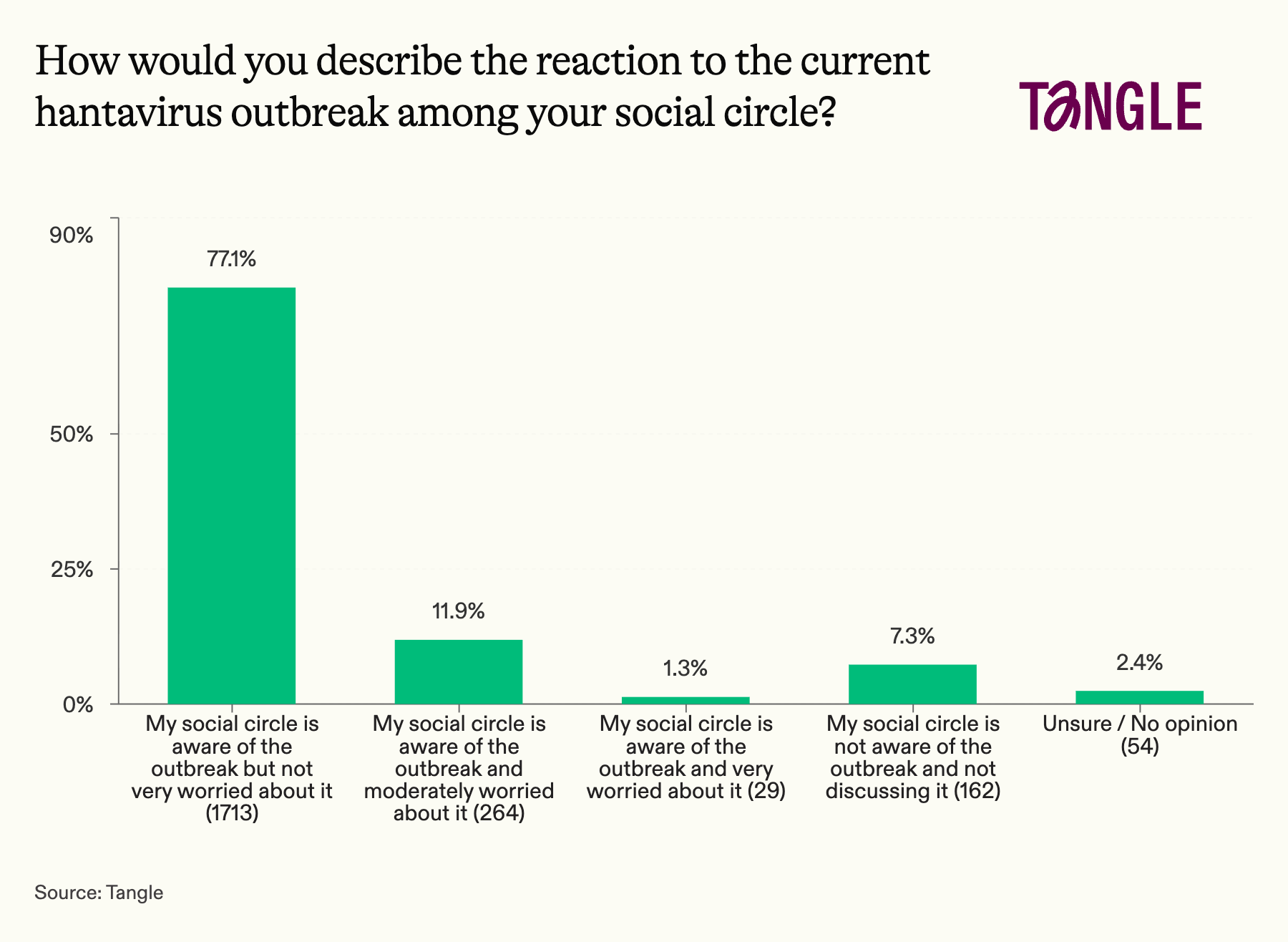
- Our last survey: 2,222 readers responded to our survey on hantavirus with 77% saying their social circle was aware of the latest outbreak and not very worried. “Staying abreast and educated, but not panicking is probably the right framework,” one respondent said. “Nothing burger… wasted newsletter,” said another.
Have a nice day.
The Taylor’s checkerspot butterfly has lost 97% of its native Pacific Northwest prairie habitat, and without human intervention, it might have disappeared completely. The intervention is happening inside a prison greenhouse, where incarcerated women tend to the endangered species as trained butterfly technicians — tracking egg clusters, monitoring larvae, and logging data. The program has helped raise and release 80,000 caterpillars into restored prairie habitats since 2011. For Margaret Taggart, who is set for release from prison in 11 months and is now considering pursuing environmental work, the work has meant something harder to quantify. “It gave me a belief in myself that I can learn and grow,” Taggart said. Reasons to be Cheerful has the story.

Member comments