




I'm Isaac Saul, and this is Tangle: an independent, nonpartisan, subscriber-supported politics newsletter that summarizes the best arguments from across the political spectrum on the news of the day — then “my take.”
Are you new here? Get free emails to your inbox daily. Would you rather listen? You can find our podcast here.
Today’s read: 14 minutes.
Corruption in the Trump administration?
“After reviewing the evidence of the first 15 months of President Trump’s second term, I believe the president is profiting off the office and making foreign policy decisions based on business interests to a level we’ve never seen or even conceived of before, and apparently nothing is being done to stop it.”
Gold phones, Qatari planes, Syrian golf courses, cryptocurrency schemes, ballroom donations. Market moves, board seats, lawsuits dropped, lawsuits threatened. Pardons, prosecutions, profits, profits, profits… This past Friday, Executive Editor Isaac Saul waded through all of it in a thorough exploration of the charges of corruption against President Donald Trump.
We’ve decided to drop the paywall and make this Friday edition open to all readers, so you can read the full piece here. And as always, if you’d like to support our work, please consider upgrading to a paid subscription!
Quick hits.
- Iran said that it sent a 14-point peace proposal to the United States and that it had received a response, though President Donald Trump said he has not reviewed the plan in detail. (The proposal) Separately, President Trump announced that the U.S. military will assist ships attempting to transit the Strait of Hormuz by offering information on the best routes to avoid mines. (The announcement)
- The Pentagon announced that the U.S. would withdraw about 5,000 troops from Germany over the next 12 months. The move follows President Trump’s threats of withdrawal after German Chancellor Friedrich Merz criticized the Iran war. (The withdrawal)
- The Supreme Court issued an administrative stay on an appeals court ruling that had temporarily blocked mail-order distribution of mifepristone, a drug used to induce abortions. The order puts the 5th Circuit Court of Appeals decision on hold until May 11. (The ruling)
- On Monday, a trial will begin to adjudicate the second phase of a lawsuit brought by New Mexico’s attorney general against Meta. The social media company is accused of harming young users’ mental health and failing to protect them from sexual exploitation. In March, a jury found Meta guilty of violating New Mexico’s consumer protection law and ordered it to pay $375 million in damages. (The trial)
- Former New York City Mayor Rudy Giuliani (R) was hospitalized in “critical but stable” condition. The cause of his hospitalization has not been shared. (The latest)
Have we found the holy grail of hearing aids?
There’s a reason experts are calling hear.com’s new IX hearing aids “the ultimate conversation starter.” Because they’re the world’s first designed hearing aid with clarity in conversation in mind.
That means state-of-the-art noise suppression. Lightning-fast dual processing technology.
The most natural listening experience ever. In your day-to-day life, that means effortless conversation, wherever you go.
Tangle readers: Test drive hear.com's IX hearing aids today with a 45-day risk-free trial.
Today’s topic.
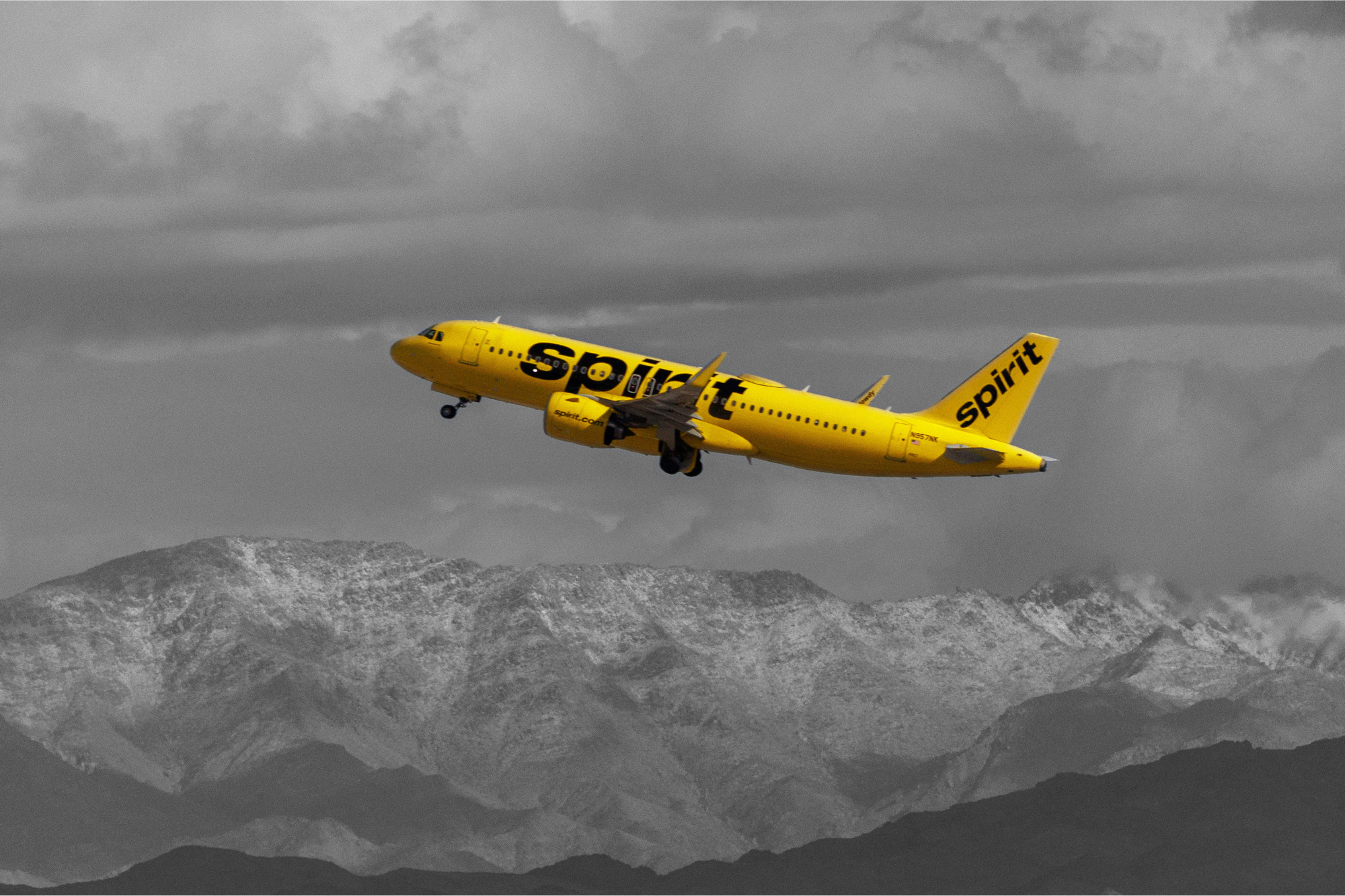
The Spirit Airlines closure. On Saturday, Spirit Airlines announced that it was canceling all flights and beginning an “orderly wind-down” of its operations. The budget airline had been struggling since the Covid-19 pandemic, and it hasn’t posted a profitable year since 2019. President Donald Trump had sought a deal to bail out the company before its shutdown but failed to reach an agreement with bondholders. About 17,000 Spirit employees and contractors are expected to lose their jobs; union representatives are negotiating with the airline to grant compensation packages to affected workers.
Back up: Spirit Airlines was known for having lower base fares than competitors but many additional fees. The airline lost $2.5 billion between 2020 and 2024 and had struggled recently with engine defects, expiring leases on its jets, and high fuel prices. These difficulties resulted in the airline declaring bankruptcy in 2024 and again in 2025. Spirit attempted to merge with JetBlue in 2022; however, the Biden Justice Department sued to stop the deal, and a federal judge blocked the move in 2024 over concerns that it could raise ticket prices and lead to significant debt for JetBlue.
On Saturday, the Department of Transportation announced that several airlines — United, Delta, JetBlue, and Southwest — have agreed to cap or reduce ticket prices for Spirit customers looking to rebook their upcoming flights. Meanwhile, American Airlines, Delta, and Allegiant have announced temporarily reduced prices on routes they shared with Spirit, while Frontier will discount prices across its network. Spirit said it would automatically process refunds for customers who booked directly with the airline, telling customers who booked through an intermediary to contact their agent.
“Unfortunately, despite the Company’s efforts, the recent material increase in oil prices and other pressures on the business have significantly impacted Spirit’s financial outlook,” Spirit said in a statement. “With no additional funding available to the Company, Spirit had no choice but to begin this wind-down.”
As Spirit’s financial outlook worsened in the past month, the Trump administration offered a $500 million bailout that would have given the U.S. government up to a 90% stake in the company. However, the administration could not reach an agreement with Spirit bondholders.
The Trump administration blamed the Biden administration for Spirit’s shutdown, arguing it should not have blocked the Spirit–JetBlue merger. “Yet another mess the traveling public has to inherit thanks to the radical policies of Joe Biden and Pete Buttigieg,” Transportation Secretary Sean Duffy said. “In blocking the JetBlue/Spirit merger in 2024, they turned their backs on the American consumer and our great aviation workforce.”
Democrats have argued that the Trump administration brought on the economic conditions that led to Spirit closing its doors. “Spiking fuel prices from Trump’s war was the nail in the coffin for twice-bankrupted Spirit airline,” Sen. Elizabeth Warren (D-MA) said. “[For what it’s worth], JetBlue merger failed because a judge, appointed by Ronald Reagan, said the deal was illegal.”
Today, we’ll share views from the left, right, and airline insiders on Spirit’s shutdown. Then, Executive Editor Isaac Saul gives his take.
What the left is saying.
- Many on the left worry about the ripple effects of Spirit’s closure.
- Others point to flawed regulation and anti-competitive tactics as drivers of Spirit’s demise.
In The Atlantic, Saahil Desai wrote “the only thing worse than Spirit Airlines… is a world without Spirit Airlines.”
“The end of Spirit was sudden and dramatic, but not unexpected. The budget airline had long been going through it: one failed merger after the next, two bankruptcies within the span of a year, and finally, rising fuel costs from the Iran war that turned a bad situation into a dire one,” Desai said. “Spirit was the airline of the masses — the kind of people who pack their own sandwiches instead of paying $21 for a turkey wrap at Hudson News. Because Spirit was so focused on budget travelers, the airline operated in many smaller cities that otherwise had few other options.”
“The paradox of Spirit is this: It was a horrible airline to fly. But it also allowed more people to fly than ever before. When you’re forced to squeeze inside of a middle seat in row 27, it’s not hard to feel nostalgic about a time when flying was glamorous and comfortable. In the 1950s, Pan Am passengers in coach were served stuffed guinea hen. Flying round-trip from Los Angeles to New York cost $208 in 1958; in today’s dollars that’s $2,377,” Desai wrote. “Since just 1995, average air fare in the U.S. decreased by 41 percent. Now cheap flights are becoming harder and harder to come by. Spirit is gone, and other budget airlines — Jet Blue and Frontier — are also struggling.”
In his BIG newsletter, Matt Stoller explored “who killed Spirit Airlines.”
“The most obvious reason is Donald Trump, who launched a war with Iran that caused jet fuel prices to double. Jet fuel takes up 20-30% of the operating cost of an airline, and all airlines globally are canceling flights and hiking prices,” Stoller said. “[The big airlines] are also acting to prevent the low cost carriers from bleeding off the cream from their fixed costs. We have to start asking why the same tactics keep recurring for forty five years, along with routine government bailouts. And the cause is deregulation. Airlines are public utility systems, but are regulated like they aren’t.”
“So who killed Spirit Airlines? Well, there’s a bit of a Murder on the Orient Express dynamic to it. Yes, it was Trump’s Iran war spiking costs, but it was also JetBlue sabotaging Spirit’s Frontier deal, and the big four legacy airlines, and Bush and Obama enforcers/regulators blessing a roll-up of power to the big four,” Stoller wrote. “Spirit won’t be the last to go. And until we decide as a country we want an airline system that serves all of us, and put the rules in place to make that happen, it’s going to get worse.”
What the right is saying.
- Many on the right say the blocked merger led to Spirit’s downfall, highlighting the failures of anti-trust advocacy.
- Some argue the Trump administration was right not to bail out the airline.
The Wall Street Journal editorial board wrote about “Spirit Airlines and the antitrust left.”
“Recall how Timothy Wu, Jonathan Kanter, Lina Khan and others on the left sought to revive long discredited theories of antitrust that view nearly all mergers as anti-competitive. Mr. Kanter tested that view on the airline industry, with disastrous results,” the board said. “Federal Judge William Young admitted Spirit’s financial troubles… He still ruled the merger an antitrust violation because it would eliminate one low-fare option on some routes. JetBlue ended its merger bid soon thereafter, and Spirit declared bankruptcy in November 2024, long before the Iran war fuel spike.”
“Congratulations Judge Young. With Spirit’s demise, that low-fare option is gone. The big boys are likely to snap up Spirit’s planes, airport gates and other assets, and there will be less competition than if the merger had been allowed. JetBlue is also struggling these days,” the board wrote. “The Spirit Airlines fiasco shows that when lawyers and politicians indulge in theories untethered to business reality, the results can be tragic for the lives and livelihoods of thousands of people.”
The Washington Post editorial board said “Sean Duffy stands up for taxpayers.”
“Transportation Secretary Sean P. Duffy opposed bailing out Spirit Airlines and went one step further on Saturday to say that there is no need for a federal bailout of any low-cost airline. While limited-government instincts seem to have atrophied for many Republicans, Duffy has retained the good sense of opposing government bailouts for private companies,” the board wrote. “Duffy reportedly opposed Commerce Secretary Howard Lutnick, who pushed for the bailout with the possibility of an up to 90 percent stake in Spirit for the federal government.”
“If the government is going to help Spirit deal with high fuel prices, the trade group for low-cost airlines said, why not set up a $2.5 billion fund to help all of them? That would have been five times larger than the proposed Spirit bailout, showing how quickly government interventions in the economy spiral,” the board said. “Duffy has poured cold water on that idea as well… It’s better for them, and it’s better for taxpayers. They have bailed out airlines enough times in the past. If people who work in the industry can’t figure out how to turn Spirit around, there’s no reason to believe Cabinet secretaries could do any better.”
What airline insiders are saying.
- Many aviation writers say Spirit’s business model was risky, but the airline provided significant value to travelers.
- Some argue the government should have bailed Spirit out.
In The Points Guy, David Slotnick called the shutdown “a sad ending for the storied budget carrier.”
“Spirit has spent the last year trying to reposition itself as a dynamic airline with both its famous low-cost base fares with a la carte pricing for add-ons, as well as things like packaged fares that include things like on-board snacks and even first-class seats, trying to take advantage of the post-pandemic finding that premium revenue is increasingly crucial for U.S. airlines. However, it appears to have been too little, too late,” Slotnick wrote. “The death of Spirit represents an end to a storied budget airline that, for whatever complaints people may have had, offered cut-rate fares that made travel more accessible for more people.
“Unbundled fares, with add-ons for everything from bags to seat selection, proved to be so competitive that it forced the legacy airlines to introduce basic economy. Spirit, for instance, was the first airline to begin charging for carry-on baggage,” Slotnick said. “And as recently as 2019, the model worked, with Spirit turning a profit going into the pandemic. But the competition from bigger airlines’ basic economy fares, with more flights on the same routes, better reputations and tempting loyalty programs bolstering the bare-bones offering, turned out to be another blow to Spirit.”
In Live and Let’s Fly, Kyle Stewart said “saving Spirit was cheap, letting it fail, expensive.”
“The Spirit effect was real. It kept pricing within the lowest tier of the market, and it pulled the middle tier down with it. On routes like Pittsburgh to South Florida, American Airlines can charge close to $500 round trip nonstop into Miami whenever it wants to. JetBlue might run $250 into Fort Lauderdale on a good day. Spirit was $100,” Stewart wrote. “Spirit set the floor. JetBlue priced against it. American had to acknowledge it existed. That floor is gone. JetBlue is not going to keep Fort Lauderdale fares at $250 round trip when the only other competitor charges $500.”
“The Trump administration offered Spirit a $500 million loan, structured so the government would take a 90% equity stake and sit at the front of the line ahead of existing bondholders in any repayment… Was $500 million good money after bad? Maybe. But consider the alternative framing. The US population is roughly 335 million people. Split that bailout evenly across every American, and it costs about $1.49 per person,” Stewart said. “US airlines carry close to a billion passengers a year… A $30 average fare increase across even a fraction of those passengers adds up to multiples of the bailout cost, and unlike the loan, that money goes straight to American, Delta, and United rather than coming back to the government with interest.”
My take.
Reminder: “My take” is a section where we give ourselves space to share a personal opinion. If you have feedback, criticism or compliments, don't unsubscribe. Write in by replying to this email, or leave a comment.
- This story brings a sad end to a unique company.
- More than anything else, the pandemic killed Spirit Airlines.
- The blocked merger and lack of a bailout didn’t help, but Spirit was headed for failure one way or another.
Executive Editor Isaac Saul: Spirit Airlines was always exactly what it said it was: A budget airline that’d get you from Point A to Point B as cheaply as possible.
Like many people, I’ve had a love–hate relationship with the airline for most of my life. In my early 20s, when I was too broke to fly on other airlines, Spirit got me all over the country on the cheap. If you could pack light and get past the ticket checker without them detecting a second carry-on bag, $90 to $150 could get you to most cities in the country. Yes, it often felt like you were riding a public sky bus to get there, but that was part of the charm.
“Selling cheap flights” isn’t a business model that engenders deep, personal brand loyalty, but I’m especially grateful to Spirit Airlines because they made it possible for me to regularly see my grandmother in Fort Lauderdale before she died at the age of 97. For millions of Americans, budget airlines like Spirit are a lifeline — a connector to family, friends, and experiences that otherwise would not be possible. I’m sad for the loss of this service, I’m especially sad for the roughly 17,000 workers who just lost their jobs, and I suspect ticket prices are about to go up without a competitor pulling everyone to the bottom (which would be a loss for anyone who flies).
Yet, it has to be said, the airline also almost always provided a miserable experience. Canceled flights, rolling delays, unconscionably cramped seating, hidden fees, bad on-plane service, malfunctioning air conditioning — pretty much anything that could go wrong on an airplane did go wrong anytime I chose to fly Spirit. The company seemed strangely proud of its patchy operations, offering the customary PA message of “welcome back to all our customers who swore they’d never fly with us again.” That sort of low-cost audacity exemplified the love–hate relationship I had with them.
Which is all just to say I felt a pang of nostalgia when I heard the news, combined with the immediate reaction of, “Well… yeah.” The partisans have gotten on their sides (look at us, we can even fight about an airline closure!) and as usual are selling their audiences only part of the story. Anyone narrowly blaming the Biden administration or Trump’s war in Iran isn’t interested in an honest post-mortem. The real culprit, if you absolutely had to pick only one, is neither Iran nor some failed merger. It’s the pandemic. Spirit was quite profitable before Covid-19, and it was actually one of the better performing airlines in the U.S. by some metrics. In 2019, it was operating at a 12.9% margin and had $1.1 billion in cash. In 2018, it had a 15.8% margin.
Then the pandemic came and broke the model. Demand cratered, and by the end of 2021, Spirit posted a $472 million loss. Post-Covid inflation continued to crush the business, and it hasn’t had a profitable year since. It simply never recovered.
Other challenges didn’t kill Spirit, but they did throw dirt on the coffin. Jet-fuel prices have skyrocketed since the beginning of the Iran war, and unlike other airlines, Spirit was not well positioned to withstand an oil shock. While some airlines hedge against fuel-price increases by buying futures contracts on jet fuel derivatives, Spirit explicitly noted that it didn’t have enough capital to make those purchases and thus had no such protection. So it was much more vulnerable to increasing fuel prices than other airlines.
The failed merger is even more complicated. While it’s true that the Biden administration challenged the JetBlue–Spirit merger, it’s also true that a Reagan-appointed judge blocked the merger after it went to trial and that JetBlue’s own internal documents showed prices could go up by as much as 40% on overlapping routes. “This merger was going to eliminate too much competition to get approved by a Republican-appointed judge” is much less punchy than “Biden killed Spirit Airlines,” but it’s true.
Of course, the merger may not have been blocked if the Biden administration hadn’t challenged it, but that’s no guarantee either. Some state attorneys general were co-plaintiffs in the case, private parties sue under antitrust law all the time and — again — the case actually went to trial before the ruling came down, indicating the evidence was strong.
Had the merger gone through, the possibility that it would have helped consumers feels like a coin toss. On the one hand, a Spirit–JetBlue merger could have maintained some low-cost routes and kept some downward pressure on prices. That would have been a win for consumers and upwards of 17,000 workers.
On the other hand, such a merger would also have been an end to the airline but by a different means. If you’ve flown both, you know JetBlue and Spirit are pretty different; and JetBlue’s entire bid was based on the premise that it would take over Spirit’s routes, raise the prices, and start flying people on JetBlue planes. It’s also plausible that thousands of Spirit employees still would have been laid off as a result of the merger. Before the JetBlue deal was accepted, Spirit’s CEO urged shareholders to reject it over concerns about antitrust regulations.
The entire Spirit–JetBlue merger was actually part of a larger effort to stop Spirit from merging with Frontier, another low-cost budget airline, that likely would have forced some of the larger airlines to bring down their prices even further. That was the merger that would have really benefitted consumers the most. Ultimately, Spirit merging with JetBlue would have been worse than its merger with Frontier, but Spirit shutting down is the worst outcome of all.
And, of course, there’s been a lot of chatter about whether the Trump administration should have bailed the airline out. Broadly speaking, I’m against the government picking winners and losers in the private sector. I don’t hand over my tax dollars so failing private businesses can pay lobbyists to convince the government to give them my money. I’d say this is a principle I believe in, though not an absolute red line. I can imagine some scenarios where a government bailout of a major corporation might be necessary because the consequences of not doing so would be so grave, but this situation really doesn’t come close to qualifying as one of them.
Ultimately, I think the Trump administration made the right decision by not granting Spirit a cushy bailout. The bar for this kind of rescue should be extremely high. Transportation Secretary Sean Duffy put it in simple terms: “There’s been a lot of money thrown at Spirit, and they haven’t found their way into profitability,” he said. “If no one else wants to buy them, why would we buy them?”
In the end, this is a sad story about a genuinely helpful service not being able to survive a once-in-a-lifetime economic shock. That’s the main ingredient, even though plenty of others give this episode its flavor — corporate greed, government regulation, partisan fighting. Every business in today’s economy has to cook with those ingredients, and no matter how important you think each one is or isn’t, the hard reality is that Spirit just couldn’t get the recipe right.
Now, Spirit’s ultra-low fares for consumers are gone, just two years after the federal government supposedly acted to preserve them. Meanwhile, JetBlue may be on the way out, too, leaving consumers with dwindling low-cost options and a market that continues to be dominated by the “big four” airlines.
Take the survey: What do you think caused the closure of Spirit Airlines? Let us know.
Disagree? That's okay. Our opinion is just one of many. Write in and let us know why, and we'll consider publishing your feedback.
Your questions, answered.
Q: I am a native speaker of the English language and as someone active in literature, I am a fairly robust reader. I don’t understand how you think any person reading with more depth than a simple scan could cover today’s material in 14 minutes or less. Or do you assume that your readers only scan the enormous amounts of material that you put out?
— Linda in Saxony, Germany
Tangle: This is a bit of a sliding scale for us, and something that we’ve experimented with over time, but we’ve generally fallen into this rubric:
Assume a reading speed of 300 words per minute, which is in line with the average pace for high school- to college-aged readers. Aim for 4,000–4,500 words in the newsletter. Approximate the reading speed to these guidelines: Under 4,200 means 13 minutes, between 4,200 and 4,450 is 14 minutes, between 4,450 and 4,650 is 15 minutes, and the rare cases where we exceed that would be 16 minutes. As you can see, those cut-offs don’t line up exactly to 300 words per minute, but we tend to most often fall around 4,300–4,500 and want to use extra specificity for that range.
A few notes on this rubric. One, we know a lot of readers take the time to follow our links and check our citations, a great practice but also one that inflates one’s reading time. Second, those calculations don’t include ads that can add to the total length of our emails — not a lot, but enough to make a bit of a difference. Lastly, reading times are usually a little slower on screens than on print media, so that difference may be affecting even the fastest readers.
Generally, though, those read times are estimates. Averages are just averages, and plenty of people will fall above or below them.
Want to have a question answered in the newsletter? You can reply to this email (it goes straight to our inbox) or fill out this form.
Numbers.
- 3.4%. Spirit Airlines’s share of the domestic airline market between February 2025 and January 2026, the eighth-highest among U.S. airlines.
- #8. Spirit’s rank for on-time departures among domestic airlines between February 2025 and January 2026.
- –17.9%. The percent change in Spirit’s operating revenue between FY2024 and FY2025.
- –12.1%. The percent change in Spirit’s operating costs between FY2024 and FY2025.
- –29.8%. The percent change in the number of passengers transported by Spirit between February 2025 and January 2026.
- 3.4 million. The approximate number of passengers served by Spirit in Fort Lauderdale, Florida, between February 2025 and January 2026, making it the company’s largest domestic market.
The most natural listening experience ever. Are these the holy grail of hearing aids? Get a 45-day risk-free trial to find out.
The extras.
- One year ago today we had just released a Friday edition covering President Trump’s first 100 days.
- The most clicked link in our last regular newsletter was our latest episode of Suspension of the Rules.
- Nothing to do with politics: Read the events of Bram Stoker’s Dracula on the day they occurred in the book with Dracula Daily.
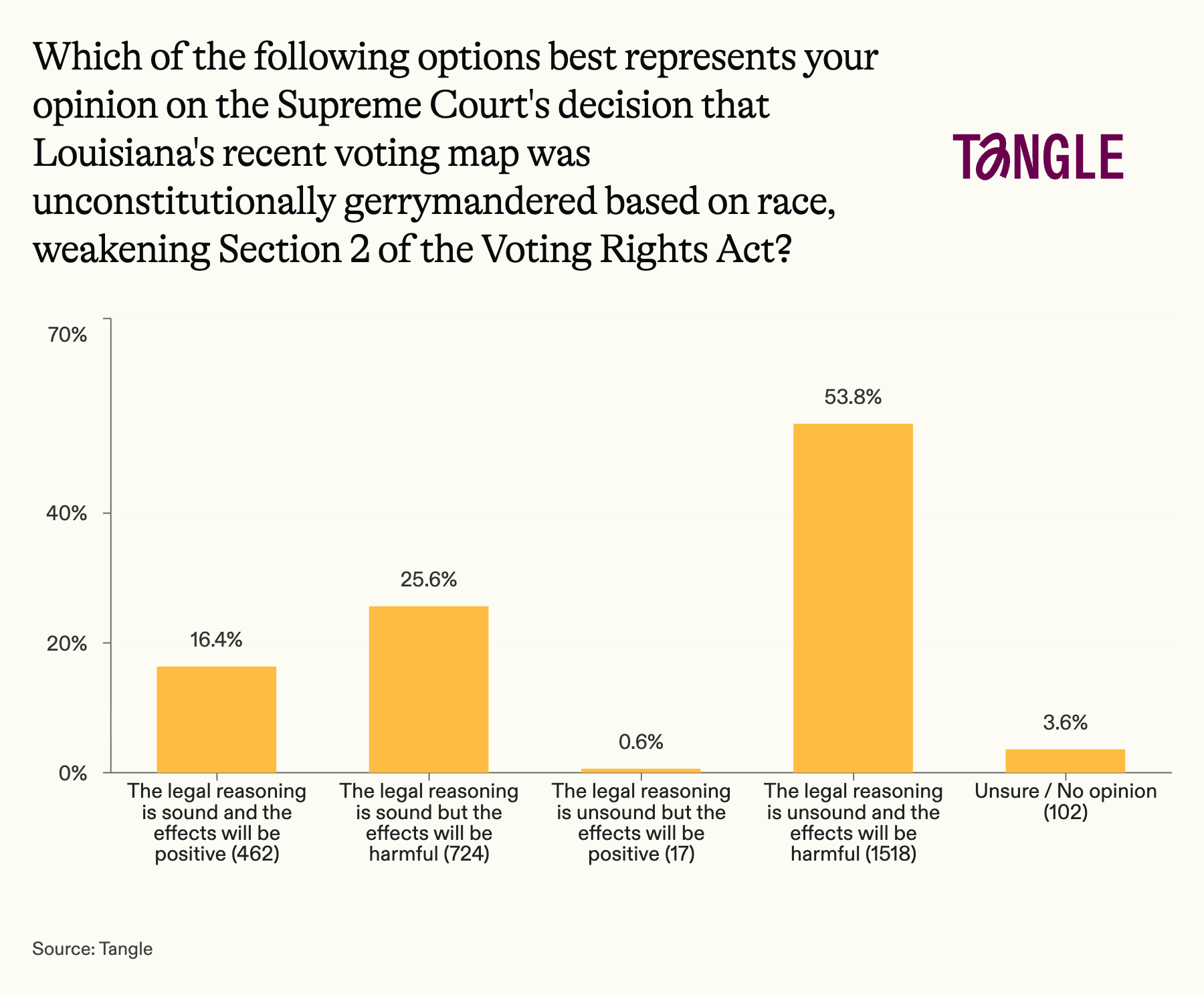
- Our last survey: 2,823 readers responded to our survey on the Supreme Court’s recent decision to weaken Section 2 of the Voting Rights Act with 54% saying the legal reasoning is unsound and the effects will be harmful. “Racism is alive and well, and it will only get worse now,” one respondent said. “The only people keeping racism alive are the Democrats. Jim Crow is dead to everyone else,” said another.
Have a nice day.
Last month, a routine bus ride to Hancock Middle School in Kiln, Mississippi, turned extremely dangerous. After bus driver Leah Taylor passed out behind the wheel, five students leapt into action. Jackson Casnave grabbed the steering wheel as the bus veered off course while Darrius Clark hit the air brakes — so forcefully it nearly threw him through the windshield. Kayleigh Clark called 911, and Destiny Cornelius spotted the driver’s medication in her hand and administered it as McKenzy Finch helped keep everyone calm. “I’m very proud of them,” Taylor said afterward. “I couldn’t ask for any other students than my students on my bus. I'm gonna think of how they saved my life.” WLOX in Biloxi, Mississippi, has the story.

Member comments