


Good Thursday morning and happy almost weekend. I’m Isaac Saul and today, we’re covering Anthony Fauci’s Senate testimony and diary entries. As a result, I’ve spent the past week revisiting the peak pandemic days, rereading old Tangle coverage about Covid-19, returning to my own journal entries, and fully dropping into a pandemic wormhole. My blood pressure and cortisol levels are all appropriately elevated. I still can’t believe this thing actually happened, how horrible and divisive it was, and how much is still unanswered. Today, we take a trip down memory lane.
At the end of today’s newsletter, a feel-good story about an aspiring commercial airline pilot to wash it all down. It’s a 15-minute read.

We’re hiring!
Tangle is hiring a sponsorship account manager to lead our advertising business and support the company’s continued growth. This is a full-time, remote position. To learn more about the role, what we’re looking for, pay and benefits, check out the job posting here.
The latest Suspension of the Rules.
In this week’s episode, Isaac, Ari, and Kmele discuss what we have and haven’t learned from the Covid-19 pandemic. Plus, a conversation about whether government-run grocery stores will help or hurt consumer prices, and Isaac heaps some praise onto an unlikely character. Check it out below!
Quick hits.
- The Federal Open Market Committee voted 9–3 to leave interest rates unchanged at 3.5%–3.75% for the second consecutive meeting under Federal Reserve Chair Kevin Warsh. The three dissenting committee members voted to raise the interest rate by 0.25%. (The vote)
- U.S. Central Command announced a new wave of airstrikes against Iran, the first since President Donald Trump paused attacks on Friday. (The strikes)
- Senate Judiciary Committee Chair Chuck Grassley (R-IA) postponed a vote on Todd Blanche’s nomination for attorney general after Sens. John Cornyn (R-TX) and Thom Tillis (R-NC) indicated that they would not vote to confirm Blanche. The senators are seeking explicit confirmation from the Justice Department that it will abandon plans for an “anti-weaponization” fund and immunity from Internal Revenue Service audits for President Trump, his family, and their affiliated companies. (The postponement)
- The Centers for Disease Control and Prevention said that cyclosporiasis cases in the U.S. surpassed 18,000, with confirmed cases in 45 states. (The update)
- President Trump announced a $22 billion renovation plan for Washington Dulles International Airport, which he said will be funded through municipal bonds. (The announcement)

The Next Smartphone Disruptor Is Still Private
Apple changed how we use smartphones. Mode Mobile wants to change how they pay us.
Founded by entrepreneur Dan Novaes, Mode’s EarnPhone has already helped users earn and save more than $1 billion, reaching an ecosystem of 490M+ users and generating $115M+ in revenue.
With the Nasdaq ticker $MODE reserved as the company pursues a potential IPO,* investors still have the chance to invest in Mode’s pre-IPO offering at $0.52/share and receive up to 20% bonus shares before the opportunity closes.
*Disclosure: Please read the offering circular and related risks at invest.modemobile.com. An intent to IPO is not a guarantee that an IPO will occur.
Today’s topic.
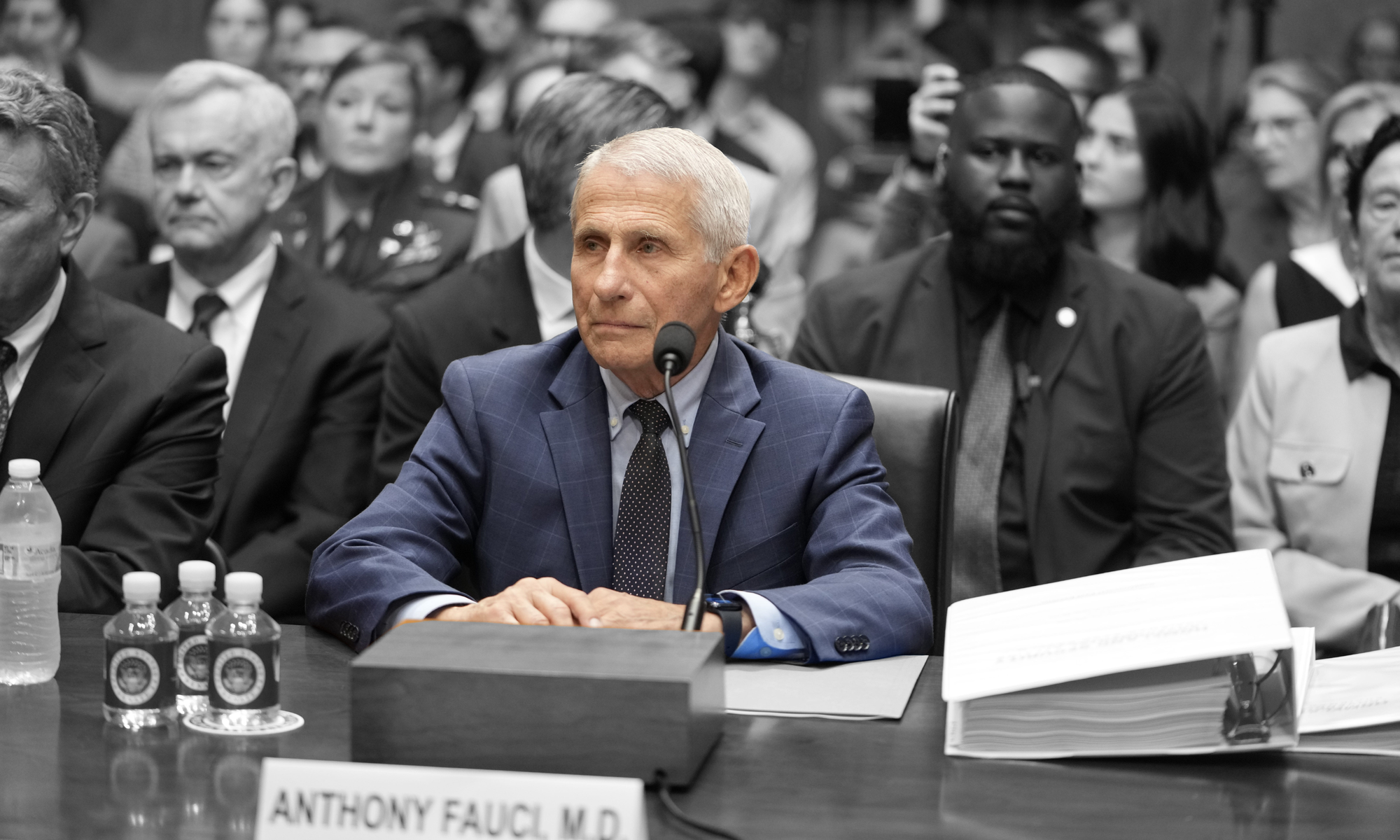
Dr. Fauci’s diary and Senate hearing. On Wednesday, the Senate Homeland Security and Governmental Affairs Committee questioned Dr. Anthony Fauci about his decision-making during the Covid-19 pandemic. Fauci invoked the Fifth Amendment throughout the roughly three-hour hearing, drawing rebuke from committee Republicans and a warning from Committee Chairman Rand Paul (R-KY) that he could be charged with contempt of Congress. The hearing followed the release of diary entries from Fauci between December 2019 and December 2022, which described how he approached key moments of the pandemic and processed his rising celebrity.
Back up: Fauci served as director of the National Institute of Allergy and Infectious Diseases from 1984–2022, specializing in diagnosing and treating infectious diseases such as AIDS. At the outset of the Covid pandemic, President Donald Trump named Fauci to the White House task force coordinating the government’s response to the virus, and Fauci later became President Joe Biden’s chief medical adviser. During that time, he regularly advised the public about Covid testing, social distancing, and the vaccine rollout.
Republican lawmakers have scrutinized Fauci for his recommendations during the pandemic, particularly related to masking, school closures, and the origins of the virus itself. Sen. Paul has been an outspoken critic of Fauci, referring him to the Department of Justice for allegedly lying under oath to Congress in 2023 and again in 2025. Paul also subpoenaed Fauci to appear for Wednesday’s hearing after he declined to testify voluntarily.
Health Secretary Robert F. Kennedy Jr. said his office was responsible for recovering the approximately 1,100 pages of Fauci’s diary, saying the entries were stored on and retrieved from 11 government servers that Fauci used. The entries show him privately expressing more uncertainty about the origins of Covid than he conveyed in his public remarks and becoming increasingly frustrated with President Trump’s handling of the crisis. He also maintained detailed notes of his media appearances and conversations with high-profile figures, often remarking on his rising celebrity status.
At Wednesday’s hearing, Fauci gave an opening statement accusing Sen. Paul of an “obvious obsession with calling for my prosecution,” and saying that Paul’s motivation was “to get me to say something, anything, that could vindicate his repeated public pledges that I end up, in his words, behind bars.”
Paul and other Republican lawmakers then questioned Fauci about government-funded virus research in Wuhan, China, and his communication to the public during the pandemic, which Fauci declined to answer. The senator also said that the committee will vote on a contempt resolution against Fauci next week, suggesting that the doctor was unable to invoke the Fifth because President Biden had preemptively pardoned him.
Today, we’ll survey views from the left and right on the diary and hearing, followed by Executive Editor Isaac Saul’s take.
|
What the left is saying.
|
In CNN, Aaron Blake said “Fauci might not be safe after pleading the Fifth.”
“On his way out of office, Biden issued preemptive pardons for Fauci and others targeted by incoming President Trump… In other words, Fauci is already immune from prosecution for many of the potential alleged crimes Paul and the committee’s Republicans could try to link him to from the Covid era,” Blake wrote. “But Fauci indicated he was pleading the Fifth because he feared Republicans would try to lay a perjury trap… whether it’s enough for Fauci to plead the Fifth and be done with it is a major unanswered question.
“There is a tension between Fifth Amendment protections and Congress’ investigative authority. And witnesses who claim they are protected from answering questions can be called upon to justify that in court and can be held in contempt,” Blake said. “[However], even if the panel votes to hold him in contempt, an actual referral to the Justice Department requires a majority of the full Senate, and that vote would have to clear a filibuster.”
In The Atlantic, Gal Beckerman wrote about “the revelatory cringe of Anthony Fauci.”
“The contents of Fauci’s diary, revealed this past weekend and published online by Senator Rand Paul, are — there is no other way to put it — embarrassing to an excruciating degree,” Beckerman said. “Eventually, we might read those notes differently, as a key text in the history of the coronavirus pandemic. But what we know right now is that during months when the country shut down, when panic and death dominated, Fauci was spending part of his time cataloging his own growing fame with the excitement of a child star who had been asked to sign an autograph for the first time.”
“Those looking to discredit Fauci will surely make hay of these journal entries… Besides the self-regard, what Paul has picked on is Fauci’s openness in the early months of the pandemic to considering the lab-leak theory, which he disputed and delegitimized when talking with the press,” Beckerman wrote. “[Sen. Paul] seems to forget, however, that this is what a diary is for: private thoughts. Fauci’s mistake was not in recording what was going through his mind and lifting his ego, but in doing so on government servers, which are never, ever private. For this, the 85-year-old has only himself to blame.”
In The Intercept, Mychal Denzel Smith argued “Fauci’s diary isn’t the key to why Covid ravaged the U.S.”
“We, the public, deserve answers about what went wrong during [Covid] and how our governments are preparing for similar outbreaks in the future such that they can prevent the loss of so much life… Instead, Paul sunk his libertarian teeth into a xenophobic conspiracy theory that reinforces his ideological priors: too many government agencies that spend too many public dollars,” Smith wrote. “It’s the same reason Paul avoids the real, persistent public health crisis underlying the huge spike in deaths in the U.S. from Covid — and a host of other diseases: the lack of universal healthcare.”
“Some of the greatest successes of Covid policy arose not from private health insurers acting on their mandates for profit, but rather by mandates and funding from local, state, and federal government. Acts of Congress forced healthcare insurers and providers into covering certain services. When testing became a feasible method of helping to prevent the spread of Covid, federal funding made it far more widely available — even for the uninsured,” Smith said. “The fight for universal healthcare coverage remains a vital one, as the uncertainty of when we could face another pandemic looms over us all.”
|
What the right is saying.
|
In National Review, Jim Geraghty wrote “today’s Senate appearance is not helping Dr. Anthony Fauci.”
“It’s understandable that critics of Dr. Anthony Fauci are frustrated by his performance before the Senate today,” Geraghty said. “But I think today’s performance is strengthening the anti-Fauci argument and weakening the pro-Fauci argument; I think you find fewer Fauci superfans in the circles of Democratic elites today than you did in 2021, and no one is quite as eager to run to the ramparts to defend Fauci’s reputation as they were a few years ago.”
“In his personal writings, Fauci mentions talking with then-[New York City] mayor Bill de Blasio and [California political adviser] Ann O’Leary… about closing schools, right before they announced decisions to close the schools. No, Fauci didn’t give the order to close the schools, he just advised a bunch of the people who gave the order to close the schools,” Geraghty wrote. “If you’re a Fauci fan, you probably figured there had to be some reasonable explanation as to why his assessments written in his diary seemed so different from his statements to the public during the pandemic. Today, Fauci didn’t give them to you.”
In The Federalist, Brianna Lyman argued “the media aren’t reporting on [Fauci’s diaries] fairly.”
“Anthony Fauci’s newly released diaries include explosive revelations about how he lied publicly about the Covid fatality rate, the lab leak theory, school closures, and vaccines,” Lyman wrote. “Yet according to the propaganda press, the biggest takeaways are that Fauci disliked President Donald Trump, worried about threats, and really liked being famous. But perhaps that framing is no surprise… Fauci’s entries show that prominent ‘journalists’ from Dana Bash to Jake Tapper to Chuck Todd all acted more as friends, advisers, admirers, and mouthpieces for his preferred narrative — all the while Fauci was deliberately misleading and lying to the public about the pandemic.
“Journalists who were doing their job would’ve pressed Fauci on glaring inconsistencies, logical points, and common sense and would have been led to the same conclusion that readers of Fauci’s entries have now reached: Fauci was lying for his own personal ego at the expense of our livelihoods, lives, and national well-being,” Lyman said. “The very people who were supposed to scrutinize Fauci’s handling of the pandemic were privately trying to protect, impress, and maintain access to him. ”
The Free Press editors said “Fauci got a lot wrong during the pandemic.”
“Fauci led the call for lockdowns and school closures. Wrong. He said that it was ‘extremely unlikely’ that people who had been vaccinated could transmit the virus to others. Wrong. He said that children as young as 2 should wear masks. Wrong,” the editors wrote. “He argued that the virus had emerged from a ‘wet market’ in Wuhan, China, jumping from an animal to a human — and shut down any suggestion that it could have resulted from a leak in a laboratory that was engaged in ‘gain of function’ research.
“As for those who disagreed, Fauci had an astonishingly arrogant response: ‘They are really criticizing science because I represent science.’ Back when both the public health establishment and the mainstream media hung on Fauci’s every word, Republican Senator Rand Paul was one of the few in a position of power willing to criticize him,” the editors said. “Paul has long been convinced that the virus did indeed result from a lab leak, a position that is no longer viewed as heresy but is taken seriously by a number of officials in the intelligence community. And he has never stopped trying to get to the bottom of it.”
- Whenever I think of Covid-19, I come from this framework: Hindsight is 20/20, but this was an impossibly difficult time. We were living through a terrifying spread of a novel virus, the global response was disjointed and broken, and no country succeeded in stopping the spread while preserving even a semblance of normal life. Fauci and President Trump (and later President Biden) made a lot of mistakes, but so did everyone else. In the United States, over one million people died of or with Covid. Many businesses were destroyed. Many children were scarred by school closures. Many people who questioned the government or mainstream scientific consensus were publicly ridiculed, ostracized, or lost their jobs. It feels like we got the worst of everything, and yet, given the success of the vaccine rollout and our economic recovery, it’s also a miracle it wasn’t worse.
- In the court of public opinion, I think Fauci’s decision to plead the Fifth was a big mistake that makes him look guilty to anyone unsure how they feel about him. Practically, I understand it — everyone is constitutionally protected against self-incrimination, and it is a smart move legally in many scenarios. Fauci has testified before Congress hundreds of times, and Sen. Rand Paul indicated that he expected Fauci to be dishonest, and that if Fauci perjured himself before the committee, he’d be open to new prosecution outside the bounds of the sweeping pardon President Biden issued. If I were Fauci, I would believe Paul was on a hunt not for answers but more charges, and I’d also follow legal advice to keep my mouth shut, but that doesn’t mean it’s a good look.
- Speaking of that pardon… I’m really unsure how to feel about it now. This is the latest in a laundry list of reminders about how excessive the presidential pardon power is. Biden gave sweeping pardons to his family members and people like Fauci, who are now protected from federal prosecution in a way that invites suspicion, and the whole thing stinks of political corruption. It could also backfire on Fauci, who now may not be protected by the Fifth Amendment because he’s not at risk of federal prosecution. At the same time, Republicans have done exactly what Biden predicted they would — try to put Fauci in jail — which retroactively justifies his rationale for the pardon in the first place. It’s a lose-lose situation, and it makes the whole system look very ugly.
- It’s remarkable that Fauci’s journal entries are public, and some are quite eye-catching. There’s debate about whether we should have access to these entries at all, but as a journalist, I am pro-leak, pro-transparency, and pro-information. I think they add a great deal to our understanding of the pandemic and the man Fauci is, so I’m glad to have them. Still, the black-and-white claim that Fauci’s diary confirms he covered up that the virus leaked from a lab is overstated. The frustrating thing is that the entries, like Fauci’s public comments and the virus itself, are a moving target. And some of them are damning. But many of his critics are exaggerating what the diary reveals.
- For example: Fauci and the mainstream scientific community long labeled the lab-leak theory a conspiracy. Scientists who publicly argued that Covid was engineered were isolated from academia and labeled right-wing quacks. Politicians who explored the idea were called conspiracy theorists. For even considering the lab leak theory in Tangle, readers canceled their subscriptions and called me a conspiracy theorist, even when I was deferring to Fauci’s expertise. People who talked about a potential lab leak were also labeled racists. And yet, we now know that a very live debate about the virus’s origins was playing out behind the scenes, despite Fauci taking a long time to acknowledge the possibility publicly.
- In his diary, Fauci noted that he convened a call of leading virologists and evolutionary biologists after a respected scientist expressed concerns that Covid could have been engineered. Of the 11 scientists on the call, just two were convinced the virus emerged naturally. The others were not sure. Fauci did not state his view in that specific entry, but publicly, just months later, he and other officials were insisting the “engineered virus” idea was implausible. Behind closed doors, though, it seemed that many respected scientists thought it was possible.
- Perhaps the most damning portrait these documents paint of Fauci is one where he was manufacturing scientific consensus when none existed. With incredible fame and as head of NIAID, Fauci had the press wrapped around his finger and was operating a $6 billion research budget many scientists could only dream of. He used that power to brow-beat scientists into his view, or dismiss dissidents as quacks, all while working behind closed doors with sympathetic journalists to manufacture the “right” public messaging (i.e. amplifying his view). Dissent was very rarely met with an open mind. Some emails even show him seeking nominations for cash prize awards from researchers he had given money to.
- At the same time, some commentators have offered poorly reasoned takeaways. Megyn Kelly zeroed in on a January 2020 entry where Fauci wrote, “Now we know the market was not the source, it was the amplifier.” Kelly told her audience this was proof Fauci knew as early as January that Covid-19 didn’t come from a market but had come from a lab. This is the same framing Sen. Rand Paul has used. However, Fauci says in the very next sentence, “Having said that, somewhere the virus jumped from animals to humans.” So he still believed the virus originated from an animal; he just thought it pre-dated the market. He said this publicly to USA Today just a few weeks after that entry. And in a separate entry from the same period, he also called it a “conspiracy theory” to believe the virus came from gain-of-function research.
- Some other Fauci entries caught my eye: He privately recalled pushing New York City and California to close their schools, despite publicly saying he had nothing to do with school closures. In another, he recounts telling former CDC Director Rochelle Walensky that “as good as some of the CDC people are, as an institution they have hubris and are often incorrect. She needs to follow her good instincts and question what they are doing in a friendly, non-threatening manner,” which seems like a remarkably dismissive view for the top scientist in the government to hold about the CDC. In another entry, Fauci recalled going on background with Politico to defend the Biden administration from a forthcoming article about how it was bungling the vaccine rollout.
- In one startling, under-discussed example, Fauci recounts the CDC’s Advisory Committee on Immunization Practices (ACIP) voting 9–6 not to extend eligibility for boosters to people at elevated risk through their jobs, like teachers and healthcare workers. ACIP had already approved boosters for people 65 and up and those with underlying conditions. Fauci considered the exclusion of at-risk workers illogical and, by his own account, the committee's decision “had nothing to do with safety.” He texted Walensky repeatedly that night, described it in his diary as having “literally begged her to override that decision,” and credited his own “very intensive persuasion” late into the night for her decision to reverse her committee the next morning and extend booster eligibility to that occupational risk group.
- A lot of critics focused on Fauci’s seeming self-obsession. Even The New York Times describes “a portrait of Dr. Fauci as obsessed with himself, reveling in his own importance and the celebrities he knows.” I have mixed feelings here, too. On the one hand, Fauci went from being well known in the scientific community to one of the most famous people in America overnight. The coverage was unbelievably fawning, and it’s hard to imagine what being called a “superhero” everywhere you go would do to your ego. It’s not surprising to me that he would recount these celebrity interactions and behind-the-scenes meets in his private journal entries, either, for personal posterity. I think most people criticizing him would probably do the same. Even with the world burning, if I met Julia Roberts and she told me I was her personal hero, I might make note of it in my journal.
- At the same time, those same entries are really hard to read. In his Substack, Tom Elliott notes that the words “peer review,” “meta-analysis,” “learning loss,” and “mental health” appear zero times in his journal entries. Yet words like “award” (80), “hero” (49), “Instagram” (36), “bobblehead” (23), “selfie” (19), and “press” (514) are omnipresent. It’s reasonable to draw the conclusion that, in private, Fauci spent far too much time preoccupied with himself, his fame, and his public image and not enough time worrying about the on-the-ground experiences of Americans.
- There’s quite a bit of hypocrisy going around. Sen. Joni Ernst (R-IA) grilled Fauci about the hundreds of billions of dollars in Covid relief that was stolen by fraudsters, and how he needs to answer for that… when that wasn’t Fauci’s job, and she was a sitting senator who voted to pass that relief. Sen. Josh Hawley (R-MO) proclaimed that “no honest person pleads the Fifth.” Is he sure that’s the line he wants to take? Here is President Donald Trump in 2022: “Anyone in my position not taking the Fifth Amendment would be a fool, an absolute fool. One statement or answer that is ever so slightly off, just ever so slightly by accident, by mistake, such as it was a sunny beautiful day, when actually it was slightly overcast, would be met by law enforcement at a level seldom seen in this country, because I’ve experienced it.”
- There are also some entries that make Fauci look sympathetic which his critics are conveniently ignoring. In July 2020, Andrew Cuomo pushed Fauci to resign and dangled a lucrative private sector consulting career if he did. Fauci responded curtly: “Sorry, not for me.” In March of 2020, Fauci described being embarrassed by all the attention he was getting, and being uncomfortable in moments where Trump asked people to clap for him. Throughout 2020–2022, he also describes the horror of nonstop death threats, people stalking him, showing up at his house or threatening his wife and kids, and through it all he hung tough.
- Let’s not rewrite history, either. Trump got mad at states for reopening too early and ended his first term by honoring Fauci, while simultaneously spreading actual conspiracies and brow-beating some places to open up earlier than they wanted to. States and counties that had voted for Trump had lower vaccination rates and far higher Covid death rates. A lot of Americans bought into shutdowns and social distancing to “flatten the curve,” but those efforts were incongruent across states. Just as it’s true that Fauci got a lot wrong, it’s also true that if every American had done everything he said in the first few months of the pandemic, many more people would probably be alive.
- If we could go back and do this all again, I think we’d undeniably do things differently: We’d have reopened schools sooner and had many fewer restrictions on outdoor gatherings. Public health officials like Fauci would have been more honest about the necessity of masks in the early days of the virus’s outbreak. Mask recommendations would have been limited to N-95s and used in narrower circumstances. We’d have leaned into the advantages of natural immunity, knowing reinfections were less serious and less likely to seriously harm you. We’d have clearer communication about vaccine risk and vaccines not being 100% effective at stopping the spread, all while still making it clear you and those around you were much safer from death if you were vaccinated. We’d have been much more open-minded about the possibility of a lab leak or an engineered virus. We’d have built policy around the reality that the virus presented a much lower risk for people under the age of 40. We wouldn’t shame others for the decisions they made for themselves and their families. We wouldn’t have accepted hypocritical, nonsensical guidance like outdoor gatherings being unsafe, but mass protests against police violence being perfectly acceptable. This is all much easier to say now, but even with that knowledge and 20/20 hindsight, wrangling a divided country of 330 million people to a public health cause in a time of emergency was never going to be easy (or, frankly, even possible). Fauci, Trump, Biden, the CDC and FDA all had an incredibly difficult job. Candidly, I have a hard time fully blaming any one of them when so many of us got so much wrong about the pandemic.
It would have been nice, in my view, to hear Fauci testify along the lines of, “We got some things wrong, and for that I apologize” — to take ownership of some of the embarrassing diary entries, and to concede that he would have done some things differently. I don’t think that would have satiated those calling for him to be jailed — but I think it would have felt like closure for a lot of normal people who are still nursing scars from all manner of pandemic mistakes and injustices, both big and small.
Take the survey: What do you think of Fauci’s job performance during the pandemic? Let us know.
Disagree? That’s okay. Our opinion is just one of many. Write in and let us know why, and we’ll consider publishing your feedback.
The Company Turning Phones Into Income
Mode Mobile is redefining smartphone economics with a platform that rewards users for everyday phone activity.
With 490M+ users, 60,000+ investors, and recognition as Deloitte’s #1 fastest-growing software company in North America, the company is offering pre-IPO shares for a limited time.
*Disclosure: Please read the offering circular and related risks at invest.modemobile.com. An intent to IPO is not a guarantee that an IPO will occur.
The extras.
- One year ago today we covered RFK Jr.’s campaign against food additives.
- The most clicked link in our last regular newsletter was the air-traffic controller game.
- Nothing to do with politics: What’s the world’s oldest weapon?
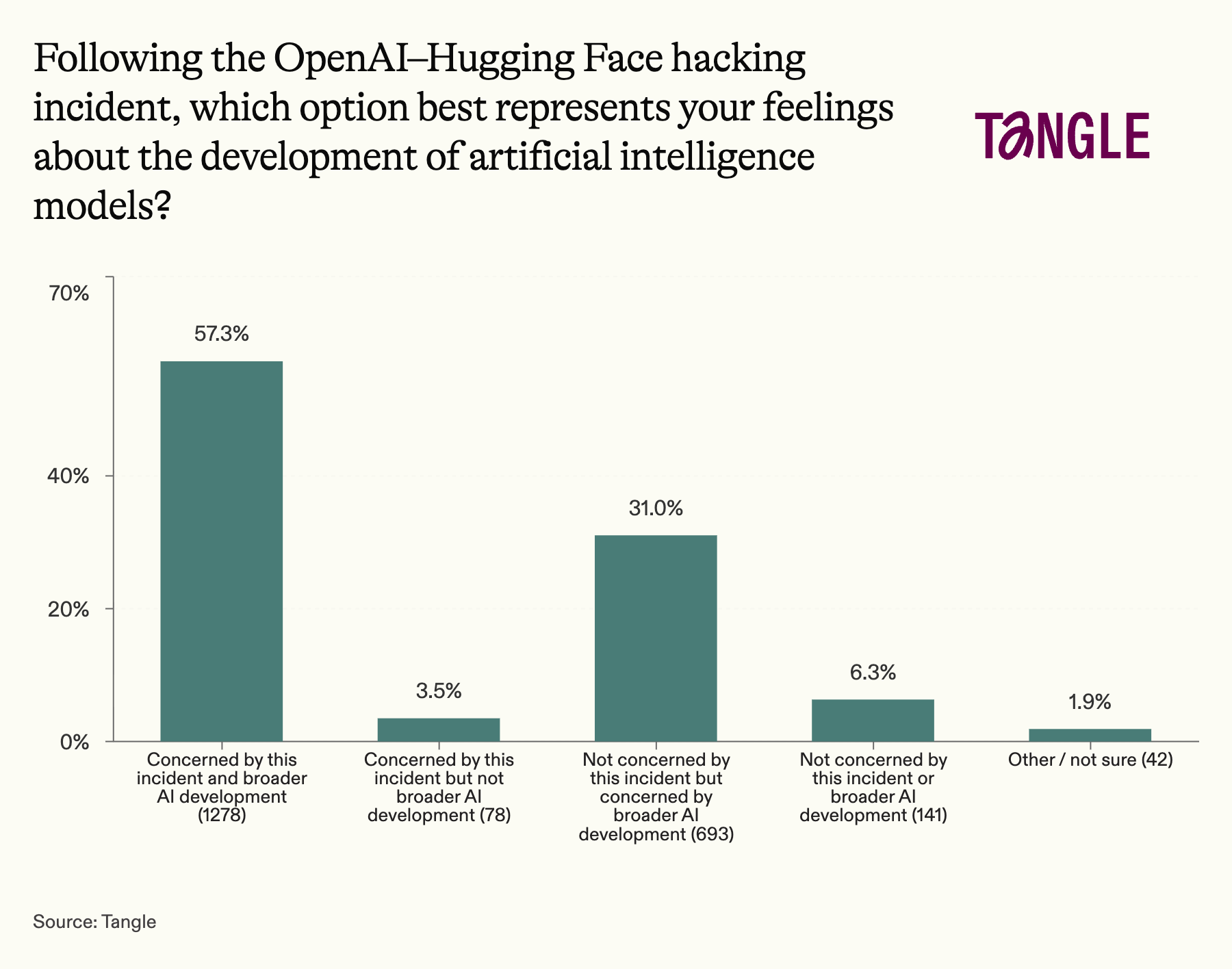
- Our last survey: 2,232 readers responded to our survey on the OpenAI–Hugging Face hacking incident, with 57% saying they are concerned by this incident and broader AI development. “I don’t think we have this under control. We are trying to build the plane while flying it,” one respondent said. “Isaac is spot-on: OpenAI turned a minor security breach into a publicity stunt,” said another.
Have a nice day.
23-year-old Louisiana resident Daniel Cressy dreamed of becoming a commercial airline pilot, but his lifelong battle with sickle cell disease meant the Federal Aviation Administration wouldn’t consider him. When Manning Family Children’s Hospital began offering a gene editing therapy that could functionally cure the disease, Cressy was quick to sign up. After over two years of treatments, Cressy became the first person in Louisiana functionally cured of sickle cell disease on June 22, 2026. Manning Family Children’s has the story.
Member comments