




Hi everyone, this is Senior Editor Will Kaback. It’s the first Wednesday of June, and a great day to be a basketball fan. The San Antonio Spurs host the New York Knicks in game one of the NBA Finals tonight, and somehow, a New York sports team contending for a championship isn’t the biggest story. No, the biggest topic (literally and metaphorically) is the Spurs’ seven-foot-something, 22-year-old French phenom Victor Wembanyama, who is unlike any athlete I’ve ever seen. In addition to his surreal grace on the court, he’s made me a fan with his unabashed emotional vulnerability and passion for his craft. It should be a fantastic series.
Okay, back to politics. We’re wading into Bill Pulte’s appointment as acting director of national intelligence, which has raised eyebrows (and then some) across the political spectrum. Then, we’ll round out this 14-minute read with an update on Gaza and some history on the U.S. intelligence community.
Forgiveness.
Over the last few weeks, we’ve been writing a lot about the indiscretion of politicians, from Graham Platner to Ken Paxton to Donald Trump. I was reminded this week of a piece I wrote in 2022, pondering the question of whether we should forgive then-Senate candidate Herschel Walker for his sins. It was fascinating to read this time capsule from four years ago, and to consider how my approach to Walker could or should apply to the present scandals — do we need more forgiveness, or does forgiveness become a crutch that encourages more bad behavior? You can read it here and let us know what you think.
— Executive Editor Isaac Saul
Quick hits.
- Secretary of State Marco Rubio told the Senate Foreign Relations Committee that the Iran war is “over,” though he acknowledged that a deal to reopen the Strait of Hormuz and curtail Iran’s nuclear program may not be reached. (The testimony)
- Acting Attorney General Todd Blanche told the House Appropriations Committee that the Justice Department is ending its plan to create an “anti-weaponization” fund, saying he still believes the idea is important but will no longer pursue it. (The testimony)
- With 57.5% of votes counted, conservative commentator Steve Hilton (R) and former Health Secretary Xavier Becerra (D) lead the California gubernatorial primary, with businessman Tom Steyer (D) in third. (The results) Separately, Mayor Karen Bass (D) is projected to advance to the general election for Los Angeles mayor, while former reality television star Spencer Pratt (R) is in second place with 63.1% of the votes counted. (The results)
- The Supreme Court issued an unsigned order allowing Alabama to use a congressional map designed to net Republicans one seat in the U.S. House in the 2026 midterms. The Court found that a lower court had erred in ruling that the map was racially discriminatory. (The order)
- CBS News fired 60 Minutes correspondent Scott Pelley following a tense meeting with Nick Bilton, the program’s new executive producer, and staff, in which he sharply criticized CBS News Editor-in-Chief Bari Weiss’s decision-making and Bilton’s qualifications. (The firing)
One thing I’ve learned running Tangle is that two people can read about the same event and walk away with completely different understandings of what happened.
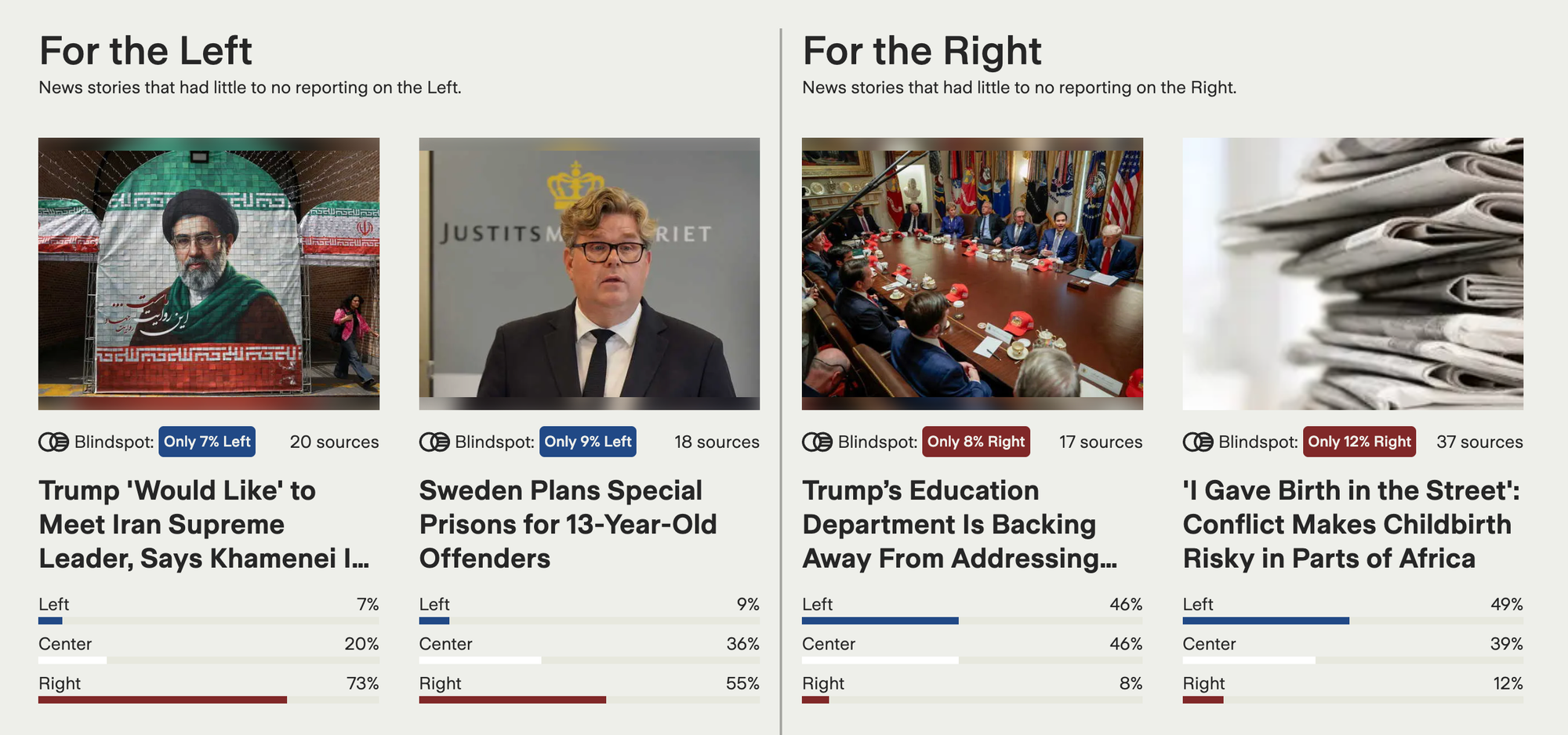
That’s why I like Ground News. It pulls together coverage from across the political spectrum and shows you how different outlets are framing the same story. My favorite feature is the Blindspot Report, which highlights stories getting significant attention from one side of the media ecosystem while receiving little coverage from the other.
If you want a better sense of not just how stories are covered, but which stories are being emphasized or ignored, check out Ground News.
We've partnered with Ground News to offer Tangle readers an exclusive 40% off their Ground News Vantage Subscription.
Today’s topic.
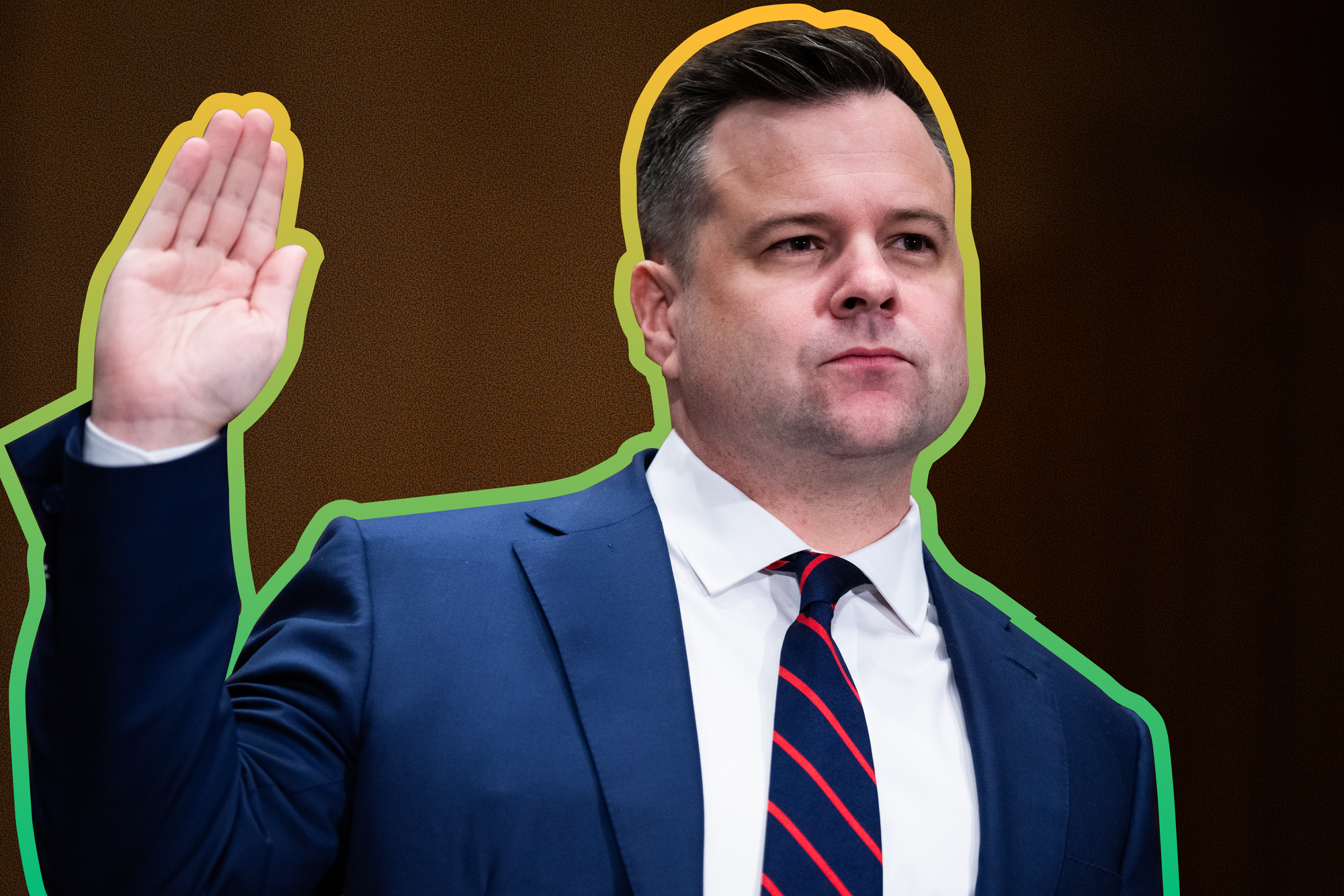
Bill Pulte as acting DNI. On Tuesday, President Donald Trump announced that he is naming housing official Bill Pulte to serve as acting Director of National Intelligence (DNI) once Tulsi Gabbard steps down as director at the end of the month. Pulte is currently the director of the Federal Housing Finance Agency (FHFA), an independent agency regulating federal mortgages, where he oversees Fannie Mae, Freddie Mac, and the Federal Home Loan Banks. Gabbard is resigning to support her husband during his battle with a rare form of bone cancer, and the White House has not advanced a nominee to serve as Gabbard’s permanent replacement.
Pulte reportedly earned President Trump’s favor with a willingness to go after the administration’s political opponents. The FHFA director spearheaded the effort to oust former Federal Reserve Chair Jerome Powell and was instrumental in initiating investigations into New York Attorney General Letitia James, Sen. Adam Schiff (D-CA), former Rep. Eric Swalwell (D-CA), and Federal Reserve Board Governor Lisa Cook for alleged mortgage fraud. Pulte has also floated the idea of a 50-year mortgage and drawn attention for a reported spat with Treasury Secretary Scott Bessent.
“William [Pulte] has deep experience managing the most sensitive matters in America, the safety and soundness of the Markets, and over 10 Trillion Dollars at Fannie Mae/Freddie Mac, a substantial increase from where it was just 12 months ago,” President Trump said in a Truth Social post. “During this period, he will remain Director of the Federal Housing Finance Agency, and Chairman of Fannie Mae/Freddie Mac.”
The nomination drew a mixed response from Republicans, including outright criticism from Senate Majority Leader John Thune (R-SD). “We don’t need a weaponized DNI, we need professionals there,” Thune said. Rep. Claudia Tenney (R-NY) defended Pulte’s appointment, saying, “Director Pulte has managed some of the most sensitive issues in our economy and has a proven record of leadership.”
Democrats were uniformly critical of the selection. “[Pulte] has no relevant experience and his sole qualification is unconditional devotion to Donald Trump,” said Rep. Jim Himes (D-CT), ranking member on the House Intelligence Committee. Additionally, Senate Minority Leader Chuck Schumer (D-NY) called Pulte a “partisan thug with no experience in intelligence.”
We’ll get into what the right and left are saying about Pulte’s appointment, then Senior Editor Will Kaback gives his take.
What the right is saying.
- The right is mixed on the pick, with many questioning Pulte’s intelligence credentials.
- Some argue Pulte’s atypical background will serve him well.
- Others say Trump’s choice confronts recent resistance from the Senate.
In National Review, Andrew C. McCarthy called Pulte’s appointment “astounding.”
“The [Office of the Director of National Intelligence] should never have been established in the first place (an overcorrection in the 9/11 aftermath). Its short history has featured too many episodes of politicizing intelligence… That said, President Trump’s naming of Bill Pulte to replace the recently departed Gabbard is astounding,” McCarthy wrote. “As director of the Federal Housing Finance Agency, Pulte has demonstrated himself to be a loyalist whose main task has been to peruse the database in search of contradictory statements in filings that the Trump Justice Department has tried to inflate into fraud cases against Trump political enemies.”
“It seems obvious that Pulte’s main credential to serve as acting national intelligence director is a willingness to pore over government files — and now, highly classified government files — and fit them into the political narrative that Trump’s rivals must be charged with crimes,” McCarthy said. “There is already howling on Capitol Hill — Democrats say the sky is falling, and Republicans seem less than eager to rally behind the Pulte pick. Still, I don’t see how Pulte’s appointment as acting DNI can be blocked. I’d scrap the ODNI altogether, but I’d have done that regardless of Pulte — it’s not the way Washington works.”
The Washington Reporter editorial board praised Pulte as an “inspired pick.”
“Pulte, one longtime Hill staffer told the Washington Reporter, ‘is deeply-respected among conservative policy staffers for his business acumen and his ability to handle tough intelligence issues.’ That skillset will be critical as Pulte steps into the front lines of America’s conflicts with China, Russia, Iran, and their proxies in our own hemisphere,” the board wrote. “[He] is no doubt an unorthodox choice for the role. However, picking someone with a non-typical background who is immensely talented and respected has been the approach that has allowed President Trump to succeed so well.
“Pulte brings the management skills, the integrity, and the relationships needed to be an enormously effective Director of National Intelligence. He is fully aligned with Trump on issues like the maximum pressure campaign against Iran and peace through strength,” the board said. “He is an inspired pick by an inspired president. Every American who is concerned about our safety and security can rest a little easier tonight knowing that Pulte is overseeing our intelligence agencies.”
In The Dispatch, Nick Catoggio said Trump’s decision responds to “a Senate that’s begun to resist his most loathsome impulses.”
“Pulte was confirmed by the Senate to lead the FHFA. That’s important. It’s important because, under the Federal Vacancies Reform Act, the default choice to fill a vacant position in an acting capacity is the ‘first assistant,’” Catoggio wrote. “But there’s an exception: Any Senate-confirmed officer serving anywhere in the government can fill the position temporarily instead if the president desires. You can understand why Congress wrote the law that way.
“Naively, lawmakers assumed that anyone nominated for a powerful position and confirmed by the Senate would necessarily have the competence and integrity to serve in another powerful position briefly, while a permanent appointee is chosen. That the president might nominate henchmen and that a compliant Senate might rubber-stamp them seems not to have occurred to them,” Catoggio said. “On top of everything else, naming Pulte to a position this sensitive is Trump’s way of extending a middle finger to a Senate that’s begun to resist his most loathsome impulses.”
What the left is saying.
- The left strongly opposes the selection, calling Pulte an unserious choice in serious times.
- Some view the appointment as yet another unwise pick from Trump.
- Others say Pulte’s only mandate is pursuing Trump’s enemies.
In Bloomberg, Andreas Kluth said “Pulte will drag U.S. intelligence from bad to worse.”
“Veterans of the [intelligence community] worried that blind loyalty to Trump, rather than expertise, was the new standard, and that America’s spies were losing the ability and willingness to speak truth to power, at a potential cost of American lives. Pulte, though, appears to be worse. He seems even less qualified for the job than Gabbard (who at least had military experience),” Kluth wrote. “Pulte was just another MAGA crony, notorious among those in the know but obscure to the wider public. That will change if he becomes DNI and wields real power — by whispering into Trump’s ear which domestic politician to investigate or which foreign country to bomb.”
“Nobody can plausibly argue that Pulte was chosen for any competence in the immensely sensitive and important functions of a DNI… At a time when America is fighting, on-again-off-again, in the Middle East, contemplating strikes in Cuba and elsewhere and hoping to deter the real adversaries in places like Beijing, decisions to nominate lackeys such as Bill Pulte are worse than irresponsible,” Kluth said. “They show a president who has lost the plot, a leader who cares not a whit for America but always and only puts POTUS First.”
In MS NOW, Steve Benen called Pulte’s appointment Trump’s “latest radical personnel move.”
“While previous directors of the FHFA were obscure figures who were unknown to the public, Pulte has blazed a rather unusual trail by contrast. To an almost cartoonish degree, the Trump sycophant has taken it upon himself to target one White House foe after another, weaponizing mortgage fraud allegations against the president’s perceived political enemies,” Benen wrote. “What does this work have to do with serving as the acting director of national intelligence? By any reasonable measure, nothing, though for Trump, who clearly wants unflinching loyalists in as many key positions as possible, Pulte’s antics are a key selling point.”
“The Government Accountability Office… opened an investigation into Pulte’s alleged abuses in the fall, and around the same time, MS NOW reported that a federal grand jury in Maryland was investigating whether Pulte and Justice Department official Ed Martin illegally shared sensitive grand jury information with unauthorized people,” Benen said. “With a background like this, common sense suggests it would be wise to keep Pulte as far away from the ODNI as possible. Alas, in this White House, common sense is apparently in short supply.”
In The Atlantic, Shane Harris explored “what Trump wants from Bill Pulte.”
“The president has shown no sign that he wants a DNI who can coordinate the work of 18 intelligence agencies and harness the power of a multibillion-dollar global-espionage network to provide senior government leaders the best up-to-the-minute information about threats to U.S. national security,” Harris wrote. “No, what Trump has made very clear is that he wants a DNI who will selectively declassify government documents that help fuel conspiracy theories, use the authorities of the state to enact political retribution against his enemies, and try to persuade Americans that Venezuela and maybe the Democratic Party are rigging elections by fiddling with voting machines.
“From that perspective, Bill Pulte is even better suited for the job than the woman he’s replacing… Never mind that none of Pulte’s targets has gone to prison, and that some insist he is attempting to criminalize paperwork errors. Pulte has been a tireless fighter for the president,” Harris said. “Gabbard was widely regarded as an unserious leader and political loyalist. No one imagined that Trump would replace her with someone better qualified. But Pulte managed to defy even those low expectations.”
My take.
Reminder: “My take” is a section where we give ourselves space to share a personal opinion. If you have feedback, criticism or compliments, don't unsubscribe. Write in by replying to this email, or leave a comment.
- President Trump has done away with any pretense that he weighs merit over loyalty.
- Pulte’s qualifications are nonexistent, and he’s obviously being elevated to advance the president’s grievances.
- His impending tenure as DNI brings both national security and institutional risks.
Senior Editor Will Kaback: Growing up, you’d hear the phrase “just keep swimming” a lot in my house. It originated from Dory the Regal Blue Tang in Finding Nemo, but over time, it evolved away from Dory’s cheerful encouragement to push through when times get tough and into another way for my parents to say “don’t take the bait when your sibling is antagonizing you.”
As I’ve gotten older, I come back to this maxim all the time, particularly as trollish behavior becomes ever more common in U.S. culture and politics. It’s pretty difficult to get me riled up about a tweet, inflammatory remark or insult, and I like to think this trait makes me well suited for the work we do here at Tangle.
No one has put that to the test more than President Trump, though. Whether you like or dislike him, I think we can all agree that he revels in trolling and effectively uses incendiary language to shift attention away from political challenges when things aren’t going his way. That tactic (from any political figure) relies on all of us taking the bait.
But this is also the president, and the impact of Trump’s words and actions is different than a sibling’s pestering. Nominating Bill Pulte as acting director of national intelligence (DNI) is more than just a troll or a middle finger to the establishment. For one, the DNI is not a cushy ambassadorship or a seat on a presidential advisory board, but a Senate-confirmed position with significant responsibilities. Second, and perhaps more concerning, Pulte’s nomination shows that the highest levels of our intelligence community are being further impacted by Trump's penchant for prioritizing loyalty over experience. Trump is not the first or last politician to put a premium on loyalty, but he’s taking it to new levels — apparently without concern for bipartisan blowback.
I should say, I’m not surprised that Pulte won himself a high-profile appointment. It’s clear why the president likes him. Their backgrounds are remarkably similar: members of wealthy families with real estate and construction backgrounds who rose to prominence in part on their ability to create spectacle. Pulte is not an Apprentice-level star, but I remember him well for his viral “Twitter philanthropy,” in which he would give away expensive gifts and cash prizes (earning Trump’s attention and praise back in 2019).
Pulte is also, in my opinion, the member of the second Trump administration who has most doggedly pursued the president’s personal interests (or grievances). As the director of the Federal Housing Finance Agency — a relatively obscure federal agency — he has been a catalyst in criminal investigations into former Federal Reserve Chair Jerome Powell, New York Attorney General Letitia James, Sen. Adam Schiff (D-CA) and Federal Reserve Governor Lisa Cook, as well as the ouster of former U.S. Attorney Erik Siebert over his objection to charging James and former FBI Director James Comey. There’s punching above your weight, and then there’s Pulte.
The Federal Vacancies Reform Act limits Pulte’s time as acting DNI to 210 days (though he could potentially stay on longer), and I think there’s close to zero chance that the Senate would confirm him. In fact, I doubt President Trump is even considering the idea. But 210 days is a long time, and Pulte will have expansive power to push investigations into Trump’s political enemies. Outgoing DNI Tulsi Gabbard got the ball rolling, making a litany of moves aligned with the president’s revenge streak. She declassified materials related to allegations of an Obama administration conspiracy to subvert Trump’s 2016 campaign and other documents related to allegations of a conspiracy to impeach Trump during his first term. She also revoked security clearances for dozens of former intelligence and national security officials who ostensibly weaponized information against the president. And she fired top intelligence officials believed to oppose the president and his agenda. No doubt Pulte is there to do more of the same.
This motive, more than his lack of qualifications, concerns me most about the appointment. Best-case scenario: Pulte’s strategy of politicized investigations has run its course, as all the aforementioned cases have fizzled out. A more plausible, good-case scenario is that Pulte becomes mired in the complex web of the U.S. intelligence apparatus and is unable to accomplish anything.
But hoping for “too incompetent to be damaging” is ominous in itself. And in reality, I think Pulte will make an impact. Gabbard was relatively unqualified to serve as DNI and still engineered her office to root out perceived disloyalty and advance the president’s claims of grand conspiracies against him. As acting director, Pulte will have the same statutory powers Gabbard had but without first being subject to Senate scrutiny. And while the investigations into Powell, James and others may be dead, it would be foolish to think that President Trump’s retribution campaigns will stop there. Will Pulte face some institutional barriers and resistance? Absolutely. But he comes off as tenacious and unafraid to butt heads with powerful figures. Again, his profile makes him an ideal ally of the president but troubling for the rest of us.
That’s to say nothing of his lack of qualifications, which Republicans and Democrats alike have been quick to point out. Now, I don’t think that on-paper qualifications are all that matter in an appointee, but some relevant experience is necessary for important positions. Pulte has none.
There’s no good time for bad national intelligence leadership, but this moment is particularly fraught. National security risks are everywhere — the Iran war, the Ukraine war, rising tensions with Cuba, crackdowns on cartels, and more — and the person leading the 18 Intelligence Community agencies, managing the national intelligence budget, and serving as principal national security advisor to the president will be someone without a single line on their resume that suggests they’re prepared for this responsibility. Pulte is apparently keeping his current job as Federal Housing Finance Agency director, too, making these weighty responsibilities a side gig.
Everything I’ve just said comes with one big caveat: Trump could still reverse his decision. Punchbowl News reported this morning that Sen. Mark Warner (D-VA) is threatening that Democrats could withhold their votes for reauthorizing Section 702 of the Foreign Intelligence Surveillance Act if the president doesn’t withdraw Pulte’s appointment. If Democrats follow through on this threat — or the bipartisan objection to the pick just becomes too loud — Trump may decide it’s not worth the fight.
I’ve ended many of my recent takes with a tone of discouragement, and today is unfortunately no different. I’m worried about the path these decisions are sending us down. I’m worried about the toll of more politicized investigations and prosecutions to come. I’m worried that, if we face a real national security crisis, we’ll have an inept leader in a critical role. I’m worried about unchecked executive power, as the president uses “acting” appointments to sidestep Senate oversight. Above all, I’m worried that as President Trump stares down sinking approval ratings, rising dissent in the Senate, a costly conflict in Iran and ongoing legal setbacks, he’ll look to consolidate his inner circle with more Bill Pultes.
Take the survey: What do you think of Bill Pulte becoming acting DNI? Let us know.
Disagree? That's okay. Our opinion is just one of many. Write in and let us know why, and we'll consider publishing your feedback.
Your questions, answered.
Q: What is happening in Gaza? We haven’t heard anything lately. Is there reconstruction occurring? How are the Palestinian people? Who is running that area of the world right now?
— Kyra from Omaha, NE
Tangle: It’s not totally accurate to say Israel is in control — but Israel is in control. The ceasefire that ended the war went into effect on October 10, 2025, and it significantly reduced the violence in Gaza; 738 Palestinians were killed between then and this past April, according to the Hamas-run Gaza Health Ministry, compared to the roughly 22,000 killed in 2025 before the ceasefire took effect. Meanwhile, Israel’s footprint in Gaza has only grown since the ceasefire left the Israeli Defense Forces (IDF) in control of approximately half the strip. The IDF has issued new maps showing it controls significantly more territory beyond what was agreed to, with the restricted zone now making up roughly two thirds of Gaza. And this past week, Prime Minister Benjamin Netanyahu ordered the army to seize 70% of the territory or more.
As for Hamas, it continues to refuse to disarm in accordance with the terms of the ceasefire and is attempting to reassert control over parts of the strip. Meanwhile, President Trump’s Board of Peace — which is responsible for ushering in reconstruction — has not been active in enforcing the ceasefire’s terms. In May, U.S. Ambassador Mike Huckabee said the IDF may end up being the only entity willing to actually disarm Hamas.
Additionally, the reconstruction process hasn’t started in any meaningful way. A joint UN–EU assessment released in April found that Gazan reconstruction will require $71.4 billion over the next decade. That means rebuilding over 371,888 housing units, over half of Gaza’s hospitals, and nearly all its schools. The Gaza Board of Peace has received $17 billion in pledges, but it has collected just $23 million to fund its operations so far (or about 0.03% of the UN’s estimated costs).
The bottom line is that violence has decreased, both the reconstruction process and the peace process have stalled, and Israel has been asserting greater military control of the Gaza Strip.
Want to have a question answered in the newsletter? You can reply to this email (it goes straight to our inbox) or fill out this form.
Under the radar.
On Tuesday, President Donald Trump signed an executive order requesting that technology companies allow government oversight of new artificial intelligence models before releasing them publicly. The president reportedly planned to sign an executive order on AI oversight last month, but it was scrapped at the last minute due to concerns that a planned 90-day window for the government to review new models before their release would lead to overregulation. The new executive order includes a 30-day voluntary review window, as well as plans for the Treasury secretary to review security weaknesses discovered by AI models. The New York Times has the story.
FYI: Today’s newsletter is sponsored by Ground News, one of my favorite tools for understanding how the media covers the news. Ground News lets you compare reporting from outlets across the political spectrum and highlights stories that may be getting disproportionate attention — or being ignored altogether. Their flagship newsletter, The Blindspot Report, is a great way to broaden your perspective. Tangle readers can get 40% off a Ground News Vantage subscription here.
A deeper look.
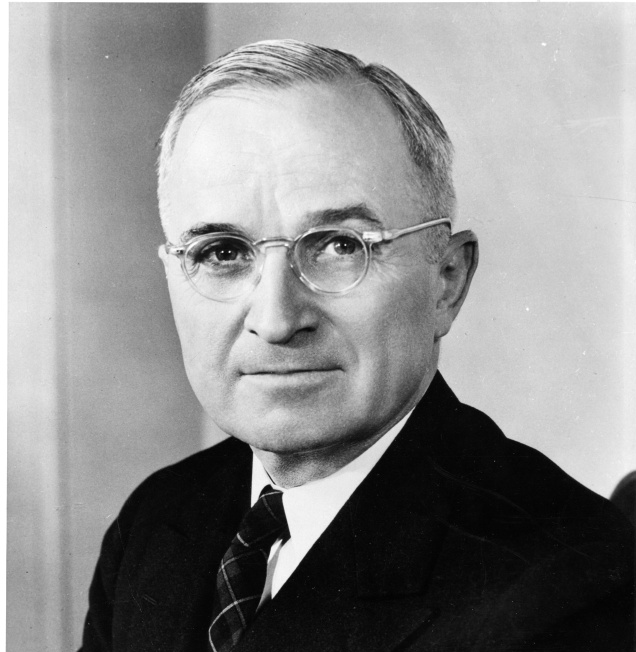
In 1946, in the aftermath of World War II, President Harry Truman created the post of director of central intelligence (DCI) in order to better organize the burgeoning national intelligence community. The role was formalized by the National Security Act of 1947, which created the Central Intelligence Agency (CIA) and offered a concrete definition of the DCI’s role: The DCI would personally oversee the CIA and coordinate the intelligence groups in the U.S. government, including the various intelligence branches of the military.
Following the September 11 terrorist attacks, Congress created the 9/11 Commission to investigate the United States’ preparedness and its ability to prevent future attacks. The commission’s report, released in July 2004, identified significant U.S. intelligence failures and recommended a restructuring of government intelligence offices, including splitting the DCI’s responsibilities into two roles: one overseeing the CIA, and another coordinating intelligence efforts across the government. In response, Congress passed the Intelligence Reform and Terrorism Prevention Act of 2004, officially establishing the position of director of national intelligence (DNI) as part of the executive branch. President George W. Bush nominated John D. Negroponte to be the first DNI in February 2005; after Negroponte’s confirmation, the office began operations in April 2005.
The extras.
- One year ago today we wrote about the attack in Boulder, Colorado.
- The most clicked link in our last regular newsletter was the Trump–Netanyahu conversation.
- Nothing to do with politics: The best breakfast food in every state.
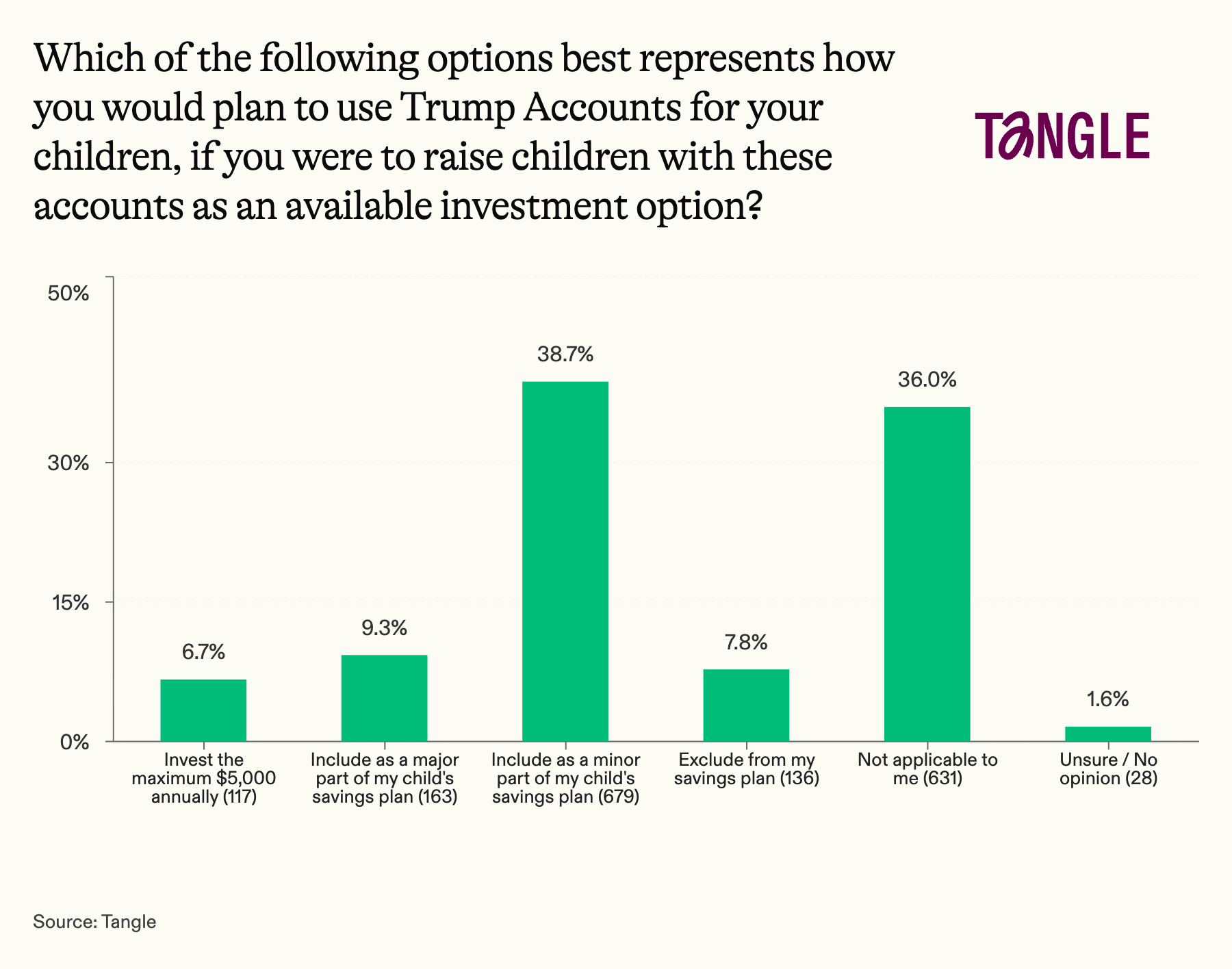
- Our last survey: 1,754 readers responded to our survey on Trump Accounts with 39% saying they would include it as a minor part of their child’s saving plan. “Probably just leave the $1,000 in it but certainly not put any more in. Better to have more control over money we invest for the child,” one respondent said. “Even if you do nothing but take the $1,000 and leave it in the account, assuming an average rate of return of only 8%, the account will have $128K in it by the time your child is 65!” said another.
Have a nice day.
When farmer Rudy Neish started taking care of his wife, who has dementia and has had both hips replaced, he realized he didn’t know how to cook and wanted to “give her better meals.” Neish’s neighbor of ten years, police officer Tyler Butterworth, stepped in to help: After Neish told Butterworth about his problem, Butterworth offered to teach Neish to cook. The police officer taught the farmer to make dishes like marinated pork tenderloin, kale salad, and peri-peri chicken. “As I learned to cook better meals, more nutritious ones, my wife is doing better as a result,” Neish said. “It was just as simple as Tyler says, ‘Well I love to cook, won’t you let me teach you to cook.’” NBC News Today has the story.

Member comments