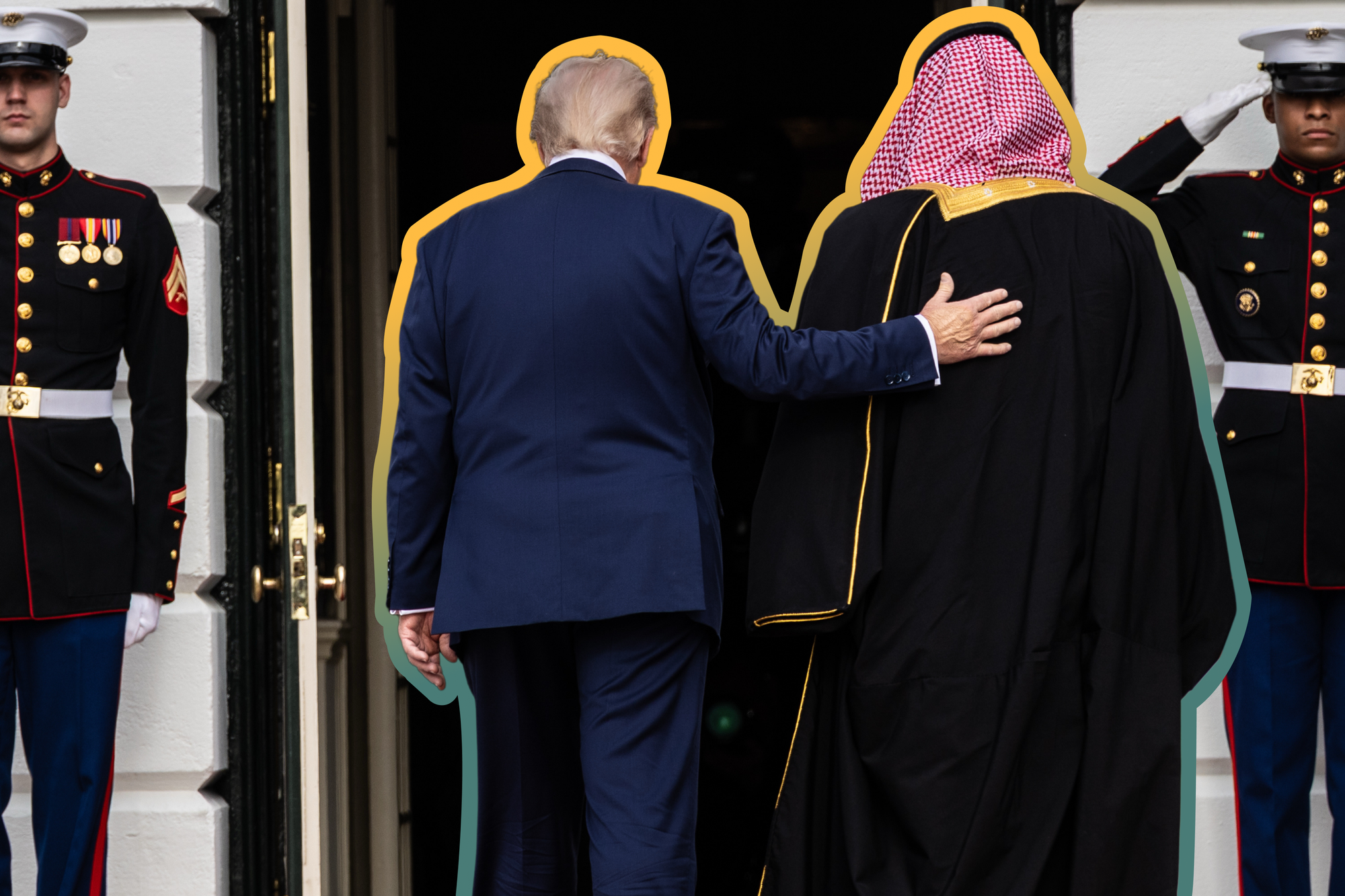
Last week, I published an exhaustive 6,000-word essay on the self-dealing and potential corruption of President Donald Trump’s second administration.
I shared clips of the article on X, and it went viral. The initial feedback from readers within and outside the Tangle community overwhelmingly asked us to drop the paywall on the piece. After a few hours, we did.
Since then, we’ve been inundated with comments, criticism, and questions. Usually, when an article takes off like this, I write a follow-up piece addressing those criticisms and questions. I do this because I think engaging with our audience is an important way to gain trust and an important exercise in humility and intellectual honesty. I often engage with feedback by quoting specific readers and then responding directly to what they said in a Q&A format. That’s exactly what I’m doing today.
Of course, as is typical, the responses came from across the political spectrum. To give just one illustrative example: One reader wrote in to say that I’ve “skewered Biden’s son over and over again” and used this article to “pour more venom” into that story. She also expressed her frustration that I was only “slightly less biased than the rest of the major media who report Trump corruption on page 3 or not at all on TV.”
Simultaneously, a reader named John said, “I’m one of the readers who stopped reading about half way [through]. Just couldn’t stand [Isaac’s] obvious distaste, if not revulsion of President Trump. It’s obvious in all his ‘My Take’ comments. I think he’s doing a disservice to the multiple employees of all those watchdogs he’s trying to hang. Not ONE of them can speak up? Even ‘off the record?’ By the way, I can’t stand Trump but I’d like to see some verified facts, not some ‘wanna be editor’ alleging such.”
This is the environment we live in now, and I’m trying to navigate it as honestly as I can. You write a piece like this, and one side says “where the hell have you been?” while the other side thinks you’re a hack editor making baseless allegations.
Alternatively, some readers actually wrote in questioning the facts that provide the basis of the piece. One Tangle reader told me her friend had used ChatGPT to “fact-check” me and found that “there are multiple claims in that article that are either unverified, misleading, or very likely false as written.” In one telling example, ChatGPT said “there is no confirmed ‘Iran war’ being negotiated” by Jared Kushner, and that Kushner is a “private citizen” with no record of being involved in negotiating the war’s end, despite the fact there obviously is an Iran war and Kushner is a chief negotiator in ending that war. ChatGPT also claimed “there is no widely confirmed reporting from The New York Times” about Syrian billionaires lobbying Trump for sanctions relief, despite that very New York Times article obviously existing.
What explains the enormous discrepancy here? It turns out the critic was copying and pasting the text of my piece into ChatGPT, without the linked primary sources. Once they sent ChatGPT the actual article, it conceded that the facts of the piece were accurate, apologized for getting it wrong, and suggested only that I was injecting strong language that included my own feelings (guilty as charged!).
On the Suspension of the Rules podcast this week, I talked more about this ChatGPT “fact-check” story, the other things ChatGPT got wrong, and the frightening new reality where people regularly export their critical thinking to artificial intelligence, even as they prompt the LLM in ways that produce inaccurate results. This is a new playing field where someone thinks I’m lying because an AI chatbot tells them things that are absolutely untrue.
Now, onto some specific feedback.
One of the most common responses we got — and one I should have thought to preempt — was about the Obamas. Many, many readers said something along the lines of, “Obama came into office with ‘X’ amount of dollars and left with many more, yet you ignore that story.” This feedback was maybe best articulated by a reader named Kelly, who commented, “From community organizer making $35,000 at most, to state and U.S. senator, Obama entered the White House with $1.3 million — where did that come from? He left the White House with close to $40 million. By no means does this condone Trump ‘corruption,’ but what has been newly corrupted that already wasn’t?”
I think the big difference here is that we understand pretty clearly how President Obama accumulated his wealth. Obama released his tax returns throughout his career, so the way he accumulated his estimated net worth of $70 million is documented — and you can go find those tax returns and follow the paper trail. The vast majority of his wealth came from publishing books and speaking tours. He netted just under $5 million in royalties from his first two books by the first year of his presidency. Then, as his second term expired, he and Michelle got $65 million for two additional books (one from each). After that, Obama signed a TV deal with Netflix worth a reported $50 million. He also gets paid as much as $400,000 for a single speaking engagement.
I really don’t know what to say except that Obama’s opportunism is, self-evidently, very different from Trump’s. The closest comparison is that Obama’s Netflix deal was negotiated by Ted Sarandos, an Obama donor whose wife got an ambassadorship in the Bahamas. But, crucially, that appointment actually preceded the Netflix deal by roughly a decade. What’s more, it’s actually another example of a scandalous behavior Trump has engaged in to an even higher degree. In my entire 6,000-word piece, I didn’t even get into the Trump donors receiving ambassadorships because there was so much other stuff going on (more on that below). Also, Obama got his TV deal after he was in office, not during.
On top of that, the Trump family isn’t just getting money through TV deals while he’s president (see: Melania and Amazon); he is using the presidency to become wealthier. He is regulating businesses that make him money, or taking investments from foreign leaders while striking arms deals with them, or launching Trump-themed cryptocurrencies whose values evaporate for investors while he makes a profit.
Further, because Trump does not release his tax returns and is not transparent about his finances, we are left putting two and two together through investigative journalism and leaks. Conversely, the way the Obamas accrued their wealth is well documented — we know how they made the money and when. You can think those deals were too cushy, or his speaking fee is outlandish, and even that such a fee opens doors to palm-greasing. But the fact remains that these income streams were not as directly linked to his decisions as president in the way that Trump’s have been.
Separately, quite a few readers wrote in about this sentence: “By the time Trump ran for office in 2016, under the ‘drain the swamp’ mantra of rooting out corruption by other politicians, he excoriated the Clintons for… taking money from Saudi Arabia and other Middle East monarchies. That money, which Trump criticized her for accepting, was going to the Clinton Foundation — a philanthropic fund run by the Clintons.”
Many people countered that the Clinton Foundation was actually just a front for the Clintons to get rich by leveraging their fame. One representative comment came from Gettaway Gal, who said, “You state, without qualification, that the Clinton Foundation was a philanthropic organization when it is well established it was simply a funnel to get what was then huge amounts of money to the Clinton family and associates (noting the Clintons are now personally worth hundreds of millions of dollars — where do you think that came from?)”
I’m going to start with a confession — something many Tangle readers may not know — an act of transparency that I hope will earn me some trust here.