






I’m Isaac Saul, it’s Monday, and I have the distinct feeling this is going to be one of those weeks that feels like a month. I just got back from a family weekend in the little beach town of Oak Island, North Carolina, which I imagine is what the Outer Banks was like a few decades ago. This is our now-annual tradition to celebrate the miraculous nine family birthdays (including my own) that fall in a four-week span, which must be some kind of record.
Now, it’s back to New Jersey and the real world. Today, we’re diving into the latest Graham Platner controversy, and probably not for the last time. Plus, a look at how Kentucky and Tennessee became states. It’s a jam-packed 14-minute read.
P.S. My family friend Val asked me to say hi to her in the newsletter, thinking I wouldn’t do it. So: Hi, Val.
P.P.S. A happy sixth Tangle anniversary to COO Magdalena Bokowa, our first-ever hire.
Are you new here? Get free emails to your inbox daily. Would you rather listen? You can find our podcast here.
New and improved comments.
In case you missed our announcement in Friday’s edition on our favorite reader essays, our publishing platform Ghost has rolled out several new commenting features! Comment replies now nest more easily, helping you keep track of conversations, and you can now dislike comments that you think violate our commenting guidelines.
To read more about these changes, you can check out our FAQ page. And to experience them yourself, comment below!
Quick hits.
- The United States said it bombed Iranian radar and drone sites in response to Iran shooting down a U.S. drone over the weekend. Iran accused the U.S. of ceasefire violations and said it will cut off discussions on a peace deal for now. (The latest)
- A federal judge blocked a plan to rename the Kennedy Center for the Performing Arts to include President Trump’s name. The judge also ruled that the center’s board improperly voted to approve a two-year closure and renovation set to begin this summer. (The rulings) Separately, a federal judge temporarily halted the Trump administration’s $1.776 billion “anti-weaponization” fund while challenges play out in court. (The order)
- The organizers of the Great American State Fair, part of the planned celebrations for the United States’s semiquincentennial this summer, said President Trump will headline the start of the event on June 24 after several scheduled musical artists dropped out of performing. (The update)
- Secretary of State Marco Rubio spoke with Lebanese President Joseph Aoun and Israeli Prime Minister Benjamin Netanyahu over the weekend as part of a push for a renewed ceasefire between the countries. (The meetings)
- No candidate reached the 50% threshold to win Colombia’s presidential election to replace term-limited President Gustavo Petro, sending the race to a runoff between right-wing candidate Abelardo de la Espriella and left-wing candidate Iván Cepeda, whom Petro endorsed. On Sunday, the Colombian president cast doubt on the initial result, alleging flaws in the vote-counting process. (The election)
When Money Is Tight, These 7 Resources Will Help Nearly Everyone
When you log into your bank account, how do your savings look? Probably not as good as you’d like. It always seems like an uphill battle to build (and keep) a decent amount in savings.
So when money is tight, these seven resources will help nearly everyone.
Today’s topic.
The latest Graham Platner controversies. On Saturday, The Wall Street Journal published an exposé on the behavior of Graham Platner, the presumptive Democratic nominee in the Maine Senate race. According to The Journal, Platner’s wife, Amy Gertner, disclosed to his campaign last August that she had discovered sexually explicit texts between Platner and multiple women on his phone last spring. Furthermore, The Journal found that Platner has an active account on Kik, a private-messaging app often used to arrange sexual encounters. Also on Saturday, The New York Times revealed that Gertner had disclosed this information to a senior aide who later left the campaign, and Platner had been sending explicit messages to up to 12 women. The reports represent the latest controversies in Platner’s campaign to defeat Sen. Susan Collins (R) in November’s election.
We covered Platner’s early campaign controversies in October.
Back up: Platner, 41, is a progressive Democrat and military veteran who deployed to Iraq with the Marine Corps three times and served in Afghanistan with the Maryland Army National Guard. After his service, he returned to Maine to seek treatment for post-traumatic stress disorder and later worked as an oyster farmer. His campaign highlights his support for Medicare for All, campaign-finance reform, addressing income inequality, and antitrust enforcement.
Platner has no political experience beyond serving as harbormaster and chair of the planning board for the town of Sullivan, Maine, but his campaign has risen to national prominence since he declared his candidacy in August 2025. He was expected to face Maine Gov. Janet Mills in the Democratic primary on June 9, but Mills dropped out of the race in April, citing insufficient campaign finances. Polling at the time showed Platner with a sizable lead, and he is heavily favored to beat the remaining Democratic candidate, environmental policy consultant David Costello.
From the early days of his campaign, Platner has faced controversy for past statements and actions. Most notably, he had a tattoo on his chest of a skull symbol associated with the Nazi police, which he claims he did not know the meaning of when he had the tattoo done while on leave from the military in 2007. He had the symbol covered up once it was publicly revealed. Separately, his past activity on the social media platform Reddit has drawn scrutiny for his repeated use of slurs and disparaging comments made about various groups. Platner has apologized for many of the comments and said he made them while struggling with his mental health after his time in the military.
In response to Saturday’s reporting on her husband’s sexually explicit texts, Gertner released a statement accusing the campaign aide with whom she shared information about the messages of “spread[ing] malicious gossip,” adding, “I am deeply hurt by her betrayal and the invasion of our privacy.” She acknowledged challenges in their marriage from that time period, but said they have sought counseling that has strengthened their relationship. In his own statement, Platner said, “Amy and I went through something hard — because of me… We did the work, and I’m grateful for her every hour of every day.”
Recent polling shows Platner with a lead over Sen. Collins in a race that could decide control of the Senate, but some elected Democrats have expressed unease about his candidacy. Last week, Rep. Jake Auchincloss (D-MA) said he found Platner’s tattoo “personally disqualifying,” adding, “I hope Maine voters agree with me.” On Sunday, Sen. Cory Booker (D-NJ) said he has “concerns” about Platner and thinks he “has questions to answer.”
Other Democrats have continued to back Platner. Sen. Chris Murphy (D-CT) said, “He certainly admitted that he has made mistakes, but I think this is going to be a pretty clear contrast in Maine between somebody who has spent his life protecting us versus somebody who seems to be protecting Donald Trump’s corruption.” Sens. Bernie Sanders (I-VT), Ruben Gallego (D-AZ), and Elizabeth Warren (D-MA) have also endorsed Platner.
Today, we’ll share views from the right and left on Platner’s campaign and the latest controversy. Then, Executive Editor Isaac Saul shares his take.
What the right is saying.
- Many on the right say controversy is defining Platner’s campaign — and more could be on the way.
- Some argue Democrats won’t be able to distance themselves from Platner if they want to.
- Others suggest Trump’s rise has made scandals like these survivable.
In National Review, Jeffrey Blehar asked “what other skeletons are lurking in Graham Platner’s closet?”
“Mainers — and the national media — were certainly sold one story about Platner: that of an antiwar Marine during the Iraq War, a hardscrabble oysterman, and a working-class straight talker,” Blehar wrote. “And then, one by one, we discovered that each of these biographical points was, when not outright false, distorted beyond all recognition. It turns out that Platner, who frequently accuses Senator Collins of ‘voting to send him to Iraq,’ actively volunteered two years after the United States declared war because — in his own words, later hastily erased from Reddit — ‘I wanted to have an adventure and kill some people.’”
“Now, the latest scandal emerges, and it’s quite the doozy. It turns out that earlier in the spring of 2025, mere months before he declared his candidacy, Graham Platner was caught by his wife juggling as many as six separate sexting relationships with other people,” Blehar said. “Democrats were already concerned enough about having to back a man who proudly tattooed a Nazi death’s head across his chest and kept it even after the moment he decided he wanted to run for Senate as a progressive leftist. But what will they do if they find themselves politically committed to an actual moral monster?”
In Fox News, David Marcus wrote “establishment Dems turn on Graham Platner, but it’s way too late.”
“What was most telling about these sordid new sexting revelations wasn’t that it exposed Platner as a creep. We already knew that. It was that the leak came from a fellow Democrat. The party may be starting to realize they have created a Marxist monster they can’t control,” Marcus said. “Over the past several days, there has started to be what looks like an effort by establishment Democrats to tank socialist Platner’s campaign… We have known for some time now that Platner is not exactly the poster child for impulse control, so why now?”
“Platner’s backers in the party, many of them the same people who propelled Zohran [Mamdani] to success, are circling the wagons around their guy. They say the leaking aide committed a terrible act of betrayal, and with a straight face, suggest Platner is the victim in all this,” Marcus wrote. “There are two problems with this. One is that voters don’t care about internal campaign disputes. Nobody watches that much C-SPAN. The second is that, this time, after Democratic Socialists have swallowed so much of the party, the Establishment seems set to strike back.”
In The Los Angeles Times, Matt K. Lewis suggested “in politics after Trump, nothing is disqualifying.”
“Under old ‘pre-Trump’ rules, Platner’s campaign would have withered instantly after revelations that he once had a Totenkopf SS tattoo, previously identified himself as a communist, said Black people were poor tippers, and wrote that white people ‘actually are’ as racist and stupid as Trump thinks they are,” Lewis said. “Instead, after all this surfaced, Platner actually rose in the polls. Considering the circumstances, there are several reasonable explanations for this. Maybe Maine Dems have concluded that moral purity tests are politically suicidal after years of watching heterodox figures like Joe Rogan and Elon Musk drift away from the party.”
“Or maybe Maine Democrats have absorbed the same lesson Republicans adopted in 2016: Once voters stop treating scandal as disqualifying, policing your own side for off-the-field behavior starts to look like unilateral disarmament,” Lewis wrote. “I mean, who could blame them for thinking you’ve got to fight fire with fire? America, after all, reelected Trump after 34 felony convictions. At a certain point, continuing to insist that ‘character matters’ starts sounding like advice Ward Cleaver might have offered Wally on ‘Leave It to Beaver.’”
What the left is saying.
- The left is unnerved by Platner’s ongoing controversies, but many still believe he can win.
- Some say he’s a superior option to Susan Collins despite his baggage.
- Others suggest his past mistakes, while serious, don’t define his candidacy.
In Slow Boring, Matthew Yglesias asked “can [Platner] make the case for himself?”
“I find the meta-narratives around this race annoying. If Democrats want to do better, they need to win in places that Trump won. If you pay attention to Josh Shapiro, John Fetterman, Ruben Gallego, Mark Kelly, Katie Hobbs, Tony Evers, Tammy Baldwin, Whitmer, Elissa Slotkin, Raphael Warnock, and John Ossoff you won’t necessarily answer all the questions, but you’re looking in the right places,” Yglesias said. “It’s also probably helpful to look at how Mary Peltola and Roy Cooper became favorites in their senate races. But Maine is a blue state. The only ‘lesson’ to be learned from Maine is that Susan Collins overperforms because she’s moderate.
“If Platner were the world’s greatest husband and had impeccable taste in body art, there would still be no lessons from any political success he might or might not achieve, because beating Collins in Maine doesn’t generalize to anywhere,” Yglesias wrote. “Platner needs partisan Democrats to win. Platner needs Democrats who don’t hate Chuck Schumer and aren’t enraged by ‘the establishment’ to take a generous view of his personal life. This should not be that hard for him to do. But he does have to try.”
In USA Today, Sara Pequeño argued “Graham Platner isn’t perfect, but he’s better than Susan Collins.”
“[Platner] made a series of concerning comments on social media years ago. He, until very recently, had a questionable tattoo. He is unpolished and casual, nothing like the polished candidates we have come to expect from the Democratic Party. That’s exactly why people like him,” Pequeño said. “Platner comes with a lot of baggage, and that baggage presents risks to the Democratic Party. But it doesn’t seem to be phasing Mainers who see themselves in his campaign and candor.
“Politics may look different in each state, but strong progressive messaging and vigorous organizing efforts are paying off across the country. It’s unwise of Democrats to consider Platner a lost cause because of things he’s said and done in the past,” Pequeño wrote. “Platner is a lesson to national Democrats that it’s not about having a polished, pristine image and minimal skeletons in the closet. I’d go so far as to argue that these things can be forgiven, so long as the candidate appears genuine and homegrown.”
In The Portland Press Herald, Rev. Stephen Edington suggested “Robert C. Byrd might help us better understand Platner.”
“Mr. Byrd began his Senate career as a right-wing Democrat. He opposed the 1964 Civil Rights Act. While he didn’t remake himself into a leftist, he made his way along the political spectrum to become one of the more distinguished, and longest serving, members of the Senate,” Edington said. “Byrd began his political career in the 1940s as the organizer, and as an ‘Exalted Cyclops,’ of a West Virginia chapter of the Ku Klux Klan… Sen. Byrd characterized his KKK involvement as ‘The greatest mistake of my life.’ But it was a mistake (putting it mildly) that he moved well beyond. I’ve thought of Sen. Byrd while following the Senate campaign of Graham Platner.”
“As reprehensible as Mr. Platner’s baggage may be — and for which, as noted, he has apologized and looks to move beyond — his baggage does not, as I see it, rise to the level (or sink to the depths) of Robert Byrd’s one-time leadership in the Ku Klux Klan,” Edington wrote. “I am not touting Graham Platner as the next Sen. Robert Byrd. I am saying I don’t feel that Mr. Platner’s previous indiscretions, serious as they are, should define him politically any more than Robert Byrd’s Klan membership, in the end, defined him.”
My take.
Reminder: “My take” is a section where we give ourselves space to share a personal opinion. If you have feedback, criticism or compliments, don't unsubscribe. Write in by replying to this email, or leave a comment.
- Platner’s scandals are multiplying and dragging on his broad populist appeal.
- Still, I can’t help but wonder how much these scandals even matter anymore.
- This is all very bad for my optimistic take on the imminent return of decency.
Executive Editor Isaac Saul: A few weeks ago, I listened to Graham Platner’s lengthy interview with The New York Times. I had been following Platner’s rise for a while, of course, but the conversation offered a good look into what has made him a successful candidate. A former Marine, he offers a specific and powerful antiwar perspective on politics. He has adopted the economic populism currently succeeding on the left and the right, and he conveys an earnestness that is hard to find among more buttoned-up and experienced politicians.
But Platner’s problem has never been a reticence to stake out antiwar positions or project authenticity. His vulnerability has always been questions about his character.
The former Marine’s most notorious issue was a tattoo on his chest of a symbol that was used by the Nazis. Platner says he got the tattoo while drunk in Croatia, didn’t know about its Nazi association, and has Jewish family members whom he loves and respects. From a purely political view, that defense seems to have satisfied Democratic primary voters — even though his responses haven’t fully put that issue to bed.
Yet this now-infamous scandal isn’t the only worrisome incident from Platner’s past. He posted on Reddit regularly for over a decade, denigrating various groups, minimizing concerns about rape in the military, and praising the military tactics of Hamas. Platner has apologized for these posts and suggested they were a byproduct of his PTSD, but they present another political problem for him in the general election.
Platner’s defense worked insofar as the controversy didn’t appear to hurt him with primary voters, and I’m sympathetic to his explanation, as friends of mine who have come home from war acted out in similar ways as they processed what they saw. But the latest revelations about his texting with women and presence on a messaging app known for its young user base and focus on anonymity bring those questions from behind the keyboard into the real world. This shows a real-world deviancy and dishonesty, one that is distinct from and worse than typical online shitposting.
The most pressing question about Platner, to me, is a political one: Does any of this matter anymore? Last week, I excoriated Texas Attorney General Ken Paxton, who has Bob Menendez-levels of corruption on his record along with the same kind of questions about infidelity and treatment of women that are on Platner’s resume. I view Paxton’s record as far worse than Platner’s, given the decades of public service and corruption paired with the infidelity, but the comparison invites itself and is top of mind. If Platner were a Republican Senate candidate who had a Nazi-associated tattoo, said he went to Iraq because he wanted to kill people, downplayed rape, disparaged black people as cheap and rural white people as racist and stupid and then got caught sexting several women while married, Democrats would be having a field day about the racist, fascist womanizer heading to the Senate to do Trump’s bidding. But he has a (D) next to his name, so it becomes necessary for his party (and some pundits) to justify all of the above — especially when the Senate majority and stopping Trump hangs in the balance.
In the post-2016 political realm, after President Trump survived the “grab them by the pussy” Access Hollywood tapes, it’s hard to know when a scandal is going to actually harm a politician. Democrats in Maine now know all about Platner’s controversies and are pretty much set to rubber-stamp him through the primary anyway. Texas Republicans just sent Paxton to the general election. Yet there are counterexamples, too: Cal Cunningham (D-NC) lost a Senate race he was leading in 2020 to Thom Tillis after news broke of a sexting relationship with a campaign aide. Herschel Walker (R-GA) failed in his 2022 bid for a Georgia Senate seat, and one of the primary attacks against him was a history of abusing women. I don’t actually know what distinguishes the politicians who survive these scandals from the ones who don’t; it’s a sort of political intangible that is not easy to identify or describe. Is it how earnest the apologies feel? Is it particularly unlikable opponents? Is it just a matter of when a race could flip the Senate or stop a widely disliked president’s agenda? Or is it something closer to random?
My suspicion is that, in this environment, Democratic voters are not going to be guilted into abandoning their support for Platner. But he’ll need to win independents and moderate Republicans if he wants to flip Maine’s Senate seat. Whether he can do that is a different question.
The Platner communications team has done its best to manage a candidate dealing them bad hand after bad hand, and they have landed a few solid talking points while also offering up some embarrassing attacks. On the upside, Platner’s wife has said they are in marriage counseling to work through their issues, saying she loves her husband and knows who he is. That’ll land for a lot of people, especially anyone who has endured struggles in their marriage. She also attacked the former campaign official who leaked the story, saying she confided in her as a friend and had her trust broken. This, too, is a sympathetic talking point.
On the other hand, the campaign threatened the former aide if she went public — those messages then (predictably) leaked to the press right away. Platner, in a very Trumpian move, has also attacked the media for reporting on the facts of his bad behavior.
“It’s no surprise to me that the establishment media outlets are just gonna run gossip instead of wanting to talk about the things that actually matter in this race which are the material realities that Mainers are working with. These people are gonna try to make this race about anything but what it’s supposed to be about, which is policy,” he said. “Amy and I have a very loving and very happy marriage. They would very much like to try to rip that apart.”
Sorry, but no. Platner screwed up, and the public has a right to know; the media is just doing its job. Platner is new to this life, with zero time in the public eye before running for one of the most contested Senate seats of this cycle, but this is the kind of dirty laundry that gets appropriately aired when you run for office. Character still matters to some voters, and it’s not the media’s fault for getting answers to relevant questions about Platner’s behavior. Once that happens, actually, it’s the press’s responsibility to inform the public, not protect the candidate.
For now, the appeal of fresh blood and new faces in the Senate continues to float his campaign: A poll released last week from the University of New Hampshire showed Platner leading Collins by nine points, and up 19 points among women. I’ll be curious to see if or how those numbers shift as this latest story trickles down to the public, but I’m skeptical it’s the last time Democrats are going to have some explaining to do on Platner’s behalf.
Like Paxton’s victory in Texas last week, none of this is good for my prediction of a return to decency in politics. In fact, that Platner is an odds-on favorite to win this Senate seat despite the Nazi tattoo, marital indiscretion, and ugly internet posts is a reminder that indecency desensitizes and compounds over time. What once would have easily been a disqualifying rap sheet for a Democratic candidate is now compared to the “bad guys” on the other side and excused, diminished, or ignored. All the indecent characters in politics benefit from this environment, and until partisan voters are willing to risk an important Senate seat for a moral high ground, we’re sure to be stuck in the mud trying to climb out.
Take the survey: Who do you think will win the Maine Senate election? Let us know.
Disagree? That's okay. Our opinion is just one of many. Write in and let us know why, and we'll consider publishing your feedback.
This day in history.
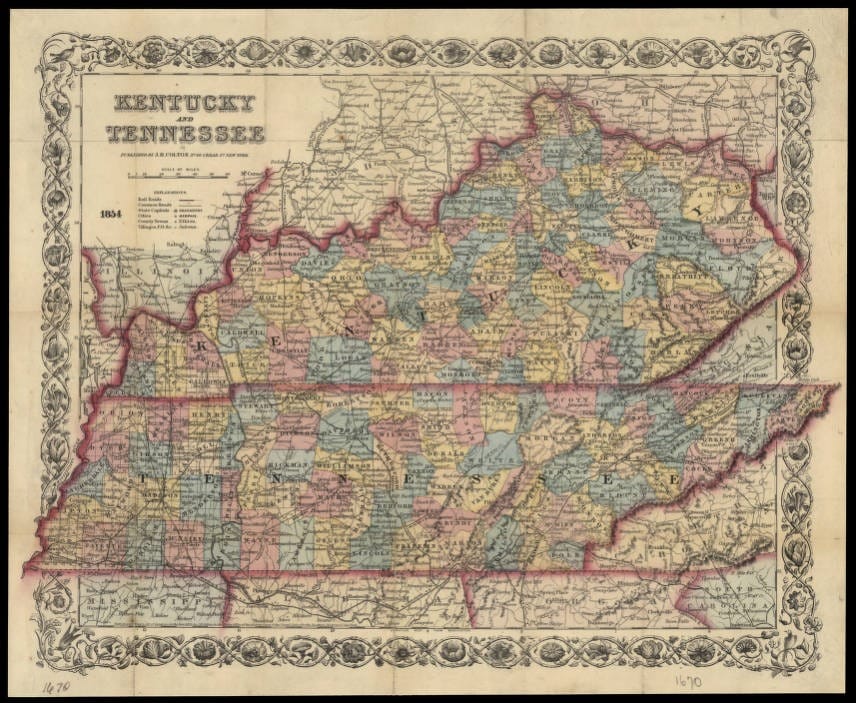
Two states — Kentucky and Tennessee — were admitted to the Union on this day in 1792 and 1796, respectively.
In 1775, the Transylvania Company signed the Treaty of Sycamore Shoals with Cherokee leaders, purchasing land that comprised much of modern-day Kentucky and Tennessee. Many Cherokee and other Native tribes fiercely resisted the treaty, and existing colonial law voided it, but its signing sped up settlement of the region west of the Appalachian mountains. At first, the settlements were governed by Virginia; but settlers clamored for independent statehood as their population grew, culminating in Kentucky’s official admission to the Union as the 15th state in 1792.
Modern-day Tennessee had to take its own meandering path to statehood. Much of Tennessee was initially considered part of North Carolina, but a growing population, difficult journeys, and conflicts with Native peoples made the governing relationship tenuous. In 1784, East Tennesseans unsuccessfully tried to establish the state of Franklin. After North Carolina ratified the Constitution in 1789, it ceded control of the land to the United States government and became known as the Southwest Territory. The Southwest Territory presented itself to Congress for statehood in 1795, and Tennessee became the 16th state in 1796.
Numbers.
- 2,014. The number of comments Graham Platner made on Reddit between July 2009 and November 2021.
- 24–37. Platner’s age when he made the comments.
- 55% and 28%. The percentage of likely Democratic primary voters in Maine who said they supported Platner and Gov. Janet Mills, respectively, in a March 2026 Emerson College poll conducted before Mills ended her campaign.
- +4%. Platner’s net favorability rating in a March 2026 Emerson College poll of likely primary voters in Maine.
- 51%–42%. Platner’s lead over Sen. Susan Collins (R) in a head-to-head matchup, according to a May 2026 University of New Hampshire poll of likely general election voters in Maine.
- 49%–38%. Platner’s polling lead over Collins in February.
The extras.
- One year ago today we had just published a Friday edition from Isaac on his relationship with Zionism.
- The most clicked link in our last regular newsletter was Google search, without the AI overview.
- Nothing to do with politics: Where to find an empty movie screening near you.
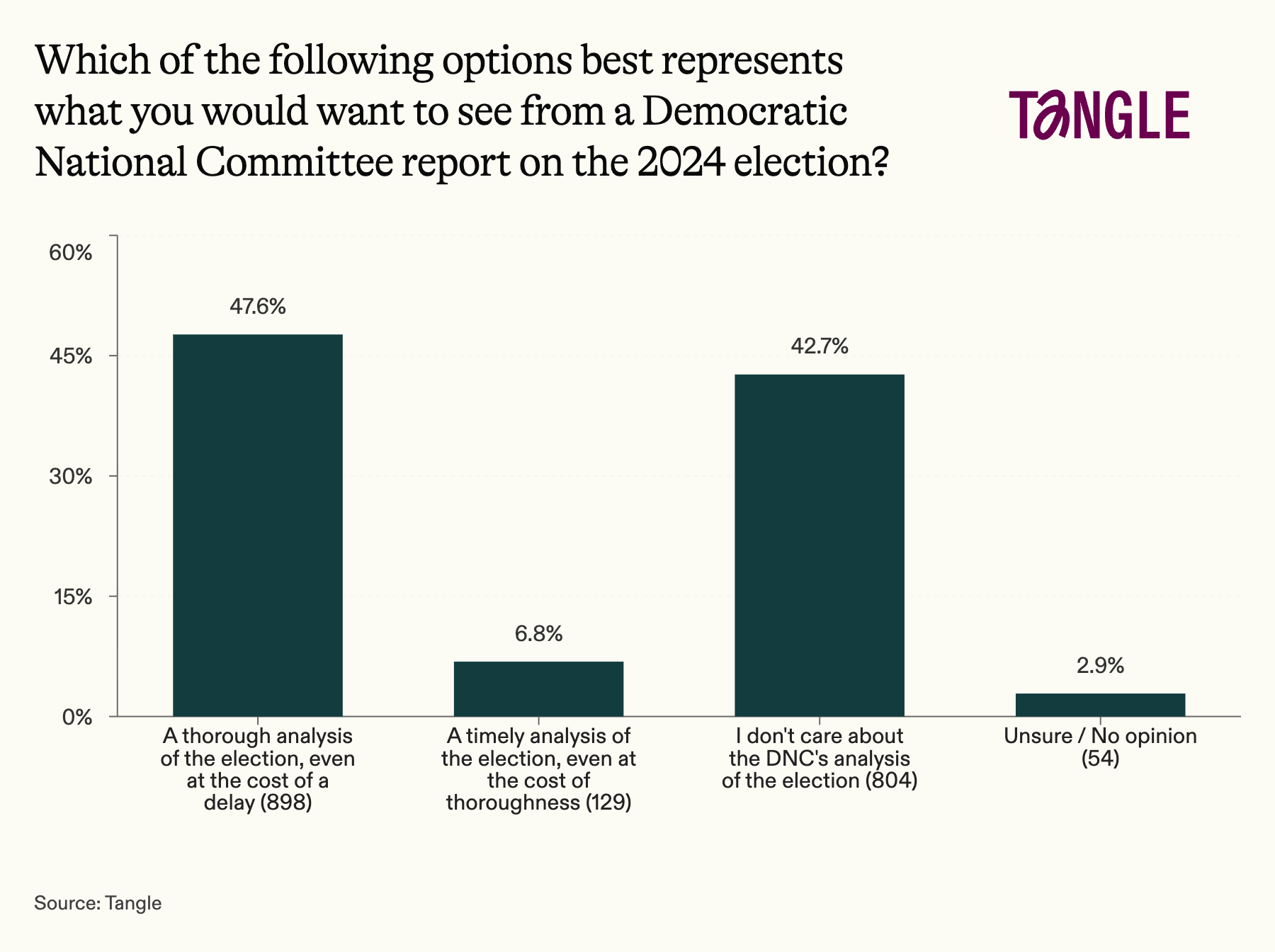
- Our last survey: 1,885 readers responded to our survey on the 2024 Democratic National Convention with 48% saying they would prefer a thorough analysis over a timely one. “There is no reason it couldn’t be thorough and timely,” one respondent said. “Although, what’s really the point? I’m more interested in what they do now,” said another.
Have a nice day.
Rustom Basumatary spent his childhood as a poacher hunting small game inside Manas National Park as part of his upbringing in the Indigenous Bodo community; now, he’s one of Northeast India’s most celebrated environmentalists. Basumatary grew up to become a park guide, help rediscover the critically endangered white-bellied heron, and found a youth conservation initiative to pass that work to the next generation. “For every tree I plant, there are many people ready to cut it down,” he said. “Conservation is not easy; it’s a tough task. Still, we are doing it, and we will continue our efforts.” In 2023, he received the Assam Gaurav Award for his conservation efforts, one of the region’s top civilian honors. Good Good Good has the story.

Member comments