





I'm Isaac Saul, and this is Tangle: an independent, nonpartisan, subscriber-supported politics newsletter that summarizes the best arguments from across the political spectrum on the news of the day — then “my take.”
Are you new here? Get free emails to your inbox daily. Would you rather listen? You can find our podcast here.
Today’s read: 15 minutes.
Our next event!
Today, I’m pleased to announce that we are coming to Berkeley Springs, West Virginia, on June 13 and 14 for a special VIP dinner and a live taping of our weekly podcast, Suspension of the Rules. Tickets are on sale now! Why Berkeley Springs?
- It’s an American gem. Incorporated in 1776, history abounds — George Washington used to visit with his ill brother, who believed the springs could improve his health. Now, it’s known for its greenery, spas, and resorts.
- Speaking of history, we’ll be recording live inside the historic Star Theatre.
- Berkeley Springs is just a few hours from Washington, D.C.; Pittsburgh; Philly; Maryland; New Jersey; Ohio; and even parts of Virginia and North Carolina. If you’re looking for a summer weekend getaway, this is it!
- Right now, this is the only live event on our schedule. We’re hoping to hold a few more this year — but for now, it’s the only one we can guarantee!
- Most of the Tangle team will be in attendance, which is unique. Unlike past events where it’s been just me and a few others, this is shaping up to be an opportunity to meet and interact with the full team.
We have already sold over half of our VIP tickets, and general admission tickets are going fast. This is a small theater, so to secure your tickets before a sellout, you should hop on it now!
Quick hits.
- The Justice Department expanded its settlement of President Trump’s lawsuit to include provisions preventing the government from pursuing existing tax audits for previously filed returns against Trump, his businesses, and his family members. (The agreement) Separately, President Trump disclosed more than 3,600 stock trades in the first quarter of this year, including several companies whose business have been impacted by his decisions as head of the federal government. The president said the trades were handled by third parties. (The trades)
- The Senate voted 50–47 to advance a resolution to limit President Trump’s war powers in Iran. Republican Sens. Susan Collins (ME), Lisa Murkowski (AK), Rand Paul (KY), and Bill Cassidy (LA) joined 46 Democrats in favor of the resolution, while Sen. John Fetterman (PA) was the lone Democrat in opposition. The resolution has now been discharged from committee and will face further votes on the Senate floor. (The resolution).
- Late Tuesday, the Pentagon announced that it would be pausing a planned deployment of 4,000 troops to Poland. Vice President JD Vance said the pause was only a temporary delay, not a permanent reduction. (The deployment)
- Chinese President Xi Jinping met with Russian President Vladimir Putin in Beijing, where the two leaders expressed a desire for deepening ties between the nations and, according to Chinese state media, an end to hostilities in Iran. (The visit)
- According to the Congolese Health Ministry, the current Ebola outbreak in Central Africa has killed at least 131 people and infected 531. The U.S. State Department strongly urges against travel to the Democratic Republic of Congo, South Sudan or Uganda, and it has announced it will fund up to 50 Ebola response clinics. (The outbreak)
22 Things To Cut When Living On Retirement (Many People Ignore #11)
Whether you’re already enjoying retirement or just eyeing the exit ramp, the math of a fixed income can feel like a daunting puzzle. The rising cost of living often turns "relaxing" into "calculating," but your golden years shouldn’t be defined by what you can’t do.
The good news? You don’t need a radical lifestyle overhaul to find breathing room. Often, it isn't the big-ticket items that drain a nest egg; it’s the steady drip of outdated services and inefficient accounts. Efficiency isn't about deprivation — it's about intentionality.
Our partner, FinanceBuzz curated a list of simple cutbacks and financial tools to help you reclaim your budget for what actually matters.
Today’s topic.
The 2026 midterm primary races. The midterm primaries officially began on March 3, and on Tuesday, primaries were held in states across the country. Elections in Kentucky, Georgia and Alabama drew particular focus, where Republican candidates were facing challenges from President Trump or crowded fields for the party’s nomination.
In Kentucky, Trump-backed candidate and former Navy SEAL Ed Gallrein decisively defeated incumbent Rep. Thomas Massie in the primary for the state’s 4th congressional district by 9.8 percentage points. The president was frequently at odds with Massie, whom he called “the worst Republican Congressman in history.” Massie’s defeat comes days after a contentious race in Louisiana, where Rep. Julia Letlow and state Treasurer John Fleming defeated incumbent Sen. Bill Cassidy, advancing to a June runoff. Cassidy had also drawn the ire of President Trump for voting to convict him in his January 6 impeachment trial. Trump ultimately endorsed Letlow.
In Georgia on Tuesday, Rep. Mike Collins finished first in the Republican Senate primary but did not secure 50% of the vote. Collins will now advance to a runoff with former football coach Derek Dooley; the winner will face Sen. Jon Ossoff (D) in the general election. Elsewhere in Georgia, Lt. Gov. Burt Jones and healthcare executive Rick Jackson are also headed to a runoff in the Republican gubernatorial primary. The winner will face former Atlanta Mayor Keisha Lance Bottoms (D), who prevailed in her Democratic primary.
In Alabama, Rep. Barry Moore (R) — who was endorsed by Trump — placed first in a crowded primary race for Senate, which is now headed to a runoff with either state Attorney General Steve Marshall or former Navy SEAL Jared Hudson. The three are competing for the Senate seat vacated by Sen. Tommy Tuberville, who opted to run for governor. Tuberville won his primary easily and will face former Sen. Doug Jones (D) in November’s election.
In Texas, President Trump did not initially endorse a candidate in the Republican Senate primary, where state Attorney General Ken Paxton is challenging Sen. John Cornyn. After neither candidate secured 50% of the vote in March, the race moved to a runoff to be held on May 26. President Trump officially endorsed Paxton on Tuesday. The winner will face state Rep. James Talarico in the general election.
Below, writers from the left and right react to the performance of Trump-backed challengers in Republican primaries. Then, Executive Editor Isaac Saul gives his take.
What the left is saying.
- The left sees the primaries as a demonstration of Trump’s total control over the GOP.
- Some argue the extent of the president’s influence won’t be clear until November.
- Others say Trump is destroying the Republican Party.
In Common Dreams, Robert Reich suggested that “the GOP is now Trump’s.”
“Trump’s purge of Cassidy comes in the wake of Trump’s purges of House Republicans who stood up to him, such as Wyoming’s Liz Cheney,” Reich said. “Today’s Republican Party no longer has any purpose other than achieving whatever Trump wants, which is making Trump richer and more powerful. The GOP is now Trump’s; it is no longer America’s. Today’s Republican voters, by contrast, are showing increasing frustration with Trump.”
“Yet for elected Republicans, survival now depends on personal loyalty to Trump,” Reich wrote. “For Trump, the first and most basic sign of loyalty to him — and therefore survival as a politician in Trump’s Republican Party — is a willingness to publicly proclaim as truth what we know to be two big lies: that Trump won the 2020 election, and that he did not seek to overturn its results by illegal means. As a result, almost all congressional Republicans are now election deniers.”
In New York Magazine, Ed Kilgore said “after purging Cassidy, Trump sets his sights on Massie.”
“Donald Trump’s efforts to assert total control over his party despite his sinking overall popularity achieved a landmark victory on Saturday with the resounding defeat of two-term Republican senator Bill Cassidy of Louisiana,” Kilgore wrote. “Massie is the next presidential intraparty target… This is a heavily Republican district in a heavily Republican state, so the primary will be the final word for this particular House seat. But its national resonance is unmistakable. If Massie goes down, it will continue Trump’s successful May vengeance tour.”
“More generally, we won’t know until November whether the political capital Trump has expended this year to enforce discipline in his own party ranks would have been better spent on the general election,” Kilgore said. “Perhaps he’s as focused on the power of his MAGA movement within the GOP as on the GOP’s power over the country. Or maybe he’d just prefer not to think about November — which, if polls are to be believed, will make a mockery of all the post-2024 talk of Trump bestriding the country like a colossus.”
In The New York Times, Michelle Cottle argued that “Mr. Trump’s petty project has been bad for the G.O.P.”
“[Massie’s] loss to Mr. Gallrein, an unknown, undistinguished challenger expected to be a much more reliable presidential boot licker, is the latest warning to other Republicans about the dangers of crossing Mr. Trump even now, as his popularity is on the slide,” Cottle wrote. “It should also serve as a vivid and very expensive reminder, especially to Republicans, of how little Mr. Trump cares about the current or future well-being of his chosen party. Destroying the G.O.P. might suit his purposes even better.”
“Mr. Trump’s petty project has been bad for the G.O.P., a spectacular waste of resources that could have been put to better use in any number of races and places,” Cottle said. “Mr. Trump has clearly thrilled to the idea that the Republican Party cannot survive without him — that there can be no such thing as a post-Trump G.O.P. The suggestion that he will ever cede the stage gracefully is laughable. Everything we’ve seen in the past decade suggests that, until the bitter end of his presidency — maybe even beyond — he will work to ensure that the Republican Party remains entirely his creature. The more pathetic the better.”
What the right is saying.
- Many on the right say the primary results show that Republican politicians need to fall in line with the party.
- Some believe the money spent on the primary races is a bigger loss than the defeated incumbents.
- Others see the primary results as a tragedy for the GOP and the country.
In The Washington Times, Kelly Sadler said “Republican voters want team players.”
“[Bill Cassidy’s] disloyal vote to impeach Mr. Trump in his first term compounded Republican voters’ frustrations,” Sadler wrote. “Rank-and-file Republicans understand that the Democratic Party will do anything to seize and hold power, and they also understand the need to fight fire with fire… They want a party unified around policy goals, with the ruthlessness to accomplish them. This includes ending the filibuster, redistricting and passing bills that align with the president’s agenda.
“Still, many elected Republicans do not seem to get it,” Sadler said. “Rep. Thomas Massie of Kentucky is one of them. Mr. Massie’s base of anti-war leftists, anti-Israel activists, libertarians, online activists and Epstein-file conspiracists is not made up of rank-and-file Republicans. Mr. Massie voted against Mr. Trump’s One Big Beautiful Bill Act, which delivered tax cuts to working-class families… Many observers of these party expulsions assume it is Mr. Trump’s control over the base. They are wrong. It is Republican voters controlling their elected officials.”
In National Review, Jeffrey Blehar said “Donald Trump still commands the loyalty of his troops.”
“Although my many libertarian friends have found nice things to say about Massie over the years, I will miss him significantly less. Many of my colleagues are convinced he is a barely veiled antisemite; I merely think him crazy, and have grown tired of crazy people in Congress. What Massie called ‘principle’ ended up expressing itself in little more than mindless oppositionalism,” Blehar wrote. “I never thought Massie would survive direct presidential intervention, especially not after having genuinely enraged many of his own constituents by conspiring with Democrats to force a release of the so-called ‘Epstein files.’ It was one step too far.”
“Don’t weep too hard for Thomas Massie. He has long promised that, if he ever lost, he would be happy to idle away his days on his hand-built home on his secluded estate, appreciating the beauties of life off the grid and away from the hugger-mugger of it all, and now he will get his chance,” Blehar said. “Instead, weep for the tens of millions of dollars squandered in internecine warfare, and all to prove a point nobody disputes: Even amidst his national political ruin — November is now shaping up to be a butchering of World War I–level proportions — Donald Trump still commands the loyalty of his troops.”
In The Dispatch, Nick Catoggio described “the real lesson of the Cassidy disaster.”
“[‘Don’t cross Trump’] is not the lesson of Bill Cassidy’s defeat. Lots of Republicans have ‘crossed’ Trump since 2016 and lived to tell the tale,” Catoggio wrote. “What Cassidy was naive about was his faith that Republican voters could not possibly be so morally wretched that they would still be worshiping that blob five years later, still seeking revenge on the senator in 2026 for having cast what was obviously a brave, correct, and honorable vote.”
“In Donald Trump’s party, conscience kills. That’s the real lesson of the Cassidy disaster. And the senator tried to learn it, albeit too late. The easiest way to understand his vote to confirm [Robert F. Kennedy Jr. as Health Secretary] is as a formal repudiation of his own conscience,” Catoggio said. “Having failed the supreme loyalty test five years ago, though, he couldn’t un-fail it… Cassidy chose the Constitution over Trump. He would never be forgiven for it. There is no hope for America as long as the right remains what it’s become. Bill Cassidy didn’t know that in 2021. He knows now.”
My take.
Reminder: “My take” is a section where we give ourselves space to share a personal opinion. If you have feedback, criticism or compliments, don't unsubscribe. Write in by replying to this email, or leave a comment.
Executive Editor Isaac Saul: President Trump’s level of control over the Republican Party has become one of the most tired talking points in American media. A new wave of questioning whether this is the moment Trump’s grip will loosen seems to pop up every few months. Then, when the moment inevitably passes, we all talk about how the GOP is still his party, and the cycle repeats a few months later.
Starting about a month ago, much hype has been made about whether Trump could oust some Indiana state legislators, send Sen. Bill Cassidy packing, and raise enough money to beat Rep. Thomas Massie in a primary. He did all three, and his endorsed candidates in Georgia and Alabama performed well, too. It’s Trump’s party, and you cross him at your own peril. Whether this is a good or bad thing is a matter of time and perspective, but it’s silly to spend any time examining the question of whose party it is, as that has now been answered over and over and over.
So, with that, here are eight other thoughts on the last week of midterm politics:
- Speaking of worn-out talking points: Could Texas actually be up for grabs this time? President Trump’s endorsement of Ken Paxton has Republicans reeling, and rightfully so. Trump just sent one of the most openly corrupt and politically vulnerable candidates that I can remember to a Senate primary. Sen. Jerry Moran (KS) said Trump’s endorsement “saddened” him and he was unsure “what you can complain about on John Cornyn.” Sen. Susan Collins (ME) said she didn’t understand it. Sen. Lisa Murkowski (AK) said the seat is now in jeopardy. Sen. Lindsey Graham (SC) said it will cost three times more to defend Texas than it would have otherwise. James Talarico, of course, is probably too left for the state — but he’s certainly got a better chance against Paxton than he would have had against Cornyn, which everyone but Trump seems to understand.
- While Trump’s grip on Republican voters remains strong, his grip on Republican senators is a different story. Well ahead of November, we may be in for a dynamic sea change. Just yesterday, the Senate advanced legislation to block President Trump from further military action in Iran. The deciding vote was Sen. Bill Cassidy (R-LA), who notably flipped sides on the vote after Trump ousted him in a primary just last week. Sen. Cornyn, meanwhile, now has little reason to post pictures of himself reading Trump’s book and pretending to be interested. Sen. Thom Tillis (R-NC) has been a thorn in the administration’s side since announcing his plans to retire. And with the independent streaks Sens. Murkowski and Collins already had, the supposed 53–47 Senate majority feels much more like a split with a number of live swing votes. Or, as one senior Republican aide put it to NOTUS, “now [Trump] doesn’t have a governing majority.” Trump could be headed for an oddly premature “lame duck” presidency a few months ahead of the midterm elections.
- Speaking of pre-general-election-weirdness, what do you think Thomas Massie is going to do now? He was already unafraid to buck the party line, but I imagine the last few months of his 14-year congressional career are going to be totally unrestrained. Here is one quote from his concession speech: “By the way, while gas is almost $5 and diesel is almost $6, they’re talking about this big ballroom they’re going to build. And it looks like the Roman Empire, architecture from the Roman Empire. I see a few analogies there, and people are just trying to make ends meet.” Massie is representative of an ascendant faction on the right — an anti-Israel, anti-war, libertarian group of former Trump-voters who seem to be voiceless at the national level right now. I’ll be watching how this ascendant right movement operates with or without Massie.
- While all the focus was on Republicans in the South on Tuesday, one of the most interesting races was in Northeastern Pennsylvania, where progressive Democrat Bob Brooks won a primary race in one of the most divided districts in America. He will now face first-term Republican Ryan Mackenzie in the general election. Why did this Pennsylvania House race catch my eye? Because Brooks, a retired firefighter and union leader who now runs a lawn-care business, would become one of the few House Democrats without a college degree in Congress if he prevails in November. He also pulled together a fascinating coalition: He was endorsed by Sen. Bernie Sanders (I-VT) and spent the last few weeks campaigning with Gov. Josh Shapiro (D) and former Transportation Secretary Pete Buttigieg. Brooks shares a lot of similarities with Graham Platner: A gruff-looking, masculine candidate with working-class appeal who seems a little out of place in stuffy D.C. circles. He’s even complete with “controversial old social media posts,” where he expressed conservative views and called Colin Kaepernick a “douchebag.” Yet none of that stopped him from winning. Is this a new Democratic faction in the making?
- Meanwhile, a Yale-educated college professor and Democratic Socialist named Chris Rabb won his primary in a deep-blue Philadelphia district and seems locked in for a congressional seat. Republicans have already fought their internal battle and know they will be sailing under the Trump banner to 2028. But rounding up a coalition within a party that runs the gamut from Bob Brooks to Chris Rabb is a lot for a future Democratic leader to have to wrangle.
- If working-class non-college educated vs. Ivy League socialists doesn’t interest you, there’s also another primary runoff next Tuesday in Texas, where a Democrat named Maureen Galindo will be fighting for the nomination in the state’s 35th District. Last week, Galindo promised to convert ICE detention centers into internment camps for “American Zionists,” adding that “it will also be a castration processing center for pedophiles, which will probably be most of the Zionists.” She’s headed to a runoff after finishing first in the crowded Democratic primary race in Marc with 29.2% of the vote. That’s fine, right?
- It kind of fell under the radar, but a lot of votes were cast on Tuesday that literally won’t count for a variety of reasons. In Georgia, Rep. David Scott (D) appeared on the ballot posthumously. He died at the age of 80 while seeking a 13th term, becoming the fourth Democrat in just this term to die while in office. This devotion to staying in office as long as possible has genuinely hurt Democrats’ ability to function as a minority party. Meanwhile, over 100,000 people cast ballots in four of Alabama's seven congressional districts that may not count after Republican Gov. Kay Ivey moved to postpone the election. Ivey is hoping to redraw Alabama’s maps on the backs of a Supreme Court ruling, and if successful, instituting a redraw will mean voiding the ballots cast on Tuesday.
- Finally: Bon voyage to Brad Raffensperger, who deserves a tip of the cap and whom history should remember favorably. Raffensperger, you might recall, was the Georgia secretary of state Trump pushed to “find” 11,000 votes to flip the state in his favor in 2020. Raffensperger declined, then spent the last six years dutifully trying to prove that the Georgia election was fair and legal. Three recounts and many hearings later, a lot of voters still believe something was amiss. But Raffensperger never wavered in his resistance to election denialism, and he never stopped trying to prove the legitimacy of his state’s election. His attempt to become governor failed on Tuesday, likely ending his political career, but I can almost guarantee he will publish a book about the insanity of the last six years — and it’s going to be awfully good.
Take the survey: How much control do you think President Trump has over the Republican Party? Let us know.
Disagree? That's okay. Our opinion is just one of many. Write in and let us know why, and we'll consider publishing your feedback.
Your questions, answered.
Q: The amount of unsolicited texts I have gotten from PACs asking for donations/contributions to random state- or local-level elections on the other side of the country has absolutely SKY-ROCKETED in the last few months. Is that something y’all would ever report on somewhere?
— Peter (submitted through Subtext)
Tangle: We’re happy to expound on this. Simply put, you’re getting these texts because it’s primary season. Political messaging ramps up when elections are underway, and perhaps the most cost-effective way for candidates to communicate with you is through text messages. One SMS text costs senders between one and five cents, making it much cheaper than mailers or TV ads. You’re getting more texts now because, as Alex Quilici, CEO of call-blocking company YouMail, put it, “If you see more of something, that means it’s working.”
That low cost of distribution allows political action groups (PACs) more overhead to pay for the really expensive part: getting your data. Political groups paid 37 data brokers over $23 million to access voter data during the 2020 election. That number excludes major players like Meta and Google, meaning it’s only a fraction of what PACs are paying in total. PACs can also get a lot of data cheaply through voter rolls, or from national fundraising platforms like ActBlue or WinRed.
The Telephone Consumer Protection Act (TCPA) forbids campaigns from contacting you with auto-dialers and requires services to allow you to opt out. However, the TCPA allows campaigns to text potential voters without their permission — provided an actual person sends the message. That means that after you opt out from one campaign, PACs can just sign you up for different (but very similar) campaigns through peer-to-peer services, as long as an actual person runs them.
To make matters worse, a 2021 Supreme Court ruling exempted campaigns from the TCPA if they simply manually feed numbers into an automated system. Worse still, political calls are exempt from the Do Not Call Registry, meaning campaigns can legally contact registered voters even if they’ve opted out of commercial calls.
The upshot is that as long as people keep clicking these messages to donate, we’re all going to keep getting them. But since Peter asked this question through our messaging service, now is a good time to remind you that Tangle never shares your information with anyone, and if you opt out we will never re-enroll you without your consent.
Want to have a question answered in the newsletter? You can reply to this email (it goes straight to our inbox) or fill out this form.
Under the radar.
Last Tuesday, May 12, officials at the recently opened immigration detention center in the Florida Everglades told vendors it would shut down. The center, known as “Alligator Alcatraz,” was opened in July 2025 and held 1,383 detainees as of the most recent report in April. Florida’s Division of Emergency Management projected last year that the facility would cost $1.1 billion to operate and expected a $608 million reimbursement from the federal government, which has not come. “We’ve saved taxpayers money,” Florida Gov. Ron DeSantis (R) said. “We’ve saved taxpayers from medical care and schooling [of unauthorized immigrants] and all these different things” (a report found that unauthorized immigrants had cost the state roughly $660 million in healthcare costs in 2024). DeSantis has not confirmed where the facility’s detainees will be sent once it closes. The New York Times and WLRN Florida have the story.
A deeper look.
Political candidates for a general election weren’t always decided by primaries. In the early days of the United States, elections weren’t even decided by parties at all. Initially, those seeking office didn’t announce their own candidacies but were customarily nominated for office by others. For higher offices (like the Senate, governor, president), party caucuses of sitting legislators often chose nominees. As national parties formed, congressional caucuses nominated candidates for the presidency.
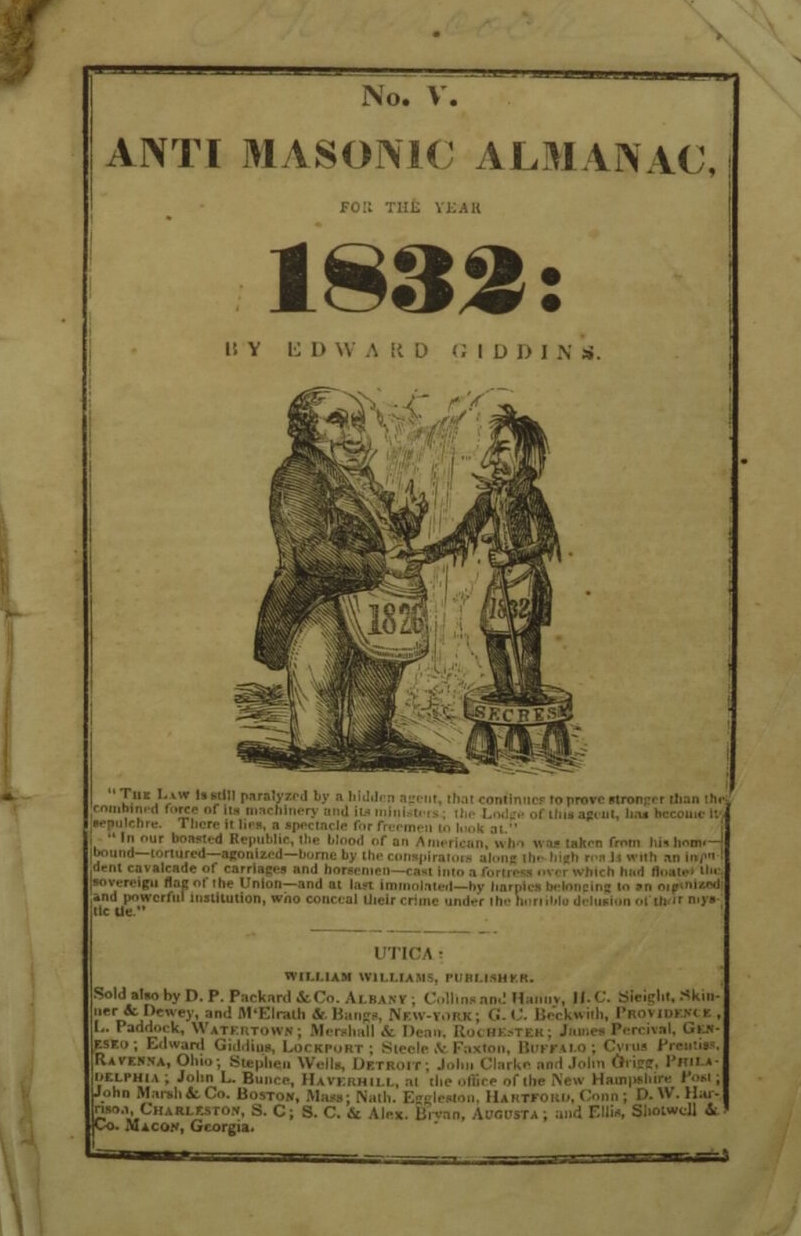
This changed with Andrew Jackson’s populist mass-appeal movements of 1824 and 1828, which shifted the power center toward the masses. In 1831, shortly before the 1832 Democratic Convention (which nominated Jackson for president), the Anti-Masonic Party held the first national nominating convention (which, ironically, nominated a freemason). Shortly thereafter, Crawford County, Pennsylvania, held the first direct primary election for a local office in 1842. The “Crawford County System” went on to become the norm, replacing the smoke-filled backroom nomination process with one that was out in the open for any party member to participate in.
Many retirees assume financial stress comes from major expenses, but often it’s the smaller recurring costs quietly draining savings month after month. FinanceBuzz put together a list of overlooked subscriptions, outdated services, and unnecessary spending habits that can add up fast — along with practical ways to keep more money in your pocket. See the full list here.
The extras.
- One year ago today we wrote about birthright citizenship before the Supreme Court.
- The most clicked link in our last regular newsletter was the tips for digital spring cleaning.
- Nothing to do with politics: Empty Waymos are herding in one particular Atlanta cul-de-sac.
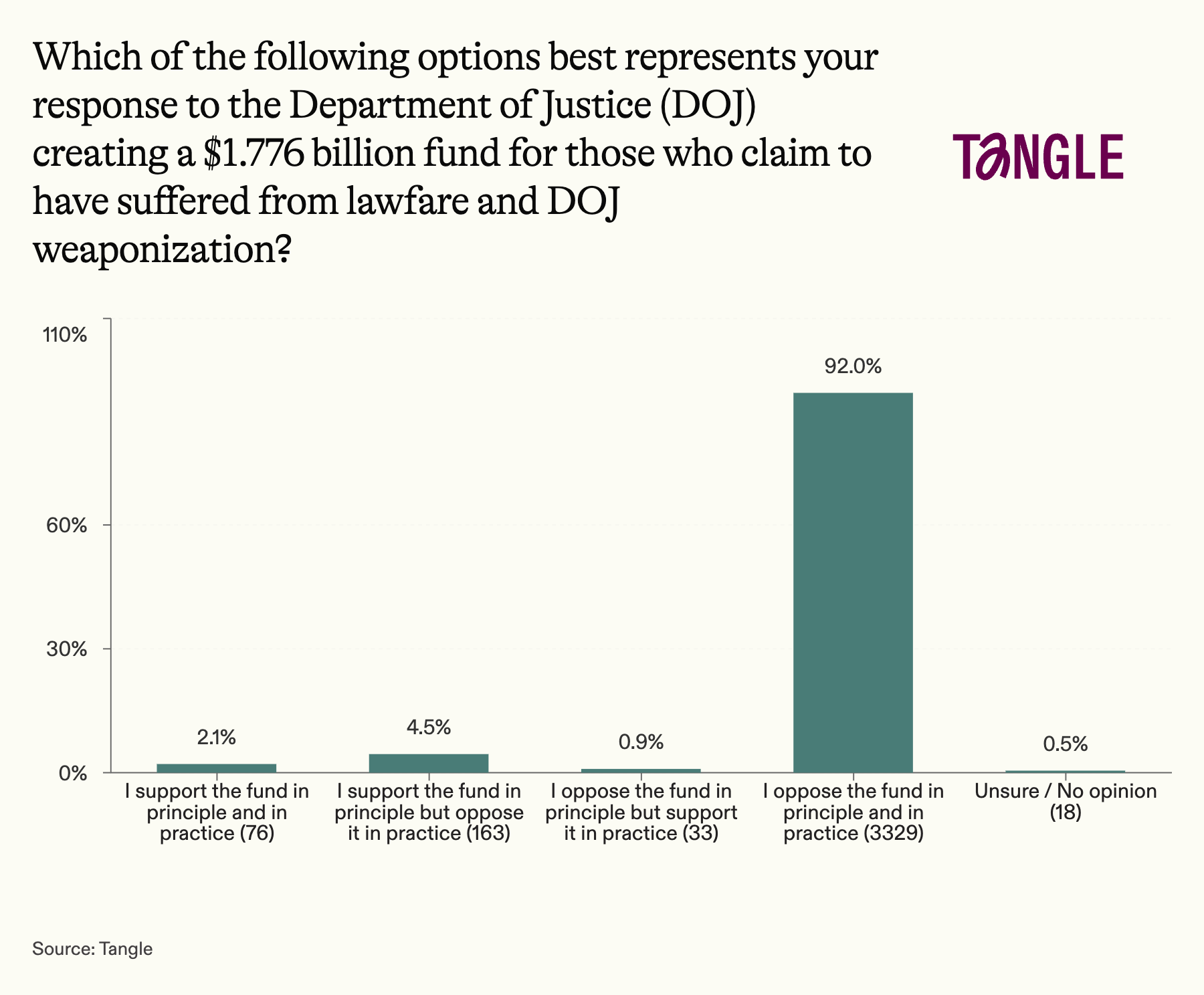
- Our last survey: 3,619 readers responded to our survey on the Department of Justice’s anti-weaponization fund with 92% opposing it in principle and in practice. “Stories like this make me lose trust in the American government,” one respondent said. “Congress should act before the next admin does worse,” said another.
Have a nice day.
For decades, the Free Application for Federal Student Aid (FAFSA) was notoriously long and difficult to fill out, creating a barrier for many American high school students — especially first-generation or low-income students — to afford college. In 2020, the Department of Education began overhauling the FAFSA system in an effort to simplify the form, but the new system’s rollout was plagued with difficulties. However, and despite issues with the rollout, the simplified system resulted in about 570,000 additional students gaining eligibility for federal aid in 2024–25, according to a recent Government Accountability Office report. The most substantial increase occurred for students in households with incomes ranging from $40,001 to $80,000. EdSource has the story.

Member comments