




I'm Isaac Saul, and this is Tangle: an independent, nonpartisan, subscriber-supported politics newsletter that summarizes the best arguments from across the political spectrum on the news of the day — then “my take.”
Are you new here? Get free emails to your inbox daily. Would you rather listen? You can find our podcast here.
Today’s read: 13 minutes.
We want to see you in person soon!
We are finalizing details for our fourth-ever live event, and we want to see you there. We will be holding a live episode of our flagship podcast Suspension of the Rules, as well as hosting a VIP dinner. Make sure to check your inbox at 10 AM ET tomorrow to find out where the event is, and how to buy tickets!
Quick hits.
- BREAKING: A brush fire dubbed the Sandy Fire broke out in Simi Valley, California, on Monday. The fire has spread to more than 1,300 acres, prompting evacuation orders across Los Angeles and Ventura counties. (The fire) Ventura County fire officials say the fire has not expanded much over night and that they have dug precautionary fire lines to protect nearby residential areas. (The update)
- On Monday, three people were killed at a mosque in San Diego, California, by two shooters who fled the scene before killing themselves. Law enforcement officials are investigating the shooting as a hate crime. (The shooting)
- President Donald Trump said there was a “very good chance” that the U.S. and Iran could come to a deal to end the current war and prevent Iran from gaining a nuclear weapon. The comments came hours after the president reportedly postponed planned strikes on Iran following pressure from other Middle East leaders. (The comments)
- Russian President Vladimir Putin will travel to China on Tuesday and Wednesday to meet with Chinese President Xi Jinping, just a week after President Trump’s visit to China. Putin and Xi will reportedly discuss trade and other international issues. (The meeting) Separately, Russia’s nuclear chief said the Zaporizhzhia nuclear power plant is “near the point of no return” following Russian claims of Ukrainian strikes near the plant. (The situation)
- The U.S. State Department announced new sanctions against 11 Cuban officials and government entities it described as “Cuban regime-aligned actors” as tensions rise between the two countries. (The sanctions)
- President Trump announced that TrumpRx, the government program offering lower pricing on certain medications, would expand to include 600 new generic drugs. (The announcement)

A single scam can undo all that you’ve worked for.
Imagine answering the phone to learn a criminal just took out a $200,000 loan in your name. Your credit score plummets overnight. Banks chase you for payments you never authorized. This is happening with alarming frequency — in 2025, the FTC received 3 million fraud reports from consumers, who reported $15.9B in losses.
NordProtect scans the dark web 24/7 for your exposed information, monitors your credit reports, and alerts you the second something suspicious appears. If identity theft strikes, you can access expert restoration support and may be reimbursed for eligible recovery expenses, up to $1 million.
Don’t discover the fraud after the damage is done. Protect your financial life now.
Today’s topic.
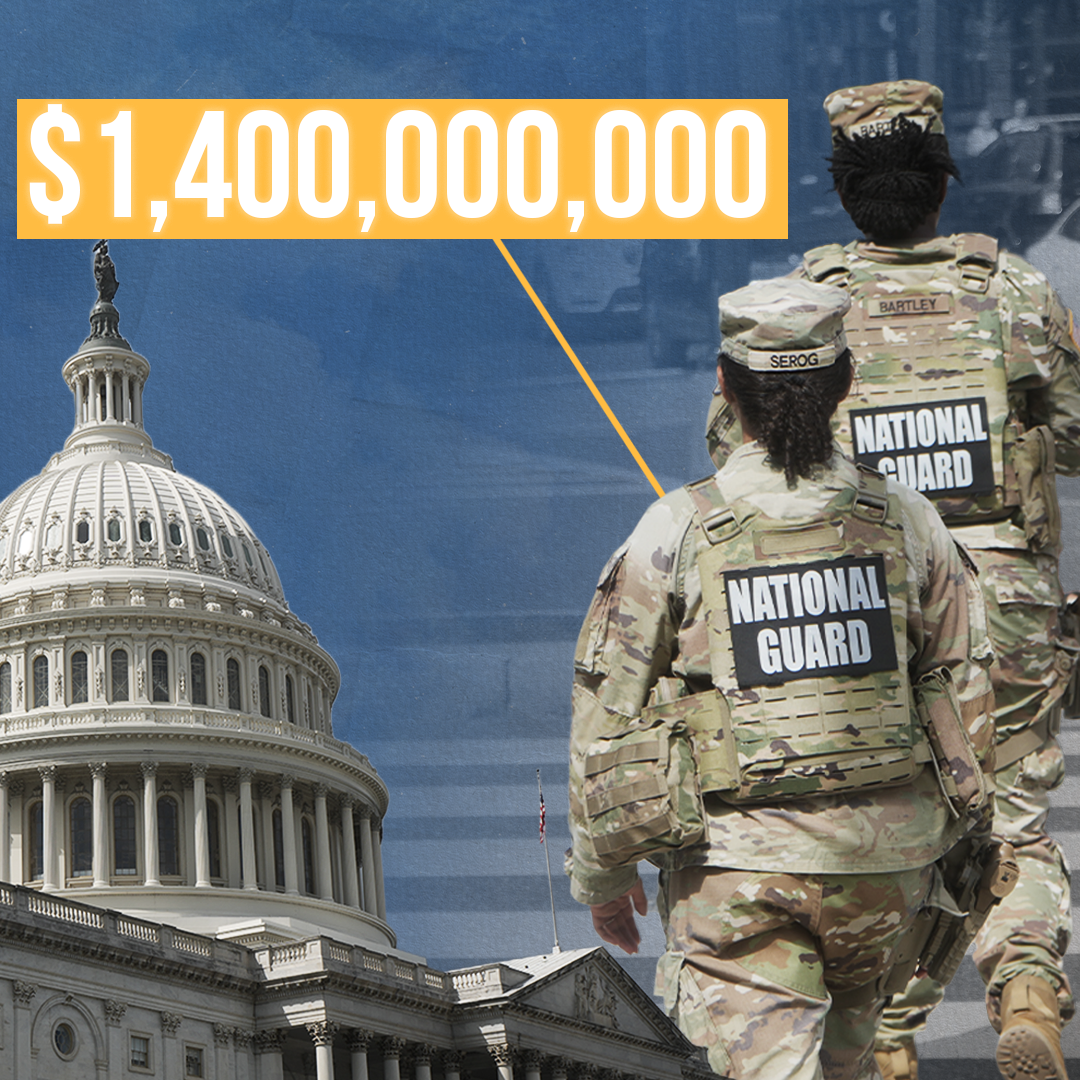
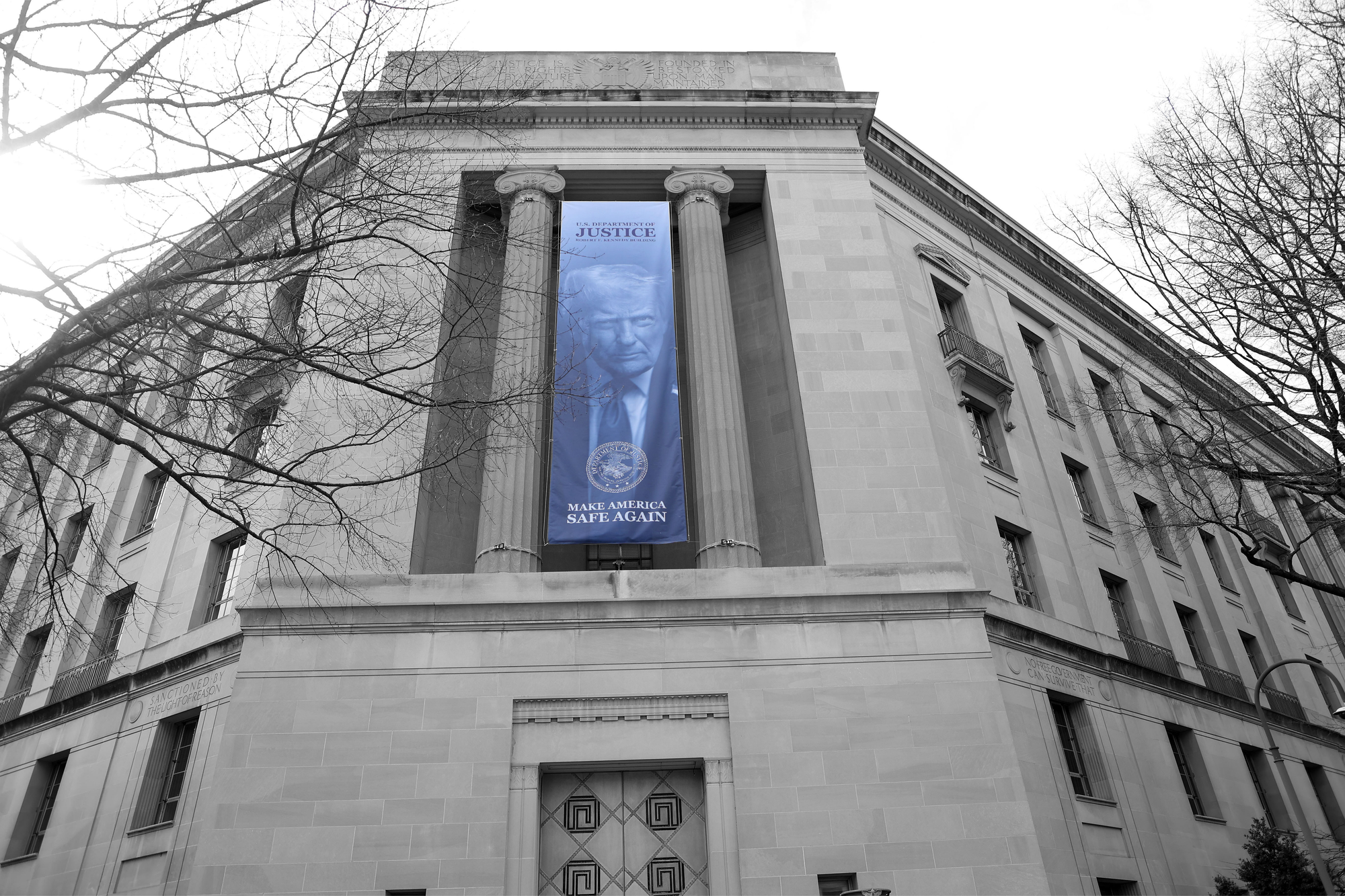
The Department of Justice’s anti-weaponization fund. On Monday, the Department of Justice (DOJ) announced that, as part of the settlement agreement in President Donald J. Trump v. Internal Revenue Service, it would create a new fund that could “issue formal apologies and monetary relief” to individuals and entities who claim to have suffered from lawfare and DOJ weaponization. The anti-weaponization fund will receive $1.776 billion from the federal government’s judgment fund used to settle and pay other cases. Five people, appointed by the Attorney General, will oversee the new fund; one of the five must be chosen in consultation with congressional leadership.
Back up: In January 2026, President Trump, his sons Eric Trump and Donald Trump Jr., and the Trump Organization sued the Treasury Department and Internal Revenue Service for $10 billion over alleged leaks of confidential tax information in 2019 and 2020. On Monday, Trump settled that lawsuit in exchange for the creation of the anti-weaponization fund and a formal apology from the government. Additionally, the president is withdrawing two other complaints he previously filed against the government — administrative claims over the Federal Bureau of Investigation’s search of Mar-a-Lago in 2022 and the investigation into Russian collusion during his 2016 presidential campaign.
The new fund will provide monetary relief to claimants who allege they were politically targeted by the Justice Department under previous presidential administrations, and the settlement creating the fund did not contain any language specifying congressional or judicial review. Instead, it will be required to report the sum of its disbursements and its recipients to the Attorney General on a quarterly basis. Applicants can choose to file claims, and there is no partisan requirement to file. The fund will process claims until December 1, 2028, just before the end of President Trump’s term.
Acting Attorney General Todd Blanche cited past litigation, such as the Keepseagle settlement, as precedent for the creation of the anti-weaponization fund. In Keepseagle, the DOJ — under the direction of President Obama — transferred $680 million from the judgment fund into a class-action settlement fund to compensate Native Americans who were unfairly denied access to Department of Agriculture credit and loan services.
In the DOJ press release announcing the fund, Blanche said, “The machinery of government should never be weaponized against any American, and it is this Department’s intention to make right the wrongs that were previously done while ensuring this never happens again.”
Democrats have criticized the settlement, claiming the anti-weaponization fund is nothing more than a “slush fund” for the Trump administration’s political allies. In a statement, Senate Minority Leader Chuck Schumer (D-NY) said the fund was made “to reward his own allies, loyalists, and insurrectionists.” Some Republican lawmakers, such as Sen. Bill Cassidy (R-LA), have also criticized the fund.
Below, we’ll get into what the right and left are saying about the anti-weaponization fund. Then, Executive Editor Isaac Saul shares his take.
What the right is saying.
- The right critiques the fund, with some describing it as a more brazen version of the left’s past dealings.
- Some say it takes executive authority too far.
- Others support the fund as an avenue for redress.
In National Review, Dan McLaughlin said the fund “takes a page from the left’s playbook.”
“While [the fund] doesn’t stink on ice quite as visibly as Trump getting the taxpayers to pay him, it nonetheless looks a lot like a collusive operation to create a slush fund to pay off friends and political allies. And in doing so, it expends nearly $2 billion in taxpayer money that Congress never appropriated,” McLaughlin wrote. “The classic Trump modus operandi is to look at something crooked that is done smoothly and quietly through sophisticated lawyering on the left — and then imitate it while saying all the quiet parts out loud. This is another instance.”
“Using legislative appropriations and programs to line the pockets of allied groups is an old standby of Democrats, but so is laundering aid to friends and allies through the judicial system — often, with the knowledge that a part of it gets kicked back,” McLaughlin said. “Congress should reclaim its authority over large payments made by the executive branch. And our system should also reject collusive uses of the court system when they don’t involve Trump.”
The Washington Post editorial board argued that “the Trump administration is stretching executive authority to a breaking point.”
“If this stands, it will become a template for all future American presidents to shower financial benefits on friends and allies without accountability,” the board wrote. “The fund will be under the control of five people appointed by the attorney general. They can be fired at will by Trump, meaning the money can only go to people the president sympathizes with… The money will presumably flow to conservative figures investigated or prosecuted during the Biden years. But people who are victims of malicious prosecution can seek recompense through the normal legal process. If that process is too onerous, Congress can change the law.
“The new model of ‘compensation’ the Trump administration just invented lacks normal legislative and judicial checks,” the board said. “Conservatives rightly blasted the use of sue-and-settle tactics employed by progressive groups during the Obama administration… Trump is exploiting the legal system in the same way, but the conflict is far more overt because the lawsuit being ‘settled’ was filed by Trump himself.”
In PJ Media, Catherine Salgado said President Trump “prioritized Americans’ search for justice.”
“It will be interesting to see how many people take advantage of this fund in the coming months. The Biden administration targeted thousands of people unfairly, from the Jan. 6ers to pro-lifers to traditional Catholics to Trump allies,” Salgado wrote. “To give just one example, former FBI Director Chris Wray admitted to the House Judiciary Committee in July 2023 that the Biden-era spying on and targeting of concerned parents at school board meetings was not based on evidence.
“Rep. Kevin Kiley asked Wray if there had been ‘an increase in harassment and threats of violence’ spurring the investigation into dissatisfied parents who objected to radically woke and sexualized curricula. Wray confessed, ‘I’m not aware of any such evidence,’” Salgado said. “In other words, that weaponization was purely based on Democrats’ ideological opposition to parental rights, not on evidence of violence. Now victims of such injustice have a way of seeking redress.”
What the left is saying.
- The left rebukes the fund, with many saying President Trump’s actions violate the separation of powers.
- Some see the fund as an important example of how Trump maintains his base.
- Others say it makes upcoming elections difficult for Republican candidates.
In The Daily Beast, David Gardner asked “If we cannot rely on America’s rule of law, what do we have left?”
“By forcing through a self-serving settlement in his $10 billion case against the Internal Revenue Service, Trump has dangerously blurred the separation of powers that has governed the United States through 46 presidencies, including his own first term,” Gardner said. “The blatancy leaves you breathless, because in Trump’s IRS lawsuit, he was effectively both the plaintiff and the defendant. And by manipulating the proceedings, he ended up being the judge.”
“Judge Kathleen M. Williams… was reportedly considering dismissing Trump’s lawsuit for the simple reason that his personal lawyers were bringing the case, and his government lawyers were responding to it,” Gardner wrote. “But the judge was rendered helpless on Monday when Trump announced he was withdrawing his lawsuit… Trump has already shown his disdain for elections he doesn’t win and Supreme Court decisions he doesn’t agree with. Now he is running roughshod through the legal system.”
In The New Republic, Greg Sargent suggested the fund might “serve as a form of coalition management.”
“This saga captures something essential about how the political economy of Trumpism really functions. It helps explain why his supporters stick by him through one episode after another of the most corrupt self-dealing we’ve seen from any U.S. president in modern history,” Sargent said. “For Trump, there’s no such thing as justice or injustice. Outcomes reflect power and nothing more — who is winning and who is losing, who is dominant and who is supplicant.”
“[The fund is] overseen by people who can hand out the loot with no transparency, people whom Trump can fire for any reason — say, for not giving money to whoever Trump wants them to give it to. Including his army of insurrectionists,” Sargent wrote. “[Payments will] keep large swaths of his coalition persuaded that a win for Trump, no matter how illicit or ill-gotten, is a win for them. That his corruption isn’t just in his own interests, but in theirs, too. Because, after all, they’re getting a cut of the spoils.”
In USA Today, Chris Brennan said “Republicans are stuck with Trump’s billion-dollar scams.”
“Imagine being a Republican in Congress right now, seeking another term in November's midterm elections as President Donald Trump drops like a stone in public opinion polling, dragging his party down with him,” Brennan said. “Those Republicans were already going to face questions from voters about Trump’s weird obsession with building a $1 billion ballroom at the White House.
“And now they will have to also justify Trump creating a $1,776,000,000 slush fund to enrich his allies, who had to face the indignity of being held accountable by law,” Brennan wrote. “The war in Iran is at an expensive standstill. The price of gasoline is above $4.50. Inflation is surging again. But Trump is focused only on what really matters to him — retribution and building monuments to himself… Republicans in Congress are handcuffed to Trump and his troubles.”
My take.
Reminder: “My take” is a section where we give ourselves space to share a personal opinion. If you have feedback, criticism or compliments, don't unsubscribe. Write in by replying to this email, or leave a comment.
- This fund is another overt example of corrupt self-dealing by the Trump White House.
- Yes, Democrats have been using settlement payouts to advance their agenda for years, but this is different in several key ways.
- All of this could be legal, but Congress should step in and stop it.
Executive Editor Isaac Saul: A little more than two weeks ago, I published a 6,000-word piece exploring all the self-dealing and potential corruption from the first 15 months of President Donald Trump’s administration. Had the piece been scheduled for this week, the Trump–DOJ fund certainly would have made the cut — it may have even headlined
The arc of how the Justice Department ended up with a cheekily priced $1.776 billion fund for the Trump administration to dole out is remarkable in the worst possible way. In October, the president sought $230 million in damages against the Justice Department for alleged abuses of his civil rights in pursuing partisan investigations into him. Trump actually had a leg to stand on with those initial claims. He was not president when he filed the complaints, and the foundation of at least one of those investigations (the Russia collusion story) was itself the subject of great scrutiny for all manner of violations. There’s no need to re-litigate it here, but the FBI’s investigation into the 2016 Trump campaign was seriously flawed; suing the federal government is one path towards resolution for the aggrieved party.
Of course, the problem is that Trump then became president and continued to not just pursue those damages but inflate them. A year into his second term, he filed a federal lawsuit seeking $10 billion in damages for his leaked tax returns. Again, this was a response to a real harm, maybe even a crime. Those returns were leaked — but a government contractor did the leaking and even went to prison for it. Trump sued the IRS itself, claiming the agency didn’t do enough to prevent the leaks.
The president, obviously, is not the first person to have his tax returns leaked. But here is where things get corrupt and self-enriching. He is the first person to seek $10 billion in damages for that, and he’s definitely the first person to seek recompense while also overseeing the Justice Department responsible for doling out that money. Then, when he was staring down the likely prospect of his lawsuit being thrown out of court — because our court system recognized the absurdity of a president effectively suing his own government and then paying himself billions of dollars of taxpayer money — Trump’s legal team pivoted: They withdrew their own lawsuit, settled with themselves indirectly, and created the fund to pay out cash to other “victims” of government weaponization.
Now, rather than giving himself $10 billion, Trump has granted himself nearly $2 billion to pay out to anyone who claims the government was weaponized against them. We’re all numb to numbers like this now, but I’m still wrapping my head around two billion dollars. That’s enough money to fund the entire annual budget of a mid-sized city like St. Louis or Indianapolis; you could use it to pay over 23,000 school teachers for a full year, or provide Medicaid coverage for well over 200,000 people for a year.
Instead, the roughly $2 billion fund will be disbursed according to the judgment of a board of five Attorney-General-picked people whom the president can fire anytime. So the president is in full control of where and to whom the money goes, and he’s made it clear it will go to his aggrieved supporters. It feels like a millennium ago when we were debating whether Trump would pardon January 6 rioters; he did, and now he’s positioned to give them cash.
Some writers on the right have argued that the left has given money to political allies for years. Dan McLaughlin (under “What the right is saying”) put it like this: “The classic Trump modus operandi is to look at something crooked that is done smoothly and quietly by the left through sophisticated lawyering on the left — and then imitate it while saying all the quiet parts out loud.” There’s wisdom here, and this is a flavor of something we’ve seen before. Perhaps most egregiously, under President Barack Obama, the EPA would invite lawsuits against regulations it couldn’t change then immediately choose to settle those lawsuits, doling out cash and favorable regulatory changes to get what it wanted while bypassing Congress.
Yet the same flavor does not mean the same. A single To’ak Chocolate bar can cost as much as $500, but it isn’t the same as a $4 box of Cocoa Puffs cereal just because both taste like chocolate. The EPA settled lawsuits for tens of thousands of dollars and altered obscure environmental rules about, say, endangered birds. It’s unlikely President Obama was directly overseeing these settlements but rather turning a blind eye to what his agency heads were doing. Trump, on the other hand, is creating a $1.776 billion slush fund of taxpayer money that he directly oversees and controls, and which he can use to cover “administrative services, funds, facilities, staff, travel and other support services” for whatever the anti-weaponization fund ends up going to.
The administration (and McLaughlin) have been using their own counter-example to claim precedent here: the Keepseagle case, which is a class settlement the Obama administration reached with Native American farmers for $760 million. This is not the same flavor, though. That lawsuit was brought over systematic discrimination by the USDA, the plaintiffs went to court, and the settlement was approved by a judge. After all eligible parties received their payments, the remaining amount was then dispersed through grants to the same affected community (Native Americans being denied loans they were eligible for). By contrast, Trump is completely bypassing the judicial and court system by withdrawing the case and creating this fund, ensuring that none of the claimants or harm is reviewed by a judge.
This might be the part where you ask, “Is this legal?” And the answer is, actually, maybe? Trump is accessing the federal government’s judgment fund, an uncapped fund Congress created to allow the Justice Department to settle lawsuits against the U.S. At the same time, Congress has the power to step in and say “the president doesn’t get to use $2 billion dollars for a slush fund for his political allies.”
Will Congress do that? The answer is probably not — since Congress is currently controlled by Republicans who understandably live in fear of crossing Trump and do not seem to care much at all about controlling the purse, reining in wasteful spending, or preventing new presidential absurdities from becoming precedent. Should Congress step in and stop this? The answer is definitively yes. Standing up to Trump’s obvious self-dealing is not only a necessity in principle, but failure for Congress to act now will mean Trump just wrote the blueprint for future presidents to do the exact same thing and point back to this administration as the precedent.
Take the survey: What do you think about the anti-weaponization fund? Let us know.
Disagree? That's okay. Our opinion is just one of many. Write in and let us know why, and we'll consider publishing your feedback.
Don’t let stolen data become someone else’s profit. NordProtect proactively scans the dark web 24/7, monitors your credit, and sends instant alerts in case of suspicious activity. You also get up to $1M in identity theft recovery coverage. Use code TANGLE and get 79% off.
Your questions, answered.
Q: What do you make of this NYT piece by Nick Kristof about rape in Israeli prisons, and namely the extraordinary claim with far from extraordinary evidence that dogs were used to rape prisoners? Do you think this is due to a flawed editorial process, and if so, do you think it applies to the news desk as well?
— Erez from Mountain Lakes, NJ
Executive Editor Isaac Saul: Upfront: I’m very skeptical of the story about the dogs raping Palestinian prisoners. The chain of custody for that story is long and winding, but built on numerous anonymous and unverified claims. Its most viral moment came when the Israeli writer Shaiel Ben-Ephraim alleged to have confirmed the story with an Israeli source — though he later said that his claims were still unverified. A post from Ben-Ephraim on X was one of the citations Kristof used in his piece.
To say I was surprised the Times allowed Kristof to use Ben-Ephraim as a source would be a massive understatement. I vividly remember when Ben-Ephraim first seemed to be transitioning from analyst to activist; I thought about inviting him on the Tangle podcast, looked into his background, and decided he wasn’t reliable after (in a dark irony) finding a series of sexual assault allegations against him (which he’s admitted to). He now raises money on his X account that he claims goes to “Gaza genocide survivors,” though I have no idea if that’s true.
Both Ben-Ephraim and Kristof cite other sources in their claims of dogs being used to abuse prisoners, including reports from Euro-Med Human Rights Monitor, the BBC, and Al Jazeera. On one hand, each relies on anonymous allegations, and some rather crude anatomical questions cast doubt on the story. On the other hand, the most solid evidence they point to came from prisoners at an Israeli detention camp. Israel blocked at least one UN investigation from examining claims of sexual violence against Palestinians in that prison, which should (obviously) invite more scrutiny.
The New York Times is still trustworthy, and they — along with other stalwart publications like The Wall Street Journal, Financial Times, TIME Magazine — are still miles ahead of what you’d find from online influencers. I once freelanced for TIME Magazine and the fact-checking was unbelievably arduous; single paragraphs took weeks to get approval. Not every story or outlet operates that way, but the big ones with many layers of editorial guidelines do.
So… how did this claim get through? I presume, in part, because it was under the opinion section and Kristof was transparent about his source. It’s telling that The New York Times news desk has never reported these claims as verified facts. I doubt allowing Ben-Ephraim to be used as a source was a “fact-check” error as much as an editorial decision to let Kristof’s linked source stand on its own, which would be a manifestation of some latent anti-Israel bias among the decision-makers in the editorial section.
Putting all this aside, I do think Kristof’s story highlighted mostly well sourced and horrifying examples of prisoner abuse, and it’s a worthwhile story to discuss. I appreciated the perspective offered by Israeli writer and former Tangle podcast guest Haviv Rettig Gur, who urged his audience to acknowledge abuses by Israeli soldiers but not to elevate unverified claims. Abuse in Israeli prisons is real, as it is in prisons all over the world, and it’s something Israeli citizens have themselves been incensed about. I don’t think Kristof is a bad guy for writing the piece; I just think he has very strong feelings about the issue which blinded him (and his editors) to the unlikely aspects of his story.
Want to have a question answered in the newsletter? You can reply to this email (it goes straight to our inbox) or fill out this form.
Under the radar.
On Wednesday, May 13, the Mobile Area Water and Sewer System (MAWSS) announced that divers conducting a routine maintenance survey of the Converse Reservoir Dam in Mobile County, Alabama, had discovered a “grenade-type” improvised explosive device (IED) in the reservoir, which supplies drinking water to the city of Mobile and the surrounding area. Law enforcement, including local officials and the Federal Bureau of Investigation, responded to the discovery and were able to safely detonate the device. The dam and reservoir are federally designated critical infrastructure, and the IED’s origin is currently unknown. MAWSS alerted the Department of Homeland Security and is cooperating with the ongoing investigation. CNN has the story.
The extras.
- One year ago today we covered former President Biden’s cancer diagnosis.
- The most clicked link in our last regular newsletter was the prediction for what travel will look like in 20 years.
- Nothing to do with politics: Why your digital devices need their own spring cleaning.
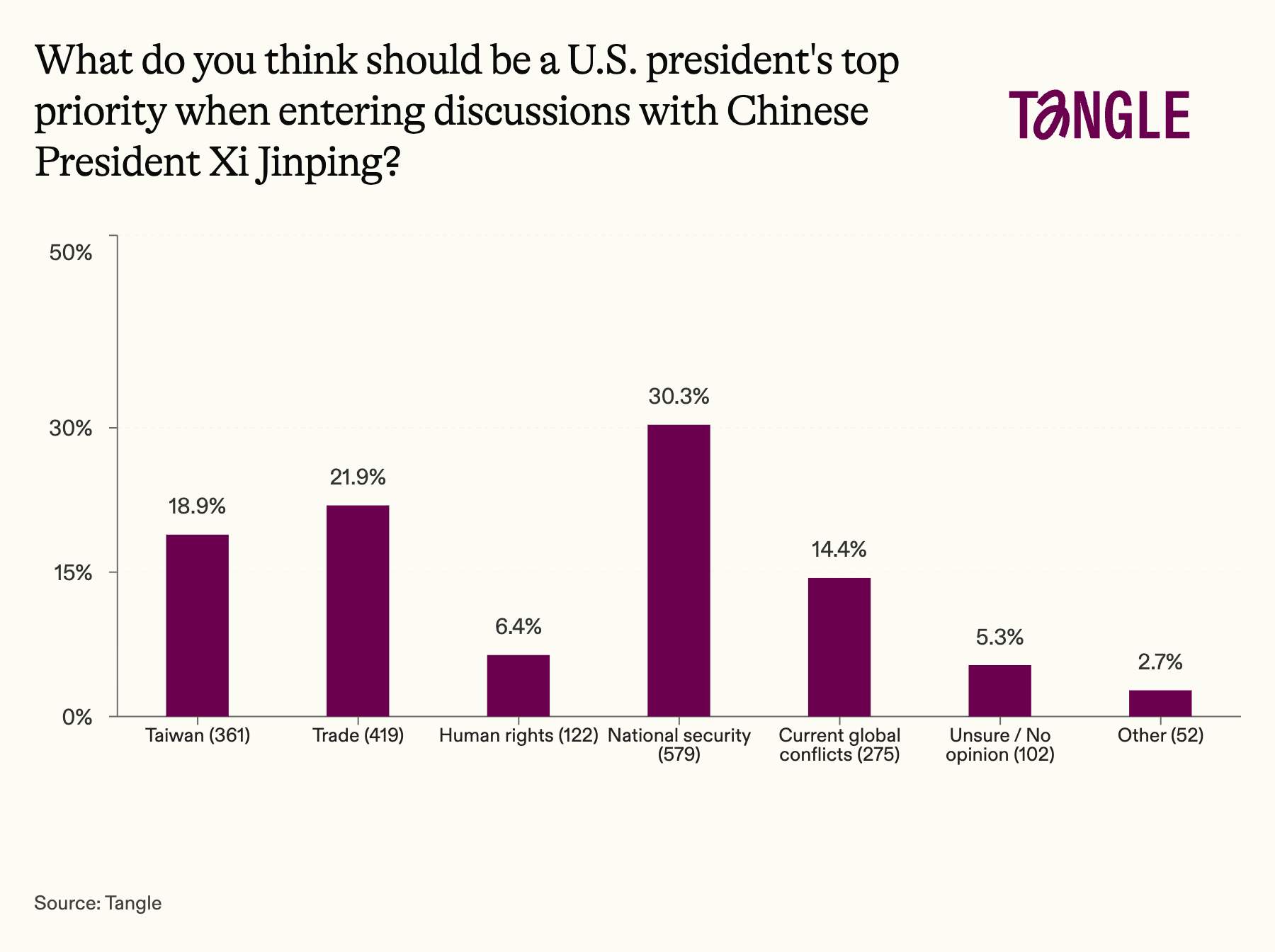
- Our last survey: 1,910 readers responded to our survey on the Trump–Xi summit with 30% saying national security should be the top priority of any president negotiating with China. “U.S.–China cooperation on AI development and usage is a critically important issue for the future of the world, and should be a top priority,” one respondent said. Another respondent said “long-term ongoing stability based on economical (money drives all elements) and geo-political stability” should be a president’s top negotiation priority.
Have a nice day.
Three months ago, Ernesto Gael Hernandez saved up $500 in chore money to buy his first 3D printer. Today, the 10-year-old from Brownsville, Texas, runs Prestige 3D Labs — three printers, a retail partnership with a local clothing store, and $1,500 in profit. He prints keychains, fidget toys, and custom designs for customers across the Rio Grande Valley, fitting in jobs between school and football practice. “I just like doing it because I want to invest in a house for my mom and me when I grow older,” Ernesto said. KRGV Rio Grande Valley has the story.

Member comments