





Hello everyone. This is Tangle Managing Editor Ari Weitzman. It’s Thursday, and the winds of change are blowing. The morning air is retaining its biting crispness for a little longer each day before being beaten back by the afternoon heat. That’s September for you, which is why this month is divisive. Astronomical fall won’t start until the 22nd, but meteorological fall is already upon us. Regardless of how you (or you, Isaac) view the end of summer, autumn is hardly in full swing. Watch this space, as I intend to be the Punxsutawney Phil of September, and you will know the season is upon us when this preamble is just me reciting Rainer Maria Rilke’s Autumn Day.
The morning air isn’t the only thing that’s changing; a stiff breeze of anti-AI backlash is sweeping the country, too, and today it batters my position on data centers. We’ll dig into the latest arguments before looking back at the Luddite movement and unpacking two stories we almost covered this week. Lord: It is time… to read on.
It’s a 13-minute read.
P.S. Don’t forget we have a 20% off Labor Day offer running right now — if you want to snag a Tangle newsletter membership for less than $5/month, unlock all our ad-free content and get tomorrow’s Friday edition, you can do that here.
Suspension of the Rules.
Isaac, Ari, and Kmele had a lot to talk about this week. From Kmele “having a moment” on CNN to mail-in voting changes to CBS’s coverage of Abdul El-Sayed — plus a good guy of the week from the Pacific Northwest and a brief check-in on the Iran war — this week’s Suspension of the Rules is jam-packed.
Quick hits.
- Three people were killed in a shooting in a Minneapolis apartment building, including the suspected shooter. Several others, including three police officers, were also injured. (The shooting)
- The House voted 212–206 in favor of a constitutional amendment capping the Supreme Court at nine justices. However, the vote required a two-thirds majority to advance. (The failed amendment)
- A plane carrying Secretary of Homeland Security Markwayne Mullin made an emergency landing after experiencing engine failure. Officials have not announced what caused the engine failure. (The landing)
- President Donald Trump signed a continuing resolution to extend the government’s current funding through December 11, averting a shutdown at the end of September. (The funding bill)
- A federal judge temporarily blocked an August executive order that would narrow eligibility for birthright citizenship for some children born in the United States. The order specifically targeted children born to “alien enemies” or parents that engaged in birth tourism. (The ruling)
The Best Sleep of Your Life
You’re exhausted… but as soon as your head hits the pillow, your brain won’t turn off. Or maybe you finally fall asleep… only to wake up at 2:37 AM staring at the ceiling. For millions of people over 35, the problem isn’t just stress, blue light, or bad luck — it’s a simple mineral deficiency.
Organixx Magnesium 7 is the complete magnesium solution, with seven highly absorbable forms that target every pathway your body uses for relaxation and recovery. The result?
- Fall asleep in minutes
- Stay asleep for hours
- Wake up feeling like you’re 20 again
Today’s topic.
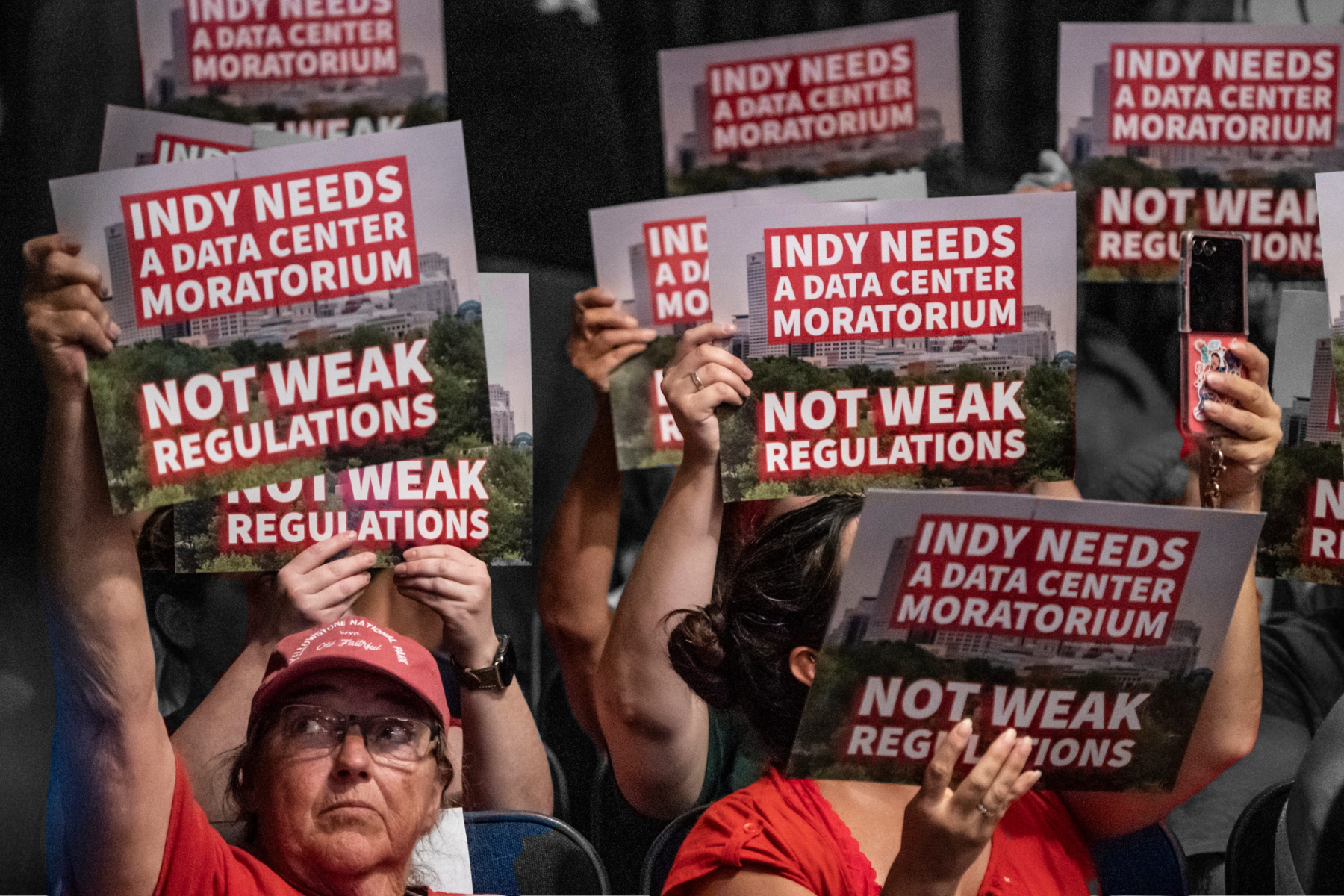
Pushback on data centers. In recent months, opposition to data centers has increased across the United States, prompting both Republican and Democratic politicians to oppose the facilities and some states to pause new construction. While some political leaders, including President Donald Trump, remain supportive of data centers, the topic has become a major issue ahead of the 2026 midterm elections, often linked to concerns about societal disruptions brought on by artificial intelligence (AI).
Back up: Data centers house servers, storage systems, and networking equipment that process and store digital information. Data centers have existed since the mid-20th century, and Google built the first hyperscale iteration in 2006. In concert with advancements in AI, demand for data centers has increased, and AI companies have sought to build new facilities to support the compute power needed to offer their services reliably.
A March 2026 Gallup poll found that 71% of U.S. adults oppose new AI data centers in their areas, with many citing concerns about the facilities’ resource use, effects on quality of life, and environmental impact. Conversely, proponents argue that environmental concerns are overstated and highlight the benefits that data centers offer to local economies.
However, as public opposition to the building projects has grown, states and localities have begun enacting moratoriums on new construction. In July, New York Gov. Kathy Hochul (D) ordered a one-year pause, and similar measures have been proposed in several other states.
Heading into the midterms, candidates from both parties have highlighted their opposition to data centers; according to AdImpact, 8% of all campaign spending on broadcast television in July went toward data center- or AI-related ads, and 99% of campaign spending on data center advertisements went to critical ads. In August, the National Republican Senatorial Committee sent a memo to AI companies calling data centers “a sleeper issue for the entire election cycle” and noting that Democrats had effectively leveraged the issue in key races.
President Trump has maintained his support for new construction of the facilities. On Monday, he wrote on Truth Social, “The only reason that communities throughout the U.S.A. should not want Data Centers is if they want to end up being backwards and poor,” adding, “China could not be happier with this anti Data Center movement.” Relatedly, the social media company X said on Thursday that it had discovered and suspended approximately 200 accounts from a suspected bot farm in China that were posting critically about data centers “in a manner that could manipulate a legitimate debate about American AI and energy policy.”
Today, we’ll get into the latest in the data centers debate, with views from the left and right, then Managing Editor Ari Weitzman’s take.
|
What the left is saying.
|
In MS NOW, Zeeshan Aleem called Trump’s position on data centers a “golden opportunity to win.”
“The president’s own party is in a panic about a growing national backlash against data centers and has been scrambling to create distance from them,” Aleem wrote. “Yet there’s a good chance that the GOP’s about-face will be overshadowed by the president, who has exponentially more power to define the party’s reputation. He also has the ability to pressure and criticize other Republicans for diverging from his pro-data center preferences.”
“This in turn leaves a tremendous opportunity for Democrats to respond and win on the issue of data centers. And their best bet is to coalesce around moratoriums on building them,” Aleem said. “The good thing about moratoriums is that they are not grounded in an opposition to developing AI per se, nor are they entirely impractical about the need for technological development. What they do is ask for AI development to be subjected to the democratic process — and not imposed on the public and the world by purely profit-seeking businesses keen on eluding accountability.”
In Gizmodo, AJ Dellinger said “Silicon Valley is losing the vibes war.”
“Donald Trump, who has refused to back away from data centers, said this week that data centers ‘could use a little public relations help,’” Dellinger wrote. “To address the issue, OpenAI has put up job listings for community engagement leads in Ohio and Georgia tasked with trying to ‘reduce risk of opposition’ to data centers… The answer offered by Big Tech and its backers is not to back off but rather to find a better sales pitch. The idea is that these poor, uninformed citizens have had their heads clouded with misinformation (maybe from China), and if we just set the record straight, public opinion will turn around.”
“Companies have tried sending representatives to communities… they’ve been greeted with heckles, boos, and guillotines. They have fed city councilmembers talking points only for those councilmembers to get voted out of office,” Dellinger said. “It’s not messaging that the tech industry is losing on so much as it is vibes. There’s no turning that ship around with a messaging blitz, because what people object to runs deeper. Something about the technologies they are being exposed to, that are invading their space and their privacy, feels off to them. They’ve heard the messages and seen the outcomes. You want to tell them they’re wrong?”
In The Nation, Chris Lehmann argued “Trump can’t stop the populist uprising against data centers.”
“The opposition to data centers in red states has grown so strident that President Donald Trump intervened on behalf of his benefactors in the AI industry. In a Truth Social post on Monday, Trump sought to browbeat his followers into submission,” Lehmann wrote. “It didn’t go over well. ‘This statement is insane,’ went one typical reply on the traditionally Trump-idolizing platform… No one wants the austerity represented by water rationing, spikes in electrical bills, and general resource plunder to wipe out the quality of life in the places where you live and work.”
“When you squint a bit at the data-center uprising, its economic message is of a piece with the [19th century] Populists’ crusade to rein in the brutal takeover of the American countryside by the twinned forces of the railroad and oil industries… Now, as then, legislatures are the plaything of the monopolists remaking the country into their own image,” Lehmann said. “The Populists sought to break the stranglehold of plutocratic governance by founding their own independent party… It’s an indictment of our duopolistic status quo that neither party, as a principled matter of political economy, can afford to divorce itself from today’s tech oligarchy.”
|
What the right is saying.
|
In City Journal, Shawn Regan wrote about “what the data-center backlash could cost us.”
“Halting or slowing down data-center construction would mean deliberately constraining the infrastructure behind one of the most important innovations of the twenty-first century,” Regan said. “If data centers become too hard to build here, American companies could grow dependent on foreign computing capacity to train proprietary models or conduct cutting-edge research. Government agencies could find themselves renting computing capacity from geopolitical adversaries. It’s easy to imagine Washington later spending enormous sums to ‘reshore’ that capacity, just as it is doing now with critical minerals.”
“America must not make the computing power fueling these innovations artificially scarce. The challenge is to build enough of it while addressing legitimate local costs and making sure that host communities share the gains,” Regan wrote. “But the AI industry and its supporters need to do a better job explaining that data centers have much more to offer than just these local benefits. AI’s biggest promise lies in much broader, more universal applications — cancer treatments, personalized medicine, faster scientific discovery, better manufacturing and economy-wide productivity gains, to name a few. Chatbots and AI slop are just a distraction.”
In Reason, Tosin Akintola suggested “candidates are backing voters’ bad arguments.”
“Americans really don’t like data centers,” Akintola wrote. “According to a recent poll from Heatmap Pro, 75 percent of Americans ‘would oppose a new data center being built near where they live.’ And as the responses from a March Gallup poll show, opponents of these facilities think data centers are noisy, bad for the environment, and bad for property values. Other commonly cited concerns include the data centers’ exorbitant water and electricity use. These would be valid reasons to oppose data centers if they weren’t unfounded. Yet, true to form, politicians are trying to capitalize on the misdirected public fury.”
“After calling Texas the ‘epicenter of AI development’ last November, [Gov. Greg Abbott] recently mounted an about-face to slow data center buildout in his state… In August, Abbott escalated his campaign, directing [two utilities organizations] to audit all data centers in the process of connecting to the state’s electricity grid and pause all new construction until the audit is complete,” Akintola said. “Data centers are clearly unpopular. But accepting the flawed arguments of the industry’s critics and introducing harmful legislation to ban the technology is tantamount to accepting mob rule.”
In Townhall, Erick Erickson argued “two things can be true at once.”
“Foreign entities have seeded the opposition to data center growth in the United States. China, in particular, through its control of TikTok and other influence outlets, has relentlessly worked to stop the American AI advantage against China,” Erickson wrote. “Also, at this point, much of the opposition is organic, bipartisan, and growing. Americans are deeply opposed to data centers. They are wrong and shortsighted, but my view is the minority view. We should start by understanding the problem. Dario Amodei, the CEO of Anthropic and Sam Altman, the proprietor of OpenAI, are two of the worst spokesmen for AI and data centers to exist.
“Dario Amodei has all but said AI is going to take your job, kill your family, destroy your future and the government needs to shut it all down, but AI is also a good thing… In the post-COVID world, American trust in institutions is low. The secrecy and feeling of powerlessness against giant corporations feed that distrust and amplify opposition,” Erickson said. “Americans need to get this right… But I am hard-pressed to blame skeptics when the loudest pro-AI voices are the CEOs who cannot help but scare you.”

- I’m realizing that my previous position on data centers doesn’t hold up to scrutiny.
- At the same time, the environmentalist backlash against data centers also doesn’t make sense.
- That leaves me conflicted, but increasingly skeptical that new construction will be matched by consumer demand.
I’m starting to change my mind about data centers.
This is the third time in six months I’m talking about this issue in Tangle. I’ve consistently been unconvinced of the arguments against data centers, which has put me on the side that says we should keep building more. However, I’ve also never been convinced by many of the arguments on that side. Consumer-facing companies like Microsoft, Meta, or Allbirds building data centers will not help us out-compete China in any way, and building a new data center in your town will not turn it into the next Loudoun County. Instead, I’ve argued that we need to level up capacity to meet consumer demand.
But today, as I attempted to reconstruct that argument, I found each point collapsing like a sandcastle built on the incoming tide. Here’s what that looks like:
The internet runs on remote data centers, and services that power the internet increasingly rely on AI; therefore, we need more data centers to provide that AI. “McKinsey’s 2025 global survey found that 88% of respondents said their organizations regularly used AI in at least one business function,” according to the digital marketing firm Big Red Jelly, in a post that Pangram found was 100% generated by AI.
Alright, that’s a little uncomfortable. But still… The future isn’t always comfortable, and existing in a modern world means accepting modern tools. Companies use AI to help their businesses, and if they continue to do so, then we’re simply going to need more data centers.
Roughly 78% of businesses have integrated conversational AI into their processes, and the chatbot industry is projected to grow by 19.6% every year until 2033. According to a recent study by Pew, as of August 20, over a third of pages on the internet since the release of ChatGPT show signs of AI authorship.
Okay, that actually feels pretty bad. Who looks at those numbers and says, “Good, we’re increasingly exporting our lives to digital spaces, and we’re filling those places with slop — slop sloshing around our ankles, growing higher, reaching our chins in its warm thoughtless embrace. Let’s do more of that”? Nobody that I know.
But still… that’s the growth projection, so we should — that is, industry investors should — build out new data centers to meet consumer demand. Maybe you can’t possibly foresee yourself or your company using AI more than you currently do. But many of the companies you use as a consumer or a professional are projected to scale up. If you use the internet and exist in the interconnected world, you just need some place to process and house offsite data. Newer, more modern data centers will make the internet better overall. If you use Amazon, or store your photos on Google or watch Netflix, you’ll want better and faster data centers. And if you want those services to stay reliable and process faster, new hyperscale data centers are not being built to do that.
Wait, is that right? New data centers are not being built to replace older ones? As it turns out, tech companies aren’t planning to take current centers offline, and data center capacity is set to double by 2030. But still… Companies need these new data centers to power important, cutting-edge new tools. Meta, for example, is building out data centers so rapaciously that it can’t wait for the projects to complete and are putting server racks for its AI in tents in Ohio and Tennessee — sorry, I mean, Meta is building out new data centers staffed by robots —
Ahem.
Sorry, let me try that again. Meta is building out a new five-gigawatt data center to provide artificial intelligence services that their customers are demanding: AI-generated ad campaigns, customer service chatbots, and tools to help create AI-generated content. And look at the evidence that demonstrates consumer demand for these things. Gen Z empirically hates AI ads, most consumers prefer human customer service to AI bots, and only 7% say AI-generated marketing makes them trust a brand more.
So, to sum: The tech industry is justified in building more of these data centers to power new products that Americans are increasingly showing they do not want.
Not exactly a compelling position.
Even as I sheepishly admit that my previous line of argument doesn’t hold up, I don’t find the most popular argument against data centers to hold up, either. To put it bluntly, the environmental concerns about these facilities are way overstated. Data centers are about as loud as a normal conversation, they release only a marginal amount of atmospheric carbon, and their water concerns are grossly exaggerated to the point of total public misunderstanding.
I’m less concerned about the impact data centers will have on the environment than the impact data centers are already having on environmentalism. Whereas our most pressing environmental issues are petroleum and coal power plants, loss of biodiversity, plastic pollution, deforestation and clean air, I find it almost impossible today to have a conversation about the environment that isn’t about data centers. They’re barely a blip on the radar for carbon dioxide emissions, yet they’re sucking up all the oxygen in modern environmentalism.
That leaves me in a strange position. I don’t think the logic supporting data center expansion holds up, but I don’t think the argument against it holds up either. Instead, I think another, third argument is currently convincing me against building out more data centers.
Let’s revisit Loudoun County, the richest county in the country and the one with the most data centers in America. Earlier this summer, one of its data centers suddenly went offline and caused a temporary grid disturbance across the entire Eastern United States. There were no rolling blackouts and our grid stabilized just fine, but that disturbance felt like a warning shot to me. We’re building out systems, logistically and economically, that assume these data centers will be there. And if we keep building on that assumption more and more, if (and when) these facilities go away we’re going to be left overextended and overleveraged in a sector that doesn’t appear to be set to deliver on its astronomical promises.
I’d normally say that the private sector is free to pursue its ventures, and if it fails, that’s its prerogative. But right now, there’s just too much riding on this issue to be laissez-faire about it. There will be no other Loudoun County — its largesse is singular, owing not to AI data centers but to data centers that are 20+ years old. They’re currently reaping the returns on investments made at the dawn of the internet, when the county was the center of the government’s investment in fiberoptic technology in the late 1990s, not profiting from more recent ventures.
Asking us to accept this rate of construction is asking us to accept that AI is going to be more transformational to our daily lives than the internet. I don’t think that’s a position I can accept. Most of you have used AI tools and seen the public relations initiatives from Anthropic and OpenAI, and you probably see what I see: This technology looks much closer to its ceiling than to a vertical acceleration. Yet, construction in this space is treating runaway future growth as a given.
I’m not a Luddite. I think AI has already given us a lot of phenomenal applications. We have professional tools that can help parse through mountains of legal briefs, detect skin cancer, and unfold novel proteins. We should feel grateful for those innovations. But I’m not sure I still believe that building more and more data centers will help support a brighter future. Instead, I think they’re helping to prop up an ever-expanding bubble — and when it goes “pop,” it’ll take years of work and billions in invested capital with it.
Take the survey: Do you think we should keep building data centers? Let us know.
Disagree? That’s okay. Our opinion is just one of many. Write in and let us know why, and we'll consider publishing your feedback.
A deeper look.

For most of human history, goods were produced in homes and workshops by skilled craftsmen and women. But that all changed in the 1760s, when British inventor James Hargreaves created new machinery that sped up textile production and James Watt improved upon the steam engine. As more inventions made it possible for goods to be produced more quickly, entrepreneurs like Richard Arkwright set up the first factories that used these innovations en masse. This period of rapid technological change became known as the First Industrial Revolution.
Mass production of textiles and other goods increased throughout the 19th century, but not all Britons supported the change. A group of textile craftsmen who felt that the new machinery was taking their livelihoods rioted against the rise of factories and new technology. They banded together and would destroy machinery in cities across England by night. These craftsmen called themselves Luddites, after their mythical leader Ned Ludd. Their protests began in about 1811; in 1813, in an effort to quell the protests, many Luddites were put on trial and hanged for their crimes. Though Luddite protests would briefly revive in 1816 after the end of the Napoleonic Wars, industrialization would continue apace.
The term Luddite has survived to describe anyone opposed to technological advancement — including advancements like artificial intelligence.
Better Sleep Starts Here
Tired all day, wide awake at bedtime? Organixx Magnesium 7 combines seven highly absorbable forms of magnesium designed to support relaxation, restful sleep and recovery. So you can spend less time staring at the ceiling at 2:37 AM and more time actually sleeping.
The road not taken.
Two topics nearly made the cut this week. First was the U.S. Postal Service whistleblower who claimed that the agency is attempting to secretly implement parts of President Trump’s executive order on mail-in voting despite legal challenges, raising concerns about whether the new system will be in place for the November midterms. It’s an important story, but we covered Trump’s executive order last week and want to allow more time to learn about the veracity of the whistleblower’s allegations.
Second, Army Secretary Dan Driscoll’s resignation over reported clashes with Defense Secretary Pete Hegseth. Driscoll’s departure — and the growing number of firings and resignations in the military — will likely be a main topic of ours soon, but we felt it was prudent to wait for more reporting on the circumstances of Driscoll’s departure before weighing in.
The extras.
- One year ago today we covered the debate over physician-assisted suicide.
- The most clicked link in our last regular newsletter was the story of House Democrats defecting on a rule vote.
- Nothing to do with politics: Another banger from Neal.fun: Play as a sketch artist drawing cartoon suspects.
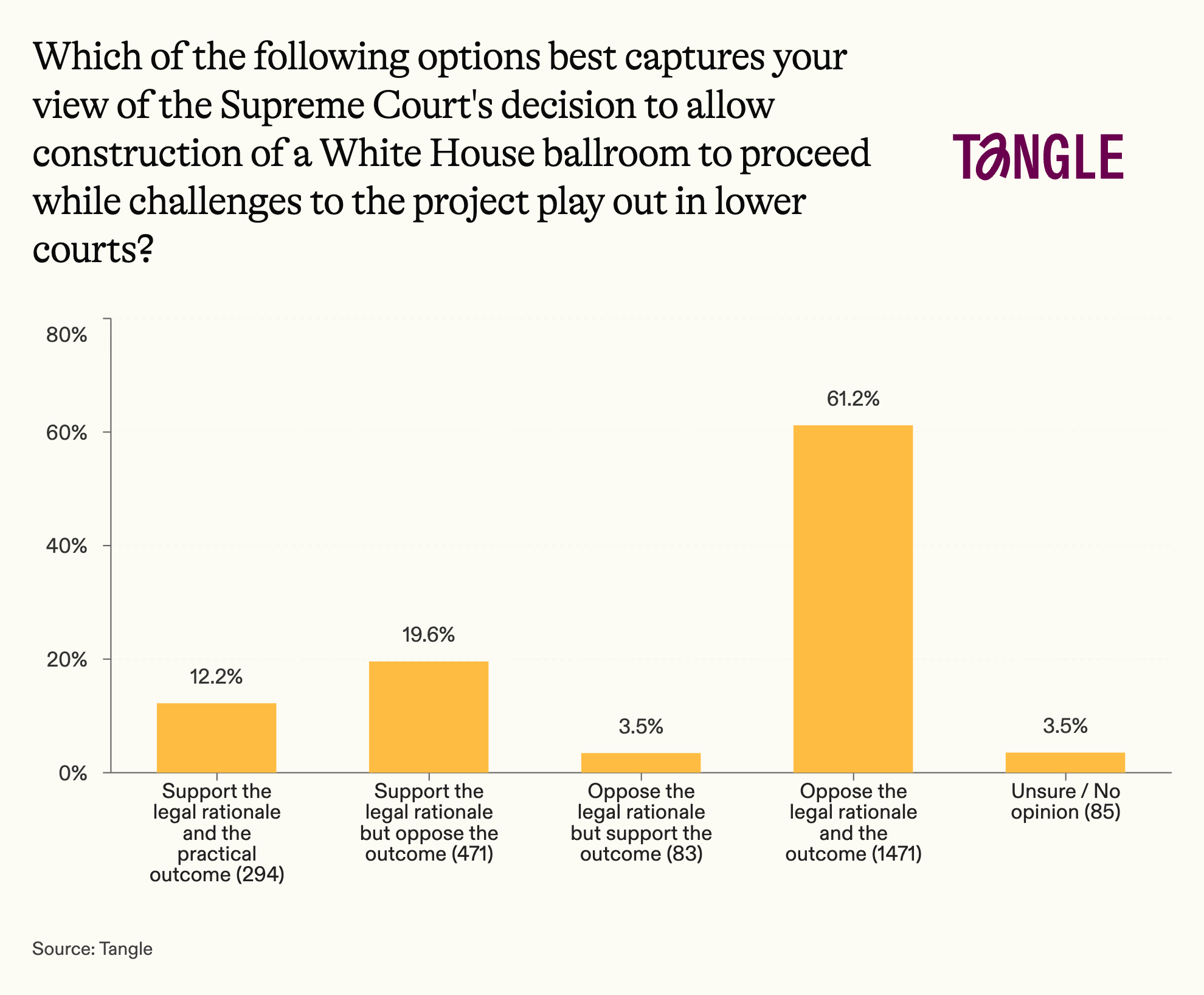
- Our last survey: 2,404 readers responded to our survey on the Supreme Court’s ruling on the White House ballroom with 61% opposing both the legal decision and practical ramifications. “Better to ask forgiveness than permission, but I’m confident this president will do neither,” one respondent said. “I fully support the ballroom in all its glory — and think a secure underground compound is an excellent idea,” said another.
Have a nice day.
Carl Wilson spent years driving trucks past I-90 in Osburn, Idaho, watching elk get killed trying to cross the highway. He set out to turn an abandoned “bridge to nowhere” — half-demolished decades earlier by a mining company — into a wildlife overpass, rallying neighbors, businesses, and state agencies behind the idea. Wilson died in December 2022 before the project was completed. However, Kirsten Voorhees, a civil engineer who’d survived her own collision with a deer at 16, promised him she’d see it through. She did. With $645,000 in grants, the retrofit was completed in August 2025, and trail cameras have since recorded elk and deer using it safely. “I told him, ‘You have my word,’” Voorhees said. “It became a blood oath.” Good Good Good has the story.

Member comments