



Welcome to September. I’m Isaac Saul, Tangle’s executive editor. One upside of being an adult: September 1 no longer means the end of summer. I have no school to return to and no new realities to face. I’ve got three more weeks left of long nights, warm evenings, ice cream, beaches and laid-back Fridays, and I don’t care what anyone says (or if a fall chill has started to poke its head up here in New Jersey). Summer ends September 22. Not a day earlier.
Today, we’re diving into the U.S.–Venezuela oil deal, plus an opportunity to submit questions for our reader mailbag, and a reader question about the flooding in Nepal.
It’s a 14-minute read.
Share your questions.
Next Friday, September 11, we’ll publish a mailbag edition answering reader questions about the 25th anniversary of the 9/11 terrorist attacks, as well as broader questions about other timely news topics, under-the-radar issues, and anything else of interest. You can submit a question here for consideration.
Quick hits.
- The Supreme Court ruled 5–4 that President Donald Trump can continue construction of a new White House ballroom while challenges to the project continue in lower courts. Chief Justice John Roberts and the Court’s three Democratic-appointed justices dissented. (The ruling)
- Army Secretary Dan Driscoll has reportedly submitted his resignation and plans to depart the Pentagon in the coming days. Driscoll has reportedly clashed with Defense Secretary Pete Hegseth over his strategic vision and firings of key military leadership. (The report)
- A U.S. Postal Service whistleblower alleged that the agency is secretly attempting to implement President Trump’s executive order on mail-in ballots despite a federal judge temporarily blocking the action. (The allegations)
- The Federal Trade Commission and 22 states sued Amazon for allegedly not disclosing surcharges to its online search advertising auctions, creating deceptively higher prices to advertise on its platform. (The suit)
- A federal judge granted a Justice Department request to delay a lawsuit seeking to revoke the Food and Drug Administration’s (FDA) approval of mifepristone, a drug used in medication abortions. The case will be paused until December 1 or until the FDA finishes its safety review of the drug. (The pause)
The 8 Dumbest Things We Keep Spending Too Much Money On
You’re smart with your money. But even high earners fall into these traps: quietly overspending on things that feel “normal” but add up fast.
This quick list breaks down eight of the most common (and costly) habits and walks through how to fix them in under five minutes.
Today’s topic.
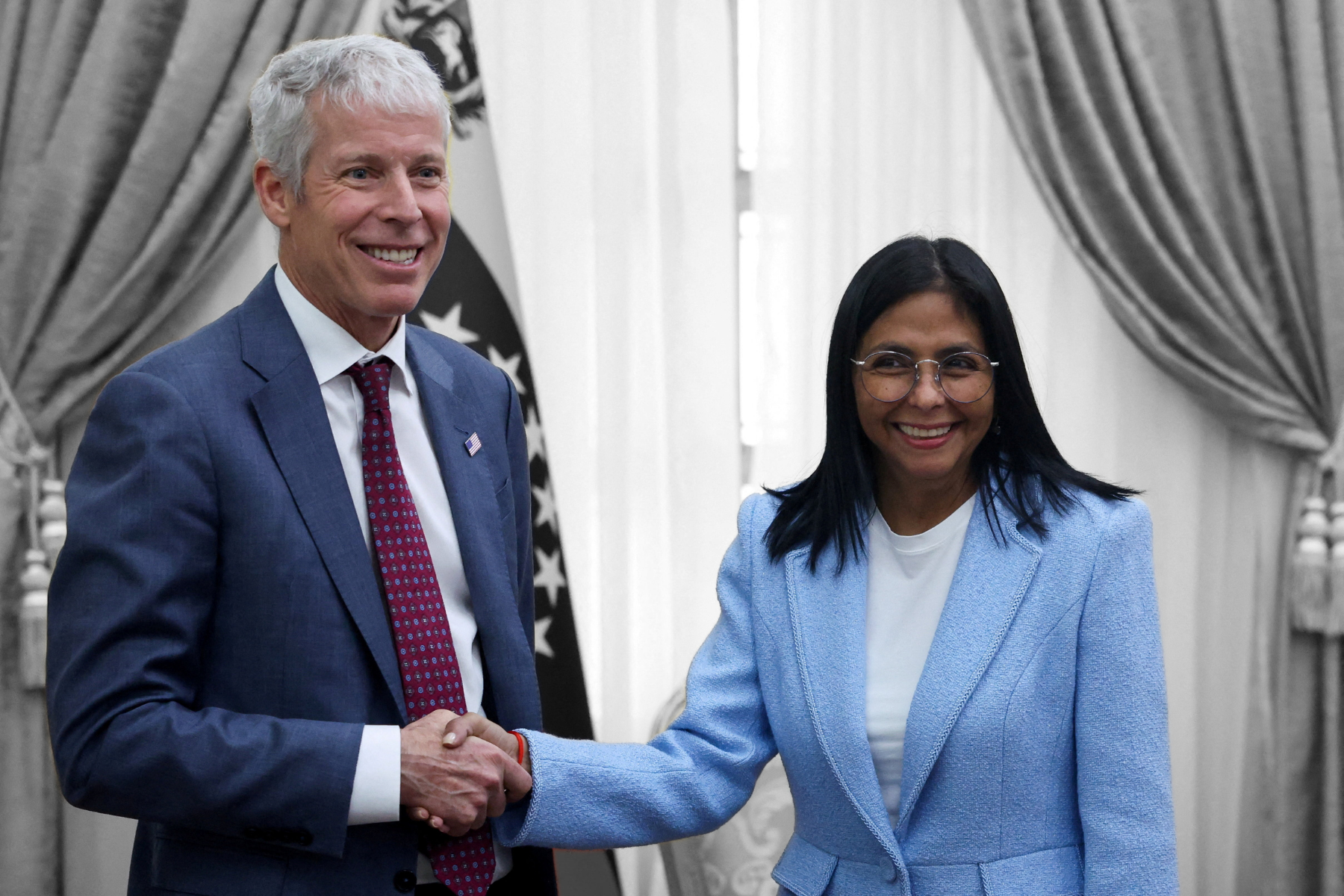
The U.S.–Venezuela oil agreement. On Friday, President Donald Trump announced an agreement to make the United States government an investor in the production of Venezuelan oil. Under the reported terms of the deal, the U.S. will take a stake in a private Venezuelan company that will be given the rights to develop 17 oil fields believed to contain 65 billion barrels of oil. President Trump said the deal will help build up U.S. oil reserves, bring down gas prices, and promote investment and production in Venezuela from other U.S. energy companies. Interim Venezuelan President Delcy Rodríguez said the deal will economically benefit her country and revitalize its energy industry.
Back up: In January 2026, the U.S. conducted a military operation to arrest then-Venezuelan President Nicolás Maduro and bring him to the United States to face drug trafficking charges. Rodríguez was Maduro’s vice president at the time, and she has since served as the country’s interim president with backing from the Trump administration. President Trump has said that he would work with President Rodríguez to open Venezuela to U.S. oil companies and rebuild its energy infrastructure, which has suffered from underinvestment and political instability.
On Monday, the White House shared that the U.S. government will take a 35% equity stake in the parent company of North American Blue Energy Partners (NABEP) and will be able to purchase 20% of the company’s oil at production cost. The State Department will also have the right of first refusal to purchase the remaining 80% of its production. NABEP will have exclusive rights to develop the 17 oil fields for 100 years.
President Trump said the agreement will “substantially lower Gas Prices for all Americans, long into the future, while helping to continue to set Venezuela on a course toward Tremendous Success and Great Prosperity.” Secretary of State Marco Rubio said the deal will “bring nearly $100 billion in private investment, support thousands of high-paying jobs, and drive the reconstruction of Venezuela’s economy.”
Some energy experts raised concerns about the deal, citing uncertainty about what role the U.S. government will play in NABEP’s operations and the significant infrastructure upgrades needed to boost Venezuelan oil production. Others questioned whether U.S. oil companies can trust that the deal will persist beyond a leadership change in both countries.
Today, we’ll survey commentary from the left and right on the deal, followed by Executive Editor Isaac Saul’s take.
|
What the left is saying.
|
In The Daily Beast, David Rothkopf argued the agreement won’t “benefit the U.S. in the near or medium term.”
“As with all such Trump announcements, upon closer scrutiny, his boasts are empty and misleading. They also mask or neglect to note a much darker side to what has happened, the president’s judgment, his intentions, and the likely consequences of the whole endeavor,” Rothkopf wrote. “The deal will not produce enough oil to restore our strategic reserves in the next several years, if ever. Venezuela’s oil infrastructure is damaged and insufficient and would require massive investment and work to ramp up sufficient production.”
“It is not a ‘deal.’ This is the U.S. illegally seizing the assets of another country via force; an act of bald-faced aggression, akin to Russia’s seizure of Eastern Ukraine (with similar economic motives). As a consequence, it tacitly gives license to other nations, like Russia, to use force to attack and steal from weaker neighbors around the world,” Rothkopf said. “It is unlikely any future U.S. administration would support this relationship, thus cutting it short before the U.S. could derive any real benefit.”
The Economist called the agreement a “murky deal.”
“Mr. Trump claimed that the arrangement ‘more than doubles’ American oil reserves. That is misleading,” the writer said. “The United States, whose own reserves stand at around 44 billion barrels, will not own the 65 billion barrels of Venezuelan oil, much though Mr. Trump might wish it did. It appears it will instead become the majority owner of a new company that will have the right to develop and operate 17 Venezuelan oil fields spanning the Orinoco Belt and Lake Maracaibo.”
“Any contracts signed will still ultimately be with the government of Ms. Rodríguez. She is not a leader chosen by Venezuelans but the heir to Nicolás Maduro, who flagrantly stole the last presidential election, in 2024… [The deal] raises the prospect that both the Trump administration and the Rodríguez regime might now share an incentive to prevent any elected government from taking office,” the writer said. “It was a Venezuelan energy minister who, in the 1970s, memorably described oil as ‘the devil’s excrement.’ Perhaps it was inevitable that any deal to exploit its potential was never going to be clean.”
In RealClearPolitics, Leopoldo Martínez Nucete suggested the deal “could benefit all sides.”
“For too long, Venezuela has confused maintaining its sovereignty with keeping its oil in the ground even if its vast oil reserves produced neither investments nor collective well-being. But true sovereignty means establishing rules that turn those resources into prosperity for Venezuelans, including with international partners. That’s how to judge the oil deal announced by the governments of the U.S. and Venezuela,” Nucete wrote. “The agreement will outlast any occupant of the White House. The same will be true on the Venezuelan side. Obligations will not depend on Delcy Rodríguez’s political will, but on institutions, valid contracts, and rules capable of surviving changes in government.
“The deal satisfies many needs of both countries. The U.S. wants to diversify and secure nearby oil supplies amid instability in the Middle East and pressure on its strategic petroleum reserves. Venezuela needs tax revenue and tens of billions of dollars to rehabilitate an industry weakened by years of underinvestment, corruption, mismanagement, sanctions, and loss of technical capacity,” Nucete said. “The dual country, public-private partnership is novel, ambitious and, potentially, a huge benefit to all participants.”
|
What the right is saying.
|
In PJ Media, Matt Margolis wrote “this is the kind of deal Trump was elected to make.”
“This deal is a game changer on several levels. Venezuela holds the largest proven crude oil reserves on the planet, somewhere between 303 and 304 billion barrels, or roughly 19% of the entire global total. Locking down majority control of even a slice of that changes the math on America’s energy security in a way few deals could,” Margolis said. “Does this actually move the needle for voters? That’s the only question that matters nine weeks out from the midterms.
“Trump and Rubio are promising gas prices will drop substantially over time, and there’s a real case for it: more supply, less reliance on hostile foreign partners, and a deal that reportedly costs American taxpayers nothing… But oil deals don’t lower prices at the pump overnight,” Margolis wrote. “Whether voters feel real relief at the gas station before November, or whether they simply hear about a deal they haven’t yet benefited from, will determine how much credit Republicans actually get before the midterms. If prices do fall in time, Democrats lose one of their most reliable midterm talking points.”
In his Substack, Erick-Woods Erickson called the agreement “a good deal” with “a bad structure.”
“Unfortunately, the structure of this deal is socialist, and I am not going to pretend otherwise because a Republican signed it,” Erickson wrote. “This is the same error the socialist left makes, arriving from the other direction. The left wants the state to own the means of production because it distrusts the market. The post-liberal right wants the state to own the means of production because it distrusts the market too, but it calls it national security.”
“Notwithstanding all of that, on balance, this is a good deal. It is good for Venezuela, which needs capital, jobs, and an economy that is not a criminal enterprise. It is good for the United States, which needs crude that does not travel through a strait Iran keeps trying to mine. It is good for a hemisphere that spent twenty years watching what socialism does to a rich country,” Erickson said. “But the structure is rotten, and rot spreads. A future president should sell the warrants… and get the Treasury and the Pentagon out of the equity business.”
The Wall Street Journal editorial board said the details of the deal “aren’t cause for enthusiasm.”
“The U.S. will take a 35% stake in a private company run by Alejandro Betancourt, a Venezuelan businessman close to Ms. Rodríguez,” the board wrote. “The U.S. investor here will be the Pentagon, of all agencies, which will structure the investment through penny warrants that will gain the equity stake without taxpayer cash. The legal authority for this is far from clear, since the Defense Department is investing in a foreign entity. Can the Pentagon Office of Strategic Capital take such equity stakes?”
“The politics of all this are even more complicated, to put it mildly. The U.S. government is essentially getting in bed with a foreign dictator and her favored capitalist. Any foreign firm that invests will have all three as de facto partners, but Mr. Trump will be out of office in 2029 and the heavy-handed U.S. role might not play well over time in Caracas. The oil deal will prop up Ms. Rodríguez, at least in the short term, and that may be part of Mr. Trump’s motivation,” the board said. “Much still isn’t known, but this all looks like an example of the Trump Administration extending its creeping crony statism beyond U.S. shores.”
|
||||
|
||||
|
Reminder: This is where we share a personal opinion. If you have feedback, criticism or compliments, leave a comment or reply to this email.
|

Maybe it was about the oil after all?
It feels like a lifetime ago now, but in the days after the capture and extradition of Nicolás Maduro, there was a lively debate about why the Trump administration did what it did. The administration’s justification was that state-sponsored drug traffickers were bringing massive quantities of cocaine into the country from Venezuela, constituting a coordinated, narco-terrorist attack. Following the Maduro operation, the administration also told us that the Venezuelan leader was illegitimate, that he had stolen our oil, that we had to depose him to keep China and Russia out of the Western Hemisphere, and that doing so would be a warning shot to Cuba. I argued at the time that I could see it as simply all of the above — that Maduro’s capture would serve each of these interests, even if the administration’s stated reason was preventing drug trafficking.
Many writers on the left (and Venezuelan officials) were adamant that Trump’s primary goal was to control Venezuela’s oil supply. I was keeping an open mind, but I was pretty compelled by this argument, too. Here was one of 14 points I made in my take:
If you made me bet all my personal belongings on the administration’s “true” motivations here, cynically, I’d bet the answer is oil. Venezuela is rich with the kind of oil we can refine in the U.S. Iran, Russia, and China were already making inroads (as one Venezuelan celebrating in the streets put it, “What do you think Russia and China wanted… the recipe for arepas?”). Trump has been talking more and more about the need to take back oil refineries he thinks Venezuela stole. This has, for what it’s worth, also been the allegation from Venezuela: That the Trump administration was coming for its natural resources.
Of course, eight months later, many Americans have moved on. But this latest gambit puts any argument to bed, and the administration’s primary stated rationale of fighting narco-terrorism seems to have faded into the background. It’s easy to memory-hole this, but the justification for the initial boat strikes was to stop not just cocaine, but fentanyl. Marco Rubio said at the time that Trump wasn’t going to allow the U.S. “to be flooded with cocaine and fentanyl.” And Trump himself said “big bags of cocaine and fentanyl” were strewn in the ocean after the strikes on the alleged drug boats.
Over time, the inclusion of fentanyl in these talking points disappeared (because it was never part of the problem). Targeting Maduro for his role in the cocaine trade didn’t make much sense either, since Venezuela does not produce crops used to make cocaine, and the drug is primarily trafficked through other countries. And now we know that blowing up boats in the Caribbean Sea and extrajudicially killing dozens of alleged drug traffickers has done nothing to solve these supposed problems. Data from the Drug Enforcement Administration demonstrates this. As The Washington Post reported, drug traffickers have simply changed their boats and routes in response to U.S. strikes.
Maybe drug-trafficking is still a priority of the U.S. relationship with Venezuela, but if it is, then the Trump administration seems to be unwilling to accept the reality that doing the same thing over and over will not produce different results.
What has come of the Maduro extradition is this: The U.S. is now taking an ownership stake in the second-largest corporate holder of proven reserves in the world (behind only Saudi Aramco). Now, maybe the Trump administration didn’t initially have plans to unlock all this oil. Maybe this was an extemporaneous move following the Iran war, rising energy costs, and the now-choked-off Strait of Hormuz. Perhaps Trump really was serving many interests at once by extraditing Maduro, and the administration has ceded defeat on stopping drug trafficking to focus on the price and supply of oil.
Yet, from the outside looking in, the simplest read is that it was about the oil all along. Not narco-terrorists. Not ousting a dictator. Not Russia, China, or Cuba. But oil.
That all needed to be said up front in order for us to speak plainly about the net result of the boat-strike campaign. Sen. Tim Kaine (D-VA), a senior Democrat on the Armed Services Committee, reviewed classified intelligence on the boat strikes and then said the strikes have likely “killed individuals who are not involved in narcotrafficking.” If that’s the case, then the U.S. government has been killing innocent people extrajudicially for alleged drug trafficking with (so far) no positive impact on our own drug crisis. Simultaneously, we captured a foreign leader — however despotic and awful — arrested him, extradited him, and then executed a kind of regime change/resource extraction under the same guise of fighting drug trafficking, when really we came for and stayed for the oil.
As for the deal itself, to say final details are still fuzzy is charitable, given both sides have communicated some disparate facts, but it’s got potential. For Venezuelans, this has the upside of injecting capital into and stabilizing the market for their most crucial natural resource. After years of mismanagement, I can see the upside there. For Americans, the benefit is less straightforward: Trump needs to convince some U.S. oil firms to invest, then he needs those firms to help scale up production and build out the infrastructure to get that oil to the U.S. In the meantime, we’ll be propping up Venezuela’s newest dictator, with most of Maduro’s administration in place, and the Pentagon appears to be the agency taking all this on — at a time when the war in Iran rages, weapons supplies are depleted, and threats abound from Russia and China.
That’s all to say nothing about the administration taking equity stakes in 31 private companies and thrusting itself into partial ownership of a foreign nation’s oil reserves. As Scott Lincicome, a Cato Institute director, said, “This isn’t even ‘creeping’ socialism anymore.”
Still, this arrangement has a decent chance of creating a huge influx of oil into the U.S., which could mean cheaper fuel, cheaper energy, and more prosperous Americans. I imagine this arrangement will end up kind of like Trump’s first-term Title 42 immigration restriction policy: A Democratic presidential candidate for 2028 will hammer the Trump administration on it, but if that candidate ends up in office, they will not undo it.
Yet the cost is substantial. I acknowledge that Maduro is a leader who killed, tortured, and sexually abused his political opponents; repressed democracy; stole his country’s 2024 election (actually); and destabilized our hemisphere. But consider what we gave up to depose him: We’ve undermined international law; set a new standard for how we act when diplomacy fails; and created the expectation (or reaffirmed the widely held belief) that our high-minded moral projection about spreading democracy or fighting terrorists was really just a cover for more, cheaper oil. Not only that, but moving forward, we’re now in bed with the new Venezuelan regime, which does not appear meaningfully different from the old one — save its pliancy to Trump. Just as we win the fruits of their natural resources, they now exert new economic leverage over us, especially in a future where we become more dependent on Venezuelan oil.
As you might suspect, I’m not particularly keen on this trade-off. I’d much rather have cheap oil through the system that existed a year ago — when gas was a dollar less a gallon. It was by no means perfect, but we didn’t have an ambient, unending war in Iran, we hadn’t struck and killed boaters in the Caribbean on scant or non-existent evidence, and we could still stake out some semblance of a moral high ground toward Venezuela. It’s hard to defend that moral high ground now — even if I’m glad to see Maduro gone, and even if this gambit might “work” to cheapen oil and line American government coffers.
For some, that trade-off will be worth it. For me, not so much.
Take the survey: How do you feel about the practical and moral implications of this deal? Let us know.
Disagree? That’s okay. Our opinion is just one of many. Write in and let us know why, and we’ll consider publishing your feedback.
Your questions, answered.
How much of the flooding in Nepal is because of climate change? I see a lot of people saying this online but I’m not sure how true that is.
— Reggie from Boston, MA
Tangle: For background: Authorities and scientists believe a massive glacier caused the deadly flooding in Nepal and China last week when it broke off of a mountain along the countries’ border and fell thousands of feet into the river below, triggering a flood wave. The death toll from the disaster has now surpassed 1,000.
As with other natural disasters, the conditions that cause events like the glacier collapse are becoming more likely due to climate change — but we can’t attribute this event, specifically, to a warming planet. That’s what we learned from talking to climatologist Zeke Hausfather about the Canadian wildfires, and that’s the broad takeaway here.
Let’s start with this: The Himalayas are getting warmer, and the Langtang region (where this glacier collapsed) has been getting warmer even faster. The Langtang region has consistently been losing ice mass since the 1950s, and about half the mass it’s lost since then has come in the past 25 years.
So, why can’t we just say “climate change caused this collapse” definitively? Because we don’t have a forensic analysis of this event yet and can’t say exactly what triggered it. Theoretically, a world that is richer in glaciers is also a world with more possibilities for glacial collapses; and to be sure, glaciers have been collapsing for centuries without any apparent linkage to climate change. In 1962, a glacier broke from Peru’s tallest mountain with no apparent trigger. Then, during an earthquake in 1970, another ice wall broke off the same mountain and killed 25,000 people.
Of course, the difference here is that this sudden glacial collapse wasn’t triggered by a seismic event, but it was so dramatic that the collapse itself triggered a seismic event instead. Maybe that was due to something specific with this glacier, but the contextual evidence is pretty clear. As Hausfather said, “The collapse happened on a mountain warming at around 0.29 Celsius per decade in summer, immediately after four consecutive summers that all rank among the five warmest in an 86-year record, during an August that was running warmer than any complete August on record, in a valley that has lost ice at an accelerating pace, and in a region where human influence is very likely the main driver of glacier retreat.”
Want to have a question answered in the newsletter? You can reply to this email (it goes straight to our inbox) or fill out this form.
This day in history.
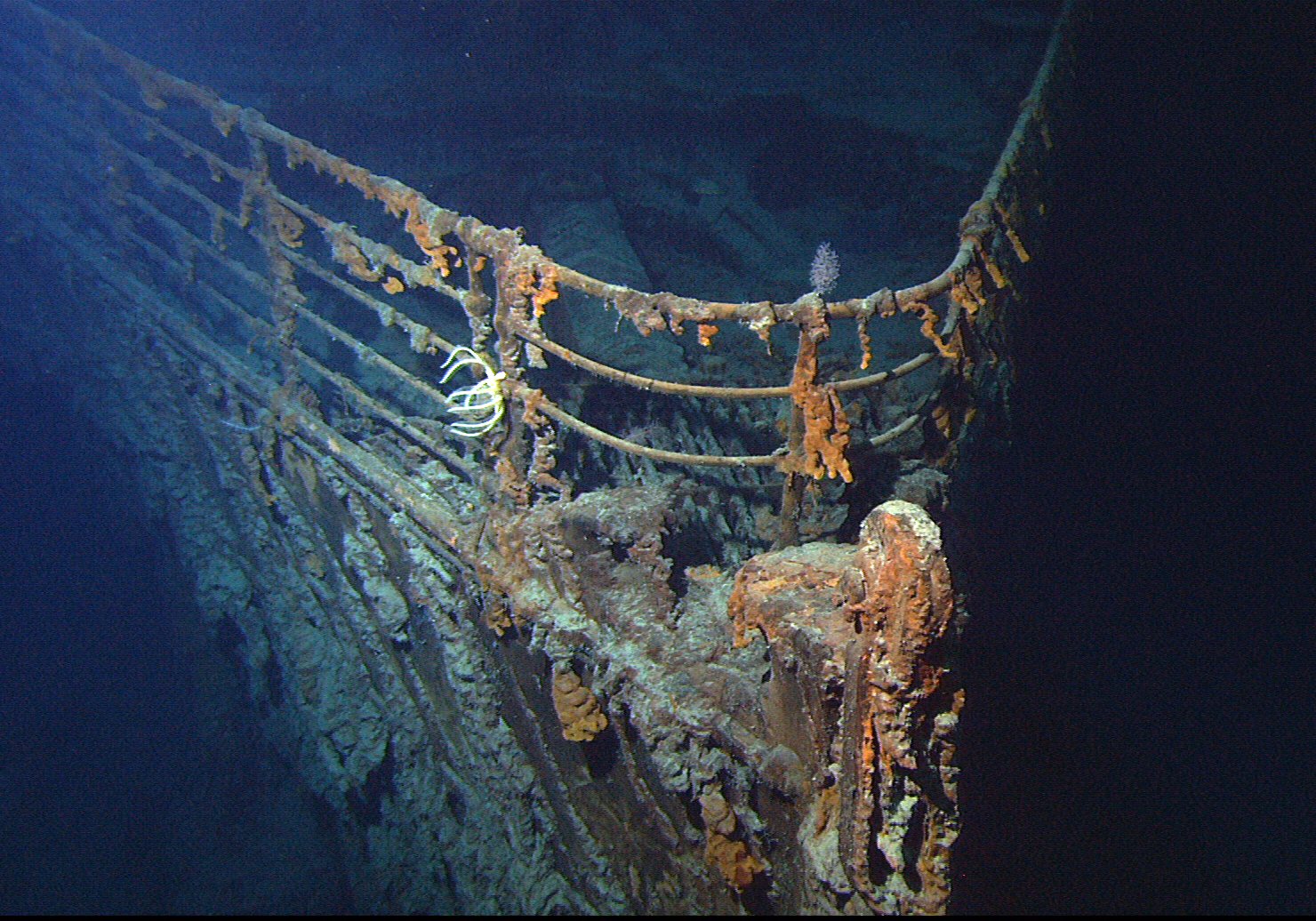
Shortly before midnight on April 14, 1912, the “unsinkable” RMS Titanic — then the largest ocean liner in service — struck an iceberg on her maiden voyage. A little under three hours later, she sank into the North Atlantic. Of the roughly 2,200 people aboard, 1,500 died; the survivors were rescued by the RMS Carpathia hours later.
After the disaster, many immediately turned their attention to the possibility of finding the wreckage. Survivors and family members hoped to lay loved ones to rest; others wanted to recover the ship’s treasures. However, for decades, technological limitations — and poor understanding of the ship’s whereabouts at the time it sank — prevented serious searches.
That changed in 1985, when two research institutions — Woods Hole Oceanographic Institution (WHOI) in Massachusetts and the French National Institute of Oceanography (IFREMER) — tested new underwater imaging technologies by searching for the Titanic’s wreckage. Led by Dr. Robert Ballard and oceanographer Jean-Louis Michel, the team set out to search a 100-square-mile field where the ship ultimately came to rest. Throughout July and August, the team searched most of the field with little luck. With 12 days left in the search, the team adjusted its strategy; rather than searching for the Titanic’s hull, they zeroed in on the debris trail they believed would lead them to the wreck. On September 1, 1985, their efforts paid off and they found one of the ship’s boilers, leading them to her wreckage.
8 Dumb Things Smart People Waste Money On
You can be good with money and still waste a surprising amount of it.
These eight everyday expenses are easy to overlook because they feel completely normal. See which ones are quietly costing you — and the simple ways to spend less.
The extras.
- One year ago today we had just published a reader essay in the Sunday Edition making the case for a U.S. Department of Senior Affairs.
- The most clicked link in our last regular newsletter was the report on the flash floods in the Grand Canyon.
- Nothing to do with politics: A mystery island in Canada appeared… then disappeared.
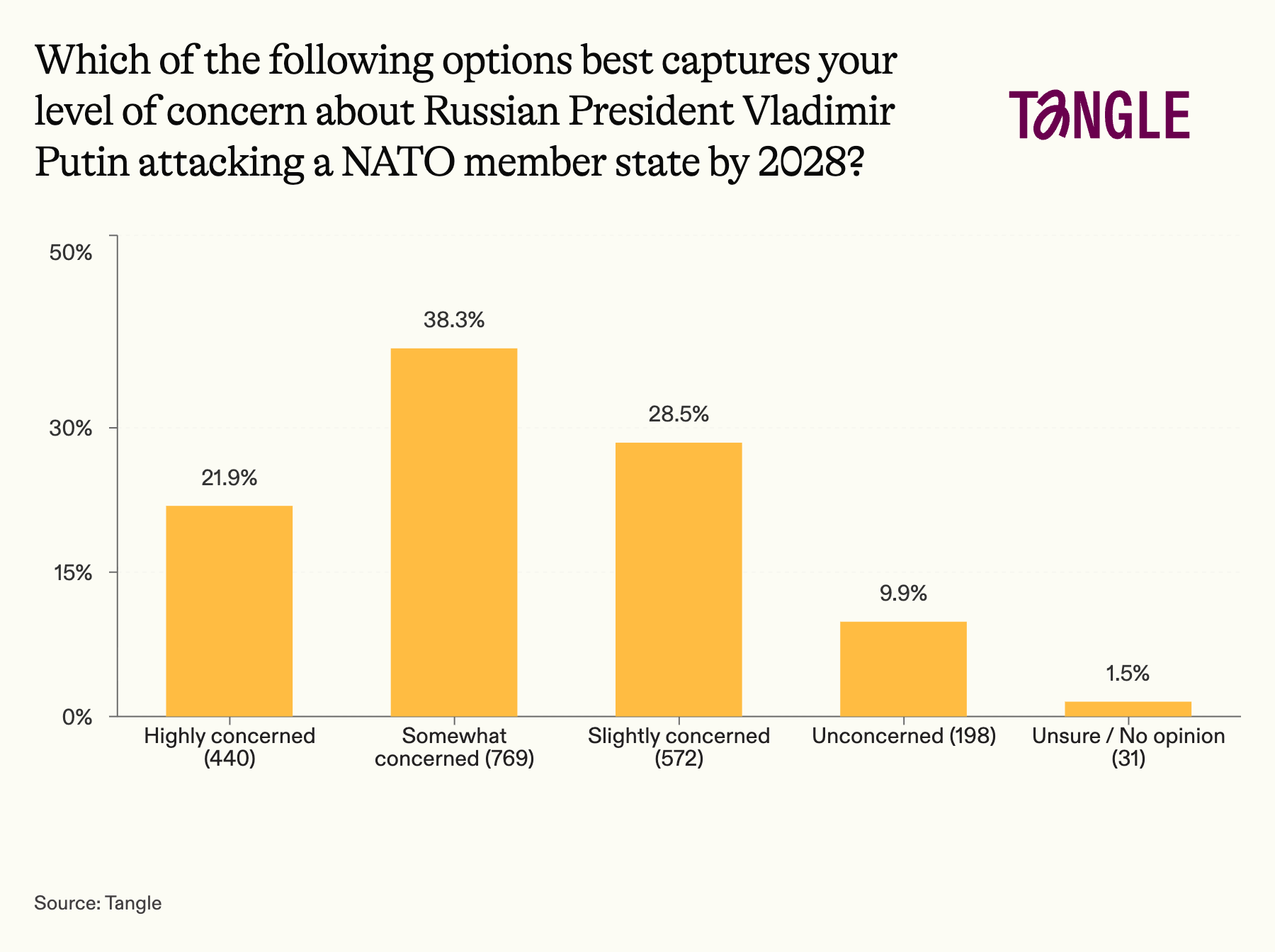
- Our last survey: 2,010 readers responded to our survey on Western relations with Russia, with 38% saying they are somewhat concerned about Russian President Vladimir Putin attacking a NATO member state by 2028. “Given Trump’s overtly friendly attitude towards Putin, it seems the next two years are a potential ‘window of opportunity’ for Russia to attempt inroads in Europe,” one respondent said. “While stubborn, Putin has all he can chew on right now. Hard to imagine him taking on more,” said another.
Have a nice day.
When British Columbia residents heard distressed animal sounds from under a dock on Vancouver Island, they discovered three young otters caught in an abandoned fishing net. They freed two of the otters to reunite with their mother in the water, but the fishing net was wrapped around the third otter’s neck, restricting its breathing and leaving it unconscious. Gordon Mellish, a retired commercial fisher and carver, cut away the net and began CPR, and then mouth-to-mouth on the otter’s small snout; before long, he noticed the otter had started to regain consciousness. “It was so neat to have that moment,” Mellish said. “Then I just told her, ‘Get rest, get better, and make sure you make it back home.’” The Vancouver Sun has the story.


Member comments