
I’m Isaac Saul, and this is Tangle: an independent, nonpartisan, subscriber-supported politics newsletter that summarizes the best arguments from across the political spectrum on the news of the day — then “my take.”
Are you new here? Get free emails to your inbox daily. Would you rather listen? You can find our podcast here.
Today’s read: 14 minutes.
Surf the web like it’s 1999
Remember when the only pop-ups in your life were Jack-in-the-Box toys and surprise visits from the in-laws? Today every article feels like Times Square — blinking, shouting while secretly collecting (and selling) your life story.
CleanWeb from Surfshark is the pint-size bouncer that tells those nosy ads, trackers, and malware to take a hike. Install it once, and voilà: pages load faster than your grandkids on Wi-Fi, the creepy “single seniors in your area” banners vanish, and your online footprint shrinks to a kitten’s paw.
Best part? You can still browse the recipes, stock tips and golf memes you love — just without the pickpockets.
Tangle readers can try it for just $1.99 a month (that’s 87% off!) and tossing + an extra 3 months free!
Did you miss it?
On Friday, Isaac published a members-only piece on the five things he’s gotten wrong about Trump in his second term. One of them had to do with today’s topic (the Russia–Ukraine war). The newsletter was our most opened edition in the last three months, and it drove close to 400 comments. You can read it here or listen to the podcast version here (but fair warning: You’ll be prompted to join 65,000 other Tangle members to unlock the full article or podcast).
Quick hits.
- Consumer prices in June rose 2.7% from the year prior, a faster rate than May’s 2.4% annual increase. Prices rose 0.3% from May to June. (The numbers)
- The Supreme Court issued an unsigned order halting a lower-court order that had blocked the Trump administration’s layoffs at the Education Department. The court’s three liberal justices dissented. (The ruling) Separately, 24 Democrat-led states and the District of Columbia sued the Trump administration for freezing $6 billion in education funding. (The suit)
- Federal Reserve Chair Jerome Powell asked the central bank’s inspector general to review its $2.5 billion headquarters renovation project, which President Trump has alleged could be illegal. (The review)
- Former New York Governor Andrew Cuomo announced he will remain in the New York City mayoral election and run as an independent after losing the Democratic primary to state Assemblyman Zohran Mamdani. (The announcement)
- Firefighters in Arizona are battling two wildfires in and around the Grand Canyon. The fires have collectively burned approximately 55,000 acres of land. (The fires)
Today’s topic.
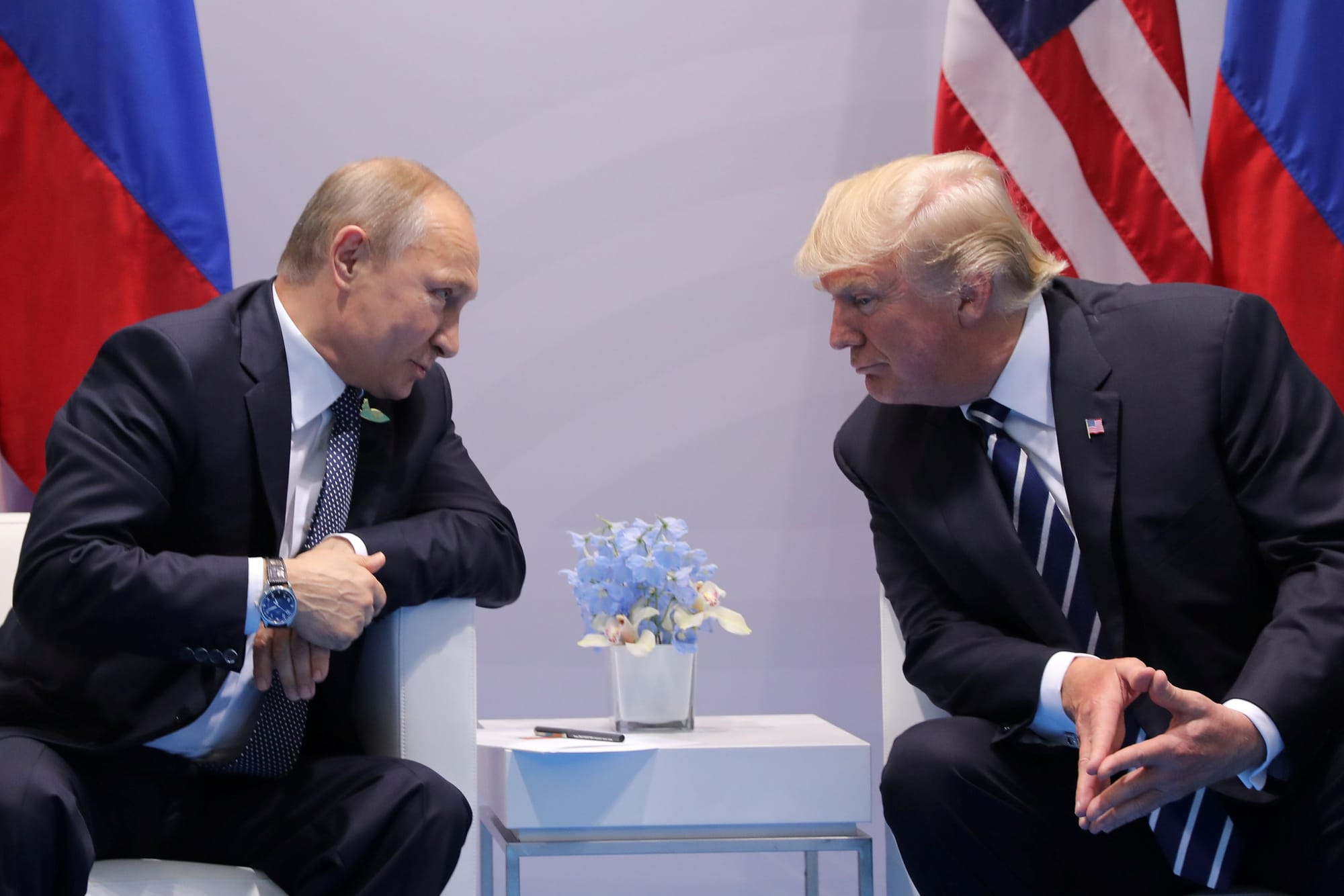
New developments in the war in Ukraine. On Monday, President Donald Trump announced two measures aimed at pressuring Russia to negotiate an end to the war in Ukraine. First, Trump said Russia would face tariffs “at about 100%” if it did not agree to a peace deal in the next 50 days, adding that he would impose secondary sanctions on countries that buy Russian oil, such as China, India, Brazil, and Turkey. Second, he outlined a plan for countries in the North Atlantic Treaty Organization (NATO) to purchase weapons from the United States and then transfer them to Ukraine. The announcement follows recently heightened criticism from President Trump towards Russian President Vladimir Putin over his purported unwillingness to end the war.
NATO Secretary General Mark Rutte touted NATO’s success in providing sustained aid to Ukraine. “This is again European nations standing up. I've been in contact with many countries… they all want to be part of this,” Rutte said alongside Trump in the Oval Office. “And this is only the first wave. There will be more.”
In addition to the NATO arms plan, Trump said on Sunday that he would authorize the transfer of an unspecified number of Patriot air defense missiles to Ukraine, which the European Union would pay for. Trump added that the new weapons deal would provide Ukraine with access to a “full complement” of weapons, possibly including short-range missiles, Howitzer rounds, and medium-range air-to-air missiles. “Putin really surprised a lot of people,” Trump said when announcing the decision. “He talks nice and then bombs everybody in the evening.”
The comments marked an ongoing shift in President Trump’s posture toward President Putin. In March, Trump said he believed that Putin was interested in peace and criticized Ukrainian President Volodymyr Zelensky's handling of negotiations, culminating in a heated exchange in the Oval Office. However, after a July 3 call with Putin, Trump told reporters the two leaders had made no progress and that he was “not happy.” Then, on July 7, Trump said he was “disappointed” that Putin continued to bomb Ukrainian cities as they were trying to negotiate a ceasefire. One day later, during a cabinet meeting, Trump again criticized Putin, saying, “We get a lot of bullshit thrown at us by Putin, if you want to know the truth. He's very nice all the time, but it turns out to be meaningless.”
Meanwhile, Russia has been ramping up its offensive in Ukraine. On Saturday, Russia carried out a large-scale drone-and-missile attack in southwestern Ukraine that killed at least six people and wounded dozens more. Russia has also stepped up its efforts to break through parts of the roughly 620-mile front line, where Ukraine has signaled its troops are under increasing duress.
Today, we’ll cover the new developments in the conflict, with views from the right, left, and writers abroad. Then, my take.
What the right is saying.
- Many on the right support Trump’s evolving posture, calling it a welcome pivot.
- Some worry that the U.S. continues to overextend itself in foreign conflicts.
The Wall Street Journal editorial board said “Trump sends a new message to Putin.”
“It took six months, but President Trump seems to have concluded that Vladimir Putin doesn’t want peace in Ukraine. The Russian will have a ‘lovely’ talk with the President ‘and then the missiles go off that night,’ Mr. Trump said in the Oval Office on Monday. This new realism is a welcome change from Mr. Trump’s previous strategy of leaning only on Ukraine and has a better chance of getting a cease-fire,” the board wrote. “The best news from Monday’s White House meeting is that the free world will continue to arm Ukraine against Mr. Putin’s ravages.”
“The President also threatened a new 100% tariff on countries that buy Russian goods if there’s no progress toward a cease-fire within 50 days. The threat is clearly an attempt to get ahead of the bill by Sens. Lindsey Graham and Richard Blumenthal that would slap tariffs of up to 500% on countries that purchase Russian oil and gas products,” the board said. “The 50-day reprieve is too generous to Mr. Putin, who may think it means Mr. Trump doesn’t really want to do it. Messrs. Graham and Blumenthal issued a statement praising Mr. Trump’s turn on weapons but with a hint of disappointment that he didn’t endorse their sanctions bill, which has 85 co-sponsors.”
In The American Conservative, Daniel R. DePetris wrote about “America’s broken foreign policy.”
“The United States is simply doing too much, the consequence of an outdated U.S. foreign policy of primacy that Washington continues to lean on. In general, primacy is a resource-intensive approach that seeks to defend a state’s status as the world’s foremost power by keeping competitors down and allies close,” DePetris said. “Maintaining dominance over the international system is the name of the game, and U.S. administrations under Republican and Democratic presidents alike sought to ensure American power was unrivaled and unchallenged.”
“Trump may repeatedly crow about allies in Europe and Asia not picking up their fair share of the defense burden, but the sheen of primacy hasn’t worn off yet,” DePetris wrote. “Desperately clinging to a dying hegemony means shortchanging military readiness over the long-term, rapidly moving military resources thousands of miles at a time without due regard for long-term strategy and expending defense assets at a rate that current production can’t match. Eventually, those decisions will add up and result in difficult decisions down the line, like the one Washington just confronted regarding Ukraine.”
What the left is saying.
- Many on the left believe Trump is genuinely frustrated with Putin, but note that his position could change again.
- Others suggest that Trump is angry because Putin is hurting his ability to self-mythologize.
In CNN, Aaron Blake wrote “Trump seems to really be losing patience with Putin. But why now?”
“This week [Trump] has reversed a brief pause in defensive weapons shipments to Ukraine (while suggesting this was undertaken by others in his administration). He has, for now, largely abandoned blaming both sides for the war, after almost always pairing any critique of Russia with a critique of Ukraine — as if they were equal partners in prolonging Russia’s war of aggression,” Blake said. “And on Tuesday he without prompting praised the ‘courage’ of Ukraine’s fighters, suggesting the huge investment the United States has made in Ukraine’s defense hasn’t been the boondoggle that many in the MAGA base believe… So what’s happening here?”
“The question before us is whether Trump’s shift today will prove as fleeting as that was. Perhaps. But there are signs that it might not be. For one, it seems the president might be coming to the realization that his goals in Ukraine are irreconcilable with Putin’s. For Trump, it’s always about getting a ‘win,’” Blake wrote. “And Trump’s comments Tuesday weren’t just tough on Putin; they seemed to reflect deeper frustration that his Russian counterpart is stringing him along… Perhaps Trump genuinely believed in his deal-making prowess, and he feels Putin has made a fool of him.”
In MSNBC, Nicholas Grossman explored “the real reason Trump’s so publicly frustrated with Putin.”
“Trump is frustrated, but with what? Not that Russia aggressively invaded Ukraine. When Putin ordered that over three years ago, Trump gushed that it was ‘savvy’ and ‘genius,’” Grossman said. “Nor is Trump frustrated that Russia frequently fires at civilian targets. Trump sometimes laments the war’s destructiveness, but always generically, without blaming Russia, like how people talk about natural disasters… If Trump actually cared about Russia killing civilians, he never would have blocked aid for air defense.”
“Most likely, what’s frustrating Trump is that events aren’t following his reality TV script, or Russia-sympathetic conspiracy theories. He promised he’d end the war on his first day back in office, using pressure on the Ukrainians and his personal rapport with Putin to stop the fighting, and get himself a Nobel Peace Prize,” Grossman wrote. “Trump put Putin above U.S. national interests, and Putin hasn’t returned the favor. Instead of prioritizing Trump’s image-crafting, Putin keeps prioritizing Russia’s national power… If anything, Putin seems to enjoy these displays of dominance, toying with Trump rather than giving him a fig leaf.”
What writers abroad are saying.
- Some writers abroad welcome Trump’s pivot but question whether he will follow through.
- Others say Ukraine must use its replenished weapons access to force Russia to the negotiating table.
In The Kyiv Post, Timothy Ash asked “is Trump finally set to call Putin to account?”
“Trump seemed to like to bully the weak, while looking up and conceding the ground to the strong. Something might have changed over the past few weeks,” Ash wrote. “Give the bully what he wants and he will go away — and what he wants is Ukraine. Initially, the Trump team indeed conceded almost everything and much more in the lead up to peace talks — no NATO for Ukraine, no bilateral security guarantees from the US, Russia keeps all the land it occupies. Putin’s response, though, was not to agree to a ceasefire, let alone a peace, but to ask for more.”
“The bigger question is whether Trump will be willing to impose significant sanctions on Russia. The mother of all Russia sanctions bills has over 80 supporters now in the US Senate, including Lindsay Graham, and enough to pass,” Ash said. “However, with Russia accounting for 10% of global oil exports and large shares of an array of other commodities, Russia, and I think the market, assumes that Trump would not dare such a disruptive, and potentially globally systemic action. Russia is assuming TACO. Let’s see. Likely, Trump will seek to up the pressure on Putin by giving a timeframe for pushing on with the 500% tariff bill.”
In The Spectator, Svitlana Morenets argued “Trump has given Ukraine a chance to stop Putin in his tracks.”
“It took Donald Trump six months, at least six useless phone calls with Vladimir Putin and more than a thousand Ukrainian civilians killed since the start of his second term for the realisation to finally hit: Russia has no intention of ending the war,” Morenets wrote. “Ukrainians will greet this news with great relief: their country’s survival has relied on the erratic moods within Trump’s administration that have led to three halts in military aid since January. Now, Ukraine can expect a continuous flow of weapons to the front line.”
“Putin’s plan to crush Ukraine when American aid dries up may have failed, but he still has an overwhelming advantage in manpower and weapon quantities,” Morenets said. “When summer, the best season for the ground offensive, ends, Trump believes Putin will come to the negotiating table… Ukraine’s best chance is to use this time — and America’s weapons — to stabilise the front line and stop the Russian advances once and for all.”
My take.
Reminder: “My take” is a section where I give myself space to share my own personal opinion. If you have feedback, criticism or compliments, don't unsubscribe. Write in by replying to this email, or leave a comment.
- Trump took too long to see Putin for who he really is.
- I’m glad Trump is firming up on Russia, but the delay in the U.S. response is giving Putin exactly what he wants.
- In order to get to a productive peace agreement, Trump will have to demonstrate a lot of resolve through the coming months.
How much time did we waste?
How many lives — Ukrainian and Russian — were lost to satisfy the fantasy that Putin was someone he wasn’t? How many Americans followed the president’s lead and bought the line that Ukraine is the real aggressor, that Zelensky is the real dictator, that Putin is the real defender against wanton aggression? How much closer could we be to the end of this war if Trump had seen Putin for who he really was from the start?
Yes, I’m glad President Trump is beginning to see Putin clearly, but we shouldn’t let him off the hook for taking the first six months of his administration to get there. Let’s not forget the entire Oval Office blow-up with Volodymyr Zelensky was sparked by Zelensky having the audacity to remind Trump and Vice President JD Vance that Putin could not be trusted. Specifically, Zelensky asked them to explain what they meant by “diplomacy,” because Ukraine had tried its share of diplomacy but Putin consistently broke his promises and wrought more war.
For that, Vance — who has still never set foot in Ukraine — chastised Zelensky, saying he was “disrespectful” to “litigate this in front of the U.S. media.” Trump then piled on, insisting Zelensky didn’t “have the cards” before going off about the “Russia hoax” and Hunter Biden. This exchange set peace talks back months. At the time, plenty of people blamed Zelensky for a tactical error in Trump diplomacy (including us); but his only crime was simply pointing out that Putin broke a 2014 ceasefire, and would break future deals if they weren’t enforced. And he was right — take a look at how Trump describes what it’s like to engage in peace talks with Putin:
“I speak to him a lot about getting this thing done and I always hang up and say, ‘well, that was a nice call.’ And then missiles are launched into Kyiv or some other city. And I say: ‘That’s strange.’ And after that happens three or four times, you say the talk doesn’t mean anything. My conversations with him are always very pleasant… And then the missiles go off that night. I go home, I tell the First Lady, ‘I spoke to Vladimir today, we had a wonderful conversation,’ and she says, ‘Oh really? Another city was just hit’… I don’t want to say he’s an assassin. But he's a tough guy. It's been proven over the years. He fooled Bush. He fooled a lot of people. He fooled Clinton. Bush. Obama. Biden. But he didn’t fool me.”
The thing is: He did fool Trump. In fact, he fooled Trump more than he fooled any of the other presidents he listed — they were all very clear-eyed about who Putin was, what he was capable of, and what his end goals were (even if they also failed to contain him). Journalists and pundits have been pointing out for years Putin’s very obvious, simple strategy: showering Trump with flattery to stay on his good side. Trump’s telling of their relationship, as shown in the quote above, is actually quite revealing: “Putin was so nice to me before murdering a bunch of Ukrainians. I just can’t figure out what his deal is!”
Of course, Putin’s deal is that he wants to conquer Ukraine, and he knows Trump could lead a force to stop him; so he’s decided to eliminate that force by playing into Trump’s weakness: adulation.
In many ways, now that we know Trump is capable of seeing Putin for who he is, his behavior in the first six months of his second term almost becomes more inexcusable. Even now, Trump’s tactics are hard to justify or understand. On July 3, Putin told Trump explicitly that he planned to escalate the war and make a renewed push to reach the administrative borders of Ukraine in the next 60 days. Trump responded by waiting nearly two weeks before announcing a 50-day deadline for a peace deal. Yes, Trump is (finally) demonstrating real frustration with Putin and meeting him with action; but his chosen tactic grants Putin the timeline he wanted.
However, some of Trump’s moves are much more aggressive than a delayed trade response. He is selling weapons to NATO that will pass through to Ukraine. He is also strengthening his relationship with the head of NATO, who has very clear interests in beating back Putin (and has not been shy about saying the alliance needs Trump’s help to do so). According to a report in the Financial Times, Trump went as far as asking Zelensky to ramp up Ukraine’s strikes deep inside Russia, even asking Ukraine if it could strike Moscow if the U.S. were to sell it long range missiles.
Personally, I find these updates heartening — not because I want the war to escalate, but because I think one side in this war is very clearly morally right, and I believe the U.S. should back it. I was open minded about Trump pursuing a peace deal, and I cheered the mineral-rights deal he struck with Ukraine; but I am also deeply unsurprised by his failure to usher in any lasting peace so far. Making peace with Putin is difficult when the Russian president believes 40 million free Ukrainians belong to him. And make no mistake, he does — this much has been clear since March of 2022. Far too many people in the Trump administration have had blinders on about that basic fact at the heart of the matter, but it appears the reality is finally setting in.
Now, I’m curious to see how Trump’s base reacts to this latest pivot. Trump’s supporters are already in the midst of their most divisive intraparty war of Trump’s second term over the Epstein files. Many Republicans do not want the U.S. to continue to support Ukraine, and more still have spent the last six months defending Trump’s position that Zelensky is the primary instigator in the war. Vance has been pushing the U.S. to stop sending money and arms to Ukraine since 2022 and railing against supporting Europe so far in his vice presidency. And for months, Trump has bullhorned his belief that the war must end and peace must be pursued at all costs — even if Ukraine has to give up more territory.
How the base responds will have real impacts on Trump’s commitment, but the more important question is how Putin will react. Russia may be more sensitive to economic and military pressure than to peace talks, and Trump is just unpredictable enough that Putin may not like his odds of success if he pushes back. Trump’s change in posture could legitimately be the best thing for Ukraine in years.
That’s all good news. However, Trump’s misread of Putin that preceded his change of heart has lost Ukraine a lot of time, cost more Ukrainians and Russians their lives, allowed the war to escalate, and increased the likelihood that any peace deal will now involve more territorial concessions for Ukraine (since they continue to lose ground in the war as time passes). For this new path to lead to peace, Trump will need to retain this accurate impression of Putin, he’ll need domestic support to keep his commitment from becoming a political loser, and Ukraine will need the resolve to wait for the tides of the war to change. These are all fresh mountains to climb in pursuit of an acceptable peace agreement for Ukraine. They’re all surmountable — but we’re off to a belated start.
Take the survey: What do you think of Trump’s pivot on Russia and Ukraine? Let us know!
Disagree? That's okay. My opinion is just one of many. Write in and let us know why, and we'll consider publishing your feedback.
Your questions, answered.
Q: It's been about a year since the first [Donald Trump] assassination attempt, yet I know absolutely nothing about the person, how it happened, or why it happened. It feels like we know so much about so many other things, but these major events in history feel like they happened and we know very little. Did I miss something? With today's media and online presence, I'm kind of surprised we don't know more about this by now.
— Chris from San Diego, CA
Tangle: At the time of the shooting, we knew very little about the motives of the attempted assassin who took aim at then-candidate Trump at a rally in Butler, PA. The public hasn’t learned everything about him since, but we have learned a few important details.
Disclaimer: Tangle’s standard policy is not to name shooters because of the well known contagion effect. In our initial coverage of this story, we made an exception due to the historical nature of the event; but given the new information the FBI has shared about the shooter since (below) we’ll be adhering to our standard policy in today’s reader question.
As we wrote at the time, the 20-year-old who attempted to assassinate Donald Trump “almost certainly held right-wing views.” He was registered to vote as a Republican, his high school classmates described him as conservative, and he grew up with conservative parents. However, he doesn’t seem to have been uniformly right-wing in his viewpoints; he reportedly did not talk about politics in high school, and he made a one-time, $15 donation to ActBlue on the day of Biden’s inauguration.
The FBI has described the shooter as an isolated loner, and the bureau says what it’s learned about him since the shooting fits a profile of a person with “no definitive ideology.” The FBI also said that it believes he was not motivated by politics but instead by a desire for significance and fame (affirming our policy to not name him here).
We also know that his preparation was more extensive than initial reports showed. He bought a ticket to the rally online, searched where Trump would be speaking from, scouted the location, and even researched how to make a homemade bomb. Recently, an extensive CBS News report uncovered that the shooter’s personal habits started to shift after he purchased a rifle in the summer of 2023. Though he continued to keep to himself, he started to practice at a shooting range and use a VPN when online. Closer to the day of the Butler rally, he began to research when the DNC and RNC events would be held, and a classmate of his at community college said he started to fidget more and talk faster.
That being said, public knowledge is sparse for two major reasons: The shooter is dead. He was shot that day by a Secret Service sniper, so we can’t learn more about him through his statements, his actions, or a trial. Second, the FBI is still investigating him, and it probably has only released a small portion of what it has uncovered. The government probably has a pretty accurate picture of the attempted assassin, but sensitive details about his life will be classified for quite a while.
Want to have a question answered in the newsletter? You can reply to this email (it goes straight to our inbox) or fill out this form.
Under the radar.
A new report from a bipartisan Senate commission alleges the Secret Service made a string of errors that preceded the assassination attempt on then-candidate Donald Trump on July 13, 2024. Among several “preventable failures” detailed in the report, the commission identified a lapse from the Secret Service’s security room agent, who is responsible for managing communications between all parties ensuring a protectee’s security. The commission found that the room agent did not communicate to law enforcement that a local tactical team was looking for a person equipped with a range finder outside the security perimeter roughly 25 minutes before the shooting. Furthermore, the report suggests that the Secret Service failed to inform counter-snipers at the event about heightened threats to Trump’s life leading up to the rally. “The lack of structured communication was likely the greatest contributor to the failures of the [Secret Service],” the report said. The Washington Post has the story.
If you have more than $1,000 in your checking account — listen up! Think bigger — boost your savings, start investing, tackle high-interest debt, or plan for that dream home. Your financial future starts with small steps. Not sure where to begin? Here are 7 ideas to help you level up your finances.
Numbers.
- 1,237. The number of days since Russia began its full-scale invasion of Ukraine.
- $3.5 billion. The United States’s estimated value of all goods traded between the U.S. and Russia in 2024, according to the U.S. Trade Representative.
- $5.4 trillion. The approximate value of all goods traded between the U.S. and all countries in 2024, according to Statista.
- 44% and 19%. The percentage of U.S. adults who support increasing and maintaining, respectively, U.S. sanctions on Russia, according to a June 2025 YouGov poll.
- 49% and 20%. The percentage of U.S. adults who support and oppose, respectively, sanctioning countries that buy Russian oil and gas.
- 26% and 23%. The percentage of U.S. adults who support increasing military aid to Ukraine and maintaining current levels of aid, respectively.
- 13% and 19%. The percentage of U.S. adults who support decreasing military aid to Ukraine and stopping all aid, respectively.
The extras.
- One year ago today we wrote about Trump surviving an assassination attempt.
- The most clicked link in yesterday’s newsletter was the ad in the free version for the Christ-first newsletter The Pour Over.
- Nothing to do with politics: The #1 ranked state for taking a summer road trip is Minnesota.
- Yesterday’s survey: 3,657 readers responded to our survey on the administration’s recent immigration raids with 54% saying they oppose the raids. “As you have pointed out before these raids are happening at WORK places. That means people are paying taxes, social security, etc,” one respondent said.

Have a nice day.
When Jonathan O’Neil began researching the Nuvvuagittuq Greenstone Belt in 2008, he faced a major challenge: The rocks lacked zircon, the standard mineral used to date ancient crust. But in a new study, O’Neil turned to a more recent dating method involving the rare Earth element samarium and determined a minimum age of 4.16 billion years, potentially making the belt Earth’s oldest known rocks. “The timescales are so long, and the history of these rocks and minerals is so tortured, that gleaning any primary information from them at all is pretty amazing,” Penn State geoscientist Jesse Reimink said. CNN Science has the story.
Don’t forget...
🎥 Follow us on Instagram here or subscribe to our YouTube channel here.
💵 If you like our newsletter, drop some love in our tip jar.

Member comments