
I'm Isaac Saul, and this is Tangle: an independent, nonpartisan, subscriber-supported politics newsletter that summarizes the best arguments from across the political spectrum on the news of the day — then “my take.”
Are you new here? Get free emails to your inbox daily. Would you rather listen? You can find our podcast here.
Today’s read: 13 minutes.
Think History Is Boring? Think Again.
Critical Thinking in History transforms how you understand the past — and present. Created by award-winning educator Kevin O'Reilly, this isn't your typical history class.
You'll evaluate conspiracy theories (Lincoln's assassination, Pearl Harbor), make tough decisions leaders and ordinary people actually faced (like the G.I. Bill in 1944 & the Crusades), evaluate historical and online sources, evaluate interpretations, and analyze cause-and-effect (why did Americans win the Revolutionary War & what caused the Great Depression?).
With over 250 free and published lessons (and new lessons posted weekly) covering everything from the Spanish Armada to the Salem Witch Trials to Reaganomics, you'll develop the critical thinking skills our democracy desperately needs.
Lessons include Guide to Critical Thinking and annotated sources. Because understanding how to think about history helps you think better about everything else.
Explore Free Lessons at CriticalThinkingInHistory.com.
*This is a sponsored post.
Donation match!
You may have heard that Tangle News has a nonprofit project that accepts charitable donations to fund our video content development for the next generation of news consumers. One of our donors, Steve, is matching every donation up to $5,000, and wants to encourage other Tangle supporters to join him. Thanks to Steve, you can now effectively double any donation you make to Tangle — for a limited time.
You can make a one-time or monthly donation of $5, $50, $500 — or any amount — to ensure Tangle reaches today’s young people! If you start a monthly gift, all new gifts will be matched for the first year. Your charitable gift is tax deductible thanks to our fiscal sponsor, Journalism Funding Partners.
Quick hits.
- President Donald Trump announced that the U.S. military had struck a boat that he alleged was carrying illegal drugs from Venezuela to the United States, killing three. The strike was the second such military action against alleged Venezuelan drug smugglers in the last two weeks. (The strike)
- The Israeli military launched a ground offensive in Gaza City. The military has not offered an expected timeline for the operation. (The offensive)
- Treasury Secretary Scott Bessent said the United States and China had reached a “framework” for a deal on the future of the social media app TikTok. The announcement comes shortly before a deadline for the app to sell its U.S. operations or face a potential ban in the United States. (The announcement)
- The U.S. Court of Appeals for the D.C. Circuit barred President Trump from immediately firing Federal Reserve Governor Lisa Cook. The decision allows Cook to participate in the central bank’s meeting this week, where it will vote on an interest rate cut. (The ruling) Separately, the Senate voted 48–47 to confirm Stephen Miran as a Federal Reserve governor. Miran will serve out the remainder of the term of Adriana Kugler, who resigned last month. (The vote)
- Washington Post columnist Karen Attiah said she was fired by the outlet over a series of social media posts related to the assassination of conservative activist Charlie Kirk. The Washington Post declined to comment on her firing. (The claim)
Today’s topic.
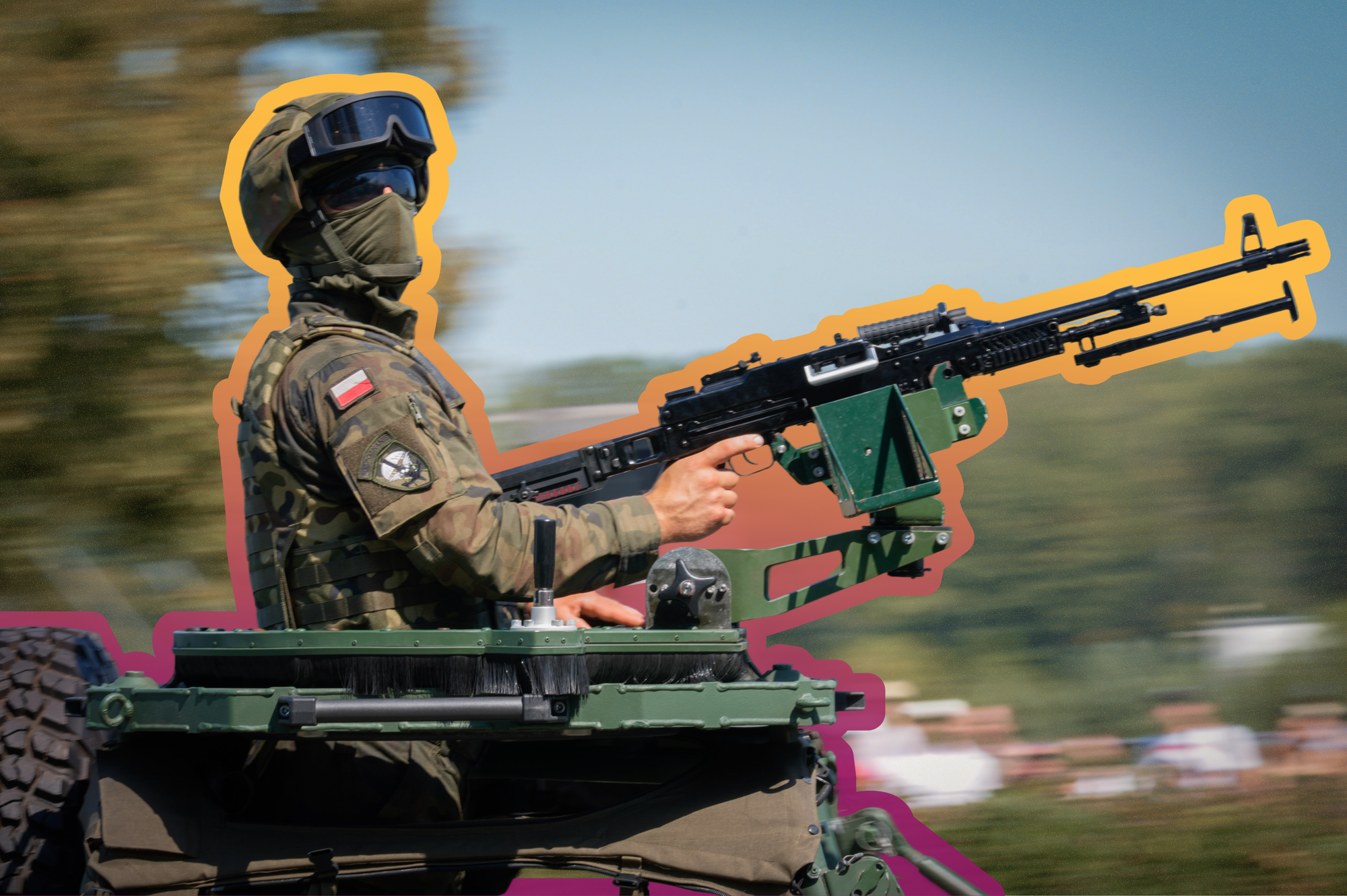
Mounting tensions between Russia and NATO. On Saturday, Romania said that it had detected a Russian drone in its airspace during an air patrol mission. The Romanian military authorized its pilots to shoot down the drone, but they declined to do so due to potential “collateral risks.” The incident marks the second Russian incursion into a North Atlantic Treaty Organization (NATO) country’s airspace this month; on Wednesday, NATO warplanes shot down several Russian drones over Poland, prompting Poland to invoke Article 4 of the North Atlantic Treaty. Russia has claimed that the violations were unintentional, but many European leaders have said the incidents have increased the chances of open conflict with Russia.
Refresher: By invoking Article 4 on Wednesday, Poland brought NATO countries together to discuss Poland’s security concerns. Article 4 is a step toward potentially invoking Article 5, which considers an attack on one member an attack on all members, but does not necessarily lead to joint action. On Wednesday, NATO Secretary General Mark Rutte said that the alliance had discussed the incursion and “denounced Russia’s reckless behaviour,” adding that a “full assessment of the incident is ongoing.”
On Sunday, Polish President Karol Nawrocki signed a classified decree for a permanent NATO troop in Poland as part of NATO’s new “Eastern Sentry” initiative in response to the drone incursions. Nawrocki called the airspace breaches “an attempt to check the mechanism of action within NATO and our ability to react.” Russian officials have sharply criticized NATO’s response as escalatory and reaffirmed their claim that the incursions were accidental. The spokesman for Russian President Vladimir Putin also suggested that NATO was already “de facto” at war with Russia given its military support of Ukraine.
Separately, on Saturday, Russia conducted military training exercises in Belarus simulating a battle against Western forces. The exercises led Poland to close its border with Belarus and deploy 40,000 troops to its eastern border, while Lithuania and Latvia similarly closed their borders with Belarus. Russia last held these simulations in 2021, when they used the drills as cover to move troops closer to Ukraine ahead of the all-out invasion in February 2022.
Simultaneously, U.S. President Donald Trump has pressed NATO to increase economic pressure on Russia as he seeks a resolution to the war in Ukraine. On Saturday, Trump posted on Truth Social, “I am ready to do major Sanctions on Russia when all NATO Nations have agreed, and started, to do the same thing, and when all NATO Nations STOP BUYING OIL FROM RUSSIA. As you know, NATO’S commitment to WIN has been far less than 100%, and the purchase of Russian Oil, by some, has been shocking!” President Trump has also called on NATO members to raise tariffs on China for their ostensible support of Russia.
Today, we’ll explore the latest moves by NATO in response to Russia’s drone incursions, with views from the right, left, and writers abroad. Then, my take.
Agreed.
- Commentators on the right and left — in the U.S. and abroad — see the drone incidents as a thinly veiled provocation by Russia.
- Many across the political spectrum also see this development as an alarming step toward a broader war in Europe.
What the right is saying.
- The right views the incursions as a clear provocation, though some call for de-escalation.
- Others say Trump must respond firmly to send Putin a message.
National Review’s editors said “Russia’s Poland incursion was no drone accident.”
“If the flight of up to 19 Russian drones into Polish territory was some sort of accident — claims to that effect from Moscow and its Belarusian surrogates have, even by their standards, been unconvincing — it was one that was both large and very convenient. For some time now, Moscow has been waging ‘non-linear warfare’ against NATO, actions ranging from sabotage to cyberattacks to smaller drone incursions. They fall below the threshold of war, as that term is usually understood, but go well beyond the jostling often seen between rival states or blocs.”
“That makes it vital that NATO responds to Moscow in a way that deters rather than encourages aggression. The drones were, along with Russia’s intensifying onslaught on Ukraine, yet another reminder from the Kremlin that, despite a relatively cordial meeting in Alaska and talk of peace talks, it remains determined to win its war with Ukraine: Those who support Kyiv will, in its view, have to deal with the consequences,” the editors said. “NATO’s response, therefore, must be firm, and it should be focused on both the political and the practical. The latter will bolster the former.”
The Washington Examiner editorial board argued “NATO must punish Russia incursion with 10-mile air cordon.”
“Trump should reaffirm his commitment to NATO, an alliance that continues to serve Americans well. NATO should warn Russia and Belarus that any unmanned drones in Ukrainian or Belarusian airspace within 10 miles of the Polish border may be shot down,” the board wrote. “NATO’s deterrent purpose is designed for moments such as this. Poland is one of the most reliable American-NATO allies. At 4.7% of GDP, it spends the highest percentage of its GDP of any NATO member on defense. Recognizing this commitment and the heavy pro-American sentiments across the Polish political spectrum, the U.S. should be resolute in defending its eastern flank ally.”
“Putin isn’t simply testing NATO, he’s also testing Trump. Putin has noted Trump’s oft-stated concern that the Ukraine war might lead to ‘World War Three.’ By dangling his drones over NATO’s Article Five mutual defense security guarantee, Putin wants to see if Trump will put pressure on NATO and Ukraine to reduce tensions or, as he should, impose costs on Russia for its new aggression,” the board said. “Trump should teach Putin a lesson, confident in NATO’s present supremacy over Russia, and of U.S. military forces across the range of conflict, knowing the importance of the alliance for Western security, prosperity, and freedom.”
What the left is saying.
- Many on the left criticize NATO’s — and the Trump administration’s — response to Russia’s actions as insufficient.
- Others view this moment as a critical test for the alliance.
In The Atlantic, Phillips Payson O’Brien wrote “Russia tested NATO in Poland. NATO flunked.”
“Some of the world’s most advanced military systems — Polish and Dutch fighters, German air-defense equipment, and Italian surveillance aircraft — were activated to respond to the incursion, NATO officials said. But the episode is only the latest evidence of NATO states’ constant failure to accurately assess their security concerns and national interests,” O’Brien said. “Russian drones and missiles have strayed into Polish territory on previous occasions in the past few years — with no consequence. Alliance members have not bothered to prepare properly for immediate threats, much less future war. Their constant weakness to this point has emboldened Putin to flagrantly violate NATO airspace while reinforcing the idea that member states have no idea how to look after their own security.”
“A firm response to the incident would involve a promise by NATO to shoot down all future hostile drones in any member nation’s airspace, and a warning to Russia that if more drones appear in NATO airspace after traveling over Ukraine, then NATO can help Ukrainians with their national air defense,” O’Brien wrote. “Instead, we are witnessing a multinational failure. NATO states, even those most immediately imperiled by Putin’s expansionism, lack the capabilities to deal with Russian warfare, and they have not understood the true strategic peril they are in.”
The Washington Post editorial board suggested “Russia is probing NATO’s resolve.”
The incursion “comes as Putin is derailing Trump’s attempts to make peace in Ukraine. Last month’s summit in Anchorage was supposed to lead to Putin meeting Ukrainian President Volodymyr Zelensky, who was willing to face his adversary. Trump then said he would pick a side in two weeks’ time. That deadline passed last Friday,” the board said. “On Wednesday, Trump posted glibly, ‘What’s with Russia violating Poland’s airspace with drones? Here we go!’ That won’t be enough to stop the Russian president, who understands how ambiguities drive wedges into alliances.”
“When it came to Iran, Trump admirably enforced his deadline and took action against the regime’s nuclear program, but he hasn’t shown the same decisiveness against Putin. There are plenty of actions he can take short of war,” the board wrote. “Don’t expect Trump to deploy more troops to Europe, but he could move additional battalions and equipment already on the continent into Poland as a show of support. NATO might even declare that it is ready to shoot down drones over Ukrainian airspace if they appear to be heading for the territory of any member country.”
What writers abroad are saying.
- Some writers say the incursion is a step in Putin’s larger plan to destroy NATO.
- Others caution against an escalatory response to the drone incidents alone.
In The Spectator, Sam Olsen asked “will Nato pass — or fail — Russia’s great test?”
“The timing is no accident. Only days earlier, Russian missiles struck buildings in Kyiv linked to Britain and the EU. It is all part of a campaign designed to test the ability of Nato to respond to Russian aggression — and to respond in a way that doesn’t destroy the alliance in the process,” Olsen wrote. “For Vladimir Putin, Ukraine is not the goal but the stepping stone. The true prize is the destruction of Nato, and with it the collapse of the American-led order that has underpinned Europe since 1945. Moscow has concluded that if the alliance can be fractured on its eastern flank, Washington’s authority across the West will unravel in turn.”
“Nato’s options are uncomfortably narrow. Sanctions are the default response, but Russia’s economy — buoyed by oil, gas and Chinese and Indian trade — still bankrolls the war. Alliance air patrols are already under way over Poland and the Baltics, but they are ruinously expensive compared to the Russian drones they swat down,” Olsen said. “Putin’s purpose is clear: to show that Nato is brittle, America unreliable, and the post-war order hollow. Europe, meanwhile, still speaks of raising defence budgets to the required 5 per cent at some point over the coming decade. The Great Test is here now.”
In Responsible Statecraft, Anatol Lieven argued “Russian drones over Poland [are] no reason to panic and start a war.”
“It seems unlikely that the handful of Russian drones that entered Polish air space did so accidentally. There have been previous incidents, but they involved individual drones very close to the Ukrainian border. Yesterday there were over a dozen,” Lieven wrote. “This was however not an ‘attack.’ None of the drones hit a significant target, or seem to have been intended to do so. The Russian move was most likely intended as a warning to the European ‘coalition of the willing’ to abandon its hopes of establishing a ‘reassurance force’ in Ukraine.”
“It was probably also a warning to the U.S. not to provide air cover or a ‘backstop’ for such a force. We should remember that during the Cold War, there were a number of far more serious violations of air space by both sides, some of them leading to NATO planes being shot down and American and British airmen killed,” Lieven said. “These incidents led not to threats of war, but careful attempts to de-escalate tensions and develop ways to avoid such clashes.”
My take.
Reminder: “My take” is a section where I give myself space to share my own personal opinion. If you have feedback, criticism or compliments, don't unsubscribe. Write in by replying to this email, or leave a comment.
- For all the concerns about the U.S. starting World War III, the only person likely to try is Vladimir Putin.
- These incursions into NATO territory are just the next test of whether the alliance will stand up to Putin’s power grabs.
- Now is the time for NATO to make a strong, unified stance against Russian incursions.
Throughout the last few years, a lot of hyperbolic commentators have warned about “World War III” breaking out because of the U.S.’s decision to support Ukraine.
Typically, these predictions have come from critics of the U.S. — who, for some reason, keep avoiding the topic of Vladimir Putin. This heterodox view, which has been popularized in America by the likes of Tucker Carlson and has been intermittently embraced by the Trump administration, is that Putin’s push into Ukraine has been mischaracterized:
Putin isn’t really the bad guy; he’s actually fighting a corrupt and duplicitous leader in Volodymyr Zelensky. He was responding to NATO aggression. Our decision to waste money, time, and resources to defend Ukraine risks escalating the conflict and dragging us into a global war.
This framing is attractive because it runs so counter to the mainstream consensus in the West; it’s also popular because Western analysts have been so wrong and so steadfast in pushing war propaganda in recent decades (see: Iraq and Afghanistan). But more than anything, this view of the war is a great example of how “heterodoxy” can be an ideology in and of itself — and how always refusing to buy the mainstream consensus can sometimes (often?) put you on the wrong side of the issues.
Put simply: The mainstream view is often the mainstream view because it's broadly, generally, directionally correct. This happens to be the case with Russia’s war in Ukraine.
Remember, we were warned that sending M1A1 tanks to Ukraine would serve as an escalation that could spark World War III. We were similarly warned about sending Ukraine HIMARS rocket launchers, the PATRIOT Air Defense System, cluster munitions, F-16 fighter jets, and then long-range missiles that could strike deeper into Russia. Each time Ukraine asked for these more advanced systems to protect itself or stave off Putin, we were warned against providing them because doing so would lead to World War III. Yet we sent them (often with mystifying delays), and no actual repercussions came to pass. Instead, Russia just kept on fighting this stalemate war in the same manner it has from the beginning, with little regard for the lives of Ukrainians or its own soldiers.
All this time, one truth has remained: The man behind the threat of World War III — the one whose reaction everyone is so worried about — is Vladimir Putin.
Putin is the one who invaded Ukraine. He is the one who can leave Ukraine. He is the one who believes Ukraine rightfully belongs to Russia, and he is the one who can end the war any day by simply deciding he doesn’t want another hundred thousand young Russians to die for territorial gains that, at best, are going to be tenuous and far short of his initial aspirations.
Instead, Putin is once again pushing the envelope, now by prodding the borders of Poland. Once again, this is something European leaders and analysts across the mainstream landscape have been predicting. Academics, reporters, and think tanks who cover Putin for a living have warned again and again that he will not stop at Ukraine — that he will test the boundaries of other post-communist nations and continue to push for control of any country previously under the Soviet sphere of influence. He might not recreate the Warsaw Pact, but make no mistake: Poland is the next test. Putin wants to see how NATO will respond; he got a taste of it, and it probably wasn’t that intimidating.
Russia, naturally, is muddying the public waters and suggesting this is all just some big misunderstanding. We are supposed to believe that an accidental airspace incursion of 19 drones, some flying hundreds of miles, happened to only cross Ukraine into Poland (whose president is an outspoken critic of Putin) but not into Hungary or Slovakia (whose leaders have supported him). That’s quite a coincidence, considering we have seen no evidence that these drones were knocked off course, or lost, or otherwise went anywhere they weren’t intended to go… and ended up in an area that triggered Article 4 and a large NATO military response. Okay. That’s one heckuva “technical error” you had there!
I really don’t think this is all that complicated. On the very, very slim chance that this was some kind of “mistake,” that doesn’t make Poland’s response an escalation. Poland is entitled to its own defense and is right not to assume best intent, and Russia’s incursion could have started a hot war with Poland. If it was simply an error, it would be a reminder of how reckless and in over his head Putin is.
But again, it almost certainly was no accident, and (again) Putin has telegraphed his intentions for years. He has long been committed to destabilizing NATO and the EU. Russia doesn’t have the military might to take on all of Europe (it has struggled to make headway against just Ukraine). However, Putin can try to fracture trust among the alliance by stress-testing its defenses and forcing difficult decisions about the best response to Russian aggression. This aim has been apparent for years.
Trump seemed to enter the White House with the kind of delusional, heterodox view of Putin I described earlier; his administration was warned otherwise by Zelensky, but instead of listening, they lambasted and isolated him, wasting months that could have been spent planning to beat back Putin together. Then they realized he was right, and now we are waiting to see what the U.S. is actually going to do moving forward. Trump has already let Putin blow past the deadline for a peace deal, and the only consequence he’s faced has been Trump meekly criticizing him to his followers on Truth Social. Now Trump’s urging NATO allies to join together for larger-scale economic punishments. That may be a tough sell, but Putin playing chicken with the borders of NATO territory is a good way to get everyone’s attention.
To be clear, I’m not sitting here saber-rattling for some kind of major U.S. intervention. I’m the last person in the world who wants to see more war. But there already is a war. Putin started it. I am insisting that the world (especially Americans) look at what is happening in Europe with clear eyes. This has been the plot from the very beginning. Putin is not a person looking for an off-ramp. He is not a leader whose ambitions stop at Kyiv. He is not someone who is worried about escalation. Putin is exactly who we thought he was.
Now, Trump and our NATO allies have a choice. They can step back — they can downplay the threat, or convince themselves this was some kind of innocent mistake, or keep making excuses for Putin. Or they can step up — they can beef up security across Europe, prepare for the absolute worst while hoping it doesn’t come to pass, and exert maximum pressure on Putin to hunker down in Moscow and give up on his expansionist dreams. Maximum pressure can mean a major funding push for Ukraine, harsh sanctions, as much economic pain for Russia as possible, and responding to Putin’s aggression with a show of unity and strength across the Atlantic and throughout Europe. NATO can make it clear that next time a Russian drone enters a member country’s airspace, there will be genuine repercussions — then follow through.
This war is now three and a half years old. Acting with constant fear of upsetting Putin, or “escalating,” or risking a World War III has only enabled the man in question to continue to do all of those things himself, on his terms. We can acknowledge that and act accordingly, or we can expect more of the same.
Take the survey: Within the next 12 months, do you think Russia will be in direct conflict with a NATO country? Let us know.
Disagree? That's okay. My opinion is just one of many. Write in and let us know why, and we'll consider publishing your feedback.
Your questions, answered.
Q: The basic idea of gerrymandering seems to be to dilute voters of the undesired party with voters from the own party. Instead of solidly blue and red districts, the result is either blue leaning or red leaning districts. But isn't there an inherent risk in doing this? The price gerrymanderers are paying is to dilute their own voters, too. Have there been cases where this has backfired and did not lead to the desired outcome because the margins were too narrow?
— Robert from Lincoln, NE
Tangle: Actually, yes, there have been examples of gerrymandering backfiring — also known as a “dummymander.”
In 1990, Georgia Democrats held a 9–1 U.S. House seat distribution and tried to press their advantage after the state picked up an additional district after the 1990 census. Instead of gaining a 10–1 edge, they overreached — spreading their majority thinly across several districts — and ended up with a 7–4 distribution in 1992 that became a quasi-permanent 3–8 advantage for Republicans starting in 1995. More recently, after the 2010 census, Republicans in control of the Pennsylvania state legislature packed Democrats into a few urban districts. Although this initially gave the GOP a 13–5 advantage in U.S. House seats, those gains would evaporate. By 2018, demographic changes led to Democrats making up ground and forcing a 9–9 tie before the state court threw out the maps and forced a redraw.
Some other gerrymanders didn’t backfire in the same exact way.Perhaps most interestingly, Texas proposed a mid-decade gerrymander that led to a Democrat walkout in protest… in 2003. After passing their map, Republicans stretched their districts thin enough that Democrats forced Republicans to focus energy on tight races and won unexpected upsets in 2006 — including a symbolic victory in the district once held by former House Speaker Tom DeLay (R), who had led the gerrymandering push and had resigned amid an ethics scandal.
Want to have a question answered in the newsletter? You can reply to this email (it goes straight to our inbox) or fill out this form.
Under the radar.
Recent polling from Gallup and Data for Progress indicates that likely Democratic voters are increasingly aligning themselves with political candidates that embrace democratic socialism over capitalism. While capitalism’s favorability among independents has also declined in recent years, socialism remains unpopular with this group (and Republicans). For Democratic voters, however, politicians who identify themselves as democratic socialists are viewed roughly as positively as those who just call themselves Democrats, and a majority say they prefer democratic socialism to capitalism when given the definitions of each. POLITICO has the story.
6 Surprisingly Legal Ways to Escape Debt
You pay your bills on time and aren't a reckless spender.
But debt relief experts know something you don't: there are escape routes that seem "too risky to try" but are completely legitimate and used every single day.
This insider guide reveals six legal strategies most people never hear about – and shows you exactly how to use them starting today, even if you owe tens of thousands.
Numbers.
- 1999. The year Poland joined the North Atlantic Treaty Organization (NATO).
- 2004. The year Romania joined NATO.
- 8. The number of times Article 4 of the North Atlantic Treaty has been invoked, including Poland’s invocation on Wednesday.
- 2003. The year that Article 4 was invoked for the first time. Turkey asked the alliance to discuss defensive measures if the country faced a threat from the armed conflict in Iraq at the time.
- 19. The number of Russian drones and drone-like objects that violated Poland’s airspace on Wednesday, according to Polish Prime Minister Donald Tusk.
- 3. The confirmed number of these drones that were shot down.
- 7,000. The approximate number of troops that took part in Russia’s military exercises in Belarus on Monday.
- 260. The length, in miles, of Poland’s border with Belarus.
The extras.
- One year ago today we wrote about the second assassination attempt on Donald Trump.
- The most clicked link in yesterday’s newsletter was the failed car bomb in Salt Lake City, Utah.
- Nothing to do with politics: Top U.S. baby names, that are also city names.
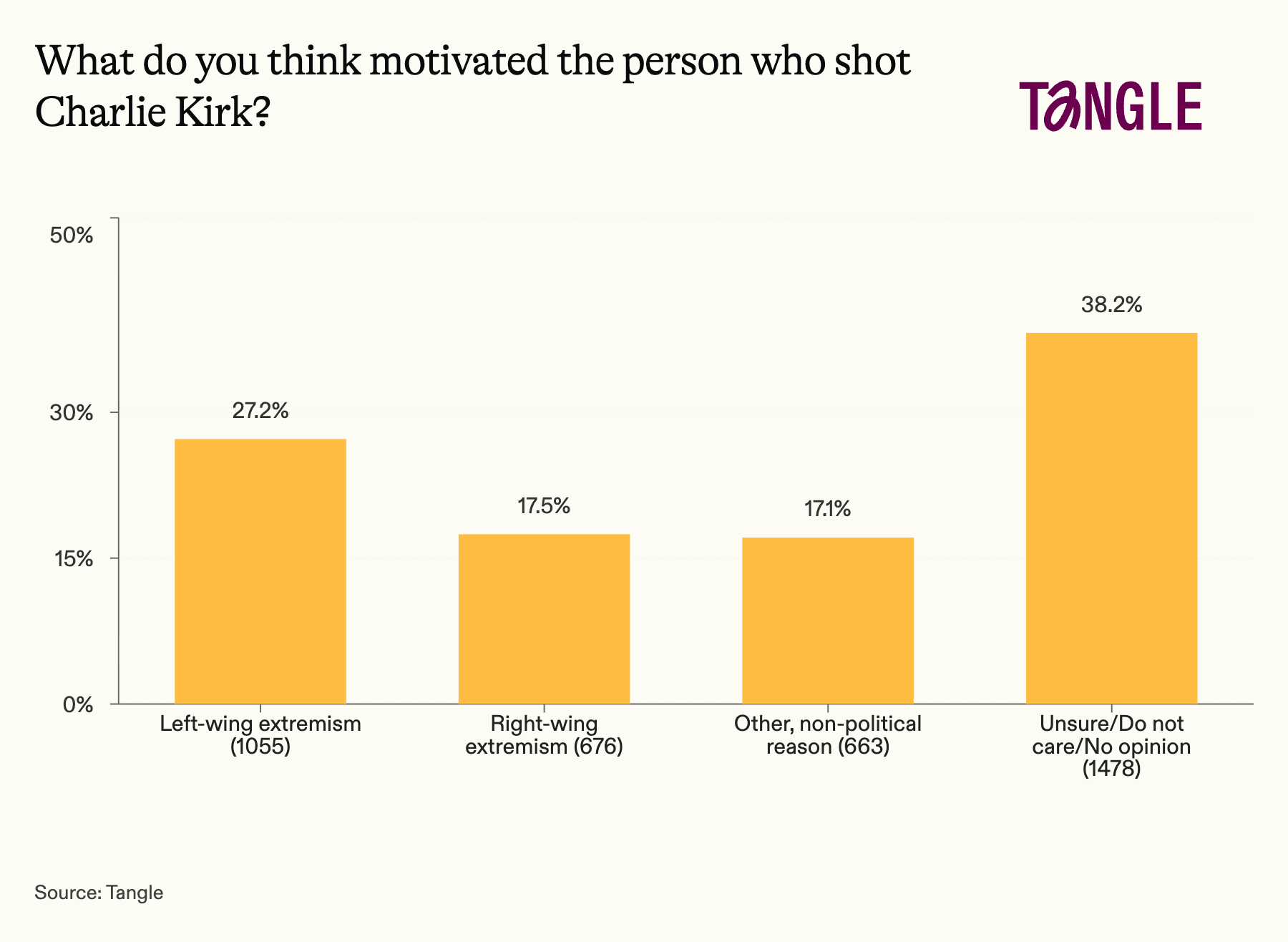
- Yesterday’s survey: 3,872 readers responded to our survey on the potential political motivations of Charlie Kirk’s shooter with 38% saying they are unsure, do not care, or have no opinion. “There isn't enough information as of yet to understand his motivations,” one respondent said.
Have a nice day.
After her grandfather was nearly the victim of an online scam, Tejasvi Manoj set out to protect seniors from similar cybercrime schemes. Less than a year later, she built and launched Shield Seniors, a website that offers explainers on common types of scams, analyzes suspicious emails and messages, and provides resources to report potential scammers. Tejasvi hopes the effort will help equip seniors with the tools to identify these schemes, which frequently target people over the age of 60. TIME recognized Tejasvi as its 2025 Kid of the Year.

Member comments